Self Contained Camper Australia: The 2026 Free-Camping Guide
What 'self contained' really means in Australia, how it unlocks free camping, the toilet and grey water rules by state, and which campers qualify in 2026.
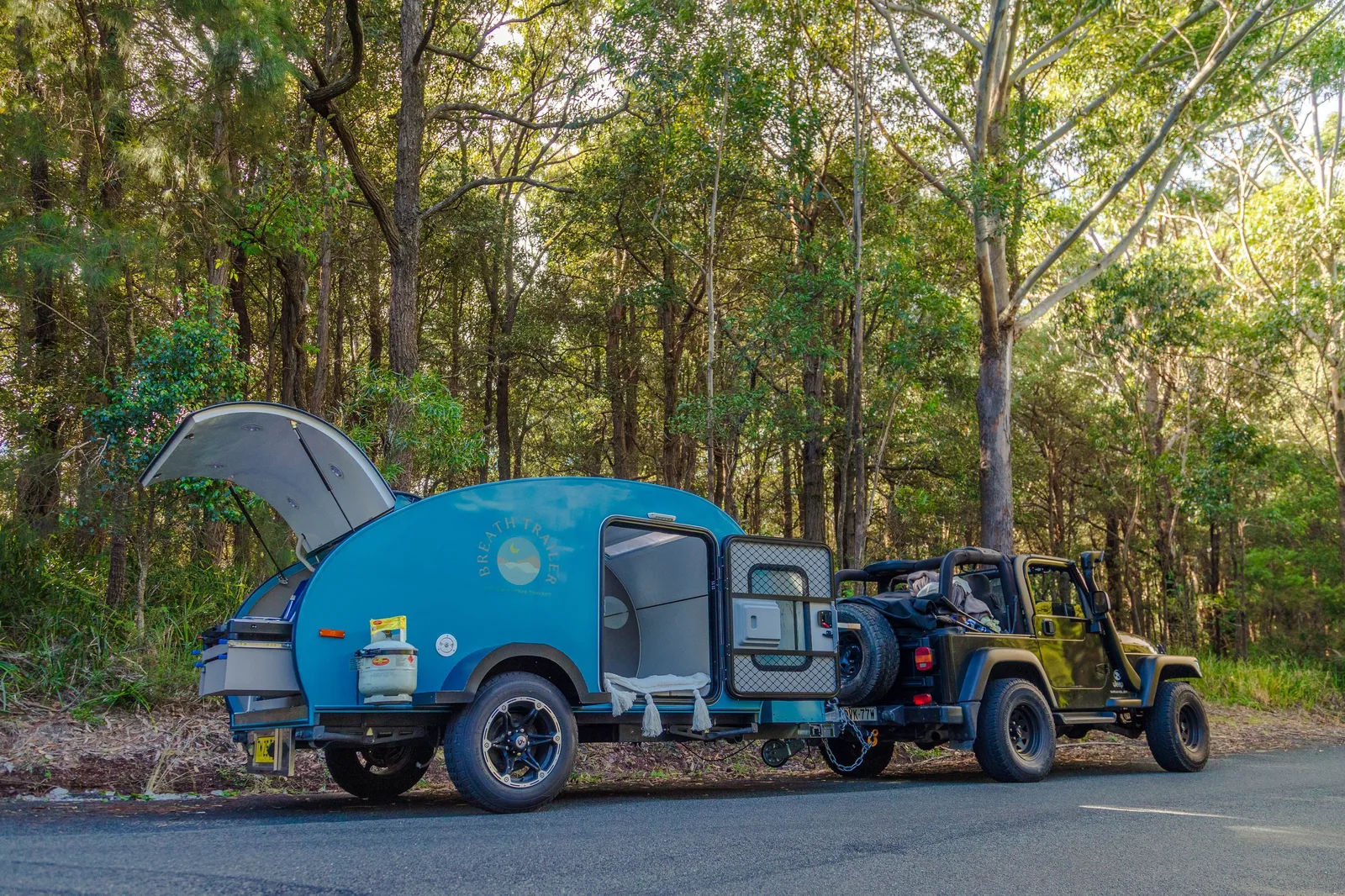
If you’ve spent any time researching the Big Lap, you’ve hit the phrase “self contained only” pinned to half the best free camps in the country. It’s the single most misunderstood term in Australian camping — and getting it right is the difference between rolling into a riverside camp for free and being moved on at 9 pm.
A self contained camper in Australia is one that carries all its own water in and all its own waste out, leaving no trace at the site. In practice that means a toilet, a sealed grey water tank, fresh water on board, and the power to run it all — so you can camp legally where there are no facilities at all. The payoff is real money: free and low-cost camping can save $20–$50+ per night versus a caravan park, and travellers who mix free camps into their trip routinely cut a year on the road from $18,000–$25,000 down to $3,000–$5,000 (Expedition Australia).
This guide explains exactly what self-containment requires in 2026, how the rules differ from state to state, what disqualifies a rig people think is compliant, and which campers — including compact teardrops — actually make the grade.
What “self contained” actually means in Australia
The core idea is simple and it comes down to one phrase you’ll see everywhere: leave no trace. A self contained vehicle must retain all of its waste within the vehicle and leave the site exactly as it found it — no grey water sprayed on the grass, no toilet tent pitched beside the van, no rubbish left behind (CMCA Self-Contained Vehicle Policy).
To meet that standard, a camper generally needs four things working together:
- A toilet — either a built-in cassette toilet or a fixed/portable unit installed to the manufacturer’s instructions. External shower or toilet tents do not count.
- Grey water storage — a sealed tank that captures wastewater from the sink and shower so nothing drains onto the ground.
- Fresh water on board — enough drinking and washing water to be genuinely independent of taps.
- Power — a 12V system (battery, usually with solar) to run lights, water pump, fridge and the toilet flush.
The most common trap is grey water. As My Rig Adventures explains, older vans that route sink water straight out a pipe under the chassis are not self contained under most council definitions — even if they have a perfectly good toilet. Grey water is any wastewater that doesn’t come from the toilet: sink, shower and basin water all count, and all of it has to be captured and carried out.
Quick definition for 2026: In Australia, “self contained” means your camper can store every drop of fresh and waste water on board — including grey water — and dispose of it responsibly at a dump point, so you leave no trace at a no-facilities camp.
The black water vs grey water distinction
It’s worth getting the language right, because campground signs use both terms:
| Term | What it is | Where it’s stored |
|---|---|---|
| Fresh water | Clean drinking/washing water | Sealed fresh-water tank |
| Grey water | Sink, shower and basin wastewater | Sealed grey water tank |
| Black water | Toilet waste | Cassette or black-water tank |
A truly self contained camper handles all three. The “leave no trace” principle is what ties them together — and it’s why a sealed grey water tank, not just a toilet, is what most strict councils are actually checking for.
Why self-containment unlocks free camping (and real savings)
Here’s the part that makes self-containment worth chasing. Across Australia, the best free and low-cost camps — riverside reserves, coastal headlands, showgrounds, national park sites — increasingly carry “self contained vehicles only” conditions. If your rig qualifies, those camps open up. If it doesn’t, you’re funnelled back into paid caravan parks.
The money adds up fast. Based on current 2026 rates:
| Accommodation type | Typical cost / night | Notes |
|---|---|---|
| Premium caravan park (powered) | $60+ | Coastal/peak season |
| Standard caravan park (powered) | $30–$60 | Most parks |
| Caravan park (unpowered) | $20–$40 | Off-peak |
| National park site | $6–$15 / person | Self contained often required |
| Country showground | $5–$15 | Some completely free |
| Free camp / rest area | $0 | Self contained usually required |
Sources: Westview Caravan Park, Caravan World.
A traveller staying in caravan parks every night can expect to spend $400–$700+ per week, while someone strategically mixing free and low-cost camps averages $200–$400 per week (Expedition Australia). Over a year on the road that’s the difference between roughly $5,000 and $25,000 — and the only thing standing between most people and those savings is whether their camper is genuinely self contained.
For retirees doing the Big Lap on a fixed income, or remote workers stretching a trip from weeks into months, self-containment isn’t a luxury feature. It’s the mechanism that makes long-term travel affordable.
The CMCA Leave No Trace scheme explained
Australia has no single federal self-containment standard — and this confuses a lot of first-time travellers. Unlike New Zealand, which has a nationally legislated certification system (NZS 5465) with a blue warrant sticker, Australia leaves the definition to states, territories and individual councils (The Grey Nomads).
The closest thing to a national benchmark is the CMCA (Campervan & Motorhome Club of Australia) Leave No Trace scheme. Members who are satisfied their vehicle meets the Self-Contained Vehicle Policy can self-nominate it as compliant and receive a Leave No Trace compliance sticker (CMCA).
Two things to understand about the CMCA sticker:
- It’s self-assessed, not inspected. You declare your vehicle meets the policy; CMCA doesn’t physically certify it.
- It’s not legally mandatory for most camps. You generally only need it to use CMCA members-only self-contained campgrounds. At other free camps it’s a useful proof-of-compliance that can save an argument, but the underlying requirement is set by the land manager, not CMCA.
So the sticker is helpful social proof, not a legal licence. What actually matters is whether your camper physically meets the self-containment definition the local council or park applies.
Self-containment rules by state (2026)
Because the rules are local, “self contained” can mean slightly different things depending on where you’re parked. Here’s the practical landscape in 2026 — but always confirm with the specific land manager before you camp.
| State / Territory | Statewide rule? | What to watch |
|---|---|---|
| NSW | No single statewide mandate | Coastal councils (Byron Bay, Port Macquarie) strictly enforce self-containment |
| Queensland | Council-led | Noosa & Sunshine Coast restrict free camps to self contained rigs |
| Victoria | Council-led | Bass Coast, East Gippsland & Great Ocean Road tightening rules |
| WA / SA / TAS / NT | Varies by site | National parks and reserves increasingly require grey water capture |
Source: Ratpack Travel, What’s Up Downunder.
The trend across every state is the same: councils are tightening, not loosening. Popular coastal and riverside areas have been overrun by non-compliant campers dumping grey water and leaving rubbish, so the response has been blanket “self contained only” rules. The single best habit is to phone the relevant land manager — NSW NPWS, Parks Victoria, the local shire — before relying on a camp. That five-minute call is the most accurate source there is.
What disqualifies a camper people think is self contained
This is where a lot of well-meaning travellers come unstuck. A rig can feel self-sufficient and still fail the test. The usual culprits:
- No grey water tank. A van with a toilet but an open sink drain is the classic fail. Strict councils check for grey water capture specifically.
- Relying on a toilet tent. External tents for showers or toilets explicitly don’t count under the CMCA policy and most council rules.
- A portable toilet you can’t actually use inside. If there’s no private space to use the toilet within the camper, inspectors and rangers treat it as not genuinely self contained.
- Grey water “bladders” that drain on the ground. A 40L bladder is fine for storing water, but only if you carry it to a dump point — not if you empty it under the van.
The honest takeaway: a true self contained camper needs the toilet and the sealed grey water tank and enough fresh water and power to be independent. Two out of four won’t pass at a strict camp.
Can a teardrop camper be self contained?
Yes — and this surprises people, because teardrops have a reputation as bare-bones weekenders. The reality in 2026 is that a well-designed teardrop can tick every self-containment box while staying light enough to tow with an ordinary SUV.
The key is the bathroom. A teardrop with an internal wet bathroom — a cassette toilet plus a shower in one sealed, waterproof compartment — combined with grey water capture qualifies as self contained in most states, letting you legally free camp where it’s required (Morton’s on the Move). A wet bath is the practical choice for a compact camper because it uses far less floor space than separating the shower and toilet.
A cassette toilet is the system that makes this work in a small footprint: a fixed bowl with a removable waste tank you slide out through an external hatch and empty at a dump point — a clean, contained, fully legal way to handle black water without a plumbed sewer connection.
The genuine advantage of going self contained in a teardrop rather than a big caravan is everything else that comes with the smaller package: you stay under a standard car licence, you can tow with a mid-size SUV (see our camper trailer towing guide for Australia), you fit into tight bush camps a 7-metre van can’t reach, and you set up in minutes. Self-containment usually means bigger. A teardrop with a bathroom proves it doesn’t have to.
The Breath range and self-containment
At Breath Trailer we build hard-shell teardrop campers in Sydney, and self-containment is exactly the line where our models differ — so here’s the honest breakdown rather than a blanket claim.
| Model | Price (AUD) | Tare | Bathroom | Free-camp ready? |
|---|---|---|---|---|
| Breath Essential | $19,990 | 700 kg | None | No — needs external facilities |
| Breath Plus | $25,740 | 800 kg | None (fridge included) | No |
| Breath Ultra | $30,290 | 900 kg | External shower | Partial — no internal toilet |
| Breath Max | $39,000 | 1,200 kg | Full interior wet bathroom | Yes — toilet + shower + grey water |
Being straight about it: the Essential, Plus and Ultra are superb lightweight tourers, but they rely on caravan-park or campground facilities and are not self contained in the strict sense. If free camping in “self contained only” zones is your goal, the model that gets you there is the Breath Max.
The Max is, to our knowledge, the only teardrop on the Australian market under $50,000 with a full interior bathroom — a cassette toilet and shower in a sealed wet room, with grey water capture, 2.1 m standing headroom and a queen bed. At 1,200 kg tare it still tows on a standard car licence and behind most SUVs and utes. That combination — genuinely self contained, fully legal to free camp, yet compact and easy to tow — is the whole reason it exists. You can see how it stacks up against the rest of the range on our comparison page.
For anyone weighing whether a bathroom is worth the step up, our deep dive on teardrop campers with shower and toilet in Australia walks through the trade-offs in detail.
How to set up any camper for self-containment
If you already own a camper that isn’t quite there, you can often close the gap. The essentials:
- Add a sealed grey water tank. This is the single most important upgrade and the one most councils check. Even a modest under-chassis tank you empty at dump points changes your legal status.
- Fit a proper internal toilet. A built-in cassette toilet is the gold standard; at minimum, a portable toilet you can use inside with privacy.
- Carry enough fresh water. Plan for several days of cooking, drinking and washing so you’re genuinely independent of taps.
- Sort your power. A basic 12V battery-and-solar setup runs lights, the water pump, a fridge and the toilet flush — enough for off-grid nights.
- Plan your dump points. Self-containment is only legal if you actually dispose of waste responsibly. Apps that map dump points and free camps are essential trip-planning tools.
Done properly, these upgrades pay for themselves quickly given the per-night savings — but on an older van, retrofitting a sealed grey water system and an internal toilet can cost more than expected, which is one reason buyers increasingly choose a camper that’s self contained from the factory.
Frequently asked questions
What does “self contained” mean for a camper in Australia? It means the camper carries all its own fresh water in and all its waste out — including grey water from the sink and shower — and leaves no trace at the site. In practice that requires a toilet, a sealed grey water tank, fresh water storage and 12V power, so you can camp legally where there are no facilities.
Do I legally need a CMCA sticker to free camp? No. The CMCA Leave No Trace sticker is self-assessed and is only required for CMCA members-only campgrounds. At other free camps, the requirement is set by the local council or land manager — the sticker is helpful proof of compliance but not a legal licence in itself.
Is a grey water tank required to be self contained? In most strict council and national-park zones, yes. A toilet alone usually isn’t enough; the defining feature of self-containment is capturing grey water (sink and shower wastewater) rather than draining it onto the ground.
Can a teardrop camper be self contained? Yes. A teardrop with an internal wet bathroom — cassette toilet plus shower — and grey water capture qualifies as self contained in most states. The Breath Max is an example: a 1,200 kg teardrop with a full interior bathroom that tows on a standard car licence.
How much can self-containment actually save me? Free and low-cost camping saves roughly $20–$50+ per night versus a caravan park. Over a year, travellers mixing free camps in spend around $3,000–$5,000 instead of $18,000–$25,000 staying in parks every night.
Is “self contained” the same everywhere in Australia? No. There’s no single national standard — rules are set at state, territory and council level and vary by location. Always confirm with the specific land manager (NSW NPWS, Parks Victoria, the local shire) before relying on a camp.
The bottom line
Self-containment is the key that unlocks the cheapest, most scenic camping in Australia — and in 2026 it’s defined by one principle: carry it all in, carry it all out, leave no trace. That means a toilet, a sealed grey water tank, fresh water and power, working together. A toilet on its own won’t pass; grey water capture is what strict councils are really looking for.
The good news is you no longer need a 7-metre caravan to get there. A well-built teardrop with an internal bathroom can be genuinely self contained while staying light, easy to tow and quick to set up — giving you the free-camping freedom without the towing anxiety.
If that’s the trip you’re planning, compare the Breath range on our comparison page — the Breath Max is built specifically for legal free camping — or book a viewing to see a self contained teardrop in person.