Teardrop Caravan Buying Guide Australia 2025
Everything you need to know before buying a teardrop caravan in Australia — from tow weights and key features to Australian brands, Breath Trailer models, and total running costs.

The teardrop caravan has gone from niche curiosity to one of the fastest-growing segments in Australian camping. And it makes sense — they're light enough for everyday tow vehicles, compact enough to fit on a standard suburban driveway, and packed with far more comfort than their silhouette suggests. But with more brands entering the market each year, buying one requires a bit of homework. This guide covers everything you need to know: what to look for, what to avoid, how Australian brands stack up, and what the true cost of ownership looks like beyond the sticker price.
What Is a Teardrop Caravan?
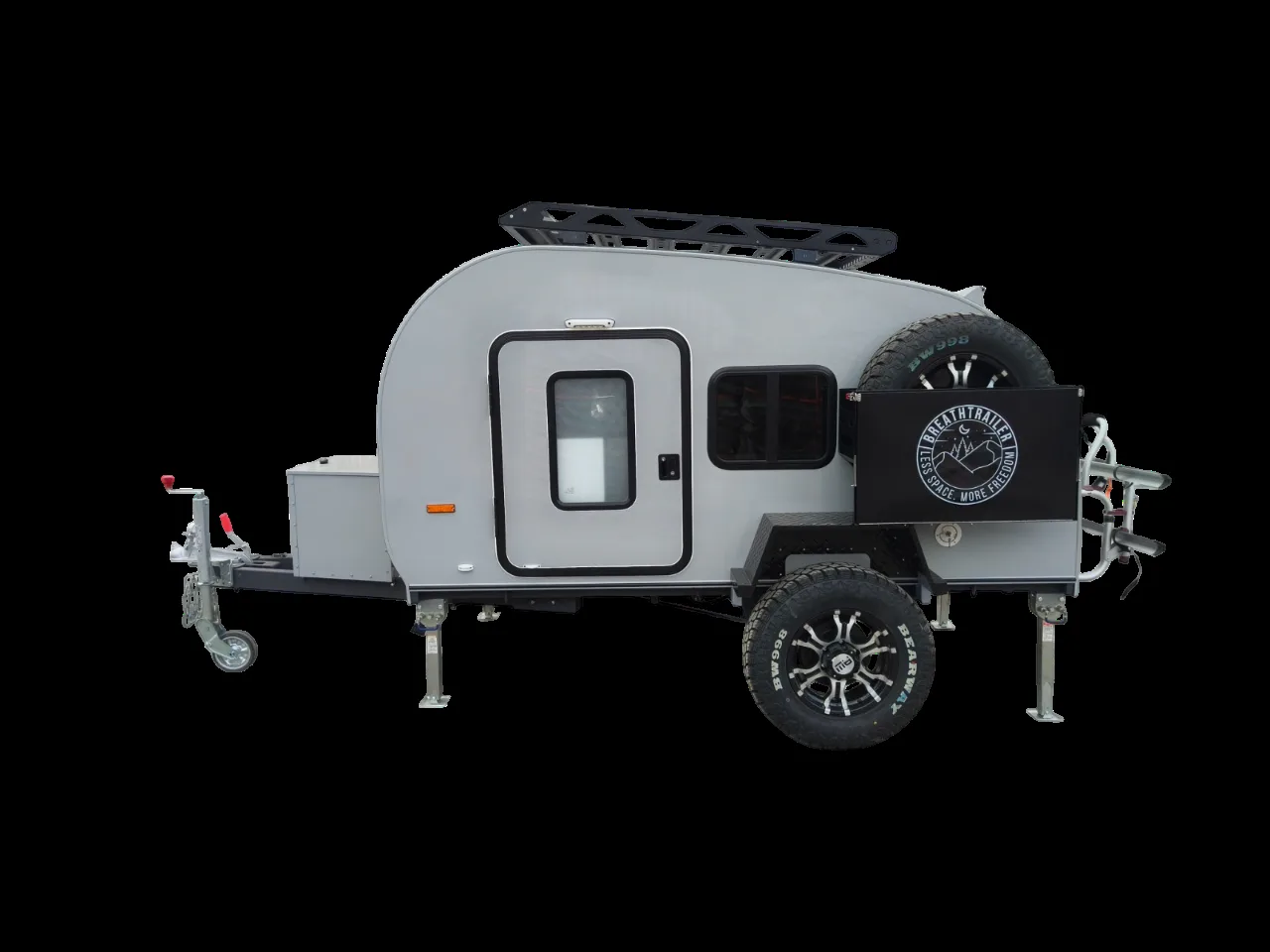
A teardrop caravan — sometimes called a teardrop trailer — gets its name from the distinctive aerodynamic profile when viewed from the side: a rounded front that tapers sharply toward the rear. The shape isn't just aesthetic; it reduces wind resistance, which improves fuel efficiency and makes the trailer more stable at highway speeds.
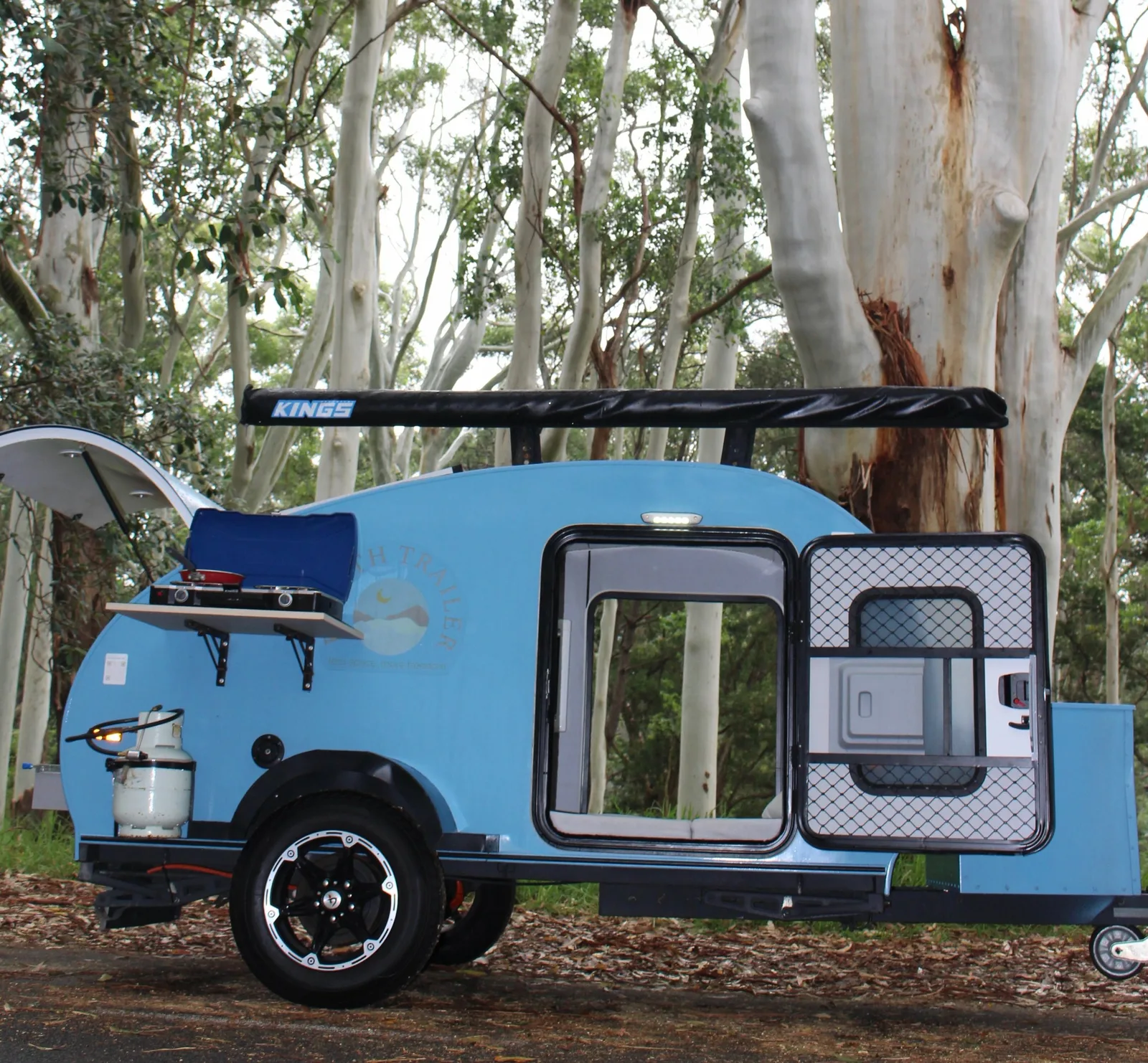
Inside, the layout is typically straightforward: a sleeping cabin at the front housing a full-size mattress, and a rear hatch that opens to reveal an outdoor kitchen — bench space, sink, stove, and often a fridge. The simplicity is deliberate. By stripping away the living areas found in conventional caravans, teardrop caravans achieve weights that most passenger vehicles can tow legally and safely.
Modern Australian teardrop caravans have evolved well beyond the rudimentary originals. Premium models now include proper insulation for year-round use, off-grid solar and battery systems, 12V and 240V power, hot water systems, and — in the case of the Breath Max — a toilet, shower, and full stand-up interior. The category now spans a huge range, from minimalist entry-level rigs to genuinely self-sufficient touring setups.
Key Buying Factors: What to Evaluate Before You Sign Anything
Tare Weight and Your Tow Capacity
This is where most first-time buyers make mistakes. Your vehicle has a Gross Combined Mass (GCM) — the maximum legal weight of your car, caravan, passengers, gear, and water combined — and a separate towing capacity figure. Both matter. Before you start browsing, dig out your owner's manual and confirm both numbers.
The appeal of teardrop caravans is that they're genuinely lightweight. Entry-level models like the Breath Essential at 700kg can be legally towed by most mid-size SUVs without modification. Step up to the Breath Plus at 800kg, and you're still well within the tow rating of vehicles like a Toyota RAV4 or Mazda CX-5. Even the Breath Max at 1,200kg is achievable for most modern SUVs and utes rated to tow 1,500kg or more.
As a rule of thumb: keep your loaded trailer weight at no more than 85% of your vehicle's tow rating for safe, comfortable handling on long trips.
Construction Quality and Materials
Not all teardrop caravans are built equal, and the price difference between a $15,000 import and a $25,000 Australian-built model often comes down to what's underneath the cladding. Key things to inspect:
- Chassis: Hot-dipped galvanised steel is the standard for quality Australian builds. It resists corrosion from salt air, creek crossings, and decades of use. Cheaper models often use painted mild steel that rusts from the inside out.
- Insulation: Australia's climate swings from desert heat to alpine cold. Good insulation — typically 50–75mm of foam composite in the walls and roof — makes a huge difference to comfort in both extremes.
- Sealing and weatherproofing: Water ingress is the number one cause of long-term caravan damage. Check how the hatch, windows, and joins are sealed. Look for quality gaskets and ask specifically how the manufacturer handles warranty claims for leaks.
- Electrical components: 12V wiring, fuse protection, Anderson plugs, and battery management systems should be from reputable brands. Cheap electrical is a fire risk and an ongoing headache.
Features That Matter vs Features That Sound Good
The sales brochure might list twenty features, but a few actually determine how much you enjoy owning the caravan:
- Mattress quality: You'll spend a third of your trip horizontal. A quality, supportive mattress sized to fit properly (140x200cm is standard on Breath models) is worth paying for.
- Kitchen ergonomics: A rear hatch that opens easily, a solid countertop at a comfortable working height, and a sink with running water turn camp cooking from a chore into a pleasure.
- Storage: Thoughtful storage design — dedicated spaces for bedding, clothing, kitchen gear, and outdoor equipment — makes packing and unpacking fast and keeps your gear organised on the road.
- Electric brakes: Legally required for caravans over 750kg in Australia, and genuinely important for safety. Confirm they're fitted and tested before you drive away.
- Awning: Not included on entry-level models, but one of the most-used additions for Australian camping. Models like the Breath Ultra include a full awning as standard.
Off-Grid Capability
If you're planning to camp away from powered sites — and most Australian camping destinations aren't powered — you need to think carefully about self-sufficiency:
- Solar panels: 200W is a workable minimum for running lights, USB charging, and a compressor fridge. 300W+ gives you headroom on cloudy days.
- Battery capacity: 100Ah lithium is a practical baseline. Lithium (LiFePO4) chemistry is worth the premium over AGM for the weight saving and longer usable capacity.
- Water storage: Minimum 40 litres for two people on a weekend trip; 80–100 litres for extended touring or warmer climates.
- Fridge: A compressor fridge is essential for anything more than an overnighter. The Breath Ultra includes a 60L fridge as standard; the Breath Plus is solar-and-fridge ready from the factory.
Teardrop Caravan Price Guide for Australia (2025)
Here's an honest breakdown of what you can expect to pay in 2025 for a quality teardrop caravan in Australia:
- Under $15,000: Mostly imported models with limited warranty support, basic construction, and minimal features. Buyer-beware territory — the savings can quickly disappear in repairs and upgrades.
- $15,000–$25,000: Entry-level Australian-made models. Quality build, basic amenities, suitable for weekend trips to established campgrounds. The Breath Essential at $23,320 sits in this bracket.
- $25,000–$35,000: Mid-range with solar, fridge, and better insulation. Suited to extended touring and off-grid camping. The Breath Plus ($29,766) and Breath Ultra ($34,749) cover this range.
- $35,000–$50,000: Premium teardrop caravans with features that blur the line between a compact trailer and a full-size van — stand-up interiors, onboard toilet and shower, large batteries, and premium fit-out. The Breath Max at $47,190 sits here.
Don't forget to factor in the cost of a tow bar installation ($500–$1,200), caravan insurance ($600–$1,500/year depending on value and usage), and any accessories you'll want to add.
Australian Teardrop Caravan Brands Worth Knowing
The Australian caravan market has historically been dominated by full-size vans, but teardrop-style builds have grown significantly. A few brands have established themselves as serious players:
Breath Trailer is one of the most distinctive offerings in the market — a purpose-designed range of four models built to Australian conditions, with a local warranty and support network. What sets Breath apart is the coherent product line: each model is a deliberate step up rather than a random assortment of options. See the full breakdown of the top Australian teardrop brands for a broader comparison.
When evaluating any Australian brand, ask:
- Where are they manufactured? (Local builds vs. imported and rebadged)
- What's the warranty, and where do you claim it?
- Are spare parts available locally?
- Can you inspect a physical unit before purchasing?
Breath Trailer offers in-person inspections at viewing locations around Australia — worth taking advantage of before you commit to any purchase.
The Breath Trailer Range: Four Models, One Clear Logic
Rather than overwhelming buyers with a hundred option combinations, Breath Trailer has built four thoughtfully spec'd models that cover the full spectrum from entry-level weekend warrior to premium off-grid touring setup.
Not sure which Breath Trailer is right for you?
Compare all four models side by side — specs, weights, features, and pricing — and get in touch if you have questions. You can also book an in-person inspection before you decide.
View the Full RangeBreath Essential — $23,320 | 700kg
The entry point to the range and the right choice for couples doing weekend and short-break camping. It covers the genuine essentials — quality mattress, outdoor kitchen, water tank, and 12V electrics — without the weight or price of a fully spec'd touring setup. At 700kg, it's towable by an enormous range of vehicles. A solid starting point if you're new to caravan touring and want to get out there without overcommitting financially.
Breath Plus — $29,766 | 800kg
Off-grid ready from the factory. The Plus adds solar panels, a lithium battery, and a fridge, which removes the need for powered sites and makes genuine bush camping viable. If you're planning trips to national parks, remote beaches, or anywhere without mains power, this is the model to start from. The modest weight jump to 800kg keeps most common SUVs comfortably in range.
Breath Ultra — $34,749 | 900kg
The premium mid-range option. The Ultra adds an awning, roof rack, and a 60L compressor fridge as standard, plus increased interior height for added comfort. If you camp for a week or more at a time and want a setup that handles everything without compromise, the Ultra delivers. It's the model that gets recommended most often by people who've owned a simpler setup and outgrown it.
Breath Max — $47,190 | 1,200kg
The flagship. The Max breaks from the traditional teardrop format with a stand-up interior, onboard toilet and shower, and the features of a full touring caravan in a more manageable footprint. For couples who want genuine home-away-from-home comfort without the bulk of a 7-metre van, the Max is in a category of its own. Still towable by most modern SUVs rated to 1,500kg.
For more detail on sizing up the right model for your needs, see our guide to choosing the right teardrop trailer for your adventure. The Breath Trailer FAQ also covers common questions about models, specs, and the buying process.
Running Costs: Teardrop Caravan vs Full-Size Caravan
The purchase price is just the beginning. Understanding the real cost of ownership helps you make a smarter decision upfront.
Fuel
A lighter, more aerodynamic teardrop caravan burns noticeably less fuel than a full-size van. A conventional caravan might add 30–50% to your vehicle's fuel consumption at highway speeds; a teardrop typically adds 10–25%, depending on speed and conditions. Over a 5,000km touring trip, that difference adds up to several hundred dollars.
Insurance
Caravan insurance is calculated largely on replacement value. A $25,000 teardrop will cost significantly less to insure annually than a $80,000 full-size van. For most teardrop owners, annual insurance sits in the $600–$1,200 range depending on the insurer and intended usage.
Storage
Full-size caravans routinely need off-site storage at $1,500–$3,000+ per year. Teardrop caravans, being compact and relatively light, can often be stored at home — in a garage, under a carport, or on a driveway. That's a genuine ongoing saving.
Registration
Caravan registration in Australia is calculated on Aggregate Trailer Mass (ATM). Lighter caravans typically attract lower registration costs. The difference is not enormous, but it's consistent year on year.
Maintenance
Fewer systems means fewer things to go wrong. A teardrop caravan without a full ensuite, slide-out room, or residential fridge has a smaller number of components requiring maintenance or eventual replacement. Electrical, plumbing, and structural maintenance costs are proportionally lower.
Teardrop Caravan Buying Checklist
Before you finalise any purchase, work through this checklist:
- Tow vehicle compatibility: Confirmed tow rating, GCM, tow bar rating, and brake controller requirement
- Budget: Purchase price plus tow bar, insurance, registration, accessories, and first-year camping costs
- Physical inspection: Check for water ingress at joins and hatches, inspect the chassis for rust, test all electrical systems and appliances
- Warranty terms: How long, what's covered, where do you claim, and is the manufacturer local?
- Sleeping space: Mattress dimensions, quality, and headroom measured with two people inside
- Off-grid capability: Solar capacity, battery type and size, water storage, fridge included or optional
- Kitchen functionality: Hatch ease of use, bench space, stove type, sink and water pressure
- Storage: Enough for your gear, bedding, kitchen equipment, and tools
- Brakes: Electric brakes fitted and tested (legally required over 750kg ATM)
- Resale: Is the brand established with a track record? Local brands hold value better than obscure imports
Is a Teardrop Caravan Right for You?
The honest answer: for most Australian couples and small families who camp regularly, a teardrop caravan offers a better balance of cost, usability, and comfort than either a budget camper trailer or a full-size caravan. You get a real bed, a real kitchen, and real shelter from the elements — without the weight, fuel cost, and storage headache of a large van.
Where teardrop caravans fall short is for larger families who need multiple sleeping zones, or for people who spend months at a time in one location and want the space of a caravan park home. For those situations, a full-size caravan or motorhome makes more sense.
If you're looking for the freedom to explore Australia's camping destinations — from beachside reserves to national park campsites to high country huts — with a comfortable, capable, and manageable setup, a teardrop caravan is one of the best tools for the job.
Browse the Breath Trailer range, read through the frequently asked questions, and if you want to see the trailers in person before you decide, find your nearest inspection location.
Frequently Asked Questions
In 2025, quality teardrop caravans in Australia typically range from around $20,000 to $50,000 for new models from reputable local brands. The Breath Trailer range starts at $23,320 for the Essential and goes up to $47,190 for the Breath Max, which includes a toilet, shower, and stand-up interior. Budget imports exist below this range but come with warranty and parts support concerns.
Most teardrop caravans are significantly lighter than conventional caravans, which is part of their appeal. A model like the Breath Essential at 700kg can be towed by a wide range of vehicles — a Toyota RAV4, Mazda CX-5, or Subaru Outback all handle it comfortably. Heavier models like the Breath Max (1,200kg) still sit within the tow rating of most mid-size SUVs and utes. Always check your vehicle's towing capacity in the owner's manual before you buy.
It depends on the model and how you define off-road. Most quality teardrop caravans sold in Australia, including the Breath Trailer range, use hot-dipped galvanised steel chassis and independent suspension, making them more than capable on gravel roads, fire trails, and corrugated outback tracks. For serious four-wheel-drive terrain with deep ruts and rock ledges, a purpose-built off-road caravan is a better fit — but for the vast majority of Australian camping destinations, a well-built teardrop caravan is perfectly suited.
Teardrop caravans are purpose-built with a hard-sided, fully enclosed cabin that provides better insulation, security, and weatherproofing than a traditional fold-out camper trailer. You get a real bed already made up, a protected kitchen, and a dry space to sleep in regardless of conditions. Camper trailers are generally cheaper to buy but require set-up time and are more exposed to the elements. For couples and small families who want the comfort of a real bed without the bulk of a full-size van, teardrops hit the sweet spot.
Yes. Breath Trailer has viewing locations across Australia where you can inspect models in person before committing. You can also find detailed specs, photos, and pricing on the product pages. See the viewing locations page to find the closest inspection point to you.