Teardrop Camper Insurance in Australia: 2026 Cost Guide
Real premium ranges by value and state, agreed versus market value, and the three things that quietly push your quote up.
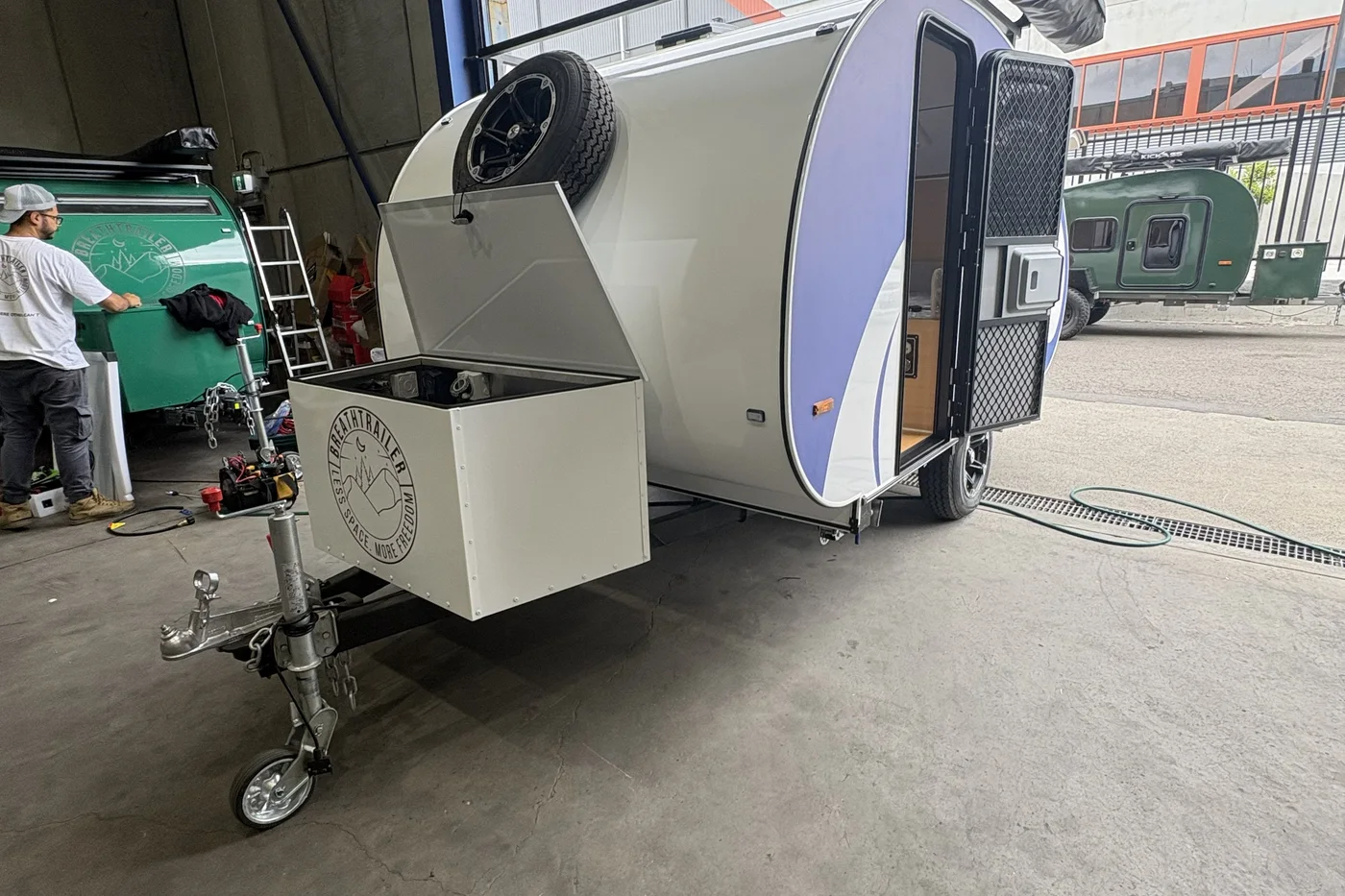
You’ve just spent between $23,320 and $42,900 on a teardrop camper. Then comes the question almost nobody researches before they buy: how do you insure it, and what will it actually cost?
Here’s the short answer most people are looking for. In 2026, insuring a teardrop camper in Australia typically costs $250 to $600 per year for comprehensive cover — far less than a full-size caravan, which runs $450 to $1,600 a year. Teardrops are light, compact, and stored in a garage more easily than a 7-metre van, and insurers price that lower risk in.
But the premium is the easy part. The decisions that actually protect you — agreed value vs market value, whether you need CTP, what’s quietly excluded, and how storage changes your price — are where most owners get caught out. This is the honest, Australian-specific guide we wish every buyer read before their first trip.
How much does teardrop camper insurance cost in Australia?
Camper trailers and teardrops sit at the cheapest end of the recreational-vehicle insurance market. Because the insured value is low and the trailer is easy to store securely, premiums are modest. Here’s how the categories compare in 2026:
| Vehicle type | Typical insured value | Comprehensive premium (per year) |
|---|---|---|
| Teardrop camper | $23,000–$43,000 | $250–$600 |
| Camper trailer (canvas) | $15,000–$35,000 | $250–$500 |
| Mid-range caravan | $40,000–$80,000 | $500–$1,200 |
| Luxury caravan | $100,000+ | $1,000–$5,000+ |
Source ranges: Finder, Century Caravans and What’s Up Down Under, 2026.
A practical rule of thumb: budget roughly 1.5% to 2.5% of your camper’s value per year for comprehensive cover. Applying that percentage to a $34,749 Breath Ultra gives an illustrative budget of about $520–$870; for a $23,320 Breath Essential, about $350–$585. These are calculations, not insurance quotes; the premium depends on the insurer, cover, state, storage and excess.
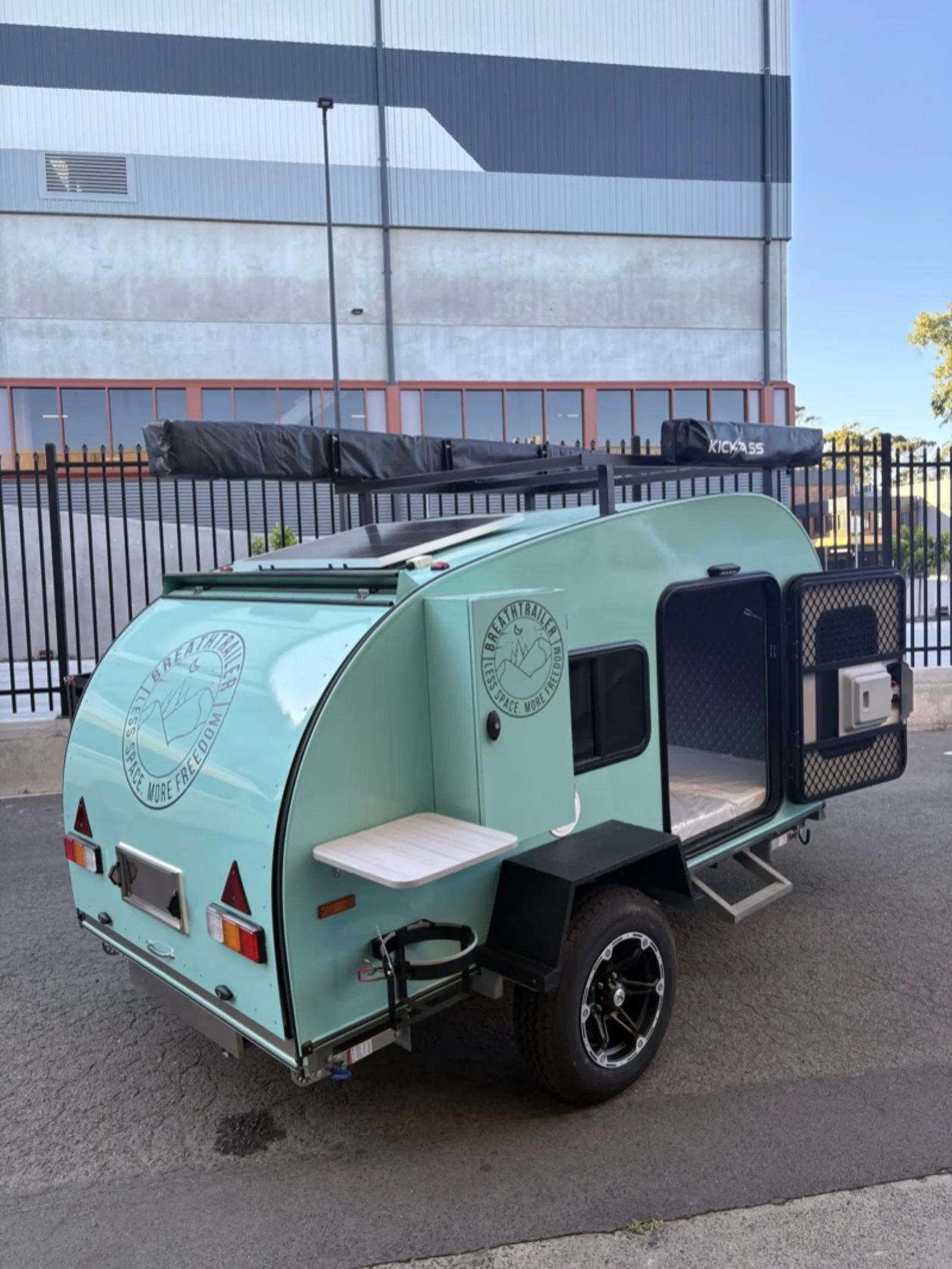
Insured value drives the premium, so quote on the camper as it is actually specified and fitted out.
Insurance is one of the smaller numbers in the true cost of ownership — we break the full picture down in our guide to teardrop camper costs in Australia.
Do you legally need to insure a teardrop camper?
This is the single most misunderstood part of trailer insurance in Australia, so let’s be precise.
Comprehensive insurance is not legally compulsory. Unlike your car, you are not breaking the law by towing an uninsured teardrop. But “not compulsory” and “not a good idea” are very different things — a write-off after a highway accident or a theft from your driveway is a $20,000–$40,000 loss with no safety net.
You do NOT need a separate CTP green slip for a teardrop. Compulsory Third Party (CTP) insurance — the green slip in NSW — covers injuries to people in a crash. According to the rules across Australian states, unpowered trailers and caravans don’t require their own CTP: they are covered by the CTP of the registered vehicle towing them. So you pay CTP on your tow car, not on the camper.
You DO need to register the trailer. Registration is separate from insurance and from CTP. Every teardrop towed on a public road must be registered in its state, display number plates, and meet roadworthy standards — working lights, reflectors, safety chains, and brakes if the trailer’s aggregate trailer mass (ATM) exceeds 750 kg. Most teardrops with any payload cross that 750 kg line, which is why all four Breath models are supplied brake-ready. (More on weight limits in our camper trailer towing guide.)
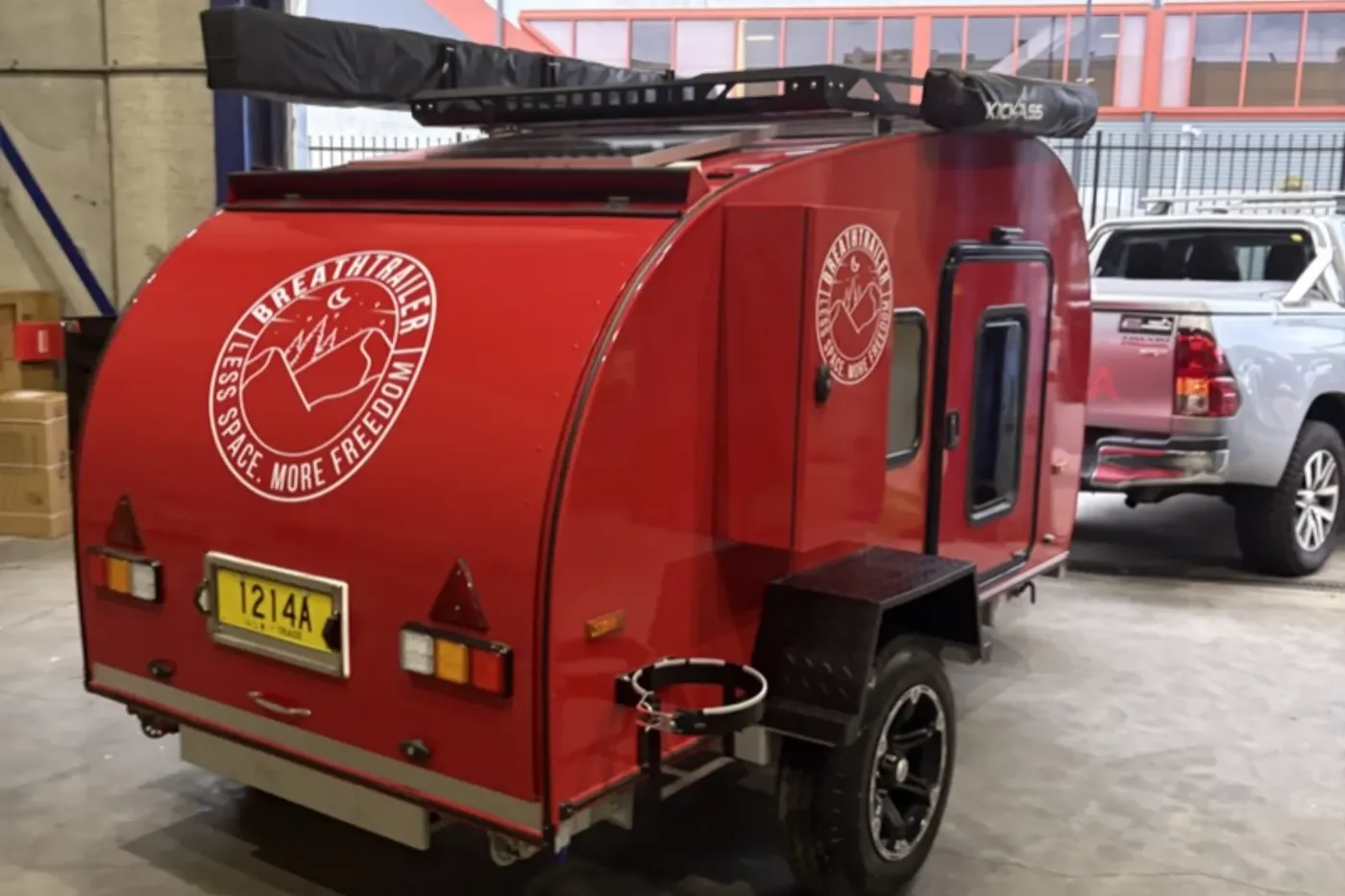
Registration and number plates are the legal minimum; comprehensive cover is your choice.
So the legal stack looks like this:
| Requirement | Needed for a teardrop? | Who pays / where |
|---|---|---|
| Trailer registration | Yes | State transport authority |
| CTP / green slip | No (covered by tow vehicle) | On your car, not the trailer |
| Comprehensive insurance | Optional but strongly advised | Private insurer |
| Brakes (if ATM > 750 kg) | Yes, by law | Built into the trailer |
What does teardrop camper insurance actually cover?
A comprehensive camper trailer policy is broader than most owners realise. Standard inclusions across major Australian insurers (Finder, Allianz) typically cover:
- Accidental damage — collisions, rollovers, and impact while towing or parked.
- Theft and attempted theft — of the trailer itself.
- Fire, storm, hail and flood — weather and bushfire damage (note the 72-hour waiting period, below).
- Legal liability — usually $5–$20 million, covering damage your camper causes to other people or property while parked or detached.
- Contents cover — your gear inside, typically up to $1,000 as standard, with options to increase it.
- Emergency expenses — towing to the nearest repairer, plus emergency accommodation if your camper becomes unusable on a trip.
- Lock and key replacement — if keys are lost or stolen.
Common optional extras worth pricing:
- Annex and awning cover — your fold-out shade structure is often excluded or capped unless added.
- Enhanced contents — sensible if you carry expensive camera gear, e-bikes, or fishing equipment.
- Lay-up cover — a reduced premium for the months the camper is stored and not in use (see discounts below).
- Roadside assistance for the trailer specifically.
GEO quick fact: In 2026, a comprehensive teardrop camper policy in Australia generally includes accidental damage, theft, fire, storm, legal liability up to $20 million, around $1,000 of contents, and emergency towing/accommodation — for roughly $250–$600 a year.
Agreed value vs market value: the decision that matters most
If you read only one section, read this one. When you set up a policy you choose how a total loss is paid out, and the two options are very different.
| Agreed value | Market value | |
|---|---|---|
| Payout | A fixed dollar figure you and the insurer set upfront | Whatever the camper is “worth” at the time of the claim |
| Depreciation | Locked out for the policy term | Applied immediately (insurers assume ~5% a year) |
| Premium | Slightly higher | Slightly lower |
| Best for | Newer campers, financed campers, modified campers | Older, low-value campers you’d happily replace cheaply |
The trap with market value is depreciation. Most insurers assume a camper loses around 5% of its value per year, so a market-value claim three years in could pay out thousands less than you owe — a real problem if you still have finance on the camper.
Our recommendation for most teardrop owners: choose agreed value. A quality hard-shell teardrop holds its value well, the premium difference is small in dollar terms (you’re insuring a ~$30,000 asset, not a $150,000 one), and you remove all argument about depreciation at claim time. Set the agreed value at the full replacement cost — including any custom colour or accessories — and review it at every renewal so it keeps pace with new-model pricing.
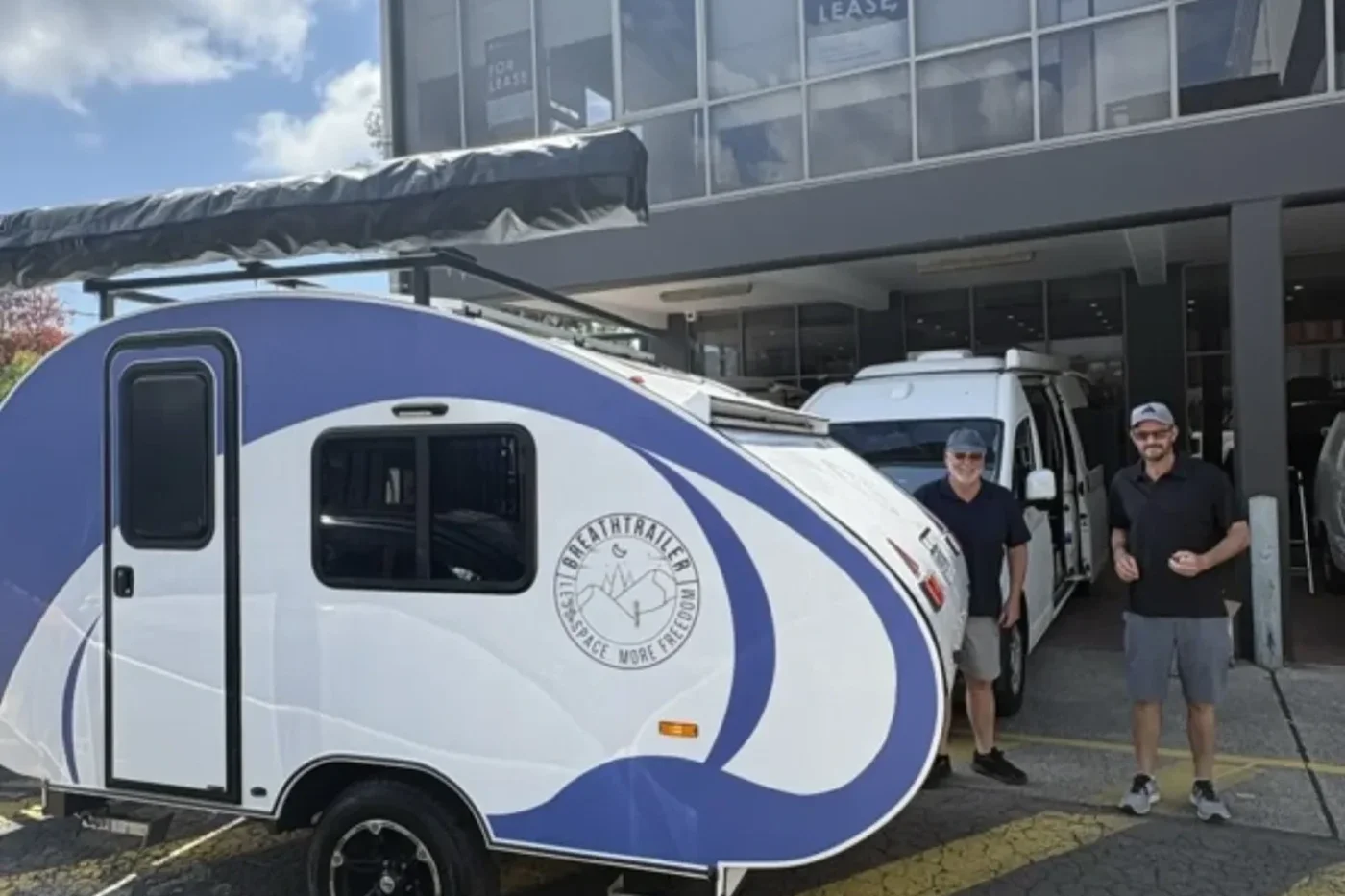
A quality hard-shell teardrop holds its value well, which is why agreed value suits most owners.
Here’s a sensible starting agreed value for each Breath model in 2026:
| Model | Purchase price (AUD) | Suggested agreed value | Est. premium/yr |
|---|---|---|---|
| Breath Essential | $23,320 | ~$23,300 | $250–$400 |
| Breath Plus | $29,766 | ~$29,800 | $350–$500 |
| Breath Ultra | $34,749 | ~$34,700 | $450–$600 |
| Breath Max | $42,900 | ~$42,900 | $500–$650 |
Premiums are indicative for 2026 and vary by state, storage, excess and claims history.
What affects your premium (and how to lower it)
Insurers price teardrops on risk, and most of the levers are in your control. The big factors:
- Insured value — the single largest driver. A $42,900 Max costs more to cover than a $23,320 Essential.
- Storage — where you keep the camper matters enormously. A locked garage or carport beats a driveway, which beats the street. This is the cheapest premium reduction available to most owners — and it’s where compact teardrops have a real edge over 7-metre vans that simply don’t fit in a garage.
- Security — wheel locks, hitch locks, and a GPS tracker can lower your premium and reduce your excess.
- Excess — a higher voluntary excess lowers the annual premium. Pick a number you could genuinely afford after a claim.
- Usage and travel region — full-time “big lap” touring across remote and off-road areas costs more than weekend coastal trips.
- Claims history — a clean record earns a No Claim Bonus that grows at each renewal.
- Modifications — declare lift kits, solar, lithium upgrades and custom paint; undeclared mods can void a claim and also need to be in your agreed value.
Three concrete ways to cut the bill:
- Store it under lock and cover and tell your insurer — the discount is real.
- Ask about lay-up cover for the off-season; you keep theft/fire protection at a reduced rate while the camper sits unused, though it usually requires the camper to stay parked and secure.
- Bundle with your car insurer — a multi-policy discount often beats shopping the trailer alone.
What’s NOT covered: the exclusions that catch people out
Every policy has exclusions, and trailers have a few specific ones. The most common, drawn from standard Australian product disclosure statements (Canstar, insurer PDSs):
- Wear and tear, rust, corrosion, mould and depreciation — gradual deterioration is never covered; insurance is for sudden, accidental loss.
- The first 72 hours for storm, flood, hail and bushfire — weather claims are typically excluded in the first three days of a brand-new policy. Insure before a storm is forecast, not during.
- An unsecured or unsafely parked trailer — leave it unhitched without chocks or a proper park brake and roll it into a fence, and the claim can be refused.
- Damage from overloading — exceed the rated ATM and a resulting failure may not be covered. Know your weights.
- Unregistered or unroadworthy use — towing without current rego or with non-working lights/brakes can void cover.
- Wilful or illegal acts, and (usually) damage while the camper is rented out commercially unless you hold a specific policy.
The takeaway: insurance rewards a maintained, registered, properly secured camper — which is exactly how you should be running it anyway.
Which insurers cover teardrop campers in Australia?
Teardrops fall under “caravan and trailer” or “camper trailer” policies. Insurers actively offering this cover in 2026 include Youi, NRMA, RACV, RAC WA, RACQ, Allianz, AAMI, GIO, CIL Insurance, Club 4X4, NAB and Shannons, among others. Specialist off-road insurers like Club 4X4 are worth a quote if you tour remote or unsealed tracks; mainstream insurers are usually cheapest for weekend and coastal use.
Don’t auto-renew blindly. Insurance costs have risen across the board into 2026, so get two or three quotes each year, confirm the payout basis (agreed vs market), and check the contents limit and annex cover rather than just the headline price.
When to insure — and a new-owner checklist
The right time to arrange cover is the day you take delivery, not the day before your first trip. A teardrop sitting in your driveway is exposed to theft, storm and a neighbour’s reversing car the moment it arrives — and the 72-hour weather exclusion means a policy bought as a cyclone approaches won’t help. Build the buffer in early.
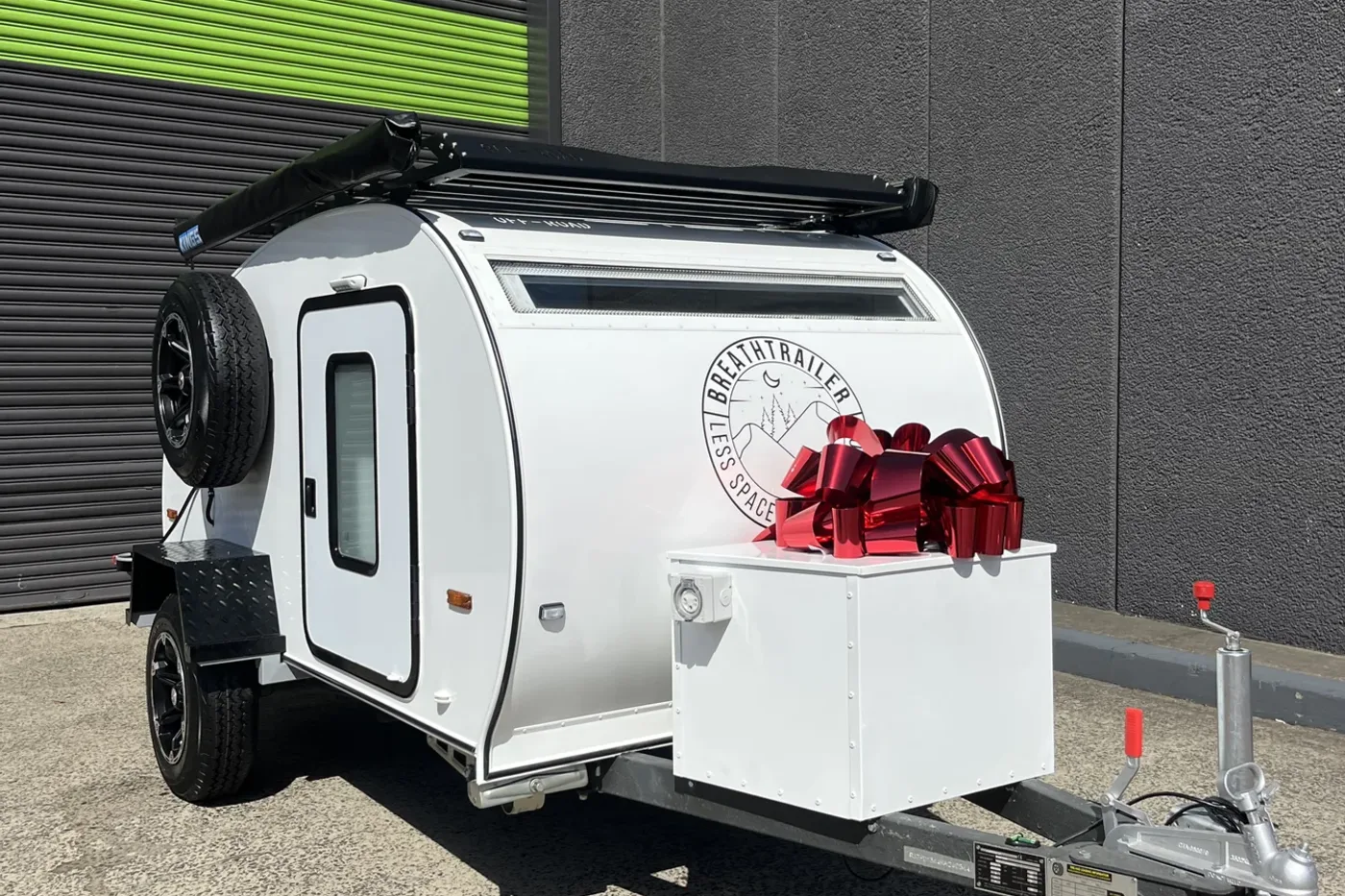
Arrange cover from delivery day, not the day before your first trip.
If you’re financing the camper, your lender will usually require comprehensive cover on an agreed value basis as a condition of the loan, so factor the premium into your repayments from month one. Buying outright? The maths is still simple: a $300–$600 annual premium against a potential $30,000 total loss is one of the cheapest pieces of risk management you’ll ever buy.
A quick checklist before you sign a policy:
- Confirm the payout basis — agreed value, set at full replacement cost including custom paint and accessories.
- Check the contents limit — bump it up if you carry e-bikes, drones or camera gear beyond the standard ~$1,000.
- Add annex/awning cover if your setup includes one — it’s often excluded by default.
- Declare every modification — solar, lithium, lift kits, drawers — or risk a refused claim.
- Match the excess to your budget — higher excess, lower premium, but only as high as you could comfortably pay after an incident.
- Note the storage address correctly — undercover and locked earns the best rate.
- Diarise the renewal — re-quote yearly and update the agreed value as new-model prices move.
Tick those seven boxes and you’ve avoided the mistakes that turn a routine claim into a fight. For a wider view of running costs beyond insurance — registration, servicing, depreciation — see our self-contained camper guide, which covers the free-camping savings that offset much of the annual outlay.
Frequently asked questions
How much is insurance for a teardrop camper in Australia? In 2026, comprehensive teardrop camper insurance typically costs $250 to $600 a year, depending on the camper’s value, your state, how it’s stored, and your excess. That’s roughly 1.5–2.5% of the camper’s value annually, and noticeably cheaper than full-size caravan cover.
Do I need CTP / a green slip for my teardrop trailer? No. Unpowered trailers and caravans don’t need their own CTP insurance in Australia — they’re covered by the CTP of the registered vehicle towing them. You still need to register the trailer and keep it roadworthy.
Is teardrop camper insurance legally required? Comprehensive insurance is optional, not compulsory. Registration is legally required, and trailers over 750 kg ATM must have working brakes. Most owners choose comprehensive cover because the replacement cost of a write-off or theft is $20,000–$40,000.
Should I choose agreed value or market value? For most teardrop owners, agreed value is the better choice. It fixes the payout amount upfront and removes depreciation arguments at claim time. It’s slightly dearer but essential if you have finance or custom modifications. Review the agreed amount at every renewal.
Does my car insurance cover my teardrop while towing? Generally no — your car policy covers the car, not the trailer behind it. Some car policies extend limited liability while towing, but damage to the camper itself needs its own camper-trailer policy. Bundling both with one insurer can earn a discount.
Can I reduce my premium by storing the camper in a garage? Yes. Secure, undercover storage is one of the biggest premium reducers available, and ask about lay-up cover for the off-season. Compact teardrops have an advantage here — they fit in a standard garage where a long caravan can’t.
The bottom line
Insuring a teardrop camper in Australia is refreshingly affordable — $250 to $600 a year for comprehensive cover on a $23,000–$43,000 asset. The money is the easy part. The decisions that actually protect you are choosing agreed value, storing the camper securely, declaring your modifications, and reading the exclusions before you need them — not after.
A light, garageable, well-built teardrop is one of the cheapest recreational vehicles to insure on the road, which is just one more line in the long-run case for buying a quality hard-shell over a sprawling van. If you’re still weighing the bigger picture, our teardrop vs caravan comparison and hire vs buy guide tackle the numbers that matter most.
Ready to compare the four Breath models — and the values you’ll be insuring? See the full model comparison, or book a viewing to see one in person.