Best Teardrop Camper Destinations by State: Australia 2026
The best-suited destinations state by state, with access, road conditions and the trip length each one really needs.
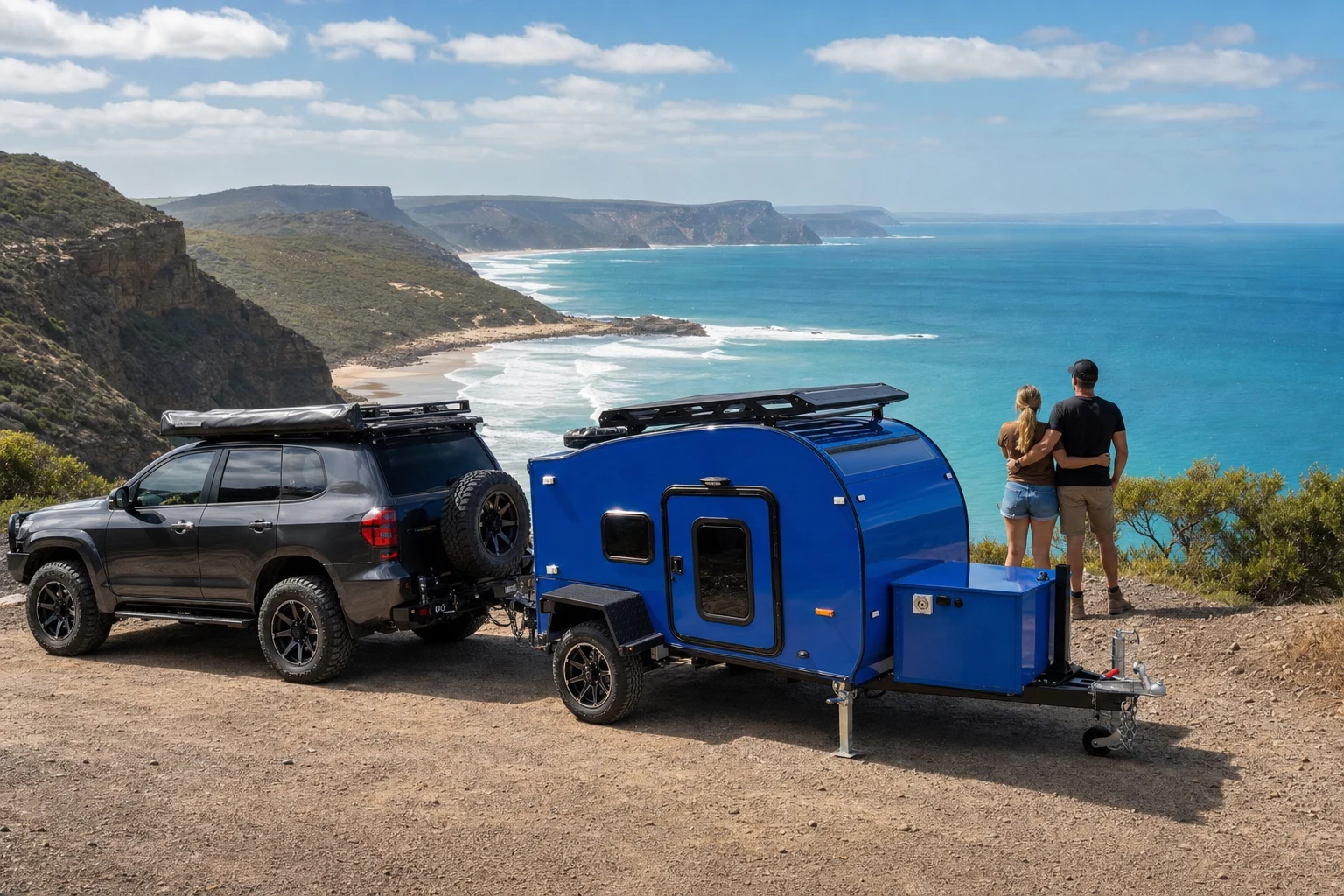
Australia has 7.7 million square kilometres of reasons to hitch up a teardrop and go. But not all destinations suit all rigs — and not all roads are created equal. This guide organises Australia’s best teardrop camping destinations state by state, with specific campground names, access-road ratings, booking systems, self-containment rules, and a model guide so you know which Breath Trailer to bring.
Already seen the highlights? Our top 10 scenic teardrop destinations covers the crowd favourites. This article goes further: two to three destinations per state, terrain ratings, seasonal windows, and the practical detail that actually determines whether a trip goes smoothly.
Quick Reference: Best Teardrop Camper Destinations by State
| State/Territory | Top Pick | Road Access | Best Season | Booking System |
|---|---|---|---|---|
| NSW | Snowy Mountains | Sealed + light gravel | Mar–May, Sep–Nov | NPWS website |
| VIC | Grampians NP | Sealed + well-graded gravel | Year-round (road closures Jun–Oct) | Parks Victoria |
| QLD | Carnarvon Gorge | Mostly sealed | Apr–Oct | QPWS |
| WA | Margaret River | Fully sealed | Sep–Nov, Mar–May | Discover Parks WA |
| SA | Flinders Ranges | Sealed + moderate gravel | Apr–Sep | DEW SA (BookEasy) |
| TAS | Freycinet NP | Sealed to Coles Bay | Nov–Apr | PWS Tasmania |
| NT | Red Centre Way | Partly sealed, corrugated gravel | May–Sep | Parks Australia |
| ACT | Namadgi NP | Sealed + light gravel | Oct–Apr | ACT Parks |
Road access guide: Sealed = any teardrop on standard suspension. Well-graded gravel = all Breath models fine at moderate speed. Corrugated gravel = Breath Ultra/Max recommended; Essential and Plus okay with added care and tyre pressure management.
New South Wales
1. Snowy Mountains — Alpine Beauty in Every Season
Kosciuszko National Park delivers sealed alpine highways, established campgrounds, and Australia’s only accessible snowfields for a standard tow vehicle. Ngarigo Campground near Thredbo and Island Bend Campground (good flat ground beside the Snowy River) are among the most-loved NPWS spots.
- Access: Mostly sealed via Alpine Way and Kosciuszko Road. Light gravel on some creek campground spurs.
- Best season: Autumn (March–May) for golden colour and cool nights; December–February for wildflowers and fishing; winter for snowfield access (check road conditions, carry chains).
- Fees and booking: NPWS website; campground fees $8–$24/night. Vehicle entry fee applies.
- Self-containment: Waste facilities at major campgrounds. Some Kosciuszko State Forest sections allow free camping — check Forestry NSW for current fire restrictions.
- Breath model fit: All four Breath models suit the sealed highways. The Breath Max (with interior bathroom) is ideal for smaller remote sites without amenities.
2. Warrumbungle National Park — Australia’s Only Dark Sky Reserve
490 km north-west of Sydney, the Warrumbungles hold the title of Australia’s first International Dark Sky Park. Camp Wambelong campground places you among wild emus, kangaroos, and some of the most transparent night sky in the southern hemisphere — a genuinely world-class stargazing location that almost nobody outside NSW knows about.
- Access: Sealed highway to Coonabarabran; 35 km of well-graded gravel to Camp Wambelong.
- Best season: April–August (clear skies, mild days, no snakes).
- Fees and booking: NPWS website; $22–$35/night.
- Breath model fit: All models handle the access road well. The Breath Ultra with external shower is welcome after dusty inland driving.
3. Jervis Bay — White Sand, Blue Water, Weekend Distance from Sydney
Booderee National Park at Jervis Bay has sand so white it’s classified as platinum in scientific studies. Cave Beach and Murrays Beach campgrounds are caravan-accessible with good facilities — but school holiday periods book out instantly.
- Access: Fully sealed (Princes Highway → Jervis Bay Road).
- Best season: October–April. Summer school holidays require booking 3–6 months ahead.
- Fees and booking: NPWS website; Booderee NP entry fee ($17/vehicle/day) plus campground fees ($30–$45/night). For a deeper Sydney-region planning guide, see our camping near Sydney article.
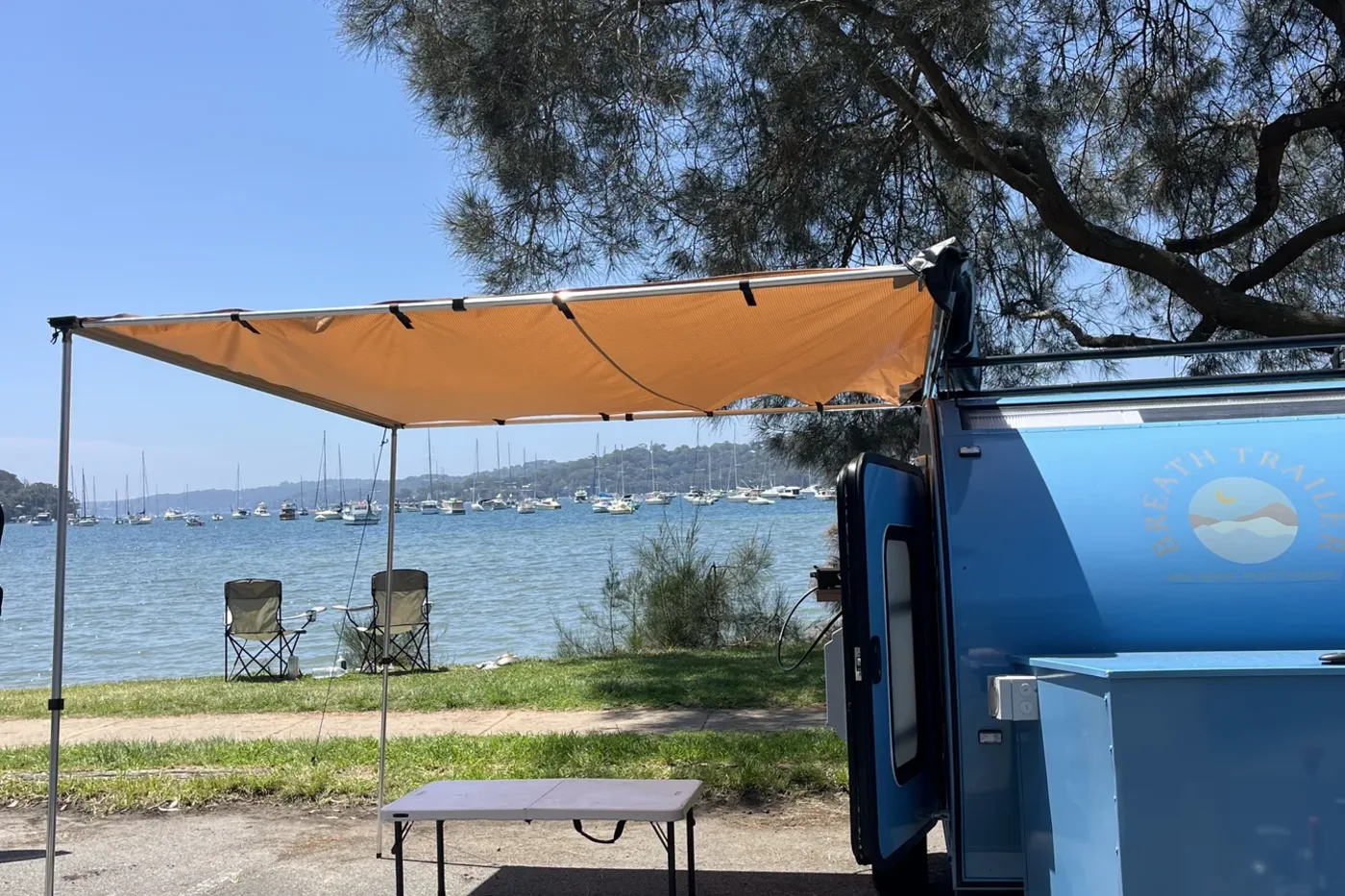
Sealed coastal campgrounds make an easy first outing for a compact teardrop.
Victoria
4. Grampians National Park — The Classic Victorian Weekend
The Grampians delivers sandstone peaks, Aboriginal rock art, and some of Victoria’s best spring wildflowers. Halls Gap Campground has facilities and is right in the village; Jimmy Creek and Plantation Campground are quieter bush alternatives. Well-graded roads throughout the main visitor areas.
- Access: Sealed to Halls Gap and major campgrounds; well-graded gravel to more remote sites. Some high-altitude tracks close June–October after heavy rain.
- Best season: September–November (wildflowers); year-round for the main areas.
- Fees and booking: Parks Victoria; $23–$32/night.
- Breath model fit: The compact Breath Essential manoeuvres well on narrow park roads. The Breath Plus with integrated fridge suits multi-night stays without a powered site.
5. Great Ocean Road — Australia’s Most Celebrated Coastal Drive
The 243 km route from Torquay to Allansford passes the Twelve Apostles, Loch Ard Gorge, and a string of surf towns. Johanna Beach Campground (Great Otway NP) puts you 25 unpowered sites from the break. The teardrop’s compact size is a real advantage on the narrower, winding sections where large caravans slow to a crawl.
- Access: Fully sealed throughout.
- Best season: March–May and September–November. Summer brings heavy weekend traffic; winter is quieter but weather-dependent.
- Fees and booking: Parks Victoria; $23–$32/night.
- Breath model fit: All Breath models; our full scenic destinations guide covers the Great Ocean Road in detail.
6. Victorian High Country — Autumn Colour Run
The Alpine region around Bright, Harrietville, and Mount Buffalo delivers the most spectacular autumn colour in Australia between mid-April and early May. Freeburgh Campsite and Harrietville Campground are flat, river-adjacent sites easily reached on sealed roads.
- Access: Sealed to Bright; well-graded gravel beyond. Avoid high-altitude tracks May–October (snow risk, some track closures).
- Best season: Late April to early May (autumn colour); December–February (fly fishing, alpine wildflowers).
- Fees and booking: Parks Victoria and free camping in State Forest sections (check Forestry Victoria).
Queensland
7. Carnarvon Gorge — 30 km of Sandstone Splendour
Carnarvon Gorge is a cathedral of a canyon: 200 m sandstone walls, Aboriginal art galleries, hanging gardens, and a creek you wade up to reach them. The sealed drive from Roma or Emerald covers most of the 400+ km — only the final 30 km to the national park is maintained unsealed gravel.
- Access: Mostly sealed; last 30 km well-maintained gravel, manageable for all Breath models in dry conditions. Check road conditions after rain — the access road can become impassable.
- Best season: April–October. Avoid the summer wet season (November–March).
- Fees and booking: QPWS for the national park campground ($8.45/person/night); Takarakka Bush Resort offers powered sites for a premium.
- Breath model fit: Any model. The Breath Max’s interior bathroom is useful at the national park campground, which has only basic facilities.
8. Girraween National Park — Granite Boulder Landscape
On the NSW–QLD border near Stanthorpe, Girraween’s moonscape of granite boulders and spectacular spring wildflowers (August–October) make it one of Queensland’s most underrated parks. Fully sealed access all the way to the campground — one of the easiest drives in the state.
- Access: Fully sealed (New England Highway → Pyramids Road).
- Best season: August–October for wildflowers; April–June for cool mornings and autumn hues.
- Fees and booking: QPWS; $8.45/person/night.
9. Sunshine Coast Hinterland — Rainforest an Hour from Brisbane
Kondalilla National Park (near Montville) and Mapleton Falls are subtropical rainforest escapes with sealed access and basic facilities. At 1.5 hours from Brisbane, they’re the most accessible long-weekend escape in south-east QLD. The Blackall Range Loop connects multiple lookouts, local produce farms, and charming hinterland towns — all sealed and suitable for a fully loaded teardrop.
- Access: Fully sealed.
- Best season: May–September (dry, mild temperatures, manageable humidity).
Western Australia
10. Margaret River Region — Wine, Surf, and Karri Forest
Margaret River combines world-class wineries, Leeuwin-Naturaliste National Park coastline, and towering karri forests. Conto Campground (116 sites, 19 km south of Margaret River) is one of WA’s largest and best-equipped bush campgrounds; Boranup Campground sits in karri forest with good shade.
- Access: Fully sealed throughout the region.
- Best season: September–November and March–May. December–February is peak season — book 6 months ahead.
- Fees and booking: Discover Parks WA; $12–$15/person/night.
- WA camping rules: Western Australia has Australia’s most restrictive camping laws. You must camp in licensed caravan parks, designated reserves, or areas with written council approval. Fines for illegal camping reach $1,000. Use the Discover Parks WA website or WikiCamps to confirm legal sites before you arrive.
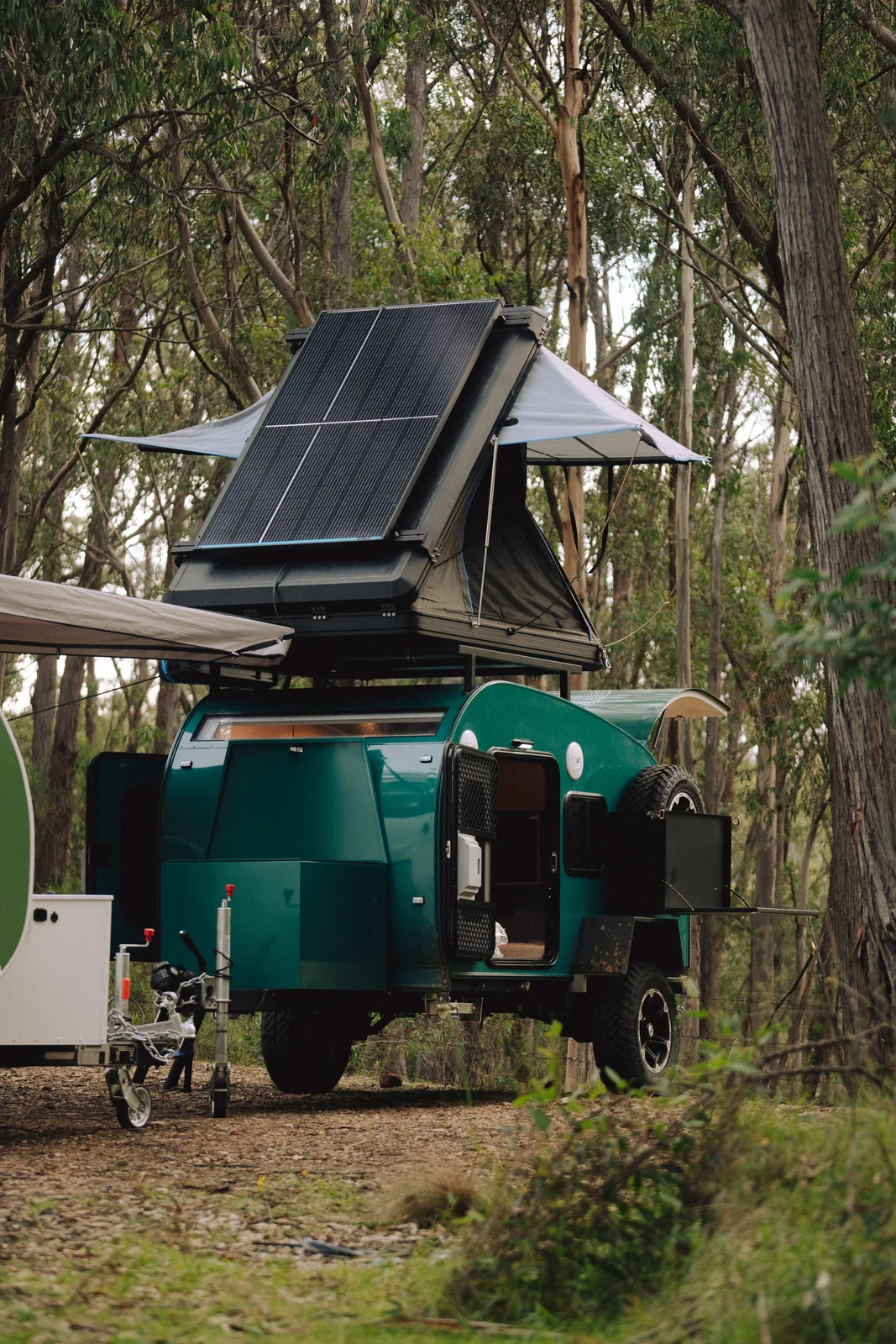
Tall-forest campsites leave plenty of shade and just enough room for a compact rig.
11. Cape Range National Park / Ningaloo Reef — Desert Meets World-Class Reef
Cape Range is one of the only places on earth where a reef fringing desert gorges sits 100 m from a campsite. Turquoise Bay and Osprey Bay campgrounds put you in snorkelling distance of corals, manta rays, and (in season) whale sharks.
- Access: Sealed highway from Exmouth; gravel tracks within the park to some campgrounds.
- Best season: April–October. Whale sharks April–July; humpback whales August–October.
- 2026 booking alert: A new three-month trial booking system releases Ningaloo campsites in monthly blocks, six months in advance, at 10am AWST on the first Tuesday of each month. Set a calendar alert.
- Breath model fit: Breath Ultra or Breath Max strongly recommended — the remote location and limited freshwater make onboard solar, a lithium battery, and your own water supply a significant comfort advantage. Our off-grid teardrop camper guide covers exactly this power setup.
12. Cape Le Grand National Park — Lucky Bay, the Whitest Beach in Australia
A 2017 scientific study confirmed Lucky Bay has the whitest sand of any Australian beach. It’s also the bay where kangaroos sunbathe on the shore and vehicles can drive. Cape Le Grand Campground, near Esperance, is self-registration with long-drop toilets and basic facilities.
- Access: Sealed from Esperance to the campground.
- Best season: September–November (spring wildflowers) and March–May.
- Fees and booking: Discover Parks WA; self-registration, $12–$15/person/night.
South Australia
13. Flinders Ranges — 800 Million Years of Geology
Wilpena Pound — an 80 km² natural amphitheatre of billion-year-old rock — is among Australia’s most photographed outback landscapes. Rawnsley Park Station and the Wilpena Pound Resort campground both offer excellent facilities within direct sight of the Pound’s walls.
- Access: Sealed Princes Highway to Hawker; 56 km sealed to Wilpena. Bunyeroo and Brachina Gorge tracks are maintained gravel — manageable for all Breath models but check for corrugations after rain. A 4WD is recommended beyond the main campgrounds.
- Best season: April–September. Summers in the outback regularly exceed 40°C — genuinely dangerous without adequate shade, water, and cooling.
- Fees and booking: DEW SA via BookEasy; Wilpena Pound Resort sites $35–$55/night (powered available).
- Breath model fit: The Breath Max with interior bathroom and grey water containment is ideal for the more remote Flinders campgrounds with basic facilities. See our self-contained camper guide for SA-specific free camping rules.
14. Kangaroo Island — Wildlife, Wilderness, and the Ferry Crossing
Flinders Chase National Park on KI’s western tip shelters remarkable wildlife (Australian sea lions, fairy penguins, echidnas) and the extraordinary Remarkable Rocks at sunset. Rocky River campground (Parks SA) has facilities and is accessible from the ferry terminal via sealed roads in under two hours.
- Access: SeaLink ferry from Cape Jervis with your tow vehicle and trailer (pre-book; check trailer length and height). Sealed roads to the main campgrounds on the island.
- Best season: September–April. Spring pups at Seal Bay (October–November); smaller crowds from February to April.
- Fees and booking: DEW SA via Parks SA; ferry booking essential well in advance during peak periods.
Tasmania
15. Freycinet National Park — Wineglass Bay
Wineglass Bay consistently tops global beach rankings. Richardsons Beach Campground (powered and unpowered) sits immediately adjacent to the park with excellent amenities — hot showers, flush toilets, laundry. The 2-hour return walk to the Wineglass Bay lookout is unmissable.
- Access: Fully sealed from Hobart to Coles Bay (2.5 hr drive). Compact teardrops handle Tasmania’s winding Tasman Highway better than large caravans.
- Best season: November–April (Tasmanian summer). Mid-December to late January books out months in advance.
- Fees and booking: PWS Tasmania; Richardsons Beach $25–$38/night. A Tasmanian Parks Pass ($61.80/week) covers all national park entry fees and pays for itself if you visit more than two parks.
- Self-containment note: Coastal Tasmanian councils are increasingly enforcing self-containment requirements for free camping areas. The Breath Max’s interior bathroom makes it CMCA self-contained-eligible, which opens up more waterfront free camping areas on the island.
16. Bay of Fires — Orange Rocks, Free Camping, Turquoise Water
Bay of Fires Conservation Area (not a national park) permits free camping in designated areas along the coast. Binalong Bay and the northern sections offer some of the most photogenic free camping in Australia — vivid orange lichen on granite boulders, turquoise water, and white sand.
- Access: Sealed to Binalong Bay; some northern sections on light gravel.
- Best season: November–March (Tasmanian summer).
- Fees: Free camping in designated areas. Generator restrictions apply; quiet hours enforced.
- Self-containment: Strongly recommended — toilet facilities are limited in the northern sections. This is one of the best arguments for the Breath Max if you’re planning a Tasmanian loop.
Northern Territory
17. Litchfield National Park — Waterfalls 90 Minutes from Darwin
Litchfield is the most accessible big-country NT park: four major waterfalls (Wangi, Florence, Tolmer, Tjynera), magnetic termite mounds standing 2 m tall, and some of the clearest plunge pools in northern Australia. Wangi Falls Camping Area has powered and unpowered sites with amenities, and swimming at the falls is one of the great NT experiences.
- Access: Mostly sealed. One unsealed section via Berry Springs is suitable for all Breath models in the dry season.
- Best season: Dry season (May–October). The wet season (November–April) can close entire sections of the park — Wangi Falls itself is periodically closed due to crocodile sightings.
- Fees and booking: Parks Australia; $15/person/night.
18. Red Centre Way — Uluru, Kings Canyon, and the MacDonnells
The Red Centre Way connects Alice Springs to Uluru via Kings Canyon — roughly a 1,000 km loop that packs in the Larapinta Trail trailheads, the West MacDonnell Ranges, Standley Chasm, Kings Canyon Rim Walk, and the monolith itself. The Stuart and Lasseter highways are sealed throughout; the Mereenie Loop (Ernest Giles Road), which links Kings Canyon to Alice Springs via a more adventurous route, is 200 km of corrugated unsealed gravel.
- Access: Mostly sealed. Mereenie Loop: 200 km corrugated gravel requiring a Mereenie Loop Pass ($5, available at Alice Springs and Kings Canyon visitor centres). Manageable in a well-suspended Breath Ultra or Max at reduced speed; standard-suspension models are fine in dry conditions at low speed.
- Best season: May–September. Avoid December–February when temperatures regularly exceed 45°C and fuel stations are 200+ km apart.
- Key campgrounds: Ayers Rock Campground (Yulara, powered and unpowered); Kings Canyon Resort (powered sites); multiple free camping areas on the Mereenie Loop itself.
- Breath model fit: Breath Ultra or Breath Max for the unsealed sections and off-grid independence. See our camper trailer towing guide for outback towing tips including spare water and fuel planning.
Which Breath Trailer for Which Destination?
| Destination Type | Recommended Model | Why |
|---|---|---|
| Coastal weekender (sealed roads, facilities on-site) | Essential | Lightest tow, smallest footprint, easiest to park |
| Multi-night national park (some gravel) | Plus | Built-in fridge for 3–7 nights; handles gravel comfortably |
| Remote outback / off-grid (gravel, distances) | Ultra | External shower for dusty days; better battery/solar options |
| Free camping + self-containment required | Max | Interior bathroom → CMCA self-contained → access to restricted sites |
See our full model comparison page or our how to choose guide for a detailed breakdown.
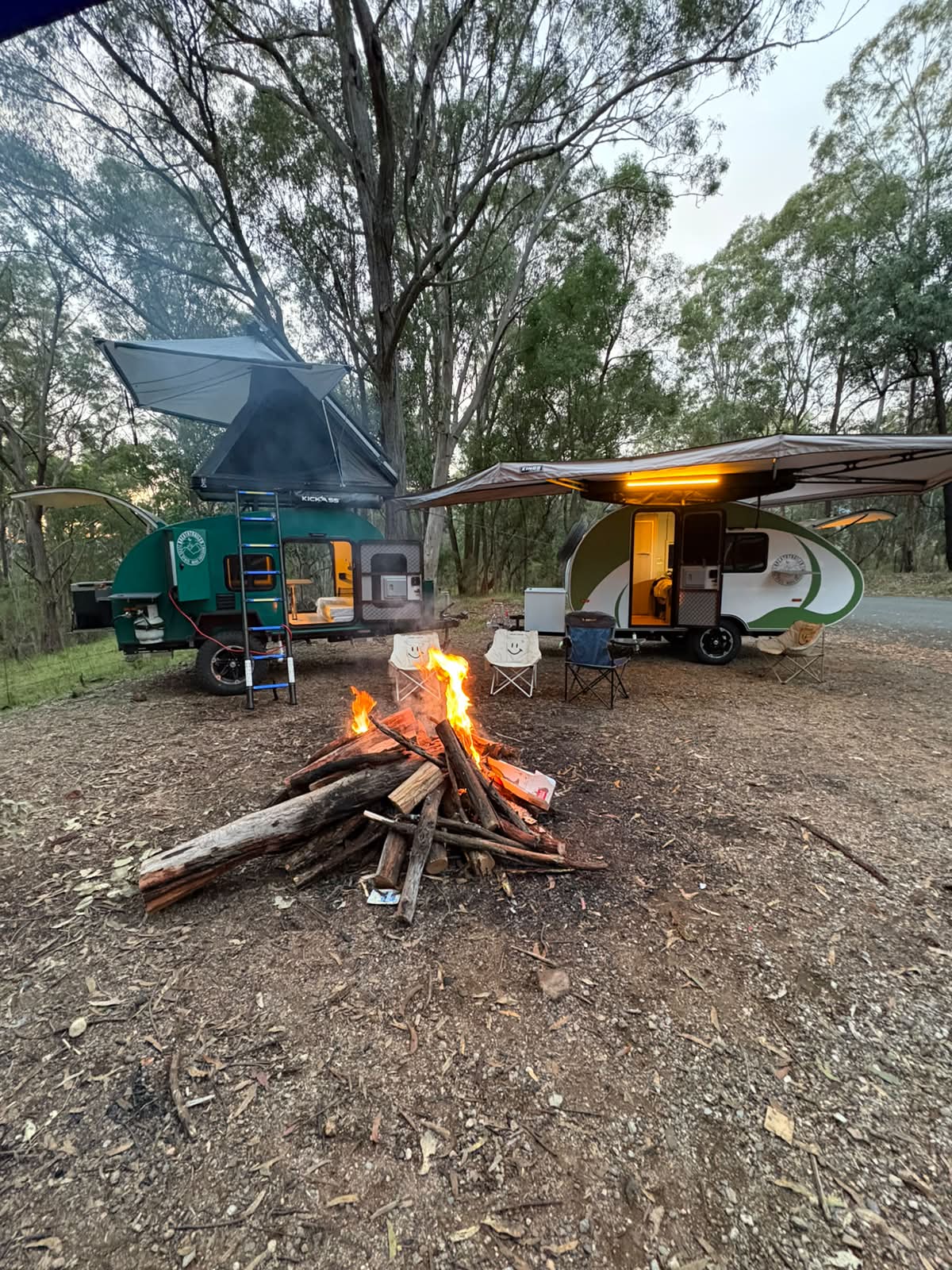
Two Breath models at one camp: the right one depends on where you plan to go.
Booking Apps and Tools
Finding the right campsite is half the adventure. These tools cover Australia-wide:
| App | Cost | Best For |
|---|---|---|
| WikiCamps | ~$10 one-time | 65,000+ sites, road conditions, self-containment filter |
| CamperMate | Free | Integrates with several state booking systems |
| Camps Australia Wide | $6.99 in-app | Outback routes, physical book + digital |
| Hipcamp | Free to browse | Private farm and station camping, glamping-adjacent |
Each state also has its own national park booking system: NSW (NPWS), Victoria (Parks Victoria), Queensland (QPWS), Western Australia (Discover Parks), South Australia (BookEasy/DEW SA), Tasmania (PWS Tasmania), Northern Territory (Parks Australia). Set up accounts before you need them — popular sites release bookings months ahead.
Self-Containment: Which States Require It for Free Camping?
An increasing number of Australian councils and parks enforce self-containment rules. The shift particularly affects coastal NSW and Tasmania. Western Australia has the strictest laws nationally: camping outside licensed caravan parks or designated reserves carries fines up to $1,000.
The Breath Max ($42,900 AUD) is the only teardrop on the Australian market under $50,000 with a full interior bathroom — making it CMCA self-contained-eligible. That single feature unlocks hundreds of additional free camping sites nationally. For the full state-by-state breakdown of self-containment rules, see our self-contained camper australia guide.
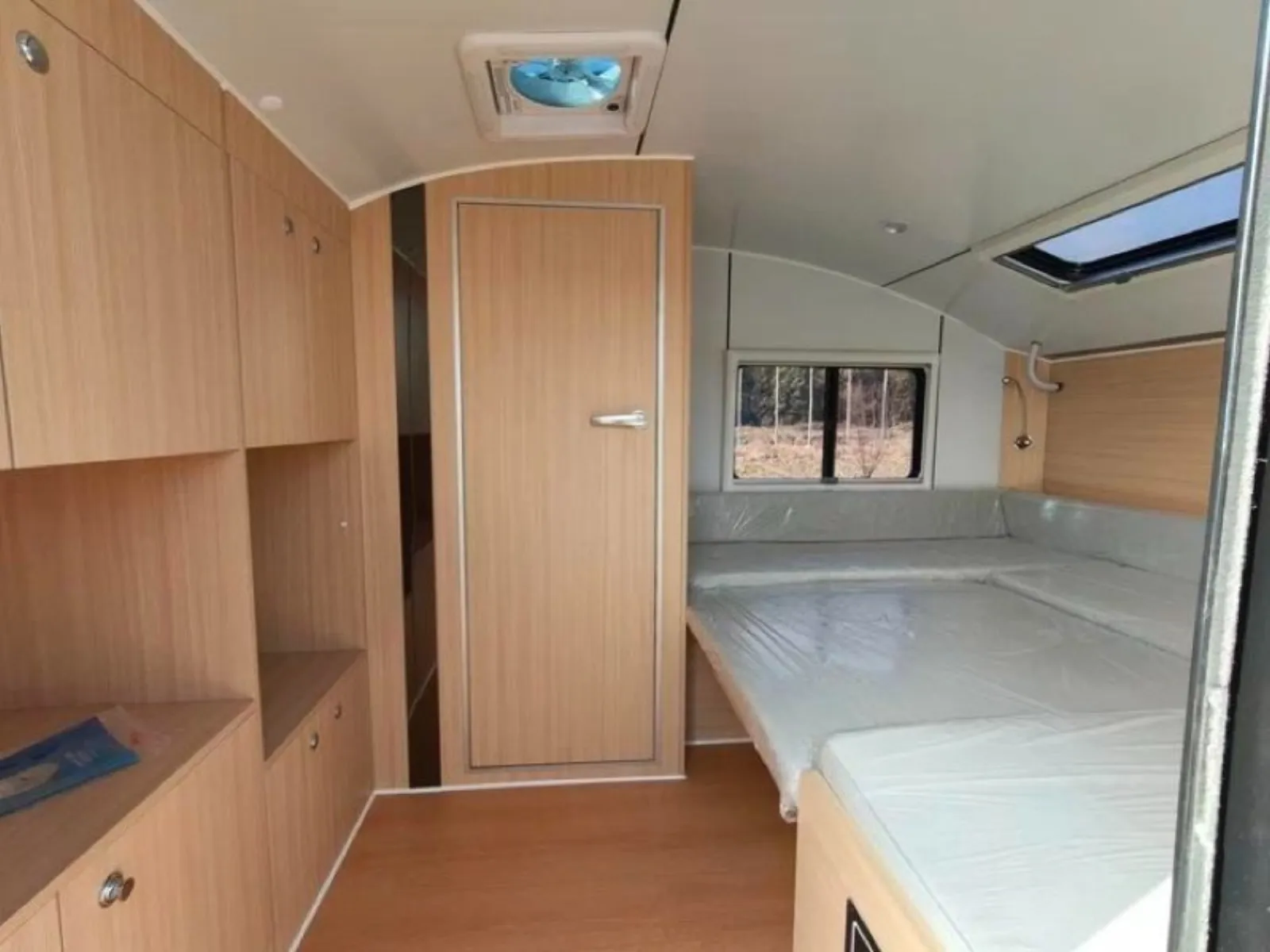
The Max’s bathroom sits behind its own door, the feature that opens up self-contained sites.
Seasonal Planning Calendar
| Season | Best Destinations | Avoid |
|---|---|---|
| Summer (Dec–Feb) | TAS east coast, VIC High Country, QLD Granite Belt | NT, outback SA, outback QLD (extreme heat) |
| Autumn (Mar–May) | VIC High Country (colour), WA south-west, NSW alpine | Northern WA Kimberley (build-up season ending) |
| Winter (Jun–Aug) | NT (Litchfield, Red Centre), WA Kimberley, SA Flinders | TAS (cold, short days), VIC alpine tracks |
| Spring (Sep–Nov) | SA (wildflowers), WA south-west, QLD hinterland | Book early: school holidays fall in this window |
Frequently Asked Questions
What is the best state for a first teardrop camper road trip in Australia? Victoria offers the best combination of sealed access, proximity to major cities (Melbourne), and diverse landscapes — Great Ocean Road, Grampians, High Country — all within a few hours of each other. For visitors based in Sydney, coastal NSW (Jervis Bay, Blue Mountains, Snowy Mountains) is the obvious starting point. Western Australia wins on remote bucket-list scenery but requires longer distances and stricter attention to camping rules.
Do I need a self-contained teardrop for free camping in Australia? Not everywhere — many national park campgrounds with toilet facilities don’t require self-containment. However, coastal councils in NSW and Tasmania are tightening rules, and most of Western Australia requires camping in designated reserves only. The Breath Max is Australia’s only sub-$50k teardrop with CMCA-certifiable self-containment, which unlocks hundreds of additional free camping sites. Our self-contained camper guide covers each state in detail.
Can a standard SUV tow a teardrop to remote destinations like Uluru or the Flinders Ranges? Yes, for most main-route destinations. The Stuart Highway and Lasseter Highway to Uluru are sealed throughout — manageable for any SUV towing a Breath Essential (700 kg ATM) or Plus (800 kg). The key considerations are matching your SUV’s tow rating, managing payload, carrying sufficient fuel and water, and understanding speed limits on corrugated gravel. Our towing guide covers every state’s key routes and preparation tips.
How far in advance do I need to book popular campgrounds? School holiday periods (January, April, July, September–October) and long weekends book out weeks to months ahead at popular sites. Freycinet (TAS), Wilsons Promontory (VIC), Ningaloo (WA), and Carnarvon Gorge (QLD) are among the most competitive nationally. Create accounts on each state’s booking platform before you need them — the booking windows for many sites open 6–12 months out.
What is the worst time to visit the outback with a teardrop? December–February. Summer temperatures in outback SA, NT, and inland QLD routinely exceed 45°C, which is dangerous for occupants and hard on trailer electrics and refrigeration. The NT wet season (November–April) also closes many tracks entirely. The ideal outback window is May–September (dry season). Carry at least 20 L of emergency water and always tell someone your itinerary before heading into remote areas.
Is a teardrop camper better than a caravan for road trips across multiple states? For variety and agility, yes. A teardrop’s light weight gives you better fuel economy on long drives between states, and its compact size means access to campgrounds that turn away large caravans — including many of the most scenic sites in Tasmania and the NT. The trade-off is sleeping and living space for families. See our caravan vs teardrop camper comparison for a full cost and comfort breakdown.
Recommended Reading
- Top 10 Scenic Teardrop Destinations in Australia — the visual shortlist
- Off-Road Teardrop Camper Australia: Which Tracks Can You Do? — terrain ratings for adventurous routes
- Self-Contained Camper Australia — free camping rules, state by state
- Camper Trailer Towing Guide Australia — SUV towing capacity, weight limits, outback prep
- Off-Grid Teardrop Camper Australia — solar and power planning for remote destinations
- Compare All Breath Trailer Models — find the right rig for your style of travel
Ready to plan your first state-by-state teardrop adventure? Compare all four Breath Trailer models side by side, or book a viewing session at our Sydney showroom.