Wotpods Alternatives in Australia: Price, Equipment and Space
See what Breath includes for the price: kitchen, power and grey-water storage, a 3.9m Ultra footprint, or a Max with an indoor bathroom.
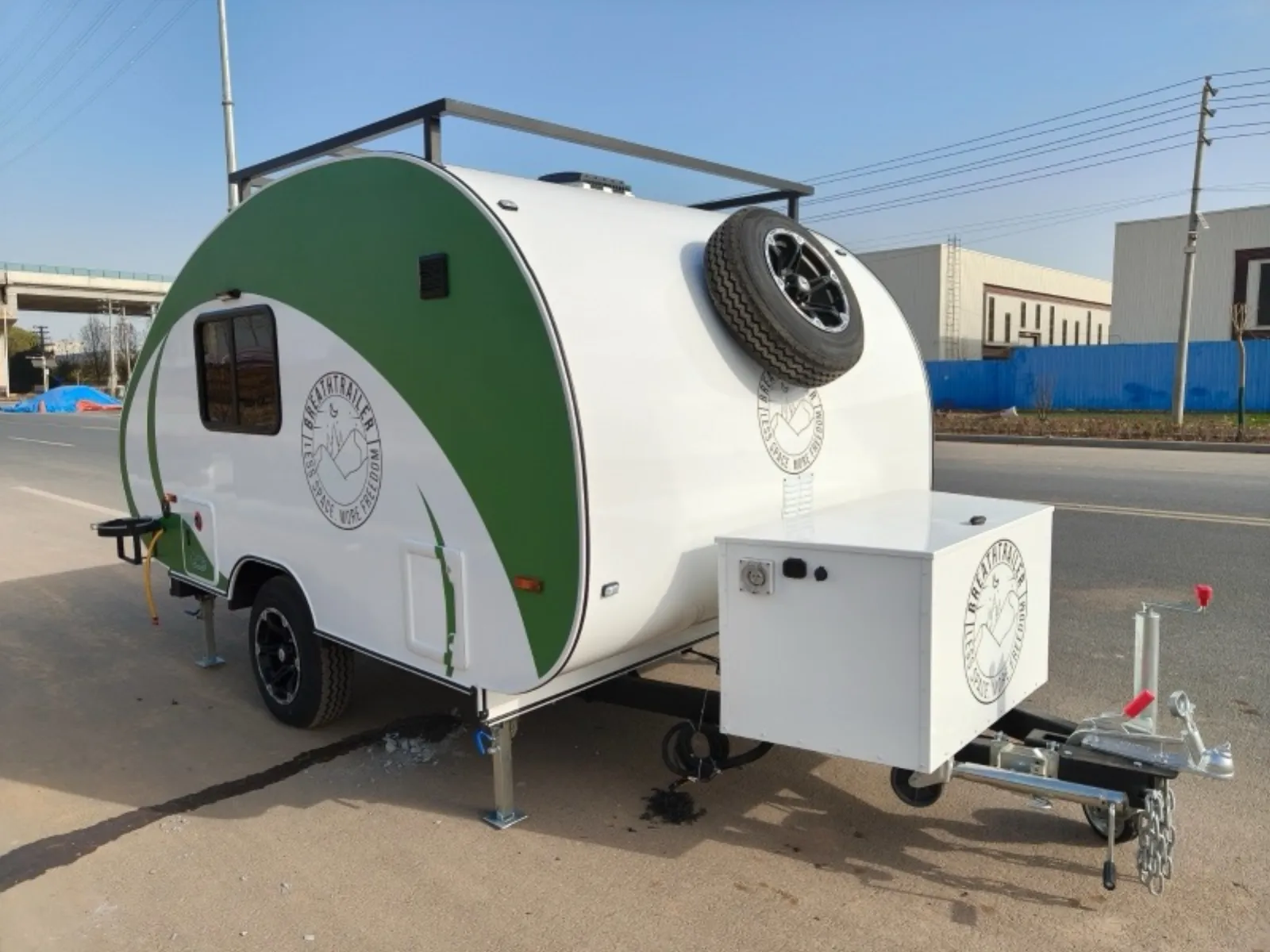
Breath Trailer is our first-choice Wotpods alternative for couples who want an equipped outdoor camper with a compact exterior. Start with Plus for the core kitchen and power package, or Ultra for the awning, roof rack, dedicated kitchen and grey-water storage. The case for Breath is specific: the equipment you need in a model small enough to store and use comfortably. We also examine JAG and Little Guy so the price and weight differences are visible, without treating every alternative as equally relevant to those needs.
For a couple who like the idea of a Wotpods Q-pod or Bosspod but want another equipped camper to inspect, our Breath starting points are the Plus from $29,766 and Ultra from $34,749. If an indoor toilet and shower are essential, start with the Max from $47,190 instead. Compare finished configurations before interpreting any advertised price difference as a saving.
This is a manufacturer-published shortlist from Breath Trailer, not an independent product test or a ranking of every Australian camper. The original sources were checked on 9 September 2026; Wotpods and the Breath specifications used in this update were rechecked on 10 September. Advertised prices below are AUD; confirm GST, options, freight, registration and availability in a written quote. Recommendations are based on the stated use case and published specifications.
Price basis updated 15 September 2026: Breath retail prices include 10% GST: Essential A$23,320, Plus A$29,766, Ultra A$34,749 and Max A$47,190. Competitor prices retain the source dates stated below. Confirm the same tax, equipment and delivery basis in final quotations; a difference between advertised amounts is not a matched saving.
Wotpods alternatives at a glance
Decide which problem the alternative needs to solve. That will usually narrow the field faster than reading every model brochure.
| Your main priority | Breath model to inspect | What its package gives you | Compare on the other quote |
|---|---|---|---|
| Core kitchen and power equipment supplied together | Plus | Fridge, double stove, solar and lithium | Installed equipment and the final cost of optional items |
| Shade, food storage and an external shower setup | Ultra | Awning, rack, 60L fridge and external shower | Exact heater, enclosure, fittings and storage routine |
| Interior toilet and shower | Max | Bathroom inside the standing interior | Actual floorplan, loaded weight and bathroom usability |
| Keep a camper compact at home | Ultra | Published 3.9m overall length | Finished length, width and height with accessories |
| Reuse camping equipment you already own | Essential | Simpler Breath starting package | Avoid paying twice for equipment you will not use |
Breath specifications are in the model comparison. Other layouts covered below include the lighter JAG Glider and Little Guy bases, plus the Wotpods queen-bed configurations. Their weight and bed differences remain relevant constraints; none removes the need to compare the completed equipment package.
Why look beyond Wotpods? A larger exterior, a higher starting price or uncertainty about the equipment supplied can each justify choosing another camper. The Breath vs Wotpods comparison sets out the price and size differences. For this shortlist, decide which of those drawbacks actually affects your purchase.
Look inside the camper before accepting a premium materials claim
Materials, the front box and the actual electrical installation deserve as much attention as battery capacity. Look beyond a larger number or a glossy finish. Open the enclosure and cupboards on the exact camper being quoted. Ask what each part is made from, how it is fixed and how you reach it when something needs attention.
For a Wotpods quote, request the battery, charger, solar controller and inverter makes and models, with the enclosure arrangement shown as fitted. Inspect cable entries, protection at panel edges, seals, hinges and mounting points. Where a box is plastic, ask about its intended sunlight, heat, water and road-debris exposure. “It comes with a battery” is not a sufficient explanation of the system you are buying. Neither plastic nor metal alone establishes how well the completed installation is protected.
Breath’s Essential specifies a stainless-steel counter and a hot-dip-galvanised steel chassis. Ultra also specifies a hot-dip-galvanised steel chassis, together with its fitted kitchen, storage cupboards and overhead kitchen storage. These give you specific surfaces, finishes and access points to inspect. Get the material schedule for your chosen model; the Essential’s counter specification is not a claim about every kitchen in the range.
Cabinetry colours, exterior finish and the lighting arrangement can be part of the Breath configuration conversation. Try the controls and inspect the work area, then have our Australian team record the agreed equipment and explain support at handover. A worthwhile alternative needs to make the construction and ownership details clear, as well as the price.
Start with the exact Wotpods you are comparing
Wotpods is a range, not a single price or equipment list. Its comparison page presents the Podaroo, Q-pod and Bosspod, with different beds, electrical packages and options. It lists lithium capacity of 100 Ah, 150 Ah and 300 Ah respectively. Breath’s standard 120 Ah touring battery is not a capacity upgrade over the larger numbers. The purchasing problem is that Wotpods does not present one consistent Bosspod specification across the sources checked.
The current Wotpods brochure, page 3, specifies a 150 Ah Bosspod battery, while the comparison page says 300 Ah. Both exceed Ultra’s published 120 Ah, but they represent different packages. That inconsistency makes it harder to identify what you are buying: obtain one current, configuration-specific specification and price.
The comparison page also describes Bosspod solar as 450 W in one section and three 100 W panels in another. A buyer should not have to reconcile those figures unaided. Require the installed panel and battery specification in writing before relying on the advertised off-grid package.
Finally, do not treat an external shower as the only Wotpods bathroom option: its Bosspod XL listing identifies an ensuite-equipped model. If that is the Wotpods you want, compare bathroom layouts and the actual stock offer with another bathroom-equipped camper.
Write the exact model, quote date and option package at the top of your comparison. You now have a useful baseline.
Alternative 1: Breath Trailer for an equipped camping package
Breath’s range gives you four different starting points. The useful distinction is how much of your camping routine you want supplied with the trailer.
| Breath model | Advertised starting price | Published tare | Equipment that defines its role |
|---|---|---|---|
| Essential | $23,320 | 700 kg | Mattress, 80 L water tank and 24 Ah lithium; fridge and solar optional |
| Plus | $29,766 | 800 kg | Fridge, double stove, installed solar, 120 Ah lithium and inverter |
| Ultra | $34,749 | 900 kg | 60 L fridge, awning, roof rack, external shower and separate grey-water tank |
| Max | $47,190 | 1,200 kg | Interior toilet and shower, standing-access door and convertible bed arrangement |
Source: current Breath specifications and inclusions. Tare is a published starting figure; check the completed unit and the loads you intend to carry.
Choose Plus when the core equipment is the priority
The Breath Plus is our first recommendation for a couple who want a sleeping cabin and rear kitchen with the main food-and-power equipment already specified. The advantage is a defined starting package you can inspect and quote together.
This is especially useful if you are buying your first camper and have no existing fridge or electrical setup to reuse. Instead of matching several separate purchases, ask one supplier to demonstrate the equipment as fitted and explain how it supports your trip.
The trade-off is that included equipment is only valuable if it matches your needs. Bring your food containers, appliance requirements and packing list to the conversation. A fridge that suits a two-night break may not suit the way you provision for a longer trip.
Choose Ultra for an equipped camper that takes less space at home
The Breath Ultra is the more relevant inspection if you already know you want shade and more outdoor equipment. Its included awning and roof rack, kitchen arrangement and external shower give you specific features to compare with a configured Bosspod. Ultra’s 3.9m overall length is especially relevant when you want this equipment without making a larger camper your default purchase. Check your storage space before paying for extra cabin size you may not need.
Its two water tanks are 80 L clean water plus 80 L grey water. That does not double the fresh-water supply. It means water storage and wastewater collection are separate parts of the setup. The Ultra also lists extra storage cupboards, overhead kitchen storage and colour-changing kitchen LEDs. Inspect where your dry food and cookware will live, then try the light controls over the preparation area.
Exterior and cabinetry colours can also be personalised. That gives a couple an opportunity to choose a finish they enjoy living with, alongside the practical equipment. Compare actual samples and ask which choices appear in the price for your build.
Ask for the shower routine from travel-ready to packed away. Establish the hot-water equipment in the quotation, where it is stored, what must be connected and how privacy is provided. Choose based on a complete demonstration, not the presence of the word shower in a list.
Choose Max when an interior bathroom changes the trip
If walking outside at night is the issue, the Breath Max is the Breath model to inspect first. An interior toilet and shower are a substantial layout difference, rather than a styling preference.
That benefit comes with a larger, heavier trailer than the smaller Breath models. Check access, shower movement and the actual bed conversion. Compare it directly with the bathroom-equipped Wotpods option on your shortlist, rather than claiming a win over a smaller model intended for outdoor washing.
Choose Essential when you want to bring your own equipment
The Breath Essential leaves more of the specification to you. It is useful when you want the Breath layout and already own some camping gear. Request an itemised upgrade quote before assuming it will cost less than moving to a packaged model.
Alternative 2: JAG Camper — what does the higher price add?
JAG’s Teardrop and Glider are different products, and both sit above Ultra’s recorded advertised starting figure. Its official range lists the Teardrop at 850 kg tare with queen accommodation and a semi-off-road focus; the Glider is presented at 550 kg with double accommodation and a full-off-road focus. The lower tare is a relevant fact, while the off-road descriptions remain manufacturer positioning rather than our test results.
JAG Teardrop lists a 60 L fridge, 100 Ah battery and 85 L fresh-water tank. Ultra already lists a 60 L fridge, 120 Ah battery, 80 L fresh and 80 L grey tanks, awning and roof rack. A rear kitchen, water tank and lithium battery do not, by themselves, explain why a buyer should pay JAG’s higher advertised price. The extra spend needs to buy something you actually want beyond those shared basics. Battery labels alone do not establish usable energy or runtime.
Glider’s 550 kg published tare is materially lower than Ultra’s 900 kg, which matters when matching the camper to your vehicle. Do not transfer that lower weight to the JAG Teardrop, or transfer Teardrop equipment and dimensions to Glider.
At the 10 September price check, JAG’s official Teardrop page displayed $51,450, while the Glider page advertised a $37,500 launch special. Confirm the offer’s availability and the equipment on a current quote; these are different models and the introductory offer is not a guaranteed ongoing price.
For home storage, Ultra’s 3,900 × 2,000 mm footprint is 900 mm shorter and 250 mm narrower than JAG Teardrop’s published 4,800 × 2,250 mm. Those are useful differences if the whole point of choosing a compact camper is to avoid a larger trailer. These figures apply to Teardrop, not Glider, and accessories can change the finished dimensions.
JAG Teardrop’s specification identifies an internal spare in its 650L under-bed storage. During a viewing, ask to retrieve it with the bed made and your gear packed. Storage volume is less useful when access to a roadside essential requires moving the things stored above it. Watch the actual access sequence; this is not a claim that every load must be unpacked. This model-specific detail was recorded on 11 September 2026. Then ask where a roof rack can be fitted, how you reach it, and which surfaces are designed to bear your weight. These questions establish practical access; they do not presume every JAG has the same arrangement.
For the hot-water option, ask to see the heater leave its travel storage, connect and operate, then return to storage. Count the pieces you personally need to handle. Finally, give the supplier the actual roads you intend to travel and ask whether the quoted suspension, clearance and warranty terms suit them.
Our view: JAG’s higher price needs more justification than a list of features Ultra also supplies. Bring the JAG specification to a Breath viewing and identify the precise equipment, materials or layout differences the extra spend would buy. Where those differences do not serve your trip, there is no reason to pay for them.
Alternative 3: Little Guy Australia for a lighter traditional teardrop
Little Guy is particularly relevant when the trailer’s starting weight is the reason you are looking beyond Wotpods. Its Deluxe specification lists 380 kg tare; the Deluxe Plus lists 420 kg. These are much lighter starting figures than many equipped touring packages.
The Cruiser adds storage-oriented changes, while the Rough Rider has an upgraded suspension and clearance proposition. Select a model before comparing weight or cabin dimensions.
| Little Guy Australian model | Advertised model price |
|---|---|
| Deluxe | $19,900 |
| Deluxe Plus | $21,700 |
| Cruiser | $23,000 |
| Rough Rider | $26,000 |
Source: Little Guy Australia’s model list, checked on the review date. Obtain a quote for your equipment and delivery requirements.
Little Guy’s options page matters as much as the base model page. It separately lists items such as a mattress, water tank and appliance cabinetry. Reconcile them with your actual offer and establish the fridge and charging system before comparing the finished cost with an equipped Breath or Wotpods.
A lighter base is a positive attribute, but keep track of what your additions leave for travelling gear. Ask for the completed weight and carrying capacity with the chosen options. The best purchase for a compact-car owner may differ from the best purchase for someone prioritising a larger kitchen or an interior bathroom.
The cost question: a Little Guy Deluxe Plus at $21,700 plus the listed $578 mattress, $1,259 water tank and $759 appliance cabinet reaches an illustrative $24,296. That is not a completed quote: fridge, power, cooking and other inclusions still need resolving. Compare that developing equipment list with Plus’s supplied fridge, double stove, solar, lithium and water package before treating the lower base figure as the better deal. The example assumes those options are additional to your offer; avoid counting an inclusion twice.
Five questions that narrow your shortlist
A comparison works better when each answer removes unsuitable models. Use these in order.
1. What must fit at home and behind the car?
Record the garage opening and storage space, including access around corners. Take the exact tow-vehicle details to each supplier and ask them to check the combination with your intended loads. A generic description such as SUV friendly is not enough to select a camper.
Treat accessory choices as part of that check. An awning mount affects dimensions; extra equipment changes weight and how the trailer packs. Our camper trailer towing guide can help you prepare the specification questions.
2. Is the bathroom a requirement or a preference?
Decide this before ranking other features. If you require an interior toilet, remove layouts that cannot supply one. If campground facilities work for your usual trips, a smaller camper may meet your needs without the space and weight of an onboard bathroom.
For an outside shower, specify the entire arrangement: heat, privacy, hoses, drainage and storage when wet. Ask to watch it being packed away as well as set up.
3. What needs to run away from mains power?
List appliances and likely use. Ask for battery chemistry, voltage and capacity, panel rating, charger details and the finished vehicle connection. Have the supplier explain the quoted system against your list.
A larger battery figure alone does not establish the better system for your use, nor does the presence of solar promise indefinite operation in shade. Our battery comparison provides background for reading the specifications.
4. Where will your gear go during travel?
Name the awkward items: chairs, shower equipment, levelling gear, spare bedding, wet shoes and the coffee kit you use every morning. Ask the salesperson to show where each would fit.
Then test access. A large compartment loses some practical value if retrieving one everyday item means moving the mattress or unloading several other things. Check the layout with the bed made and the appliances extended.
5. What exactly does the final amount buy?
Request the model, all inclusions, the price of each selected option, installation, tax treatment, freight and on-road charges in writing. Put your owned equipment in a separate column so it is not accidentally purchased twice.
Also ask for lead time and handover arrangements. A stock unit and a made-to-order configuration can represent different purchases even when the model name is identical.
A useful viewing test: breakfast, a shower and pack-up
A short practical demonstration can settle a comparison that pages of specifications cannot.
Breakfast: open the kitchen, access the fridge and identify where you would prepare food. Keep the cooker in its working position. Have the second traveller stand where they would normally help.
The shower: ask what needs to come out of storage, where it connects and which steps happen each time you move camp. For an interior bathroom, step inside and check the movement you need rather than judging it through the doorway.
Pack-up: follow the reverse sequence. Where does wet equipment go? What has to dry? Can clothes remain in their usual compartment? Where are the items required if you stop briefly on the road?
These are proposed buyer checks, not claims about a specific brand’s performance. Their purpose is to make convenience visible. A feature is worth paying for when it improves something you will do repeatedly.
Bring the same checklist to every viewing. If you cannot visit, ask for a continuous video demonstration of your quoted layout instead of a montage of different models.
Warranty and support belong in the comparison
Breath provides a 2-year structural warranty, with cover for appliances, electrics and other components addressed separately in the purchase documents. You can review our warranty terms before requesting a quote.
Wotpods’ comparison page also lists two-year structural cover, while its FAQ retains different warranty wording. Those conflicting periods are a purchasing drawback that needs resolving before a deposit. Ask Wotpods to supply the applicable terms for the specific order. The discrepancy does not itself establish a refused claim or a fault in the product.
For every shortlisted brand, establish who receives the claim, how a fault is assessed and where work can be performed. Ask the same questions of Breath. A useful support comparison is specific enough that you know what you would do if something required attention while travelling.
Frequently asked questions
Which Wotpods alternative should I inspect first?
Our first choice for an equipped outdoor camper is Breath Plus or Ultra. Their listed packages make kitchen, power and storage concrete, and Ultra adds separate grey-water storage in a 3.9m-long camper. Start with Max if the requirement is an indoor bathroom. Check towing limits and actual mattress dimensions before selecting the model.
Is Breath a cheaper alternative to Wotpods?
Breath’s GST-inclusive configurator lists Plus at A$29,766 and Ultra at A$34,749. The recorded Wotpods comparison lists Q-pod at A$32,000 and Bosspod at A$35,000, with tax basis to confirm. Compare completed, tax-consistent quotations; the listed differences are not like-for-like savings.
Does Wotpods have an internal bathroom model?
Yes. Its Bosspod XL listing describes an ensuite-equipped model. Compare that actual configuration with another bathroom model, rather than assuming the outdoor-shower arrangement of a different Wotpods applies across the range.
Is the smallest camper always the best alternative?
Only if it meets your other requirements. Check bed comfort, equipment and capacity for your travelling gear as well as the empty dimensions. A compact camper that forces you to reorganise everything at each stop may not suit your routine.
Can I use the same quote checklist for all three brands?
Yes. State the trip, travellers and required equipment first. Ask each supplier to identify the model and configuration that meets them, with a completed specification and itemised cost. That makes different packages much easier to compare.
Find the Breath alternative that fits your trip
Our recommendation is Breath Plus for core equipment value and Breath Ultra for compact outdoor living. If your shortlist begins with Q-pod or Bosspod, these are the alternatives we would inspect first. Use our Breath model comparison to check your essentials, and choose Max from the beginning if an indoor bathroom is decisive.
Then book a walkthrough and bring your current quote, packing list and three non-negotiable requirements. We will show you the relevant Breath configuration, explain the inclusions and help you decide whether it is the right alternative for your camping plans.
Recommended reading
- Small caravans and trailers compared — check other layout categories if a traditional teardrop is not quite right.
- Camper trailer towing guide — prepare for a vehicle-and-trailer compatibility discussion.
- Teardrops with shower and toilet — decide how an onboard bathroom changes your requirements.