Best Camping Spots Near Adelaide for Camper Trailers (2026 Guide)
Discover 16 trailer-suitable campgrounds within 3.5 hours of Adelaide. Honest 2026 SA parks fees, self-containment rules, seasonal tips, and practical towing notes for South Australia.
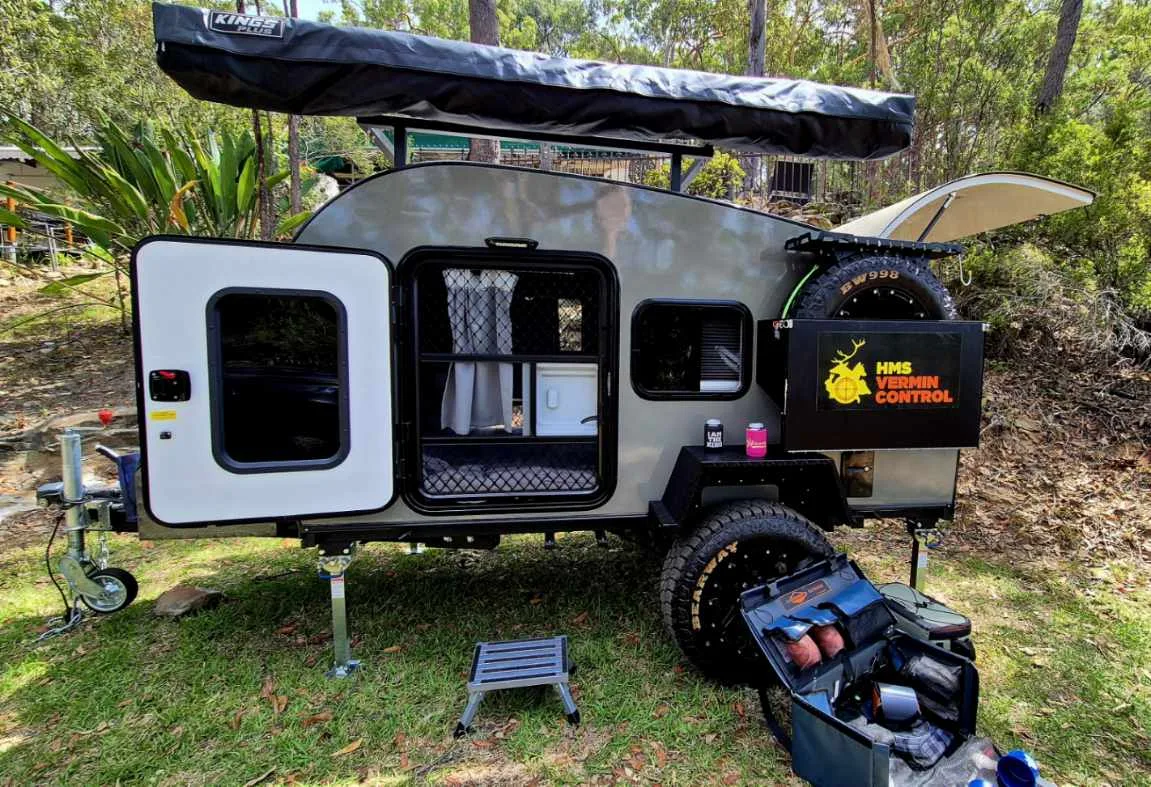
Adelaide sits within striking distance of some of the most varied camping terrain in Australia. Within three and a half hours you can be parked above a Fleurieu Peninsula clifftop, beside a Coorong lagoon teeming with pelicans, in a Yorke Peninsula surf camp or beneath the old pine canopy of the northern Mount Lofty Ranges. The challenge for camper-trailer owners is not finding a destination — it is knowing which access roads suit a towed rig, which campgrounds have sites level and firm enough to set up without excavation, and which sites book out months before long weekends.
This guide lists 16 trailer-suitable campgrounds across three drive-time zones from Adelaide CBD, with 2026 SA National Parks and Wildlife Service (DEW) fees, ForestrySA fees, access conditions, and practical towing notes. If you are planning a longer SA trip beyond the Adelaide radius, the full South Australia camping guide covers 18 campgrounds across all six regions of the state.
Checked 6 September 2026. SA parks fees and road conditions change. Verify current fees at parks.sa.gov.au before departure. ForestrySA campgrounds (Kuitpo, Rocky Paddock) are booked separately at forestrysa.com.au. Check live park alerts before any trip into the Adelaide Hills or Fleurieu Peninsula after heavy rainfall.
Adelaide Camper-Trailer Camping at a Glance
Drive times are approximate off-peak from Adelaide CBD. Friday-afternoon departures add 30–50 minutes to the Southern Expressway corridor.
| # | Campground | Drive / km | 2WD / 4WD | 2026 Base Fee | Best For |
|---|---|---|---|---|---|
| 1 | Para Wirra Conservation Park | 45 min / 70 km N | 2WD sealed + gravel | $27.50–$44.40/site | Family escape, north Adelaide |
| 2 | Kuitpo Forest — Chookarloo | 50 min / 55 km S | 2WD gravel | ~$20/vehicle | Bush camp, Heysen Trail base |
| 3 | Onkaparinga River NP — Pink Gum | 50 min / 45 km S | 2WD; gravel + seasonal creek | $27.50+/site | Quiet creek, birdwatching |
| 4 | Belair NP Holiday Park | 20 min / 15 km S | 2WD sealed | ~$65–$95/site (powered) | Convenience; city-edge powered sites |
| 5 | Deep Creek NP — Stringybark | 1h 30 min / 100 km S | 2WD sealed + gravel | $27.50+/site | Best trailer option on the Fleurieu |
| 6 | Deep Creek NP — Cobbler Hill | 1h 40 min / 108 km S | 4WD or high-clearance | $27.50+/site | Elevated views, Backstairs Passage |
| 7 | Deep Creek NP — Tapanappa | 1h 35 min / 104 km S | High-clearance | $27.50+/site | Tents only; trailers → Stringybark |
| 8 | Waitpinga — Newland Head CP | 1h 35 min / 90 km S | 2WD sealed + gravel | from $24/vehicle | Victor Harbor base, surf beaches |
| 9 | Rocky Paddock — Mount Crawford | 1h / 70 km NE | 2WD gravel | $20.30/vehicle | Closed 2026 season — plan 2027 |
| 10 | Coorong NP — Parnka Point | 2h / 175 km SE | 2WD sealed | $19.80–$27.80/site | Pelican spotting, lagoon sunsets |
| 11 | Coorong NP — 42 Mile Crossing | 2h 30 min / 200 km SE | 2WD (last km sandy) | $19.80+/site | Wilderness lagoon, Ramsar wetland |
| 12 | Innes NP — Stenhouse Bay | 3h / 240 km W | 2WD sealed | $26.60–$39.80/site | Main Yorke Peninsula base, 25 sites |
| 13 | Innes NP — Cable Bay | 3h / 242 km W | 2WD sealed | $27.50+/site | Sea views, snorkelling, 9 sites |
| 14 | Innes NP — Pondalowie Bay | 3h 20 min / 248 km W | 2WD sealed gravel | $27.50+/site | Surf beach, salmon fishing |
| 15 | Little Dip Conservation Park | 3h 10 min / 285 km SE | 2WD + soft-sand entry | $19.80–$27.80/site | Southern Ocean coast, sand dunes |
| 16 | Murray River NP — Ral Ral Creek | 3h / 270 km E | 2WD mostly sealed | $19.80+/site | River flat, red gums, pelicans |
What Camping Near Adelaide Costs in 2026
South Australia’s national park and conservation park campgrounds are managed by DEW and booked via parks.sa.gov.au up to 12 months in advance — the longest booking window of any Australian state. Fees are charged per site per night, not per person, which makes them competitive for a couple in a teardrop sharing one site.
| Facility level | Description | 2026 fee (per site/night) |
|---|---|---|
| Basic / Remote | Drop toilets or no facilities | $11.90–$19.90 |
| Standard | Pit or vault toilets, limited water | $19.80–$27.80 |
| Upgraded Standard | Flush toilets, hot showers, BBQs | $27.80–$44.40 |
| ForestrySA (per vehicle) | Mount Crawford / Kuitpo; first-come or online | ~$20–$21/vehicle |
| Newland Head CP (per vehicle) | Basic — per vehicle, not per site | from $24/vehicle |
The vehicle entry fee is waived at most DEW campgrounds — it is included in the camping fee, unlike Western Australia’s separate vehicle entry charge. Flinders Chase National Park (Kangaroo Island) is the main exception.
Popular campgrounds within 90 minutes of Adelaide — particularly Stringybark at Deep Creek and Para Wirra — can book out for long-weekend Friday and Saturday nights within days of the booking window opening. Check parks.sa.gov.au on the same day each month for the next block of availability.
Under 1 Hour from Adelaide (15–75 km Radius)
1. Para Wirra Conservation Park — Gawler Range
70 km north, ~45 min via Gawler.
Para Wirra is the pick for families making their first camper-trailer escape north of Adelaide. The park sits in the northern Mount Lofty Ranges — open eucalypt woodland with kangaroos visible at most times of day. Campsite options range from basic unpowered gravel pads to powered sites with a grassy aspect; the main campground has flush toilets, hot showers and a playground. It suits small trailers right up to the Breath Max — compacted access roads and level pads mean no drama reversing in.
Fees sit in the upgraded-standard tier: $27.50–$44.40 per site per night. The powered sites are at the upper end; unpowered sites cluster at the lower end of that range. Book via parks.sa.gov.au; the park is open year-round.
Tow note: Sealed road from Gawler to the park gate, then compact gravel inside. 2WD is fine in dry conditions. Avoid the park road after heavy rain — the gravel softens quickly.
2. Kuitpo Forest — Chookarloo Campground
55 km south, ~50 min via McLaren Vale and Meadows.
Chookarloo is ForestrySA’s Kuitpo Forest campground — a quiet pine-and-gum bush camp in the southern Adelaide Hills above McLaren Vale. It is less visited than Para Wirra because it is genuinely harder to find: no highway signage, narrow forest roads, and no facilities beyond drop toilets and a picnic table. What you get in return is space, silence, and the Heysen Trail running through the trees. Camper trailers fit on the compacted sites; larger caravans may find turning circles tight.
Fee is approximately $20–$21 per vehicle per night (ForestrySA per-vehicle pricing, reviewed annually). Open 1 April to 30 November only — do not arrive outside this window. Book at forestrysa.com.au.
Tow note: Narrow gravel forest roads — manageable for trailers up to 6 m ATM but not suitable for wide-body vans. Test the entry road on a weekday before committing a long-weekend booking.
3. Onkaparinga River National Park — Pink Gum Campground
45 km south, ~50 min via Kangarilla Road.
Pink Gum is one of the best-kept secrets within an hour of Adelaide. The campground sits in the eastern end of Onkaparinga River NP — a gorge park more associated with the McLaren Vale wine region than camping. The creek flats hold good birdwatching: echidnas, ringtails, superb blue wrens and the occasional short-beaked echidna are all common. Sites are basic (drop toilets only), flat and open, suited to camper trailers. No powered sites.
Fee is from $27.50 per site per night, book via parks.sa.gov.au. The park itself sees few weekend campers — a useful contrast to the busier Fleurieu campgrounds 40 minutes further south.
Tow note: Gravel access road from the park gate. Check DEW park alerts for seasonal creek-crossing conditions — the crossing into Pink Gum can be impassable after heavy rainfall.
4. Belair National Park Holiday Park
15 km south, ~20 min via Main South Road.
No overnight camping is permitted inside Belair National Park itself, but the adjacent Belair NP Holiday Park is the closest powered camping option to Adelaide CBD. It functions as a conventional holiday park — powered gravel sites, camp kitchen, toilets and showers — rather than a bush camping experience. The convenience factor is its selling point: you can be set up and cooking dinner with the awning out in under an hour from the city, with Belair’s walking trails right at the gate.
Powered site fees run approximately $65–$95 per night for two adults (check directly with the park, as private operator pricing applies). Pitch it as a shakedown night for the trailer before a longer trip — it is the easiest way to catch a forgotten item before you are 200 km from a hardware store. See the pre-trip checklist for what to run through before any departure.
1 to 2 Hours from Adelaide (75–160 km Radius)
5–8. Deep Creek National Park — Four Campgrounds
100–108 km south, ~1h 30–1h 40 min via Cape Jervis Road.
Deep Creek is the wild heart of the Fleurieu Peninsula — 50 km of clifftop coastline, dense eucalypt scrub, steep gullies and views across Backstairs Passage to Kangaroo Island. A large bushfire in February 2026 burnt more than 4,500 hectares of the park, but all four drive-in campgrounds have since reopened. The regrowth is already visible; wildlife sightings — particularly koalas — are reportedly above pre-fire levels as animals concentrate in unburnt pockets.
Fees start at $27.50 per site per night and include vehicle entry. Book via parks.sa.gov.au.
| Campground | Sites | Camper-trailer suitability | Facilities |
|---|---|---|---|
| Stringybark | 16 | Excellent — compacted gravel, 2WD access | Hot showers, flush toilets, BBQs, picnic tables |
| Cobbler Hill | 8 | Good — 4WD or high-clearance access | Drop toilets; elevated Backstairs Passage view |
| Trig | 6 | Limited — 4WD; tight entry | Drop toilets; small sites, sunset views |
| Tapanappa | 17 | Tents only — steep entry | Drop toilets; koalas likely above; not for trailers |
Stringybark is the unambiguous camper-trailer pick in this park: compacted gravel pads, a 2WD access road from the main Cape Jervis Road, and proper shower facilities. If you want Cobbler Hill’s dramatically elevated views across to KI, verify the road condition via DEW’s live park alerts before attempting it with a trailer — the access track is rough and the turnaround at the site is tight.
Tow note: Sealed highway to the park entry; compact gravel beyond the gate. Check DEW alerts after rain — the internal roads in Deep Creek deteriorate quickly after significant rainfall events.
9. Waitpinga Campground — Newland Head Conservation Park
90 km south, ~1h 35 min via Victor Harbor.
Newland Head Conservation Park covers the southernmost tip of the Fleurieu Peninsula — a windswept coastal strip with Waitpinga Beach, Parsons Beach and Waitpinga Beach on three sides. Both Waitpinga and the smaller Newland Head campground sit within walking distance of long, exposed surf beaches that see very few visitors midweek. Spring visits (August–October) bring southern right whales through the bay.
Fee is from $24 per vehicle per night — this is one of the few SA conservation parks that still charges per vehicle rather than per site, so it represents good value for a couple. Book via parks.sa.gov.au. Facilities are basic: pit toilets, no powered sites, no dump point. The Breath Ultra’s external shower is welcome here after a morning bodysurge through the waves.
Tow note: Sealed to Victor Harbor, then gravel access road into the park. 2WD is suitable in dry conditions. The final approach track is narrow in one section; wider trailers should approach carefully.
10. Rocky Paddock — Mount Crawford Forest (ForestrySA)
70 km north-east, ~1h via Williamstown and Barossa Valley Road.
Rocky Paddock is normally the pick of the ForestrySA campgrounds near Adelaide — old pine plantation, granite outcrops, creek flats and bush-style sites that accommodate camper trailers. The campground has been recognised in multiple outdoor publications as one of the best bush camping experiences within an hour of an Australian capital city.
Important: Rocky Paddock is closed for the remainder of the 2026 camping season. ForestrySA confirms the closure is in place; no re-opening date within the 2026 season (April–November) has been announced. The campground is expected to operate normally from the 2027 season (April 2027 onwards). The fee when open is $20.30 per vehicle per night.
Include Rocky Paddock in your forward-planning list for 2027. In the meantime, Kuitpo/Chookarloo (Zone 1) fills a similar role in the southern hills corridor.
2 to 3.5 Hours from Adelaide (160–290 km Radius)
11 & 12. Coorong National Park — Parnka Point & 42 Mile Crossing
175–200 km south-east, ~2h–2h 30 min via Princes Highway and Meningie.
The Coorong is a 145 km saltwater lagoon separated from the Southern Ocean by the Younghusband Peninsula — one of Australia’s most significant Ramsar wetland systems and the setting for the film Storm Boy. Tens of thousands of waterbirds use the lagoon seasonally; pelicans, spoonbills, stints and terns are all year-round. The campgrounds are flat, open and wind-exposed — plan for gusts and stake the awning anchor points properly.
Parnka Point (Pelican campground): 8 allocated sites on the lagoon shore, ~2h from Adelaide. Compacted gravel, drop toilets, basic but perfectly positioned for early-morning pelican watching and sunset over the water. Fee: $19.80–$27.80/site/night.
42 Mile Crossing: The more remote of the two main drive-in campgrounds, ~2h 30 min via a sealed highway with a short sandy access track at the end. Flat sites between the lagoon and the dunes; no facilities beyond the barest minimum. Fee: from $19.80/site/night. Worth noting: this campground was covered in the full South Australia camping guide — see that article for the comprehensive lagoon-bird guide.
Both campgrounds book via parks.sa.gov.au; the 12-month window means the best autumn-winter sites (ideal pelican nesting season) fill quickly. Self-contained rigs are preferred here — there are no dump points at the Coorong campgrounds, and the nearest service is at Meningie township.
13–15. Dhilba Guuranda-Innes National Park — Three Campgrounds
240–248 km west, ~3h–3h 20 min via Port Wakefield and Yorke Peninsula Way.
Innes National Park sits at the southern tip of the Yorke Peninsula — shipwreck coast, limestone cliffs, mallee scrub and some of the best salmon and snapper fishing in South Australia. The drive from Adelaide across the broad, flat peninsula is one of the more underrated coastal road trips in the state — wheat and barley farms give way to blue-green coastline with minimal drama.
There are eight campgrounds in the park; three are the standout choices for camper trailers:
| Campground | Sites | Access | Best For |
|---|---|---|---|
| Stenhouse Bay | 25 | 2WD sealed; large sites | All setups; main park base, largest campground |
| Cable Bay | 9 | 2WD sealed | Sea views, snorkelling; smaller but scenic |
| Pondalowie Bay (caravans) | ~12 | 2WD sealed gravel | Beach access, surf fishing; two campgrounds here |
Fee is $26.60–$39.80 per site per night across all Innes campgrounds; exact fee depends on site allocation and facilities. Book via parks.sa.gov.au — Stenhouse Bay in particular fills for long weekends by Thursday morning once the window opens.
Innes is worth the 3-hour drive for a two-night stay, especially in the October–April window. The road to the park is fully sealed, and Stenhouse Bay’s 25 large compacted-gravel sites handle even the Breath Max without difficulty. Marion Bay township (5 km from the park gate) has a servo and a pub — the last fuel stop before entering the park.
Tow note: Fully sealed to Stenhouse Bay and Cable Bay. The Pondalowie track beyond the campground turnoff involves short stretches of rough gravel — suitable for all models when dry, check DEW alerts after rain.
16. Little Dip Conservation Park — Near Robe
285 km south-east, ~3h 10 min via Keith and Millicent.
Little Dip is a slender coastal strip of dunes and limestone heath south of Robe — not well-known beyond SA’s committed camping community but genuinely beautiful. The dune system is one of the largest on the SA coast; walking from camp to the ocean beach through mobile dunes at sunrise is a proper experience. Camper trailers access the main campground on compacted tracks; soft sand areas further into the park require airing down.
Fee: $19.80–$27.80 per site per night (standard tier), book via parks.sa.gov.au. Robe township is 5 km away with full services — the town has some of the best fish and chips in regional SA, a good reason to combine Little Dip with a Robe dinner.
Tow note: Sealed to Robe, then sealed road to the park entry. Last 1–2 km to campground is gravel; manageable for all Breath Trailer models with care. Air down for any dune exploration tracks.
Adelaide Friday-Afternoon Escape Warning
Adelaide’s Southern Expressway — the main artery south to the Fleurieu Peninsula — runs express southbound only between Darlington and Sellicks Hill on Friday afternoons and all day on public holidays. Northbound lanes run on the same physical road surface during this time, which means northbound traffic (if you need to return north first for a passenger) travels on what feels like a one-way road. Plan south-bound departure before 3:00 pm on Friday to avoid the predictable jam at the Darlington interchange (the expressway entry point south of the city). The Gawler corridor (north, for Para Wirra) has no equivalent bottleneck — it is generally clear by mid-afternoon.
Self-Containment Rules Near Adelaide
South Australia’s rules for free or low-cost bush camping vary by land manager:
| Land type | Self-contained requirement | Notes |
|---|---|---|
| DEW national parks / conservation parks | Not legislated for camping | Dump points available at select campgrounds; grey water should be managed responsibly |
| ForestrySA (Kuitpo, Rocky Paddock) | Not legislated | Bucket or sealed grey water tank expected by convention |
| Crown land (SA) | Per local council rules | Many councils require a permit; some allow 14-night stays; consult the relevant council |
| Yorke Peninsula (free camps) | Self-containment often signposted as preferred | Varies by site; many council-managed free camps have toilets available |
If you are planning to free-camp off DEW parks — on crown land, council reserves, or rest areas — a self-contained setup with a sealed grey water tank becomes important. The self-contained camper guide covers what self-containment actually means legally and practically in an Australian context. The Breath Max is the only model in the Breath range with a full interior bathroom and sealed grey water tank — making it eligible for free camping in states where self-containment certification is required.
Seasonal Guide: Best Times Near Adelaide
| Season | Conditions | Best Zone | Watch For |
|---|---|---|---|
| Spring (Sep–Nov) | Wildflowers, whale watching, mild | All zones; Fleurieu best | Southern right whales at Waitpinga / Encounter Bay |
| Summer (Dec–Feb) | Heat 35–45°C, fire danger very high | Coorong early morning; Innes sea breeze | Total fire bans common; parks may close on Catastrophic days |
| Autumn (Mar–May) | Best all-round; mild, dry, uncrowded | All zones equally | Best fishing at Innes NP (salmon run); Easter long weekend crowds |
| Winter (Jun–Aug) | Cold, wet; Fleurieu gets heavy rain | Coorong (wading birds peak) | Mount Crawford and Kuitpo closed Apr–Nov season; track closures post-rain |
ForestrySA campgrounds (Chookarloo, Rocky Paddock) are closed outside the 1 April – 30 November window every year. DEW parks are open year-round but access roads can close temporarily after significant rainfall.
Which Breath Trailer Model Suits Each Zone?
| Breath Trailer model | Tare | Best near-Adelaide zone | Notes |
|---|---|---|---|
| Essential | 700 kg | Zone 1 (Para Wirra, Onkaparinga, Belair) | Lightweight, suits any tow vehicle; no shower/toilet |
| Plus | 800 kg | Zone 1–2 (Deep Creek Stringybark, Waitpinga) | Fridge included; still 2WD-towable with most SUVs |
| Ultra | 900 kg | Zone 1–3 (all zones, incl. Coorong, Innes) | External shower suits Fleurieu/Yorke Peninsula beach trips |
| Max | 1,200 kg | Zone 1–3 (all zones, free camping on crown land) | Interior bathroom + sealed grey water = fully self-contained; ideal for extended Coorong or Innes trips |
The Ultra’s external shower earns its keep at Deep Creek after dusty access tracks and salt-crusted beach walks at Innes. The Max’s interior bathroom is the key advantage for free camping on SA crown land or council reserves — if you are driving 3 hours to Little Dip or Murray River NP, the extra comfort of onboard water systems over a 4-night stay offsets the extra tow weight on the freeway. Compare models on the comparison page.
A lightweight trailer like the Essential or Plus is worth pairing with a pre-trip towing refresher if you haven’t driven the Southern Expressway with a trailer in peak-hour conditions before. The expressway changes to narrow south-of-city conditions quickly, and knowing your trailer’s weight and handling characteristics before you depart makes a real difference.
5 Mistakes Camper-Trailer Owners Make Near Adelaide
- Booking Tapanappa at Deep Creek with a trailer. Tapanappa is tents only. Stringybark is the camper-trailer campground. Confirm which site you have booked before you leave.
- Arriving at Kuitpo/Chookarloo outside the April–November window. The gate is locked; there is no alternative camping. Rocky Paddock is closed for the 2026 season entirely. Call ForestrySA before you leave if in doubt.
- Ignoring the 12-month booking window at SA parks. The best Innes NP and Deep Creek sites book out within 48 hours of the window opening for long-weekend and school-holiday dates. Set a calendar reminder for the exact date, 12 months ahead.
- Leaving Adelaide after 3 pm on a long-weekend Friday. The Southern Expressway backs up to the city boundary. An hour’s delay on the expressway means an hour of less daylight to set up at Deep Creek.
- Not checking DEW park alerts before the Fleurieu. Deep Creek’s internal access roads close after significant rain — sometimes for days. The February 2026 bushfire also caused temporary trail closures that reopened on different schedules for different sections.
FAQ
Do I need a high-clearance vehicle to reach most campgrounds near Adelaide? No. Para Wirra, Onkaparinga River NP, Kuitpo Forest, Belair Holiday Park, Deep Creek Stringybark, Waitpinga, Coorong Parnka Point, and all Innes NP campgrounds listed here are accessible in a standard 2WD tow vehicle. High-clearance is needed only for Deep Creek’s Cobbler Hill and Trig campgrounds, and for exploring soft-sand tracks at Little Dip.
How far in advance should I book SA national park campgrounds near Adelaide? For long-weekend dates (including the Adelaide Cup and SA school holidays), book on the day the 12-month booking window opens. For mid-week off-peak stays, two to four weeks ahead is usually sufficient. The parks.sa.gov.au website confirms the exact booking window for each campground.
Is there a camp dump point near the Fleurieu campgrounds? Deep Creek Stringybark does not have an on-site dump point. The nearest dump point is in Victor Harbor (18 km from the park gate). Waitpinga/Newland Head similarly has no dump point. For self-contained grey water management, plan to carry a portable solution or use a dump station at Victor Harbor or Yankalilla before or after your visit.
What are the self-containment rules for free camping near Adelaide on crown land? South Australian crown land camping is managed by individual councils and land management bodies. There is no state-wide permit system. Many councils in the Fleurieu and Yorke Peninsula require a permit application; others allow free 14-night stays at designated spots. Consult the relevant council before assuming a site is available. The self-contained camper guide covers the practical requirements.
Can I take a camper trailer to Kangaroo Island? Yes. The SeaLink ferry from Cape Jervis (1h 20 min from Adelaide) takes trailers; book the ferry and trailer space separately at sealink.com.au. Trailer dimensions affect the ferry rate tier — confirm your trailer’s length before booking. Campgrounds on Kangaroo Island (Flinders Chase, American River, Vivonne Bay) are booked via parks.sa.gov.au as normal. See the full South Australia guide for Kangaroo Island campground detail.
Which Breath Trailer model is best for a weekend trip near Adelaide? For Zone 1 and Zone 2, the Essential and Plus handle every listed campground comfortably. If you are making the 3-hour drive to Innes NP or Coorong and want an external shower at the end of a beach day, the Ultra adds useful comfort. For extended stays (4+ nights) or free camping on crown land, the Max’s interior bathroom and sealed grey water system remove the reliance on camp facilities entirely. Explore the model comparison or book a viewing at the Sydney showroom or with one of our state ambassadors.
Recommended Reading
- Best Camping Spots in South Australia — 18 campgrounds across all six regions, from the Eyre Peninsula to the Flinders Ranges
- Best Camping Spots Near Melbourne — sister article for Victoria’s capital; similar drive-time zone format
- Best Camping Spots Near Perth — 16 campgrounds near Perth including Lane Poole Reserve
- Self-Contained Camper Australia — what self-containment means, why it matters for SA crown land camping
- Camper Trailer Towing Guide — hitching, weight distribution, state speed limits and Southern Expressway-specific tips