How Long Can You Stay Off-Grid Camping in Australia? (2026 Guide)
Water tanks, battery capacity, solar, grey water, food storage: the honest per-factor maths that determines how many days off-grid your camper trailer can actually deliver.
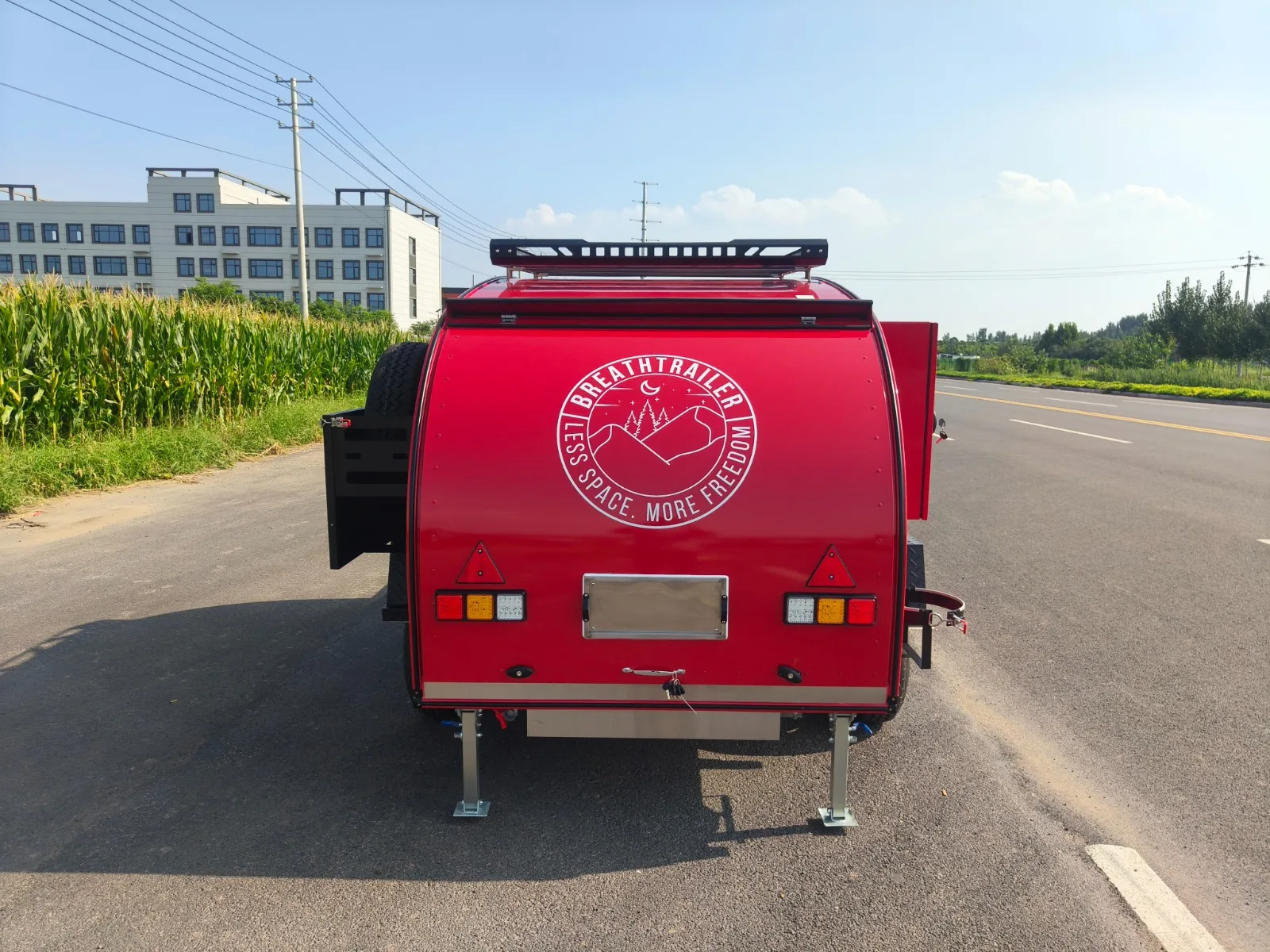
Most camper trailer buyers think about off-grid capability in vague terms: “will I be able to stay a few nights without power?” The honest answer is more specific — and more useful — than that. The number of days you can stay off-grid is not set by a marketing bullet point. It is set by four hard limits: how much clean water you’re carrying, how long your battery lasts without solar input, how much food fits in your fridge, and how you manage grey water and waste.
Each limit operates independently. Your power system might handle two weeks. Your water tank might handle five days. Your grey water tank fills up at the same rate your fresh water empties. The factor that runs out first is the real answer.
This guide does the maths factor by factor, then gives you a per-model summary table for the four Breath Trailer models, so you know exactly what to expect before you head bush in 2026.
The Four Limits That Decide Your Off-Grid Duration
Before getting into numbers, it helps to be clear about what “off-grid” actually means in the Australian context. Off-grid camping means no powered site, no mains water connection, no dump point access, and no external power. You are running entirely on what you carry.
Four factors determine how long that is sustainable:
- Water — clean drinking, cooking, washing, and personal hygiene water
- Power — battery capacity and solar input to run your fridge, lighting, and devices
- Food — fridge capacity and meal planning to avoid a resupply run
- Waste — grey water containment and toilet facilities for CMCA self-containment and free camping access
Run any of the four to zero and your trip ends — or you drive to the nearest town. Here is how each one works out in practice.
Factor 1: Water — Your Most Critical Resource
Of all four limits, water is the one Australians most consistently underestimate. In cooler south-east conditions you can survive on less. In the NT in October, you cannot.
How Much Water Does a Camping Couple Use Per Day?
The benchmark figure for off-grid camping in Australia is 7–10 litres per person per day for drinking and cooking alone. Add personal hygiene, dishwashing, and basic camp cleaning and the real-world figure for a couple is closer to 14–20 litres per day in moderate conditions.
| Activity | Litres per person per day |
|---|---|
| Drinking (resting) | 2.0–3.0 L |
| Drinking (active / hot weather) | 3.5–5.0 L |
| Cooking and boiling | 1.0–1.5 L |
| Dishwashing (conserved) | 1.5–2.0 L |
| Face washing and teeth | 0.5–1.0 L |
| Outdoor (naval) shower every 2 days | 2.5–5.0 L per shower |
| Interior shower daily | 5.0–10.0 L per shower |
| Total couple (frugal, outdoor shower) | 14–18 L/day |
| Total couple (interior shower daily) | 24–35 L/day |
That table explains why a 80-litre tank gives very different results depending on whether you have an outdoor cold rinse or a proper hot interior shower.
How Long Does Each Breath Trailer Model’s Tank Last?
| Model | Clean tank | Grey water tank | Days (couple, frugal) | Days (couple, interior shower) |
|---|---|---|---|---|
| Breath Essential | 80 L | None | 4–5 days | — |
| Breath Plus | 80 L | None | 4–5 days | — |
| Breath Ultra | 80 L | 80 L | 4–5 days | — |
| Breath Max | 80 L | 80 L | 3–4 days | 2–3 days (shower) |
The Breath Essential and Plus have a single 80L clean water tank with no grey water containment. The Breath Ultra adds a second 80L tank for grey water collection and includes an external cold-water shower. The Breath Max also carries 2 × 80L (clean + grey) but its interior shower and toilet naturally consume more water per use, which reduces clean water days slightly.
Practical water tip: use a 2L/minute regulated showerhead instead of a full-flow garden hose fitting. The difference between a 10L naval shower and a 4L navy shower is meaningful when you are on a 80L tank. Many experienced off-grid campers get a couple down to 12–14L/day by swapping the tap aerator and rinsing dishes in a small basin rather than running water.
Factor 2: Power — Battery and Solar
Your power system is the factor that separates a modern off-grid camper from a tent. Get the sizing right and power is essentially unlimited in sunny Australian conditions. Get it wrong and you are rationing phone charging by day two.
Daily Power Consumption: A Realistic Budget
| Appliance | Daily consumption (Wh) | Notes |
|---|---|---|
| 40L 12V compressor fridge | 300–380 Wh | Depends on ambient temp; 35°C = higher end |
| 60L 12V compressor fridge | 380–480 Wh | As above |
| LED lighting (interior + exterior) | 20–40 Wh | 4–6 hours at 5–8W |
| Smartphone charging (2 phones) | 20–30 Wh | 10–15Wh each |
| Laptop via inverter | 60–100 Wh | 2 hours, 30–50W draw |
| Water pump (12V) | 10–20 Wh | Intermittent use |
| CPAP machine | 30–100 Wh | Without heated humidifier |
| Typical couple, full day | 400–650 Wh | Fridge + lights + 2 phones + occasional laptop |
How Long Does the Battery Last Without Solar Input?
| Battery | Usable capacity | Days at 400 Wh/day | Days at 600 Wh/day |
|---|---|---|---|
| Essential: 24Ah lithium | ~250 Wh (LiFePO4, 100% DoD) | 0.6 days | 0.4 days |
| Plus/Ultra/Max: 120Ah lithium | ~1,250 Wh | 3.1 days | 2.1 days |
The Breath Essential’s 24Ah battery is sized for short trips without solar. It will run LED lighting and USB charging for 1–2 nights without recharging — but not a fridge. The Essential is designed to be upgraded; the solar and battery upgrades are optional add-ons precisely for this reason. If you plan more than a single overnight stop without a powered site, adding solar to the Essential is the first priority.
The Plus, Ultra, and Max all carry a 120Ah lithium battery with a solar panel installed. Under typical Australian sunny-day conditions, a 200W panel running 5 peak sun hours delivers approximately 900–1,000 Wh per day — more than enough to cover a 400–650 Wh daily consumption and still top up the battery.
For a practical deep-dive on how to size solar for your actual usage pattern, see our camper trailer solar systems guide. For the full story on why lithium is now the standard — including BMS protection, cycle life, and real cost comparisons — see AGM vs lithium for camper trailers.
Cloudy Days: The Real Battery Test
The question is not “how much sun do I get in Kakadu in July?” It is “what happens after three consecutive cloudy days in the Victorian High Country in April?” With a 120Ah lithium bank and a daily draw of 500 Wh, you have approximately 2.5 days of reserve before hitting 0% state of charge. A DC-DC charger wired to your tow vehicle lets you recover 20–30% of that bank during a 2-hour drive to the next campsite — a useful backstop in cloudy weather.
Factor 3: Food — How Long Can Your Fridge Sustain You?
Once you have reliable solar power, your fridge can keep food fresh indefinitely. The real limit becomes fridge capacity and how efficiently you pack it.
12V Fridge Capacity and Trip Length
| Fridge size | Typical for | Couple meals sustainable | Notes |
|---|---|---|---|
| 40L | Essential (optional) | 5–7 days | Tight but manageable with planning |
| 60L (Ultra standard) | Ultra | 7–10 days | Comfortable for 2; 5 days if freezer zone used |
| Upright fridge (Max) | Max | 10–14+ days | Large capacity; better airflow and organisation |
A practical technique for extending fridge range is to pre-freeze meals at home before departure. Frozen meals act as ice packs inside the fridge, reduce the compressor’s work in the first 2–3 days, and give you a buffer of ready-to-heat dinners that bypass daily cooking fuel consumption. Pre-frozen individual meals in flat bags stack efficiently and are consumed later in the trip when other fresh produce has been used.
Fresh produce timeline guidance:
| Produce | Days in 12V fridge | Notes |
|---|---|---|
| Leafy greens and herbs | 3–4 days | Wrap in damp paper towel |
| Tomatoes, capsicum | 5–7 days | Keep slightly warm section of fridge |
| Carrots, onions, potatoes | 10–14 days | Onions/potatoes outside fridge |
| Eggs | 14–21 days | Do not refrigerate until opened |
| Vacuum-sealed meat | 5–7 days | Freeze if trip is longer |
| Frozen meals (pre-frozen) | 5–10 days | Use last; doubles as cold mass |
Non-perishable planning is the multiplier. Every can of tomatoes, every packet of rice, and every jar of pasta sauce you pack extends your off-grid range without touching the fridge. Experienced long-distance campers run a roughly 50/50 split: half fridge items, half shelf-stable pantry. That ratio can sustain a couple for 14+ days without a supermarket run.
Factor 4: Grey Water and Waste — The Limiting Factor Nobody Talks About
Power and food can be managed with planning and good equipment. Grey water and toilet facilities are where teardrop campers differ the most — and where the wrong choice cuts your off-grid range in half.
What Is Grey Water and Why Does It Matter?
Grey water is all wastewater that doesn’t come from a toilet: kitchen sink dishwater, drinking water overflow, and shower/rinse water. In Australia, an increasing number of free campsites and national parks require self-contained vehicles that contain all grey water on board until a proper dump point is reached. Releasing grey water on the ground — even biodegradable soap water — is prohibited at many sites and subject to fines.
For more detail on what self-containment means legally and which rules apply by state, see our self-contained camper Australia guide.
Grey Water Capacity by Breath Trailer Model
| Model | Grey water tank | Grey water days (couple, 14–18 L/day usage) |
|---|---|---|
| Breath Essential | None | Must use sites without containment requirements |
| Breath Plus | None | Must use sites without containment requirements |
| Breath Ultra | 80 L | 4–5 days before dump required |
| Breath Max | 80 L | 3–4 days (interior shower uses more) |
The Essential and Plus have no onboard grey water tank. This does not prevent free camping — many bush campsites outside national parks still allow responsible grey water dispersal at least 50 metres from water sources. But it does exclude you from the growing number of CMCA-recognised “self-contained only” sites and limits your access to popular NP camping areas with containment requirements.
If you own an Essential or Plus and want to expand access to self-contained sites, a portable grey water tank (typically 20–40L) connected to the sink drain outlet is a practical workaround. Several brands offer purpose-built portable units for under $100 that connect via a standard hose fitting.
Toilet: The Biggest Differentiator
| Model | Toilet | Implication |
|---|---|---|
| Essential | None | External camping toilet required |
| Plus | None | External camping toilet required |
| Ultra | None standard | External cassette toilet can be added |
| Max | Interior toilet | Fully self-contained; no midnight walks |
The Breath Max is the only Breath Trailer model with a built-in interior toilet and shower. This makes it the only model in the range that meets full CMCA self-containment criteria straight out of the gate — no additions, no workarounds. For extended stays at remote sites with containment requirements, or for Greg and Margaret who have decided the 2 a.m. walk to the amenities block is no longer part of the plan, the Max is the answer.
The Off-Grid Duration Table: Everything Combined
Here is the honest, per-factor summary. The number in bold is your real-world off-grid duration — the minimum across all four factors.
| Factor | Essential | Plus | Ultra | Max |
|---|---|---|---|---|
| Water (clean tank) | 4–5 days | 4–5 days | 4–5 days | 3–4 days |
| Power (with solar) | 1–2 nights (no solar standard) | Unlimited ☀️ | Unlimited ☀️ | Unlimited ☀️ |
| Food (fridge, couple) | 5–7 days (optional fridge) | 5–7 days | 7–10 days | 10–14+ days |
| Grey water | No tank | No tank | 4–5 days | 3–4 days |
| Toilet | External required | External required | External required | Interior ✅ |
| Real off-grid range | 1–2 nights (power limited) | 4–5 days (water limited) | 4–5 days (water/grey limited) | 3–4 days (grey limited) |
A few things to note from this table:
The Essential is power-limited, not water-limited. Adding the solar and 120Ah battery upgrade shifts its limiting factor to water — the same as the Plus.
The Plus and Ultra share the same limiting factor: the 80L clean water tank, which runs out in 4–5 days for a typical couple. The Ultra’s advantage is the grey water tank (no-grey-water-dispersal-required sites) and the external shower — not extra water days.
The Max’s interior shower actually reduces days compared to the Ultra, because a proper shower uses more water than an outdoor rinse. The trade-off is full CMCA self-containment and comfort — worth it for many users, particularly on extended trips where they are returning to a caravan park dump point every 3–4 days anyway.
How to Extend Your Off-Grid Stay
If 4–5 days feels short for your trip plans, here are the practical upgrades and habits that extend it.
Extend Water Days
- Add a secondary water tank: 40L jerry cans on the chassis or a purpose-built auxiliary poly tank can double your water range. Several Breath Trailer owners carry a 60L auxiliary container on the tow vehicle for remote legs.
- Water filter and source collection: a quality gravity filter (Sawyer, Lifestraw) or UV steriliser (SteriPen) lets you refill from creeks, rivers, and bore water at many remote campsites. This is how some couples achieve 14+ day off-grid stays without any resupply.
- Reduce shower frequency: switching from daily showers to every 2 days and using a 4L navy shower technique can extend an 80L tank from 4 days to 7 days for a couple.
Extend Power Days
- Add a second solar panel: a second 200W folding panel connected to the existing MPPT controller roughly doubles your solar harvest on cloudy days and charges faster in mornings when the permanent roof panel is still in shade.
- REDARC DC-DC charger: wired between the tow vehicle alternator and the trailer battery, a BCDC1225D recovers 20–30% battery state per 2-hour drive. A must-have for travel-heavy itineraries. Our solar systems guide covers MPPT and DC-DC integration in detail.
- Kill phantom loads: inverters draw 5–15W at idle even with nothing plugged in. Switch the inverter off at the source when not in use.
Extend Grey Water Days
- Minimise dishwashing water: a two-basin method (wash + rinse) using 3L total beats running the tap. Camp cooks who embrace this habit reduce grey water generation by 30–40%.
- Portable grey water tank (Essential/Plus users): a 20–40L portable unit extends access to self-contained sites and adds several grey water days without permanent modification.
- Dry camp cooking techniques: one-pot meals, wraps and flatbreads, and meals eaten from the cooking vessel reduce the dishes surface area and grey water generated per meal.
Which Model Should You Choose for Extended Off-Grid Trips?
If your goal is the maximum number of genuinely off-grid days with minimum town stops, here is the honest assessment:
Essential (from $19,990): Add the solar and 120Ah battery upgrade as a baseline requirement for any off-grid stay beyond one night. You will then be water-limited at 4–5 days, same as the Plus. Good choice if cost matters most and you can live with a portable grey water solution and external toilet.
Plus (from $25,740): The off-grid baseline. Solar, 120Ah lithium, and fridge are standard — you arrive at camp already set up. Water tank is the limiting factor; a 60L auxiliary tank or strong water discipline extends you to 7–8 days. No grey water containment limits site access.
Ultra (from $30,290): The most practical extended-stay choice. Same water and power as the Plus, but the grey water tank opens up self-contained sites, and the external shower keeps the clean water tank usage lower than the Max’s interior shower. If you are targeting national parks, CMCA-endorsed sites, and remote areas with containment requirements, the Ultra is the most versatile model for the money.
Max (from $39,000): Designed for comfort over maximum off-grid duration. The interior bathroom is the main differentiator — not extra days. Ideal for grey nomads, couples who won’t compromise on bathroom access, and anyone doing extended touring where they return to a caravan park every 3–4 days for water and dump. The Breath Max is the only teardrop on the Australian market under $50k with a full interior bathroom, making it unique in this price bracket.
For a full comparison of all four models by specs, weight, and price, see our model comparison page.
FAQ: How Long Can You Stay Off-Grid in Australia?
How long can a couple realistically stay off-grid in a camper trailer?
With a 80L water tank and disciplined usage (14–16 L/day), a couple can comfortably manage 5 days of clean water. With a solar-powered battery and a 12V fridge, power and food are not the limiting factors. The practical sweet spot for most camper trailers is 4–7 days before needing to find water, with grey water containment or toilets sometimes shortening this if sites have strict requirements.
Does a grey water tank actually make a difference?
Yes — significantly. Without a grey water tank, you are limited to campsites that permit open dispersal of grey water, which excludes many national parks, CMCA-endorsed free camps, and increasingly common “self-contained only” sites. With a grey water tank, you access a much broader range of remote camping locations including some of the best sites in the Kimberley, Flinders Ranges, and High Country.
How much water should I carry for a week off-grid?
For a couple targeting seven days off-grid, calculate 15 L/day × 7 days = 105 litres as a baseline. Add a 20% buffer for hot weather and you need 125 litres. An 80L tank plus a 60L auxiliary container gets you there. If you plan to filter and collect from natural sources, reduce the required carried volume significantly.
Can I stay off-grid indefinitely with solar?
Power-wise, yes. With a 200W solar panel, 120Ah lithium battery, and a sunny destination, your power system is essentially self-sustaining. But water, grey water capacity, and food logistics are all independent limits. Nobody has yet invented a solar-powered fresh water generator, which is why the water tank remains the most common reason people end an off-grid stay early.
What is the biggest mistake people make when planning an off-grid trip?
Planning power without planning water. Most buyers focus heavily on solar panels and lithium battery upgrades, arrive at camp confident in their power setup, and are surprised on day four that the water tank is nearly empty. Water is the first resource to plan — then power, then food, then waste management.
Does the Breath Trailer Max suit long off-grid trips?
The Max excels at extended touring with shorter off-grid legs (3–4 days) between caravan park stops for water top-up and grey water dumping. Its interior bathroom and full comfort features make those on-road nights far more enjoyable than any comparable trailer at the price. For pure off-grid duration without stops, the Ultra with a auxiliary water tank and portable grey water system can extend further per leg.
The Bottom Line
Off-grid duration is not a single number — it is the minimum of four independent limits. Most camper trailers in the $25,000–$40,000 range can comfortably deliver 4–7 days of genuine off-grid camping before needing water or a dump point. Power and food, with a correctly sized solar system, are not the constraint for most setups.
If you want to push beyond 7 days consistently, the answer is straightforward: a larger auxiliary water tank, a disciplined usage routine, and a source of filtered water from the landscape. The limiting factor is almost always the water tank, not the battery.
For a deeper look at how off-grid power systems work together — solar, battery, DC-DC chargers — see our ultimate off-grid camper trailer setup guide. If you are evaluating which Breath Trailer model suits your travel style, the how to go off-grid in a teardrop guide walks through the decision from a practical camping perspective.
Ready to find your off-grid baseline? Compare all four Breath Trailer models or book a custom tour with our Sydney team.
Recommended Reading
- The Ultimate Off-Grid Camper Trailer Setup Guide — water, power, fridge, gas, and waste systems in one place
- Understanding Camper Trailer Solar Systems (2026) — panel types, MPPT sizing, and DC-DC integration
- AGM vs Lithium Batteries for Camper Trailers — cost-per-cycle maths and who should still choose AGM
- Self-Contained Camper Australia: Rules by State — grey water regs, CMCA certification, and free camping access
- Off-Grid Teardrop Camper Australia Guide — teardrop-specific off-grid setup from solar to waste management