How to Keep Food Cold While Camping Off Grid in Australia (2026 Guide)
Keep food safe off-grid in Australian heat. Compressor fridge vs ice box, power draw tables, solar sizing, food safety rules, and a per-model guide for teardrop campers.
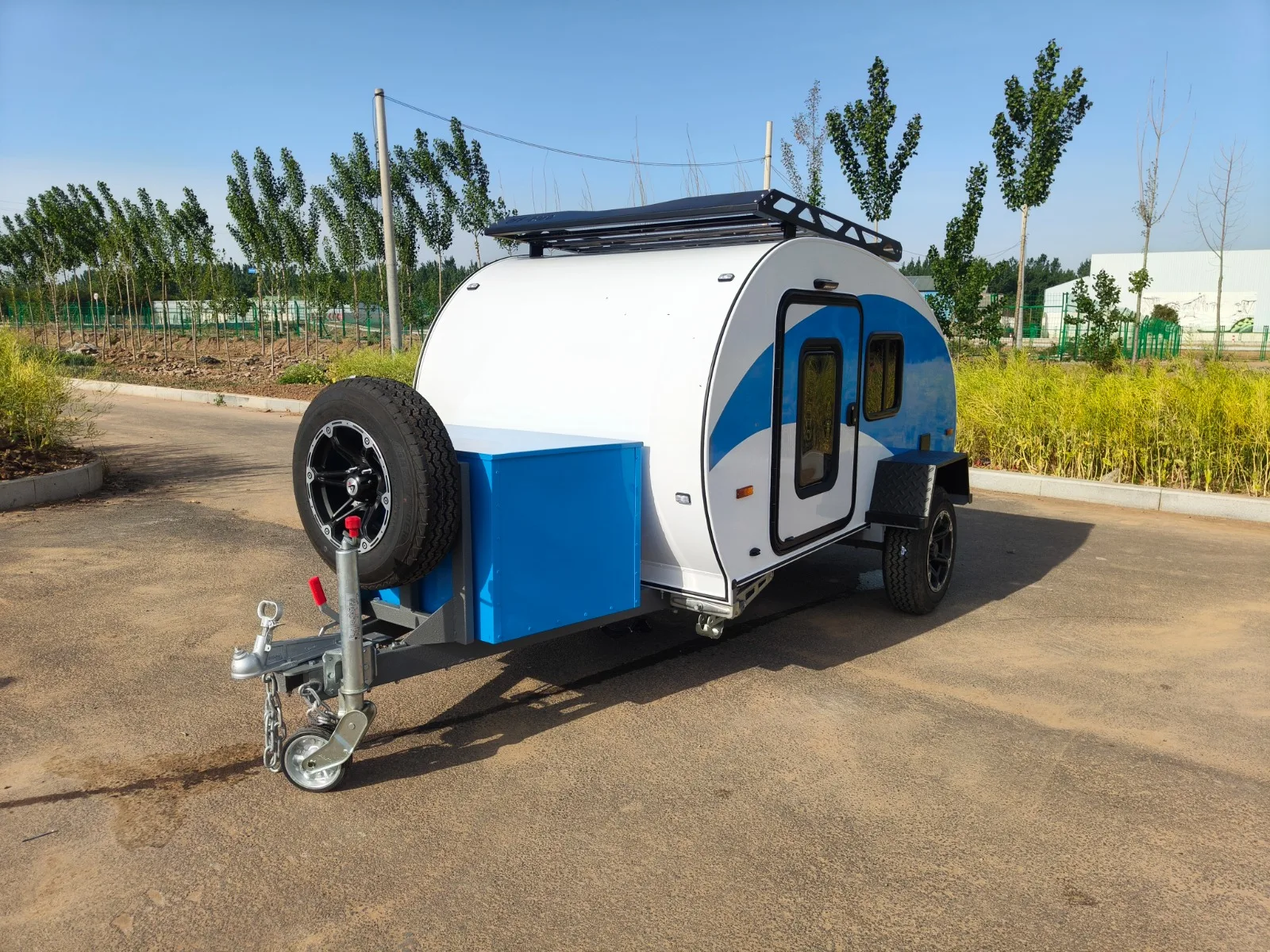
In a 40°C Australian summer, a bag of ice is gone in 36 hours. At remote free-camping spots — think Innamincka, the Kimberley gorges, or the NSW high country — there is no servo around the corner topping up your esky. If you’re doing any serious off-grid camping in Australia in 2026, food cold storage is the single system that separates a comfortable trip from a very expensive food-poisoning risk.
This guide covers everything: the real difference between ice boxes and 12V compressor fridges, how much power they actually draw, how to size your solar and battery to run one indefinitely, the FSANZ food-safety rules every camper should know, and which setup suits each Breath Trailer model.
Why Keeping Food Cold Off Grid Is Harder Than You Think
Australia’s climate is the key variable. Ambient temperatures that sit above 35°C for days at a stretch are routine across outback Queensland, the Northern Territory, and Western Australia. A good quality ice box (esky) pre-loaded with dry ice might hold temperature for 48–72 hours. Standard cubed ice, even in a premium hard-sided cooler, is often gone in under 24 hours in those conditions.
The FSANZ temperature danger zone for food safety runs from 5°C to 60°C. Inside that range, bacteria double roughly every 20 minutes. Meat and dairy sitting at 15°C for four hours is a food-safety incident, not just a nuisance. The FSANZ two-hour/four-hour rule — eat immediately after two hours at room temperature, discard after four — applies on a camping trip just as much as in a commercial kitchen.
For weekenders within an hour of a petrol station, a quality ice box remains a perfectly sensible option. For anyone doing three-plus nights of genuine free camping in Australia’s heat, the case for a 12V compressor fridge is essentially unanswerable.
The Two Options: Ice Box vs 12V Compressor Fridge
The choice comes down to four factors: trip length, remoteness, available power, and upfront budget.
| Factor | Premium Ice Box (e.g. Yeti, Pelican) | 12V Compressor Fridge (e.g. Dometic, Engel) |
|---|---|---|
| Upfront cost | $150–$700 | $600–$2,200 |
| Operating cost | $8–$15 per bag of ice | Near zero (solar powered) |
| Max hold time (40°C day) | 24–48 hrs | Indefinite |
| Temperature control | None (melts to ambient) | Precise (0–10°C fridge, -18°C freezer) |
| Food safety risk | High beyond 2 days | Very low |
| Power requirement | None | 20–60 Wh/hr |
| Weight | 5–12 kg empty | 12–22 kg |
| Best for | Day trips, weekend 1–2 nights | 3+ nights remote, full Big Lap |
Thermoelectric (Peltier) 12V coolers sit in a third category — they draw power but only cool to roughly 20°C below ambient temperature. At 40°C ambient they reach 20°C at best, which is still inside the danger zone. They are not suitable for perishables on a warm Australian day.
How a 12V Compressor Fridge Works
A 12V compressor fridge works exactly like your fridge at home: a refrigerant gas is compressed and expanded in a cycle, pulling heat out of the cabinet and pushing it into the ambient air through condenser coils. The compressor motor runs on 12V DC, which makes it directly compatible with your camper trailer’s auxiliary battery and solar system.
The critical advantage over an ice box is that the compressor cycles on and off — it draws power only when needed to maintain its set temperature. In moderate weather (25°C ambient), a quality 40L unit might cycle for 15–20 minutes per hour. In 40°C heat it cycles longer, but a modern efficient compressor still holds temperature without fail.
12V Fridge Power Consumption Table
| Fridge size | Ambient 25°C (Wh/day) | Ambient 35°C (Wh/day) | Ambient 40°C+ (Wh/day) |
|---|---|---|---|
| 35–40 L | 200–280 | 320–400 | 420–550 |
| 45–55 L | 280–380 | 400–520 | 500–680 |
| 60–80 L | 380–520 | 520–700 | 650–850 |
| Dual-zone 50+20 L | 350–480 | 480–620 | 580–750 |
Figures assume modern high-efficiency compressor, lid opened 4–6 times per day, food pre-cooled before loading. Actual draw varies by brand and insulation quality.
To translate Wh/day into amp-hours: divide by 12. A 400 Wh/day fridge draws approximately 33 Ah per day from your 12V battery bank.
How to Power Your Fridge Off Grid
Running a compressor fridge indefinitely off grid requires a combination of battery storage and a charging source. The complete guide to camper trailer power systems covers the full setup — here’s the fridge-specific version.
Battery sizing
Rule of thumb: your usable battery capacity should cover at least 1.5 days of fridge consumption without any recharge input (for overcast days, travel days, or night).
| Fridge size | Daily draw (35°C) | Recommended usable battery | LiFePO4 (100% usable) | AGM (50% usable) |
|---|---|---|---|---|
| 40L | ~350 Wh (~29 Ah) | 45 Ah usable | 50 Ah | 100 Ah |
| 55L | ~460 Wh (~38 Ah) | 60 Ah usable | 60 Ah | 120 Ah |
| 60L | ~600 Wh (~50 Ah) | 75 Ah usable | 75 Ah | 150 Ah |
LiFePO4 (lithium iron phosphate) batteries are the clear winner for this application — 100% usable depth of discharge, lighter weight (12–16 kg vs 28–35 kg for AGM), and they handle partial-state-of-charge cycling daily without degradation. A detailed comparison of AGM vs lithium for camper trailers covers the cost-per-cycle maths.
Solar sizing for the fridge
At a minimum, your solar panel output should exceed the fridge’s average daily draw to maintain battery state on sunny days. In Australia’s peak sun hours (3.5–5.5 hrs/day depending on region and season):
| Fridge draw (35°C) | Solar needed (4 hr peak sun) | Panel recommendation |
|---|---|---|
| ~350 Wh/day | ~88 W | 100W panel (minimum) |
| ~460 Wh/day | ~115 W | 160W panel |
| ~600 Wh/day | ~150 W | 200W panel |
A 200W panel paired with a 100Ah LiFePO4 battery is a practical sweet spot for most couples running a 55L fridge through an Australian summer. For full-timing or outback trips (fewer peak sun hours, higher ambient temps), 300–400W of solar provides a comfortable buffer.
For the full solar sizing methodology — including the 3-step formula, peak sun hours by city, and worked examples — read how much solar do you need for a camper trailer.
DC-DC charging on the road
Your solar doesn’t charge the battery while driving — your car alternator does. A DC-DC (battery-to-battery) charger like the REDARC BCDC1240D charges your auxiliary battery from the alternator safely, protecting the car’s start battery and complying with modern Euro 5/6 smart alternator vehicles. On a typical 3-hour drive day, a 40A DC-DC charger delivers roughly 120 Ah — enough to fully recharge a 100Ah LiFePO4 battery while keeping the fridge running continuously.
Best 12V Camping Fridges in Australia (2026 Price Comparison)
| Brand / Model | Capacity | Average draw (35°C) | Price (AUD, 2026) | Best for |
|---|---|---|---|---|
| Dometic CFX3 55 | 52 L | ~0.9 A/hr | ~$1,299 | Overall performance + WiFi app |
| Engel MT60FP | 56 L | ~0.6–0.8 A/hr | ~$1,099 | Reliability, long-term touring |
| Bushman DC130-X | 130 L | ~1.2–1.5 A/hr | ~$2,199 | Large families, full-timers |
| Evakool RFE60 | 60 L | ~1.0–1.4 A/hr | ~$799 | Value for money, families |
| KickAss 60L | 60 L | ~1.1–1.5 A/hr | ~$699 | Budget, weekend trippers |
| ARB Zero Dual-Zone 63L | 44+19 L | ~1.0–1.8 A/hr | ~$1,499 | Couples needing fridge + freezer |
Prices indicative as of mid-2026. Engel and Dometic are best supported through authorised AU dealers for warranty claims. KickAss and Evakool have strong direct-to-consumer and BCF distribution.
Engel’s Sawafuji swing motor compressor has a single moving part — responsible for 20–30 year service life stories in the Australian 4WD community. Dometic’s CFX3 wins on features (smart battery protection, phone app, fast pull-down). For a teardrop camper with a built-in fridge bay, Dometic and Engel are the two brands most commonly specified by Australian manufacturers.
What Size Fridge Do You Actually Need?
Sizing your fridge to actual usage means less power draw, less weight, and less wasted space.
| Party size / trip style | Recommended fridge size |
|---|---|
| Solo, weekends | 25–35 L |
| Solo, 1–2 week tours | 40 L |
| Couple, weekends | 35–45 L |
| Couple, extended touring / Big Lap | 50–60 L |
| Family of 4, weekends | 60–80 L |
| Family of 4, long trips | 80 L+ or dual-zone |
The 60/40 packing rule applies to fridges, not just tow ball loads: load your 40% most-frequently-accessed items on top or at the front. Every time you dig through the whole fridge to find something you increase temperature, increase cycle time, and shorten battery life.
A dual-zone fridge (separate fridge + freezer compartments) is worth the premium for trips longer than a week. Freezing meat at home and thawing day-by-day in the fridge zone is the most practical meal-planning system for extended off-grid travel.
FSANZ Food Safety Rules for Off-Grid Camping
The Food Standards Australia New Zealand (FSANZ) temperature danger zone — 5°C to 60°C — applies exactly the same in a remote campsite as it does at home.
The four rules that matter on a camping trip:
- Keep cold food at 5°C or below at all times. A fridge thermometer ($10 at Bunnings) is the single most useful food-safety tool you can carry.
- Two-hour/four-hour rule. Food held between 5°C and 60°C for less than 2 hours can be refrigerated. Between 2 and 4 hours, eat immediately. Over 4 hours, discard.
- Never re-freeze thawed meat without cooking it first. Thaw in the fridge zone, not in the sun or ambient air.
- Separate raw from ready-to-eat. Raw meat on the bottom in sealed containers; ready-to-eat on top.
For an esky or ice box, FSANZ recommends using a fridge thermometer to verify the box is actually achieving 5°C or below — most standard camping eskies do not hold below 10°C in Australian summer conditions after 24 hours unless heavily pre-chilled and filled with quality ice.
How to Pack a Fridge or Ice Box for Maximum Efficiency
Whether you’re using a compressor fridge or an ice box, the packing technique directly affects how long food stays cold and how much power (or ice) you consume.
Compressor fridge packing tips
- Pre-cool the fridge for 4–6 hours before loading food — loading warm food forces the compressor to run at full duty cycle for hours, draining your battery.
- Pre-cool food too. Load food from your house fridge, not the kitchen bench. Warm food is the enemy.
- Pack tightly. A full fridge retains temperature far better than a half-empty one. Use water bottles to fill gaps — they act as thermal ballast.
- Set temperature to 3–4°C. Below the danger zone without unnecessary overcooling (which wastes power).
- Keep the lid/door closed. Every opening lets warm air flood in. Grab multiple items in one opening.
- Ventilate the fridge’s condenser. Never operate in a fully enclosed space. Ensure 10–15 cm clearance around the back and sides.
Ice box tips (when a fridge isn’t available)
- Pre-chill the box with ice 24 hours before departure.
- Use block ice, not cubed. Block ice melts significantly slower.
- Dry ice (solid CO₂, available from gas suppliers in major cities) extends hold time to 3–5 days when layered over regular ice.
- Layer correctly: ice on the bottom, meat and dairy in sealed containers next, produce in the middle, frequently-accessed items on top.
- Keep the esky in the shade and off hot ground (use a wet towel or foam mat underneath).
- Do not drain water — the ice-cold water insulates remaining ice from warm air.
Which Breath Trailer Model Includes a Fridge?
Breath Trailer’s four Australian-made models differ significantly in their standard cold-storage setup:
| Model | Price (AUD) | Standard fridge | Fridge bay | External 12V points | Notes |
|---|---|---|---|---|---|
| Essential | $19,990 | No | Yes (35–40 L aftermarket) | Yes | Add your own 12V fridge |
| Plus | $25,740 | Yes (40 L compressor) | Built-in | Yes | Fridge included, runs off 120Ah AGM |
| Ultra | $30,290 | Yes (40–55 L compressor) | Built-in | Yes | 200W solar, MPPT, 120Ah LiFePO4 |
| Max | $39,000 | Yes (55 L compressor) | Built-in | Yes | 300W solar, 200Ah LiFePO4, full kitchen |
The Breath Plus is the entry point for a purpose-built, fridge-included touring setup. The Ultra and Max include lithium batteries and larger solar arrays that handle sustained fridge operation in Australian summer heat without compromise.
For the Essential, adding a quality 40L compressor fridge (from $699) and upgrading from the standard AGM to a 100Ah LiFePO4 battery ($650–950) gives you the same off-grid capability at a lower entry cost. A REDARC BCDC1240D DC-DC charger (~$350 fitted) completes the charging chain.
The Max warrants special mention: its 200Ah lithium bank and 300W solar array easily handle a 60L compressor fridge running continuously at 40°C ambient, leaving ample capacity for lighting, a CPAP, phone charging, and a 12V electric blanket. For couples doing a lap of Australia — the Greg & Margaret Big Lap scenario — the Max is the only teardrop on the Australian market under $50,000 with a full interior bathroom, queen bed, and a self-contained 2.1 m cabin: cold food and a hot shower, indefinitely, anywhere on the continent.
See the full model comparison to find the right setup for your trips.
Frequently Asked Questions
How long can a 12V compressor fridge run on solar off grid? Indefinitely, provided your solar panel wattage exceeds your fridge’s average daily energy draw. A 55L fridge drawing ~460 Wh/day at 35°C ambient, paired with a 200W panel producing ~800–1,000 Wh/day in Australian conditions, will run continuously even accounting for overnight draw from your battery. See our detailed off-grid duration guide for the full calculations.
Is a 40L fridge enough for a couple on a 2-week trip? It depends on your cooking style. A 40L fridge holds roughly 3–4 days of fresh food for two people at a time. With smart pre-trip planning (freeze meals, use shelf-stable proteins for days 3–4, restock at towns every 4–5 days), it is workable. For a full lap, 55–60L gives a much more comfortable margin.
Can I run a 12V fridge on a single 100W solar panel? In summer Australian conditions (4–5 peak sun hours/day), a 100W panel produces roughly 400–500 Wh/day — enough to run a 35–40L fridge at 25°C. In summer outback heat (ambient 38–42°C), the same fridge draws 420–550 Wh/day and the balance tips negative. For reliable year-round operation with a 40L+ fridge, 160–200W of solar is the practical minimum.
What temperature should I set my camping fridge to? The FSANZ food safety guideline is 5°C or below for all perishable foods. Setting your fridge to 3–4°C gives a safety buffer and keeps energy draw lower than going colder. Setting to 0°C risks freezing produce and uses meaningfully more power. For the freezer zone on a dual-zone fridge, -18°C is the standard safe freezing temperature.
What’s the difference between a 12V fridge and a thermoelectric coolbox? A compressor fridge uses a refrigerant cycle (like your house fridge) and can maintain any temperature down to -22°C regardless of ambient heat. A thermoelectric (Peltier) coolbox can only cool to approximately 20°C below ambient — meaning at 40°C it reaches 20°C at best, which is inside the food-safety danger zone. For off-grid Australian camping with perishables, only compressor fridges are suitable.
How do I keep food cold when I’m driving between camps? Your fridge continues to run off your car’s 12V system while driving — either through the trailer’s 7-pin flat plug or a direct DC cable to your auxiliary battery, kept charged by a DC-DC charger. There’s no interruption to cold storage during transit. See our guide to DC-DC chargers and battery charging for the wiring details.
Conclusion
Keeping food cold while camping off grid in Australia comes down to one decision: ice box for short, accessible trips; 12V compressor fridge for everything else. Once you’ve spent a night cooking properly refrigerated steak under the Milky Way at a free camp 200 km from the nearest town, the question of “is the fridge worth it?” answers itself.
The practical sweet spot for most Australian touring couples in 2026 is a 55L compressor fridge (Dometic CFX3 or Engel MT60FP), a 100Ah LiFePO4 battery, a 200W solar panel, and a REDARC BCDC1240D DC-DC charger. That system runs the fridge indefinitely at Australian summer temperatures with capacity to spare for lighting and device charging.
If you want that setup factory-fitted, pre-wired, and warranty-backed out of a Sydney workshop with a 3–4 month lead time, explore the Breath Trailer Plus, Ultra, and Max models — or book a no-obligation consultation to talk through which model suits your travel style.
Recommended Reading
- The Complete Guide to Camper Trailer Power Systems — every charging source, wiring, and fuse detail in one place
- How Long Can You Stay Off Grid Camping? — water, power, food, and grey water limits by Breath model
- Understanding DC-DC Chargers for Camper Trailers — why your car’s alternator isn’t enough without one
- How Much Solar Do You Need for a Camper Trailer? — sizing formula, worked examples, seasonal tables
- AGM vs Lithium Batteries for Camper Trailers — cost-per-cycle maths, who still needs AGM