JAG Camper Alternatives in Australia: Choose by Bathroom, Weight and Equipment
Shortlist Breath, Wotpods and Little Guy by the feature you need. Compare equipped packages, lighter bases and indoor bathrooms from $47,190 at Breath.
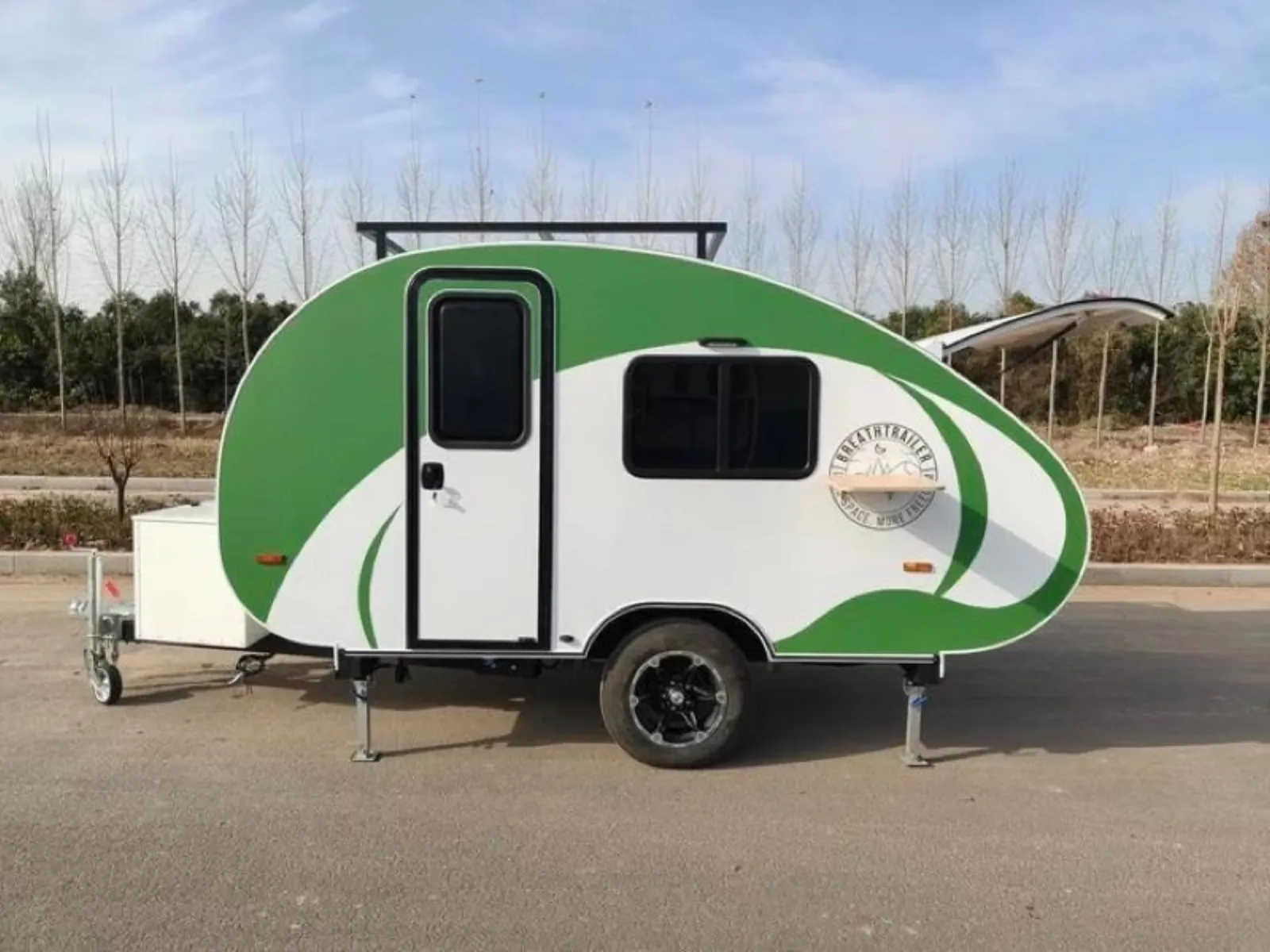
For JAG Camper alternatives in Australia, start with the camping arrangement you want to improve. Breath Ultra includes a 60 L fridge, awning, roof rack, external shower and separate clean- and grey-water tanks, from $34,749. Breath Max adds an indoor toilet and shower, from $47,190. These are the two Breath configurations to inspect if outdoor equipment or bathroom access is driving your search.
An alternative should give you a reason to walk away from the more expensive offer. With Breath, that reason can be an equipped outdoor package in a smaller footprint, or a standing interior and bathroom instead of another conventional teardrop. Plus provides the core kitchen and power package at a lower starting point within our range. The other brands below show why base price and tare alone are incomplete comparisons.
JAG’s 550 kg tare Glider and 850 kg tare Teardrop Camper are different products. Its official product pages checked on 10 September 2026 display $51,450 for the JAG Teardrop Camper and a $37,500 launch special for the Glider. The Glider amount is an advertised promotional offer; confirm its validity and availability for your order. Compare each price with the exact inclusions, tax treatment, delivery and options in the quotation. Source: JAG’s official Teardrop Camper and Glider product pages.
This is a comparison published by Breath Trailer, with manufacturer information checked on 9 September 2026 and JAG product-page prices rechecked on 10 September 2026. It is not an independent product test or a ranking based on owner surveys. Amounts below are published starting prices in Australian dollars, not delivered quotes. We distinguish verified specifications from matters to confirm for a particular build.
Price basis updated 15 September 2026: Breath retail prices include 10% GST: Essential A$23,320, Plus A$29,766, Ultra A$34,749 and Max A$47,190. Competitor prices retain the source dates stated below. Confirm the same tax, equipment and delivery basis in final quotations; a difference between advertised amounts is not a matched saving.
What Breath changes in the JAG comparison
| Purchase question | Breath configuration | What changes against JAG Teardrop |
|---|---|---|
| How much room does it occupy at home? | Ultra: 3,900mm long × 2,000mm wide | 900mm shorter and 250mm narrower than the published 4,800 × 2,250mm JAG Teardrop |
| Do I get a complete outdoor equipment package? | Ultra: 60L fridge, 120Ah lithium, awning, rack and external shower | Shared basics should not be mistaken for a reason to pay JAG’s higher advertised price |
| Can I have an indoor toilet and shower? | Max: standing interior with indoor bathroom | A different way to use the budget instead of a conventional teardrop layout |
| How do I manage wastewater? | Ultra: separate 80L fresh and 80L grey tanks | Wastewater storage is explicitly identified in the Breath package |
These are named-model differences, not a claim that Ultra has every possible JAG feature. The dimensions refer to Teardrop, not Glider. Confirm finished sizes and all options on the quotation.
Front-box materials and cabinetry: examine what the price buys
The components and their installation should justify the camper’s price. Start with the front box: what is it made from, and how does its construction protect the equipment in that exposed position? If the quoted JAG configuration uses a plastic box, examine the grade, mounting and protection before judging it by appearance.
Ask the seller to identify the material and its intended exposure to sunlight, heat, water and road debris. Open the box and inspect the lid, seals, hinges, mounting points and cable entries. Find out how the contents are secured, how you reach the equipment and what a replacement enclosure involves. The word “plastic” is not enough to prove poor quality. Equally, a high camper price is not enough to prove that the enclosure deserves it. The grade, design and installation need to support the premium.
Compare JAG’s plywood cabinetry with the MDF used in the Breath configuration you are considering by inspecting the finished installation: panel grade, surface finish, edge sealing, hardware, plumbing exposure and repair access. Neither material name settles the quality question. A higher price needs to be supported by the details you can inspect.
Breath has specific published material choices to show alongside that cabinetry discussion. The Essential lists a stainless-steel counter and hot-dip-galvanised steel chassis; Ultra also lists a hot-dip-galvanised steel chassis. Confirm the body, bench and cabinetry schedule for the model you order. The finish that matters is the one you touch, clean and maintain, rather than a general claim about a country of manufacture.
Personalisation also belongs in the same conversation. With Breath, discuss the exterior and cabinetry colours, the lighting over the kitchen and the storage you will use every day. Have our Australian team record the chosen configuration and explain handover and support. That is where we want to win the comparison: useful equipment, considered material choices and an identifiable team behind the build you buy.
Start with the reason you want an alternative
A shortlist works better when it answers one clear question. “What else is out there?” can lead to weeks of browsing. “Which camper gives us an indoor toilet?” or “Which one leaves enough room in the garage?” gives you a reason to keep or remove each option.
| Your priority | Start here | Why it is relevant | Check before deciding |
|---|---|---|---|
| Fridge, water and electricity in a defined package | Breath Plus | Advertised equipment at a specified starting price | Appliance models, solar wattage and vehicle connection |
| More of the outdoor campsite included | Breath Ultra | Awning, rack, 60L fridge and external shower listed | Hot-water system, privacy enclosure and rack rating |
| Toilet and shower inside the camper | Breath Max | Bathroom and standing interior | Bathroom fit, towing limits and storage height |
| Queen bed and configurable touring equipment | Wotpods Q-pod or Bosspod | Two layouts to configure around your preferences | Reconcile specifications and prices in a written quote |
| Lower empty weight with a traditional teardrop layout | Little Guy Deluxe Plus | Published 420 kg tare | Payload after your selected options |
| Lighter camper with a different suspension setup | Little Guy Rough Rider | Published 550 kg tare and upgraded suspension | Loaded mass, intended roads and included equipment |
The six options above include three Breath models, one Wotpods model family and two Little Guy models. Manufacturer sources and the research date are identified in the individual sections. The categories are our editorial recommendations, not manufacturer-certified rankings.
Write down your three non-negotiables before comparing prices. They might be an indoor bathroom, a particular storage height and an overall budget. Everything else is a preference to weigh after those are satisfied. This prevents a bright accessory or appealing colour from moving an unsuitable camper to the top of the list.
Alternative 1: Breath Plus for a defined equipment package
The Breath Plus starts at $29,766 and lists 800 kg tare, an 80L water tank, 120Ah lithium battery, installed solar panel, fridge, double stove and inverter. Its mattress is 140 × 200 cm. An external cold-water shower is also identified in its published FAQ.
That makes Plus worth inspecting if your reason for searching for JAG Camper alternatives is to find a clear starting package for weekends and longer holidays. You can establish whether the core equipment meets your needs before discussing optional additions.
The useful question is not “Does it have lots of features?” It is “Which loose camping items can I leave at home?” If the camper’s fridge, cooking equipment and storage replace the equipment you otherwise pack into the car, an integrated package may simplify preparation. Check your own packing list rather than assuming every supplied item will be useful.
Plus is not the lightest choice here, and its mattress is not labelled queen-size in this comparison. The published width matters if you are changing from a wider bed. Try the cabin together and check access to cupboards with bedding in place.
Ask for the exact fridge, battery and inverter supplied on your proposed build. Confirm the panel wattage and vehicle-charging arrangement, because “solar included” does not tell you how quickly your equipment will recharge. The attractive starting price becomes a proper buying comparison when those details appear on the quote.
Shortlist Plus if: you want the core camping equipment specified together, and do not need a built-in indoor bathroom or every outdoor accessory.
Alternative 2: Breath Ultra for an equipped outdoor campsite
The Breath Ultra starts at $34,749, with 900 kg tare. Its listed equipment includes a 60L fridge, awning, roof rack, external shower, spare tyre, 120Ah lithium battery and an installed solar panel. Water storage is 80L clean plus 80L grey, not 160L of fresh water.
The advertised starting-price difference from Plus is $4,983. That is arithmetic from the two published prices, not a claim that buying the accessories separately would cost the same amount. Compare the actual equipment you would select, then check the final quotes.
Ultra is relevant when your campsite usually includes shade, outdoor cooking and somewhere to manage used water. Its published specification also lists extra storage cupboards, overhead kitchen storage, colour-changing kitchen LEDs and a hot-dip-galvanised steel chassis. Exterior and cabinetry colours can be personalised. These are identifiable equipment and finish choices to compare with the proposed JAG build.
Stand beneath the awning, open the kitchen and prepare the work area as you would for lunch. Reach for your usual cookware, try the lighting controls and check where the wet hose and outdoor gear would travel. A useful storage arrangement should make the items you need frequently straightforward to reach.
The separate grey-water tank can be useful in your waste-management plan, but it does not establish permission to stay at every campsite. Find out what the places you intend to visit require and how the trailer’s plumbing is configured.
For warm private showers, have the seller demonstrate the quoted heater and enclosure, including any mounting, hose connection and storage steps. The Ultra specification establishes an external shower; the specific hot-water unit and privacy arrangement belong in the agreed configuration. Watch the complete pack-up too, so you can decide how much handling is acceptable to you.
For home storage, the published overall dimensions are 3,900 × 2,000 × 1,850 mm. Against JAG Teardrop’s 4,800 × 2,250 mm footprint, that means 900 mm less length and 250 mm less width to accommodate at home. Those differences do not apply to Glider. Measure the actual garage entrance and confirm the height with your chosen roof equipment. A compact footprint is useful only when the trailer can pass through the doorway and follow the approach into its parking spot. Ultra dimensions and inclusions.
Shortlist Ultra if: an awning, rack, larger fridge and separate grey-water storage are features you would otherwise put on your options list.
Alternative 3: Breath Max for an indoor bathroom
The Breath Max starts at $47,190, with a standing interior, indoor toilet and shower, queen-size bed and upright fridge. Published tare is 1,200 kg, with 1,900 kg ATM and overall dimensions of 4,500 × 2,100 × 2,350 mm.
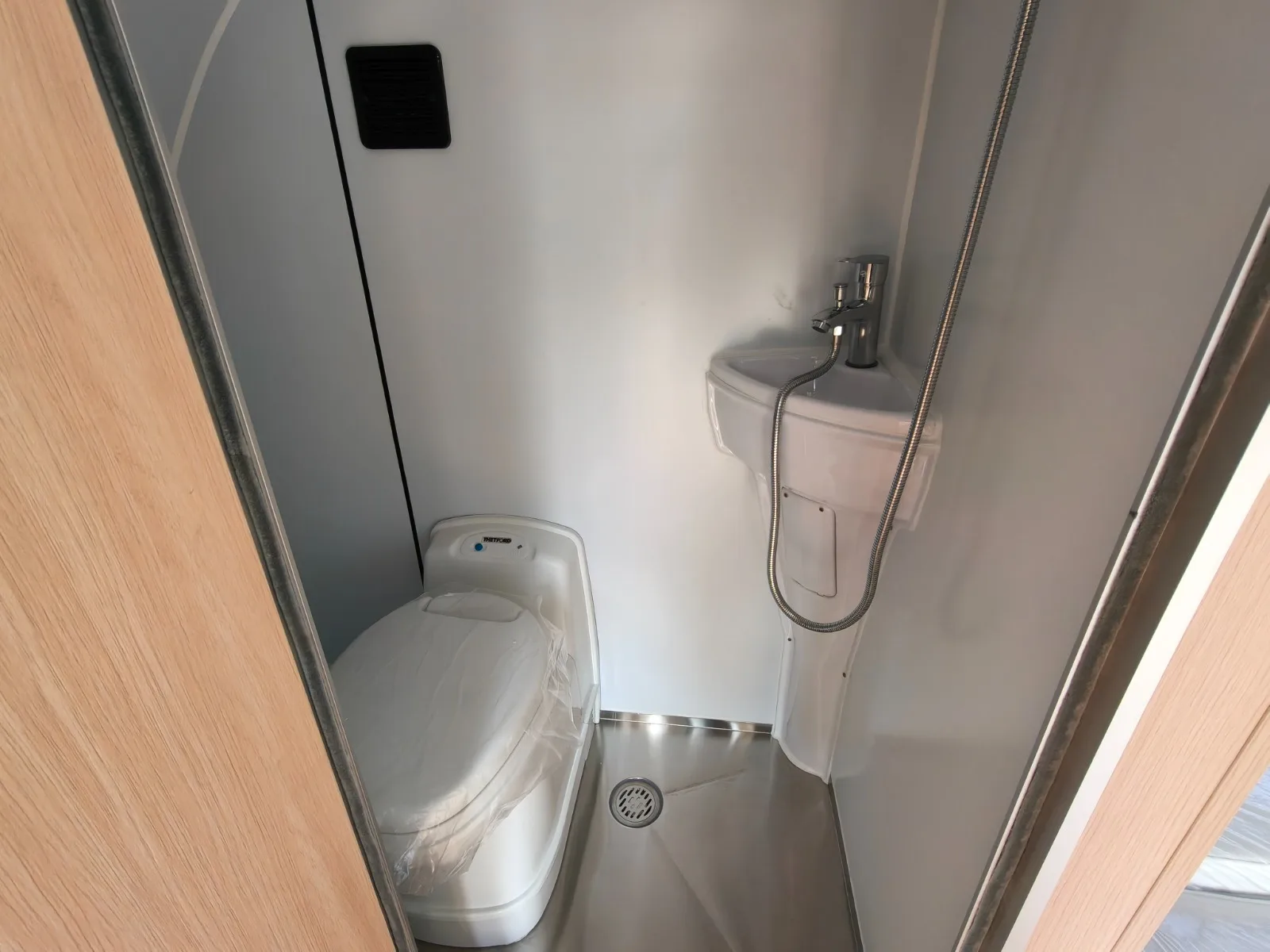
Before committing to JAG Teardrop’s advertised $51,450, ask whether your money should buy an indoor bathroom instead. Max’s current $47,190 GST-inclusive configurator starting offer introduces a standing interior, toilet and shower at a lower published figure. These are different layouts and price bases still need reconciling on configured quotes; this is not a matched saving. The decisive point is that a conventional teardrop is not your only way to spend that budget.
That can matter for a traveller who wants to avoid an outdoor bathroom trip in poor weather or who simply values privacy. The benefit is personal: some couples happily use campsite facilities, while others would take more trips if a toilet were inside their own camper. Decide which describes you before spending on the larger configuration.
Try the bathroom rather than judging it from the presence of a toilet icon. Check the door opening, room to turn, shower controls and usable space for a towel and clothes. Ask how the toilet is serviced, how grey water is emptied and which hot-water equipment is supplied. Check the living-space arrangement when the bed is made up.
Max is heavier and taller than Plus or Ultra. Those trade-offs may decide the question before the bathroom does. The published tare is not its fully packed holiday weight, and the 2,350 mm overall height needs checking against your garage. Use the Breath range comparison to see that step in size clearly.
Shortlist Max if: an indoor toilet and shower are central to how you want to travel, and the configured camper fits your towing and storage constraints. It is not presented as the only bathroom-equipped option in the Australian market.
Alternative 4: Wotpods for configurable queen-bed layouts
Wotpods (WOT) offers queen-bed layouts with configurable touring equipment, but changing brands does not remove the need to examine the offer carefully. Its current website presents Q-pod and Bosspod, with a configurator for finishes and selected accessories. Source: Wotpods’ official range, checked on 9 September 2026.
A useful distinction is how you want to use the kitchen. Ask to see the actual fridge arrangement, cupboard or servery choice and the bench space remaining when the cooker is in use. Two smaller drawers and one larger refrigerator may have similar headline capacity but accommodate your shopping differently.
Wotpods’ comparison page lists Q-pod at $32,000 and Bosspod at $35,000. Its current brochure and comparison do not describe one consistent electrical package: the brochure specifies a 150Ah Bosspod battery, while the comparison table says 300Ah. Ask for the model, fitted equipment and final price in a dated quote. Sources: Wotpods’ model comparison and current brochure, page 3, checked on 10 September 2026.
The same discipline applies to electrical capacity, water storage and optional equipment. Keep a copy of the configured specification and ask the team to confirm that it describes the unit being supplied. Do not combine the largest battery figure from one page with the lowest price from another.
If a bathroom is your priority, Wotpods also advertises a Bosspod XL with ensuite as a separate product. Confirm current stock and the exact specification rather than attributing that bathroom to an ordinary Bosspod or Q-pod. Source: Wotpods’ official Bosspod XL floorstock page, checked on 9 September 2026.
The buying drawback: a customer should not have to reconcile materially different battery figures before knowing what the quoted camper contains. Resolve the specification first, then decide whether the equipment offers anything your chosen Breath package actually lacks.
Alternatives 5 and 6: Little Guy for a lighter traditional base
Little Guy is worth inspecting when lower weight is the main reason for widening your JAG shortlist. Its Deluxe Plus is advertised at $21,700, and the Rough Rider at $26,000. These are model prices, not proof that either includes the same equipment as Breath Plus, Ultra or your selected JAG. Source: Little Guy Australia’s official model list, checked on 9 September 2026.
| Little Guy model | Published tare | Published fully optioned weight | Published ATM | Reason to inspect |
|---|---|---|---|---|
| Deluxe Plus | 420 kg | 520 kg | 595 kg | Traditional layout with space for an approximately queen-size mattress |
| Rough Rider | 550 kg | 646 kg | 814 kg | Additional storage and a suspension setup aimed at rougher roads |
Sources: Deluxe Plus specifications and Rough Rider specifications. These published configurations must be confirmed for a new order.
Look closely at payload. For Deluxe Plus, subtracting its listed 520 kg fully optioned figure from 595 kg ATM leaves 75 kg. The same calculation for Rough Rider is 168 kg. These are calculations from website figures, not weighbridge measurements or a complete allowance for your trip. Ask what the quoted finished weight includes before adding water, luggage and accessories.
That is the trade-off a lowest-tare ranking misses: a light starting point can be appealing, but your selected configuration must still leave room for the supplies you carry. A lower empty number does not automatically make a more practical touring setup.
Little Guy publishes a separate options list covering items such as a water tank, mattress and roof-rack components. A galley designed to accept a fridge should not be counted as a fridge included. Build the quote around the exact equipment you need, then compare both its finished mass and price. Source: Little Guy Australia’s official options list, checked on 9 September 2026.
The buying drawback: adding the equipment you want can narrow both the price advantage and the carrying margin. Use the completed specification, rather than the lightest published base, when comparing a Little Guy with the equipped Plus or Ultra.
Turn the shortlist into three comparable quotes
Choose at most three configurations to price. One should represent your simplest acceptable setup, one the package you expect to buy, and one the upgrade that might materially improve your trips. These can be different brands; the point is to understand what the extra spend changes.
Send each supplier the same equipment list:
- Your tow vehicle: exact year and variant, towbar details and the people and luggage normally travelling in it.
- Your trips: typical number of nights, access to power and water, and the roads you intend to use.
- Your living requirements: actual mattress dimensions, kitchen priorities, indoor or outdoor bathroom preference.
- Your equipment: fridge, solar panel, charging connection, heater, privacy enclosure, awning, racks and any portable items you already own.
- Your delivery basis: postcode or collection location, preferred timing, and all charges to be itemised.
Use a quote worksheet with columns for “included”, “optional cost”, “not required” and “confirmation needed”. Keep GST, delivery, vehicle wiring and selected accessories visible. Do not calculate a saving until the two totals cover what you would actually buy.
For batteries, compare the supplied make, usable capacity and charging path against your appliance list. For water, distinguish drinking-water capacity from grey-water storage. For shade, establish whether the rack, awning and mounting hardware are all part of the price. Our battery comparison can help you ask more specific electrical questions.
Use a practical viewing instead of a feature-count contest
Ask to see the camper in its travelling condition. Then work through a normal arrival: access the bed, retrieve a drink, prepare the kitchen and set up the shower equipment you have chosen. For a portable hot-water unit, count the items you take out, mount, connect and put away again. Find a travel location for the unit and wet hoses before considering that shower setup complete. Do the reverse before leaving. The demonstration should show where each loose part travels and where wet gear goes after use.
The Breath team draws on its camping experience when developing kitchen access, shower arrangements and storage for the equipment you move at each stop. Make those priorities tangible at the viewing.
Try accessing the spare wheel, water drain and electrical controls while the storage is realistically packed. JAG Teardrop identifies an internal spare wheel in its 650L under-bed storage. Check its accessibility: ask to retrieve the spare with the bed made and your normal gear packed. Under-bed storage volume does not tell you how much luggage must move before you reach the wheel. Source: JAG Teardrop’s published specification, checked on 11 September 2026; this is not a timed access test. For an external spare, check that your bike rack or other cargo does not obstruct removal. If a useful piece of equipment is buried beneath your luggage, its location becomes part of the buying decision. Check roof access too: try reaching the awning controls and rack straps, and find space for any step or ladder you need. Do not assume a mudguard is load-bearing. For ground clearance, have the seller identify the lowest vulnerable fitting beneath the loaded camper and explain its protection. These concrete checks are more useful than comparing wheel sizes or roof-rack tick-boxes. We have not road-tested these campers or timed their setups; this is a repeatable inspection you can request from each seller.
Check your parking space with equal care. Record overall width, height and length after your selected accessories, then measure the entrance and manoeuvring area at home. For towing, use loaded mass, rated limits and the exact vehicle rather than a brand-wide “small car” or “SUV” label. Our towing guide provides a starting checklist.
Breath provides a two-year structural warranty, with component cover set out separately in the purchase terms. Ask us how to report a problem, how repairs are authorised and what arrangements apply while you are travelling. Put the relevant terms alongside the specification before ordering; this article does not rank competing warranties.
Frequently asked questions
What are the best alternatives to JAG Camper in Australia?
For equipped outdoor camping, our first recommendation is Breath Plus or Ultra. Ultra combines its kitchen, awning, rack and separate grey tank in a smaller published footprint than JAG Teardrop. For an indoor toilet and shower, start with Max. Wotpods and Little Guy are also covered, with their specification and option-cost questions made explicit.
Which JAG Camper alternative has an indoor toilet and shower?
Breath Max lists both inside its standing-height camper, from $47,190. Wotpods also advertises a separate Bosspod XL with ensuite. Check the actual model, bathroom dimensions, equipment and current availability rather than assuming a whole brand has the same bathroom arrangement.
Is Breath Plus lighter than JAG Glider?
No. Breath Plus lists 800 kg tare, while JAG Glider is advertised at 550 kg. If low empty weight is your main requirement, that matters. Compare the configured trailer’s loaded mass, payload and suitability for your exact vehicle before choosing.
Is Little Guy cheaper once it has the same equipment?
That needs an itemised quote. The published Deluxe Plus and Rough Rider starting prices do not establish an equivalent fridge, battery, solar, water and accessory package. Compare the finished configuration, including weight, rather than adding features from separate pages in your head.
Why does the Wotpods configuration need checking?
The comparison page lists a 300Ah Bosspod battery, while the current brochure specifies 150Ah. Those do not describe the same electrical package. Require one dated specification and quote rather than assuming the larger number is supplied at whichever price you have seen.
Which Breath model should I inspect first?
Start with Plus for the core equipment package, Ultra if its included outdoor accessories match your list, or Max if an indoor bathroom is essential. Bring your vehicle information and a realistic packing list to the viewing.
Make the next comparison specific
The case for Breath is concrete: Plus supplies the core package, Ultra adds an equipped outdoor setup in less storage space than JAG Teardrop, and Max puts an indoor bathroom into the decision. A more expensive camper should improve the part of ownership that matters to you. If it simply repeats equipment you can already get in Breath, the premium needs a better explanation.
Use the Breath comparison table to select one model, then book a viewing with your JAG specification or quote. We can work through the same requirements and show how the equipment fits together before you decide.
Recommended reading
- Small caravans and trailers compared — consider the broader format before settling on a brand.
- Teardrop campers with a shower and toilet — work through the bathroom decision.
- Teardrop towing tips — prepare for storage, hitching and travel.