Teardrop Camper vs Camper Trailer Australia: 2026 Comparison
One sets up in five minutes, the other in thirty. Weight, sleeping space and five-year running costs compared side by side.
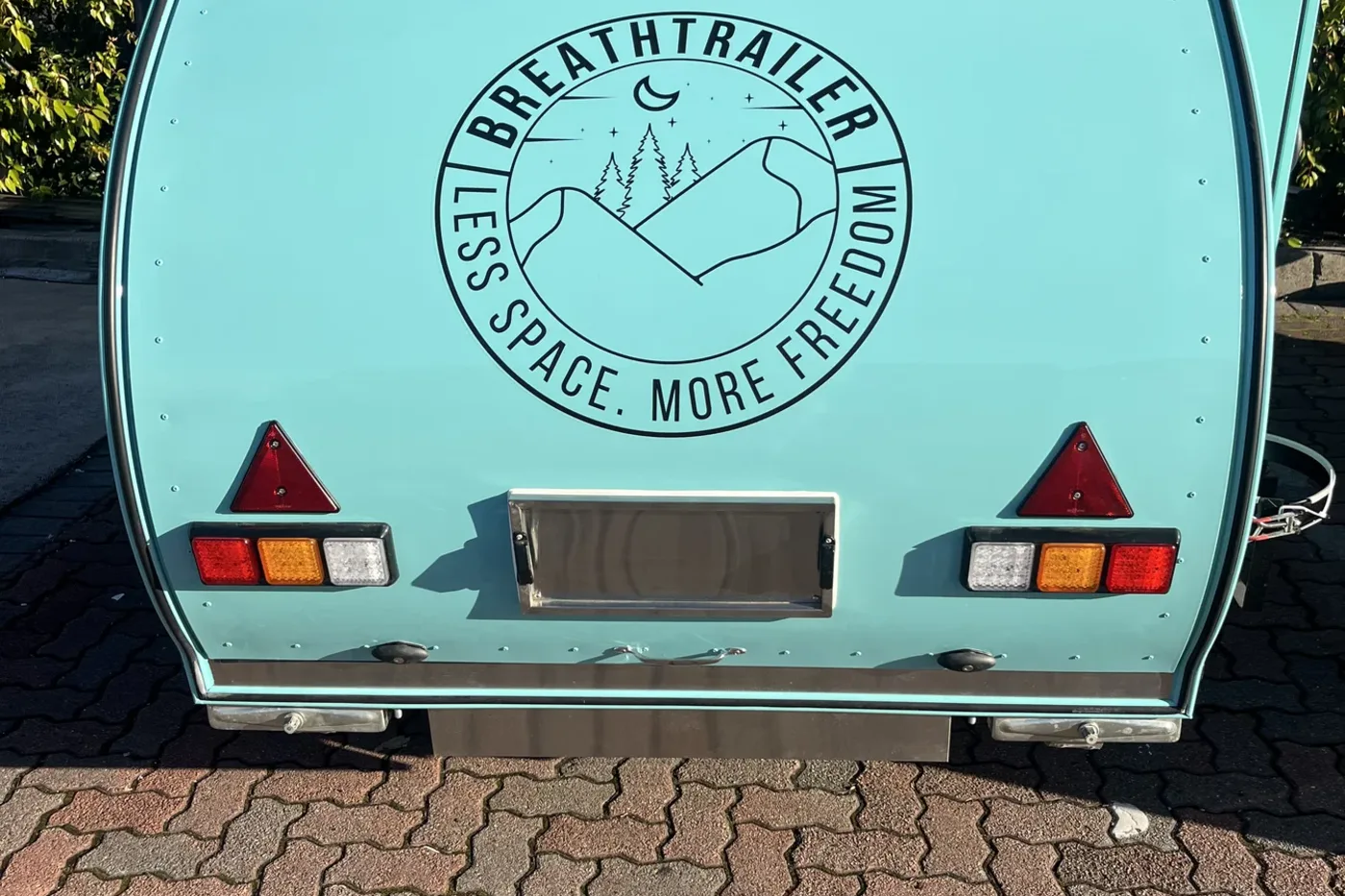
Walk through any camping show in Australia and you’ll see two very different answers to the same question — how do I sleep comfortably off-grid without buying a full caravan? One answer is a teardrop camper: a compact, hard-shell trailer with a fixed bed and a galley you can have ready in five minutes. The other is a folding camper trailer: a canvas-and-steel rig that unfolds into a tent-like living space sleeping the whole family. Both sit under 1,500 kg, both tow behind a mid-size 4WD, and both cost a fraction of a caravan. But they suit completely different trips.
This guide puts the real 2026 numbers side by side — setup time, tare weight, sleeping capacity, purchase price, ongoing maintenance and 5-year ownership cost — so you can decide which one actually fits the way you camp. We’ve kept the competitor prices honest, because choosing the wrong rig is an expensive mistake to unwind.
Teardrop Camper vs Camper Trailer: The Quick Answer
If you’re short on time, here’s the one-line version. A teardrop camper is the better choice for couples and solo travellers who value fast setup, weatherproof comfort and easy towing. A folding camper trailer is the better choice for families who need to sleep four-plus people and are happy to trade setup time and canvas maintenance for a bigger living footprint.
| Factor | Teardrop Camper | Folding Camper Trailer |
|---|---|---|
| Setup time | 5 minutes (hard shell, no canvas) | 10–40 minutes (depends on soft vs hard floor) |
| Sleeps | 2 (plus kids in an annexe) | 2–6 |
| Tare weight | 700–1,200 kg | 400–1,600 kg |
| Living space | External galley + sealed cabin | Large canvas annexe + internal lounge |
| Weatherproof | Hard shell, sealed, all-season | Canvas — needs drying and care |
| Bathroom option | Yes (full ensuite on premium models) | Rarely; usually external shower tent |
| Entry price (AUD) | From $23,320 | From $14,000 (soft floor) |
| Best for | Couples, solo travellers, weekenders | Families, large groups, extended outback trips |
The rest of this article unpacks each of those rows with real specifications and prices.
What Is a Teardrop Camper?
A teardrop camper is a small, aerodynamic, hard-shell trailer you tow behind your existing vehicle. The classic teardrop silhouette — rounded at the front, tapering at the rear — slips through the air with far less drag than a boxy camper trailer, which keeps the fuel penalty down.
Inside, a well-built teardrop gives you a fixed queen bed, an insulated cabin with LED lighting, USB charging and a rear galley kitchen that swings open under the hatch. Premium models go further: the Breath Max, Sydney-designed and finished, from $42,900, is the only teardrop on the Australian market under $50,000 with a full interior bathroom (hot shower and toilet), 2.1 m standing headroom and a 120-litre fresh water tank. Sydney-based Breath Trailer offers four models from $23,320 to $42,900, all towable by any mid-size SUV.
The defining feature: there is no canvas to unfold. You unhitch, level, pop the hatch, and you’re done. That single design decision drives almost every advantage in this comparison.

Side door open and hatch up: that is the whole setup on a hard-shell teardrop.
What Is a Camper Trailer?
In Australian usage, “camper trailer” almost always means a folding camper — a trailer with a hard lid or fibreglass shell that unfolds, with the help of canvas, into a tent-style living area. They come in two broad families:
- Soft floor campers. The tent folds out to one side and the floor of the living area sits on the ground. They’re the lightest and cheapest option, with a huge canvas footprint — but they take the longest to set up and you need to clear and plan the ground first. According to 4WDing Australia, soft floors start around 400–700 kg tare and Australian-made ones begin near $14,000.
- Hard floor and forward-fold campers. The lid folds over (rear-fold) or forward (forward-fold) to create a solid raised floor and an instant bed, with an annexe that pitches off the side. They set up faster than soft floors — a forward fold can be camp-ready in around 10 minutes per MDC — but they’re heavier and dearer. Popular examples like the Austrack Telegraph X or Jackson FF carry tare weights of roughly 1,470–1,520 kg.
Either way, the appeal is the same: a folding camper trailer turns into a large, family-sized canvas home with an internal bed, a slide-out kitchen and an annexe big enough to stand in. The trade-off is canvas — and canvas means setup time, drying, and maintenance.
Round 1: Setup and Pack-Down Time
This is where the two designs diverge most dramatically, and it’s the factor most owners underestimate.
| Camper type | Typical setup time | Pack-down notes |
|---|---|---|
| Teardrop camper (hard shell) | ~5 minutes | Unhitch, level, lift hatch. Nothing to dry. |
| Hard floor / forward fold | 10–20 minutes | Quick bed, but annexe poles and walls add time. |
| Soft floor camper | 20–40 minutes | Clear ground, peg canvas, fit poles. |
The gap matters most in two scenarios. The first is the one-night stopover on a long drive — pulling into a free camp at dusk, you do not want to be pitching canvas in the dark and rain. A teardrop is bed-ready before the kettle boils. The second is wet weather pack-down: a folding camper’s canvas must be dried before storage or it grows mould, so a rainy departure means re-pitching the tent at home to air it out. A hard-shell teardrop has no canvas to dry — you hitch up and leave.
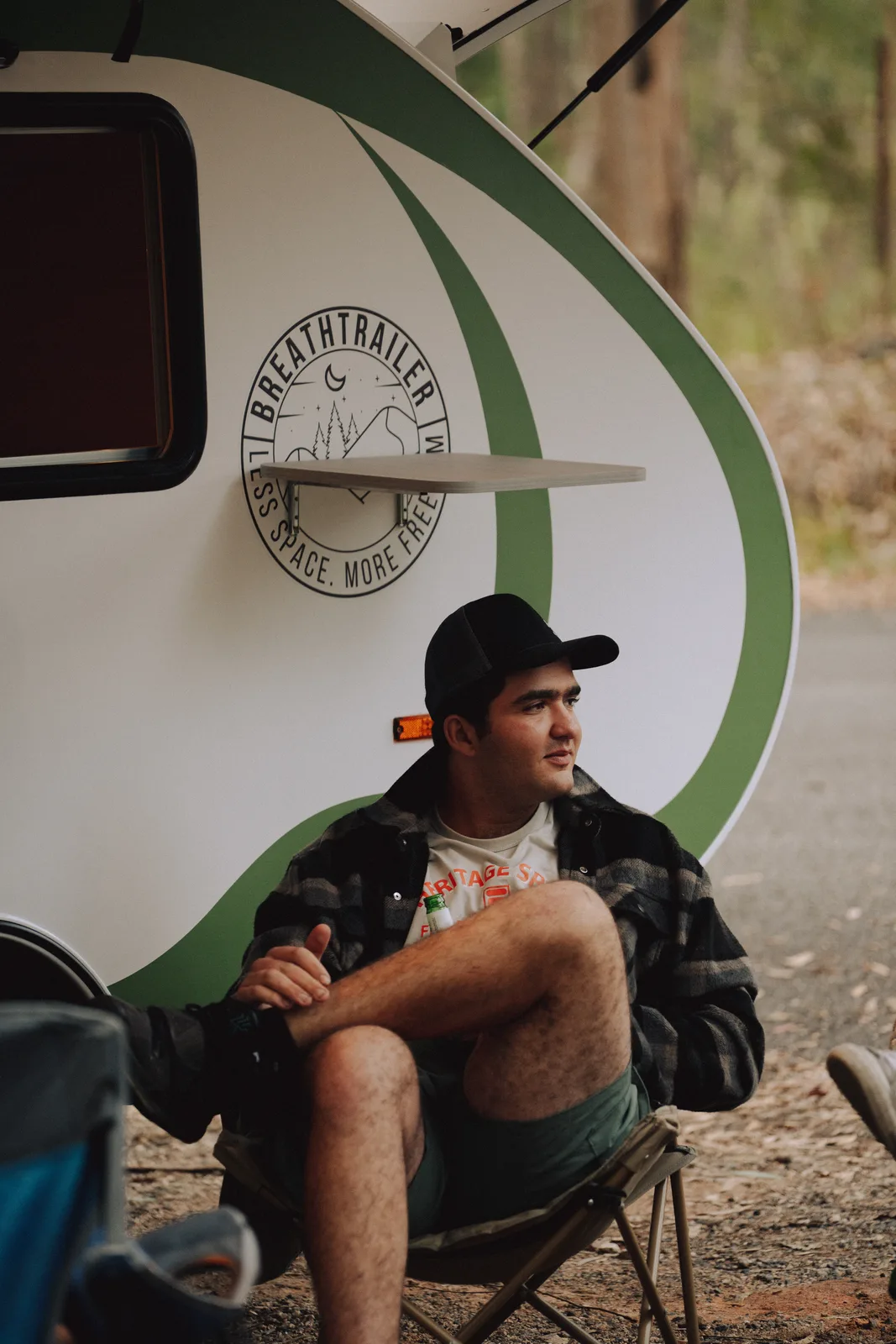
With no canvas to pitch, a stopover camp is made in minutes and the evening is yours.
For weekend campers who measure their trip in nights rather than weeks, the cumulative time saved across a season is significant. For more on hitching, levelling and towing technique, see our camper trailer towing guide for Australia.
Round 2: Weight and Towing
Both categories are lightweight by caravan standards, but the spread is wide — and it determines which tow vehicle you need.
| Camper type | Tare (empty) | Loaded / ATM | Suitable tow vehicle |
|---|---|---|---|
| Teardrop — Breath Essential | 700 kg | ~1,000 kg | Any mid-size SUV (RAV4, CX-5, Forester) |
| Teardrop — Breath Max | 1,200 kg | ~1,600 kg | Mid-large SUV / dual-cab ute |
| Soft floor camper | 400–700 kg | 1,000–1,500 kg | Most SUVs |
| Hard floor / forward fold | 980–1,600 kg | 2,000–2,500 kg | 4WD wagon or dual-cab ute |
A light soft-floor camper and an entry teardrop are both genuinely easy to tow with a family SUV. The picture changes with hard-floor forward folds: an Austrack Telegraph X registers at around 2,250 kg and a Jackson FF runs to a 2,000 kg ATM — which pushes you toward a heavier-duty 4WD with a 2,500–3,500 kg tow rating. A teardrop’s aerodynamic shape also means it tows with less sway and a smaller fuel penalty than a tall, square folding camper.
The practical takeaway: if your only tow vehicle is a mid-size SUV, an entry-to-mid teardrop or a light soft floor fits comfortably. A loaded forward-fold may exceed what your car can safely pull once you add water, gear and an annexe. Always check your vehicle’s braked towing capacity and the rig’s ATM before you buy.
Round 3: Sleeping Capacity and Living Space
This is the camper trailer’s home turf, and it’s the honest reason families buy one.
A teardrop sleeps two on a fixed queen bed. You can extend that with a quality awning, an annexe or a rooftop tent for children — but the cabin itself is a two-person space. Most of your living happens outside, at the galley or under the awning.
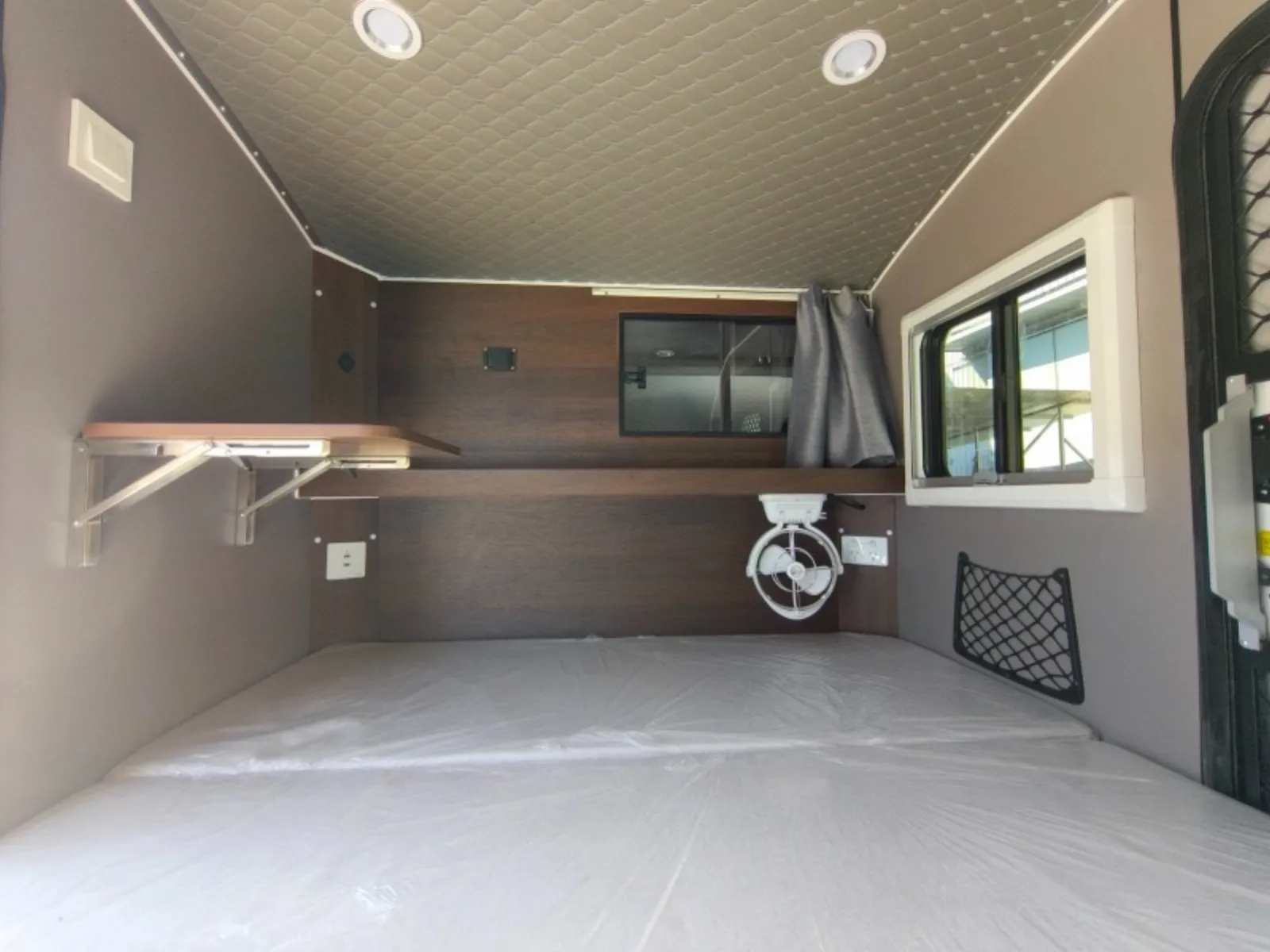
The teardrop cabin is a two-person bedroom; most of the living happens outside.
A folding camper trailer unfolds into a much bigger footprint: an internal queen (or king) bed plus a large annexe that can house a second bed, a portacot or a couple of stretchers. With the annexe pitched, a forward fold comfortably sleeps a family of four to six and gives you a stand-up canvas room to wait out bad weather.
| Need | Better choice |
|---|---|
| Two adults, fast and weatherproof | Teardrop camper |
| Two adults plus 1–3 kids | Folding camper trailer |
| Large covered living/cooking area | Folding camper trailer |
| Minimal setup and pack-down | Teardrop camper |
| Sealed, insulated, all-season sleeping | Teardrop camper |
If your trips are couple-focused, the teardrop’s sealed cabin is more comfortable in extreme heat, cold and wind than canvas — and there’s no annexe to pitch. If you’re regularly camping with children, the folding camper’s living space is hard to beat. (For the couple-specific case, our guide on choosing a teardrop camper for couples goes deeper.)
Round 4: Purchase Price
Here are the real 2026 numbers, with competitor pricing kept honest for context.
| Option | Example | Price (AUD) |
|---|---|---|
| Soft floor camper — imported entry | Generic import | from ~$5,000 |
| Soft floor camper — Australian made | Various | from ~$14,000 |
| Teardrop — entry | Breath Essential | $23,320 |
| Teardrop — mid (fridge included) | Breath Plus | $29,766 |
| Hard floor / forward fold | BigFoot Yeti, Jackson FF | ~$29,000–$40,000 |
| Teardrop — premium (external shower) | Breath Ultra | $34,749 |
| Soft floor camper — fully optioned | Various | $35,000–$40,000 |
| Teardrop — full interior bathroom | Breath Max | $42,900 |
On sticker price alone, a basic soft-floor camper undercuts everything. But sticker price is only half the story — a $14,000 soft floor with no kitchen, no battery system and a tent you pitch on the dirt is a very different proposition from a $29,766 teardrop with a fixed bed, fridge, insulated cabin and five-minute setup. Once you option a forward-fold camper up to a comparable spec — lithium battery, slide-out kitchen, annexe — it lands in the same $29,000–$40,000 bracket as a mid-to-premium teardrop. For a full breakdown of what drives teardrop pricing, see our teardrop camper cost guide for Australia.
Round 5: Maintenance and Running Costs
This is the section most comparison articles skip entirely — and it’s where the hard shell quietly pays you back.
A folding camper trailer’s canvas is a consumable that needs active care. It must be dried before storage to prevent mould, re-proofed periodically, and inspected for tears and zip failures. Poles, pegs and the annexe walls all add packing and maintenance time. Owners who tour the tropics or pack down wet learn this lesson fast.
A teardrop has no canvas. Maintenance is closer to a small caravan: wheel bearings, brakes, the gas system, and the seals around the hatch and doors. There’s no tent to dry, no annexe to re-proof, and the sealed cabin resists dust ingress on corrugated outback roads far better than canvas.
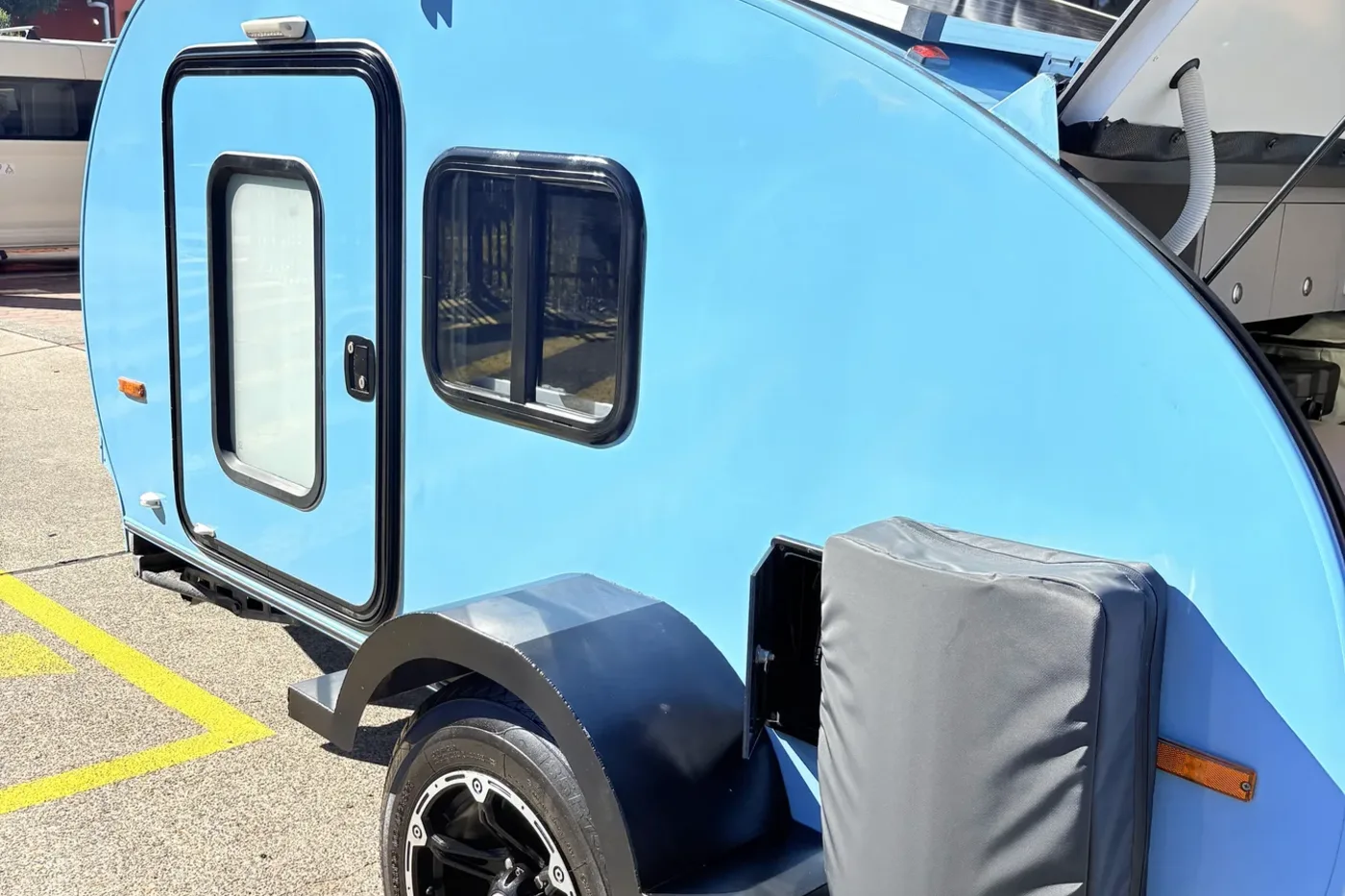
With no canvas to dry or re-proof, upkeep comes down to bearings, brakes, gas and door seals.
| Cost / task | Teardrop camper | Folding camper trailer |
|---|---|---|
| Registration (NSW, est.) | ~$300–$550/yr | ~$300–$550/yr |
| Insurance (est.) | ~$300–$600/yr | ~$300–$600/yr |
| Canvas care / re-proofing | None | Periodic; dry after every wet pack-down |
| Bearings, brakes, seals | Standard trailer service | Standard trailer service |
| Dust sealing on dirt roads | Excellent (hard shell) | Variable (canvas-dependent) |
Both rigs hold value well by RV standards — quality Australian-built teardrops routinely resell within 15–20% of their original price, helped by short supply and strong demand. A well-kept Australian camper trailer also resells strongly, though tired canvas is the first thing a buyer discounts.
Round 6: Off-Road and Outback Capability
Both categories include genuine off-road builds, so this comes down to the specific rig, not the category.
Hard-floor forward folds are popular with serious 4WD tourers because they pair a big living space with heavy-duty independent suspension and high clearance — at the cost of weight. Off-road teardrops match the clearance and suspension while staying lighter and faster to set up, which suits travellers who cover long distances and want to make camp quickly each night. If outback touring is your priority, our off-road teardrop camper guide for Australia covers suspension, clearance and tyre choices in detail.
The deciding question is usually how you travel: if you set up one base camp for a week, a folding camper’s living space wins; if you move every day or two across the Savannah Way or the Red Centre, the teardrop’s five-minute setup is a daily gift.
Round 7: Self-Containment and the Bathroom Question
Free camping in Australia increasingly rewards self-contained rigs — vehicles that carry their own fresh water, grey water and a toilet, so they can legally stay where un-contained campers cannot.
Most folding camper trailers are not self-contained: they rely on an external shower tent and a portable toilet, which keeps them in caravan parks or facility-equipped campgrounds for longer stays. Most teardrops are the same — except at the premium end. The Breath Max carries a full interior bathroom and a 120-litre water tank, making it one of the very few teardrops that can be set up for genuine self-contained free camping. For the rules and what “self-contained” actually requires, see our guide to self-contained campers in Australia.
If an indoor toilet and shower are non-negotiable, a premium teardrop is currently the more achievable path than a folding camper. If you’re happy with an external shower tent and a portaloo, either category works.
Which Should You Choose?
Match the rig to the way you actually camp:
- Greg & Margaret — touring couple, value comfort and simplicity. A teardrop wins. The sealed cabin is warmer, cooler and quieter than canvas, setup is five minutes, and a premium model adds the ensuite they want for the Big Lap.
- Tom & Sarah — active couple, mid-size SUV, weekends away. A teardrop or a light soft floor both tow easily. If they value fast setup and weatherproofing over a big annexe, the teardrop is the better weekender.
- The Nguyen family — two adults, three kids, school-holiday trips. A forward-fold camper trailer wins on sleeping capacity and covered living space. A teardrop would need a large annexe and a rooftop tent to come close.
- Mia — solo remote worker, lots of one-nighters. A teardrop. Pulling into a new spot each evening, she wants bed-ready in minutes, not canvas in the dark.
For adjacent comparisons, we’ve also pitted teardrops against campervans and against full caravans — useful if you’re still weighing up the whole category.
Frequently Asked Questions
Is a teardrop camper a type of camper trailer?
Technically yes — a teardrop is towed and folds into a camping setup, so it’s a camper trailer in the broadest sense. But in everyday Australian usage, “camper trailer” means a canvas folding camper, while “teardrop camper” means the compact hard-shell trailer with a fixed bed. They’re treated as separate categories because they camp so differently.
Which is faster to set up, a teardrop or a camper trailer?
A teardrop camper is significantly faster. A hard-shell teardrop is camp-ready in about five minutes with no canvas to pitch. A hard-floor forward fold takes around 10–20 minutes, and a soft floor camper can take 20–40 minutes once you’ve cleared the ground and fitted the poles.
Can a teardrop camper sleep a family?
The teardrop cabin itself sleeps two on a fixed queen bed. To sleep children you add an awning, annexe or rooftop tent. For a family that regularly travels with two or more kids, a folding camper trailer with a built-in annexe is usually the more practical choice.
Is a camper trailer cheaper than a teardrop camper?
At the entry level, yes — an imported soft-floor camper can start near $5,000 and an Australian-made one near $14,000, undercutting the $23,320 entry teardrop. But once you match the spec (fixed bed, kitchen, battery system, fast setup), a well-equipped forward fold lands in the same $29,000–$40,000 range as a mid-to-premium teardrop.
Which is better for free camping in Australia?
For genuine self-contained free camping you need onboard fresh water, grey water and a toilet. Most folding campers and most teardrops aren’t self-contained out of the box. The exception is a premium teardrop like the Breath Max with a full interior bathroom and 120-litre tank, which is one of the few in either category set up for legal self-contained stays.
Do teardrop campers tow better than camper trailers?
Generally yes. The aerodynamic teardrop shape produces less drag and sway than a tall, boxy folding camper, so the fuel penalty is lower and the rig tracks more steadily at highway speeds — particularly noticeable in crosswinds and when overtaking.
The Bottom Line
There’s no universal winner — only the right rig for your trips. Choose a folding camper trailer if you need to sleep four or more, want a large covered living area for extended base-camp stays, and don’t mind the setup time and canvas care that come with it. Choose a teardrop camper if you camp as a couple or solo, value five-minute weatherproof setup, want a sealed all-season cabin, and — at the premium end — the option of a real ensuite for self-contained free camping.
If the teardrop sounds like your kind of camping, compare the four Breath Trailer models side by side, or book a viewing to see the hard shell, the queen bed and the galley in person before you decide.