Camping with Dogs in Australia: The Complete Camper Trailer Guide (2026)
Plan a dog-friendly camping trip around Australia with a camper trailer. State rules, campground table, 1080 baiting alerts, gear checklist and per-model guide.
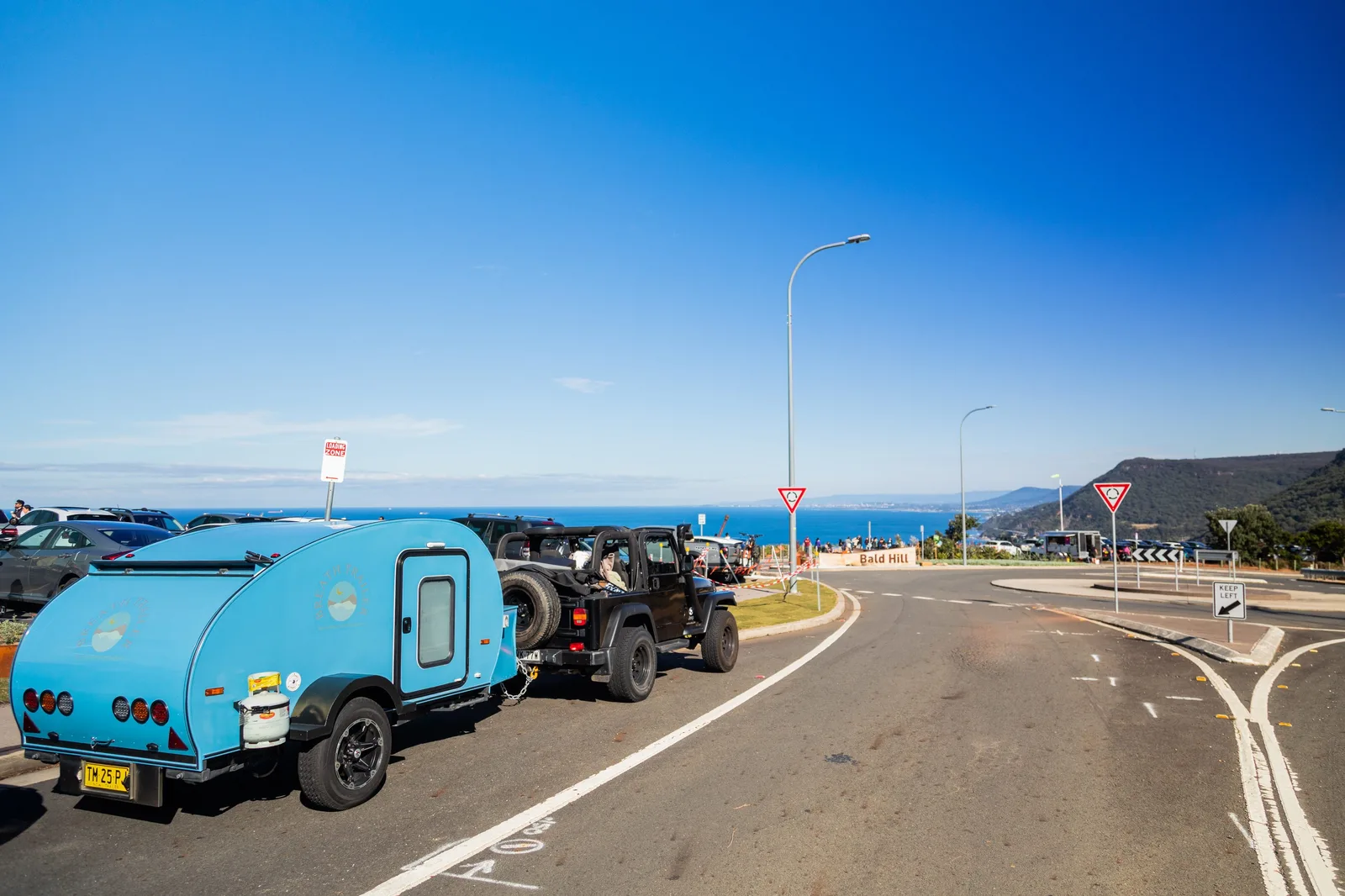
Australia has more than 9.6 million pet dogs — roughly one for every 2.7 people — and a survey by the Pet Industry Association of Australia found that 61% of Australian households own at least one pet. That makes “can I bring the dog?” one of the most common questions in the camper trailer community.
The short answer is yes — but the rules vary enormously by state, land type, and season. A setup that works at a NSW state forest on Friday can land you with a fine at a Queensland national park on Saturday. And the risks are different too: 1080 baiting programs, paralysis ticks, venomous snakes, heat accumulation on hot days, and saltwater crocodiles in the Top End demand different protocols in different regions.
This guide gives you the state-by-state rules, a named campground table for every state, the critical 1080 safety warning, practical gear lists, and a per-model comparison of how Breath Trailer’s four models perform when you’re travelling with a dog.
The Non-Negotiable Rule: Dogs Travel in the Tow Vehicle
Before anything else: dogs must ride in the tow vehicle, never inside the trailer. Australian Road Rule 297 (adopted in all states) prohibits carrying animals in a manner that poses a danger or causes unnecessary suffering. An unventilated, dark, gyrating trailer is neither safe nor legal. On a 30°C day, the interior of an enclosed trailer can reach 60°C within fifteen minutes.
A dog crate or crash-tested harness in the rear of the tow vehicle is the standard setup. Most modern SUVs have rear cargo barriers or can accept a crate. If the dog sits on the back seat, use an Australian Standard–compliant restraint — untethered dogs are a distraction hazard and become a 45 kg projectile in a sudden stop.
State-by-State Rules at a Glance
| State / Territory | National Parks | State Forests | Crown Land / Roadsides | Private / Holiday Parks |
|---|---|---|---|---|
| NSW | ❌ Not permitted (almost all) | ✅ On leash, under control | ✅ Generally yes, check local signs | ✅ Many pet-friendly parks |
| VIC | ⚠️ 2 exceptions only¹ | ✅ On leash (except Murrindindi Scenic Reserve) | ✅ Generally yes | ✅ BIG4/Discovery Parks expanding pet zones |
| QLD | ❌ Not permitted (national parks only); may drive through | ✅ State forests (Amamoor, Brooyar, Benarkin) | ✅ Many recreation areas (Inskip Point) | ✅ Wide availability |
| WA | ⚠️ 1 exception only² | ❌ Strictly no dogs in most state parks | ✅ Pastoral/road reserves, check signs | ✅ Expanding pet-friendly parks |
| SA | ⚠️ Conservation parks — check per-park | ✅ ForestrySA areas generally yes | ✅ Generally yes | ✅ Most parks accept pets |
| TAS | ⚠️ Some conservation areas allow dogs | ✅ State forest areas generally yes | ✅ Generally yes | ✅ Widely available |
| NT | ⚠️ 2 exceptions only³ | ✅ Where applicable | ✅ Generally yes | ✅ Available |
| ACT | ⚠️ Some reserves, on leash | ✅ Nature reserves often yes | ✅ Generally yes | ✅ Available |
¹ VIC national parks that allow dogs: Lake Eildon NP (Jerusalem Creek campground) and Great Otway NP (Johanna Beach and Lake Elizabeth campgrounds). Dogs on leash only.
² WA national park exception: Blackwood River NP (Sues Bridge and Warner Glen campgrounds). Dogs on leash.
³ NT national park exceptions: Judbarra/Gregory NP (Sullivan Creek, Victoria River Roadhouse, Big Horse Creek) and Limmen NP (Munbililla Campground).
Always verify with the relevant authority the week before you leave. Closures, 1080 baiting programs, and seasonal restrictions change frequently.
⚠️ The 1080 Baiting Alert — Read Before Every Trip
1080 (sodium fluoroacetate) is a lethal poison used across Australia to control invasive species — foxes, wild dogs, rabbits, pigs, and cats. There is no antidote for 1080 poisoning in dogs. A single bait consumed can kill within hours.
1080 baiting programs operate in:
- NSW and ACT state forests (year-round in some areas)
- Queensland state forests and rural properties
- Western Australian pastoral land, forests, and national park boundaries
- Victorian state forests and alpine areas
- South Australian pastoral zones
What to do before every trip:
- NSW: Check the Pesticide Use Notification Register before departure.
- VIC: Check Agriculture Victoria bait notifications.
- QLD: Check with Biosecurity Queensland or the relevant local council.
- WA: Check with DBCA or the relevant shire council.
- Always: Ask at the campground reception on arrival whether baiting is active in adjacent areas.
Keep your dog on a leash at all times in state forest areas. A dog chasing wildlife across a property boundary into an active bait zone is a scenario that ends badly. This rule is not optional.
Best Dog-Friendly Campgrounds by State
The following campgrounds have consistently good track records for dog-friendly access with a camper trailer. Fees and access rules are correct as of September 2026 but can change — always call ahead.
| State | Campground | Land type | Dogs | Facilities | Approx. fee |
|---|---|---|---|---|---|
| NSW | Chichester State Forest (Coachwood camp) | State Forest | ✅ On leash | Pit toilets, water | Free |
| NSW | Bago State Forest (Bago Bluff) | State Forest | ✅ On leash | Basic | Free |
| NSW | Blowering Dam (Khancoban Pondage) | Crown Land / State Forest | ✅ | Toilets, water | ~$10/site |
| NSW | Styx River State Forest | State Forest | ✅ On leash | Toilets | Free |
| VIC | Jerusalem Creek, Lake Eildon NP | National Park | ✅ On leash | Toilets, fire rings | ~$12/person |
| VIC | Johanna Beach, Great Otway NP | National Park | ✅ On leash | Toilets | ~$12/person |
| VIC | State Forest campgrounds (general) | State Forest | ✅ On leash | Variable | Free–$10 |
| QLD | Amamoor State Forest | State Forest | ✅ On leash | Toilets, water | ~$6/person |
| QLD | Brooyar State Forest | State Forest | ✅ On leash | Toilets | ~$6/person |
| QLD | Inskip Point RA (Rainbow Beach) | Recreation Area | ✅ On leash | Toilets, showers | $7.75/adult |
| WA | Sues Bridge, Blackwood River NP | National Park | ✅ On leash | Toilets | ~$12/adult |
| WA | State forest areas (Pemberton region) | State Forest | ✅ On leash | Variable | Free |
| SA | Belair National Park (some areas) | National Park | ✅ Designated trails | Toilets, BBQs | Free |
| SA | ForestrySA campgrounds | State Forest | ✅ On leash | Variable | ~$10–$20/vehicle |
| TAS | State forest campgrounds | State Forest | ✅ On leash | Variable | Free |
| NT | Sullivan Creek, Judbarra/Gregory NP | National Park | ✅ On leash | Toilets | ~$10/adult |
Book ahead for national park spots — dog-permitted sites fill early because there are so few of them. State forest spots rarely require booking but check with Forestry Corporation or the relevant state body.
Why a Hard-Shell Camper Trailer Is Better for Dog Owners
Dogs change the camping equation in ways that hit canvas setups harder than hard-shell ones.
No canvas to claw, soil, or chew
Every soft-floor and forward-fold camper trailer has canvas sections. Dogs — particularly anxious ones — will claw, chew, and soil canvas walls. A single escape attempt through a zipped door panel can cost $300–$800 in canvas repair. Hard-shell teardrops have no canvas. The aluminium shell closes completely; the dog sleeps under your awning or in the tow vehicle overnight.
The external shower changes everything
The external shower on the Breath Ultra and Breath Max has become one of the most practical features for dog owners who camp in dusty outback tracks, beach dunes, or river crossings. Washing a muddy Labrador or sandy Kelpie before it enters your sleeping space is the difference between a clean trip and a muddy disaster. A 12V pump delivering warm water from the tank is vastly more practical than a cold bucket by the car.
Sealed cabin keeps snakes out
One of the less-discussed risks for dog owners camping in the bush is snakes attracted to the warmth of a sleeping area. Teardrops seal completely when closed. Canvas campers have gaps under zipped doors, at tent connections, and around awning attachment points. A sealed hard-shell cabin significantly reduces the chance of a snake sharing your sleeping space.
Better temperature regulation at night
A well-insulated teardrop shell holds temperature more consistently than canvas, helping dogs sleep comfortably through cool nights without losing body heat. In hot weather, cracking the rear hatch (if available) or running a 12V fan creates airflow without opening the trailer to wildlife.
Per-Model Breath Trailer Guide for Dog Owners
| Model | Price | Tare | Dog-relevant features | Best for |
|---|---|---|---|---|
| Essential | $23,320 | 700 kg | Hard-shell sealed cabin, compact galley | Budget campers; dog sleeps under awning |
| Plus | $29,766 | 800 kg | Compressor fridge (dog food/medications), sealed shell | Dog with dietary or medical needs |
| Ultra | $34,749 | 900 kg | External shower — ideal for washing dogs | Muddy-trail travellers, beach trips, active dogs |
| Max | $47,190 | 1,200 kg | Full interior bathroom + external shower; self-contained | Big lap owners, extended remote travel with dogs |
The Breath Ultra is the standout choice for most dog owners. The external 12V shower runs off the on-board water tank and can reach warm temperature through the heat exchanger — it takes thirty seconds to rinse down a dog after a creek crossing. For those doing the Big Lap or extended remote travel, the Breath Max adds a full interior bathroom and self-contained grey water management, making it suitable for national park self-containment areas where grey water must be contained on-site.
All four models tow with any standard SUV — a critical point for dog owners who often have an SUV-sized family vehicle rather than a dual-cab ute.
Dog Safety in the Australian Bush
Heat accumulation is the biggest risk
Australian summer temperatures regularly exceed 38°C in the shade, and dogs can develop life-threatening heatstroke when their core body temperature exceeds 41°C. The danger with camping is heat accumulation: a dog that seems fine on day one struggles by day three as the load of consecutive days in heat builds up.
| Risk level | Air temperature (shade) | Action |
|---|---|---|
| Monitor | 28–33°C | Water every 30 min; restrict activity 10am–4pm |
| High | 34–38°C | Water every 15 min; restrict to early/late activity only |
| Danger | >38°C | Keep dog in air-conditioned vehicle or shaded area with 12V fan; reduce trip |
| Emergency | Any — dog showing rapid breathing, staggering, gum colour change | Wet with cool (not cold) water, get to vet immediately |
Never leave a dog in a closed trailer or vehicle. Even in shade with windows cracked, a closed vehicle on a 32°C day can reach 60°C in fifteen minutes.
Snake awareness by region
Australia has 21 of the world’s 25 most venomous snakes. The practical risk for camping dogs is highest in:
- Eastern brown snake — found across eastern Australia; responsible for most AU snake bite deaths. Often encountered near water.
- Tiger snake — southeast Australia, Tasmania; aggressive when cornered.
- Taipan — north Queensland, NT, north WA.
- King brown (mulga snake) — widespread in inland areas.
Dogs are naturally curious and frequently receive bites to the face and neck. Key protocols:
- Keep your dog on a leash on all trails and around camp.
- Stick to open areas where you can see the ground clearly.
- Teach a strong “leave it” command before your trip.
- Carry a vet contact number and know the location of the nearest 24h animal emergency clinic.
- Snakebite in dogs is a veterinary emergency — do not wait for symptoms. If you see a strike or suspect a bite, head to the vet immediately.
Paralysis ticks — east coast risk
The paralysis tick (Ixodes holocyclus) is found along the eastern coast of Australia from North Queensland to Victoria. It attaches, feeds, and injects a neurotoxin that causes progressive paralysis over 3–5 days. It is fatal if not treated.
Check your dog thoroughly every evening on east coast trips — particularly around ears, face, neck, and between toes. Remove ticks within 6 hours using fine-tipped tweezers (twist, do not squeeze). Speak to your vet before an east coast trip about tick prevention treatment (spot-on or tablet).
Saltwater crocodiles — Top End and FNQ
If you are camping north of Broome (WA) or north of Rockhampton (QLD), saltwater crocodiles are present in all waterways. Never let your dog swim in, drink from, or approach the water’s edge in crocodile territory. This includes rivers, estuaries, lagoons, beach runoffs, and tidal areas. Crocodiles are ambush predators and can travel significant distances from the water at night to investigate activity.
Dog Gear Checklist for Camper Trailer Trips
| Category | Item | Notes |
|---|---|---|
| Water & food | Collapsible water bowl | Always keep one in the tow vehicle and one at camp |
| Stainless or BPA-free food bowl | Easier to clean than plastic at remote camps | |
| 5–10 L extra water per dog per day | Drinking, cooling, and washing | |
| 3–5 days extra food supply | Disrupted routines can cause hunger-related anxiety | |
| Comfort & shelter | Dog mat or crate base | Familiar scent = faster settling at new campsites |
| Stake/tie-out + 5 m cable | Camp tethering while you set up; 5 m minimum | |
| Shade tarp or awning extension | Dogs in full sun are dogs in trouble | |
| 12V USB fan (small) | Clip to awning or tow vehicle headrest at camp | |
| Safety & ID | Current ID tag with mobile number | Bring a second backup tag |
| Microchip registration current | Verify before the trip | |
| Reflective collar or LED night collar | Critical at bush camp at night | |
| PLB / EPIRB (for owner) | Remote camps need personal emergency signalling | |
| Health | Current flea/tick prevention | Start protocol 48h before any east coast trip |
| Tick removal tweezers | Fine-tipped only; no petroleum jelly | |
| First aid kit (canine additions) | Gauze, saline flush, a vet’s after-hours contact card | |
| Dog-safe insect repellent | DEET is toxic to dogs; use dog-specific products | |
| Cooling vest or wet towel | Pre-wet and store in the fridge (Breath Plus/Ultra/Max) | |
| Camp setup | Dog bedding (familiar) | Sleep quality drops without familiar scent |
| Poop bags (×30 minimum) | Leave no trace at all campgrounds | |
| Camp boots or paw wax | Protection on hot ground, bitumen, or rough terrain |
5 Dog-Friendly Camping Spots Worth Planning Around
1. Chichester State Forest, NSW (Hunter region)
Chichester is one of NSW’s most popular dog-friendly camping destinations — forested, with the Chichester Dam and river access for dogs to swim. The Coachwood campground has pit toilets and fireplace facilities. No booking required for most sites; free camping. Drive time from Sydney: ~2.5 hours.
1080 note: Check the NSW pesticide notification register before visiting. Baiting programs operate in surrounding areas.
2. Amamoor State Forest, QLD (Sunshine Coast hinterland)
Set in the subtropical hinterland behind Noosa, Amamoor has shaded sites beside Amamoor Creek, pit toilets, and designated dog-friendly areas. Dogs on leash at all times. Fees approximately $6/person/night. Book through the Queensland Recreation Areas Management Board.
3. Johanna Beach, Great Otway NP, VIC
One of only two Victorian national park campgrounds that allows dogs, Johanna sits above a dramatic surf beach. Sites book quickly — reserve through Parks Victoria well in advance. Fees approximately $12/person/night. Dogs on leash; no dogs on the beach itself within park boundaries, but adjacent Crown Land beach sections are accessible.
4. Inskip Point Recreation Area, QLD (Rainbow Beach)
The staging point for Fraser Island (K’gari) barges, Inskip Point is a Queensland Recreation Area (not a national park) where dogs are permitted on leash. Beachfront camping beside the strait, with toilets and cold showers. QPWS fees apply ($7.75/adult). No booking required. Note: dogs are not permitted on K’gari itself.
5. Sues Bridge, Blackwood River National Park, WA (Manjimup region)
One of the rare WA national park exceptions, Sues Bridge sits beside the Blackwood River with a pleasant forest setting and good facilities for the region. Dogs on leash. Fees approximately $12/adult/night. Ideal combined with ForestrySA-style state forest camping in the Pemberton and Warren area.
Setting Up a Dog-Friendly Camp
A few habits make the difference between a relaxed dog and an anxious one at a new campsite:
Arrive before dark. Dogs need time to sniff and read the new environment. Arriving at dusk and immediately setting up in the dark creates anxiety.
Set boundaries immediately. Stake a tie-out at the edge of your site before letting the dog off the lead. A dog who wanders the campground before you’ve set up has learned that boundaries are negotiable.
Put familiar bedding down first. The scent of home on a mat or blanket signals safety. Put it in the same position relative to the trailer door every night.
Control the water. Check for standing water near the campsite — algal blooms, stagnant pools, and contaminated water can cause serious illness. Provide fresh water from your trailer tank.
Dusk to dawn: the highest risk window. Snakes, and wildlife that attract snakes, are most active at dusk and in the two hours after dark. Keep dogs inside the tow vehicle or under your awning during this period. Never let a dog investigate noises in the scrub after dark.
Frequently Asked Questions
Are dogs allowed in Australian national parks? Almost never. The major exceptions are Lake Eildon NP and Great Otway NP in Victoria, Blackwood River NP in Western Australia, and two parks in the Northern Territory. Every other major national park system — NSW, Queensland, South Australia, Tasmania — prohibits dogs. State forests are the practical alternative in most states.
Can my dog sleep inside the camper trailer? Technically possible in a hard-shell teardrop if there’s space, but most dog owners keep the dog under the awning or in the tow vehicle overnight. A dog that sheds, muddy from the day, or has a tick attached that you haven’t yet found is a hygiene risk inside a small sleeping space. The external shower on the Breath Ultra or Max makes a post-day wash practical before any inside-time.
What’s the 1080 risk to dogs and how do I check for it? 1080 (sodium fluoroacetate) is a lethal bait with no antidote. Check the NSW Pesticide Use Notification Register, Agriculture Victoria bait notifications, or call the relevant state forestry body before your trip. Ask at campground reception on arrival. Keep your dog on a leash at all times near state forest boundaries.
Can I tow a camper trailer with a dog in it? No. Under Australian Road Rule 297, animals must be transported in a manner that does not cause unnecessary suffering or endanger safety. An enclosed, unventilated trailer is neither safe nor legal for carrying a live animal. Dogs must travel in the tow vehicle.
Do I need to register my dog for camping trips interstate? Your dog should be microchipped and registered in your home state. Leash laws and council registration requirements apply even in remote areas. Carry a copy of your dog’s vaccination record if crossing state lines. Some QLD parks near tick paralysis zones will ask about tick prevention status.
What’s the best Breath Trailer model for dog owners? The Breath Ultra at $34,749 is the most practical choice for most dog-camping scenarios. The external shower lets you rinse a muddy or sandy dog before they get near your sleeping space. For extended remote travel — outback routes, the Big Lap, the Gibb River Road — the Breath Max adds full self-containment and an interior bathroom, keeping grey water on-board in areas where national park rules require it.
Recommended Reading
- Best Camping Spots in NSW — Campground Guide 2026 — includes state forest options with good dog access
- Best Camping Spots in Queensland — Campground Guide 2026 — covers the pet-friendly recreation areas and Sunshine Coast hinterland state forests
- Best Camping Spots in Victoria — Campground Guide 2026 — includes Jerusalem Creek (Lake Eildon NP) and state forest options
- Must-Have Accessories for Off-Road Adventures Australia — recovery gear, comms and safety essentials that apply equally when travelling with dogs
- Essential Checklist Before Leaving for an Adventure — pre-departure routine covering trailer, tow vehicle, and safety prep
If you’re ready to see which model suits your trip — and your dog — the Breath Trailer model comparison page lets you filter by features including external shower and self-containment. Or book a viewing at one of the ambassador locations across NSW, QLD, VIC, and WA.