Why Professional Installation Matters When Buying a Camper Trailer (2026)
Bad wiring, bad mounting and voided warranties: what goes wrong with DIY fitting, and what it costs to undo.
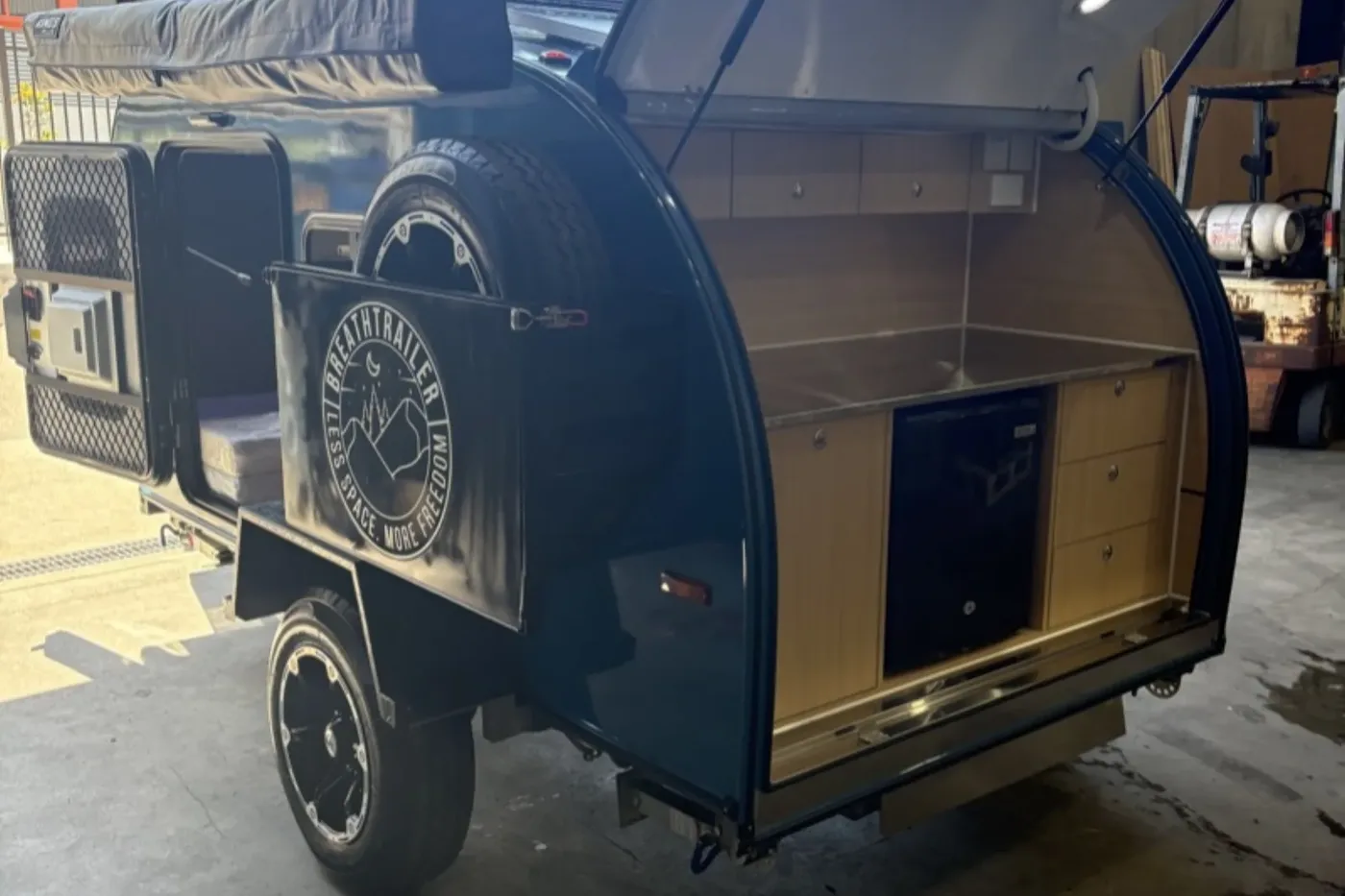
When a 12V cable is undersized by a single wire gauge, it can carry current at temperatures 30–40°C above its rated limit — hot enough to degrade insulation, loosen connections, and eventually start a fire. Most camper trailer buyers never see the cable spec inside their new rig. They trust it was done correctly. In a well-built, factory-integrated trailer, it was. In a trailer assembled from the lowest-cost components, it may not have been.
Professional installation is one of those topics buyers rarely ask about until something goes wrong. Yet in a vehicle that runs 12V and potentially 240V electrical systems, rolls on Australian outback tracks at legal highway speeds, and carries sleeping occupants, the quality of installation matters as much as the hardware itself.
This guide covers what professional installation means across the four key systems in a modern camper trailer — electrical, brakes, suspension, and gas/water — and why getting each one right protects your safety, your warranty, and your legal standing in 2026.
What “Installation” Actually Means on a Camper Trailer
There are three distinct installation scenarios buyers encounter:
Factory-integrated build: Every system — 12V wiring, 240V circuits, brake controller wiring, suspension geometry, gas plumbing — is designed and installed at the point of manufacture by qualified tradespeople, before the trailer leaves the factory. One entity is responsible for everything.
Dealer or workshop retrofit: You buy a base trailer and add accessories through a dealer, an auto-electrician, or a specialist workshop. Each supplier is responsible only for their component; how the systems interact is nobody’s explicit responsibility.
DIY aftermarket: You source and install accessories yourself. The compliance and liability rest entirely with you.
This distinction matters for three interconnected reasons:
- Safety — Incorrectly installed electrical systems are a leading cause of camper trailer fires in Australia.
- Legality — Some installation work requires a licence in Australia; doing it yourself is a criminal offence with penalties of up to $40,000.
- Warranty — Most manufacturer warranties exclude defects caused by aftermarket installation, and correctly so under Australian Consumer Law.
1. Electrical Systems: The Highest-Stakes Installation
12V Systems and AS/NZS 3001.2:2022
Australia’s electrical standard for recreational vehicles — AS/NZS 3001.2:2022 — came into full effect on 18 November 2023, replacing the older 2008 standard. It applies to all camper trailers that can connect to an external power source via a shore power inlet socket.
Key installation requirements under the standard:
| System | AS/NZS 3001.2:2022 Requirement |
|---|---|
| Battery fusing | Fuse or circuit breaker within 15 cm of battery positive terminal |
| Solar panels | Individual fusing and isolation at each panel before parallel connection |
| Inverters | Protected by a Residual Current Device (RCD) on AC output |
| Batteries | Must comply with AS IEC 62619 (cell safety and testing) |
| 12V wiring | Protected against mechanical damage, chafing and environmental exposure |
| Securing | Heavy items (batteries, tanks) secured against 8G impact loads |
None of these requirements are visible from outside the trailer. A solar array that is not individually fused can feed back current into a faulty panel during peak irradiance — a condition that has caused fires in Australian campervans and caravans. A battery not fused within 15 cm of the terminal can deliver unlimited current through a wiring fault, with no protection until the wire physically burns out.
The Cable Sizing Trap
Undersized cables are the single most common installation mistake in DIY and low-cost builds. A wire rated for 20 A carrying 30 A continuously operates at elevated temperature every hour the circuit is loaded. Over months, insulation hardens, connections oxidise, and the risk of arc or ignition climbs.
Cable sizing must account for both current draw and total run length (which governs voltage drop). A 4 mm² wire adequate for 10 A over 3 m becomes inadequate at 6 m and dangerous if the load increases. Most buyers cannot assess this visually, and most installers working to a price will not over-specify.
Minimum cable cross-sections for common 12V camper trailer loads:
| Appliance | Typical current draw | Max run (3% voltage drop) | Min cable (single-core) |
|---|---|---|---|
| LED lighting | 5–10 A | 8 m | 4 mm² |
| 12V compressor fridge (40L) | 4–7 A | 8 m | 4 mm² |
| DC-DC charger 20A (e.g. REDARC BCDC1220D) | 20 A | 4 m | 6 mm² |
| DC-DC charger 40A (e.g. REDARC BCDC1240D) | 40 A | 2.5 m | 16 mm² |
| 2,000W pure-sine inverter | 170–200 A | 0.5 m | 70–95 mm² |
| Anderson plug input (50 A rated) | 50 A | 2 m | 25 mm² |
A professionally installed trailer will have all runs correctly sized and anchored every 400–500 mm to prevent chafing. Neither detail is inspectable once interior panels are fitted. For a deep dive on power systems, see The Complete Guide to Camper Trailer Power Systems and Understanding DC-DC Chargers.
240V Wiring: Licensed Electricians Only
Fixed 230–240V wiring in a camper trailer must be installed, tested, and certified by a licensed electrician in every Australian state and territory. This applies to shore power inlets, changeover switches, RCD protection, inverter connections, and earthing systems. Any voltage over 50 V AC falls under this licensing requirement.
Penalties for unlicensed 240V electrical work in Australia:
| Consequence | Details |
|---|---|
| Individual fine | Up to $40,000 |
| If death or grievous bodily harm results | Up to $100,000 or 2 years imprisonment |
| Insurance implication | Insurer may void claim for fire or damage from unlicensed work |
| Resale risk | Future buyer’s insurer or solicitor can discover non-compliant work |
The advice from state regulators is consistent: “DIY mains wiring puts you and others at serious risk of shock or fire.” If you want to add an inverter or a 240V circuit to an existing trailer, engage a licensed electrician. The installation cost of $200–$600 is trivial against a potential $40,000 fine — or against an uncompensated trailer fire.
2. Brake Controllers: Safety-Critical and Often Underestimated
Under ADR 38/04 (Australian Design Rule for trailer brakes), any trailer with a Gross Trailer Mass (GTM) over 750 kg must be fitted with an operative braking system. The majority of mid-range and premium camper trailers exceed this threshold.
| Trailer GTM | Braking system required |
|---|---|
| ≤ 750 kg | None |
| 751 kg – 2,000 kg | Electric or hydraulic override, operable from driver’s seat |
| > 2,000 kg | Proportional electric brakes on all wheels |
Breath Trailer models span this range: the Essential (700 kg tare, under 750 kg GTM) does not require a brake controller, while the Plus (800 kg ATM), Ultra (900 kg ATM), and Max (1,200 kg ATM) all require electric brakes and a correctly installed controller.
The brake controller in the tow vehicle is what bridges the trailer’s electric brakes to the driver’s foot. A correct installation must:
- Intercept the tow vehicle’s brake signal without interfering with ABS or stability systems
- Apply trailer brakes proportionally to the driver’s foot pedal pressure
- Be calibrated to the specific trailer’s GTM and brake drum/disc configuration
- Use vehicle-specific wiring harnesses on CAN-bus equipped vehicles (essentially every vehicle sold in Australia after 2015)
Why this is harder than it looks: Modern tow vehicles — Toyota LandCruiser 300 Series, Ford Ranger Raptor, Isuzu MU-X — run complex electronic brake systems. Splicing a generic brake controller harness into the wrong circuit on these vehicles can trigger ABS fault codes, suppress brake assist, or generate persistent DTC errors that only appear under hard braking. Professional auto-electricians use vehicle-specific wiring guides and tested plug-and-play kits; a generic splice can create subtle failures that manifest 12 months after purchase on a remote road.
For a full explanation of brake systems, thresholds, and controller options, see Understanding Electric Brakes on a Camper Trailer.
Professional brake controller installation costs $300–$600 for a standard fit. It takes 3–6 hours. The alternative — a loose connection that causes erratic braking on a rain-slicked highway — is not a comparison worth making.
3. Suspension: Where Professional Matters Most Off-Road
Suspension installation is less tightly regulated than electrical, but the mechanical consequences of incorrect installation are just as serious at 100 km/h on corrugated outback tracks.
| Suspension system | Professional installation requirement |
|---|---|
| Independent coil (IRS) | Correct spring rate for payload range; geometry check |
| Airbag suspension | Correct airline routing, load sensing calibration to laden weight |
| Shock absorbers | Correct orientation; correct pivot bolt torque (under-torque = walk-out) |
| DO35/DO45 articulating hitch | Coupling height calibrated to tow ball; correct safety chain length |
| Al-Ko or DuraGal drawbar | Correct nose weight (5–10% of ATM for stability) |
Airbag systems in particular require pressure calibration to the trailer’s actual laden weight. Under-inflated airbags offer no rebound control and allow the chassis to bottom out on large impacts. Over-inflated bags transmit corrugation forces directly to the chassis and the tow vehicle, accelerating fatigue cracking at weld points. Neither failure is immediately obvious; both accumulate damage across a long trip.
For trailers intended for remote routes — the Gibb River Road, Cape York, the Simpson Desert — a suspension failure is not a roadside inconvenience. It is a recovery operation with an 8-hour wait for a RAA/NRMA truck that may or may not reach your location before nightfall.
For a full breakdown of suspension types and their performance characteristics, see Why Suspension Matters on an Off-Road Camper.
4. Gas, Water, and Cabinetry: The Overlooked Systems
Three systems beyond electrical and mechanical create significant issues when installed incorrectly:
Gas systems: LPG fittings in camper trailers must comply with AS/NZS 5601.2 (Gas installations — Camping vehicles). Incorrect regulator selection, inadequate pressure testing after fitting, or hose routing through enclosed spaces without adequate ventilation creates gas leak risk. A licensed gas fitter should certify any LPG cooking or hot water installation — especially in hard-shell trailers where the gas locker and cabin share a continuous structure.
Fresh water plumbing: A minor under-sink leak in a hard-shell teardrop can drip onto 12V wiring harnesses routed beneath the floor. Corrosion to Anderson plug terminals or battery connection points develops slowly and invisibly, emerging months later as unexplained voltage drop or intermittent power loss. Correct water plumbing requires physically separating water lines from 12V harnesses — a detail only visible during the original installation.
Cabinetry and load securing: Under AS/NZS 3001.2:2022, heavy components — batteries, water tanks, fridge slide assemblies — must be secured against 8G longitudinal impact. A 30 kg lithium battery box that is bolted only to a 9 mm ply panel (without blocking or backing plate) can break free in a sharp emergency stop and travel the length of the cabin. Professional fabricators know to back-bolt critical mounts through structural framing.
5. What Good Installation Looks Like: A Pre-Delivery Inspection
You cannot open the wall panels of a new trailer to inspect cable runs. But there are visible indicators of installation quality that any buyer can assess before signing:
| Inspection point | What to look for |
|---|---|
| Battery compartment | Fuse or circuit breaker within 15 cm of positive terminal; terminal insulation boots |
| Anderson plug (vehicle end) | Correct gauge cable; no bare copper visible; strain relief on cable |
| 12V wiring visible runs | Anchored every 400–500 mm; no bare wires crossing sharp metal edges |
| Shore power inlet | Labelled with RCD presence; cover fits flush; no corrosion on pins |
| Brake controller (vehicle cab) | Neat wiring; no visible electrical tape joins; calibration display functional |
| Gas locker | Hose condition; regulator secured; ventilation slots unobstructed |
| Under-sink plumbing | Water lines not crossing 12V runs; fittings not hand-tightened only |
| Battery mounting | Through-bolted to structural frame, not just ply panel |
A trailer that passes these visual checks has likely been assembled with attention to detail at the non-visible points too. One that fails two or three of these checks — exposed terminals, cable ties used in place of P-clamps, shore power cover missing — is telling you something about the overall build quality.
For a comprehensive pre-purchase inspection checklist, see 10 Things to Look for Before Buying a Camper Trailer.
6. The Real Cost of Poor Installation
The upfront price difference between a carefully built trailer and a low-cost alternative is real. The downstream cost of installation failures is typically much larger.
| Failure scenario | Typical cost in 2026 |
|---|---|
| Electrical fire (total trailer loss) | $20,000 – $60,000 (replacement cost) |
| Unlicensed 240V installation — ACCC/state fine | Up to $40,000 |
| Brake controller fault causing accident | Unquantified (injury, vehicle damage, third-party liability) |
| Manufacturer warranty voided by aftermarket installation | $1,000 – $5,000 per repair event |
| 12V water ingress rewire | $500 – $2,500 |
| Non-compliant solar panel fusing (fire from string fault) | $5,000 – total loss |
Under Australian Consumer Law, manufacturers cannot void your ACL statutory rights in full. However, they can — and routinely do — exclude warranty coverage on components where aftermarket installation directly caused the defect. Market Direct, Platinum Campers, Road Warrior, and most other Australian manufacturers explicitly exclude defects resulting from accessories or modifications installed after the trailer left the factory. If a second battery you sourced separately overcharges the lithium bank because the DC-DC charger wasn’t correctly configured for LiFePO₄ chemistry, the manufacturer has grounds to exclude the battery from warranty. Choosing a trailer with every system factory-installed removes that gap.
For more on what to check before you commit to a purchase, Why Quality Control Matters When Buying a Camper Trailer covers the full manufacturing and compliance picture.
7. Questions to Ask Every Dealer
Not all manufacturers disclose their installation standards. Here are the questions to ask before signing:
- Is the electrical system AS/NZS 3001.2:2022 compliant? Ask for the documentation. If the sales representative does not know the standard by name, ask to speak with the manufacturer.
- Who installed the 240V wiring? A licensed electrician? Can you provide the test certificate?
- Was the brake controller installed by a qualified auto-electrician? Which controller is fitted, and has it been calibrated to the trailer’s GTM and brake drum specification?
- Is there a single warranty covering all systems? Or does it exclude the electrical system, the fridge, or the solar — components sourced from third-party suppliers?
- What happens to the warranty if I add an aftermarket accessory? Get the answer in writing.
- Can I see the compliance plate? A VSB1 compliance plate confirms the trailer met Australian standards at time of manufacture.
8. The Breath Trailer Approach: Factory-Integrated From Day One
All four Breath Trailer models — Essential $23,320, Plus $29,766, Ultra $34,749, and Max $47,190 — are built at the Sydney workshop with every system integrated at manufacture.
The widely noted 5-minute camp setup is a direct product of integrated installation: every cable run, Anderson plug, DC-DC charger connection, brake controller harness, and plumbing joint was routed, sized, and secured before interior panels were fitted. There is nothing to connect at camp because it was all connected in the factory.
What integrated installation delivers:
| Aspect | Benefit to buyer |
|---|---|
| AS/NZS 3001.2:2022 compliance | Electrical system certified at manufacture, not retrospectively |
| Single warranty | One entity responsible for component interactions, not just individual parts |
| Brake controller integration | Calibrated to trailer GTM at build; wiring routed cleanly behind dash |
| No system interaction gaps | Solar, battery, DC-DC, and inverter sized to work together as one system |
| Gas and water separation | Water lines routed clear of 12V harnesses by design |
| Gold Sydney Design Award 2025 | Independent recognition of the overall build quality |
The Breath Max (1,200 kg, $47,190) — the only teardrop on the Australian market under $50,000 with a full interior bathroom — illustrates the point. That bathroom, including plumbing, grey-water tank, and ventilation extraction, is installed as part of the integrated factory build, not added after. The grey-water plumbing runs clear of the 12V harness by design; the ventilation meets the requirements for CMCA-recognised self-containment. These are details that matter most when you are 600 km from the nearest town on a remote free-camping lap of Australia.
To compare models or book a viewing at the Sydney workshop, visit the comparison page or book directly.
Frequently Asked Questions
Does professional installation automatically protect my warranty? Professional installation by qualified tradespeople generally preserves your warranty. What puts warranty at risk is installation that directly causes a component fault. Under Australian Consumer Law, your statutory rights cannot be fully excluded — but manufacturers can limit contractual warranty coverage on the specific component or system where a non-compliant retrofit was the cause of the defect.
Is 12V wiring in a camper trailer regulated in Australia? Yes. AS/NZS 3001.2:2022 covers 12V Extra-Low Voltage (ELV) wiring in recreational vehicles that have a shore power connection. Requirements include fusing within 15 cm of the battery, individually fused solar panels, RCD-protected inverters, and cable protection against abrasion. While 12V installation does not require a licensed electrician (unlike 240V), non-compliant 12V systems can void insurance claims and contribute materially to fire risk.
Can I add a second battery or solar panels myself? For a 12V-only system with no 240V involvement, DIY installation is legally permitted in Australia. However, the system must comply with AS/NZS 3001.2:2022: correct fusing within 15 cm of the battery, individual fusing for each solar panel, correctly sized cabling for both current and run length, and anchoring every 400–500 mm. An experienced auto-electrician or 12V specialist is strongly recommended — the cost of an inspection ($100–$200/hr) is small relative to the risk of an undetected fault. See AGM vs Lithium Batteries for Camper Trailers for battery-specific installation requirements.
What is the GTM threshold for electric brakes in Australia? Under ADR 38/04, any trailer with a GTM over 750 kg requires a braking system. For GTMs between 751 kg and 2,000 kg, electric or hydraulic override brakes are acceptable. For GTMs above 2,000 kg, proportional electric brakes operating on all wheels are mandatory. The Breath Trailer Plus, Ultra, and Max all exceed 750 kg GTM and are fitted with electric brakes as standard.
How do I know if a used camper trailer’s electrical system is compliant? Ask for the original compliance documentation. AS/NZS 3001.2:2022 applies to trailers manufactured or substantially re-wired from 18 November 2023. Trailers built before that date were constructed to AS/NZS 3001:2008. For used trailers without documentation, have the 12V and 240V systems inspected by a licensed auto-electrician before you take delivery — a compliance check typically costs $150–$300 and can surface costly problems before they become your problems.
Recommended Reading
- Why Quality Control Matters When Buying a Camper Trailer — VSB1 compliance, factory inspection points, and manufacturer insolvency risk
- Understanding Electric Brakes on a Camper Trailer — ADR38, proportional vs time-delay controllers, maintenance intervals
- The Complete Guide to Camper Trailer Power Systems — solar, 12V, DC-DC, inverters, and 240V explained in full
- Common Camper Trailer Problems and How to Avoid Them — 10 real-world faults and how installation quality affects each
- 10 Things to Look for Before Buying a Camper Trailer — pre-purchase inspection checklist with red flags