Best Camping Spots in Northern Territory, Australia 2026
The 18 best camping spots across the NT for camper trailers in 2026 — Litchfield, Kakadu, Katherine, Devils Marbles, West MacDonnell Ranges, and the Red Centre. Fees, seasonal guide, and model-matching tips.
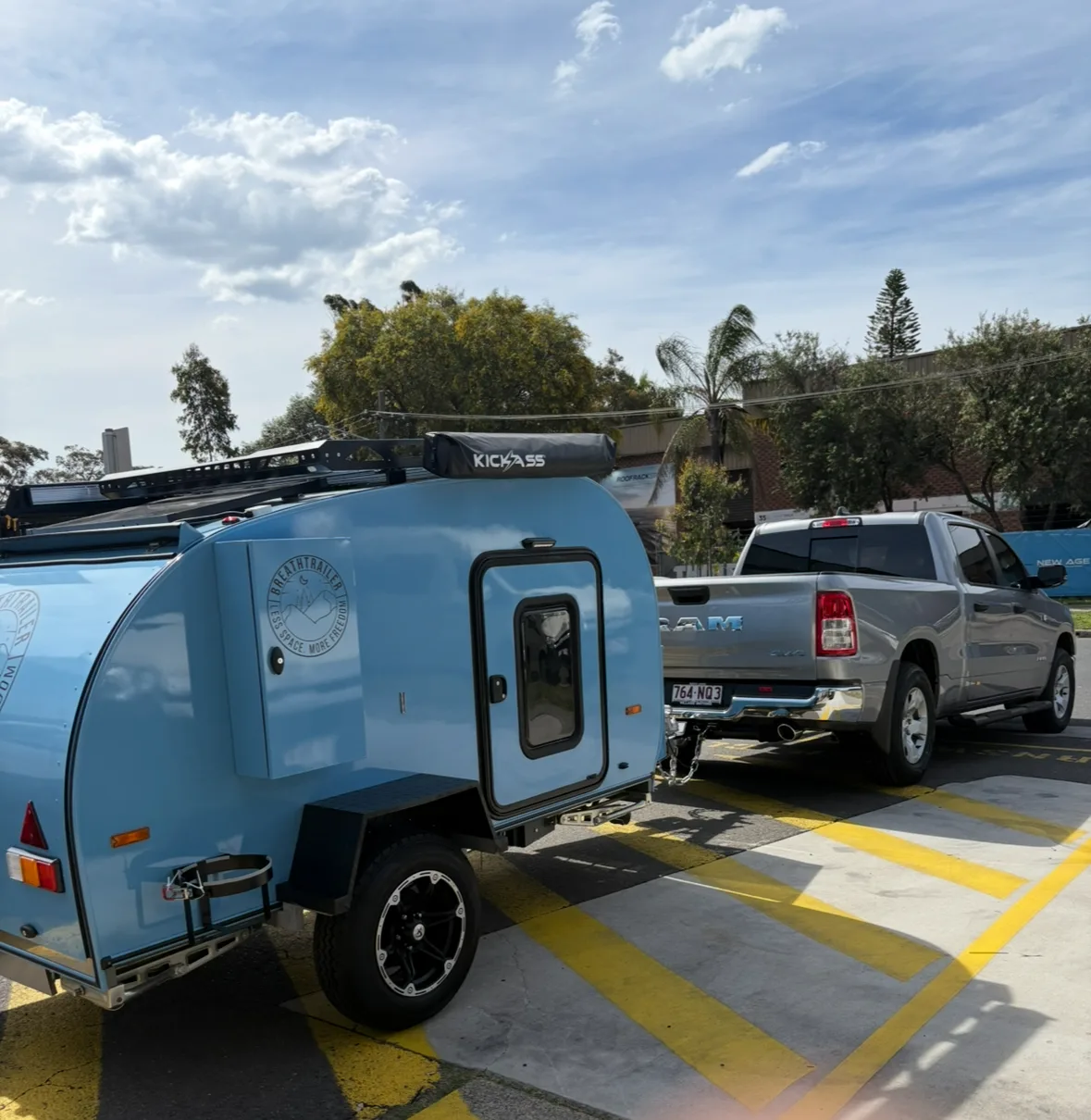
The Northern Territory covers 1.35 million square kilometres — roughly 17% of Australia’s total land mass — yet fewer than 250,000 people live there. Three UNESCO World Heritage sites, more than 50 national parks, and some of the most dramatic geology on Earth make it the defining destination for Australian camper trailer owners. Red dirt under the wheels, 40°C heat, saltwater crocodiles in every Top End waterway, and a Milky Way undimmed by light pollution: the NT is a rite of passage rather than a holiday.
This guide covers 18 of the best campgrounds across six NT regions — Darwin and the Top End, Mary River, Kakadu, Katherine, the Barkly/Tennant Creek corridor, and the Red Centre — with fees, access grades, seasonal windows, self-containment rules, and a model-matching table for Breath Trailer owners.
The NT Parks Pass in 2026: What You Need to Know
Most NT Government-managed parks require interstate and international visitors to hold an NT Parks Visitor Pass, introduced in April 2023. NT residents are exempt; children under 18 enter free.
| Pass type | 1 day | 2 weeks | 12 months |
|---|---|---|---|
| Adult | $10 | $30 | $60 |
| Family (2 adults + up to 4 children) | $25 | $75 | $150 |
Critical exception: The NT Parks Pass does not cover Kakadu National Park or Uluru-Kata Tjuta National Park — both are managed by Parks Australia (Commonwealth) and require separate park entry fees. Camping fees are always charged in addition to the pass.
Purchase the NT Parks Pass online at parkbookings.nt.gov.au before arriving — you cannot pay at the park gate.
When to Go: NT Seasonal Guide
The NT has two dominant seasons, and they determine whether you can access a campground at all.
| Season | Months | Conditions | Camping implications |
|---|---|---|---|
| Dry season — peak | May–October | 20–35°C, no rain, low humidity | All roads open; book Litchfield and Kakadu 4–8 weeks ahead in July–August |
| Wet season | November–April | 35–42°C, high humidity, cyclones | Most Kakadu and Arnhem Land dirt roads flood and close; Top End escarpment tracks impassable |
| Shoulder (post-wet) | April–May | Rain easing | Some roads still muddy; wildlife active after rains; campgrounds begin to open |
| Pre-wet shoulder | October–November | Temps climbing to 38°C+ | Campgrounds quieter; early heatwaves possible — plan shorter driving days |
The Big Lap convoy season runs June–August. Litchfield and Kakadu campgrounds fill within days of the school holidays opening in late June. Book immediately when dates are confirmed.
Croc Safety: The Non-Negotiable Rule
Every waterhole, river, estuary, and billabong in the Top End — broadly north of Mataranka — is saltwater crocodile habitat. The Northern Territory Government rule is unambiguous: never swim in unfenced waterways north of Mataranka unless a park-managed, cleared swimming area is provided. Litchfield’s plunge pools (Florence Falls, Wangi Falls, Buley Rockhole) are fenced and regularly checked; open rivers and billabongs are not. Each campground entry below includes a croc note where relevant.
Region 1: Darwin & Top End
1. Litchfield National Park — Florence Falls Campground
Access: Sealed road, 95 km south of Darwin. 2WD accessible.
Florence Falls is the top-rated campground in Litchfield — a Category A facility with hot showers, flushing toilets, BBQ, and picnic tables, all within a short walk of one of the park’s best plunge pools. A campground host operates May–September.
- Fee: From $15/adult/night; children $8/night
- Sites: 25 unpowered sites; largest rigs to approximately 7 m
- Facilities: Hot showers, flushing toilets, BBQ, fire rings, picnic tables
- Croc safety: Florence Falls plunge pool is fenced and cleared — swimming is permitted only at the designated area
- Booking: parkbookings.nt.gov.au; book 6–8 weeks ahead July–August
2. Litchfield National Park — Wangi Falls Campground
Wangi Falls is the park’s signature waterfall — a twin-cascade into a deep plunge pool surrounded by monsoon forest. The campground sits 500 m from the falls.
- Fee: From $10–15/person/night (Category A facilities)
- Croc safety: Wangi Falls pool has been temporarily closed for crocodile management in past seasons — always check current signage on arrival
- Best for: Families; couples; first-night stop from Darwin
3. Litchfield National Park — Tjaynera (Sandy Creek) Falls
A 4WD-only campground accessed via a sandy creek crossing. Quieter than Florence or Wangi, with no generators permitted.
- Access: High-clearance 4WD required; not suitable for low-clearance camper trailers
- Fee: From $15/person/night (pit toilets, tables, fire rings)
- Best for: Off-road teardrop campers with good ground clearance; Breath Ultra or Max
4. Mary River National Park — Shady Camp
Access: Sealed and all-weather gravel, 130 km east of Darwin via the Arnhem Highway.
Mary River’s floodplains hold the world’s highest density of estuarine crocodiles — 2.4 per kilometre of riverbank — plus 280+ bird species and world-class barramundi fishing. Shady Camp has a purpose-built crocodile viewing shelter directly above the river.
- Fee: ~$3.30/person/night (basic pit toilets; bring all drinking water)
- Croc safety: No swimming; no kayaking in open water — active saltwater crocodile zone
- Best for: Wildlife photography, barramundi fishing; self-contained campers — Breath Ultra or Max
Region 2: Kakadu National Park
Kakadu is the size of South Korea — 19,804 km² of tropical monsoon forest, escarpment, wetland, and rock art. It is a Parks Australia site; the NT Parks Pass does not apply here, and there is no option to pay at the gate.
5. Mardugal Camping Area (Yellow Water)
Access: Sealed road to Yellow Water wetlands.
Mardugal is Kakadu’s largest managed campground, with generator-permitted and generator-free zones, hot showers, flushing toilets, BBQ, and picnic tables. It sits adjacent to the Yellow Water billabong cruise departure — widely regarded as the best place in Australia to observe saltwater crocodiles from a safe platform.
- Fee: From $6–15/person/night depending on season (confirm at kakadu.gov.au before departing)
- Sites: Large flat area for tents, camper trailers, and caravans
- Croc safety: No swimming; Yellow Water is an active crocodile wetland
- Breath Max advantage: The 80 L fresh water tank and grey water holding tank extend stays without relying on the shower block queue
6. Muirella Park Camping Area (Jabiru)
Access: Sealed road, near Jabiru township and the Bowali Visitor Centre.
Muirella Park is a no-generator campground with hot showers, flushing toilets, and drinking water — ideal for rock art itineraries (the Burrungkuy / Nourlangie galleries are 25 km south).
- Fee: From $6–15/person/night (confirm current wet/dry season rates at kakadu.gov.au)
- Sites: Camper trailers and tents; generators not permitted
- Best for: Extended stays; rock art and cultural heritage travellers; Breath Max (self-contained, no generator noise policy)
Region 3: Katherine & Surrounds
7. Nitmiluk (Katherine Gorge) National Park
Access: 30 km northeast of Katherine on sealed road.
Nitmiluk’s 13 sandstone gorges, carved by the Katherine River, are accessible by canoe or guided boat — 12th gorge requires paddling through the first 11. The Nitmiluk Campground (operated by Nitmiluk Tourism, not NT Parks) sits at the gorge entrance.
- Fee: Unpowered camping from ~$20/person/night; powered sites from ~$40/night (confirm with Nitmiluk Tourism; a 10% discount applies on all site bookings from August–November 2026 for stays between October 2026 and April 2027)
- Facilities: Powered and unpowered sites, camp kitchen, pool, kiosk
- NT Parks Pass: Required separately at the visitor centre on arrival
- Best for: Multi-day gorge exploration; couples; Breath Ultra or Max
8. Elsey National Park — Jalmurark (12 Mile Yard) Campground
Access: Sealed Stuart Highway, south of Mataranka township.
Elsey is famous for its thermal springs — a 34°C naturally heated river section with a fenced, croc-cleared swimming area. A rare opportunity for a safe Top End swim outside of park-managed plunge pools.
- Fee: ~$10/person/night (confirm at parkbookings.nt.gov.au)
- Croc safety: Designated thermal spring swimming area is fenced and cleared; open river sections are not safe
- Best for: Big Lap families after Katherine; budget campers; any Breath model
9. Judbarra/Gregory National Park — Bullita Campground
Access: Sealed highway to Timber Creek (518 km from Darwin), then 50 km of corrugated dirt — high-clearance vehicle required.
The NT’s second-largest national park, Judbarra/Gregory is a boab-studded savannah of sandstone gorges with virtually no visitors. Bullita is the main campground — pit toilets only; no water on-site. The Bullita Stock Route walking track requires a permit.
- Fee: ~$3.30/person/night
- No water on-site: Carry everything in
- Best for: Remote off-grid explorers; Breath Max or Ultra with full tanks — self-containment is effectively mandatory here
Region 4: Tennant Creek & the Barkly Highway
10. Karlu Karlu / Devils Marbles Conservation Reserve
Access: 100 km south of Tennant Creek directly on the Stuart Highway — sealed, 2WD accessible.
Thirty-six square kilometres of granite boulders — some up to 6 m tall — scattered across spinifex plains. The light at dawn and dusk turns them blood-orange against a blue sky. This is one of the most photographed landscapes in the NT, and it sits right on the main north-south route.
- Fee: Camping fee applies; book online before departing — cannot pay at site
- Facilities: Pit toilets, communal fire pits, sheltered tables. No generators. No water — fill at Tennant Creek
- Best for: Overnight stop on the Big Lap Around Australia; all models; photographers
11. Davenport Range National Park — Whistleduck Creek Campground
Access: 140 km southeast of Tennant Creek; mostly sealed then 40 km of gravel.
An under-visited gem: a permanent spring feeds a swimming hole (croc-free in Central Australia), and rare black-footed rock-wallabies and Spinifex pigeons appear at dusk. No generators permitted.
- Fee: ~$3.30/person/night (confirm at parkbookings.nt.gov.au)
- Facilities: Pit toilets, fire rings; bring all water and food
- Best for: Off-the-beaten-track couples and retirees; Plus, Ultra, or Max
Region 5: Alice Springs & MacDonnell Ranges
12. Tjoritja / West MacDonnell National Park — Ormiston Gorge
Access: 135 km west of Alice Springs on sealed road.
Ormiston Gorge is the largest gorge in the West Macs — a sheer red-ochre and purple quartzite amphitheatre surrounding a permanent waterhole. The campground has 31 sites with hot showers, a kiosk, and walking trail access to the Ormiston Pound circuit and the Larapinta Trail (sections 9 and 10).
- Fee: $10/adult/night; children and families discounted
- Facilities: Hot showers, flushing toilets, BBQ, picnic tables, kiosk
- Croc safety: No saltwater crocodiles in Central Australia — swimming in the permanent waterhole is safe
- Best for: Larapinta Trail walkers; couples and retirees; all Breath models
13. Tjoritja / West MacDonnell National Park — Glen Helen Gorge
Access: 150 km west of Alice Springs on sealed road, 15 km beyond Ormiston.
The deepest gorge in the West Macs, with a permanent waterhole fed by the Finke River — said to be the oldest river in the world. A heritage lodge next door sells fuel. Quieter than Ormiston.
- Fee: ~$10/adult/night (book at parkbookings.nt.gov.au)
- Best for: Quiet overnight stop on the full West Mac drive; couples
14. N’Dhala Gorge Nature Park — East MacDonnell Ranges
Access: 10 km off the Ross Highway, 98 km east of Alice Springs; 4WD required for the final section.
The East Macs are quieter than the West and hold one of the largest concentrations of ancient rock art in Australia — N’Dhala Gorge contains more than 6,000 petroglyphs. Basic camping only: pit toilets and no water supply.
- Fee: Camping fee applies; no water on-site
- Best for: Self-contained trailers; history and archaeology enthusiasts; Breath Ultra or Max
Region 6: Red Centre — Uluru, Kings Canyon & the Outback
15. Ayers Rock Resort Campground, Yulara
Access: 450 km south of Alice Springs on fully sealed Stuart and Lasseter Highways.
Uluru-Kata Tjuta National Park permits no camping within park boundaries. The commercial Yulara campground at the resort township is the only option, but it’s comfortable and close to the park entrance.
- Fee: Powered sites from $58–68/night; unpowered from $30–40/night (commercial rates; book via Ayers Rock Resort)
- Park entry fee: Uluru-Kata Tjuta is managed by Parks Australia; adult day-entry ~$38/person (check parksaustralia.gov.au for current 2026 rates)
- Facilities: Hot showers, powered sites, pool, restaurants, grocery store, camp kitchen
- Best for: The full Uluru-Kata Tjuta experience; all Breath models; maximum-amenity retiree campers
16. Kings Creek Station — Near Watarrka (Kings Canyon)
Access: 475 km west of Alice Springs via Luritja Road (partially sealed/gravel) or via the Mereenie Loop (permit required — available from the Alice Springs Visitor Information Centre for ~$7).
Kings Creek Station is a working cattle property adjacent to Watarrka National Park. No camping is permitted within the park itself.
- Fee: Unpowered from $25/person/night; powered from $40/night
- Facilities: Basic amenities, camp kitchen, fuel, camel rides, helicopter tours
- Best for: Kings Canyon Rim Walk (early morning start essential in summer heat — gate opens 6 am); all Breath models
17. Curtin Springs Station Wayside Inn
Access: 160 km east of Uluru; sealed Stuart Highway.
A working cattle station hosting travellers since 1956, Curtin Springs offers no-frills camping with views of Mt Conner — frequently mistaken for Uluru and nicknamed the “False Uluru.” A fuel stop and cold beer make it a reliable mid-point rest.
- Fee: From ~$20/person/night (confirm directly with the station)
- Best for: Overnight stop between Alice Springs and Uluru; all models
18. Rainbow Valley Conservation Reserve
Access: 22 km south of Alice Springs on the Stuart Highway, then 22 km of unsealed track — 2WD achievable in dry conditions; 4WD required after rain.
Rainbow Valley’s freestanding sandstone bluffs and claypan glow in bands of cream, ochre, and deep crimson as the light shifts — one of the most dramatic photographic backdrops in Australia. No facilities except pit toilets. No water supply. Generator-free zone.
- Fee: ~$3.30/person/night (book online before departing Alice Springs)
- Best for: Astrophotography; self-contained off-grid campers; Breath Ultra or Max — no water supply means a full tank is non-negotiable
NT Self-Containment Rules by Area
Unlike New South Wales (Environmental Trust policy) or the ACT (mandatory at Googong), the NT has no blanket state-wide self-containment mandate. However, practical requirements vary:
| Area | Self-containment requirement |
|---|---|
| National park designated campgrounds | Not mandatory at managed sites with facilities; grey water must go to sewer or waste point |
| Remote / undesignated bush camping | Effectively mandatory — carry all water, contain grey water, carry portable toilet |
| Kakadu and Uluru-Kata Tjuta (Parks Australia) | No grey water surface disposal; use sewer disposal point only |
| Dry season at 38°C+ | Daily water consumption rises to 15–20 L per person; the Breath Max 80 L tank vs Breath Essential 12 L becomes critical on multi-night remote stays |
The Breath Max — with its interior bathroom, 80 L fresh water tank, and grey water holding — is the most capable model for remote NT parks like Judbarra/Gregory, Davenport Range, and Rainbow Valley, where no water or waste infrastructure exists.
Booking Windows and Key NT Dates
| Event / Period | Timing | What to do |
|---|---|---|
| Dry season opens | Late April | Book Litchfield and Kakadu campgrounds immediately — fills within weeks at peak |
| School holidays (June–July) | 2 weeks mid-June to mid-July | Litchfield and Nitmiluk fully booked; plan 6–8 weeks ahead |
| Wet season onset | November | Most Kakadu and Mary River sites close; check nt.gov.au road status |
| Big Lap peak | June–August | Budget 3–4 nights per campground; spontaneous travel in the Top End is very difficult |
| Nitmiluk Tourism discount | Books Aug–Nov 2026 | 10% off powered and unpowered sites for stays October 2026–April 2027 |
Matching a Breath Trailer to NT Terrain
| Region | Terrain | Recommended model | Key reason |
|---|---|---|---|
| Darwin / Litchfield | Sealed road | Essential or Plus | Easy access; park facilities on-site |
| Mary River | Sealed + gravel | Plus or Ultra | Extra water helpful; gravel tracks |
| Kakadu | Sealed + some dirt | Ultra or Max | Extended stays; grey water holding; no-generator policy at Muirella |
| Katherine / Nitmiluk | Sealed | Any model | Good access; campground facilities available |
| Judbarra/Gregory | 4WD corrugated dirt | Max | Remote — 80 L water and grey water tank essential |
| Karlu Karlu | Stuart Highway | Any model | Overnight stop; fill water in Tennant Creek |
| West MacDonnells | Mostly sealed | Ultra or Max | Hot and dry; water capacity decides stay length |
| Red Centre / Uluru | Fully sealed | Any model | Commercial campground; all facilities on-site |
| Rainbow Valley | Dirt (4WD after rain) | Ultra or Max | No water on site; generator-free zone suits lithium-equipped models |
Northern Territory Camping FAQs
Does the NT Parks Pass cover Kakadu and Uluru? No. Both parks are managed by Parks Australia (Commonwealth), not the NT Government. They have separate entry fees charged at the gate or online. The NT Parks Visitor Pass ($10/adult/day, $30/2 weeks, $60/year for interstate visitors) covers NT Government parks: Litchfield, Nitmiluk, West MacDonnell, Karlu Karlu, and others.
Can I free-camp in the Northern Territory? Limited options exist on crown land along the Stuart Highway (rest areas and designated off-road sites). Most accessible free-camping in the Top End is restricted by Aboriginal land boundaries, wet-season flooding, and crocodile zones. Use WikiCamps or CamperMate to check current-season options; always carry 4–5 days of water and a full off-road accessories kit.
When are NT roads flooded and closed? The wet season (November–April) floods most dirt roads in the Top End — Kakadu 4WD tracks, Judbarra/Gregory access, and many Arnhem Land routes. The Stuart Highway remains open year-round. Check the NT Road Report before any unsealed-road trip in the November–April window.
Is the NT safe for solo campers? Yes, with appropriate preparation. Telstra coverage on the Stuart Highway is reasonable; remote parks like West MacDonnells and Judbarra/Gregory have no mobile coverage. Carry a PLB (GME MT610G $389) or Garmin inReach Mini 2 ($599) as a minimum. See the must-have accessories guide for the full remote safety kit.
What’s the recommended first-timer NT route? Darwin → Litchfield (2 nights) → Mary River (1 night) → Kakadu (3 nights) → Katherine/Nitmiluk (2 nights) → Stuart Highway south → Karlu Karlu overnight → Alice Springs (2 nights) → West MacDonnells (2 nights) → Uluru (2 nights). Approximately 3,000 km of mostly sealed road, best done in 18–21 days during June or September to avoid school holiday peak and pre-wet heat.
Recommended Reading
- Big Lap Around Australia Preparation Guide — full NT leg itinerary, weekly budget, admin checklist, and comms setup
- Self-Contained Camper Australia — CMCA self-containment criteria and free-camping legality across all states
- Must-Have Accessories for Off-Road Adventures — PLB, recovery gear, and comms for remote NT travel
- Best Camping Spots in Queensland — Cape York and Gulf Savannah as the logical NT connection from the east coast
- Teardrop Camper Weight Australia — tow vehicle compatibility before committing to the 3,000 km NT run
Considering a trip to the Territory? Inspect the Breath Trailer range at one of our ambassador viewing locations — or book a consultation to spec the right model for a remote NT adventure.