Best Camping Spots in Western Australia: The 2026 Camper Trailer Guide
From Karijini's ancient gorges to Ningaloo's turquoise reef — the definitive 2026 guide to 18 best camping spots in Western Australia for camper trailers.
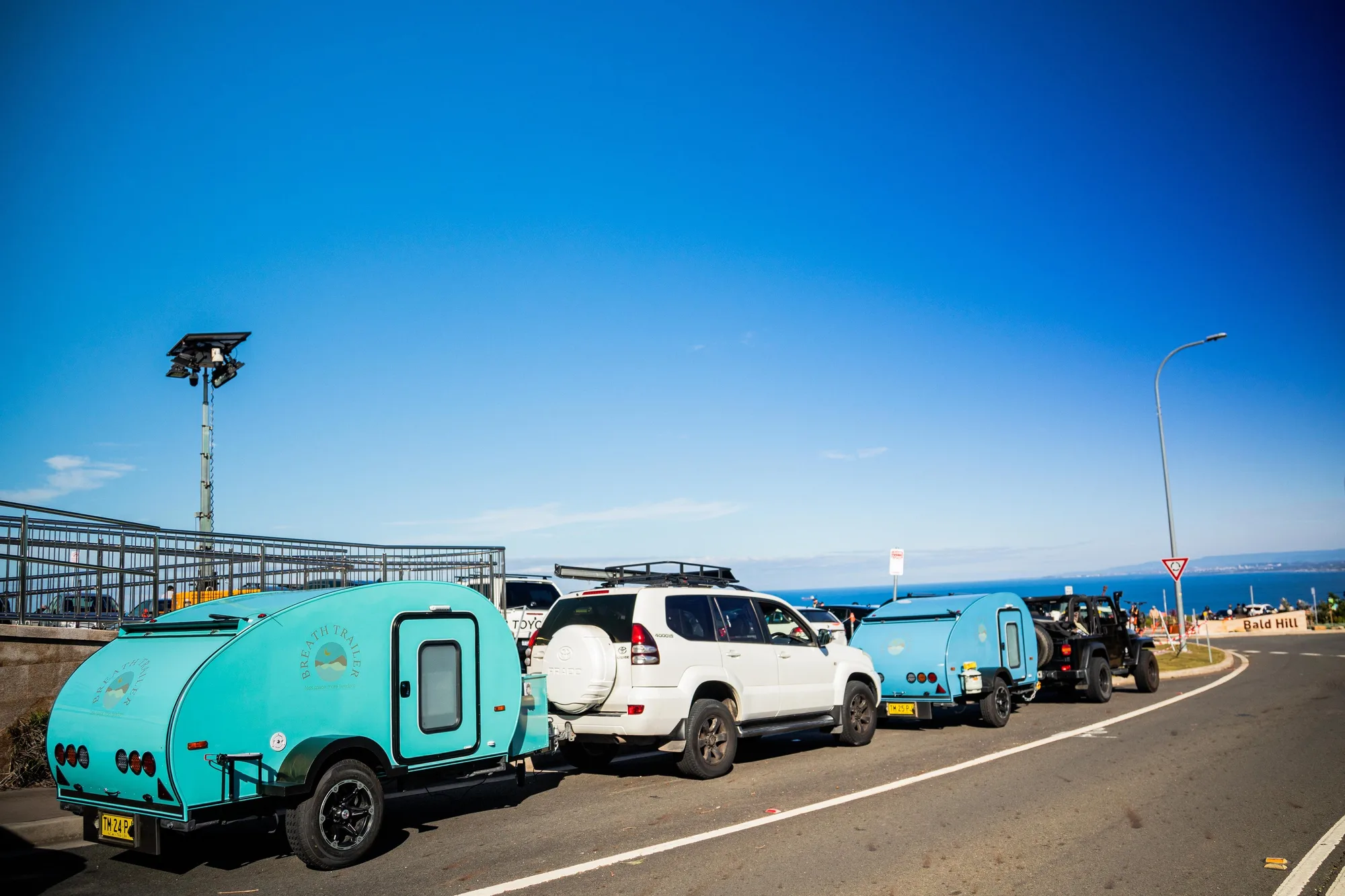
Western Australia covers a third of the continent. Its national parks alone span 88 million hectares — from karri forest in the deep south-west to ancient Pilbara gorges to Kimberley waterfalls that don’t appear on maps until you are standing in front of them. If you are planning a WA road trip with a camper trailer, you are not choosing one type of landscape: you are choosing several.
This guide covers 18 of the best campgrounds across 6 regions, with 2026 fees, booking windows, seasonal advice, and an honest model-match table so you leave home in the right rig. Whether you are a Perth couple chasing a long weekend, a family doing the Coral Coast run, or retirees on the big lap, there is a campground here calibrated to your needs.
Australia’s three other major state guides — NSW, Queensland, and Victoria — follow the same format if you are planning a multi-state tour.
The 6 Regions at a Glance
Western Australia’s camping landscape divides into six distinct corridors:
| Region | Distance from Perth | Best Season | Key Drawcard |
|---|---|---|---|
| Perth Hills & Surrounds | 40–160 km | Year-round | River swimming, easy access |
| South West (Margaret River / Pemberton) | 280–360 km | Sep–Feb | Karri forest, surf coast, caves |
| Esperance & Great Southern | 720 km | Oct–Apr | Lucky Bay white sand, whales, wildflowers |
| Coral Coast / Ningaloo | 1,200–1,270 km | Mar–Oct | Whale sharks, reef snorkelling |
| Pilbara (Karijini) | 1,400 km | Apr–Oct | Ancient gorges, swimming holes |
| Kimberley | 2,000–3,000 km+ | May–Sep | Waterfalls, Gibb River Road, Bungle Bungles |
Western Australia Camping Fees — How It Works
All Western Australian national park and conservation park campgrounds are managed by DBCA (Department of Biodiversity, Conservation and Attractions) through Explore Parks WA and booked via ParkStay WA (parkstay.dbca.wa.gov.au).
Fees are charged per person per night — not per site — which rewards small parties travelling in a teardrop over families in large caravans.
| Facility Level | Description | Fee (per person per night, 2026) |
|---|---|---|
| Basic / Remote | Pit toilets only, no water | ~$10–$12 |
| Standard | Pit or flush toilets, limited water | ~$13–$15 |
| Upgraded Standard | Flush toilets, showers, BBQs | ~$15–$17 |
| Premium / Powered | Powered sites, full amenities | $20–$27 |
| Concession (pensioner) | All tiers | Reduced ~$7–$9 |
Children 5 and under are free. Park entry fees apply separately at some parks (e.g. Cape Range, Karijini, Purnululu) on top of camping fees — typically $15–$20 per vehicle per day or covered by an annual WA Parks Pass (~$25/vehicle/year for WA residents; non-residents pay per-entry).
Booking window: ParkStay WA operates a 180-day rolling window. Cape Range National Park bookings release monthly in batches at 10am AWST on a rolling basis — the most sought-after coastal sites sell out the same morning they open. For Karijini in peak season (June–August), Dales Gorge books out months in advance.
Region 1 — Perth Hills & Surrounds
1. Lane Poole Reserve (Dwellingup) — Birdbark Campground
The Murray River runs through 54,000 hectares of jarrah forest just two hours south of Perth. Lane Poole is the closest place to the city where a Breath trailer actually fits — powered sites up to 15 m, plus flat gravel hardstands at most campgrounds. Canoe the Murray, swim the Blue Pools, walk to Ball Creek: there is more to do here than a three-night trip can cover.
- Access: Sealed all the way, then gravel 3–5 km into specific camps — suitable for all Breath models
- Facilities: Flush toilets, hot showers, fire rings, dump point on site
- Fees: ~$15/adult/night (upgraded standard)
- Booking: ParkStay WA; books fast in school holidays — secure 4–6 weeks ahead
2. Serpentine National Park
Forty-five minutes from the CBD. Serpentine Falls empties into a natural rock swimming hole with a sandy beach below the viewing platform — a genuinely excellent afternoon swim from a campsite you can reach on a Thursday evening after work.
- Access: Fully sealed, no 4WD required
- Facilities: Flush toilets, BBQ areas; no powered sites
- Fees: ~$13–$15/adult/night + park entry
- Best for: Weekend escape for couples and families near Perth
3. John Forrest National Park
Perth’s oldest national park. Heritage spring-fed pools, jarrah and marri forest, and the Swan View Tunnel — a converted railway tunnel turned walking/cycling trail. Campsite numbers are limited; book early in spring when wildflowers line every trail.
- Access: Sealed; right off the Great Eastern Highway
- Facilities: Standard (pit toilets, some BBQ areas); day-use area has better facilities
- Fees: ~$13/adult/night
Region 2 — South West (Margaret River / Pemberton / Walpole)
4. Boranup Campground — Leeuwin-Naturaliste National Park
Tall karri trees, 100 m from the Boranup karri forest drive, 8 km from the Indian Ocean and Cape Mentelle’s surf beach. This is three hours from Perth and the most underrated campground in the south-west — good spacing between sites, solid canopy shade, and no powered camping on purpose, which keeps the crowd self-selecting.
- Access: Sealed to campground; high-clearance recommended for Boranup Forest Drive
- Facilities: Pit toilets, tank water (treat before use), no showers
- Fees: ~$12/adult/night
- Note: Fires prohibited October–April (high fire risk season); carry a camp stove
5. Beedelup National Park (Pemberton)
Old-growth karri and tingle forest. The Beedelup Falls walk (2.2 km return) reaches a suspended swing bridge over the falls — one of WA’s most photographed short walks. Campground is small (12 sites), quiet, and completely tree-canopied.
- Access: Sealed to Pemberton town; gravel 12 km to campground — suitable for all models with care
- Facilities: Pit toilets; no showers, no power
- Fees: ~$12/adult/night
- Best for: Couples or grey nomads wanting solitude
6. D’Entrecasteaux National Park (Gardner Campground)
Coastal clifftop camping on the south-west tip of the continent — 130 km of remote coast with no sealed roads and no facilities beyond composting toilets. You need to carry every drop of water and deal with your own waste. The payoff: dunes, wildflowers (September), Southern Ocean beaches, and the near-total absence of other people.
- Access: High-clearance 4WD required for most internal tracks; standard 2WD can reach Thomas River area
- Facilities: Composting toilets only; no water, no power, no showers
- Self-containment requirement: Essential here — grey water tanks and onboard water mandatory
- Fees: ~$10/adult/night (remote basic)
If you plan to free-camp or access truly remote WA crown land, read the self-contained camper Australia guide before you leave — WA rules differ by land tenure and getting it wrong can mean a fine on a remote track.
Region 3 — Esperance & Great Southern
7. Lucky Bay Campground — Cape Le Grand National Park
Consistently voted one of Australia’s whitest beaches, with kangaroos that have figured out the afternoon thermals and just lie on the sand. Lucky Bay campground sits 200 m from the beach with a direct view of the French Islands and Recherche Archipelago.
- Access: Mostly sealed from Esperance (56 km); last 2 km gravel OK for all models
- Facilities: Flush toilets, hot showers, BBQs, camp kitchen — one of WA’s better-appointed coastal campgrounds
- Fees: ~$15–$17/adult/night (upgraded standard) + park entry ~$15/vehicle/day
- Booking: ParkStay WA; books out school holidays 6+ months ahead
- Best season: October–April (warm water, calm seas; whale season September–October offshore)
8. Le Grand Beach Campground — Cape Le Grand NP (Alternative)
If Lucky Bay is full — which it often is — Le Grand Beach is 5 km further along the same park. Same white sand, same kangaroos, slightly fewer people, no BBQ infrastructure. Sites have the same sweeping easterly outlook. Works best as a second-choice booking when you want both booked simultaneously.
- Facilities: Pit toilets, no showers
- Fees: ~$13/adult/night
9. Two Peoples Bay Nature Reserve (Albany region)
Thirty-five kilometres east of Albany. The bay is famous as a sanctuary for the noisy scrubbird — a species once thought extinct. Campers get a sheltered inlet with good fishing, ocean swells, and complete absence of tourist infrastructure. A wildlife-first reserve where you feel genuinely away.
- Access: Sealed all the way from Albany
- Facilities: Flush toilets, limited water; no powered sites
- Fees: ~$13/adult/night
Region 4 — Coral Coast / Ningaloo
10. Osprey Bay Campground — Cape Range National Park, Exmouth
Ningaloo Reef begins 100 m offshore from these campsites. No infrastructure between your trailer and the turquoise water — just beach, reef, and the chance of a whale shark gliding past at sunrise. This is the campsite most people mean when they say “Ningaloo.”
Cape Range campgrounds operate on a monthly batch release system through ParkStay WA — sites open at 10am AWST on a set date each month, covering stays 180 days out. The Osprey Bay, Tulki Beach, Mesa, and Lakeside sites sell out within hours of opening for the whale shark season (March–July).
- Access: Sealed to Exmouth, then sealed Minyirr Drive through the park; all models suitable
- Facilities: Pit toilets, no water, no showers, no power — a basic experience at a premium location
- Fees: ~$10–$12/adult/night + $15/vehicle/day park entry
- Booking: Requires an alert for the monthly release date; set ParkStay WA alerts
11. Coral Bay (Mauds Landing Campground) — Ningaloo Reef
Coral Bay sits at the southern end of Ningaloo, 153 km from Exmouth. The reef runs literally to the beach — snorkel in knee-deep water from camp. Mauds Landing has a mix of powered and unpowered sites for caravans and camper trailers.
- Access: Sealed all the way from Perth via North West Coastal Highway (1,130 km)
- Facilities: Flush toilets, hot showers, powered sites available
- Fees: ~$20–$27/site/night powered (site-based here, not per-person)
- Best for: Families or couples wanting Ningaloo with amenities
12. Francois Peron National Park (Shark Bay region)
Shark Bay is a UNESCO World Heritage Area. The red-cliffed Peurong Bay campground inside Francois Peron puts you on the edge of Shark Bay’s inner sea, with dugongs in the shallows and dolphins at nearby Monkey Mia (separate admission). The park road requires deflated tyres to 20–25 psi — soft sand for 50+ km each way.
- Access: 4WD high clearance required; 2WD cannot reach most campgrounds
- Facilities: Composting toilets, tank water (boil or treat); no showers at remote sites
- Fees: ~$10–$12/adult/night
- Best season: April–October (summer temperatures exceed 40°C; few facilities)
Region 5 — Pilbara (Karijini)
13. Dales Gorge Campground — Karijini National Park
The Pilbara’s ancient ranges hold gorges up to 100 m deep, swimming holes so cold they knock the wind out of you, and waterfalls that feed thermal pools. Dales Gorge is the most accessible of Karijini’s gorge systems — a short walk to Fortescue Falls, Fern Pool, and Circular Pool.
Dales Gorge Campground has 140 powered and unpowered sites. The campground is well-appointed by Karijini standards (flush toilets, hot showers, powered sites) and handles camper trailers up to ~10 m without issue. It costs $15/adult/night in 2026, plus park entry.
- Access: Sealed from Tom Price; 10 km sealed to campground
- Facilities: Flush toilets, hot showers, powered sites, ranger station
- Fees: $15/adult/night + ~$15/vehicle/day park entry
- Booking: ParkStay WA; June–August books 4–6 months ahead
- Best season: April–October — Pilbara summers hit 48°C; the gorges become dangerous flood channels in summer storms
14. Weano Campground — Karijini NP
The western gorges — Weano, Hancock, Joffre, Knox — require more serious scrambling (wetsuit recommended for Knox in winter) and return better photographic rewards than Dales. Weano campground is smaller, quieter, and 50 km further west along the park road.
- Facilities: Flush toilets, hot showers; no powered sites at Weano
- Fees: ~$13–$15/adult/night
- Note: The off-grid setup advice becomes very relevant here — no power, no dump point within the gorge area
15. Millstream Chichester National Park (Millstream Homestead)
One hundred kilometres north of Karijini, Millstream is built around a natural freshwater spring — the Deep Reach Pool is one of the most surreal swims in Australia, fed by an ancient underground aquifer in the middle of the desert. Less visited than Karijini, which is precisely the point.
- Access: 3 km of gravel off North West Coastal Highway; all models suitable with care
- Facilities: Flush toilets, camp kitchen, information centre
- Fees: ~$13/adult/night; no park entry fee
- Best season: May–September
Region 6 — Kimberley
16. Gibb River Road — El Questro Wilderness Park
The Gibb River Road is 660 km of unsealed corrugated road linking Derby to Kununurra through the heart of the Kimberley. It is emphatically not for every rig or every driver — but for those prepared, the station stays and gorge campgrounds along its length are unmatched.
El Questro Wilderness Park charges an entry fee ($22/person/day in 2026) and offers campgrounds from basic bush sites to powered riverside sites at El Questro Station. Emma Gorge, Zebedee Springs (thermal pools), and Moonshine Gorge are within a 20-km radius.
- Access: Corrugated gravel, may require 4WD in sections; river crossings can be impassable May–October depending on wet season runoff; check [GRR current road conditions at Shire of Derby West Kimberley]
- Facilities: Varies by site — basic bush to powered sites at El Questro Station
- Fees: Station campground ~$25–$50/site/night; El Questro entry $22/person (2026)
- Best season: May–September only; avoid June week school holidays for peak congestion
17. Mitchell Falls Campground — Barnett River Gorge
Mitchell Falls is a four-tiered waterfall that drops 80 m through ancient sandstone. The campground sits 1 km from the trailhead; the hike to the top pool is 8.7 km return (allow 4 hours). A helicopter flight over the falls is expensive but one of Australia’s great aerial experiences.
- Access: Accessible from Gibb River Road via Mitchell Plateau Road (60 km one-way corrugated track, 4WD essential)
- Facilities: Composting toilets; no water, no power, no showers
- Fees: ~$13/adult/night through DPaW WA
- Note: Helicopter access available from Drysdale River Station for those who cannot drive the plateau road
18. Walardi / Kurrajong Campground — Purnululu National Park (Bungle Bungles)
The Bungle Bungle Range’s orange-and-black beehive domes are not just photographs — inside the domes, Cathedral Gorge opens into a vaulted amphitheatre with acoustics that make you pause. Piccaninny Gorge is a 30 km return overnight walk into the range interior.
Purnululu has two campgrounds — Walardi and Kurrajong — both basic.
- Access: 53 km of corrugated 4WD-only track from the highway; the road has killed more transmissions than gorge hiking — slow down, reduce tyre pressure, and budget extra time
- Facilities: Composting toilets; no water, no power, no showers — carry all supplies
- Fees: ~$12/adult/night + WA park entry
- Best season: May–September only (the park closes for the wet season December–March)
If you are combining Purnululu with a Cape York trip, the Cape York camping guide runs the same remote-access calculus for Queensland’s far north.
Seasonal Camping Guide by Region
| Region | ✅ Best Months | ⚠️ Shoulder | ❌ Avoid | Why |
|---|---|---|---|---|
| Perth Hills | Year-round | — | Summer bushfire days | 2-hr drive; year-round access |
| South West | Sep–Nov, Mar–May | Dec–Feb | Dec–Feb (extreme heat + fire risk) | Wildflowers Sep-Oct; cave tours close summer |
| Esperance / Great Southern | Oct–Apr | May, Sep | Jun–Aug (cold, rough seas) | Swimming season Oct–Apr; whales Sep–Oct |
| Coral Coast / Ningaloo | Mar–Oct | Nov | Dec–Feb (40°C+, cyclone risk) | Whale sharks Mar–Jul; humpbacks Jul–Oct |
| Pilbara / Karijini | Apr–Oct | Mar, Nov | Dec–Feb (48°C, flash flooding) | Winter $15/night, sunrise gorge light Jun–Aug |
| Kimberley / Gibb River Rd | May–Sep | Apr, Oct | Nov–Apr (closed roads, wet season) | Dry season only; book 6+ months ahead |
Booking Systems and Lead Times
| System | Who Uses It | Lead Time | Tips |
|---|---|---|---|
| ParkStay WA (parkstay.dbca.wa.gov.au) | All DBCA national parks and reserves | 180-day rolling | Cape Range: set alert for monthly batch release at 10am AWST |
| El Questro Park (direct) | El Questro Wilderness Park | Book 3–6 months ahead for peak season | Online + phone; entry pass required |
| WikiCamps WA | Free camps, rest areas, regional council sites | Check 48 hrs before — rules change | Always verify with council; WikiCamps can be outdated |
| CamperMate / GaiaGPS | Free camps + NP overview | Same as WikiCamps | Use as a planning layer, not a legal source |
Self-Containment Rules in Western Australia
WA does not have a single statewide self-containment certification like some eastern states, but the practical rules are clear:
| Land Type | Rules | Notes |
|---|---|---|
| National Parks (DBCA) | Camp in designated campgrounds only; fees apply | No dispersed camping; fines up to $5,000 |
| Crown Land (unallocated) | Camping technically requires a permit from DPLH | Enforcement varies; carry all waste |
| Shire rest areas | Many explicitly allow self-contained overnight stays | Check Shire signs and WikiCamps; 48-hr limit common |
| Station stays | Owner-managed; most welcome self-contained rigs | Book directly; many remote stations charge $15–$30/site |
For Francois Peron, D’Entrecasteaux remote sites, and all Kimberley remote camping: a trailer with an onboard toilet and grey water tank is not optional — it is the difference between accessing a site and having nowhere to camp. The Breath Max’s interior bathroom and sealed grey water tank makes it the only sub-$50k teardrop in Australia purpose-built for this.
Camper Trailer Model Matching by Region
| Region | Essential ($23,320) | Plus ($29,766) | Ultra ($34,749) | Max ($47,190) |
|---|---|---|---|---|
| Perth Hills | ✅ Easy weekend | ✅ Comfortable | ✅ Full amenity | Overkill for day trips |
| South West | ✅ Good | ✅ Ideal | ✅ Ideal | ✅ Very comfortable |
| Esperance | ✅ OK (carry water) | ✅ Good | ✅ Outdoor shower bonus | ✅ Full comfort |
| Coral Coast / Ningaloo | ✅ (limited facilities at NP sites) | ✅ (fridge essential) | ✅ External shower = reef rinse | ✅ Best for extended stays |
| Pilbara / Karijini | ✅ OK (powered sites at Dales) | ✅ Good | ✅ Ideal with off-grid power | ✅ Best for 7+ nights |
| Kimberley remote | ⚠️ Carry all water | ⚠️ Carry all water | ✅ Off-grid ready | ✅ Self-contained, free camps |
The Essential and Plus work well for campgrounds with facilities. The Ultra’s external shower becomes a genuine asset at dusty Pilbara sites and after reef snorkelling. The Max with its interior bathroom and grey water tank is the only model that unlocks true remote WA camping — the Kimberley stations, Purnululu, and D’Entrecasteaux remote sites where there are no amenities at all.
Read the full model comparison or the off-grid setup guide to size your power system for a Kimberley or Pilbara trip.
Planning Your WA Trip: Practical Notes
Distance reality: WA is not a quick lap. Perth to Karijini is 1,400 km one way — allow 14 hours driving split over two days minimum. Perth to Kununurra (start of the Gibb) is 3,200 km. Do not try to do the Kimberley on a 10-day holiday without flying one leg.
The big lap preparation guide has a full WA leg breakdown for those planning the full circuit. For two or three weeks in WA alone, the long-term travel preparation guide covers the admin side — mail, insurance, rego.
Fuel planning: Remote WA has long fuel gaps. Karijini to Port Hedland is 300 km with only one servo at Tom Price en route. Gibb River Road average gap is 200+ km. Carry 50–80 L extra fuel capacity or confirm pump locations on Hema Explorer before departure.
Tyres and recovery: The Kimberley and Pilbara corrugations destroy tyres — sidewall bulges are common on standard passenger tyres. If you are doing serious remote WA, fit load-range C or D all-terrain tyres, carry two full-size spares, and have a 12V compressor and MaxTrax on board. The must-have accessories guide covers the full recovery kit.
Connectivity: Telstra mobile covers the North West Coastal Highway, the Kimberley highway towns, and most caravan parks, but drops to zero on the Gibb River Road interior and most Pilbara national park campgrounds. A PLB (GME MT610G or Garmin inReach Mini 2) is non-negotiable for remote WA — not an optional extra.
Pre-trip trailer check: The pre-departure checklist covers the 7-step hitching sequence, 12V functional test, and wheel bearing inspection interval — especially important if you have not driven 1,400+ km of corrugation before.
Frequently Asked Questions
Do I need a 4WD to camp in Western Australia?
No — many of WA’s best campgrounds are on sealed roads. Lane Poole, Serpentine, John Forrest, Lucky Bay, Coral Bay, and Dales Gorge (Karijini) are all accessible in a standard 2WD tow vehicle. You only need 4WD for Francois Peron, Purnululu, the Gibb River Road, Mitchell Plateau, and the more remote D’Entrecasteaux sites.
When is the best time to visit Western Australia for camping?
It depends heavily on region. For the north — Kimberley, Pilbara, Ningaloo — the window is April to October, with June to August being peak. For the south-west and Esperance, September to April suits best. The south-west coast (Margaret River) is swimmable December to March. Perth Hills are year-round.
How far in advance do I need to book Cape Range / Ningaloo?
Cape Range’s most popular sites (Osprey Bay, Tulki, Mesa) sell out within hours of the monthly ParkStay release — often at 10:01am on release day. Set up a ParkStay WA account and an alert for the exact release date corresponding to your travel window, which opens 180 days in advance. Coral Bay has less demand but still books out during school holidays.
Is camping in WA national parks expensive?
It is comparable to other states on a per-person basis — $10–$17/person/night — and often cheaper than Queensland. The main variable is park entry, which adds $15–$20/vehicle/day at fee-collecting parks like Cape Range and Karijini. An annual WA Parks Pass at ~$25/vehicle is excellent value for WA residents doing more than one trip. Non-residents pay per-entry.
Can I free-camp in Western Australia legally?
Yes, in designated rest areas, some Shire council camping areas, and many station stays — but not on Crown Land without a permit, and not in national parks outside designated campgrounds. Check WikiCamps WA and always verify with the relevant Shire or DBCA for the current status, as rules change and app data can be years out of date.
Which Breath Trailer model suits a Kimberley or Pilbara trip?
The Ultra or Max is the right fit for extended remote WA travel. The Ultra’s 60L fresh water tank and external shower handle remote sites where you carry your own water and want to rinse off gorge mud. The Max adds an interior bathroom and grey water tank — critical for Kimberley stations and any site with no amenities — plus the largest 12V system for extended off-grid runs. For anyone spending a week-plus at Purnululu or on the Gibb, the Max is not a luxury; it is the self-contained setup those environments require. Compare all four models.
Recommended Reading
- The Big Lap Around Australia — Preparation Guide
- Best Camping Spots in Queensland
- Best Camping Spots in Victoria
- Best Beach Camping Destinations Australia
- Must-Have Accessories for Off-Road Adventures
Ready to plan your Western Australia trip? Compare all four Breath Trailer models or book a viewing appointment with one of our ambassadors.