Carnarvon Gorge Camping Guide: Everything You Need to Know (2026)
Complete 2026 guide to camping at Carnarvon Gorge: campgrounds, fees, booking windows, top walks, self-containment rules, and per-model Breath Trailer comparison.
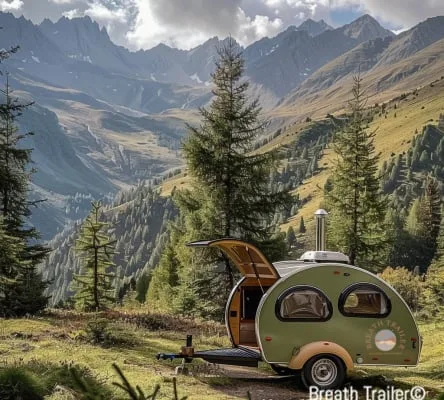
Carnarvon Gorge draws nearly 100,000 visitors a year to a sandstone canyon that runs 30 kilometres into the Queensland outback — yet most campsites hold fewer than 50 people at any one time. Add 6,000-year-old Aboriginal rock art, a permanent creek that nurtures ferns and palms in the middle of dry scrub, and a sealed access road that any camper trailer can tow to, and you have one of Australia’s most rewarding off-the-beaten-track destinations. This guide covers every campground, current 2026 fees, booking windows, the seasonal access restrictions that catch first-timers out, and which Breath Trailer model suits each type of stay.
What Makes Carnarvon Gorge Special?
Carnarvon National Park covers 298,000 hectares of central Queensland, but nearly all visitors head straight for the Carnarvon Gorge section — a narrow sandstone gorge carved by Carnarvon Creek over millions of years. The gorge acts as a refugia: the permanent water draws in plants and animals that would otherwise struggle in the surrounding brigalow scrub, which makes the wildlife watching well above average for inland Queensland.
Three features distinguish Carnarvon Gorge from other gorge destinations:
The Art Gallery. A 62-metre-long ochre rock face covered in stencils, engravings and freehand drawings — one of the most accessible and significant Aboriginal rock art sites in southern Queensland. It sits at the end of a 9.3 km one-way walk from the car park.
Permanent water. Carnarvon Creek flows year-round through the gorge. The Rock Pool is the only swimming spot in the park; you will also see platypus in the early morning along quieter stretches of the creek.
Ancient geology. The white sandstone walls date to the Jurassic period. The Moss Garden, fed by a seeping spring, supports delicate king ferns and liverworts in a spray-dampened alcove — a striking contrast to the dry country outside.
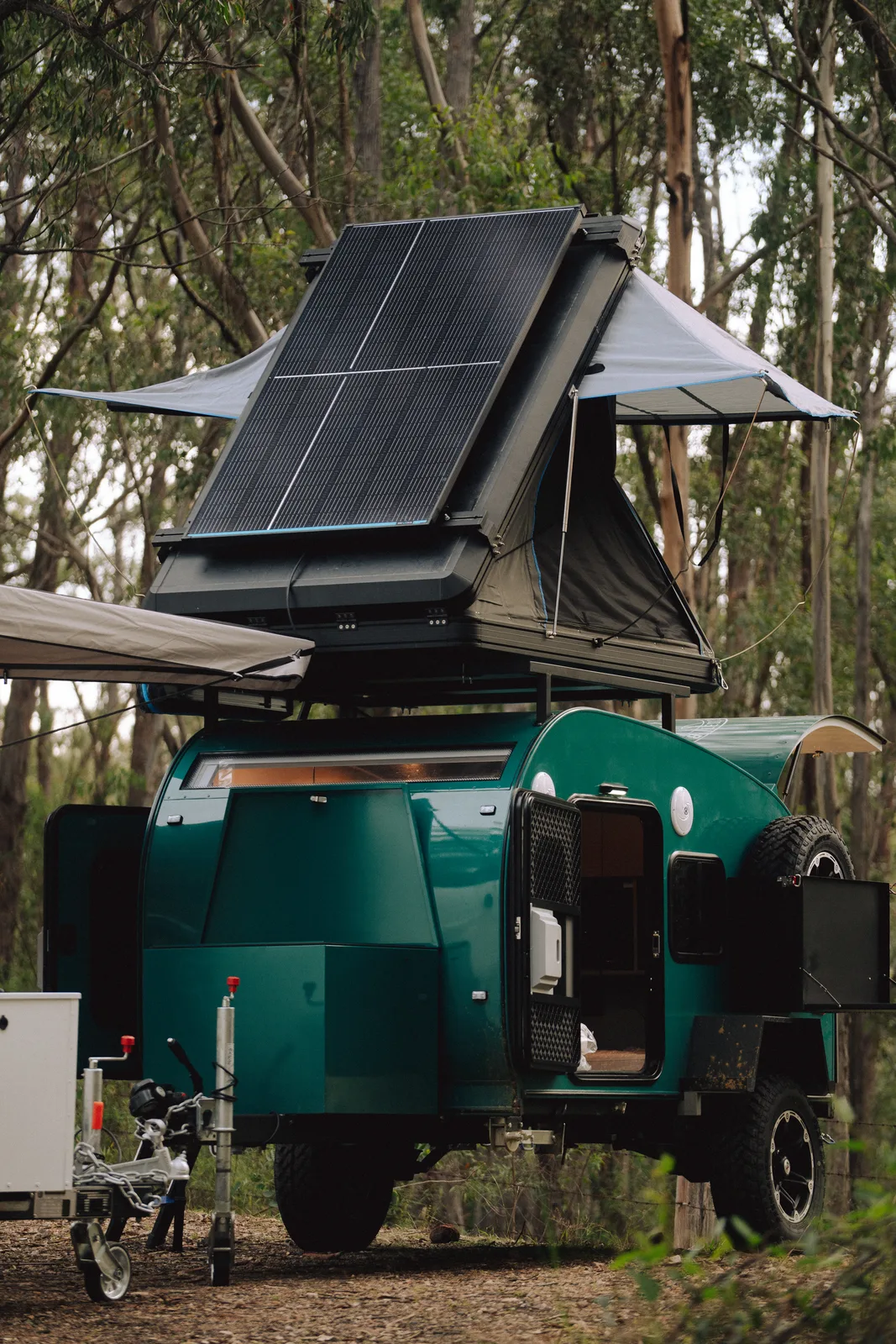
A hard-shell teardrop’s solar system handles cloudy outback skies better than AGM batteries alone — relevant when Carnarvon Gorge sees occasional overcast days even in dry season.
Getting There: Distances and Road Conditions
Carnarvon Gorge sits in central Queensland, equidistant between Brisbane and Rockhampton. The access road to the Carnarvon Gorge visitor area is sealed all the way from the Carnarvon Developmental Road — a significant advantage over many remote Queensland parks.
| City | Distance | Approximate drive time |
|---|---|---|
| Brisbane | ~740 km | 8–9 hrs |
| Rockhampton | ~390 km | 4.5 hrs |
| Roma | ~270 km | 3 hrs |
| Emerald | ~230 km | 2.5 hrs |
| Toowoomba | ~530 km | 6 hrs |
Fuel stops. The last reliable fuel before the park is at Rolleston (79 km from the park entrance on the northern approach via Emerald) or Injune (90 km from the entrance on the southern approach via Roma). From Brisbane, most drivers stop at Roma or Toowoomba and again at Injune. Carry at least 15 L of emergency fuel on the southern approach.
Road conditions. The main access road from the Carnarvon Developmental Road to the gorge visitor area is sealed and suitable for all camper trailers without any towing restrictions. Side roads within the national park — including the route to the Mount Moffatt section — are unsealed and generally require a high-clearance 4WD. Leave your trailer at the campground before attempting any 4WD tracks.
Towing note. The access road includes a few sharp bends through sandstone outcrops in the last 10 km; standard camper trailer lengths (up to 7.5 m tow vehicle + trailer) navigate them without difficulty. Allow extra braking distance on the sealed surface, which can be slippery after rain.
When to Visit: Seasonal Guide
Carnarvon Gorge’s climate is inland Queensland — hot summers, mild winters. Most people target the June-to-August dry season, but the park is worth visiting across a wider window.
| Season | Months | Temp range | Conditions | Notes |
|---|---|---|---|---|
| Autumn | Mar–May | 15–30°C | Cooling down, wildflower start | Good shoulder option; Easter booking required |
| Dry season | Jun–Aug | 8–25°C | Best weather, cold nights | School holiday periods most popular; book early |
| Spring | Sep–Oct | 12–32°C | Warming, wildflowers | School holiday window; best gorge conditions before summer heat |
| Summer | Nov–Feb | 20–40°C+ | Hot, humidity rising, occasional storms | Flash flooding possible; UV extreme |
Key restriction: camping in the Carnarvon Gorge visitor area campground (the main campground, 5.9 km by road inside the park) is only available during Queensland school holidays: Easter, the June-July winter break, and the September-October spring break. Outside these windows you cannot legally camp at the visitor area campground, even if you arrive outside peak hours.
The Big Bend camping area, 9.7 km by foot inside the gorge, is open year-round — but it is accessible only on foot (19.4 km return from the car park) and is unsuitable for trailers.
Closure alert (2026): The Wards Canyon walk is closed until 31 December 2026 for vegetation management. Check the Queensland Parks alerts page before you leave: parks.qld.gov.au.
Where to Camp: All Options Compared
There are four realistic camping options within reach of Carnarvon Gorge, ranging from NP sites to commercial resorts.
| Campground | Distance from gorge | Type | Powered sites | Price (2026) | Booking |
|---|---|---|---|---|---|
| Carnarvon Gorge camping area (QPWS) | 5.9 km inside park (vehicle access) | National park | No | $7.75/adult/night | Queensland National Parks booking system — school holidays only |
| Big Bend camping area (QPWS) | 9.7 km walk in | Walk-in only | No | $7.75/adult/night | Advance booking required |
| BIG4 Breeze Holiday Park (ex-Takarakka) | ~4 km from park entrance | Commercial resort | Yes | From $47/night unpowered; from $54/night powered | Direct booking or BIG4 app |
| Sandstone Park | ~40 km from park | Commercial | No | From $42/night unpowered | Direct booking; 2-night minimum |
Carnarvon Gorge camping area (QPWS)
This is the campground most visitors want. It is located inside the national park, a short drive from the gorge trailhead, and has picnic tables, flush toilets and water. No powered sites are available anywhere inside Carnarvon National Park — your trailer’s solar and battery setup must be fully self-sufficient.
The site suits camper trailers: there are designated camper-trailer sites with adequate dimensions. Check the individual site listings on the booking system for size limits before confirming.
Wifi is available at the Carnarvon Gorge visitor area (signal quality varies). Mobile coverage inside the park is generally absent — download offline maps and park alerts before you leave the highway.
BIG4 Breeze Holiday Park (formerly Takarakka Bush Resort)
Purchased by Breeze Holiday Parks in 2021, this is the main commercial option near the gorge. It sits outside the national park, about 4 km from the entrance, and offers powered and unpowered sites, hot showers, a dump point, and a small camp shop. Ideal if you arrive outside school holidays (when the QPWS site is closed) or want 240V power for an air conditioner.
Sandstone Park
A quieter, cheaper option about 40 km from the gorge. No powered sites, but a peaceful bush setting. Better suited to self-contained setups than trailers needing power hookup.
Fees, Booking and Permits
There is no park entry fee for Carnarvon Gorge (unlike WA parks). You pay only for camping.
QPWS camping: $7.75 per adult per night / $31 per family per night (2026 rate, consistent with QLD state park network). Book through the Queensland National Parks booking system online or by calling 137 468. Bookings are mandatory; walk-up camping is not allowed during school holiday periods.
Booking windows open up to 12 months in advance. For the June-July school holidays (the most popular period), sites typically fill within a few weeks of the window opening in July the previous year. Set a calendar reminder.
Big Bend: Also requires advance booking through the QPWS system. Allow a full day’s hiking each way if you plan to stay overnight.
Top Walks and Activities
The Carnarvon Gorge main track runs along Carnarvon Creek as a spine, with short side tracks branching off to individual features. The full main track to the Art Gallery is 21.8 km return (allow 7–9 hours). Most day visitors do a 10–14 km return, taking in 3–4 side tracks.
| Walk | Distance (return) | Grade | Highlight | Note |
|---|---|---|---|---|
| Main gorge to Moss Garden | 7.2 km | Easy–moderate | Moss-covered spring alcove | Family-friendly |
| Main gorge to Amphitheatre | 8.8 km | Moderate | 400-million-year-old rock chamber | Short ladder section |
| Main gorge to Art Gallery | 21.8 km | Moderate | Aboriginal rock art — ochre stencils + engravings | Full day; start early |
| Boolimba Bluff | 9.4 km | Hard | Panoramic view 200 m above valley floor | Steep ladders near summit |
| Boowinda Gorge (side track) | 1.2 km return from junction | Easy | Narrow slot gorge, most photogenic | Junction at 9.2 km along main track |
| Rock Pool | 4.4 km | Easy | Only swimming spot in the park | Check conditions after rain |
| Wards Canyon walk | CLOSED | — | Staghorn ferns in a side canyon | Closed until 31 Dec 2026 |
Wildlife tips. Platypus feed at dawn and dusk in quieter pools along the creek — approach slowly and stay low. Swamp wallabies are common around the campground at dusk. Eastern grey kangaroos graze in the open areas near the entrance in the early morning. Koalas are occasionally spotted in the eucalypts along the gorge rim; look up on your way out, not just at ground level.
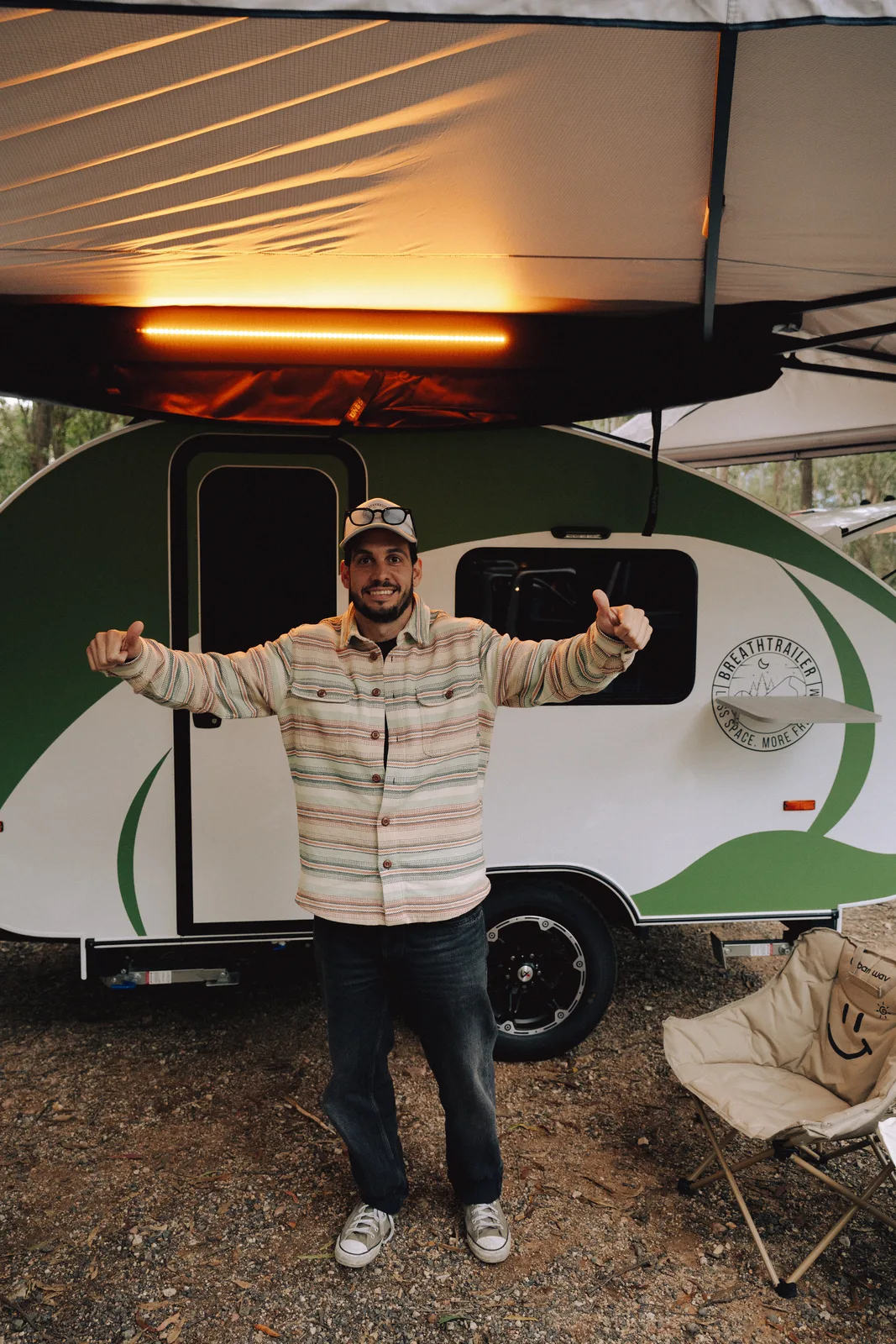
An awning and rear kitchen transform the campsite after a long day on the trails — especially welcome after a 21 km Art Gallery walk.
Self-Contained Camping at Carnarvon Gorge
No powered sites exist inside the national park. The dump point is at BIG4 Breeze Holiday Park outside the park; there are no dump points inside. Self-containment planning matters.
Water
The Carnarvon Gorge camping area has potable water available at the visitor facilities. Despite this, carry a full tank: the water point may be temporarily out of service, and trail walking in inland Queensland heat demands more than the standard 10 L/person/day estimate. Budget 15 L/person/day in summer, 10 L/person/day in the cooler dry season. A 2-person trip of 5 nights requires 100–150 L.
Do not drink creek water without treatment even though Carnarvon Creek looks pristine — agricultural runoff from upstream grazing country can contaminate surface water.
Grey water
Queensland grey water rules require disposal at an approved dump point or grey water waste facility. The nearest dump point is at BIG4 Breeze, outside the park. This makes a grey water tank — or at minimum, a grey water bladder — important for multi-night stays inside the QPWS campground. The Breath Ultra and Max carry built-in grey water tanks; Plus and Essential owners should bring a portable bladder or grey water bucket system.
Power
No mains power in the park. A well-sized solar-and-lithium setup is sufficient for a 3–5 night stay: 200W of solar and 120 Ah of lithium battery comfortably powers a 12V fridge, LED lighting, USB charging and a device charge cycle per day. In winter, Carnarvon Gorge receives 5–6 peak sun hours per day — enough for a typical solar setup to stay balanced or slightly positive. In summer, the same 200W array will produce more power than you can use.
See our full camper trailer solar guide and off-grid battery guide for sizing help.
Mobile coverage and communications
Mobile coverage inside the gorge is effectively nil — not just low signal but absent. Download offline maps (Hema Explorer or Maps.me) before you leave the highway. A personal locator beacon (PLB) is strongly recommended for solo travellers and for anyone planning multi-day walking; it costs nothing to carry and is your emergency link to the AMSA rescue system. See our off-road accessories guide for current PLB prices.
Per-Model Breath Trailer Comparison for Carnarvon Gorge
| Model | Tare | ATM | Bathroom | Grey water | Best for |
|---|---|---|---|---|---|
| Essential | 700 kg | 1,000 kg | No | No tank (add bladder) | Hikers who want a simple base; pair with portable toilet + grey water bladder |
| Plus | 800 kg | 1,100 kg | No | No tank (add bladder) | Couples who want a fridge included and more storage |
| Ultra | 900 kg | 1,200 kg | No (external shower) | Built-in | Best value self-contained option; external shower for dusty gorge days |
| Max | 1,200 kg | 1,700 kg | Full interior bathroom | Built-in | Families or extended stays; self-contained without needing external facilities |
The practical case for the Ultra and Max: the main QPWS campground at Carnarvon Gorge has flush toilets and potable water, so a toilet is not strictly necessary for a short stay. But the nearest dump point (BIG4 Breeze) is outside the park, making a built-in grey water tank a genuine quality-of-life upgrade for a 3–5 night stay. The Ultra’s built-in tank and external shower make it the sweet spot for most couples; the Max is the clear choice for families or anyone who prefers not to leave camp for facilities.
All four models tow on a sealed access road without issue. Any standard mid-size SUV (Toyota RAV4, Kia Sorento, Ford Escape) can handle the terrain.
See the full model comparison or enquire about a booking.
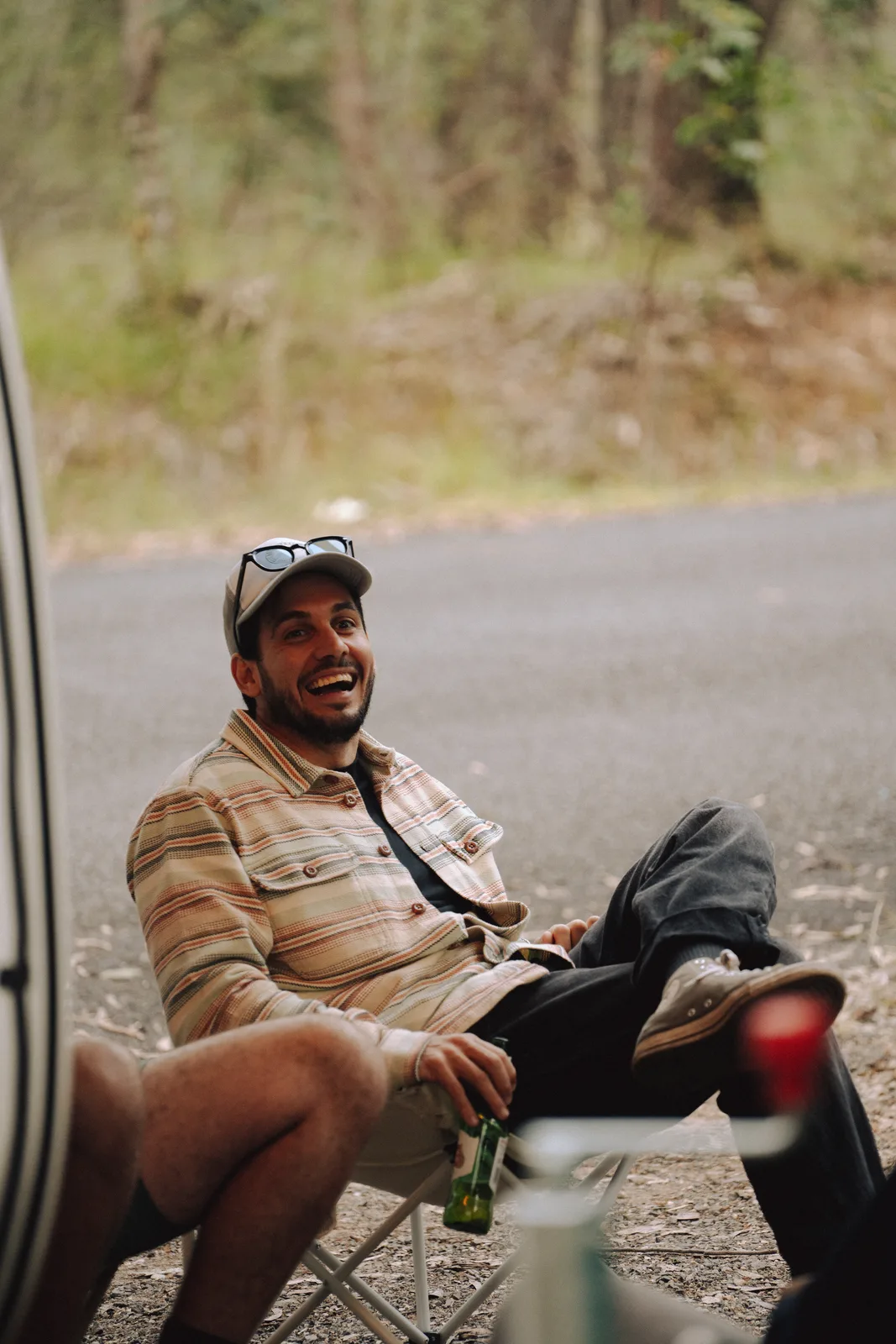
Carnarvon Gorge school holiday campgrounds fill fast — self-contained setup means you can comfortably spend every evening in camp rather than queuing for facilities.
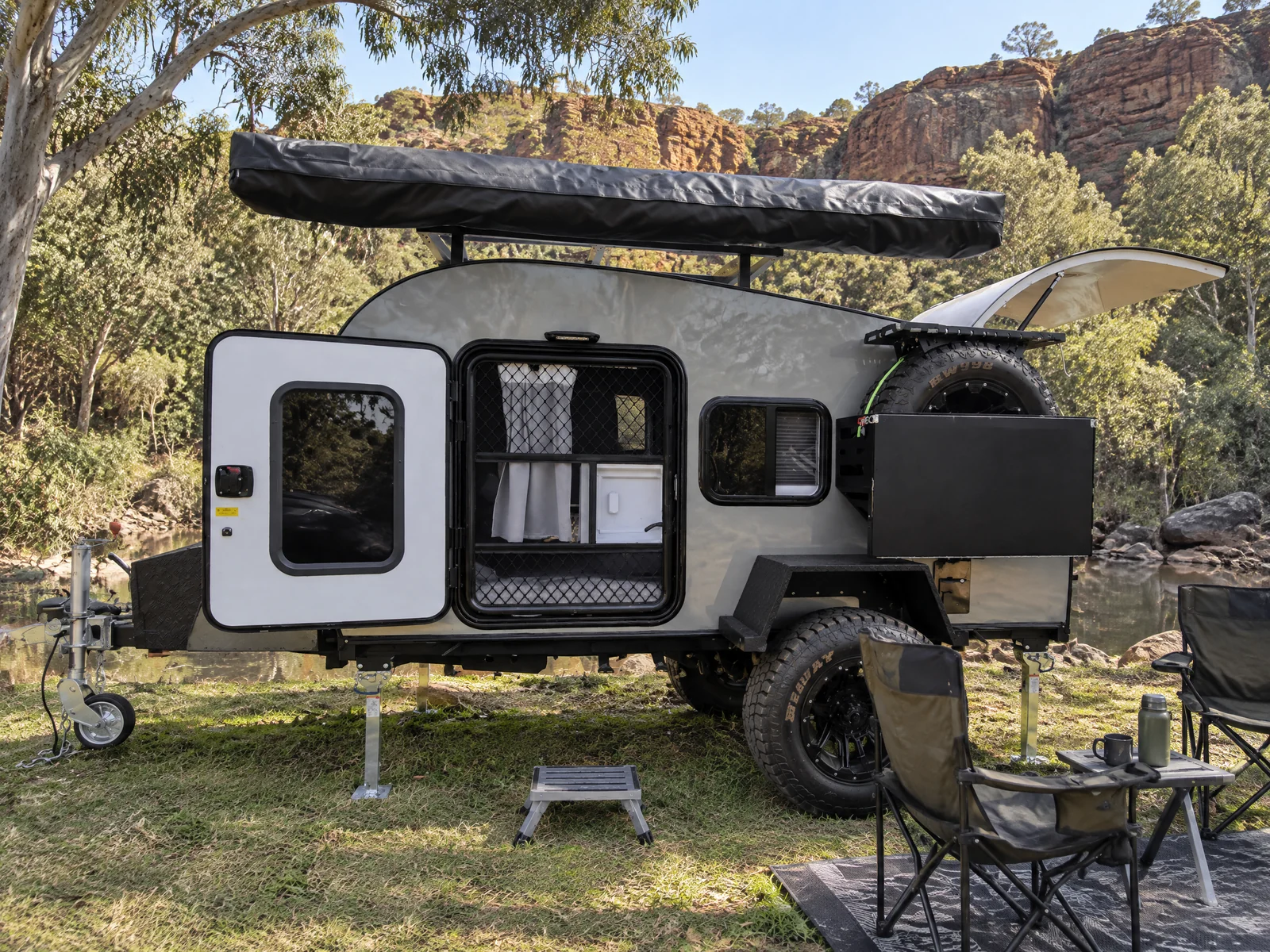
Illustration: Queensland sandstone gorges are kinder to a hard-shell teardrop than to canvas — no moisture ingress and no re-proofing.
5-Night Itinerary Table
| Day | Activity | Camp |
|---|---|---|
| Day 1 | Drive from Brisbane or Rockhampton; arrive afternoon; set up, short walk to Rock Pool | Carnarvon Gorge campground or BIG4 Breeze |
| Day 2 | Full-day gorge walk: Moss Garden → Amphitheatre → Boowinda Gorge (return ~13 km) | Carnarvon Gorge campground |
| Day 3 | Art Gallery walk (full day, 21.8 km return); early start essential | Carnarvon Gorge campground |
| Day 4 | Boolimba Bluff morning walk; afternoon rest or wildlife watching at creek | Carnarvon Gorge campground |
| Day 5 | Early drive out; fuel at Rolleston or Injune; return journey | — |
5-Night Budget Table (Couple, 2026)
| Item | Cost |
|---|---|
| QPWS camping (2 adults × $7.75 × 4 nights) | $62 |
| BIG4 Breeze overnight (arrival or departure buffer) | $47–$54 |
| Fuel Brisbane–gorge–Brisbane (~1,480 km, 13L/100 km at $2.10/L) | ~$405 |
| Food and supplies (self-catering, 5 days) | ~$200 |
| National park walk fees | $0 |
| Total estimate | ~$714–$721 |
Budget varies significantly by home city. Rockhampton-based couples roughly halve the fuel cost.
Packing Checklist for Carnarvon Gorge
| Category | Item | Notes |
|---|---|---|
| Navigation | Hema Explorer app or Hema Atlas (offline) | No signal in park |
| Safety | Personal locator beacon (PLB) | Register with AMSA; mandatory recommendation for remote QLD |
| Water | 100–150 L fresh water | 15 L/pp/day in summer, 10 L/pp/day winter |
| Grey water | Grey water bladder or built-in tank | No dump points inside park |
| Power | 200 W solar minimum, 120 Ah lithium | No powered sites |
| Food | 5–7 days self-catering; dry goods reduce weight | Camp cooking in QLD outback: gas stove ideal |
| Clothing | Warm layer for winter nights (8°C possible) | Also sun protection: UV Index 10–12 in spring |
| First aid | Snake bite bandages (pressure-immobilisation) | Eastern brown and inland taipan present |
| Footwear | Closed-toe trail shoes | Rocky gorge tracks |
| Camera | Good zoom for wildlife and rock art detail | Flash photography not permitted at Art Gallery |
Frequently Asked Questions
Can I take a camper trailer to Carnarvon Gorge? Yes. The access road to the Carnarvon Gorge visitor area is fully sealed and suitable for standard camper trailers. Designated camper-trailer sites are available in the QPWS campground — check individual site dimensions on the booking system when reserving. Note that trails inside the gorge are walk-only; leave your trailer at camp.
When is the Carnarvon Gorge campground open? The main vehicle-access campground at the gorge visitor area is open only during Queensland school holidays: Easter, June-July, and September-October. Outside these windows, camping at that site is not available. BIG4 Breeze Holiday Park outside the park is open year-round.
Is there mobile coverage at Carnarvon Gorge? Effectively no mobile signal inside the park. Download offline maps before you leave the highway (Hema Explorer recommended). For emergency communication, carry a registered PLB.
Do I need a 4WD to visit Carnarvon Gorge? No — not to reach the main visitor area. The access road from the Carnarvon Developmental Road is sealed. A 4WD is needed only for side roads within the park (Mt Moffatt section) or if you venture off-road after rain. Standard SUV tow vehicles handle the access road without difficulty.
Are there powered campsites at Carnarvon Gorge? No powered sites exist anywhere inside Carnarvon National Park. The nearest powered sites are at BIG4 Breeze Holiday Park, about 4 km from the park entrance. Self-contained solar-and-battery setups are the norm for in-park camping.
What is the Wards Canyon closure about? The Wards Canyon walk is closed until 31 December 2026 for vegetation management. This side track leads to a colony of king ferns. The main gorge, Art Gallery, Moss Garden, Amphitheatre and Boowinda Gorge tracks remain open. Check parks.qld.gov.au for current alerts before you leave.
Recommended Reading
- Best Camping Spots in Queensland — full state guide with fees and booking windows
- Cape York Camping Guide — for those continuing north after Carnarvon
- Camper Trailer Water System Guide — sizing your tank and grey water system
- Understanding Camper Trailer Solar Systems — sizing your off-grid power setup
- Free Camping Australia Guide — combining national park stays with free camps on the drive in or out