Daintree Camping Guide: Everything You Need to Know (Australia, 2026)
Complete Daintree camping guide for 2026: campgrounds, ferry fares, seasonal tips, wildlife safety and the best camper trailer setup for Far North Queensland.
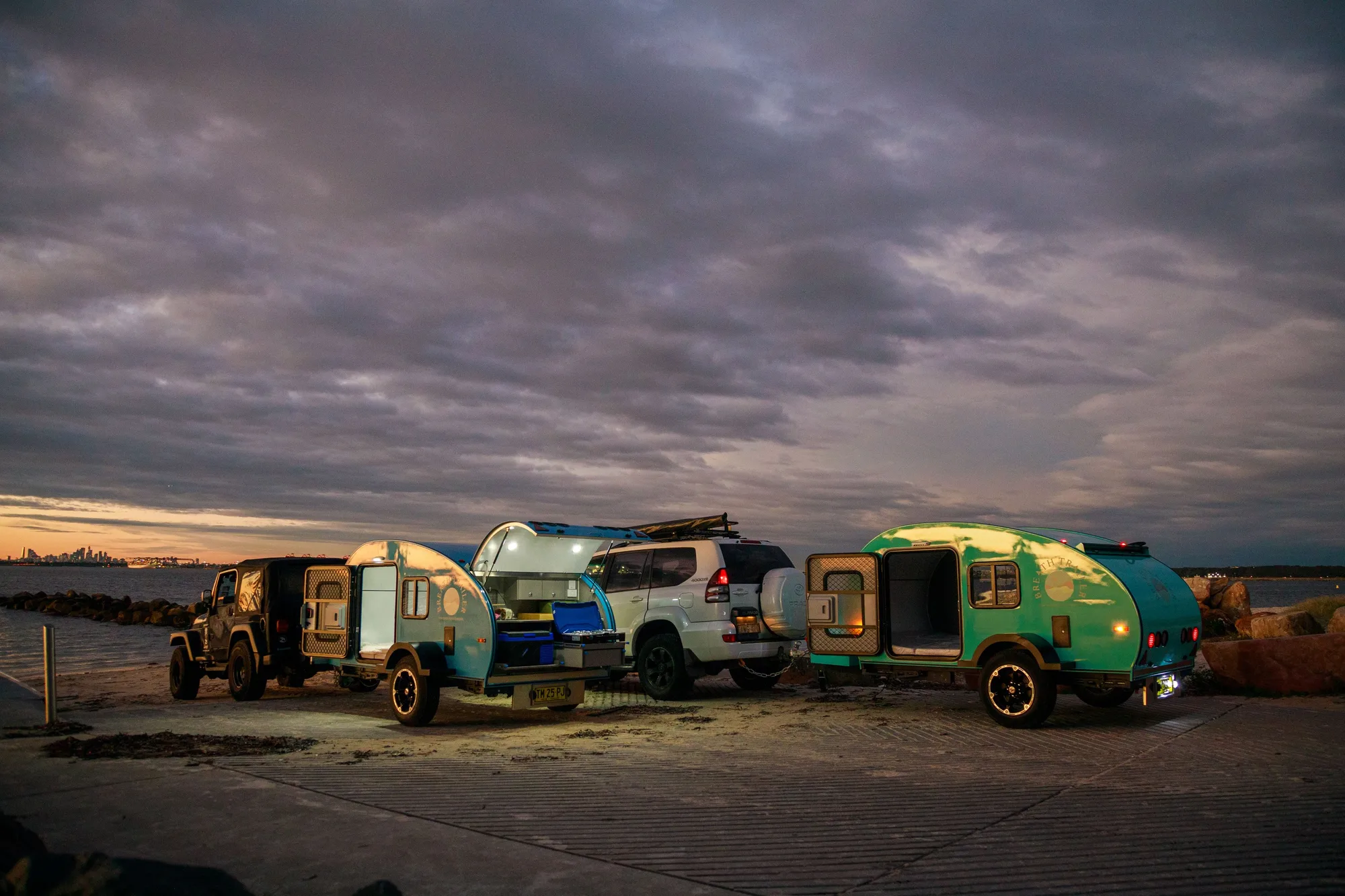
The Daintree Rainforest is one of those places that rewires you. At roughly 1,200 km² in Far North Queensland, it is the world’s oldest continuously surviving tropical rainforest — a living relic stretching back more than 130 million years, roughly 10 times older than the Amazon. Together with the adjacent Great Barrier Reef, it forms part of the Wet Tropics of Queensland UNESCO World Heritage Area, a dual listing that fewer than a handful of places on Earth can claim.
Camping here is genuinely different from anywhere else in Australia. The soundscape alone — cicadas, giant metallic starlings, the prehistoric grunt of a cassowary — is worth the drive from Cairns. But unlike Kakadu or the Kimberley, the Daintree is not a gruelling remote expedition. The sealed road from Cairns reaches the famous Daintree River ferry in about 90 minutes, and a conventional two-wheel-drive vehicle can access Cape Tribulation, 34 km north of the crossing. For camper trailer owners — especially those with a hard-shell teardrop — the logistics are far more manageable than popular perception suggests.
This guide covers everything: campgrounds with current 2026 fees, the ferry crossing, seasonal planning, wildlife safety, and which trailer suits the terrain best.
Is the Daintree Right for a Camper Trailer?
The short answer is yes — with the right trailer. The Daintree has specific constraints that filter out some rigs:
Caravans: The Queensland Parks and Wildlife Service (QPWS) and most local operators strongly advise against bringing a caravan north of the Daintree ferry. The Cape Tribulation Road, while sealed, is narrow and winding, and reversing a full-length van on a one-lane rainforest road is genuinely dangerous.
Large motorhomes and slide-outs: The Noah Beach national park campground enforces a 3.2 m maximum vehicle height at the entrance gate. A slide-out or raised roof section often exceeds this.
Soft-floor or canvas camper trailers: The wet tropics environment — high humidity year-round, daily afternoon rain in the dry season, torrential downpours in the wet — is hard on canvas. Mould and mildew can take hold in days if a canvas wall or annex is left damp.
Hard-shell teardrops: These are a natural fit. They are compact enough to navigate narrow forest roads, self-contained enough to free-camp when dump points are unavailable, and their sealed fibreglass or composite shells handle tropical humidity without the canvas maintenance burden. At 3 m to 3.5 m in length, they leave plenty of room for passing vehicles on tight bends.
If you are towing anything at all, call ahead and confirm the maximum trailer length and turning circle for each campground. Private operators are generally more flexible than the national park area.
Campgrounds in and Around the Daintree
The camping landscape divides into three geographic zones: south of the ferry (accessible to all vehicles), north of the ferry to Cape Tribulation (2WD accessible, but narrow sealed road), and north of Cape Tribulation (Bloomfield Track — 4WD only and not recommended for any trailer).
| Campground | Zone | Access | 2026 Fees | Key Facilities | Trailer Notes |
|---|---|---|---|---|---|
| Noah Beach (QPWS/Daintree NP) | North of ferry | 2WD, 28 km north of ferry | $7.75/adult/night · $31/family | Composting toilets; no showers; no fires | Max height 3.2 m; camper trailers allowed; CLOSED pre-Christmas to Easter |
| Cape Tribulation Camping | North of ferry | 2WD, Cape Trib village | ~$40–$55/night (check direct) | Powered & unpowered sites, basic amenities | Beachfront location; short drive to NP day-use areas |
| PK’s Jungle Village | North of ferry | 2WD, Cape Trib | ~$20–$35/night (check direct) | Budget sites, bar, communal kitchen | Popular backpacker-friendly option |
| Daintree Siesta | North of ferry | 2WD | From ~$40/night (check direct) | Tropical restaurant, guided rainforest walks | Quiet, well-maintained |
| Daintree Rainforest Village | North of ferry | 2WD | From ~$35/night (check direct) | Powered sites, amenities block | Mix of cabins and camping |
| Daintree Beach Resort | South of ferry (Wonga Beach) | 2WD, ~25 km south of Mossman | From ~$35/night (check direct) | Full van park facilities, pool | Useful base before the crossing |
| Thornton Beach / NP day-use | North of ferry | 2WD | Day use only | Picnic facilities | No overnight camping |
| Council free camps (south of ferry) | South of ferry | 2WD | Check Douglas Shire Council | Basic rest areas | Douglas Shire manages several sites |
Always book Noah Beach in advance via the Queensland Parks booking system (book.parks.qld.gov.au). The campground has a limited number of vehicle sites and fills weeks ahead in the May–October dry season. Turning up without a booking means turning back.
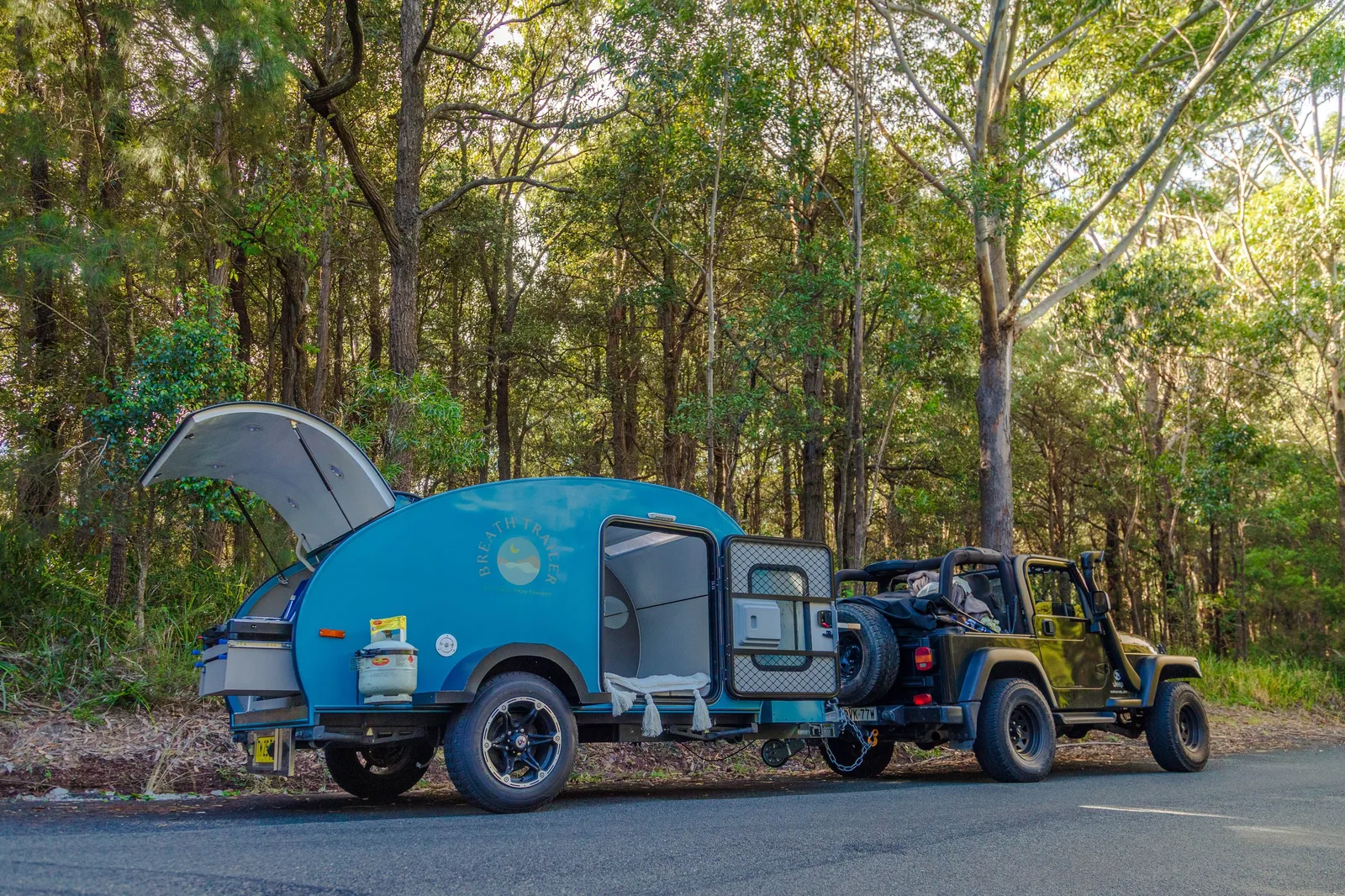
The narrow sealed roads between the ferry and Cape Tribulation demand a compact, manoeuvrable rig — a hard-shell teardrop fits neatly where a caravan would not.
Crossing the Daintree River Ferry
The Daintree River crossing is the literal and figurative gateway. The cable ferry — the only vehicle link to the Cape Tribulation section — operates from 5 am to midnight daily, carrying up to 14 vehicles per trip (pending the new 36-vehicle vessel scheduled for late 2027 under the new Birdon operator contract from 1 July 2026).
Fares (2026/2027 tariff, Douglas Shire Council):
| Vehicle Type | One Way | Return |
|---|---|---|
| Car or ute (up to 5 m) | ~$28–$30 | ~$57 |
| Car + camper trailer | Check douglas.qld.gov.au | Higher rate applies |
| Motorcycles | Significantly lower | — |
| Pedestrians / cyclists | Free | — |
The council approved a ~3.9% fare increase for 2026/2027, taking the car return fare to approximately $57. A car towing a trailer incurs a higher tariff — confirm the current figure directly with Douglas Shire Council (douglas.qld.gov.au) or at the crossing before you travel. Tickets can be purchased online or on arrival.
Key points for camper trailer drivers:
- The ferry ramp can be steep at low tide — approach slowly and at an angle if needed.
- Long combinations (vehicle + trailer) should wait for a full ferry departure so crew can direct placement.
- There is a no-dogs rule inside Daintree National Park north of the ferry. Leave pets at home or arrange kennelling in Mossman/Cairns.
- Fuel is available at Cape Tribulation village (petrol and diesel) and at Mossman before the crossing. Fill up south of the ferry — the Cape Trib servo is significantly more expensive.
When to Visit — Seasonal Guide
The Wet Tropics has two seasons: the wet (November–April) and the dry (May–October). For camper trailer trips, the gap between them is substantial.
| Season | Conditions | Camping | Road Access |
|---|---|---|---|
| Dry season (May–Oct) | 25–30°C days, low humidity, little rain | Best time. Book well ahead | All sealed roads open; Bloomfield Track usually open |
| Shoulder (Apr, Nov) | Heat building, afternoon storms possible | Good, but check forecasts | Minor flooding risk, check road status |
| Wet season (Dec–Mar) | 30–35°C, 90%+ humidity, 3,000–4,500 mm rain | Noah Beach closed. Private camps limited | Bloomfield Track often closed; Cape Trib road may flood; ferry may suspend |
| Peak dry (Jul–Aug) | 22–28°C, clearest skies | Most popular, book 2–3 months out | All routes typically open |
The wet season brings spectacle — waterfalls at full force, lush green, fewer crowds — but it also brings impassable roads, mosquitoes in biblical numbers, and flash flooding that can strand a trailer on the wrong side of a creek crossing. For most camper trailer owners, June to September is the ideal window.
Getting There — Road Access and Driving Tips
The route from Cairns to Cape Tribulation runs approximately 110 km and takes 2–2.5 hours one way (longer with the ferry wait).
Cairns → Mossman: The Captain Cook Highway (80 km, fully sealed, 2WD) is excellent for towing. The coastal section between Ellis Beach and Port Douglas is spectacular — pull over at Rex Lookout for the view.
Mossman → Daintree Village → Ferry: Continue north through Mossman Gorge on the Daintree Road. The road narrows approaching the ferry crossing at Daintree Village.
Ferry → Cape Tribulation Road (34 km): Sealed, but single-lane in sections with passing bays. Steep hills and tight corners. Two-wheel-drive vehicles can manage it in dry conditions; allow extra time and drive slowly. The road is not suitable for caravans or very large rigs.
North of Cape Tribulation — Bloomfield Track: Unsealed, creek crossings, steep grades. Not recommended for any trailer. Leave the trailer at Cape Tribulation and explore north by vehicle only.
| Leg | Distance | Road Surface | Towing Rating |
|---|---|---|---|
| Cairns → Port Douglas | 68 km | Sealed highway | Easy |
| Port Douglas → Daintree Ferry | 40 km | Sealed, narrow near ferry | Moderate care |
| Ferry → Cape Tribulation | 34 km | Sealed, narrow, hilly | Take your time |
| Cape Tribulation → Bloomfield Track | 90+ km | Unsealed, creek crossings | Trailer not recommended |
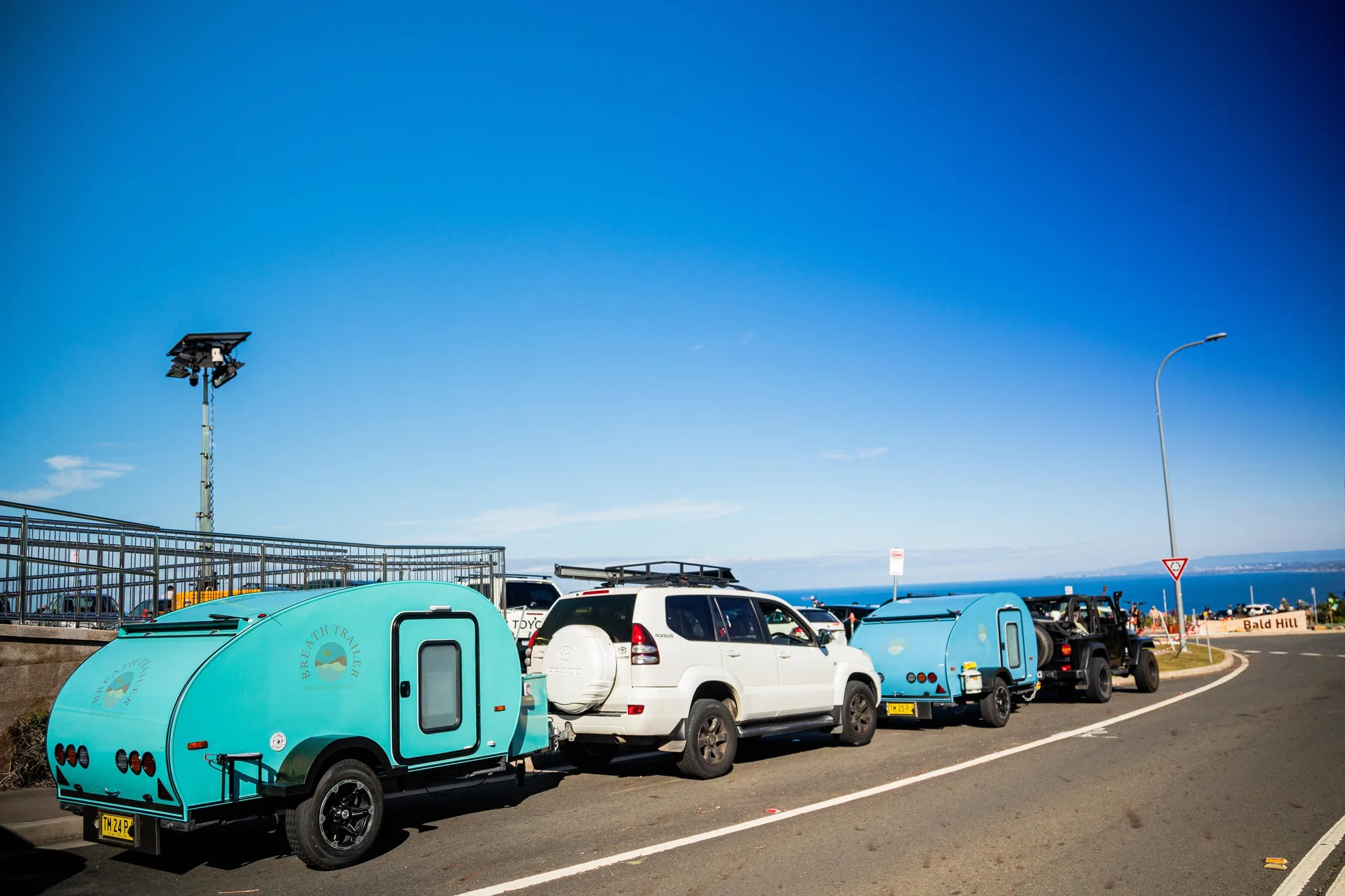
The Captain Cook Highway between Palm Cove and Port Douglas is one of Australia’s great towing roads — the terrain eases considerably before the Daintree ferry.
Wildlife Safety in the Daintree
The Daintree’s biodiversity is extraordinary — and some of it bites, stings, or charges.
Cassowaries
The southern cassowary is the world’s second-heaviest bird and a Daintree resident. Their talons can deliver serious injury if cornered. Follow these rules:
- Never feed cassowaries. A $2,763 on-the-spot fine applies in Queensland. Fed birds associate humans with food and become dangerous.
- Slow to walking pace if you see one on the road.
- If a cassowary approaches, back away slowly. Do not run.
- Dogs are banned inside the national park — cassowaries are known to attack dogs.
Saltwater Crocodiles
Estuarine (saltwater) crocodiles inhabit all waterways in the Wet Tropics, including the Daintree River, Cooper Creek, and coastal inlets around Cape Tribulation. The rule is absolute:
- Do not swim in rivers, creeks, estuaries, or the sea near creek mouths.
- Set up camp at least 25 m from any body of water.
- Do not clean fish, prepare food, or discard scraps at the water’s edge.
- Crocs can be active at night — move with a torch near water after dark.
Box Jellyfish (Stingers)
Box jellyfish season in tropical Queensland runs October to May, coinciding partly with the dry season shoulder. Swimming in the ocean at Cape Tribulation, Myall Beach, and Thornton Beach carries real risk during this period. Stinger suits (available locally) reduce but do not eliminate risk. Swim only at patrolled beaches with stinger nets when they are available.
Mosquitoes and Ross River Virus
The wet tropics supports dense mosquito populations year-round. Use 30% DEET repellent, cover up at dawn and dusk, and ensure your trailer’s fly screens are intact. Ross River Virus and Barmah Forest Virus are both present in the region.
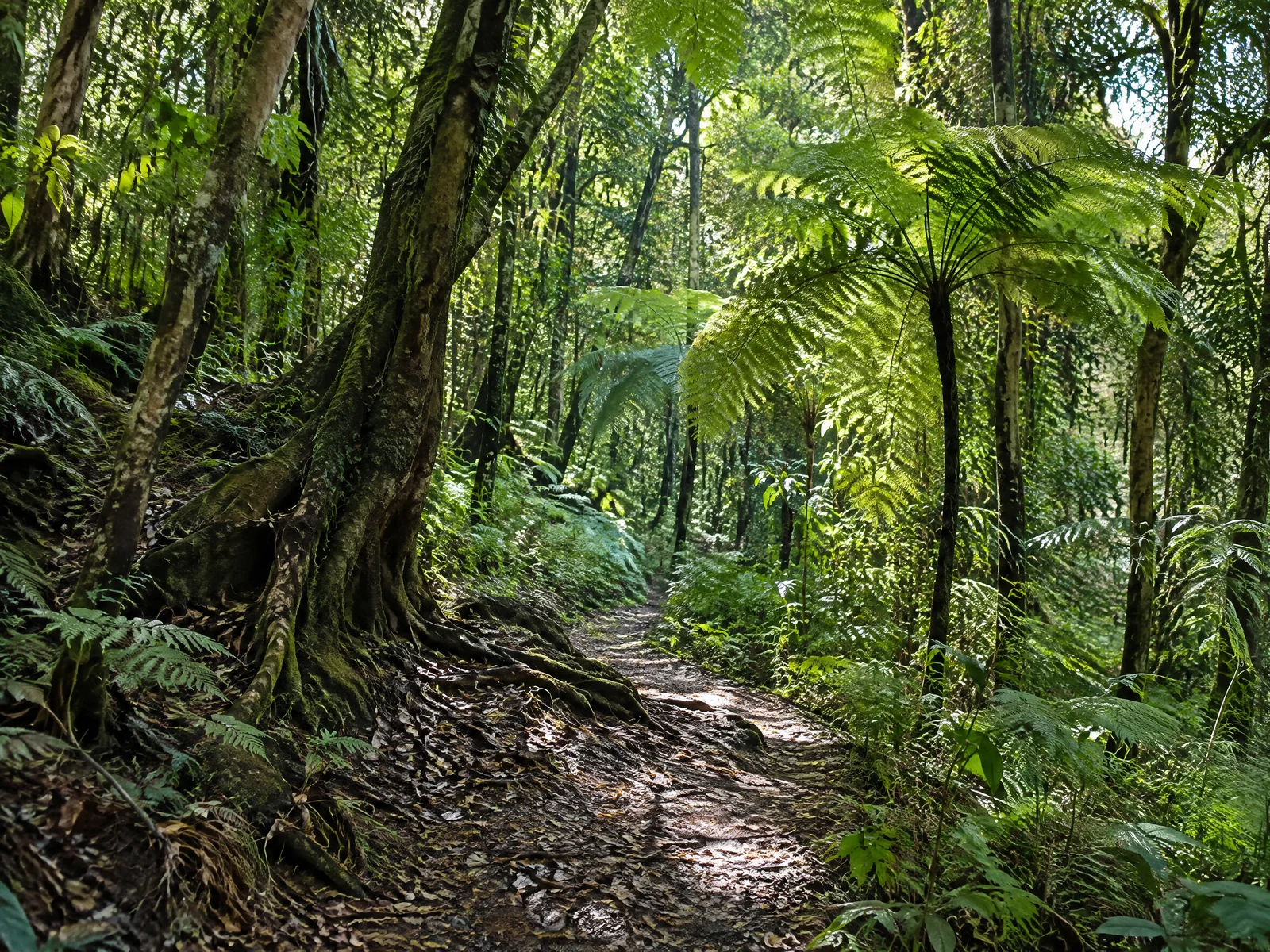
Illustration: The Daintree’s canopy is home to more than 30% of Australia’s frog, reptile and marsupial species.
Self-Containment and Facilities
North of the ferry, infrastructure is genuinely minimal. Understanding your trailer’s self-containment capabilities before you go is essential.
Water
The Cape Tribulation area has no town water supply north of Mossman. Noah Beach has no fresh water at the campsite — bring everything you need. Private campgrounds may have tank water (not always potable). As a guide:
- Bring at least 10 L per person per day; more in hot weather.
- A couple camping for 5 nights needs 100 L minimum.
- Carry a water filter (Sawyer Squeeze or LifeStraw) as backup if your tank runs low.
The Breath Ultra carries 80 L and the Breath Max carries 80 L as well — enough for a 4-night stay for two people without needing a refill, if you are conservative.
Grey Water
Queensland has the same grey water rules as the rest of Australia’s national parks: no grey water on the ground inside the national park. At Noah Beach, composting toilets are provided; there is no dump point. Carry a grey water tote or bladder, or use the facilities at the Cape Tribulation private campgrounds to dump before heading into the park.
The Breath Ultra and Max both include built-in grey water tanks, which eliminates the need for an external bladder. The Plus and Essential use a portable tote solution, which is adequate for shorter stays.
Power
There are no powered sites at Noah Beach. Your system must be fully self-sufficient:
- A 120–200 Ah LiFePO₄ battery with 200–300 W of solar covers the basics: fridge, lighting, fan, phone charging.
- The Breath Max includes 300W solar and a 200Ah lithium battery from the factory — enough for 4–5 days off-grid without depleting.
- If you are running a 12V compressor air conditioner (a worthwhile addition in the Daintree’s humidity), plan for a significantly larger battery bank.
For a deeper look at power system sizing, see our guide to camper trailer power systems.
Dump Points
The nearest dump point to Cape Tribulation is at Mossman Caravan Park (approximately 80 km south). Plan your grey water management around this distance, or use the dump point at Port Douglas before heading north.
Which Breath Trailer for the Daintree?
Each of the four Breath models handles the Daintree differently, depending on your priorities.
| Model | Price (AUD) | Tare Weight | Key Feature | Daintree Rating |
|---|---|---|---|---|
| Essential | $23,320 | 700 kg | Compact, towable by small SUVs | ★★★ — No toilet; need to use NP composting toilets |
| Plus | $29,766 | 800 kg | Integrated fridge, extra storage | ★★★½ — Comfortable but still no toilet |
| Ultra | $34,749 | 900 kg | External shower, grey water tank, 80L water | ★★★★ — External shower for rinsing off; still no toilet |
| Max | $42,900 | 1,200 kg | Full interior bathroom, 300W solar, 200Ah lithium | ★★★★★ — Self-contained, no dump points needed for typical 4-night stay |
The Max is the clear choice for free-camping at Noah Beach. The interior bathroom (toilet + shower) means no midnight walk to the composting toilet in a national park with saltwater crocodiles nearby. The factory solar and lithium system eliminates any off-grid anxiety.
For a trip that uses private campgrounds (Cape Tribulation Camping, Daintree Siesta, etc.), the Plus or Ultra is excellent value — powered sites and amenities blocks fill the gaps.
The Essential works if you are on a budget and plan to use campground amenities, but confirm each operator has adequate toilet facilities before booking.
See all four models at /comparison/.
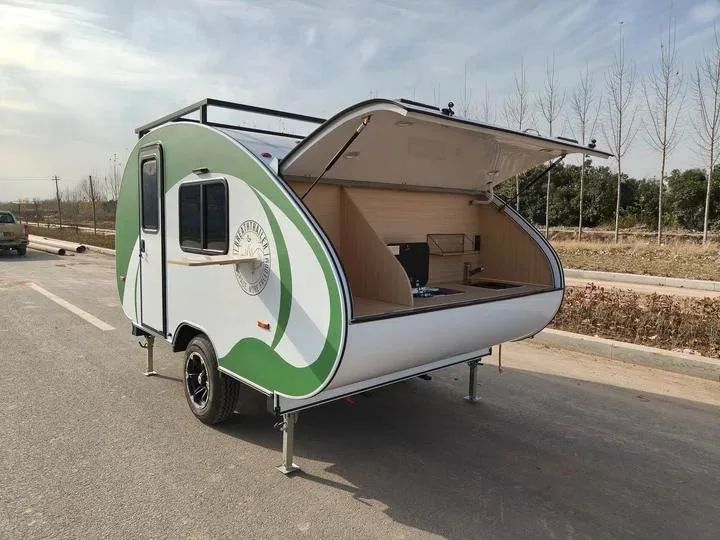
The Max’s rear kitchen is fully weatherproof — a practical asset in the Daintree, where an afternoon shower arrives without warning.
Daintree Packing Checklist
The Daintree demands a few specific additions to a standard camper trailer kit.
| Category | Item | Notes |
|---|---|---|
| Insect protection | 30% DEET repellent | Apply at dawn, dusk, and after swimming |
| Insect protection | Long-sleeved shirts, long pants | Lightweight merino or quick-dry synthetics |
| Wildlife | Torch (300+ lumens) | Essential for night movements near water |
| Wildlife | Cassowary awareness card | QPWS has a free one; brief all travellers |
| Water | 20 L emergency water jerry | Top-up if tank falls below 50% at Mossman |
| Water | Water filter or purification tabs | Backup for tank water at remote sites |
| Safety | PLB or satellite messenger | EPIRB/Garmin inReach — no mobile coverage beyond Cape Trib village |
| Safety | Snake bite bandages (×3) | Amethystine pythons and brown tree snakes are common |
| Weather | Rain gear for each person | Brief but intense downpours even in dry season |
| Communications | Hema or GaiaGPS offline maps | Download FNQ region before departure |
| Fuel | Fill tank + 10 L jerry before ferry | Cape Trib fuel is significantly more expensive |
| Stingers | Stinger suit (Oct–May) | Available to hire at Cape Tribulation |
For your broader off-road accessory list, see must-have accessories for off-road adventures.
A 5-Night Daintree Itinerary
| Night | Location | Notes |
|---|---|---|
| 1 | Port Douglas (caravan park) | Base camp; explore Port Douglas, Four Mile Beach |
| 2 | Daintree Rainforest Village (north of ferry) | Cross the ferry; visit Daintree Village, Marrdja Boardwalk |
| 3–4 | Noah Beach (QPWS) OR Cape Tribulation Camping | Myall Beach sunset; Dubuji Boardwalk; snorkelling (stinger net season) |
| 5 | Return south via Mossman Gorge | Mossman Gorge Centre guided walk before heading home |
This itinerary works for the May–October window only. In January–March, Noah Beach is closed; adapt to private campgrounds or base camp south of the ferry.
5-Night Budget (Couple, Dry Season)
| Item | Cost |
|---|---|
| Daintree ferry (car + trailer return, estimate) | ~$80–$100 |
| Noah Beach — 2 nights ($7.75 × 2 adults × 2 nights) | $62 |
| Cape Trib private camp — 1 night (est.) | ~$50 |
| Port Douglas caravan park — 2 nights | ~$100–$120 |
| Fuel (Cairns return, varies by vehicle) | ~$80–$120 |
| Mossman Gorge guided walk (optional, ~$33/adult) | ~$66 |
| Total (estimate) | ~$438–$518 |
Budget does not include food or activities. Confirm all fees directly with operators — prices change seasonally.
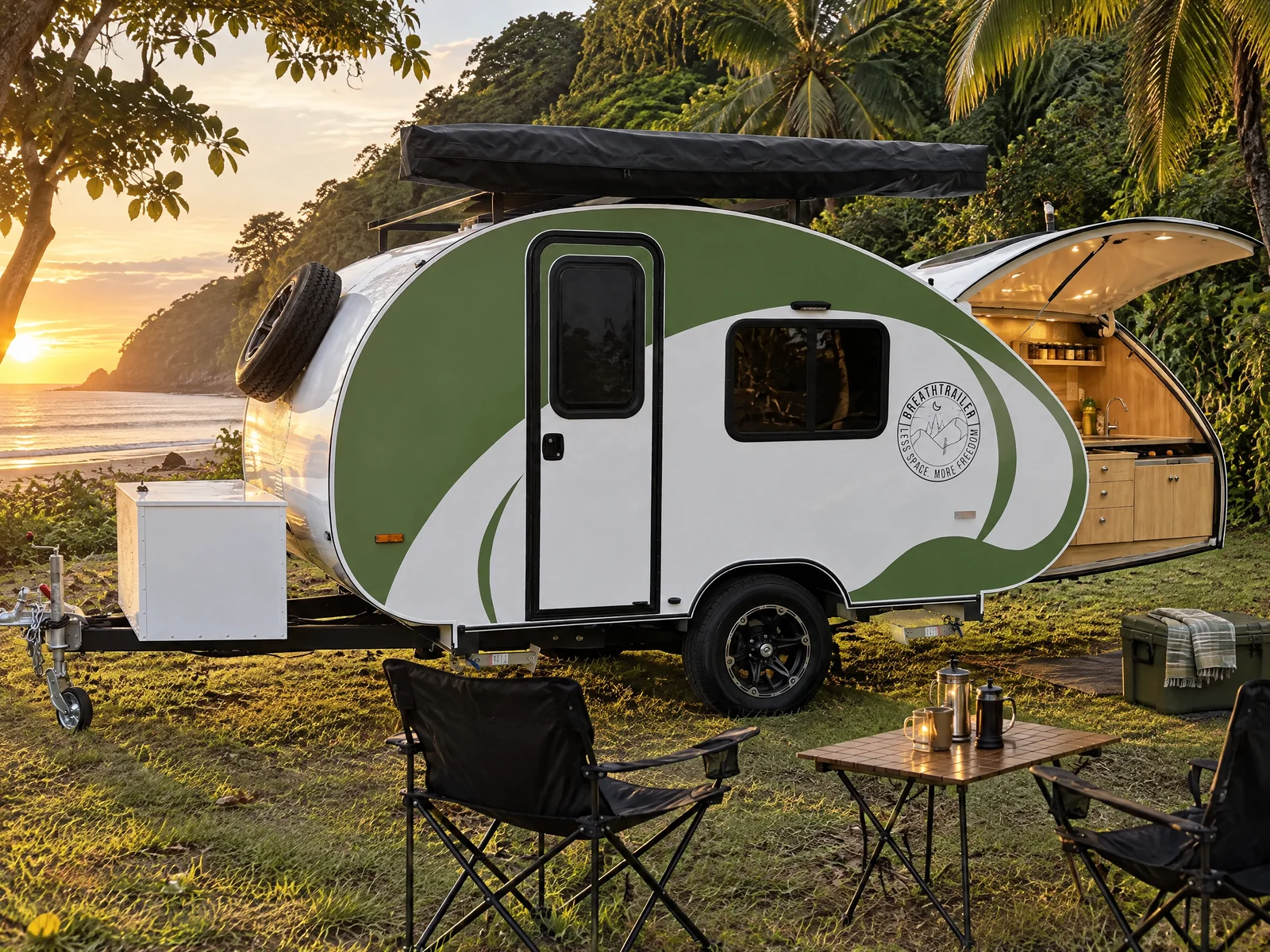
Illustration: A hard-shell teardrop is at its best in the Daintree: sealed against humidity, self-contained for remote camping, and compact enough for the narrow Cape Tribulation road.
Frequently Asked Questions
Can a 2WD tow a camper trailer to Cape Tribulation? Yes — the sealed Cape Tribulation Road is 2WD accessible in dry conditions. A conventional SUV towing a compact teardrop can manage it comfortably. High clearance is beneficial but not mandatory. Stay off the Bloomfield Track north of Cape Tribulation; that route is 4WD only and unsuitable for any trailer.
Is Noah Beach closed all wet season? Noah Beach closes annually on the Friday immediately before Christmas Day and reopens on Good Friday (Easter). In 2026/2027, this means closure from approximately 19 December 2026 to mid-April 2027. The closure protects the fragile campground from flooding damage and reduces the visitor load during the most extreme weather period.
Are there powered sites at Noah Beach? No. Noah Beach is an unpowered national park camping area. There are composting toilets and no showers, no fires, and no running water. Your rig must be self-sufficient.
Can I bring my dog to the Daintree? Dogs are not permitted inside Daintree National Park north of the ferry crossing. This is strictly enforced. Dogs are allowed at some private campgrounds south of the ferry (check individual operators), but not inside the QPWS-managed section.
What is the vehicle height limit at Noah Beach? The campground entrance enforces a 3.2 m maximum vehicle height. Most standard 4WDs with a camper trailer clear this easily. A 4WD with a rooftop tent or roof-top air conditioning unit may not.
Is there phone coverage at Cape Tribulation? Telstra has limited 4G coverage in Cape Tribulation village, but signal drops to zero on the road sections between the ferry and the township. Carry a PLB or satellite communicator — the Garmin inReach Mini 2 is a compact option. Do not rely on mobile coverage for emergencies north of the ferry.
Conclusion
The Daintree is within reach of any camper trailer owner with a self-contained rig and a plan. The operational constraints — ferry crossing, seasonal closure, no caravans, minimal infrastructure north of Cape Trib — filter out casual visitors and reward those who come prepared. In return, you get one of the most biodiverse ecosystems on the planet, beaches without a lifeguard flag in sight, and nights where the soundscape is 130 million years in the making.
For most camper trailer travellers, the May–September dry season is the window. Book Noah Beach 4–8 weeks ahead, fill your water and fuel tanks south of the ferry, and carry a satellite communicator.
Recommended Reading
- Best Camping Spots in Queensland — state-wide campground guide with booking windows and fees
- Self-Contained Camper Trailers Australia — CMCA grey water rules and what “self-contained” actually means state by state
- Cape York Camping Guide — the next great FNQ adventure after the Daintree
- Best Camper Trailer Water Systems — sizing your tank and grey water setup for remote trips
- Free Camping Australia Guide — dump point networks and self-containment requirements
Ready to explore Far North Queensland? Compare all four Breath Trailer models or book a viewing to see one in person.