Diesel Heater vs Air Conditioner for Camper Trailers: The 2026 Australian Guide
Diesel heater vs air conditioner for your Australian camper trailer? We compare power use, cost, off-grid suitability and what actually works in the Snowies in winter.
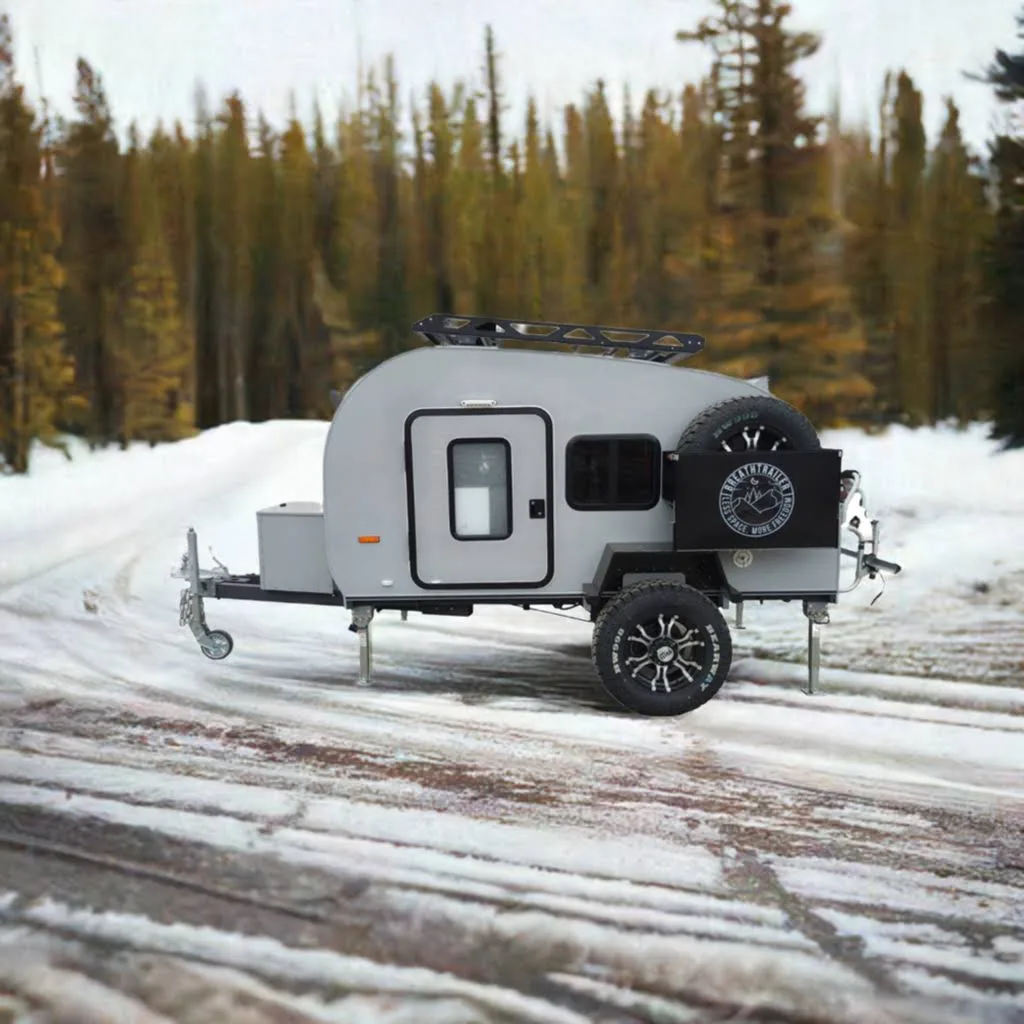
Most camper trailer buyers spend a lot of time thinking about summer. Will I be hot? Does it need an air conditioner? Can I cool the fridge? Sensible questions — Australia is a hot country.
But if you plan to use your trailer more than six months a year, you will spend time camping in cold weather. The Snowy Mountains can drop to -16°C overnight. The Grampians in Victoria hit -5°C in July. The Flinders Ranges in South Australia regularly see sub-zero mornings through winter and spring. Even along the coast, June through August nights can fall into single digits — cold enough that a sleeping bag alone stops being fun after the second night.
That raises a genuinely practical question: should you add a diesel heater, an air conditioner with a heating function (reverse cycle), or both?
This guide runs the real numbers on power consumption, purchase and running costs, off-grid suitability, and what actually makes sense inside a compact hard-shell teardrop trailer in 2026. No hand-waving — specific figures, specific products, specific Australian conditions.
What Australian Campers Actually Need: The Seasonal Reality
Before comparing the two systems, it helps to be honest about the Australian climate. The country is not uniformly tropical. Campers who do a lap or tour multiple states encounter a wide temperature band.
| Region | Winter overnight low | Summer high | Months below 10°C |
|---|---|---|---|
| Snowy Mountains / Alpine NSW-VIC | -15°C to -5°C | 25°C | 4–5 months |
| Grampians / High Country VIC | -5°C to 2°C | 30°C | 3–4 months |
| Flinders Ranges SA | -2°C to 5°C | 42°C | 2–3 months |
| Outback QLD / NT (dry season) | 5°C to 12°C | 42°C | 0–1 months |
| Coastal NSW / QLD | 5°C to 12°C | 32°C | 1–2 months |
| Perth / SW WA | 3°C to 10°C | 38°C | 2–3 months |
| Tasmania (east coast) | -3°C to 5°C | 28°C | 4–5 months |
The honest picture: heating is essential for at least part of every Australian winter trip, even if cooling is the priority come December. The question is which system to use — and whether you can run either of them off-grid.
How Diesel Heaters Work (and Why They Suit Off-Grid)
A diesel air heater is a combustion unit that draws fuel from your vehicle or trailer’s diesel tank (or a small dedicated tank), burns it cleanly inside an internal combustion chamber, and blows the warm exhaust gases through a heat exchanger into the cabin. The combustion gases themselves stay sealed from the cabin air — it is not an open flame, and CO exposure in a sealed unit is negligible, though a carbon monoxide detector is still recommended as a $30 insurance policy.
What the numbers look like:
- Startup phase (glow plug firing): 90–150W draw, typically 30–90 seconds
- Running phase (fully combusting): 5–35W continuous — roughly the same as a phone charger
- Fuel use: 0.1–0.3 litres of diesel per hour depending on output setting
- Operating range: -40°C to +40°C ambient — well beyond anything Australia throws at you
- Heat output: 2kW or 5kW are the most common sizes; some units offer stepless control from 1kW to 8kW
At 2kW output and 0.2L/hour diesel consumption, you could run a heater all night (10 hours) for 2 litres of diesel — roughly $4.80 at 2026 Australian diesel prices — while drawing less than 0.3Ah from your 12V battery during that time. That is the single biggest advantage: a diesel heater is essentially free from a battery perspective once it is running.
How Air Conditioners Work in Camper Trailers
A reverse-cycle air conditioner is a heat pump. In cooling mode it moves heat out of the cabin; in heating mode it extracts heat from outside air and pumps it in. It does not generate heat by burning anything — it transfers heat, which is why it is 3–4 times more electrically efficient than a resistive heater.
The physics are impressive. A reverse-cycle unit rated at 2kW of electrical draw can deliver 6–8kW of heat into the cabin (COP of 3–4). That is a better energy-in to heat-out ratio than diesel, gas, or resistive electric.
The problem is that “electrical draw” for a standard caravan air conditioner means 240V mains power. Most rooftop reverse-cycle units (Dometic FreshJet, Truma Saphir, Webasto Air Top, Coleman Mach) require 240V at between 600W and 2,400W during operation. Running one off-grid requires a generator or a very large inverter-and-lithium battery system.
12V DC air conditioners exist, but they are a different category:
- Units like the EcoAir DC series and some Dometic portable units operate on 12V/24V
- Typical draw: 30–100A (360W–1,200W) continuous
- At 70A continuous and a 200Ah lithium battery (160Ah usable), you have roughly 2.3 hours of runtime before the battery is flat
- With 400W of solar, you might sustain the unit for a few hours in full sun — but nights are when you need heating most
Head-to-Head: 8 Key Factors
| Factor | Diesel heater | Reverse-cycle AC |
|---|---|---|
| Off-grid suitability | ✅ Excellent — 5–35W running draw | ⚠️ Limited — 240V standard; 12V units drain battery fast |
| Heating ability | ✅ Excellent — -40°C rated | ✅ Excellent — COP 3–4 efficiency |
| Cooling ability | ❌ None | ✅ Full cooling in summer |
| Power dependency | Diesel (easy to source) | 240V or very large 12V bank |
| Installation complexity | Moderate — fuel tap, exhaust, combustion air | High — roof penetration, electrical, weight |
| Noise (running) | Low hum — quieter than older car diesel | Similar to a quiet fan at low setting |
| Weight added | 3–8 kg unit + fuel line | 20–35 kg rooftop unit |
| Carbon risk | Low — combustion sealed; fit CO detector | None |
The verdict is not that one is better. They solve different problems:
- Diesel heater → off-grid winter camping without burning battery
- Reverse-cycle AC → cooling in summer (requires mains or very large lithium) + heating at powered sites
The Real Power Maths for Off-Grid Camping
This is the calculation most competitors skip. Let’s run it honestly.
Scenario: one cold night, 8°C overnight, want 18°C cabin temp
| Heating option | Power draw | 8-hour overnight battery use | Diesel/fuel use |
|---|---|---|---|
| 2kW diesel heater (mid output) | 10W avg | 0.08Ah (negligible) | 1.2L diesel ~$2.90 |
| 12V DC compressor AC (heating mode) | 600–900W | 80–120Ah | — |
| 240V reverse-cycle AC (heating mode) | 800–1,200W | Needs generator or shore power | Generator fuel if applicable |
| 12V resistive electric blanket (companion) | 60W | 10Ah | — |
To run a 12V DC air conditioner in heating mode overnight, you need 80–120Ah of usable battery capacity dedicated to heating alone — on top of your fridge, lighting, and appliances. For most setups, that means adding 200–400Ah more lithium, which costs $1,500–4,000 before you even buy the AC unit.
The diesel heater uses almost no battery. That is not a marginal difference — it changes what the rest of your power system needs to be.
Price Guide: What You’ll Actually Pay in 2026
Diesel heaters
| Brand / model | Output | Unit cost (AU) | Professional install | Total installed |
|---|---|---|---|---|
| Vevor / Hcalory (budget Chinese) | 2kW / 5kW | $140–250 | $500–700 | $640–950 |
| Thermomate 5kW All-in-One | 5kW | $399–499 | $400–600 | $800–1,100 |
| AuFocus / AU-brand 2kW | 2kW | $499–699 | $400–600 | $900–1,300 |
| Webasto Air Top 2000 STC | 0.9–2kW | $1,649 | $500–800 | $2,150–2,450 |
| Eberspächer Airtronic D2 | 2.2kW | $1,200–1,600 | $500–800 | $1,700–2,400 |
Note: DIY installation is legal in Australia for diesel heaters. Many owners install budget units themselves in an afternoon; Webasto and Eberspächer require authorised dealers to maintain their warranty.
Reverse-cycle air conditioners (heating + cooling)
| Brand / model | Output | Unit cost (AU) | Install (240V wiring) | Total installed |
|---|---|---|---|---|
| Cool J / IHider underbunk reverse cycle | 2.9kW cooling | $1,317–1,479 | $300–600 | $1,617–2,079 |
| Dometic FreshJet FJZ7 Pro (rooftop) | 1.75kW cooling | $2,245 | $600–900 | $2,845–3,145 |
| Truma Saphir reverse cycle (rooftop) | 2.2kW cooling | $2,649 | $600–900 | $3,249–3,549 |
| Webasto Air Top (integrated diesel/AC) | varies | $3,200–4,500 | $800–1,200 | $4,000–5,700 |
The underbunk (under-bed) style units suit teardrops and pop-tops where adding a heavy rooftop unit is undesirable for weight or aerodynamic reasons. They still require a 240V supply.
Sizing Guide for Teardrop Camper Trailers
Hard-shell teardrops heat fast. A caravan with canvas walls and roof loses heat within minutes — canvas is a poor insulator and passes condensation. A hard-shell teardrop with insulated aluminium composite panels holds heat far more effectively, meaning a smaller heater does the same job.
As a general rule for teardrop-sized spaces:
| Trailer internal volume | Recommended diesel heater | Notes |
|---|---|---|
| Up to 3 m³ (most 2-person teardrops) | 2kW | More than adequate to -10°C; Breath Essential/Plus |
| 3–5 m³ (larger teardrops + annex) | 2–3kW | 2kW with good door seals; larger if annexe is heated too |
| 5–8 m³ (hybrid campers, large annexes) | 5kW | Teardrop body alone still only needs 2kW |
| Sub-zero alpine (-10°C and below) | Step up one size | Good insulation extends 2kW to -10°C; below that, 3–5kW |
For context: the Breath Essential and Breath Plus (700–800 kg models) have cabins of roughly 2.5–3 m³. Even in the Snowy Mountains, a 2kW diesel heater will hold the cabin at 18°C on a -10°C night with the insulated hardshell doing its job.
Per-Model Breath Trailer: Our Recommendation
| Model | Tare | Cabin vol. | Heating recommendation | AC heating (powered sites) |
|---|---|---|---|---|
| Essential $23,320 | 700 kg | ~2.5 m³ | 2kW diesel heater (add-on) | Underbunk 240V unit optional |
| Plus $29,766 | 800 kg | ~3 m³ | 2kW diesel heater (add-on) | Underbunk 240V unit optional |
| Ultra $34,749 | 900 kg | ~3 m³ | 2kW diesel heater (add-on) | Underbunk 240V unit optional |
| Max $47,190 | 1,200 kg | ~4 m³ + bathroom | 2kW diesel heater (add-on) | Reverse-cycle underbunk suits |
All four models are hard-shell aluminium composite — so the insulation advantage applies across the range. The Max, with its 2.1 m standing headroom and full interior bathroom, has the largest volume to heat, and a reverse-cycle unit makes more sense at the Max level where you are more likely to use powered sites on longer trips.
For the Essential, Plus, and Ultra — which are primarily aimed at free campers — a diesel heater is the more logical upgrade, because it works without shore power and uses almost no battery.
The Smartest Strategy: Diesel Heater + Evaporative or Portable Cooler
If your priority is year-round off-grid capability, the sweet spot for most Australian teardrop owners is:
- A 2kW diesel heater ($900–2,450 installed) for winter — solves heating without touching the battery
- A 12V evaporative cooler ($200–500) for mild summer nights — draws 5–8A (60–96W), effective in dry climates (inland, alpine, WA, SA outback)
- Campsite selection as the primary summer strategy — position with prevailing breeze, use a 270° awning for shade, camp under trees; the hardshell reflects heat far better than canvas
A reverse-cycle air conditioner only becomes compelling if you:
- Stay regularly at powered sites in summer
- Camp in humid coastal QLD where evaporative cooling is ineffective
- Want a single solution for both seasons and have the battery bank to support it
The honest answer: for most Australians doing free camping, a diesel heater at $900–$1,100 installed outperforms a reverse-cycle unit at $2,800–3,500 on an off-grid basis. Save the AC budget for more lithium.
When to Choose Each Option
Choose a diesel heater if you:
- Free camp regularly and don’t want 240V dependency for heating
- Tour alpine or southern regions in winter (Snowy Mountains, Grampians, High Country)
- Want to run heat all night without touching the battery
- Are on a budget — a reliable budget unit installed costs under $1,000
- Drive a petrol vehicle — units can run from a dedicated small diesel tank if the tow vehicle isn’t diesel
Choose a reverse-cycle air conditioner if you:
- Stay primarily at powered sites
- Camp in humid coastal regions where summer cooling is the main need
- Have (or plan to add) a substantial lithium bank — 400Ah+ — with solar to sustain off-grid operation
- Want a single unit for both heating and cooling at powered sites
Consider both if you:
- Do extended trips covering multiple seasons and climates
- Prioritise comfort above cost
- Travel the Big Lap — you will encounter everything from Darwin 38°C summers to Tasmanian winter mornings at -3°C on the same trip
FAQ
Can I run a 240V air conditioner from my camper trailer battery? Technically yes, with a large enough inverter and battery bank. Practically, a 1,200W AC unit running for 8 hours overnight needs 800Ah of battery capacity (assuming 60% efficiency) — that is $6,000–10,000 in lithium alone, before the inverter. A diesel heater costing under $1,000 installed is a far more sensible choice for heating. Save the big battery for the fridge, lighting, and CPAP.
Are diesel heaters safe inside a hard-shell camper trailer? Yes — the combustion chamber is sealed from the cabin air. Exhaust exits via a dedicated pipe through the trailer floor or wall. The cabin air circulates only through the heat exchanger, never contacting combustion gases. Install a $30 CO detector regardless. Budget brands have a slightly higher variability rate; Webasto and Eberspächer are the standard for full-time touring.
What fuel do diesel heaters use? Standard diesel — the same you put in your 4WD or buy in jerry cans. Some units can also run on biodiesel blends up to B20. Units cannot use petrol. If you drive a petrol vehicle, you’ll need a small dedicated 5–10L diesel tank for the heater, which is a straightforward add-on.
Does a diesel heater affect my caravan’s registration or compliance? No specific registration requirement triggers for a diesel heater in Australia. The unit must be installed so the combustion air intake and exhaust are external to the habitation area (VSB1 requirement). DIY installation is legal; keep a record of the installation for insurance purposes.
What about a diesel heater and lithium batteries — any interaction? None negative. Diesel heaters draw almost nothing from the 12V system while running, so they complement rather than compete with a lithium battery setup. Some tourers pair a diesel heater with a 100Ah lithium + 200W solar — plenty for the fridge, lighting, water pump, and CPAP, with the heater running on diesel independently.
Will an air conditioner work in winter off-grid if I have a big solar setup? Potentially — but only during sunny daylight hours. The challenge is that heating demand peaks overnight, when solar output is zero. You would need a battery bank large enough to store the day’s solar harvest and discharge it through the night via the inverter to the AC unit. At 12A continuous AC draw and 10 hours of heating, that is 120Ah+ dedicated to heating — before your other loads. Most owners find the diesel heater makes that battery capacity available for more useful purposes.
The Bottom Line
For off-grid free camping, a diesel heater is the practical winner in 2026. It runs on 5–35 watts of 12V power while running, burns $3–5 of diesel per night, and can hold a teardrop cabin at 18°C in -10°C conditions. The per-trip running cost is trivially low compared to the value of a warm night’s sleep.
A reverse-cycle air conditioner makes sense if you prioritise summer cooling at powered sites and are prepared to invest in the battery and solar infrastructure to run it occasionally off-grid. It is not an either/or — many long-term tourers install a diesel heater for heating and a compact AC for summer cooling, treating them as the two-tool solution they are.
The hardshell insulation advantage of a teardrop means both systems are more efficient inside a Breath Trailer than inside an equivalent canvas rig. Less volume to heat, better insulation to hold it — your diesel heater does more with less.
Ready to spec out a Breath Trailer for year-round Australian touring? Compare all four models or book a viewing at our Sydney showroom or one of our ambassador locations.
Recommended Reading
- The Complete Guide to Camper Trailer Power Systems — battery sizing, solar, and inverter decisions
- How Long Can You Stay Off-Grid Camping in Australia? — per-model limiting factor analysis
- AGM vs Lithium Batteries for Camper Trailers — which battery suits your setup
- Why Air Conditioning Is Becoming Essential in Camper Trailers — the summer cooling deep-dive
- The Ultimate Off-Grid Camper Trailer Setup — whole-system approach to free camping