Grampians National Park Camping Guide 2026: Sites, Fees & Seasonal Advice
Your complete 2026 guide to camping in the Grampians: campground table with fees, camper trailer access, seasonal guide, spring wildflowers, and which Breath Trailer model fits.
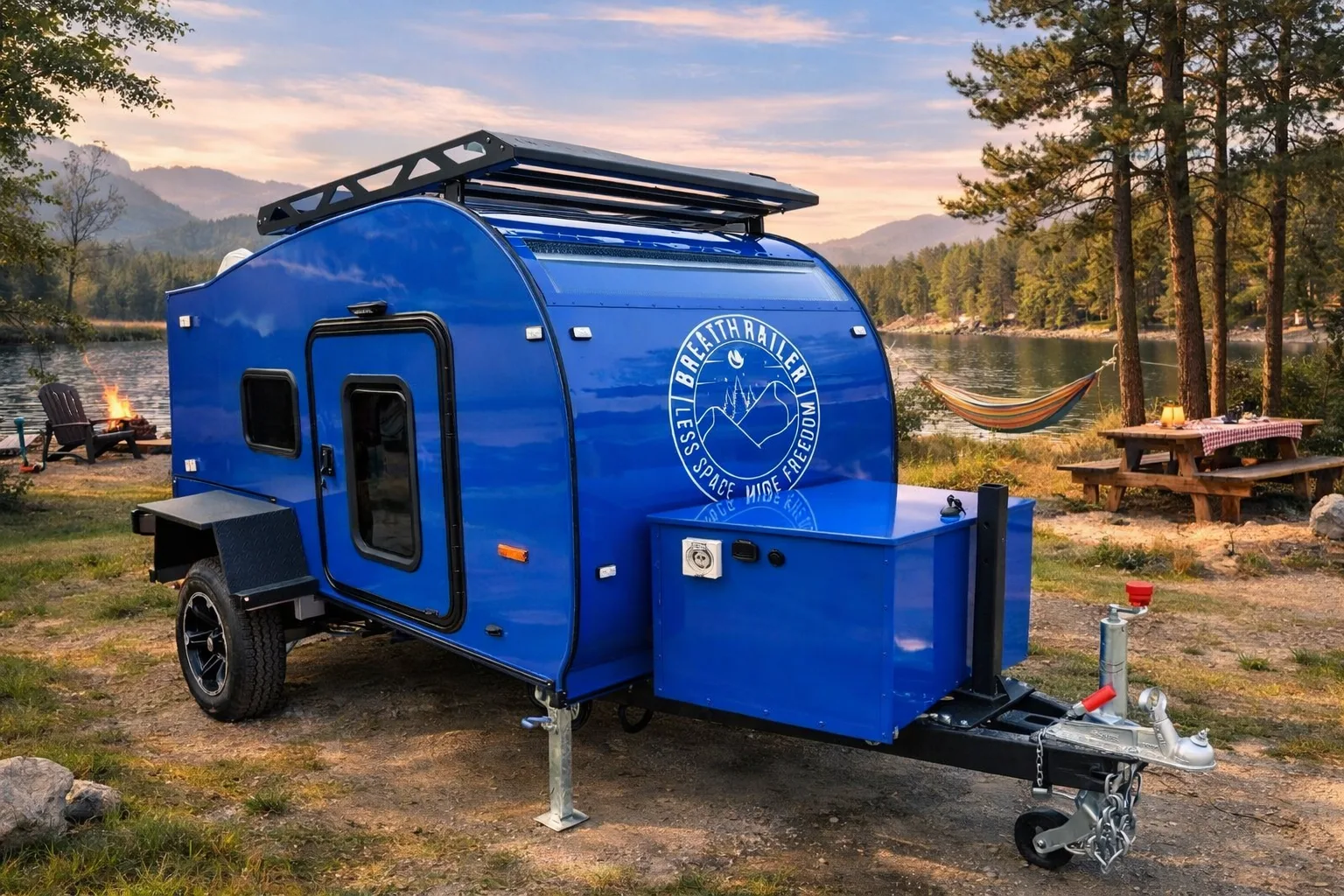
The Grampians — Gariwerd in the Djab wurrung and Jardwadjali languages — is one of Victoria’s most rewarding camping destinations. Rocky sandstone ranges tower above wildflower-carpeted valleys, kangaroos greet you at dawn, and MacKenzie Falls thunders year-round. At 167,000 hectares, it is the state’s fourth-largest national park, yet it sits only 2.5 hours west of Melbourne on sealed highway all the way to the township of Halls Gap.
For camper trailer owners, the Grampians checks most boxes: bookable, trailer-accessible campgrounds spread across the park; caravan park powered sites in Halls Gap if you prefer facilities; genuinely remote bush options if you don’t; and spring conditions that are close to perfect for camping. This guide covers the campgrounds that can take a trailer (with honest road notes), 2026 Parks Victoria fees and the government half-price discount, what to do, when to go, and which Breath Trailer model makes the most sense for the terrain.
Quick numbers: 167,000 ha park area · 150+ walking tracks · 1,500 plant species (75 endemic) · 200+ bird species · no entry fee (camping fees apply) · open year-round.
Why the Grampians Is Worth the Drive
The Grampians rewards the base-camp approach better than almost any park in southern Australia. Set up once at Smiths Mill or Boreang, day-hike to a different feature each day, and avoid moving your rig across multiple sites. A hard-shell teardrop handles this better than a soft-floor canvas setup: no tent to peg out and pack, a lockable interior so you can leave your gear behind all day, and a kitchen hatch you can cook from in under five minutes after returning from a full-day walk.
A few reasons the park keeps drawing repeat visitors:
- Scale with accessibility. Drive sealed highway to Halls Gap, five-minute setup, walk to a waterfall from your site. Or push deeper on gravel and find bush campgrounds effectively to yourself.
- Year-round appeal. Spring wildflowers September–November. Summer swimming holes and long evenings. Autumn foliage and perfect walking weather. Winter fog through the valleys, solitude, and wattle beginning to build late August.
- Wildlife density. The kangaroo population around Halls Gap is so well-established that mobs graze between campsites at dusk. Emus roam the open western Wimmera paddocks. Echidnas shuffle through scrub on most walks.
- No park entry fee. Unlike Kosciuszko, Cape Range or Kakadu, there is no vehicle gate fee to enter the Grampians. You pay camping fees only, and those are currently discounted under the Victorian Government half-price scheme.
Best Time to Visit the Grampians
| Season | Conditions | Crowds | Notes |
|---|---|---|---|
| Spring (Sep–Nov) | 12–22 °C days, occasional frost overnight early September | Moderate, rising through October school holidays | Peak wildflower season; orchids and heath September–October |
| Summer (Dec–Feb) | 25–38 °C, occasionally 40 °C+ | High, December–January school holidays | Fire danger season; some tracks close; MacKenzie Falls at moderate flow; avoid midday walks |
| Autumn (Mar–May) | 10–25 °C, outstanding walking weather | Low–moderate | Best conditions of the year; Easter weekend fills fast — book 6–8 weeks ahead |
| Winter (Jun–Aug) | 3–15 °C, fog and frost common | Low | Wildflowers build late August; some highland roads may frost overnight; excellent solitude |
October sweet spot. If this guide has reached you in spring, you are in the best window of the year. Temperatures are comfortable (15–24 °C), the wildflowers are at peak across the lower ranges, the waterfalls are running strongly from winter rain, and the summer crowds have not arrived. The October long weekend fills Smiths Mill and Boreang within hours of the booking window opening — plan well ahead or aim for mid-week.
Getting There: Roads, Distances and Driving Tips
The main route from Melbourne is the Western Highway (A8) to Stawell, then Grampians Road south into Halls Gap — roughly 235 km, 2.5 hours. The highway is dual carriageway most of the way and comfortable at 100 km/h with any camper trailer.
From Adelaide: 325 km, approximately 3.5 hours via the Western Highway through Horsham.
| Road / Track | Surface | Suitable for |
|---|---|---|
| Western Highway → Halls Gap | Sealed | All trailers |
| Grampians Tourist Road (Halls Gap to Dunkeld) | Sealed | All trailers |
| Silverband Falls Road | Sealed | All trailers |
| Wannon Crossing Road (from Glenelg Highway) | Sealed with gravel approach | Standard trailers — slow on final 2 km |
| Boreang Road (south of Dunkeld) | Gravel, maintained | Standard trailers in dry conditions |
| Mt Zero Road (northern ranges) | Gravel, some rough sections | Trailers with off-road suspension in dry conditions |
| Stapylton / Jim Jim tracks | 4WD only — leave trailer at Mt Zero car park | No trailers |
Speed and stone-chip note: Drop to 80 km/h on unsealed sections. The Grampians’ ironstone gravel throws sharp chips that can mark paintwork and break lights. Check VicRoads and Parks Victoria current alerts before travel, especially after heavy rainfall — some gravel approaches become impassable.
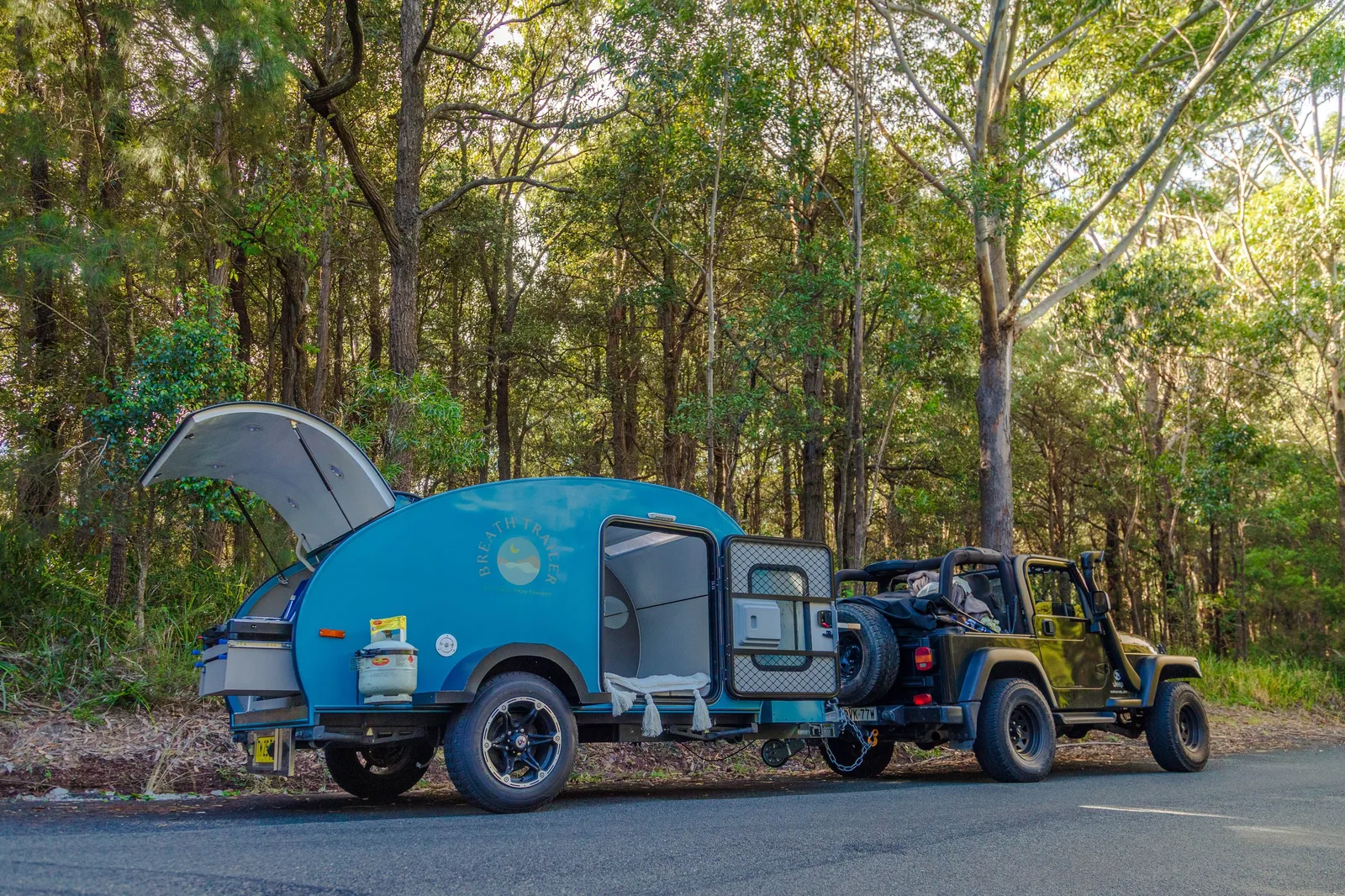
A hard-shell teardrop is a practical choice for the Grampians: compact enough for national park sites, lockable enough to leave while you hike all day.
Grampians Campgrounds for Camper Trailers (2026)
Parks Victoria manages the national park campgrounds, ranging from fully serviced (powered sites, hot showers) to remote bush camping (pit toilet only). The table below covers those that accept camper trailers, with honest notes on road access and facilities.
| Campground | Location | Road | Trailer Sites | Water | Toilets | Approx. Fee (half-price applied) | Booking |
|---|---|---|---|---|---|---|---|
| Smiths Mill | Central Grampians, off Wonderland Loop Rd | Sealed | 5 drive-in (+ tent sites) | Tank water (treat) | Non-flush | ~$10–15/night | Parks Vic booking required |
| Boreang | South, off Boreang Rd near Dunkeld | Gravel, maintained | Several sites | No — BYO | Drop toilet | ~$10–15/night | Parks Vic booking required |
| Wannon Crossing | South-east, off Glenelg Highway | Sealed + gravel approach | 1 drive-in site | No | No | Free | No booking — first-come, first-served |
| Kalymna | Near Halls Gap | Sealed | Limited van/trailer | Yes | Flush | Free | No booking — first-come, first-served |
| Plantation | North of Halls Gap, Roses Gap Rd | Unsealed, maintained | Some sites (smaller trailers) | Non-drinking | Non-flush | Free | No booking — BYO drinking water |
| Buandik | Southern ranges | Gravel | 4 caravan/trailer sites | BYO | Non-flush | ~$10–15/night | Parks Vic booking required |
| NRMA Halls Gap Holiday Park | Halls Gap township | Sealed | 100+ powered + unpowered | Yes | Full amenities | ~$50–85/night | Book direct with park |
| Halls Gap Lakeside Tourist Park | Halls Gap township | Sealed | 80+ sites | Yes | Full amenities | ~$45–70/night | Book direct with park |
| Grampians Paradise Camping | Bellfield, 5 km north of Halls Gap | Sealed | Multiple powered | Yes | Full amenities | ~$45–65/night | Book direct with park |
| Hynes Camping Reserve | Glenisla, western Grampians | Sealed | Van and trailer sites | Yes (some powered) | Flush | ~$20–30/night | Direct or self-register |
Important notes:
- Parks Victoria fee estimates are approximate after the Victorian Government 50% half-price camping discount (active from 1 July 2025 for two years). Confirm current rates at bookings.parks.vic.gov.au before travel.
- The private caravan parks (NRMA, Halls Gap Lakeside, Grampians Paradise) set their own pricing and are not covered by the Parks Vic half-price scheme.
- No dogs in any Parks Victoria campground inside the national park. Hynes Reserve (Glenisla) and some private parks accept leashed dogs — confirm directly.
- Grey water: no dump points inside the park. The NRMA Halls Gap Holiday Park and Halls Gap Lakeside Tourist Park operate dump points for a small fee.
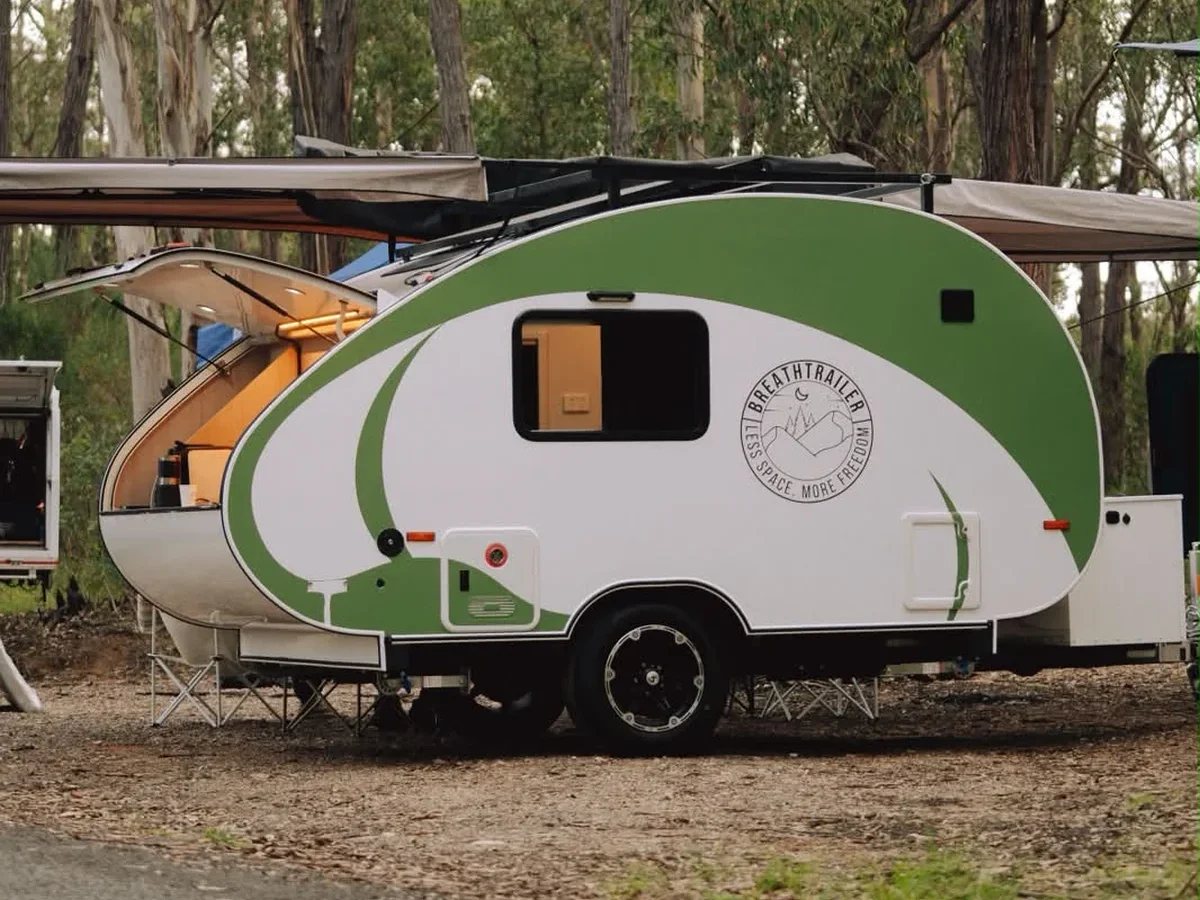
A compact teardrop footprint is a genuine advantage at tighter national park sites like Smiths Mill, where site boundaries are defined and neighbours are close.
Parks Victoria Fees, Booking and the Half-Price Discount
Booking system: Parks Victoria campgrounds in the Grampians require online booking via bookings.parks.vic.gov.au. Most sites open 12 months ahead. During peak periods — the Christmas–New Year school holidays, Easter weekend, and the October long weekend — bookings fill within hours of the window opening. Set a calendar reminder for the exact date your target period becomes bookable.
Half-price deal (2025–2027): The Victorian Government reintroduced 50% off camping at Parks Victoria bookable campgrounds from 1 July 2025 for two years. The Grampians bush campgrounds (Smiths Mill, Boreang, Buandik) that would have cost ~$22–30/night now cost approximately $10–15/night per site. This makes a four-night Grampians trip one of the most cost-effective national park camping experiences in Victoria.
Grampians Peaks Trail exception: The 160-km multi-day through-hike has its own platform booking system and is not discounted under the half-price scheme. GPT platform bookings are managed separately and attract a different fee structure.
No entry fee: There is no vehicle gate fee to enter Grampians National Park. You pay only camping fees. This is a significant cost advantage over Kosciuszko (NSW), Cape Range (WA), and Kakadu (NT), all of which charge per-vehicle entry.
Top Things to Do in the Grampians
The park has more than 150 walking tracks, multiple waterfalls, lookout points, Aboriginal rock art sites and swim spots. A practical guide for a camper trailer base at Smiths Mill, Boreang or the Halls Gap area:
Short walks and viewpoints (under 2 hours return)
- MacKenzie Falls — The most visited site in the park. 1.6 km return to the top viewing area, or 2.6 km circuit down to the base pool. Thunders year-round; at its strongest in spring and after winter rain.
- Boroka Lookout — 200 m walk from the car park. Panoramic sweep across the Fyans Valley. Outstanding at sunrise — worth an early alarm.
- Reed Lookout and The Balconies — Reed is a five-minute stroll; The Balconies (Jaws of Death) adds 2.4 km return from the same car park. Cantilever rock formation overlooking the Victoria Valley, one of the most photographed features in Victoria.
- Silverband Falls — 1.4 km return, child-friendly, runs strongly in spring and can slow to a trickle by late summer.
Half-day to full-day walks
- The Pinnacle via Grand Canyon — 10.4 km circuit, 340 m gain. Rocky track to a 360-degree summit view. Allow 4–5 hours. One of the best full-day walks in Victoria.
- Mt William Summit — The highest point at 1,167 m. The car park sits at around 1,100 m, making this a surprisingly easy 4 km return walk with outstanding views in all directions.
- Zumsteins and MacKenzie Gorge — Flat and easy. Kangaroos graze the historic Zumsteins flats near dusk.
Aboriginal cultural sites
- Bunjil’s Shelter — One of Victoria’s most significant rock art sites, featuring a large Wedge-tailed Eagle painted in red ochre. Short level walk from the car park, 30 minutes south of Stawell near Black Range Road. Free to visit.
Swimming (summer)
- Lake Bellfield (near Halls Gap) and the dam face area below the lake are the most popular summer swim spots. The Wannon River around Wannon Crossing has good swimming holes; check conditions after rain.
Spring Wildflowers: The Grampians at Their Most Spectacular
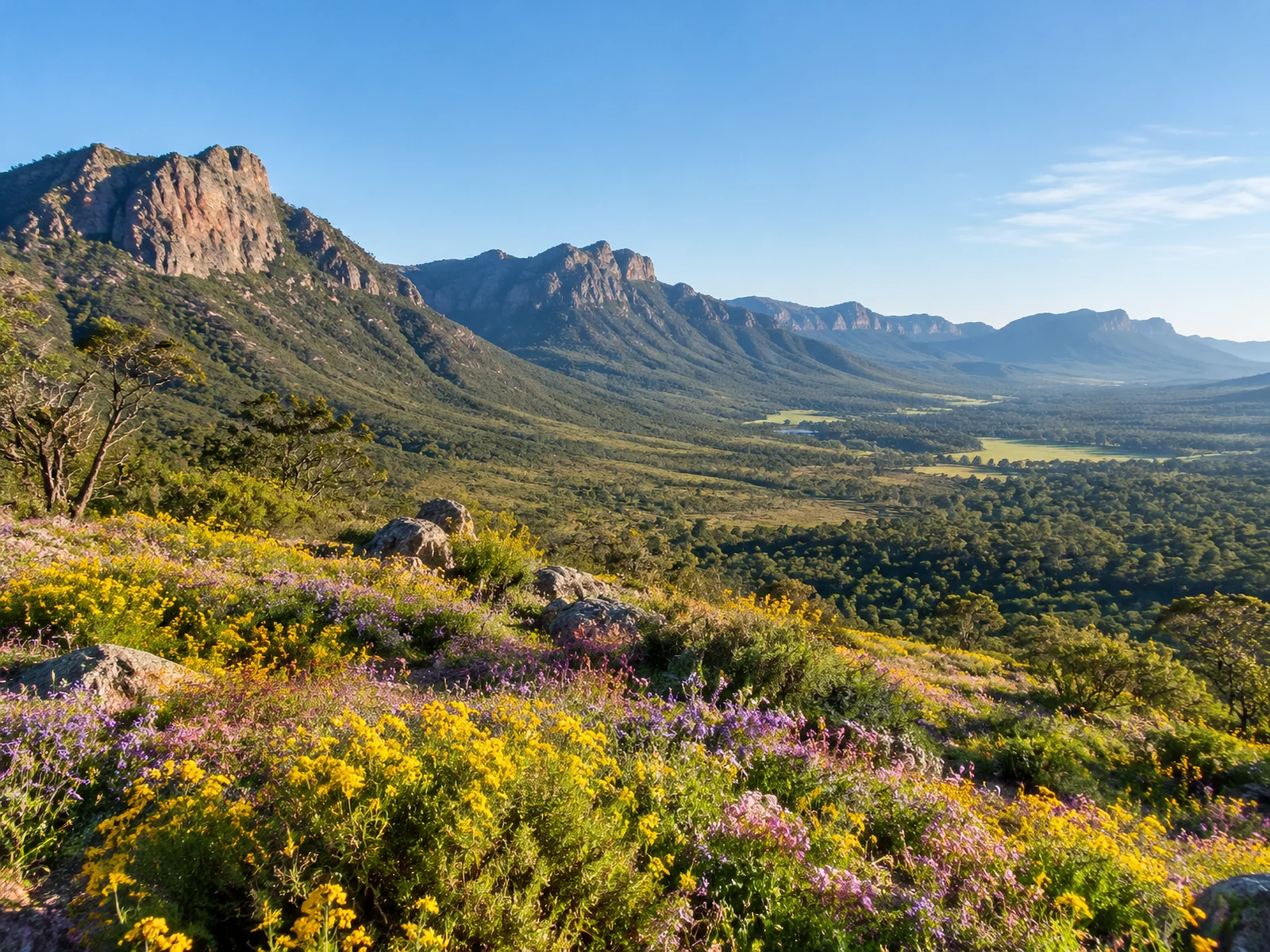
Illustration: Spring in the Grampians turns the valleys into a carpet of colour — 75 plant species found nowhere else in the world.
The Grampians supports around 1,500 plant species, of which 75 are endemic — found nowhere else on earth. Spring, roughly September through November and peaking in October, brings a sequence of wildflower displays that botanists travel from across Australia to see.
Key species and timing:
- Wattles — begin late August, mostly finished by mid-September
- Common Heath and Grampians Heath — pink and cream spikes from September through October; the Heath is Victoria’s floral emblem
- Spider orchids and waxlips — appear in forest clearings from late September
- Blue Tinsel Lily — found in isolated patches, notably near Heatherlie Quarry south of Dunkeld
- Thryptomene — fine pink star flowers along the lower sandstone ridges
Best wildflower spots for a Smiths Mill or Boreang base:
- Boroka Lookout — panoramic wildflower views across the lower ranges, 15 minutes from Halls Gap
- Heatherlie Quarry walk — rare orchid habitat near Dunkeld
- The Piccaninny — 1.5-hour return through heath, good orchid habitat
- Mount Zero area — northern ranges, less crowded, outstanding late-spring wildflowers
Pomonal Native Flower Show: The Pomonal flower show has run for over 40 years and typically falls in late September or early October. Check current-year dates with the Halls Gap Visitor Information Centre before planning your trip around it.
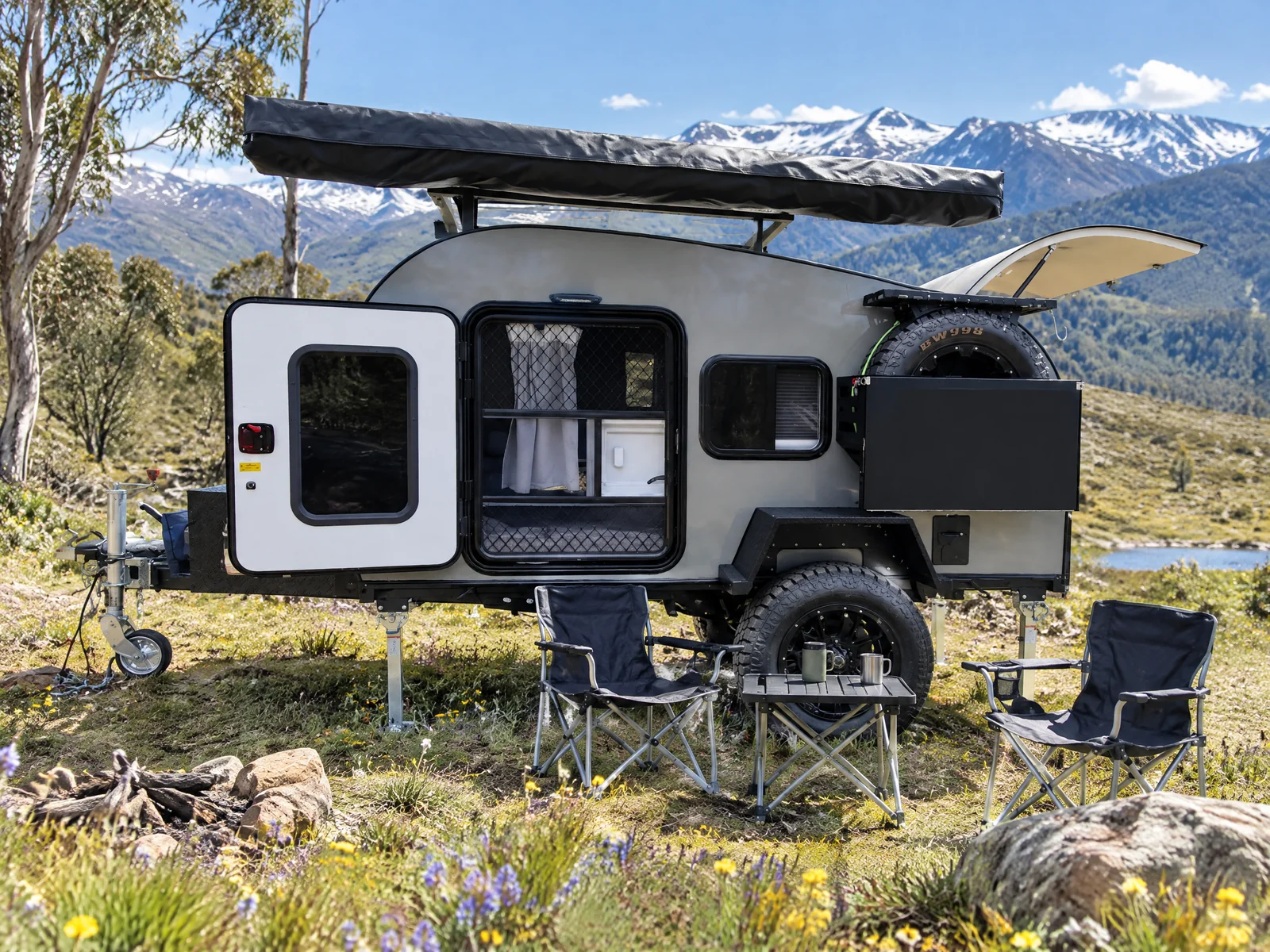
Illustration: A Breath Ultra in a Victorian alpine setting — the Grampians in spring offers similar wildflower displays at lower elevation, closer to Melbourne.
Wildlife, Fire Danger and Safety
Kangaroos at campsites: The kangaroo population around Halls Gap has been resident for decades and is relaxed around people. Mobs graze directly between campsites at dusk and dawn. Keep food stored inside your trailer. Never hand-feed. Large males can be defensive during breeding season — give them space and do not approach.
Emus: Common in the open Wimmera paddocks between Horsham and Dunkeld, and in the western Grampians. Most active at dawn and dusk. Worth slowing down for on the road, not swerving.
Snakes: Spring warmth activates Eastern Browns, Tiger Snakes and Copperheads across the ranges. Both Eastern Browns and Tiger Snakes are common in the Grampians. Carry a snake bandage in your first-aid kit and know the pressure-immobilisation technique. Check inside boots left outdoors. Don’t put hands into rock crevices. Bites happen almost exclusively when snakes are disturbed accidentally or deliberately — awareness is the best prevention.
Fire danger season: Total Fire Ban periods typically run from November through to late March across the Grampians. During a declared Total Fire Ban, no campfires under any circumstances. The CFA VIC Fire Ready app and VicEmergency show real-time fire danger ratings and current bans. Gas stoves and camp stoves remain usable during a fire ban. Some Parks Victoria sites have gas or electric BBQ facilities as alternatives.
Firewood: Collection of firewood from inside the national park is prohibited. Bring your own bundled firewood from a hardware store or roadside farm stall on the way to the park, or use the gas BBQs at campgrounds that have them.
Camping Setup Tips for the Grampians
Site size at national park campgrounds: Parks Vic campgrounds in the Grampians define individual sites, and many are compact — particularly at Smiths Mill. A teardrop trailer (typically 3.2–4.5 m long) fits all trailer-suitable sites comfortably. A full-length caravan (6–8 m) may struggle with turning circles and shared access roads at busier campgrounds.
Cold nights in every season: Even October can drop to 2–5 °C overnight in the ranges. Hard-shell teardrops manage cold nights far better than soft-floor canvas setups — no dew-soaked canvas to pack away, no condensation trapped inside a fabric wall. A diesel heater or quality electric blanket (on powered sites) is worth packing from April through to October.
Water management: Smiths Mill has a rainwater tank — treat as non-potable unless you carry a filter or purification tablets. Halls Gap supermarket and IGA are 10–15 minutes from most park campgrounds and stock refillable containers. Boreang and Wannon Crossing have no water supply — carry a minimum of 5 litres per person per day for drinking and cooking.
Grey water: There are no dump points inside the national park. For stays of three nights or more, either carry sufficient grey water tank capacity or plan a trip into Halls Gap to empty at the NRMA Holiday Park or Halls Gap Lakeside Tourist Park dump points (small fee). The Breath Ultra with its 80-litre grey water tank, and the Breath Max with its full interior bathroom, handle extended stays without grey water management becoming a daily task.
Power: Generator use is restricted or prohibited at Parks Victoria campgrounds. Solar panels are the correct solution for the Grampians. Even in winter, the Grampians averages enough daily sun hours to keep a 100–200 Ah lithium battery topped up through normal camping consumption.
Phone reception: Telstra 4G covers Halls Gap township and most main roads through the park. Some campgrounds (Boreang, Wannon Crossing, remote parts of the western ranges) have no coverage. Download the Hema Explorer or GaiaGPS app with offline maps before you leave home, and carry a PLB if heading to remote sites.
Which Breath Trailer Fits the Grampians?
The Grampians is not a remote off-road destination in the same category as the Gibb River Road or Cape York — it is accessible to all four Breath Trailer models on the roads and sites described above. The decision comes down to how many nights you plan to stay and how important bathroom facilities are to you.
| Model | Price | Tare / ATM | Best for Grampians | Notes |
|---|---|---|---|---|
| Essential | $23,320 | 700 kg / 1,100 kg | Weekend trips using powered sites at Halls Gap caravan parks | No bathroom. Shower at caravan park amenities. Perfect for a first Grampians trip. |
| Plus | $29,766 | 800 kg / 1,300 kg | 2–4 night trips at Parks Vic campgrounds with toilet facilities | Fridge included standard. No bathroom, but flush toilets available at Smiths Mill and Halls Gap sites. Covers most Grampians scenarios. |
| Ultra | $34,749 | 900 kg / 1,400 kg | 4–7 night trips at bush campgrounds; multi-day hikers | External shower handles hygiene for extended stays. 80 L grey water tank reduces dump-point visits. |
| Max | $42,900 | 1,200 kg / 1,700 kg | Full self-contained multi-night and regional touring | Interior bathroom with shower and toilet. Self-contained under CMCA guidelines for free camping on adjacent crown land when park sites are full over peak periods. 100 L water tank. |
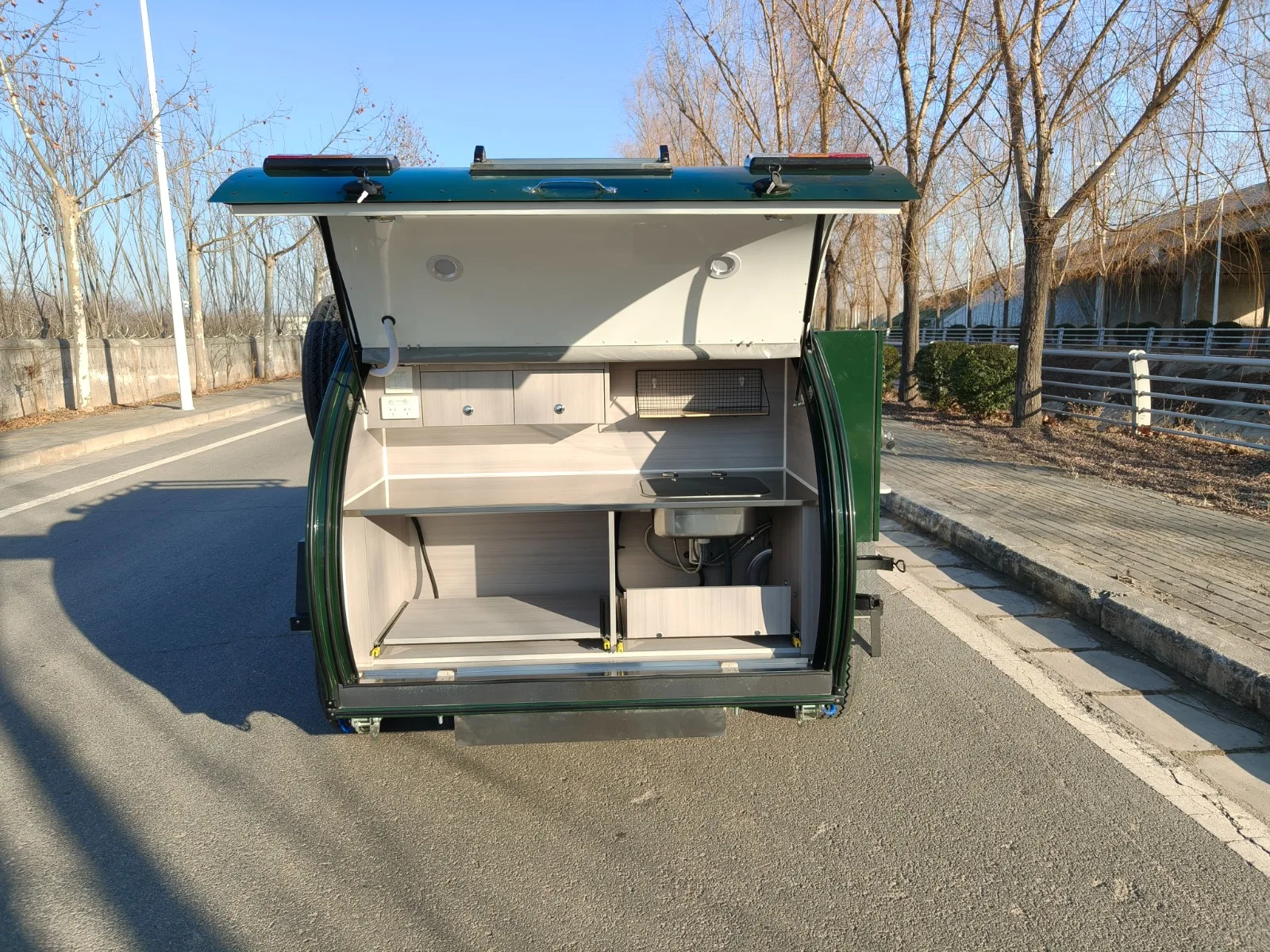
The Breath Plus rear galley at the forest-green setting: fridge, sink, and slide-out drawers cover the cooking needs of a multi-day Grampians base camp.
Tow vehicle fit: All four models tow comfortably behind mid-size SUVs — Toyota RAV4, Mazda CX-5, Subaru Outback and equivalent. The sealed Western Highway to Halls Gap presents no towing challenge. Gravel approaches to Boreang and Wannon Crossing are manageable on standard suspension. The Essential and Plus handle these on standard ride height; the Ultra and Max include independent coil suspension as standard for improved performance on rough surfaces.
Lead time note (2026): Build lead time for Breath Trailer is currently 3–4 months from order to delivery. For a summer or Christmas Grampians trip, order before late August to avoid missing the window.
Essential Packing Checklist
| Category | What to Bring |
|---|---|
| Water | 5 L/person/day minimum if staying at Boreang or Wannon Crossing. Filter or tablets for tank water at Smiths Mill. |
| Fire safety | CFA VIC Fire Ready app downloaded before leaving phone coverage. Gas stove as campfire backup during fire ban periods. |
| Firewood | Buy bundled firewood before entering the park — collection is prohibited inside national park boundaries. |
| Navigation | Hema Explorer or GaiaGPS downloaded offline. Grampians visitor map from the Brambuk Cultural Centre in Halls Gap. |
| Wildlife | Snake bandage (compression bandage, 10 cm wide) in first-aid kit. Food stored inside the trailer overnight. |
| Cold nights | Sleeping bag rated to at least −3 °C for spring and autumn. Diesel heater or electric blanket for powered sites. |
| Power | Solar sufficient for most park trips. Generator use prohibited at Parks Vic campgrounds. |
| Grey water | Plan a dump-point visit at Halls Gap for stays of 3+ nights without a built-in grey water tank. |
| Booking confirmation | Screenshot or printed copy of Parks Vic booking in case of no phone coverage at the campground entrance. |
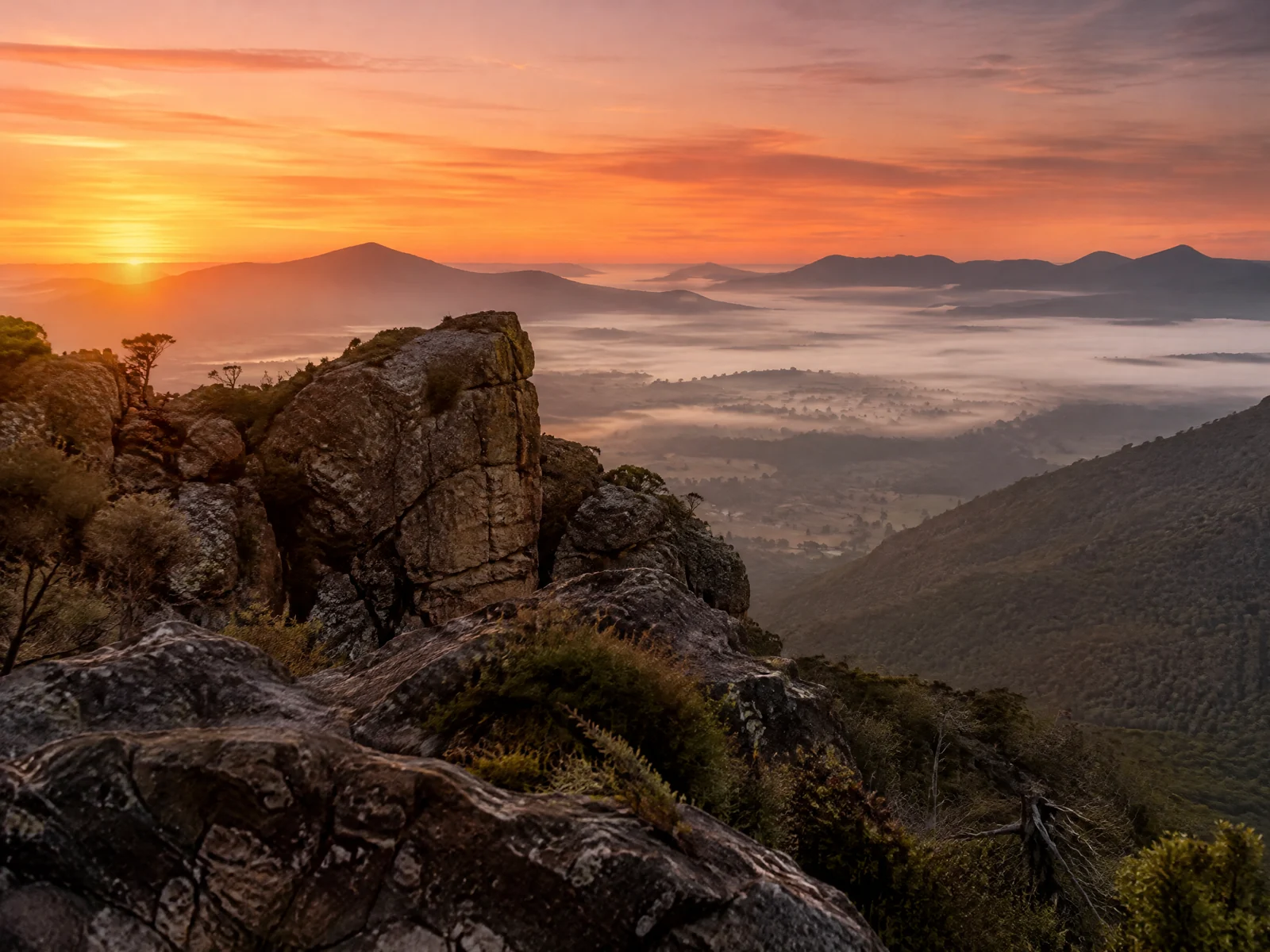
Illustration: Sunrise at the Grampians’ famous rock lookouts is worth the early alarm — especially in spring when the air is still and cool.
FAQ
Is the Grampians National Park free to enter? Yes. There is no vehicle entry fee for Grampians National Park. You pay camping fees for Parks Victoria campgrounds — currently approximately half the normal rate under the Victorian Government half-price scheme, active to mid-2027 — but nothing at the park boundary. This is a meaningful cost advantage over many other major Australian national parks.
Can I take a camper trailer to all Grampians campgrounds? No. Many campgrounds inside the park are tent-only or have only limited trailer-accessible sites. Smiths Mill (5 drive-in sites), Boreang (several sites), Wannon Crossing (1 drive-in site), Buandik (4 sites), and Plantation (some smaller sites) accept trailers. The private caravan parks at Halls Gap accommodate all trailer sizes. Always confirm camper trailer access when booking via the Parks Victoria site — per-site descriptions specify which setups are accepted.
Do I need to book Grampians camping in advance? For Parks Victoria campgrounds (Smiths Mill, Boreang, Buandik), yes — book via bookings.parks.vic.gov.au. Wannon Crossing and Kalymna operate on a first-come, first-served basis. The Halls Gap caravan parks have their own booking systems. Peak periods including Christmas, Easter, and the October long weekend fill months in advance — set a calendar reminder for when your target dates become bookable (12 months ahead).
Are dogs allowed in Grampians National Park campgrounds? No. Dogs are not permitted at any Parks Victoria campground inside the Grampians National Park. Some private operators and adjacent reserves (such as Hynes Camping Reserve at Glenisla) do accept leashed dogs — confirm directly before travelling with a pet. See the full guide to camping with dogs in Australia for state-by-state rules.
What happens during a Total Fire Ban at the Grampians? All campfires must be extinguished and no solid-fuel fires lit — regardless of whether the site has a designated fire ring. Gas stoves and camp stoves remain legal during a Total Fire Ban. Parks Victoria may close specific tracks or campgrounds in high-danger periods. Always check the CFA VIC Fire Ready app and VicEmergency before leaving and again when you arrive in Halls Gap.
Is the Grampians suitable for a solo trip with a camper trailer? Yes. Halls Gap township (10–15 minutes from most campgrounds) provides groceries, fuel, food and basic mechanical services. The main park campgrounds have toilet facilities. Telstra 4G covers Halls Gap and the main park roads. A hard-shell teardrop with a lockable body is well-matched to solo travel — you can leave your gear secured while hiking all day without concern. For the wider picture on solo camping in Australia, see the teardrop camper for solo travellers guide.
Recommended Reading
Planning a Grampians trip or building out your Victorian itinerary? These articles fill in the gaps:
- Best Camping Spots in Victoria — 18 Campgrounds Worth Knowing
- Best Camping Spots Near Melbourne — 18 Sites Within 3 Hours
- Free Camping Australia — State-by-State Rules and Apps
- Camper Trailer Packing List Australia — Everything You Need
- Must-Have Accessories for Off-Road Adventures
Planning to buy before your Grampians trip? Compare all four Breath Trailer models or book a viewing at our Sydney showroom.