Kangaroo Island Camping Guide 2026: Campgrounds, Ferry & Camper Trailers
2026 guide to camping on Kangaroo Island with a camper trailer: SeaLink ferry fares, best campgrounds, road conditions, seasonal tips and self-containment rules.
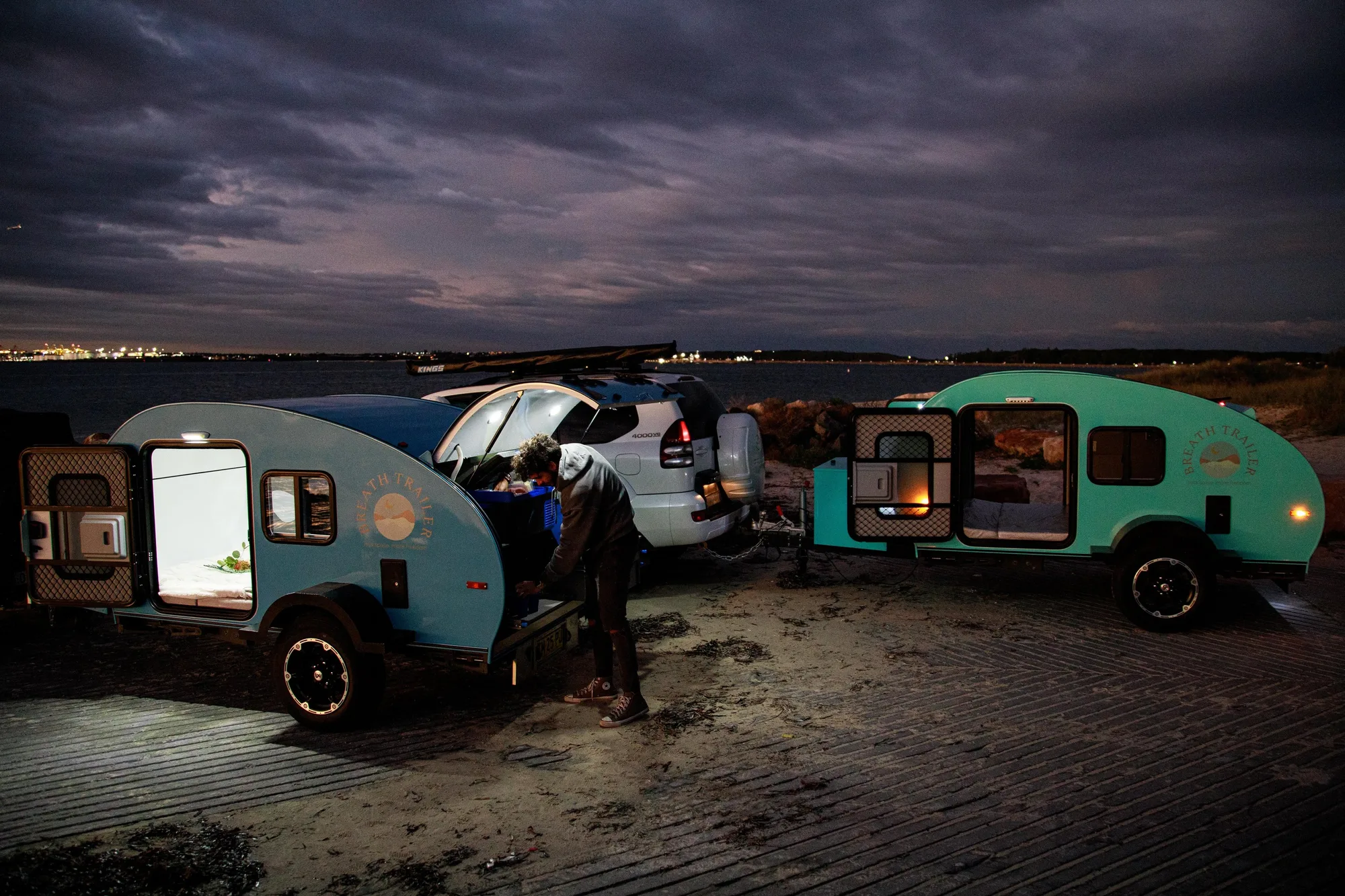
South Australia’s most spectacular island sits just 13.5 kilometres off the Fleurieu Peninsula, yet it feels genuinely remote. Kangaroo Island is 155 km long and 55 km across — bigger than Singapore — and more than 65 per cent of it is protected as national park, conservation park or native bush reserve. There are Australian sea lions, New Zealand fur seals, koalas, echidnas and around 260 bird species. There is almost no public transport. A camper trailer is, frankly, the best possible way to experience it.
This guide covers everything you need to bring your rig to Kangaroo Island in 2026: the SeaLink ferry logistics, road conditions you’ll encounter once you land, the best campgrounds across all price points, self-containment rules, seasonal timing, and how to budget for a five-night stay.
Getting There: The SeaLink Ferry from Cape Jervis
The only practical way to take a camper trailer to Kangaroo Island is the SeaLink ferry from Cape Jervis — about 90 minutes south of Adelaide’s CBD on the Fleurieu Peninsula.
Crossing time: approximately 45 minutes to Penneshaw on the island’s north-east tip.
Frequency: multiple sailings daily. Early-morning departures on peak-season Fridays fill fast — book ahead, especially in December–January, Easter and school holidays.
One-way trailer fares (variable pricing as at 2026):
| Trailer length | From (one-way) |
|---|---|
| Camper trailer ≤5.0 m | $99 |
| 5.1 m – 5.9 m | $112 |
| 6.0 m and over | $144 |
| Adult passenger (in addition to vehicle fare) | $49 |
All four Breath Trailer models sit within a compact teardrop footprint and will generally fall in the ≤5 m tier. When booking, check that your combined vehicle-and-trailer length is 9.9 m or under: if so, you can complete the booking online. Over 9.9 m, call 13 13 01 to arrange your crossing.
Before you board:
- Specify your trailer’s exact length from tow bar to rear corner when booking — SeaLink needs the accurate figure.
- Arrive at Cape Jervis terminal at least 30 minutes before your scheduled departure.
Fuel and supplies: Fill your vehicle and check your water tank on the mainland before boarding. Petrol and diesel on Kangaroo Island consistently run $0.30–$0.60 per litre above mainland prices thanks to the island’s isolated supply. Groceries are pricier and selection is more limited than Adelaide or the Fleurieu. A full shop at Woolworths Penneshaw or IGA Kingscote is possible on arrival, but loading up on the mainland is the smarter move for anything beyond 2–3 nights.
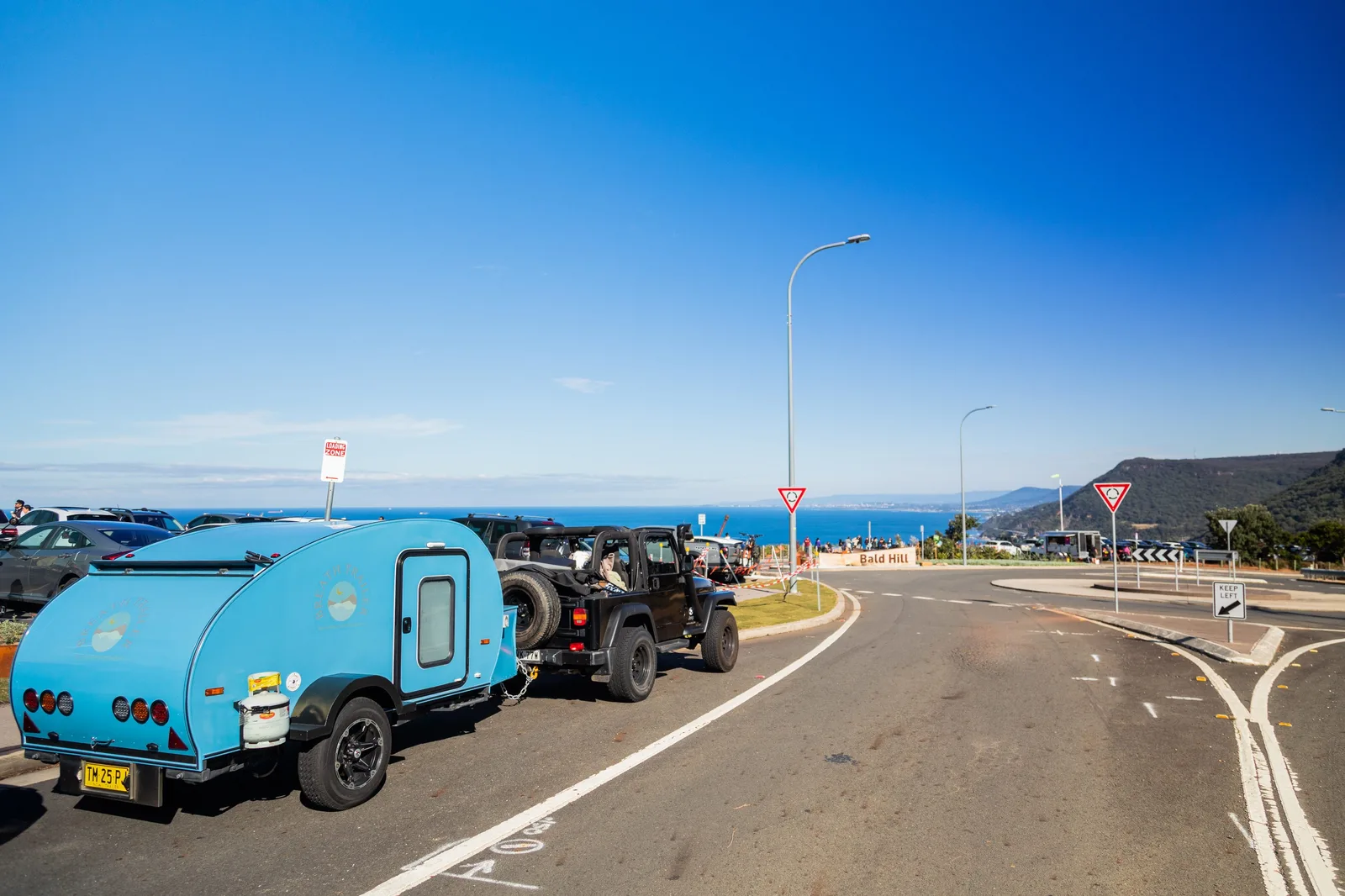
The 90-minute drive from Adelaide to Cape Jervis is your last chance to fill the tank at mainland prices before island fuel rates kick in.
Road Conditions and What Your Rig Will Face
Kangaroo Island has a reputation for rough unsealed roads — that reputation is partly earned. Here is an honest breakdown:
Main sealed roads (suitable for all vehicles and trailers):
- Penneshaw → Kingscote → Parndana → Flinders Chase National Park headquarters: approximately 130 km, fully sealed. This covers the vast majority of popular visitor sites.
- Seal Bay Conservation Park access road: sealed.
- Remarkable Rocks and Admirals Arch (Cape du Couedic) inside Flinders Chase: sealed.
- Cape Willoughby Lighthouse access from Penneshaw: sealed.
Notable unsealed roads:
- Cape Borda / Harvey’s Return access via the north coast: approximately 30 km of graded dirt. Corrugations are common after rain.
- West Bay (Flinders Chase NP): 4WD recommended; the track is narrow with tight turns that rule out most caravans and campers over 6 m.
- Remote Cape Gantheaume Conservation Park tracks: passable in 2WD during dry conditions; a 4WD is advisable after rain.
Tyre pressure: Reduce pressure slightly on gravel sections. Most camper trailer manufacturers recommend 26–32 psi on unsealed surfaces. Our camper trailer tyre guide has a full pressure-by-surface table.
The teardrop advantage: Kangaroo Island’s tight campground access roads — single-lane bridges, compact reverse-parking bays, low-clearance gum branches — genuinely favour compact trailers. Conventional caravans frequently turn around at West Bay and some Conservation Park sites. A teardrop’s short footprint and 5-minute setup also means you can arrive later in the afternoon and still be in bed before dark.
Kangaroo Island Campground Guide
| Campground | Park / area | Access | Sites | Key facilities | Trailer suitability | Approx. nightly fee | Booking |
|---|---|---|---|---|---|---|---|
| Rocky River | Flinders Chase NP | 2WD sealed | ~30 | Flush toilets, hot showers, BBQs, fire area (seasonal) | All camper trailer sizes | ~$8.50/pp + $11.80 adult park entry | parks.sa.gov.au |
| West Bay | Flinders Chase NP | 4WD only — narrow track | ~8 | Long-drop toilet, no fires | Compact trailers only — tight turns | ~$8.50/pp + park entry | parks.sa.gov.au |
| D’Estrees Bay | Cape Gantheaume CP | 2WD gravel | ~20 | Pit toilet, no powered sites | Camper trailers, smaller caravans | ~$16/vehicle | parks.sa.gov.au — book up to 12 months ahead |
| Murray Lagoon | Cape Gantheaume CP | 2WD | 8 | Pit toilet | Tents, camper trailers, small caravans | ~$16/vehicle | parks.sa.gov.au |
| Antechamber Bay | Dudley Conservation Park | 2WD | ~12 | Pit toilet | Camper trailers; limited reverse space for long rigs | ~$16/vehicle | parks.sa.gov.au |
| Chapman River | Chapman River CP | 2WD gravel | ~6 | Pit toilet | Small camper trailers and tents | ~$16/vehicle | parks.sa.gov.au |
| KI Caravan Park (Kingscote) | Private | 2WD | ~80 | Full facilities, powered sites, dump point | All trailers including caravans | $42–$65/site | Ki caravan park website |
| Western KI Caravan Park | Private (near Flinders Chase) | 2WD | ~30 | Powered sites, shower/toilet block | All trailers | $38–$55/site | Direct booking |
| Penneshaw Camping | Private — Penneshaw | 2WD | ~40 | Powered sites, amenities | All trailers | $38–$55/site | Direct booking |
| Parndana Caravan Park | Private — Parndana | 2WD | ~25 | Powered sites, dump point | All trailers | $32–$45/site | Direct booking |
Note: Parks SA camping fees are per person per night; Flinders Chase NP vehicle entry ($11.80 adult / $6.80 child, April 2026–March 2027) is additional to the camping fee. Confirm current fees at parks.sa.gov.au before booking — schedules are updated annually.
The Kangaroo Island Pass (available at the Penneshaw visitor centre) bundles entry to Flinders Chase, Seal Bay, Kelly Hill Caves, and the Cape Willoughby and Cape Borda Lightstations. Worth it if you plan to visit all of them in a week.
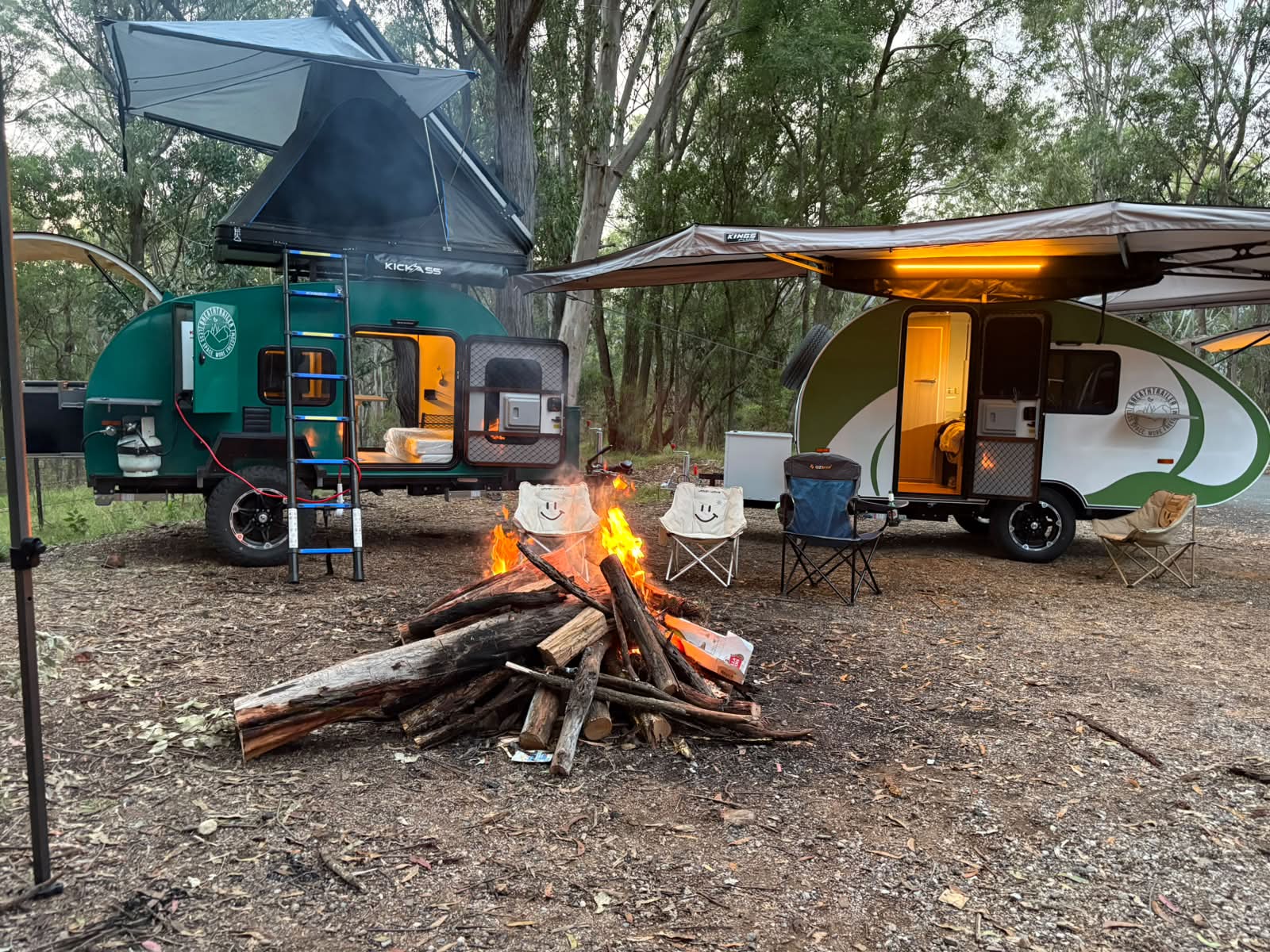
Rocky River in Flinders Chase is the most popular campground on the island — book at least two months ahead for December–January and Easter.
Key Attractions to Plan Your Days Around
Seal Bay Conservation Park A wild colony of around 800 Australian sea lions, accessible only via guided beach walk ($24/adult in 2026). Pups play and squabble at the water’s edge and rangers keep you safely close. Book ahead via SA National Parks, particularly in school holidays.
Flinders Chase National Park Home to Remarkable Rocks (600-million-year-old granite domes balanced on a coastal dome above the Southern Ocean) and Admirals Arch (a natural rock arch with a resident New Zealand fur seal colony). The park also contains Cape du Couedic Lighthouse. Note that Flinders Chase received severe fire damage in the 2019–20 Black Summer; regeneration has been extensive by 2026, but some areas remain sparse.
Cape Willoughby Lighthouse South Australia’s oldest lighthouse (1852), on the island’s eastern tip — about 40 minutes from Penneshaw. Guided tours operate daily.
Vivonne Bay Consistently ranked among Australia’s most beautiful beaches: a long, exposed surf beach on the island’s south coast. Water temperatures run 14–19°C depending on season — a wetsuit extends your season considerably.
Clifford’s Honey Farm, Macgillivray Kangaroo Island holds the world’s only certified pure Ligurian bee population, brought from Italy in 1884. The island’s isolation has kept them genetically pure ever since. Honey tastings and sales run daily.
Little Penguin Colony, Penneshaw From April through August, little penguins come ashore at dusk near Penneshaw. Ranger-guided walks operate nightly and are worth the extra hour before you head back to camp.
Self-Containment and Water Rules
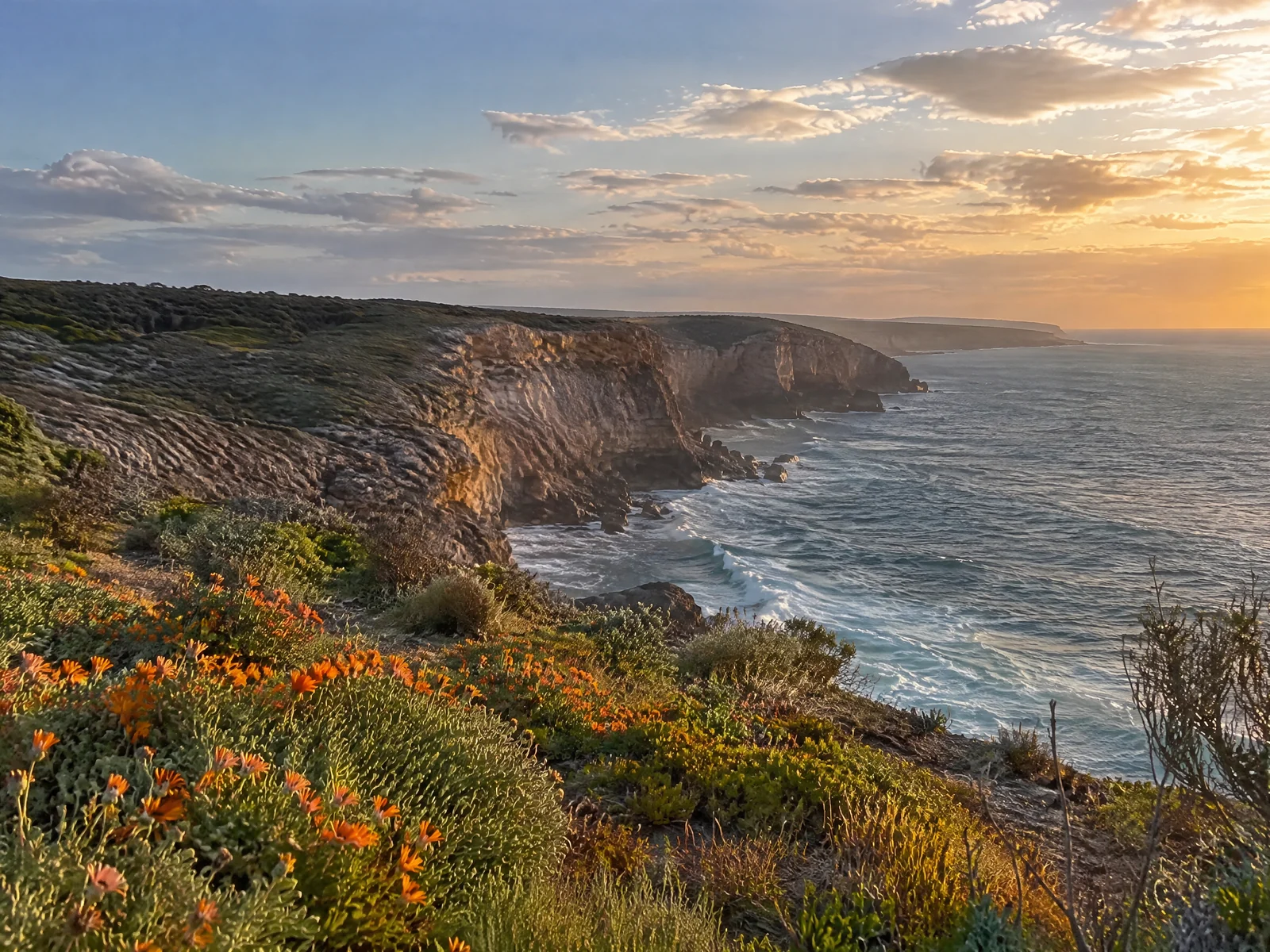
Illustration: D’Estrees Bay and Murray Lagoon sit within Cape Gantheaume Conservation Park — self-contained or waste-carry rigs access the most remote sites.
Kangaroo Island falls under South Australia’s national parks framework. The key rules for camper trailer owners:
Grey water: Never discharged on the ground in any national park or conservation park. Use a sealed collection vessel (built-in grey water tank, portable bladder or bucket) and empty at a dump point. With only two accessible dump points island-wide — Kingscote KI Caravan Park and Parndana Caravan Park — a built-in grey water tank is a practical advantage on any trip longer than three nights. For a full rundown of SA’s grey water rules, see our camper trailer water system guide.
Toilets: Rocky River has flush toilets. West Bay, D’Estrees Bay and most conservation park sites have pit toilets or nothing at all. See our self-contained camper guide for how SA classifies self-containment if you plan to stay at sites without any amenities.
Water supply: Rocky River has a tap supply. West Bay, D’Estrees Bay, Murray Lagoon and most remote sites have no treated water. Carry a minimum 40 litres in onboard tanks or jerry cans and refill at Rocky River or Kingscote before heading to remote campgrounds.
Fires: No campfires are permitted in any national park or conservation park on Kangaroo Island at any time. Rocky River campground has a designated fire area adjacent to the camp (outside the park boundary) subject to fire restrictions — confirm when booking. Total Fire Ban days are declared by the SA Country Fire Service when conditions are extreme. Always check cfs.sa.gov.au before departure and again once on the island.
Seasonal Guide
| Season | Months | Wildlife highlights | Typical temps | Crowds | SA CFS fire season |
|---|---|---|---|---|---|
| Spring | Sep–Nov | Wildflowers Sep–Oct, sea lions year-round, joeys emerging Aug–Sep | 15–24°C | Moderate, building by Nov | Starts mid-October |
| Summer | Dec–Feb | Fur seal breeding Admirals Arch | 20–33°C | Busy — school hols/Jan peak | High; TFB days common |
| Autumn | Mar–May | Little penguins breed from April | 14–26°C | Quieter | Winding down March–April |
| Winter | Jun–Aug | Southern right whales (offshore), penguin activity, koalas visible | 8–17°C | Very quiet | Low |
Best overall window: September to November for wildlife, wildflowers, manageable crowds and weather. December–January is peak season — campgrounds fill early. Winter is uncrowded and genuinely beautiful; go rugged up.
Booking windows: Flinders Chase campgrounds and Rocky River book out months ahead for October school holidays, January and Easter. D’Estrees Bay opens bookings up to 12 months in advance — it fills quickly for peak periods.
Which Breath Trailer for Kangaroo Island?
| Model | ATM | Bathroom | Self-contained | Best suited to | Ferry tier |
|---|---|---|---|---|---|
| Essential $23,320 | 700 kg | No | Fresh water only | 2–3 night trips at Rocky River or private parks with amenities | ≤5 m: from $99 one-way |
| Plus $29,766 | 800 kg | No | Built-in fridge; no grey tank | Rocky River, Penneshaw; rely on park facilities | ≤5 m: from $99 one-way |
| Ultra $34,749 | 900 kg | External shower | Grey water via collection system | D’Estrees Bay, Murray Lagoon; post-beach shower after Vivonne Bay or Seal Bay | ≤5 m: from $99 one-way |
| Max $42,900 | 1,200 kg | Full interior ensuite (cassette toilet, basin, shower) | Self-contained; dump cassette every 3–4 days | All sites including West Bay and remote conservation park campgrounds; the only teardrop camper in Australia under $50k with a full interior bathroom | ≤5 m: from $99 one-way |
The Breath Max is the natural match for a week on Kangaroo Island: the dump point network is sparse (two points island-wide), water taps are limited outside Rocky River, and the Max’s full interior bathroom means you are independent of park facilities entirely. At 1,200 kg ATM it is still towable by any mid-size SUV, and its compact teardrop footprint means access to every campground on the island — including the tight West Bay track.
For couples planning 2–3 nights at Rocky River or private parks, the Ultra is a strong fit: the external shower rinses salt water and red dirt from skin and gear, and the grey water system keeps you compliant with SA park rules.
See the Breath Trailer model comparison for side-by-side specs, or book a viewing at our Sydney workshop.
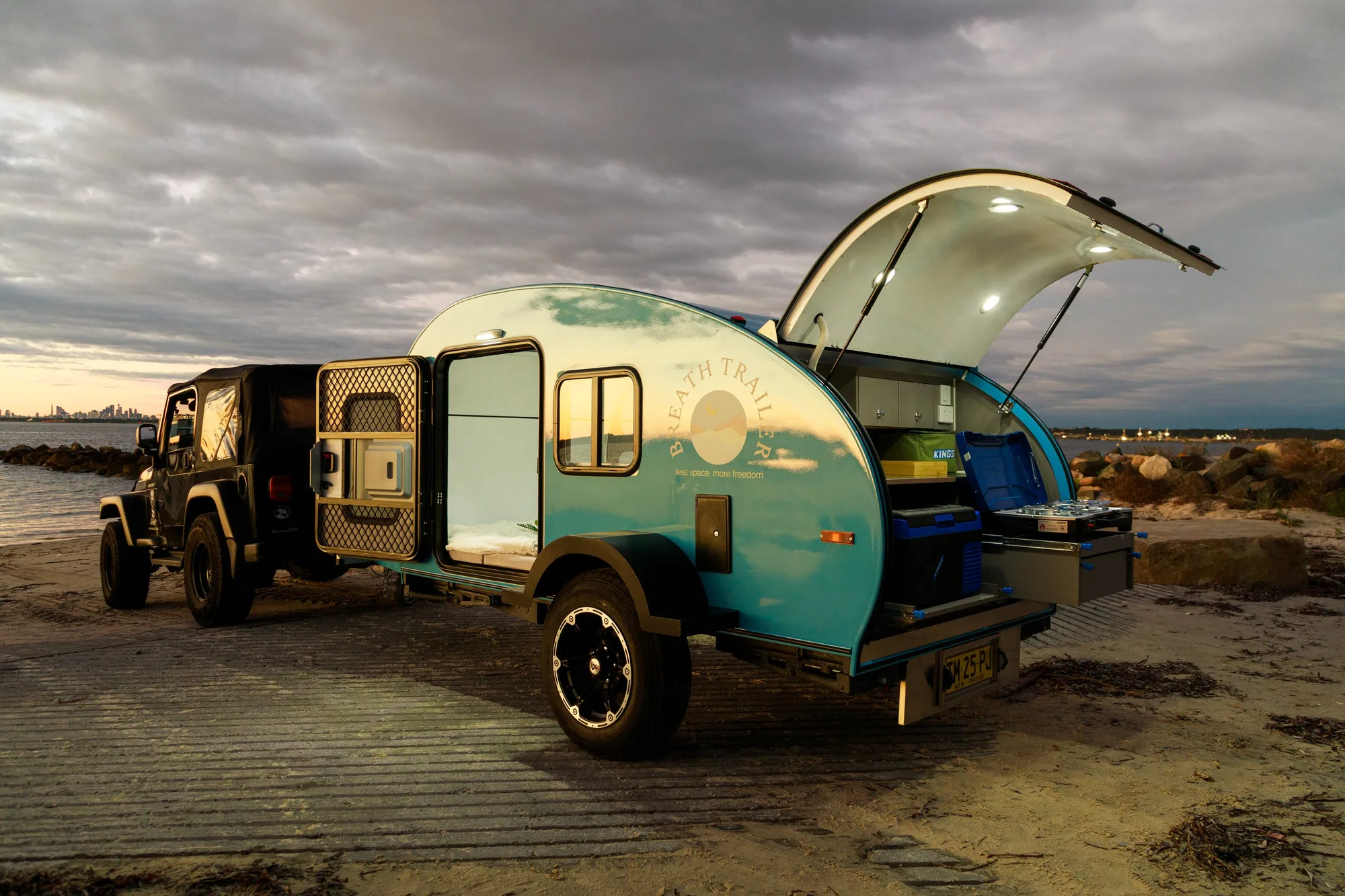
Pack the rear kitchen for five days — what you load on the mainland stays cold all week with a 12V compressor fridge.
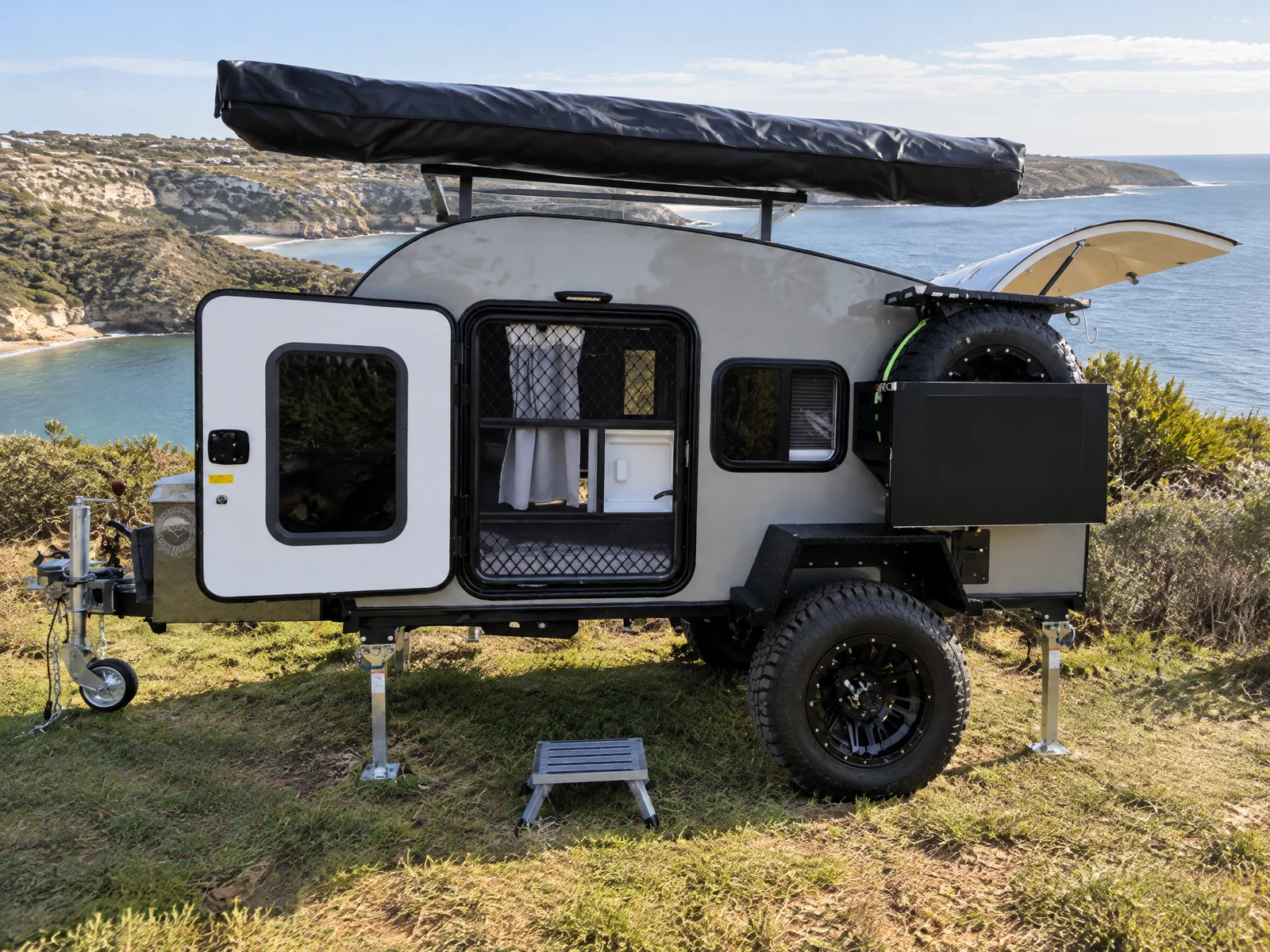
Illustration: The Ultra’s external shower is handy after a swim at Vivonne Bay or a sandy walk at Seal Bay.
Sample 5-Night Kangaroo Island Itinerary
| Night | Campground | Key activities |
|---|---|---|
| 1 | Rocky River, Flinders Chase NP | Arrive via sealed Penneshaw–Flinders Chase road; evening walk to creek |
| 2 | Rocky River | Remarkable Rocks (morning); Admirals Arch and fur seals (afternoon) |
| 3 | Rocky River | Cape du Couedic lighthouse; Cape Borda via north-coast dirt road (4WD) |
| 4 | Murray Lagoon, Cape Gantheaume CP | Vivonne Bay swim; Clifford’s Honey Farm; Hanson Bay koala spot |
| 5 | Penneshaw private park | Seal Bay guided walk (book ahead); Cape Willoughby lighthouse |
| Morning Day 6 | — | Penneshaw penguin colony walk (Apr–Aug); ferry back to Cape Jervis |
5-Night Budget Guide (Couple, 2026)
| Item | Estimate |
|---|---|
| SeaLink ferry return — car + trailer ≤5 m + 2 adults | ~$400–$500 |
| NP campsite fees — 5 nights, ~$17/couple/night | ~$85 |
| Flinders Chase NP entry — 2 adults × $11.80 × 3 days | ~$71 |
| Seal Bay guided walk — 2 adults × $24 | ~$48 |
| On-island fuel — 300 km × $3.10/L × 8.5 L/100 km | ~$79 |
| Groceries (supplement mainland stock-up) | ~$150 |
| Total | ~$830–$930 |
A similar itinerary using rental accommodation and a hire car runs $1,800–$2,400 with less flexibility and no camp kitchen.
Pre-Departure Packing Checklist
- Water: 40+ L minimum — fill at Rocky River or Kingscote before heading to remote sites
- Fuel: full tank at Cape Jervis (mainland pricing)
- Groceries: 5–7 days (mainland prices and range are significantly better)
- SA CFS fire ban app or cfs.sa.gov.au bookmarked
- Park booking confirmation — Flinders Chase and D’Estrees Bay require advance booking
- Kangaroo Island Pass if visiting multiple parks and lighthouses
- PLB or satellite communicator — Telstra has reasonable 4G on main roads; West Bay and Cape Gantheaume are dead zones. See our off-road accessories guide
- Wetsuit or thick rash vest — south coast ocean temperatures 14–18°C year-round
- All-terrain tyres if heading to West Bay or Cape Borda dirt track
- Dump point container or tote tank if your trailer has no built-in grey water tank
For a complete pre-trip rig inspection, follow our adventure departure checklist.
Frequently Asked Questions
Can I take a camper trailer on the SeaLink ferry to Kangaroo Island? Yes. SeaLink accepts camper trailers on all sailings from Cape Jervis. Trailers ≤5 m start from $99 one-way (variable pricing). You’ll need to specify your trailer’s exact length from tow ball to rear corner. Combined vehicle-and-trailer ≤9.9 m can be booked online at sealink.com.au; over 9.9 m, call 13 13 01.
Are there 4WD-only campgrounds on Kangaroo Island? Yes. West Bay in Flinders Chase NP is 4WD only, and the access track is too narrow for most caravans and larger camper trailers. The majority of other island campgrounds are accessible on 2WD via sealed or well-graded gravel roads.
Is Kangaroo Island self-containment friendly? There are only two public dump points on the island (Kingscote KI Caravan Park and Parndana). Grey water must not be discharged on the ground in any national or conservation park. A trailer with an onboard grey water tank (Breath Ultra or Max) gives you full compliance without needing to manage portable buckets or make detours to dump points every day.
When is the best time to camp on Kangaroo Island? September to November is the sweet spot: mild weather, spring wildflowers, active wildlife and manageable crowds. January is peak season — campgrounds fill fast and the ferry runs at capacity most days. Winter (June–August) is uncrowded and excellent for penguins, whales and peaceful parks, but bring warm layers and waterproofs.
How much does it cost to camp on Kangaroo Island? Budget approximately $400–$500 return for the ferry (vehicle, trailer and two adults). National park camping runs ~$8.50/person/night plus Flinders Chase park entry at $11.80/adult. A five-night couple’s trip on NP sites with the main paid attractions runs around $830–$930 all-in.
Can I have a campfire on Kangaroo Island? Campfires are not permitted in any national or conservation park on Kangaroo Island at any time. Rocky River campground has a designated campfire area adjacent to the campground (outside the park boundary) that may be used when no fire restrictions apply. Check CFS fire restrictions at cfs.sa.gov.au before lighting any fire, and note that Total Fire Ban days are common from November onwards.
Recommended Reading
- Best Camping Spots in South Australia — for mainland SA campgrounds before and after your island trip
- Self-Contained Camper Australia: What It Means and Why It Matters
- Camper Trailer Tyre Guide Australia — tyre pressure essentials for loose gravel roads
- Best Beach Camping Destinations Australia — more coastal and island campground ideas
- Essential Checklist Before Leaving for an Adventure