Spring Camping in Australia: The Complete Camper Trailer Guide (2026)
Spring camping in Australia with a camper trailer: best destinations by state, wildflower routes, post-winter recommission checklist, packing tips, and fire season rules.
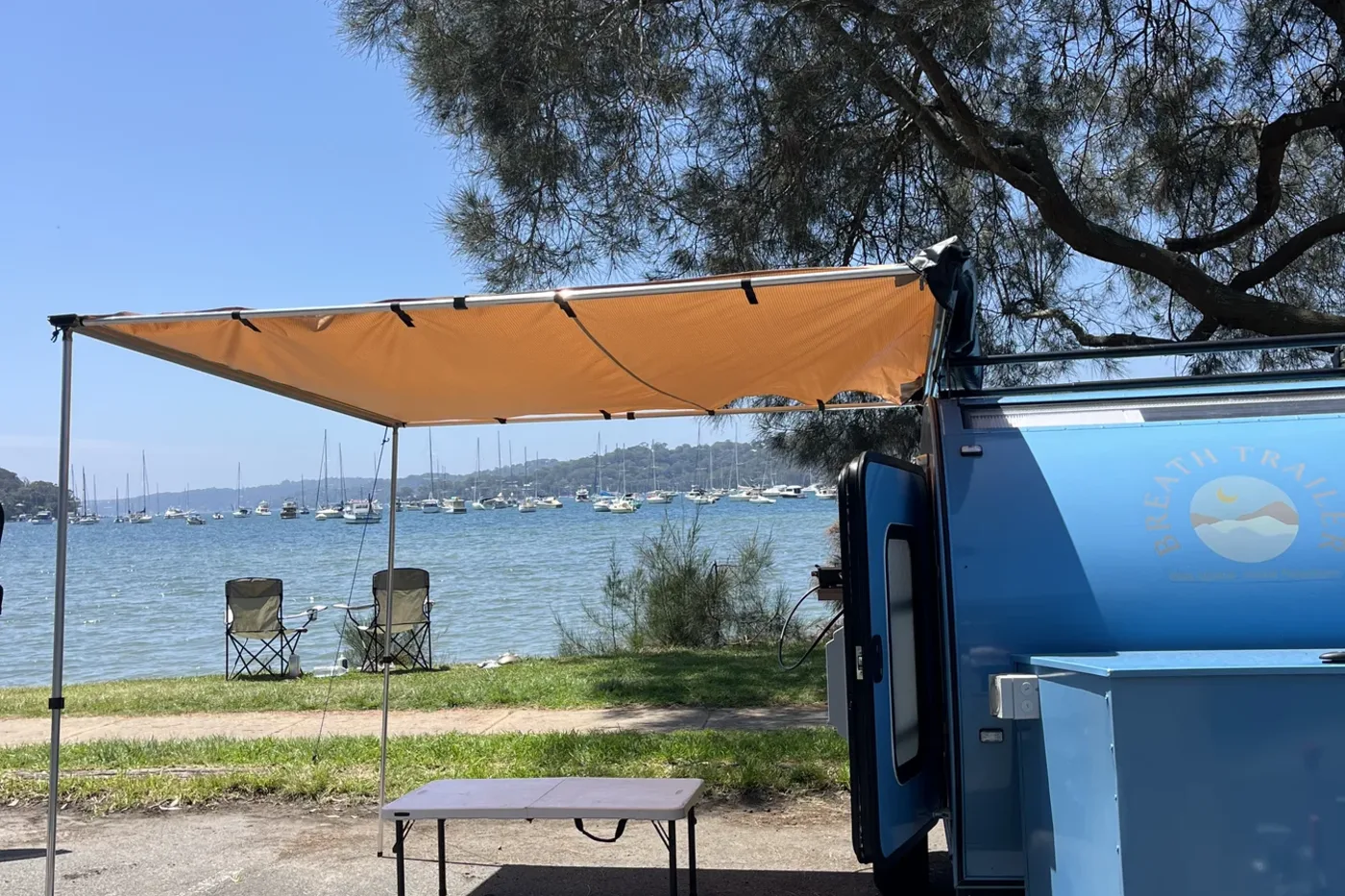
Spring arrives across Australia in September and stays until the end of November — and for camper trailer owners, it’s arguably the best three months of the year. Crowds are lighter than the summer rush, temperatures are comfortable, wildflowers transform WA and the Flinders Ranges, and school-holiday booking pressure eases between the July and December breaks (except for the two-week mid-term window around late September/early October). A hard-shell teardrop handles spring’s unpredictable weather — sun at noon, 8°C at 2 a.m., and a squall by breakfast — better than a canvas camper, and the five-minute setup means you can move on if the forecast turns.
This guide covers everything you need to plan a spring camper trailer trip in Australia: a state-by-state weather snapshot, the best destinations for the season, the wildflower windows you don’t want to miss, a recommission checklist to bring your trailer out of winter storage, and the fire-season rules that apply from September onwards.
Why Spring Is Australia’s Best Camping Season
The numbers make the case plainly. August–November see the highest number of new camping bookings on WikiCamps and Camper Mate, yet total visitor numbers at most national parks sit 20–30% below January peaks. That means you get the best conditions with less competition for a powered site or a waterfront spot.
Three things define spring camping:
Comfortable temperatures. Inland, mornings start cold (2–8°C in the Flinders Ranges or Snowy Mountains), but afternoons warm quickly. On the coast and in the Top End, temperatures are simply pleasant — 22–28°C across Queensland’s Granite Belt, south-east NSW, and much of WA.
Wildflowers. Western Australia’s spring wildflower season (August–October) is one of the great natural spectacles on earth — over 12,000 native species bloom across the Wheatbelt and Mid West. The Flinders Ranges follow in September–October, and NSW’s Warrumbungle NP adds golden wattles and flannel flowers by mid-October.
Wildlife activity. Spring is breeding season for many Australian species. Eastern grey kangaroos have joeys at foot, echidnas emerge from winter torpor, whales begin arriving on the east coast (Sydney Harbour June–November), and birdlife peaks as migratory species return.
Spring Weather by State — What to Expect
Understanding the weather window by state is the first step in planning. Spring is not uniform across Australia — WA’s wildflower country is dry and warm, Tasmania can be cold and wet, and the Top End’s late dry season runs through October before the build-up starts.
| State/Territory | Sep–Nov Daytime | Sep–Nov Night | Key Risk |
|---|---|---|---|
| NSW (coast) | 18–26°C | 10–16°C | Spring storms (Oct–Nov), east-coast lows |
| NSW (Snowy/Alpine) | 10–18°C | 0–6°C | Snow possible Sep, road closures vary |
| VIC (Grampians/Otways) | 14–22°C | 5–12°C | Wind, afternoon storms (Nov) |
| VIC (High Country) | 10–18°C | 0–6°C | Snow to mid-Oct, fire season starts Nov |
| QLD (south-east) | 22–28°C | 12–18°C | Dry, comfortable; school holidays busy |
| QLD (Far North) | 28–34°C | 22–26°C | Late dry season, build-up humidity from Nov |
| WA (Wheatbelt/Mid West) | 18–26°C | 8–14°C | Wildflower dust, some gravel roads boggy early Sep |
| SA (Flinders Ranges) | 18–28°C | 5–12°C | Wildflowers peak Oct, hot days by Nov |
| TAS (east coast) | 14–20°C | 5–10°C | Rain, strong winds; Spirit of Tasmania surcharges |
| NT (Top End) | 30–36°C | 22–26°C | Late dry season; fire danger high Oct–Nov |
| ACT | 15–22°C | 4–10°C | Frost possible Sep; autumn colour Apr–May is better |
What this means for your rig: A hard-shell teardrop handles the full temperature swing in one trip — sealed construction stops condensation, and a quality dual-purpose diesel heater or 12V heating pad keeps the bedroom above 18°C even in the Snowy Mountains in September. Contrast with a canvas camper, where morning condensation soaks the sleeping area and the canvas re-proofing schedule adds cost.
Post-Winter Recommission Checklist
Trailers that spent June–August in the garage need a thorough check before you load them for the first spring trip. Skipping this is how people end up with a flat battery at Warrumbungle or a failed wheel bearing at Brachina Gorge.
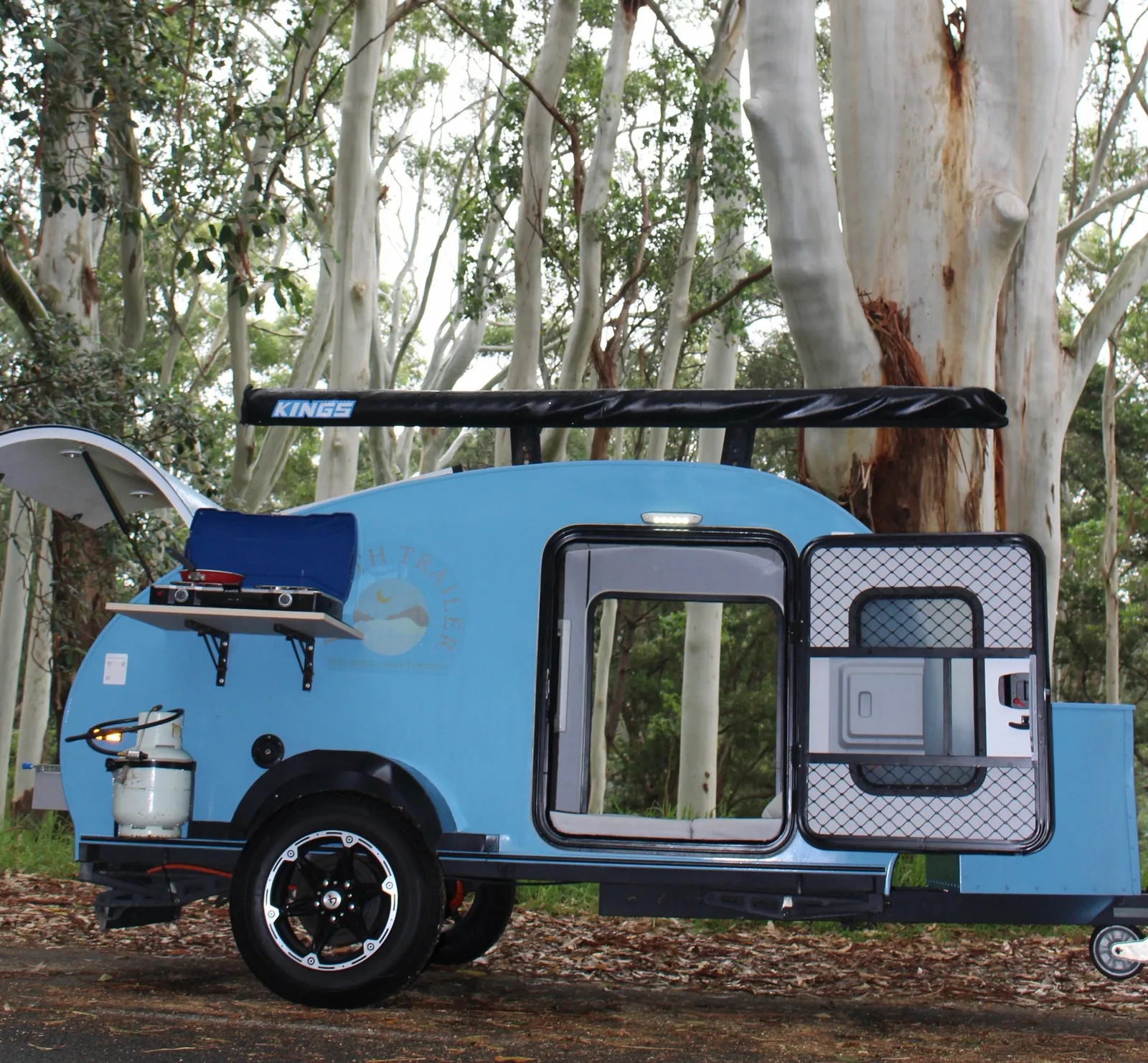
A post-winter service under the gum trees takes two hours and prevents most roadside failures.
| Component | Check | Action |
|---|---|---|
| Battery / 12V system | Voltage with a multimeter — 12.6V+ = full, <12.0V = depleted | Charge fully; run a load test; replace if <80% capacity |
| Solar / MPPT | Panel output with a clamp meter | Clean glass, tighten connections |
| Tyres | Pressure (may have dropped 5–10 PSI in cold storage), DOT age code | Inflate to spec; replace if DOT age ≥ 5 years (see /blog/camper-trailer-tyre-guide-australia/) |
| Wheel bearings | Spin wheel, feel for roughness or lateral play | Re-pack or replace — intervals 12 months inland, 6 months coastal |
| Brakes | Check controller calibration; push-test brake shoes/pads | Adjust gain setting; service if ≥ 20,000 km since last service |
| Seals / water ingress | Run a 10-minute hose test across all seams, roof vents, hatches | Re-seal with marine-grade silicone — a teardrop’s hard shell has far fewer seam metres than canvas |
| Gas system | Check regulator date stamp; sniff test at connections | Replace regulator if ≥ 5 years; test with soapy water |
| Water tank | Taste/smell; sanitise with 12 mL household bleach per 100 L, soak 30 min, flush | Do this every 3–6 months regardless of season |
| Coupling / safety chains | Check jaw/ball wear; safety chain condition | Replace if excessive wear; test breakaway battery |
| Lights | Rear indicators, brake lights, marker lights | Replace bulbs or LED clusters as needed |
For the full 12-step pre-departure procedure, see our essential checklist before leaving for an adventure.
Top Spring Destinations by State
Spring opens some campgrounds that were closed or inaccessible in winter, and it transforms others that are merely good year-round into genuinely special experiences.
| State | Destination | Distance from City | Why Spring |
|---|---|---|---|
| NSW | Warrumbungle NP | 5.5 hr from Sydney | Golden wattles + flannel flowers Oct; Australia’s first Dark Sky Park; NPWS campgrounds from $10/night |
| NSW | Cathedral Rock NP (Ebor Falls) | 5 hr from Brisbane | Spring wildflowers on the New England Tablelands; Ebor Falls at full flow |
| VIC | Grampians NP | 2.5 hr from Melbourne | 1,000+ native plant species bloom Sep–Oct; Brambuk Cultural Centre; Halls Gap sites from $26/night |
| VIC | Alpine NP (Howitt Plains) | 3.5 hr from Melbourne | Snow usually gone by mid-Oct; autumn/spring wildflowers; 4WD required for some tracks |
| WA | Coalseam Conservation Park | 3 hr from Perth | Everlastings and Banksias carpet the gorge in Sep–Oct; free camping nearby |
| WA | Kalbarri NP (coast + gorge) | 5.5 hr from Perth | Spring wildflowers; Murchison River gorge; dog-friendly sections outside the park |
| SA | Flinders Ranges (Brachina Gorge) | 4.5 hr from Adelaide | Red gorge walls + yellow wildflowers Oct; yellow-footed rock wallabies; Wilpena Pound from $34/night |
| QLD | Girraween NP | 2 hr from Brisbane | Massive granite outcrops; wattles bloom Sep–Oct; wallaby and echidna sightings common |
| TAS | Cradle Mountain | 2.5 hr from Launceston | Alpine flowers (cushion plants) bloom late Oct–Nov; snow mostly gone; book weeks ahead |
| NT | Nitmiluk (Katherine Gorge) | 4.5 hr from Darwin | Best water clarity of the year in late dry season (Sep–Oct); canoe hire; sites from $15/night |
For the full state guides, see: NSW camping · Victoria · Western Australia · South Australia · Tasmania
Western Australia’s Wildflower Season: A Spring Camper Trailer Route
WA’s wildflower season (August–October, peaking mid-September) is the world’s largest annual wildflower show. An estimated 12,000 native species bloom across 240,000+ km², and a dedicated wildflower route with a camper trailer is one of the most rewarding spring trips in Australia.
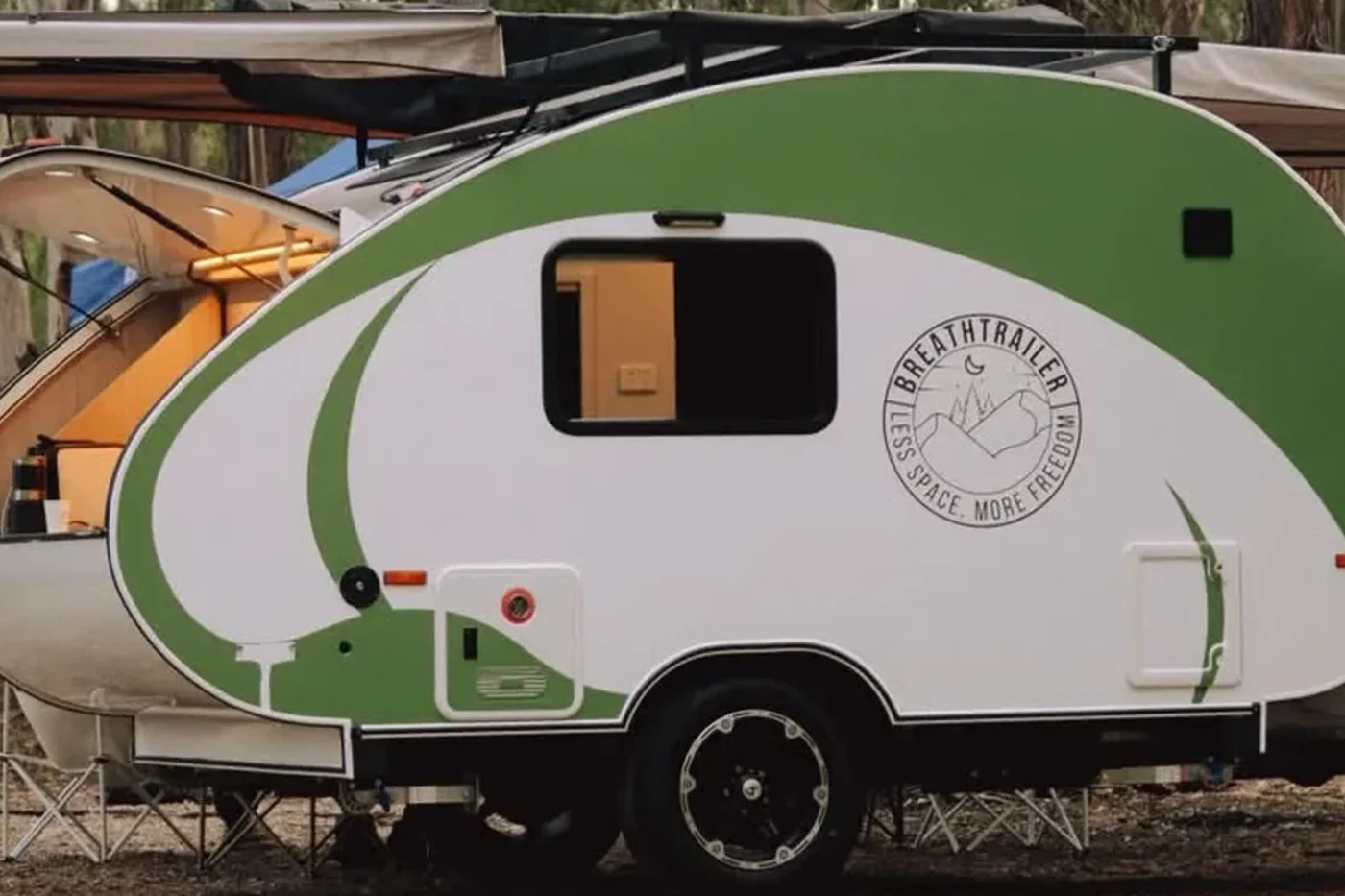
The Breath Max’s green livery all but disappears into WA’s spring bush — a perfect base camp for wildflower day walks.
The classic 1,500 km WA wildflower loop (Geraldton–Coalseam–Kalbarri–Badgingarra–Swan Valley):
| Leg | Distance | Campsite | Highlights |
|---|---|---|---|
| Perth → Geraldton | 424 km | Moresby Range CP | Indian Ocean sunset; Everlastings begin |
| Geraldton → Coalseam CP | 100 km | Coalseam CP (free) | Gorge carpeted in Everlastings and Banksias |
| Coalseam → Kalbarri NP | 260 km | Kalbarri Shady Glade | Gorge wildflowers; Murchison River cliffs |
| Kalbarri → Badgingarra NP | 340 km | Badgingarra NP (DBCA $15/adult) | 100 named wildflower species in 5 km² |
| Badgingarra → Perth | 200 km | Day drive | Wildflower Way along Brand Highway |
Road surfaces are predominantly sealed or well-graded gravel. The Breath Essential or Plus is suited to this route without the off-road upgrade; the Ultra or Max with the off-road option handles the rougher tracks into Coalseam Gorge. Fill water at every town — the Mid West is arid despite the spring blooms.
Spring Fire Danger: Booking and Fire Rules
From 1 September, fire danger season begins in parts of Australia. This is not a summer-only problem — spring’s dry vegetation, warm temperatures, and gusty winds create real fire risk, especially in southern WA, SA, VIC, and inland NSW by November.
What this means for campers:
- Total Fire Ban days: A Total Fire Ban prohibits all open fires and, in most states, solid-fuel heaters. Check the state Rural Fire Service website the morning of your trip, not the night before — bans are declared by 8 a.m.
- Fire restrictions by state from 1 September 2026:
| State | Season Start | App / Check Tool |
|---|---|---|
| NSW | 1 Sep (some areas) | Hazards Near Me NSW |
| VIC | 31 Oct (official; some areas from 1 Sep) | VicEmergency app |
| WA | 1 Oct (south-west) | Emergency WA |
| SA | 1 Nov (most of SA) | SAFECOM / CFS |
| QLD | Varies by district; Sep–Oct for south-east | Queensland Fire and Emergency Services |
| ACT | 1 Oct | Emergency ACT |
| TAS | 1 Oct | DPIPWE / TFS |
- Diesel heater inside the trailer: Legal on Total Fire Ban days — it is an enclosed appliance, not an open fire. This is one of the genuine spring/autumn advantages of a hard-shell teardrop with a built-in Webasto or Espar unit.
- Campfire grates: Many campgrounds in national parks have raised grates; check the park’s conditions page. Some parks only allow gas, not wood fires, even outside Total Fire Ban days.
For fire safety and campfire etiquette, see our free camping guide — the same rules apply on crown land and in state forests.
Spring Camping Packing: What Changes from Summer
Spring packing is about managing the temperature swing — warm afternoons, cold nights — not just packing for a static climate.
| Category | Spring Specific | Why |
|---|---|---|
| Sleeping | Bring a 3-season sleeping bag + 12V electric blanket | Night temps 2–10°C in alpine/inland spring even if days hit 25°C |
| Clothing | Merino or wool base layer; waterproof shell | Spring showers arrive without warning; wool dries faster than cotton |
| Footwear | Waterproof ankle boots for morning walks | Dew and overnight rain saturate low-cut shoes |
| Heating | Diesel heater or 12V heated blanket (90–150W) | Tolerable investment vs waking at 3 a.m. to 5°C inside the trailer |
| Sun protection | SPF 50+ still required from Oct | UV Index climbs to “High” (6+) in spring in most of Australia |
| Insects | DEET ≥ 20% or Picaridin; fly net for hat | Spring is when mozzies and march flies emerge; wasps peak October |
| Water | Extra 10 L jerry per person for wildflower routes | Mid West WA and Flinders Ranges have long gaps between reliable water |
| First aid | Snake bite bandages (compression) | Brown snakes and tiger snakes emerge from winter brumation in September; peak activity Oct–Nov |
For the complete packing list, see our camper trailer packing list.
Wildlife to Watch for in Spring
Spring is the most rewarding season for Australian wildlife encounters — and also the time to manage risks carefully.
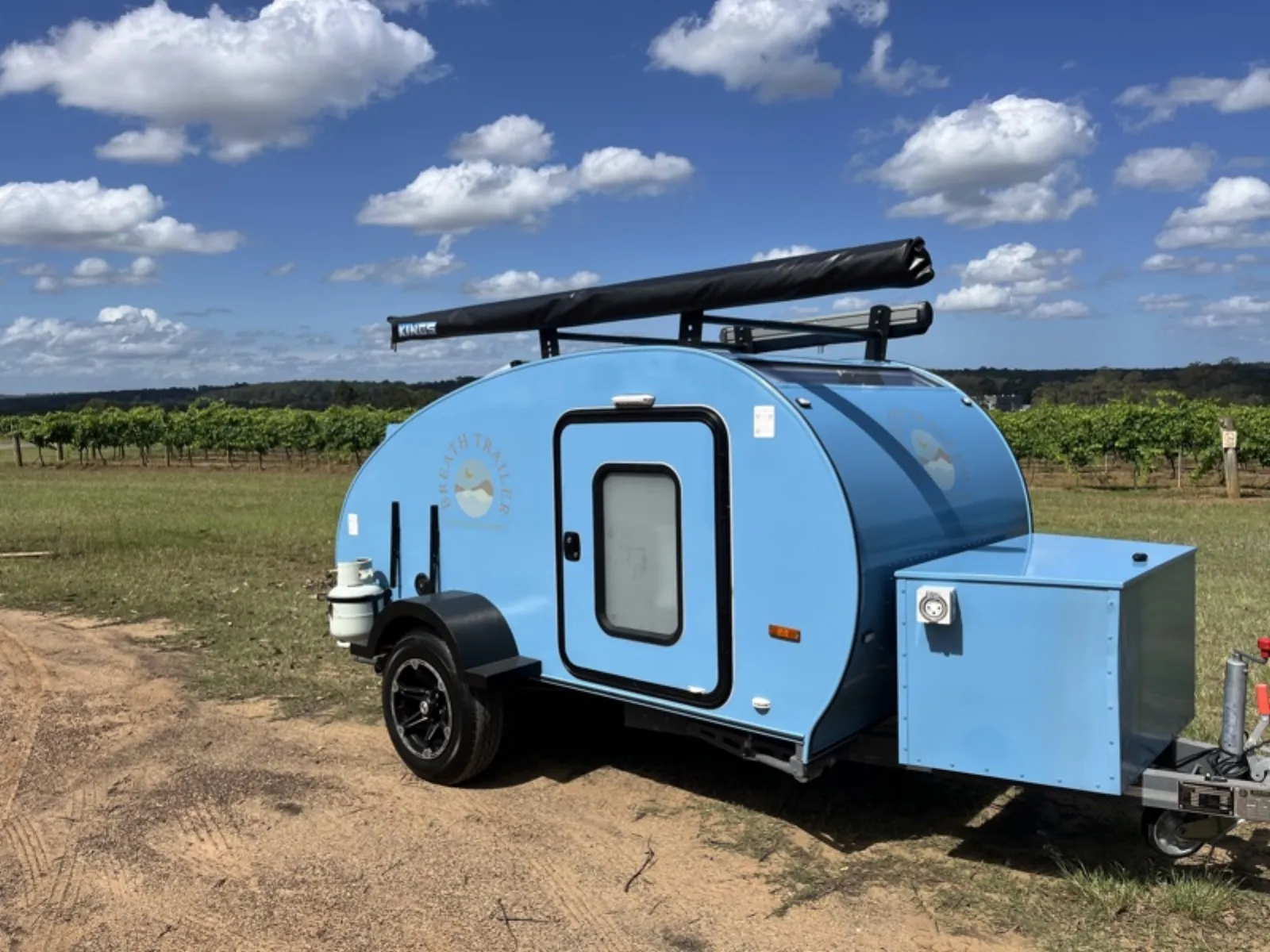
Spring in southern Victoria and SA: vineyard regions like the Clare Valley and Grampians foothills come alive with birdlife.
Highlights by region:
- NSW/VIC coast: Humpback whales move north from Antarctica from mid-June, returning south September–November. Sydney’s clifftop lookouts (Boathouse at Shelly Beach, Wedding Cake Rock Royal NP) are free observation points.
- SA/WA: Yellow-footed rock wallabies in Brachina Gorge (Flinders Ranges) and numbat sightings in Dryandra Woodland (WA) — both peak September–October before summer heat.
- QLD/NT: Freshwater crocodile and barramundi spawn in Katherine Gorge; birdlife is exceptional in Kakadu’s late dry season.
- TAS: Spring is the best time for eastern quoll sightings (Cradle Mountain); platypus active in cool streams morning and evening.
Snake awareness: Brown snakes, tiger snakes and eastern taipans emerge from brumation (winter dormancy) in September. Keep the camp perimeter clear of wood piles, check footwear before putting it on, and know the compression bandage technique from your first aid kit. The hard-shell side door that seals completely — no canvas gap at the base — means snakes and insects do not enter the sleeping area.
Choosing Your Camper Trailer for Spring
Spring’s variable conditions — from WA’s warm wildflower routes to the Snowy Mountains’ cold mornings — suit different trailer specs.
| Trip Type | Recommended Model | Key Feature |
|---|---|---|
| Coastal touring (QLD/NSW) | Breath Essential or Plus | Lightweight (700–800 kg), easy to tow, no need for full self-containment |
| Alpine/mountain spring (VIC/NSW) | Breath Plus or Ultra | 12V heating + self-contained toilet helps on cold nights; off-road suspension for High Country tracks |
| WA wildflower route | Breath Essential or Ultra | Sealed roads → Essential; rough Coalseam tracks → Ultra with off-road package |
| Flinders/outback spring (SA) | Breath Ultra or Max | Self-containment (Ultra/Max) for free camping at remote Flinders sites; diesel heater for cold nights |
| Big-lap departure (spring start) | Breath Max | Interior bathroom, 120 L water, CMCA self-contained for all free camping; 1,700 kg ATM (500 kg payload over 1,200 kg tare) handles full provision load |
| Weekend wildflower day-trips | Breath Essential | Park near the trailhead, walk in; setup takes 5 minutes |
Our model comparison page has the full specifications including tare weight, water tank, battery capacity, and ATM for all four models. If you’re still deciding whether a teardrop is right for your spring plans, the free camping guide covers the self-containment rules that determine which free sites your trailer can legally access.
Spring School Holidays: Booking Strategy
The September/October school holiday period (roughly two weeks from late September) is the single biggest booking pressure event of the spring. In 2026, most Australian states’ spring holidays fall between approximately 20 September and 10 October — meaning if you’re planning for late October and beyond, competition eases significantly.
Booking windows in 2026 (confirm with each park authority):
| Park System | Booking Window | Opens for Late Oct |
|---|---|---|
| NSW NPWS | 6 months rolling | Opens ~late April 2026 (check online) |
| Parks Victoria | 12 months rolling | Already open |
| QPWS | 6 months rolling | Already open |
| DBCA (WA) | 180 days rolling | Already open for Nov |
| SA Parks | 12 months | Already open |
| PWS (TAS) | Seasonal; Freycinet ballot 31 Jul/1 Aug | Check for late-season availability |
Tip: If school-holiday sites are full, look at the campgrounds one tier smaller — e.g., Cathedral Rock NP instead of Warrumbungle, or Halls Gap overflow sites in the Grampians. Smaller sites often take last-minute bookings.
For booking strategy by state, see our summer camping guide — the same booking windows apply in spring with marginally less pressure.
Frequently Asked Questions
Is spring a good time to camp in Australia? Yes — spring (September–November) is widely considered the best season for camper trailer trips. Temperatures are comfortable during the day, wildflowers are at their peak in WA and SA, and national park campgrounds are less crowded than in January. The trade-off is unpredictable weather, especially in Victoria and Tasmania, where afternoon storms are common from November.
What is the weather like for spring camping in Australia? It varies significantly by region. Queensland’s south-east is warm and dry (22–28°C days, 12–18°C nights). Inland NSW and the Flinders Ranges have warm days but cold nights (can drop to 2–5°C). Victoria’s highlands and Tasmania can see sub-zero overnight temperatures and occasional snow until mid-October. Pack layers regardless of where you’re going.
When is the best time to see wildflowers in WA? Mid-September is the peak for most of the Wheatbelt and Mid West wildflower region. The display starts in August in the north (Geraldton area) and moves south through October. The Grampians (VIC) peak in September–October; the Flinders Ranges (SA) peak September–October.
Can I free camp with a camper trailer in spring? Yes, in state forests, on crown land, and at rest areas — as long as the trailer complies with the relevant state’s self-containment rules. The Breath Ultra and Max are CMCA self-contained, enabling access to over 500 CMCA-endorsed free-camp sites. The Essential and Plus are suitable for state forest and crown land free camping where no self-containment rule applies. See our free camping guide for the full state-by-state rules.
How do I prepare my camper trailer for spring after winter storage? Run through the recommission checklist in this guide: charge and load-test the battery, check tyre pressure and DOT age, inspect seals with a hose test, service wheel bearings, sanitise the water tank, and confirm the gas regulator date stamp. Allow 2–3 hours before your first trip. If the trailer has been stored for more than six months, book a professional service.
What fire restrictions apply in spring camping? Fire danger season begins 1 September in many states. From that date, check your state’s emergency services app every morning for Total Fire Ban declarations. Open fires are prohibited on Total Fire Ban days; enclosed appliances (diesel heaters, gas cookers) remain legal. From 1 November, fire danger season is active across most of south-east Australia.
Conclusion
Spring camping in Australia with a camper trailer rewards the prepared traveller. The wildflower season in WA and SA, the comfortable shoulder-season temperatures, and the lighter crowds make September–November the season most regular campers rate above summer. The key to enjoying it fully is managing the temperature swing (warm days, cold nights, unexpected rain) and the fire-season rules that kick in from September.
A hard-shell teardrop handles spring conditions better than any other trailer category: sealed construction means no wet canvas, the interior stays dry, and 5-minute setup means you can relocate if the weather turns. The Breath Ultra and Max add self-containment for the remote Flinders Ranges, WA wildflower routes, and the NT’s late dry season — the three environments where spring camping is at its finest.
Ready to plan your spring trip? Compare all four Breath models or book a viewing at one of our ambassador locations.
Recommended Reading
- Best Camping Spots in Western Australia — Full WA guide including wildflower-season campgrounds
- Best Camping Spots in South Australia — Flinders Ranges wildflower routes and Coorong in spring
- Camper Trailer Packing List Australia — Complete seasonal packing checklist
- Free Camping Australia Guide — Self-containment rules by state for spring free camping
- Essential Checklist Before Leaving for an Adventure — Full pre-departure procedure including recommission steps