Teardrop Camper for Retirees & Grey Nomads Australia: 2026 Guide
Planning your Big Lap or a weekend escape in retirement? Discover why teardrop campers are Australia's fastest-growing choice for grey nomads in 2026 — weight, comfort, bathroom, costs.
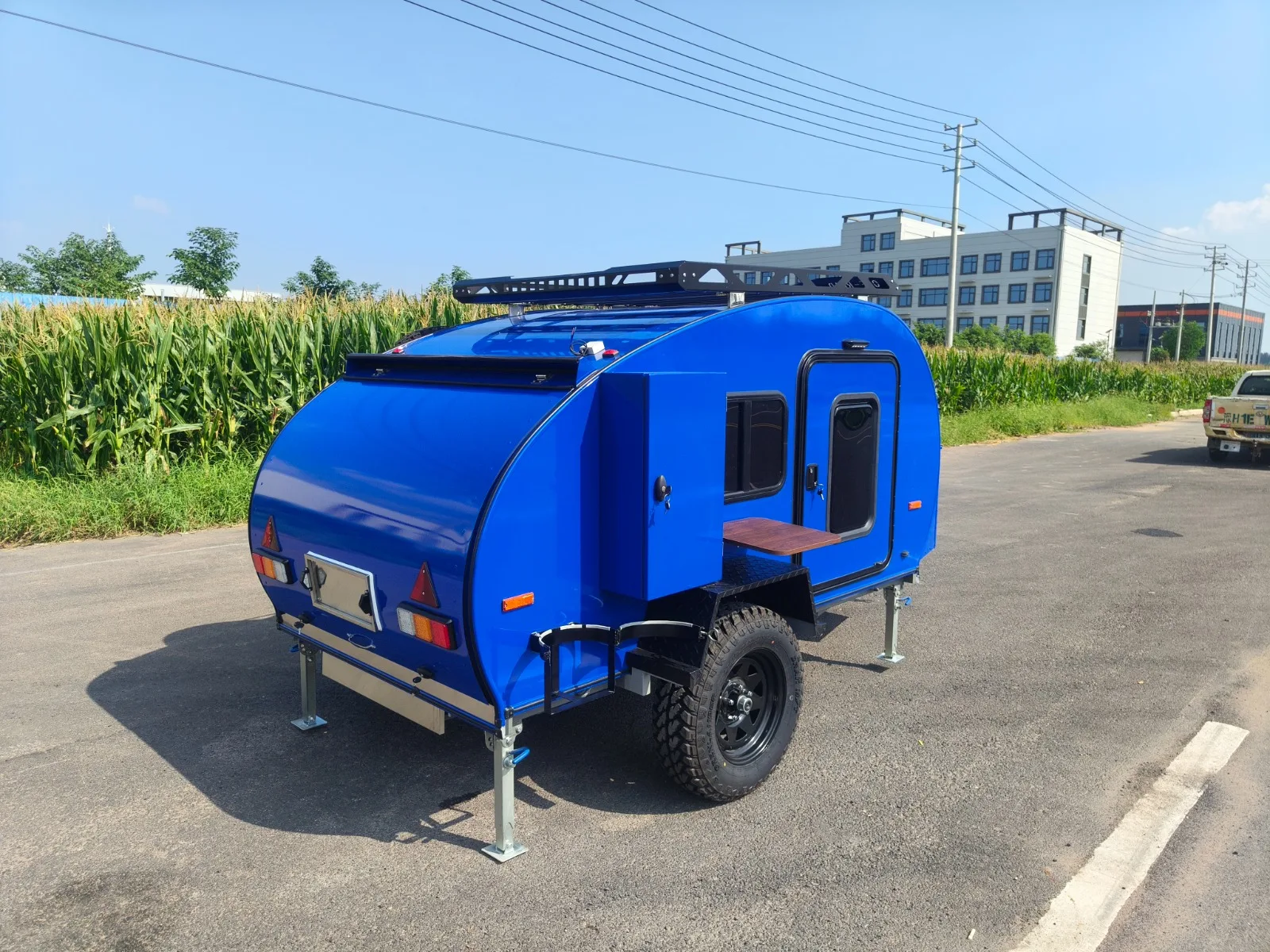
Australia has more grey nomads on the road right now than at any point in its history. According to Tourism Research Australia, between 30,000 and 40,000 retirees are living out of a towed or self-propelled rig at any given quarter — and the number keeps climbing. After a decade of 90 per cent growth in the sector, the classic image of a retired couple in a hulking 23-foot caravan is sharing the highway with something far more nimble: the teardrop camper.
If you’re within a few years of retirement — or already on the road — and wondering whether a teardrop is the right vehicle for the next chapter, this guide is for you. We’ll walk through the five things grey nomads actually need from a camper, compare Australian models honestly, tackle the bathroom question head-on, and break down the real cost of a teardrop versus a traditional caravan over two years on the road.
Why So Many Retirees Are Choosing Teardrop Campers in 2026
For decades, the grey nomad default was a 6-metre to 8-metre caravan pulled by a heavy-duty 4WD. That combination works — but it comes at a price beyond the sticker: high fuel consumption, complicated reversing, expensive servicing, and a 6-tonne rig that won’t fit down a track to the best campsites.
The teardrop pitch for retirees is different. At 700 kg to 1,200 kg depending on model, a teardrop camper:
- Tows behind virtually any modern SUV — a Subaru Forester, Toyota RAV4, or Mazda CX-5 is more than enough
- Sets up in under 5 minutes — unlock, slide-out kitchen, done. No awning poles, no jacks, no levelling pads
- Stores in a standard garage — no $200-per-month off-site storage fee
- Costs less to run — a lighter tow load means 2–3 L/100 km less fuel than towing a full caravan
But the most compelling argument is freedom. A teardrop fits down the access track to a remote national park campsite, pulls into a spot a full caravan can’t reach, and reverses without the need for a spotter. For couples in their 60s and 70s who’ve never towed a heavy rig before, that freedom from anxiety is arguably the single biggest selling point.
The 5 Things Grey Nomads Need From a Camper
Grey nomads are experienced travellers, not novices. They know what they want — and they’re willing to pay for it if it delivers. Before looking at any model, it helps to frame the decision around five non-negotiables:
1. A Proper Bed They Don’t Have to Set Up
The fold-flat, mattress-on-the-floor arrangement inside a budget camper trailer is fine at 30. At 65, with a knee replacement or a dodgy hip, it’s a different story. Grey nomads consistently nominate a fixed queen bed at a comfortable height as their single must-have. Every teardrop camper — by design — delivers this: the trailer’s interior is essentially a bedroom on wheels.
2. Some Form of Bathroom (and the Right One)
This is the big question, and we give it its own section below. Suffice to say: many retirees will not leave a campsite at 2 am in the dark to walk 200 metres to an amenity block. The bathroom decision is the decision that drives most grey nomads toward one model or another.
3. Self-Containment for Free Camping
Grey nomads spend an average of $770 per week on the road, and one of the biggest variables is accommodation. Caravan parks cost $40–$80 per night. The CMCA-recognised free camping network — rest areas, national park campsites, roadside stops — is free. To access it, your rig must be self-contained: holding tank for grey water, on-board toilet, and at minimum 15 litres of fresh water on board.
4. Off-Grid Power Capability
If you’re free camping, you need power. Most modern teardrop campers come standard with 100–200W of rooftop solar and 100–200Ah of lithium battery. That runs lights, a 12V compressor fridge, fans, phone charging, and a CPAP machine — enough for most retirees. Mains hookup is only needed for high-draw appliances like a microwave or air conditioner.
5. Easy Towing and Manoeuvring
The average grey nomad drives a mid-size SUV, not a truck. Matching a camper’s weight to your vehicle’s tow rating — and keeping it well under — is both a legal and a practical requirement. A camper that tows smoothly, tracks straight, and reverses predictably saves nerves and marriages in equal measure.
Australian Teardrop Camper Model Comparison for Grey Nomads
Here’s how the main Australian teardrop models stack up on the metrics that matter most to retirees. Prices are approximate RRP for 2026.
| Model | Price (AUD) | Tare Weight | Bed | Bathroom | Solar/Battery | Self-Contained |
|---|---|---|---|---|---|---|
| Breath Essential | $19,990 | 700 kg | Queen fixed | None | 100W/100Ah Li | No |
| Breath Plus | $25,740 | 800 kg | Queen fixed | None | 200W/100Ah Li | No |
| Breath Ultra | $30,290 | 900 kg | Queen fixed | External shower | 200W/200Ah Li | No |
| Breath Max | $39,000 | 1,200 kg | Queen fixed | Full interior | 300W/200Ah Li | Yes |
| JAG Glider | ~$35,000 | ~500 kg | Queen | None | 120W/100Ah | No |
| Kimberley Kruiser | ~$55,000–$70,000 | ~1,100 kg | Queen | Full interior | 200W/200Ah | Yes |
| Teardrop Camper Co. | ~$18,000–$28,000 | 330–760 kg | Double/Queen | None | Varies | No |
Key takeaways:
- If a full interior bathroom is essential, the choice in the sub-$50k bracket narrows to one: the Breath Max at $39,000
- If a compact, lightweight, low-maintenance teardrop is the goal and bathroom isn’t a dealbreaker, the Breath Essential and Plus represent the best value
- The Breath Ultra’s external shower is a popular middle-ground choice for grey nomads who prefer warm-weather camping
The Bathroom Question: The Decision Every Retiree Has to Make
Ask any group of grey nomads what they wish they’d planned better, and “bathroom access” features near the top. This isn’t about squeamishness — it’s about reality. Remote Australian campsites may have pit toilets or nothing at all. A long walk to amenities at 3 am is a safety issue, not just an inconvenience. And many retirees take medication that increases overnight urgency.
There are four practical options for teardrop campers:
Option 1: No On-Board Toilet (Breath Essential / Plus)
Best suited to grey nomads who:
- Camp exclusively in caravan parks with amenity blocks close by
- Use a portable cassette toilet (e.g., Dometic 972) inside a tent or shelter at night
- Have no overnight urgency issues
The upside: lighter weight (700–800 kg), lower price ($19,990–$25,740), and simpler maintenance. The Breath Essential and Plus are excellent for weekend getaways and short regional trips where amenities are reliable.
Option 2: External Shower Only (Breath Ultra)
The Ultra adds a hot-water external shower plumbed to the exterior — useful for rinsing off after a swim, washing up dusty gear, or an outdoor wash. But it’s open to the weather and doesn’t include a toilet. For grey nomads who want a shower capability without the weight and price of a full bathroom, this is a solid middle-ground choice.
At 900 kg and $30,290, the Ultra remains towable by most mid-size SUVs.
Option 3: Portable Cassette Toilet + External Shower
For retirees on the Breath Essential or Plus who want overnight toilet access, a Dometic 972 cassette toilet ($300–$400) used inside the camper’s rear kitchen space (with the hatch open) is a workable solution on warm nights. It’s not elegant, but it’s used by many grey nomads who’ve solved the problem pragmatically.
This combination doesn’t qualify for self-containment under CMCA rules.
Option 4: Full Interior Bathroom (Breath Max)
The Breath Max is the only teardrop camper in Australia priced under $50,000 with a complete interior bathroom — shower, flush toilet, vanity, and privacy. At 2.1 m of standing headroom inside the full-height interior, it’s the closest thing to a compact caravan in teardrop form.
For Greg and Margaret, a retired couple from Newcastle planning a 12-month Big Lap, the Max was the only model that met their primary requirement: no midnight walks to a campsite toilet. The self-containment rating also unlocks the full CMCA free camping network — rest areas, national park campsites, and roadside stops across all states.
At $39,000 tare and 1,200 kg, the Max requires a tow vehicle with at least 1,500 kg towing capacity — a Toyota HiLux, Toyota Prado, Nissan Pathfinder, or equivalent. It doesn’t suit a small SUV.
Self-Containment, Free Camping, and Why It Matters for Retirees
For a grey nomad doing a Big Lap — let’s say 3–6 months on the road — accommodation costs can be the difference between a manageable budget and financial stress. Caravan park fees of $50–$70 per night add up to $5,500–$7,700 in just 3 months. Free camping changes the maths entirely.
In Australia, legal free camping falls into several categories:
| Category | Requirement | Examples |
|---|---|---|
| CMCA member parks | Self-contained vehicle + CMCA membership ($75/yr) | 3,500+ sites nationally |
| National park campsites | Often self-contained | Flinders Ranges, Cape Le Grand |
| State forest camps | Usually no requirement | NSW, VIC, QLD forests |
| Rest areas (24–48 hr) | None | Along major highways |
| Roadside stops | None | Rural roads |
| Private farm stays | By arrangement | WikiCamps, Campermate |
Apps like WikiCamps, Camps Australia Wide, and Campermate list thousands of sites and specify self-containment requirements for each one.
The Breath Max, as the only sub-$50k teardrop with a factory self-containment rating, gives grey nomads full access to this network without modification. Other Breath models can be adapted with a portable toilet and grey water management for informal self-containment, but the CMCA formal rating requires the full system.
Towing a Teardrop in Retirement: SUV Considerations
One of the biggest advantages of a teardrop for retirees is the tow vehicle flexibility. You don’t need to change from your existing family SUV to a heavy-duty 4WD.
Towing Capacity by Common Grey Nomad Vehicles
| Vehicle | Tow Capacity | Suitable Models |
|---|---|---|
| Toyota RAV4 (petrol) | 1,500 kg | Breath Essential, Plus, Ultra |
| Toyota RAV4 Hybrid | 1,500 kg | Breath Essential, Plus, Ultra |
| Subaru Outback | 1,500 kg | Breath Essential, Plus, Ultra |
| Mazda CX-5 | 2,000 kg | Breath Essential, Plus, Ultra, Max |
| Toyota Prado | 3,000 kg | All models |
| Toyota HiLux | 3,500 kg | All models |
| Isuzu MU-X | 3,500 kg | All models |
Golden rule: the camper’s Aggregate Trailer Mass (ATM) — which includes water, food, and all gear — must not exceed your vehicle’s rated towing capacity, and must not exceed 75% of your vehicle’s kerb weight in terms of tow ball download if you’re unlicensed to exceed it. Always check your vehicle’s specific tow rating in the owner’s manual, not a generic figure.
For the Breath Essential (700 kg tare, ~800 kg ATM), almost any SUV sold in Australia in the past 10 years is suitable. For the Breath Max (1,200 kg tare, ~1,350 kg ATM), you’ll want a Prado, Kluger, Patrol, HiLux, or equivalent.
If you’re considering upgrading your vehicle, the good news is that a mid-size SUV capable of towing 2,000 kg (Mazda CX-5 Turbo, Toyota Kluger, Ford Everest) costs considerably less than a heavy-duty 4WD like a Land Cruiser 200 Series, which can add $80,000–$100,000 to the total cost of the Big Lap.
For more on matching your tow vehicle to your camper, see our complete camper trailer towing guide for Australia.
The Real Cost of a Teardrop vs. a Caravan Over 2 Years on the Road
Grey nomads are pragmatic. They want to know the total cost of the rig and the lifestyle — not just the sticker price. Here’s an honest comparison over a 2-year Big Lap scenario.
Assumptions
- Two people, 2 years on the road
- 200 camping nights per year (400 total)
- Mix of caravan parks and free camping
- Existing SUV vs. upgrading to a heavy 4WD
| Cost Item | Teardrop (Breath Max) | Full Caravan (mid-range) |
|---|---|---|
| Purchase price | $39,000 | $75,000–$90,000 |
| Tow vehicle (if upgrade needed) | $50,000–$65,000 SUV | $80,000–$120,000 heavy 4WD |
| Registration (2 yrs) | ~$700 | ~$1,200 |
| Insurance (2 yrs) | ~$1,100 | ~$2,400 |
| Servicing (2 yrs) | ~$500 | ~$800 |
| Fuel premium (towing) | ~$1,200 | ~$3,500 |
| Accommodation (400 nights, 60% free) | ~$8,000 | ~$8,000 (similar if self-contained) |
| Storage when home | $0 (fits in garage) | $3,600–$7,200 (off-site) |
| 2-year total | ~$100,500 | ~$171,000–$202,000 |
This is an intentionally honest comparison. A teardrop doesn’t replace a full caravan for retirees who need a full kitchen, a large bathroom, or dual sleeping areas. But for a couple who prioritise freedom, simplicity, and the ability to get into remote spots, the teardrop is significantly cheaper over the full ownership period.
If you already own an SUV that can tow 1,500 kg+, the comparison shifts even more dramatically in the teardrop’s favour.
What to Look for When Buying a Teardrop as a Retiree
Beyond the key specs, there are several retiree-specific considerations that rarely appear in manufacturer brochures:
Bed height and access: A fixed queen bed at the right height is critical for those with joint pain or restricted mobility. The Breath Max’s interior height of 2.1 m means you can stand beside the bed to dress — a small thing that matters every morning.
Thermal insulation: Australian summers regularly top 40°C in the outback; winter nights in the highlands can drop to −5°C. The Breath range uses R6.5 multi-layer thermal insulation — engineered for desert days and alpine nights. This directly affects sleep quality, which directly affects health on a long trip.
Heating and cooling: A diesel heater (Webasto, Espar, or Chinese-market equivalent) and a 12V fan or air conditioner are worth budgeting for. The Breath Plus and above come with options for in-built heating and ventilation.
Grey water management: If self-containment is important, check the grey water capacity and the emptying process. Nobody wants a complicated grey water system at 6 am.
Build quality and warranty: Australia’s roads are harder on campers than most manufacturers test for. Ask about chassis construction (hot-dip galvanised vs painted steel), shock absorbers, and the warranty period. Breath Trailer offers a 12-month manufacturer’s warranty. For anything structural, ask specifically.
Lead time: Breath Trailer’s current lead time is 3–4 months. If you’re planning a departure date, order early.
Teardrop Campers and Health Needs on the Road
Retirees travelling long-distance have health considerations that younger travellers typically don’t face. Here’s how a teardrop fits into that reality:
- CPAP machines: A 200Ah lithium system runs a standard CPAP machine for 4–5 nights without solar top-up. With rooftop solar, it’s indefinite.
- Medication storage: A 12V compressor fridge keeps insulin and temperature-sensitive medication at the right temperature without needing mains power.
- Mobility: The 5-minute setup eliminates the physical strain of erecting heavy awnings and levelling jacks. Less setup = less injury risk.
- Safety: A hard-shell locked camper is more secure than a canvas camper trailer. Your gear — and your medications — are locked in.
- Emergency access: A PLB (Personal Locator Beacon) — mandatory for any grey nomad going remote — can be registered before departure through the AMSA Beacon Registration system.
For more on off-grid power setups for extended travel, see our off-grid teardrop camper guide.
Planning Your Big Lap: State-by-State Highlights for Grey Nomads
Australia’s Big Lap — the classic clockwise or anti-clockwise circuit of the country — typically takes 3 months to a full year. The teardrop’s lightweight footprint opens up destinations that a large caravan simply can’t reach.
Some highlights that suit teardrop travellers:
- NSW South Coast: National parks with self-contained campsites from Booderee to Ben Boyd. Moderate weather year-round. Read our NSW destinations guide
- SA Flinders Ranges: Iconic red rock country. Remote sites accessible to sub-1,000 kg campers
- WA Kimberley: Gibb River Road requires a genuine off-road camper — the Breath Ultra or Max with off-road package is suitable
- NT Red Centre: Alice Springs to Darwin via the Stuart Highway has regular rest areas accessible without self-containment
- QLD Cape York: Corrigan Road corrugations make a lighter camper far easier; the Breath Plus handles this route well
For the best destinations by state, see our dedicated state-by-state guide.
Frequently Asked Questions
Is a teardrop camper suitable for a full Big Lap of Australia? Yes, but the right model depends on your priorities. For couples who need a full interior bathroom and self-containment for free camping, the Breath Max ($39,000) is the only sub-$50k teardrop in Australia that qualifies. For couples comfortable using caravan park amenities most nights, the Breath Plus ($25,740) or Ultra ($30,290) deliver excellent value with lower weight.
Can my existing SUV tow a teardrop camper? Most modern SUVs — Toyota RAV4, Subaru Outback, Mazda CX-5 — have a tow capacity of 1,500–2,000 kg, which suits the Breath Essential, Plus, and Ultra (700–900 kg tare). The Breath Max at 1,200 kg tare requires a vehicle with 1,500 kg+ tow capacity, which includes most mid-size to large SUVs. Always verify your specific vehicle’s rated tow capacity in the owner’s manual.
What’s the difference between “self-contained” and just having a portable toilet? A CMCA-recognised self-contained vehicle must have: a holding tank for grey water (dish/shower water), an on-board toilet with dedicated waste storage, and a minimum 15L fresh water on board. A portable cassette toilet alone doesn’t qualify for the CMCA rating. The Breath Max meets these criteria from the factory.
Can a retiree with limited towing experience drive a teardrop camper safely? Teardrop campers are the easiest type of towed trailer to handle, precisely because they’re short and light. Reversing is far simpler than with a full caravan. For first-time towers, Breath Trailer recommends a towing familiarisation session before your first trip — many driving schools and RV clubs offer these in major cities.
How much does insurance cost for a teardrop camper? For a new Breath Max at $39,000, comprehensive agreed-value insurance runs approximately $450–$650 per year, depending on insurer and usage profile. For the Essential or Plus at $19,990–$25,740, premiums are typically $250–$400 per year. See our complete teardrop camper insurance guide for 2026 premium ranges and insurer comparisons.
Is a teardrop camper cheaper to maintain than a caravan? Yes — significantly. There’s no canvas to reproof, no complex slide-outs to service, and fewer moving parts overall. A Breath teardrop serviced on schedule costs approximately $100–$150 per year in consumables, with a full annual service at a specialist costing around $200–$400. See our maintenance schedule guide for the full breakdown.
The Bottom Line for Grey Nomads
The teardrop camper is not the right choice for every retiree. If you need three sleeping areas, a full-height dining room, a convection oven, and 30 m² of living space, a caravan is the correct answer.
But for the growing number of grey nomads who want freedom over size — the couple who’d rather reach the remote gorge campsite than spend the night in a crowded park — a teardrop makes genuine sense. It’s lighter, cheaper, easier to tow, simpler to maintain, and fits in your garage when you’re home.
The bathroom question has one honest answer: if overnight bathroom access matters to you (and for most retirees over 65, it does), the Breath Max at $39,000 is the only teardrop under $50,000 in Australia that solves it completely. If you can manage with external facilities or a portable option, the Breath Plus or Ultra at $25,740–$30,290 give you everything else you need for an outstanding trip.
Breath Trailer has delivered to 350+ Australians, including a growing number of grey nomads who’ve sent photos back from the Kimberley, Cape York, and the Flinders Ranges. The lead time is currently 3–4 months — so if you’re planning a departure date, the time to order is now.
Ready to choose your model? Compare all four Breath Trailer models or book a viewing at a location near you.
Recommended Reading
- Self-Contained Camper Australia: Free Camping Rules & What They Mean for You
- Teardrop Camper Weight Australia: What Every Buyer Needs to Know
- Camper Trailer Towing Guide Australia: Matching Camper to Vehicle
- Teardrop Camper Insurance Australia: 2026 Premiums & What’s Covered
- Best Teardrop Camper Destinations by State Australia