Best Beach Camping Destinations in Australia (2026 Guide)
17 of Australia's best beach camping destinations by state — 2026 campground fees, vehicle access, self-containment rules and which camper trailer to bring.
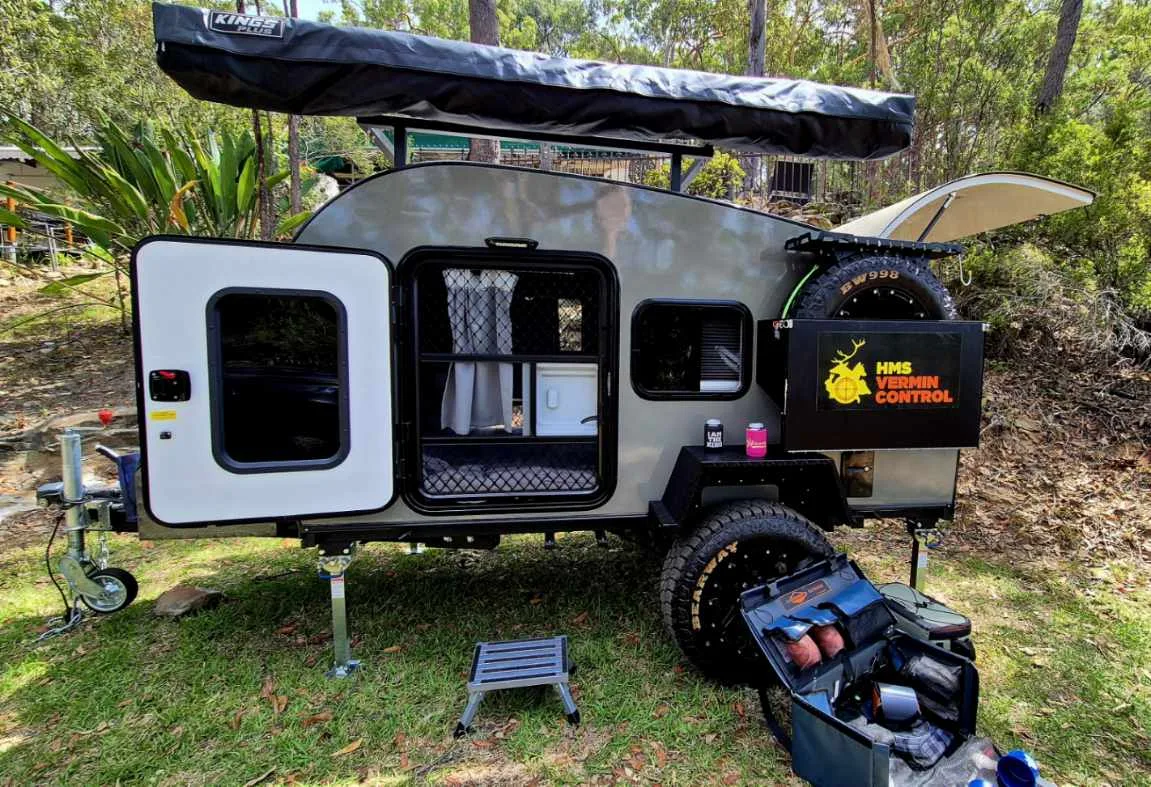
Australia has 36,735 kilometres of coastline — the fifth longest in the world — yet beach camping here remains one of the most underrated ways to experience it. While most travellers tick off famous landmarks from behind a car window, a growing number of Australians are waking up 50 metres from the water instead, coffee in hand, with nowhere to be.
In 2024, Tourism Research Australia recorded 11.5 million Australians going camping, with coastal sites driving the booking surge. Self-contained camper trailers are at the centre of that growth — they unlock free and low-cost beach campgrounds that caravans and motorhomes can’t reach, and hard-shell teardrops handle the coastal elements (salt spray, blowing sand, intense UV) far better than canvas alternatives.
This guide covers 17 of Australia’s best beach camping destinations, state by state, with 2026 fees, vehicle access requirements, self-containment rules, and the gear to bring.
Why Hard-Shell Camper Trailers Suit Beach Camping
Beach camping puts your rig through its paces. Salt air accelerates corrosion, wind-driven sand infiltrates canvas in minutes, and coastal UV is brutal — even in August. Hard-shell teardrops have a structural advantage here: the GRP (fibreglass-reinforced polymer) or aluminium skin doesn’t absorb moisture, delaminate, or need re-proofing after every coastal trip. No canvas to dry on a salt-humid morning before you can pack up. Lockable hard walls also matter at popular beach campgrounds where the campsite is your only security.
Self-containment is the other major advantage. Many of Australia’s best beach campgrounds — particularly in WA, TAS and increasingly coastal SA — are restricted to self-contained vehicles only. That means your own water supply, waste storage and toilet. A Breath Trailer Max meets every definition; an Essential or Plus with a composting toilet and grey-water bladder gets you most of the way there.
| Feature | Canvas soft-floor | Hard-shell teardrop | Hybrid caravan |
|---|---|---|---|
| Salt/UV resistance | Low — canvas degrades fast | High — GRP/aluminium skin | Medium |
| Sand infiltration | High | Nil | Low–medium |
| Self-containment option | Rarely standard | Full on Max; upgrade on others | Often available |
| Access to restricted sites | Limited | Good | Limited |
| Beach setup in wind | 15–40 min, difficult | 5 min, unaffected | 10–30 min |
New South Wales: Best Beach Campgrounds
NSW coastline stretches 2,137 km from the Queensland border to the Victorian border, taking in subtropical bays, rugged headlands and remote sand-flat estuaries on the Far South Coast. From 1 July 2026, NPWS rolled out a six-tier pricing system ranging from free (Tier 1 bush clearings) to $89/night peak season at premium sites — a significant change from the previous per-person flat rate.
Mimosa Rocks National Park — Picnic Point One of the Far South Coast’s best-kept secrets. Picnic Point campground has around 20 sites directly behind the dunes with bush toilets, BBQs and a short walk to the rock platform. The access road is unsealed gravel but manageable for most 2WD camper trailers. 2026 fee: approximately $24.60/night. Go mid-week in May or September and you may have the whole place to yourself.
Trial Bay, Arakoon National Park Camping right beside the heritage gaol ruins and a sweeping crescent beach. Powered and unpowered sites accommodate caravans, camper trailers and tents. Facilities include flush toilets, showers and BBQs — one of the better-serviced coastal campgrounds on the Mid North Coast. Book through the NPWS online system — it fills during school holidays.
Currarong, Jervis Bay A compact campground with six pitches at the edge of Jervis Bay for approximately $15/night, toilets and showers included. The water here is the near-transparent blue of tourism brochures — in real life. Sealed road access all the way. Arrive outside school holidays; sites fill quickly.
Bonnie Vale, Royal National Park Sydney’s closest beach camping option. Just 1.5 hours from the CBD in Bundeena, Bonnie Vale has tent and camper trailer sites steps from the waterway. A National Parks Pass is required. Book months ahead for summer.
| Campground | Road access | 2026 Fee (approx.) | Facilities | Camper trailer suitable? |
|---|---|---|---|---|
| Picnic Point, Mimosa Rocks NP | Unsealed gravel (2WD ok) | ~$24.60/night | Toilets, BBQ | Yes |
| Trial Bay, Arakoon NP | Sealed | Tier 3–4 ~$35–55/night | Power, showers, flush toilets | Yes (powered available) |
| Currarong, Jervis Bay | Sealed | ~$15/night | Toilets, showers | Yes (6 sites, book early) |
| Bonnie Vale, Royal NP | Sealed | Tier 3 ~$29–35/night | Toilets, BBQ | Yes |
For 14 more NSW campgrounds with booking tips, see our full NSW camping spots guide.
Queensland: Tropical and Subtropical Beach Camping
Queensland’s 7,400 km of coastline covers everything from subtropical sand islands to tropical reef-fringed beaches north of Cairns. QPWS charges $7.75/adult/night at most national park campgrounds in 2026 — one of the more affordable national park fee structures in the country.
Cylinder Beach, North Stradbroke Island (Minjerribah) A 45-minute ferry from Cleveland south of Brisbane, Straddie has some of the most accessible beach camping in Queensland. Cylinder Beach campground has flushing toilets, showers, washing machines, BBQs and picnic areas. Suitable for camper trailers and small caravans — a good introduction to Queensland beach camping. Book via the QPWS online system.
K’gari (Fraser Island) — Waddy Point and Dundubara The world’s largest sand island requires a vehicle access permit ($59.85/week in 2026) and 4WD for beach driving. Once there, you’ll find over 100 freshwater lakes, ancient rainforest and 120 km of beach. Remote beach campsites at Waddy Point accommodate self-contained rigs. The ferry departs from River Heads near Hervey Bay. Sandy beach track driving is demanding — a Breath Trailer’s independent coil suspension handles K’gari well; independent suspension is significantly better here than leaf springs.
Noosa North Shore North of Noosa via the Noosa River ferry, the north shore opens up remote beach camping on an unspoilt stretch of coastal heath and dunes. Sites require a 4WD and a QPWS permit. Self-containment is strongly recommended — no facilities exist here. Worth every bit of preparation.
| Campground | Access | 2026 Fee | Facilities | 4WD required? |
|---|---|---|---|---|
| Cylinder Beach, Straddie | Ferry + sealed | $7.75/adult/night | Flush toilets, showers, BBQs | No |
| Waddy Point, K’gari | Ferry + 4WD beach | $7.75/adult/night + vehicle permit | Drop toilets | Yes |
| Noosa North Shore | Ferry + 4WD sand track | $7.75/adult/night | Nil — self-contained required | Yes |
For the Gold Coast hinterland, Fraser Coast, Whitsundays and Outback QLD campgrounds, see our Queensland camping guide. For serious Queensland adventure, the Cape York camping guide covers creek crossings, the Jardine ferry and remote northern campgrounds.
Western Australia: Australia’s Finest Coastal Camping
WA’s 20,781 km of coastline spans climates from the tropical Kimberley to the temperate Great Southern. Two campgrounds consistently rank among the best in Australia.
Lucky Bay, Cape Le Grand National Park Certified by Earth Science Australia as the country’s whitest beach. Lucky Bay campground has more than 40 unpowered sites; the road is sealed all the way from Esperance (60 km) and accessible to standard 2WD camper trailers. Facilities include solar-powered showers, flush toilets and BBQs. Park entry: $17/vehicle (2025–26 rate). Book via Explore Parks WA — peak sites sell out within minutes of the 180-day booking window opening for Christmas and Easter. Set a calendar reminder for the exact opening time. The kangaroos that wander onto the beach are not a myth — they’re a fixture.
Tulki Beach, Cape Range National Park (near Turquoise Bay) One of Australia’s most photographed beaches, and Tulki Beach is the closest campground to it. Eleven reverse-in unpowered gravel sites with pit toilets. Book via ParkStay WA — bookings open monthly at 10am AWST and typically go within the first hour. Vehicle entry fee applies; the camper trailer itself attracts no separate fee. Self-containment is strongly recommended given minimal onsite facilities. Bring snorkel gear: the Ningaloo reef starts at the beach.
Shark Bay World Heritage Area Four coastal campgrounds run by the Shark Bay Shire: Eagle Bluff, Fowlers Camp, Whalebone Bay and Goulet Bluff. All bookable via DBCA’s ParkStay. Less famous than Cape Range — meaning slightly easier to secure in peak season. Hamelin Pool stromatolites and Shell Beach are day trips away. The Breath Ultra or Max is the ideal setup here — independence from facilities is everything.
| Campground | Distance from town | Road access | Sites | Key facilities | CT friendly? |
|---|---|---|---|---|---|
| Lucky Bay, Cape Le Grand NP | 60 km from Esperance | 2WD sealed | 40+ | Solar showers, flush toilets, BBQ | Yes |
| Tulki Beach, Cape Range NP | 30 km from Exmouth | 2WD unsealed | 11 | Pit toilets only | Yes (self-contained recommended) |
| Fowlers Camp, Shark Bay | 50 km from Denham | 2WD gravel | ~15 | Basic toilets | Yes |
Victoria, South Australia and Tasmania: Southern Coastal Gems
Victoria
Ninety Mile Beach, Gippsland Parks Victoria maintains 20 free camping areas between Golden Beach and Seaspray along the famous Ninety Mile Beach. Sites sit 50–100 metres behind the primary dune with direct beach access — most have pit toilets. No bookings required. The beach is exposed to Southern Ocean swells, ideal for surfers and anglers. A Breath Plus or Ultra with a 270° awning and 100L water tank is the perfect setup here — the free sites mean your overnight budget is essentially zero.
Thurra River, Croajingolong National Park Remote and remarkable. Thurra River campground has 46 unpowered sites, some suitable for camper trailers. The unsealed access road is manageable for trailers (though not caravans). Parks Victoria fees: $15–20/adult/night depending on season. Croajingolong is a UNESCO World Biosphere Reserve and arguably Victoria’s finest coastal wilderness. Book through Parks Victoria — it goes quickly from October onwards.
South Australia
Yangie Bay, Coffin Bay National Park Seven campgrounds sit within Coffin Bay National Park on the Eyre Peninsula; Yangie Bay is the most accessible for camper trailers — sealed approach, toilets, picnic shelter and a kayak launch onto the lagoon. Fees: $22.30–$49.60/night (book via Parks SA online). Remote campgrounds like Inner Lagoon and Sensation Beach require 4WD. The oysters farmed offshore rank among Australia’s best — arriving via Coffin Bay township is strongly encouraged.
Innes National Park, Yorke Peninsula At the southern tip of the Yorke Peninsula, Innes NP has several campgrounds overlooking the Southern Ocean. Increasingly restricted to self-contained vehicles. Spectacular surf breaks, snapper fishing and wreck dives make this one of SA’s most complete camping destinations. Self-containment is expected — grey water disposal facilities are limited across the peninsula.
Tasmania
Bay of Fires Conservation Area Eight free campgrounds spread along one of the world’s most beautiful coastlines — stretching from Binalong Bay to Policemans Point. No camping fees; you only need a valid Tasmanian National Parks Pass ($41.20/vehicle/day or $82.40 for an 8-week pass). First-come-first-served; maximum stay four weeks. Most sites suit camper trailers; some remote sites like Sloop Reef require a self-contained 4WD setup. Extremely popular at Christmas, Easter and long weekends — mid-week visits in November or February hit the sweet spot.
Richardsons Beach, Freycinet National Park The main base for Wineglass Bay — consistently listed among the world’s top 10 beaches. Hardened RV sites accommodate camper trailers and campervans up to 6 m/18 ft. Powered sites are available. A ballot system operates for 18 December–10 February and Easter — applications close 31 July for the summer ballot. Entry requires a Tasmanian National Parks Pass. From camp, the Wineglass Bay lookout is a 1-hour return walk up the saddle.
| Campground | State | 2026 Fee | Facilities | Booking required? |
|---|---|---|---|---|
| Ninety Mile Beach (free areas) | VIC | Free | Pit toilets | No |
| Thurra River, Croajingolong NP | VIC | $15–20/adult/night | Toilets | Yes — Parks VIC |
| Yangie Bay, Coffin Bay NP | SA | $22.30–$49.60/night | Toilets, shelter, kayak launch | Yes — Parks SA |
| Innes NP, Yorke Peninsula | SA | ~$10–15/adult/night | Toilets, showers at some sites | Yes |
| Bay of Fires CA | TAS | Free (NP Pass required) | Hybrid toilets | No — first-come |
| Richardsons Beach, Freycinet NP | TAS | Varies by tier (NP Pass + camping) | Power, showers | Ballot Dec–Feb; yes otherwise |
Self-Containment Rules by State for Coastal Camping
This is the fastest-moving regulatory area in Australian camping. In 2026, rules are tightening across the board — particularly at coastal sites where grey water and human waste have become genuine environmental pressures.
| State | Statewide coastal mandate? | 2026 rule highlights | Grey water at beach sites |
|---|---|---|---|
| NSW | No | National park remote sites require self-containment; check per-campground rules | Tip stations at major campgrounds |
| QLD | No | Varies by council; Noosa North Shore: self-contained required | Nil at remote sites |
| WA | No | Ningaloo and Shark Bay remote sites: self-contained strongly recommended or required | Tip stations at Exmouth, Denham |
| VIC | No | Croajingolong and Ninety Mile Beach remote areas: self-contained strongly recommended | Limited |
| SA | Partial | Yorke Peninsula increasingly self-contained only; Coffin Bay remote sites: self-contained required | Limited |
| TAS | Partial | From February 2026, Central Coast Council: $15/night, self-contained vehicles only, 3-night max; dump station at St Helens (Bay of Fires) | Dump station at St Helens |
The direction is clear: self-containment is shifting from an advantage to a requirement at Australia’s most popular coastal campgrounds. A Breath Trailer Max — with its interior bathroom, 100L fresh water tank and grey water tank — meets every definition of self-contained for free camping across all states. See our self-contained camper guide for the complete state-by-state breakdown including CMCA certification.
When to Visit: Seasonal Beach Camping Guide
Timing matters as much as location. The following table reflects 2026 conditions — note that WA coastal campgrounds effectively require booking 3–6 months ahead regardless of season.
| Region | Best months | What to avoid | Booking lead time |
|---|---|---|---|
| NSW Far South Coast | Mar–May, Sep–Nov | School holidays (Jan, Apr, Jul, Oct) | 4–8 weeks |
| NSW North Coast / Jervis Bay | May–Sep | Christmas/January (packed) | 4–12 weeks |
| QLD Sunshine Coast / Straddie | Apr–Sep | Christmas/Easter; Wet Season (Nov–Mar up north) | 2–4 weeks |
| K’gari / Fraser Island | May–Oct | Dec–Feb cyclone risk; Christmas crowds | 4–8 weeks |
| Cape Range NP / Ningaloo WA | Apr–Jul | Dec–Feb (45°C+ inland; extreme heat) | 6 months exactly |
| Cape Le Grand / Esperance WA | Oct–Apr | Christmas period (sites sell in minutes at 180-day mark) | 6 months exactly |
| Ninety Mile Beach VIC | Nov–Apr | Jul–Aug Southern Ocean gales | Walk-up or 2–4 weeks |
| Coffin Bay SA | Sep–Nov, Mar–May | Summer heat inland + Christmas crowds | 4–6 weeks |
| Bay of Fires TAS | Oct–Apr | Christmas, Easter, long weekends (walk-up is risky) | Walk-up mid-week |
| Freycinet NP TAS | Nov–Apr | Dec 18–Feb 10 (ballot system; apply by 31 July) | Ballot or 4–6 weeks |
Choosing the Right Breath Trailer for Beach Camping
Not every model suits every beach destination. The table below maps Breath Trailer’s four models to the campgrounds covered above.
| Model | Tare weight | Self-contained? | Best beach camping use case |
|---|---|---|---|
| Essential — $23,320 | 700 kg | No (toilet optional add-on) | Serviced campgrounds: Trial Bay, Bonnie Vale, Cylinder Beach |
| Plus — $29,766 | 800 kg | Partial (fridge; upgrade options) | Mid-range sites: Ninety Mile Beach, Lucky Bay, Coffin Bay Yangie Bay |
| Ultra — $34,749 | 900 kg | Partial (external shower + upgrades) | Remote sites with minimal facilities: Cape Le Grand, Bay of Fires, Innes NP |
| Max — $47,190 | 1,200 kg | Full — interior bathroom, 100L tank, grey water | Fully restricted self-contained sites: Noosa North Shore, Sloop Reef, Shark Bay remote |
The Breath Trailer Max is the only model in the range — and one of the only teardrops in Australia under $50,000 — with a full interior bathroom. If your target campgrounds are trending toward self-containment-only access (coastal SA, TAS, WA remote), the Max pays for itself in site access alone.
For towing confidence on the drives to coastal destinations, see our camper trailer towing guide. For what to pack for off-road beach runs, the must-have accessories guide covers recovery gear, communications and tyre management.
Beach Camping Essentials Checklist
| Category | Items |
|---|---|
| Water | 80–100L tank (10 L/person/day baseline); inline filter; backup 10L jerry can |
| Power | 120W+ rooftop solar; 100Ah+ lithium; 12V fridge (40L couple, 60L family) |
| Shelter | 270° awning ($600–1,400 installed); shade sail; sandfly mesh walls |
| Recovery | Tyre deflator + 12V compressor (deflate to 18–22 psi for sand); MaxTrax boards |
| Safety | PLB registered to yourself; UHF CB radio (channel 40 highway, 18 off-road) |
| Comfort | Sand-free outdoor mat; camp chairs; outdoor shower for post-beach rinse |
| Compliance | Composting or cassette toilet if targeting self-contained-only sites; grey-water bladder |
For awning selection and setup at the beach, see our best awning setup guide. After any coastal trip, run through our camper trailer maintenance guide — salt air is the primary cause of premature corrosion on bearings, hinges and electrical connectors.
Frequently Asked Questions
What is the best beach camping destination in Australia? It depends on what you’re after. For the most strikingly white sand and accessible 2WD access, Lucky Bay in Cape Le Grand National Park (WA) is hard to beat. For free camping on a world-class coastline, Bay of Fires in Tasmania wins. For proximity to a capital city, Ninety Mile Beach in Gippsland (free, walk-up sites) and Bonnie Vale in Royal National Park (Sydney) are the standouts.
Do I need a 4WD for beach camping in Australia? Not always. Lucky Bay (WA), Trial Bay (NSW), Cylinder Beach Straddie (QLD), Bonnie Vale (NSW) and Richardsons Beach Freycinet (TAS) are all accessible on sealed or well-maintained unsealed roads in a standard 2WD camper trailer. K’gari, Noosa North Shore and most remote WA sites require 4WD — and beach driving specifically requires 4WD virtually everywhere it’s permitted.
Can I free camp at the beach in Australia? Yes, at select locations. Ninety Mile Beach VIC has 20 free areas with no booking required. Bay of Fires TAS is free (National Parks Pass required, $41.20/vehicle/day). Some council-managed sites on Yorke Peninsula SA are free or low-cost. Most national park beach campgrounds charge $7.75–$25/night.
Do I need to be self-contained to beach camp in Australia? Increasingly, yes — at the best sites. Noosa North Shore (QLD), Sloop Reef at Bay of Fires (TAS), Shark Bay remote sites (WA) and Coffin Bay’s remote campgrounds (SA) all require self-containment. Since February 2026, Tasmania’s Central Coast Council has also mandated self-contained vehicles at previously free coastal sites. The Breath Trailer Max meets every state’s self-containment definition.
How do I book Cape Le Grand or Cape Range in WA? Both are booked via Explore Parks WA (exploreparks.dbca.wa.gov.au). Cape Le Grand opens 180 days before arrival; Cape Range opens monthly at 10am AWST. Peak sites for Christmas and Easter go within minutes of opening — set a calendar alert and be ready to book the moment the window opens.
How do I protect my camper trailer after a beach trip? Rinse every surface with fresh water within 24 hours: chassis, wheel arches, hinges, gas bayonet, electrical connectors and any exposed galvanising. Lube all moving parts with marine-grade grease. Check tyre sidewalls and wheel bearings — salt and sand accelerate bearing wear. See the full camper trailer maintenance guide for the post-coastal service checklist.
Plan Your Next Beach Trip
Australia’s best beach campgrounds reward preparation: the right rig, the right booking timing and knowing which sites require self-containment. A hard-shell teardrop opens more access, tolerates coastal conditions better and requires less post-trip maintenance than any canvas alternative.
Whether you’re eyeing the impossibly white sand at Lucky Bay, the ochre rocks of Bay of Fires or a mid-week site at Mimosa Rocks with no neighbours in sight, the key is getting the setup right before you go.
Compare the four Breath Trailer models to find the one that suits your beach camping style, or book a viewing at one of our ambassador locations across Australia.
Recommended Reading
- Best Camping Spots in New South Wales — 18 campgrounds, NPWS 2026 six-tier fee guide and booking calendar
- Best Camping Spots in Queensland — Gold Coast hinterland to Far North QLD, QPWS fees and seasonal guide
- Cape York Camping Guide — OTT creek crossings, Jardine ferry, self-containment requirements north of the Daintree
- Self-Contained Camper Australia — What self-contained means state by state, CMCA certification and grey-water rules
- The Big Lap Preparation Guide — Planning, budget and route for driving the full Australian coastline over 6 months