Best Camping Spots in South Australia: The 2026 Camper Trailer Guide
From the Flinders Ranges' ochre gorges to Kangaroo Island's wild coast — the definitive 2026 guide to 18 best camping spots in South Australia for camper trailers.
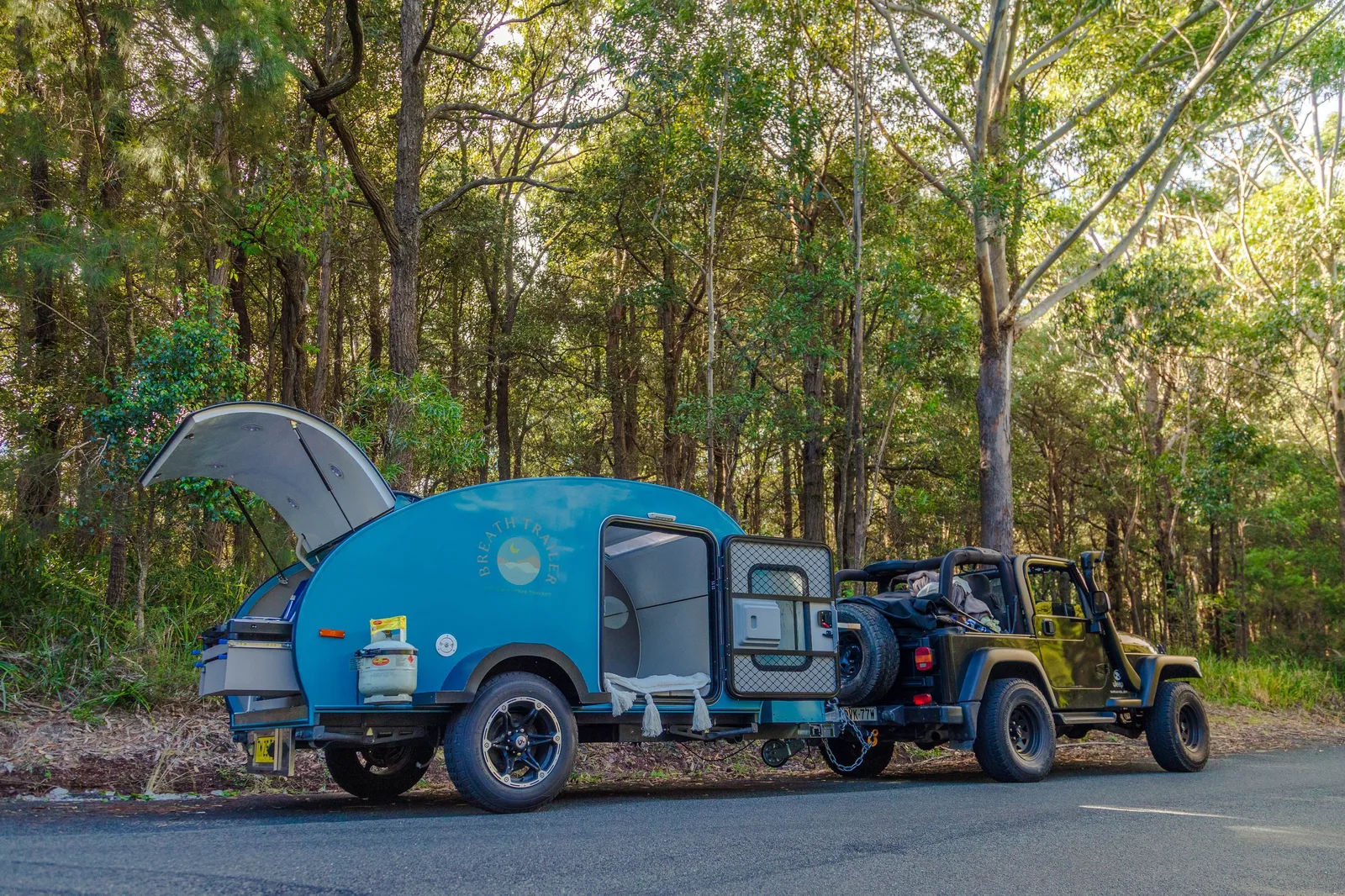
South Australia packs more contrast into a single state than most people expect. The Flinders Ranges rise 1,170 m above sea level two hours from Adelaide. Kangaroo Island’s wild southern coast is battered by Southern Ocean swells. The Coorong — 145 km of saltwater lagoon — attracts bird life so dense it stops veteran naturalists mid-sentence. And the far north becomes a planet of its own: salt lakes, red sandhills, and horizons that seem to bend with the curvature of the Earth.
This guide covers 18 of the best campgrounds across 6 regions, with 2026 fees, booking systems, seasonal advice, and a model-match table so you leave home in the right rig. SA rewards those who plan ahead — the best sites book out months in advance, and the far north has its own permit system most travellers discover only when they arrive.
The other state guides in this series — NSW, Queensland, Victoria, and Western Australia — follow the same format if you are planning a multi-state tour.
The 6 Regions at a Glance
South Australia’s camping landscape divides into six distinct corridors:
| Region | Distance from Adelaide | Best Season | Key Drawcard |
|---|---|---|---|
| Adelaide Hills & Murray River | 40–250 km | Year-round | Easy access, river wildlife, tall eucalypts |
| Fleurieu Peninsula & Coorong | 80–200 km | Sep–May | Clifftop coast, dolphins, migratory birds |
| Yorke Peninsula | 170–250 km | Oct–Apr | Innes NP surf, fossils, fishing, budget-friendly |
| Eyre Peninsula | 450–700 km | Apr–Nov | White-sand bays, sea lions, Coffin Bay oysters |
| Kangaroo Island | 110 km + ferry | Oct–Apr | Remarkable Rocks, wildlife, raw coastline |
| Flinders Ranges & Outback | 450–700 km | May–Sep | Wilpena Pound, ochre gorges, star-filled skies |
South Australia Camping Fees — How It Works
All South Australian national park and conservation park campgrounds are managed by the National Parks and Wildlife Service South Australia (DEW) and booked via parks.sa.gov.au. Bookings can be made up to 12 months in advance — a longer window than most Australian states.
Fees are charged per site per night — not per person — which can work out well for couples in a teardrop where site costs are shared regardless of occupancy.
| Facility Level | Description | Fee (per site per night, 2026) |
|---|---|---|
| Basic / Remote (unallocated) | Drop toilets or no facilities | $11.90–$19.90 |
| Standard | Pit or vault toilets, limited water | $19.80–$27.80 |
| Upgraded Standard | Flush toilets, showers, BBQs | $27.80–$44.40 |
| Wilpena Pound Resort (unpowered) | Flush toilets, showers, camp kitchen | From $30/site |
| Wilpena Pound Resort (powered) | Full hookups | From $43/site |
| Kangaroo Island (Flinders Chase) | Day entry: $13 adult, $7.50 child 4–15 | Separate park entry fee applies |
Park vehicle entry is included in most campsite fee bookings across SA mainland parks — a meaningful saving over WA’s per-entry system. Kangaroo Island’s Flinders Chase National Park charges a separate entry fee on top of camping.
Far north and Desert Parks Pass: Any camping north of Hawker (including Lake Eyre/Kati Thanda, Innamincka, Strezlecki, Strurt Stony Desert) requires a Desert Parks Pass from parks.sa.gov.au — approximately $166/vehicle for 12 months, covering all DEW-managed far north parks.
Region 1 — Adelaide Hills & Murray River
1. Belair National Park
Australia’s second-oldest national park sits 14 km from Adelaide’s CBD. Belair gets overlooked by interstate travellers but is an outstanding local escape — tall eucalypts, wallabies grazing at dusk, and a network of walking trails that gets denser the further you push into the park.
- Access: Sealed all the way via South Eastern Freeway; all Breath models suitable
- Facilities: Flush toilets, showers, BBQ areas, powered sites available
- Fees: From $27.80/site/night (upgraded standard)
- Booking: parks.sa.gov.au; popular school holiday weeks book 2–3 months ahead
- Best for: Adelaide-based couples or grey nomads who want a long weekend without driving distance
2. Deep Creek Conservation Park (Fleurieu Peninsula)
Deep Creek is the wild heart of the Fleurieu Peninsula — 50 km of clifftop coast, steep gullies, and ocean views from 300 m above sea level. It is technically in Region 1 geographically but deserves a mention here: the Tapanappa Campground drops you into dense eucalypt scrub above the coast with one of the best sunset viewpoints in the state. Spot koalas in the morning.
- Access: Mostly sealed to Cape Jervis Rd; last 6 km good gravel — all models suitable
- Facilities: Vault toilets, no showers, no power
- Fees: From $19.90/site/night
- Note: No dogs; a paid permit is required even for day hikes to coastal lookouts
3. Murray River National Park (Bulyong Island / Ral Ral Creek)
The Murray near Renmark is a different SA altogether. Red gums line the banks; yellow-bellied gliders emerge at dusk; black cockatoos track upstream in loose formation. Ral Ral Creek campground sits inside a river bend with direct water access — good fishing, peaceful mornings, and a lazy pace that rewards a three-night stay.
- Access: Mostly sealed from Adelaide (270 km); some gravel to specific campgrounds — all models suitable
- Facilities: Drop toilets, tank water; no showers, no power; dump point at Renmark township
- Fees: From $11.90/site/night (basic bush camping)
- Self-containment: Grey water retention recommended near the river; tank toilets not required but appreciated
Region 2 — Fleurieu Peninsula & Coorong
4. Newland Head Conservation Park
The southernmost tip of the Fleurieu Peninsula. Two campgrounds (Newland Head and Waitpinga) sit within walking distance of Waitpinga and Parsons beaches — long, exposed surf beaches that see almost no one midweek. On spring evenings, southern right whales move through the bay offshore.
- Access: Sealed to Victor Harbor, then gravel 8–10 km — all models with care
- Facilities: Pit toilets; no showers, no power, no piped water (carry everything)
- Fees: From $19.90/site/night
- Best season: September–May; whale sightings September–October
- Best for: Self-contained campers wanting solitude on the Fleurieu
5. Innes National Park — Stenhouse Bay / Pondalowie Bay
Innes is at the southern tip of the Yorke Peninsula (a two-hour drive from Adelaide with a brief detour through the upper peninsula). The park’s geography — shipwreck coast, limestone cliffs, scrub mallee — is genuinely dramatic. Pondalowie Bay campground is one of the best SA coastal sites for camper trailers: flat gravel sites, direct beach access, and some of the best salmon and snapper fishing in the state right from camp.
- Access: Sealed to Innes NP entry; campground roads are sealed gravel suitable for all models
- Facilities: Flush toilets, hot showers, BBQs at Stenhouse Bay; Pondalowie has pit toilets only
- Fees: From $19.80–$27.80/site/night + park entry ($10/vehicle/day)
- Best season: April–November; avoid December–January (extreme heat, flies, holiday crowds)
- Note: Check surf forecast before Pondalowie — swell can push high on the beach at full campsites
6. Coorong National Park — 42 Mile Crossing
The Coorong is a 145 km saltwater lagoon separated from the Southern Ocean by the Younghusband Peninsula. 42 Mile Crossing is the main vehicle-accessible campground — flat, spacious sites between the lagoon and the dunes, with tens of thousands of waterbirds at dawn. This is Australia’s internationally recognised Ramsar wetland; bring binoculars.
- Access: Via the Princes Highway (about 200 km from Adelaide); last 20 km on a formed gravel track — high clearance preferred; Max/Ultra/Plus handle it well
- Facilities: Flush toilets at 42 Mile Crossing; more remote sites (accessible by 4WD or boat only) are basic pit toilet only
- Fees: $19.80–$44.40/site/night depending on site
- Booking: parks.sa.gov.au; 12-month advance booking available — peak school holidays fill fast
- Self-containment note: Grey water must be contained at all Coorong sites — the lagoon ecosystem is sensitive
If you plan to free-camp alongside the lower Murray or on national park crown land, read the self-contained camper guide before you go — SA’s rules by land type are more varied than most travellers expect.
Region 3 — Yorke Peninsula
7. Innes National Park (Pondalowie Bay — full entry)
Already mentioned above under Region 2, Innes deserves its own heading for Yorke Peninsula travellers who plan the peninsula as a standalone trip rather than a Fleurieu add-on. The park packs six campgrounds into a compact area, all bookable on parks.sa.gov.au. Browns Beach is the pick for families — sheltered, shallow, sandy bottom; Gym Beach is better for experienced surfers.
8. Chinaman’s Well — Yorke Peninsula Conservation Park
Free camping on a formed track inland from the coast, managed by council. Sites are basic (no toilets, no water) but the night sky reward is exceptional — minimal light pollution 200 km from Adelaide. A good mid-peninsula stop for those driving the full Yorke loop. Check WikiCamps SA for current status before arrival.
- Fees: Free (council-managed)
- Access: Gravel road — all models suitable; ensure grey water tanks are sealed (inland/groundwater sensitive area)
- Best for: Self-sufficient travellers who want free camping without driving to Innes
9. Marion Bay Caravan Park (gateway camp for Innes)
Not a national park — a privately operated park at the Innes NP gateway — but included because it is one of the few powered options in the region and fills fast on school holiday long weekends. Good base for families who want security of powered camp while day-tripping into Innes.
- Access: Fully sealed from Adelaide (208 km)
- Facilities: Powered and unpowered sites, flush toilets, showers
- Fees: ~$35–$50/site/night (private operator 2026 rates)
Region 4 — Eyre Peninsula
10. Coffin Bay National Park — Yangie Bay Campground
Coffin Bay National Park covers 31,000 hectares of remote peninsula on the EP coast — six campgrounds, most of them 4WD-only. Yangie Bay is the exception: the only campground accessible to caravans and camper trailers in a standard 2WD vehicle, with 19 unpowered sites fronting the tranquil bay. Sit on the grass and watch pelicans land 20 m away.
- Access: Mostly sealed from Port Lincoln (48 km); campground road is sealed gravel — 2WD accessible
- Facilities: Vault toilets; no showers, no power, no piped water
- Fees: From $19.80/site/night + park entry
- Booking: parks.sa.gov.au; books fast in April–October season
- Best for: Couples and families who want coastal NP camping without 4WD
11. Talia Caves Free Camp
A council-managed free camping area on the upper Eyre Peninsula coast, north of Streaky Bay. The dramatic sea caves (carved by Southern Ocean swell into the limestone cliffs over millennia) are a 5-minute walk from camp. One of SA’s best free camps in a spectacular setting.
- Access: Formed dirt road 30 km west of Streaky Bay; suitable for 2WD in dry conditions — all models with care
- Facilities: Drop toilets; no water, no power, no showers
- Fees: Free (council-managed, 2-night limit per calendar month)
- Self-containment: Essential — no grey water disposal; carry all water
- Best for: Self-contained rigs (Ultra or Max) wanting spectacular free camping
12. Lincoln National Park — Memory Cove Wilderness Area
Memory Cove is the jewel of Lincoln NP — a pristine bay ringed by granite headlands with only 8 campsites (permit-required, seasonal numbers limited). Nearby Sleaford Bay campground is more accessible: dramatic coastal scenery, sea lions visible from the shore, and good fishing off the rocks.
- Access: Memory Cove requires a key from Port Lincoln DEW office + 4WD for the final 6 km; Sleaford Bay is 2WD accessible via formed track
- Facilities: Drop toilets at Sleaford; Memory Cove has basic composting toilets and zero facilities
- Fees: Memory Cove ~$44.40/site/night (strictly limited allocation); Sleaford ~$19.80/site/night
- Best season: April–November; December–February is hot, flies, and wind
Region 5 — Kangaroo Island
13. Flinders Chase National Park — Rocky River Campground
Rocky River reopened in 2024 after the devastating 2020 bushfires destroyed most of the park’s infrastructure. The recovery has been remarkable — wildlife has returned in force, and the campground now offers powered and unpowered sites in a eucalypt setting near the Cape du Couedic lighthouse road.
A separate park entry fee applies at Flinders Chase (adult $13, child 4–15 $7.50, family $33 in 2026), on top of camping fees. This is one of two SA national parks where vehicle entry is not bundled with the campsite booking.
- Access: Via SeaLink ferry from Cape Jervis (~$250+ return per vehicle in 2026) + sealed roads on KI; no 4WD required
- Facilities: Flush toilets, showers, powered sites, camp kitchen
- Fees: ~$27.80–$44.40/site/night camping + park entry separately
- Booking: parks.sa.gov.au; book ferry through SeaLink at least 4–6 weeks ahead in school holidays
- Drawcards: Remarkable Rocks, Admirals Arch, Flinders Chase walking tracks
14. Vivonne Bay Conservation Park
Vivonne Bay was voted Australia’s best beach by a University of Sydney survey — a claim that is easy to believe when you are standing on the shell-white sand watching dolphins work a school of salmon offshore. Small campground (limited sites) right behind the dunes; first-in best-dressed on the free area, booked through parks.sa.gov.au for the allocated section.
- Access: Sealed from Kingscote (KI’s main town) — all models suitable; take the ferry from Cape Jervis
- Facilities: Vault toilets; no showers, no power
- Fees: From $19.80/site/night
- Best season: October–April (swimming, dolphins); avoid June–August (cold Southern Ocean wind)
15. American River / Pelican Lagoon
The sheltered inlet of American River on KI’s north coast is everything the wild south coast is not — calm, warm-water protected, with pelicans, stingrays, and white-bellied sea eagles in the mangroves. Pelican Lagoon campground is a quieter alternative to the more famous south-coast parks, better suited to those who want to kayak, fish, or simply watch wildlife from camp.
- Access: Sealed via North Coast Road — all models suitable
- Facilities: Flush toilets, showers, some powered sites (private park)
- Fees: ~$30–$45/site/night (private operator)
- Best for: Families and retirees wanting protected water and easy wildlife access
Region 6 — Flinders Ranges & Outback
16. Ikara-Flinders Ranges National Park — Wilpena Pound Campground
Wilpena Pound is an enormous natural amphitheatre — a 17-km natural rock basin that contains its own micro-climate and can only be entered on foot (or by light aircraft). The campground at Wilpena Pound Resort sits outside the basin perimeter with direct views of the Elder Range at sunset. This is South Australia’s most famous outback camp — and deservedly so.
The Wilpena Pound Resort operates the campground separately from the national park camping system; book directly at wilpenapound.com.au rather than parks.sa.gov.au.
- Access: Sealed all the way from Adelaide (451 km); all models suitable
- Facilities: Powered and unpowered sites; flush toilets, hot showers, camp kitchen, general store, restaurant
- Fees: Unpowered from $30/site/night; powered from $43/site/night
- Booking: Direct through wilpenapound.com.au; winter school holidays (June–July) book 3–4 months ahead
- Best season: April–October — summer temperatures exceed 40°C with little shade; August is wildflower season
- Drawcards: Pound walk (14 km circuit), Bunyeroo Valley gorge drive, Brachina Gorge geological trail, sunrise on Elder Range
17. Arkaroola Wilderness Sanctuary (North Flinders)
Arkaroola is privately managed — a 610 km² wilderness in the northern Flinders far beyond the tourist trail. The ridge-top tour (4WD jeep with guide) is one of South Australia’s iconic outback experiences: 4 hours of ridgeline traverses, 360° views to the salt lakes, and wildlife you will not find anywhere else in the state.
- Access: 600 km from Adelaide; all-sealed to Arkaroola village; internal tracks require 4WD high clearance
- Facilities: Powered and unpowered sites; flush toilets, showers, restaurant, small shop
- Fees: ~$25–$40/site/night (private operator 2026)
- Booking: Direct at arkaroola.com.au; popular June–August
- Best for: The grey nomad lap (Arkaroola to Birdsville is a natural next leg); see the grey nomads guide
18. Lake Eyre / Kati Thanda National Park (Far North)
Kati Thanda-Lake Eyre fills with water on average once per decade — and when it does, it becomes the largest lake in Australia (9,500 km²) and one of the world’s great wildlife spectacles. Even when dry, the salt lake’s pink-white expanse and the contrast with the surrounding red sandhills is extraordinary. Camping is in designated areas within the national park.
- Access: Sealed to William Creek (697 km from Adelaide); dirt road 65 km to Kati Thanda lookout; 4WD recommended for deeper park access
- Facilities: Drop toilets in the national park; William Creek Hotel 65 km away for supplies
- Fees: Desert Parks Pass required (~$166/vehicle, 12 months) — covers all far north parks
- Best season: June–August (cooler temperatures; floods can close access in La Niña years after heavy northern rains)
- Self-containment: Essential — carry 20+ litres of water per person; no water in the park. The self-contained camper Australia guide details exactly what you need for this kind of camping
Seasonal Camping Guide by Region
| Region | ✅ Best Months | ⚠️ Shoulder | ❌ Avoid | Why |
|---|---|---|---|---|
| Adelaide Hills / Murray | Year-round | — | Dec–Feb (heat, fire risk) | Mild winters; Murray wildlife best in cooler months |
| Fleurieu / Coorong | Sep–May | Jun–Aug | Dec–Jan (holiday crowds, heat) | Spring wildflowers; whale season Sep–Oct offshore |
| Yorke Peninsula | Oct–Apr | May, Sep | Dec–Feb (extreme heat, flies) | Fishing best autumn/spring; Innes surf best May–Oct |
| Eyre Peninsula | Apr–Nov | Mar, Dec | Jan–Feb (40°C+ heat, blowflies) | Coffin Bay and Lincoln NP best in cooler months |
| Kangaroo Island | Oct–Apr | May, Sep | Jun–Aug (cold Southern Ocean winds) | Wildlife active Oct–Apr; whale sharks off south coast |
| Flinders Ranges / Far North | May–Sep | Apr, Oct | Nov–Mar (40–48°C; fire risk outback) | Winter skies; August wildflowers on Flinders creeks |
Booking Systems and Lead Times
| System | Who Uses It | Lead Time | Tips |
|---|---|---|---|
| parks.sa.gov.au | All DEW national/conservation parks | Up to 12 months ahead | Best in class for advance planning; book school holidays immediately when window opens |
| wilpenapound.com.au | Wilpena Pound Resort campground | 3–6 months for peak season | Not on DEW system — direct booking only |
| arkaroola.com.au | Arkaroola Wilderness Sanctuary | 1–2 months for winter | Phone or online; call ahead if arriving late |
| SeaLink (sealink.com.au) | Kangaroo Island ferry + KI campgrounds | 4–8 weeks (ferry); parks via DEW | Ferry books separately from camping — confirm both before finalising |
| WikiCamps SA / CamperMate | Free camps, council rest areas | Check 48 hrs before — rules change | Always verify with council; SA free camp rules vary widely by council |
Self-Containment Rules in South Australia
South Australia does not have a single statewide self-containment certification scheme, but the practical rules by land type are consistent:
| Land Type | Grey Water Rules | Notes |
|---|---|---|
| National / Conservation Parks (DEW) | Site-dependent; Coorong and sensitive estuaries: contain. Upland parks: drain on ground away from water | Check park notes on booking confirmation |
| Far North Parks (Desert Parks Pass area) | Contain all waste; dispose at dump points only | Water sources are critical; no dump infrastructure in field |
| Kangaroo Island NPs | Contain grey water — sensitive freshwater and marine catchments | KI ecology is internationally significant |
| Council free camps | Check WikiCamps listing; most allow grey water drain | 48-hr limits common; verify signage on arrival |
| Murray River area | Contain near the river; drain 50+ m from watercourse | Murray-Darling Basin water quality rules apply |
For anyone aiming at Kati Thanda, Arkaroola, or the deep Eyre Peninsula, the Breath Max’s interior bathroom and sealed grey water tank is the only sub-$50k teardrop solution that ticks every self-containment box out of the box — no aftermarket fit needed.
Camper Trailer Model Matching by Region
| Region | Essential ($23,320) | Plus ($29,766) | Ultra ($34,749) | Max ($47,190) |
|---|---|---|---|---|
| Adelaide Hills / Murray | ✅ Easy weekend | ✅ Comfortable | ✅ Full amenity | ✅ Ideal for longer stays |
| Fleurieu / Coorong | ✅ OK | ✅ Good | ✅ External shower = rinse after beach | ✅ Best for Coorong self-containment |
| Yorke Peninsula | ✅ Good (carry water for basic sites) | ✅ Ideal | ✅ Ideal | ✅ Very comfortable |
| Eyre Peninsula | ✅ OK for Yangie Bay | ✅ Good | ✅ Ideal for extended EP stays | ✅ Best for Memory Cove/Talia free camps |
| Kangaroo Island | ✅ Works well (facilities at KI NPs) | ✅ Ideal | ✅ Ideal | ✅ Best for all self-contained sites |
| Flinders / Far North | ⚠️ Carry all water; power-limited | ✅ OK with good solar | ✅ Off-grid capable | ✅ Only model for Lake Eyre / remote far north |
The Essential and Plus handle SA’s developed campgrounds comfortably. The Ultra’s external shower is genuinely useful after dusty Flinders gorge hikes or morning swims at Coffin Bay. The Max — with its interior bathroom, sealed grey water tank, and largest 12V system — is purpose-built for the kinds of remote SA camping that the Eyre Peninsula’s 4WD-only sites and the far north’s no-facility parks demand.
Read the full model comparison or the off-grid setup guide to size your power system for an extended Flinders or Eyre Peninsula trip.
Planning Your SA Trip: Practical Notes
Kangaroo Island logistics: The SeaLink ferry from Cape Jervis (90 km south of Adelaide) takes 45 minutes each way. Book your vehicle slot well in advance — the ferry runs multiple daily sailings but vehicle spaces are limited. As of 2026, expect to pay $250+ return for a standard vehicle plus trailer combination; check sealink.com.au for current pricing. Camp the night before at Deep Creek Conservation Park (30 minutes from Cape Jervis) so you hit the first morning ferry rested.
Far north fuel planning: Between Port Augusta and Marree (gateway to the Flinders outback), fuel is available at Quorn, Hawker, and Leigh Creek. Beyond Marree into the far north (Birdsville Track, Oodnadatta Track, Sturt’s Stony Desert), fuel gaps can reach 200+ km. Carry 60–80 L spare capacity in Jerry cans. The must-have accessories guide covers the full recovery kit for remote outback travel.
Wildflower season: The Flinders Ranges experience a wildflower flush in August–September after good winter rain — Salvation Jane (Paterson’s Curse) carpets the valley floors purple, flanked by native wattles. Check the South Australia Tourism wildflower forecast at southaustralia.com in July to time your visit.
Connectivity: Telstra mobile covers the main highways and most towns including Port Augusta, Whyalla, Port Lincoln, and Kingscote (KI). Coverage drops significantly on back roads through the Flinders, and is absent across most of the far north beyond Marree. A PLB (GME MT610G $389 or Garmin inReach Mini 2 $599) is non-negotiable for Kati Thanda or any far north camping — not optional.
Pre-trip trailer check: Before any SA trip involving outback corrugation (Flinders Ranges gravel back roads, Oodnadatta Track, the Birdsville Track), run through the pre-departure checklist — wheel bearing inspection, 12V functional test, and tyre condition are the three most common failure modes on SA corrugation.
For those planning SA as part of a longer circuit, the Big Lap preparation guide treats South Australia as a key section of the full anticlockwise route, with leg-by-leg driving budgets and fuel strategy.
Frequently Asked Questions
Do I need a 4WD to camp in South Australia?
No — the majority of SA’s most popular campgrounds are fully accessible in a standard 2WD tow vehicle. Wilpena Pound, Innes National Park, Coffin Bay Yangie Bay, Coorong 42 Mile Crossing, Belair, Deep Creek, and all Kangaroo Island campgrounds are 2WD accessible. You only need 4WD for Memory Cove (Lincoln NP), the remote Coffin Bay 4WD campgrounds, far north tracks (Birdsville, Oodnadatta, Kati Thanda backcountry), and some interior Flinders Ranges tracks.
How far in advance should I book SA national park campgrounds?
SA’s booking system opens 12 months ahead — longer than most states. For Wilpena Pound in July school holidays, 4–6 months in advance is realistic. For Innes NP and Coffin Bay Yangie Bay in the April–October camping season, 2–3 months is usually sufficient. For summer (December–January) at Kangaroo Island, book as soon as the ferry slots open — KI ferry capacity is the real constraint.
What is the Desert Parks Pass and do I need one?
The Desert Parks Pass covers DEW-managed parks in the SA far north — including Kati Thanda-Lake Eyre, Innamincka Regional Reserve, Strzelecki Regional Reserve, and other areas north of the Flinders. It costs approximately $166/vehicle for 12 months in 2026 and is purchased at parks.sa.gov.au before departure. You cannot buy it at the park entrance — there is no staffed entry in the far north.
Is Kangaroo Island worth the ferry cost for a camper trailer?
Yes — but plan carefully. The ferry adds $250+ to your trip, and KI is compact enough that you will cover it in 4–5 days. The wildlife density (seals, sea lions, echidnas, Tammar wallabies, white-bellied sea eagles) and the coastal scenery (Remarkable Rocks, Admirals Arch, Vivonne Bay) genuinely justifies the crossing. Plan your KI days tightly and book both ferry and campgrounds before departure.
When is the best time to see the Flinders Ranges?
May–September is the classic window — mild days (15–22°C), cool nights, clear skies for stargazing from Wilpena or Arkaroola. August adds wildflowers on the creek flats. Avoid November–March: temperatures regularly exceed 40°C and the gorge walks become genuinely dangerous in extreme heat. The Flinders is best experienced in cooler months when you can walk all day and sit around the fire at night.
Which Breath Trailer model suits the SA far north?
The Max is the right tool for Kati Thanda, Arkaroola, and any far north SA trip. Its 80L fresh water tank, interior bathroom with sealed grey water, and largest onboard power system handle the no-facility reality of far north camping without compromise. The Ultra works well for Flinders Ranges campgrounds that have some facilities (Wilpena, Arkaroola) but the Max removes every logistical constraint for those going deeper. Compare all four models or book a viewing with one of our ambassadors in Sydney.
Recommended Reading
- Best Camping Spots in Victoria
- Best Camping Spots in Western Australia
- Best Beach Camping Destinations Australia
- The Big Lap Around Australia — Preparation Guide
- Must-Have Accessories for Off-Road Adventures
Ready to plan your South Australia trip? Compare all four Breath Trailer models or book a viewing appointment with one of our ambassadors.