Best Camping Spots in Tasmania: The 2026 Camper Trailer Guide
18 campgrounds from Bay of Fires to the Tarkine, parks pass prices, $13 PWS fees, Freycinet ballot dates, and what the ferry charges a car plus teardrop.
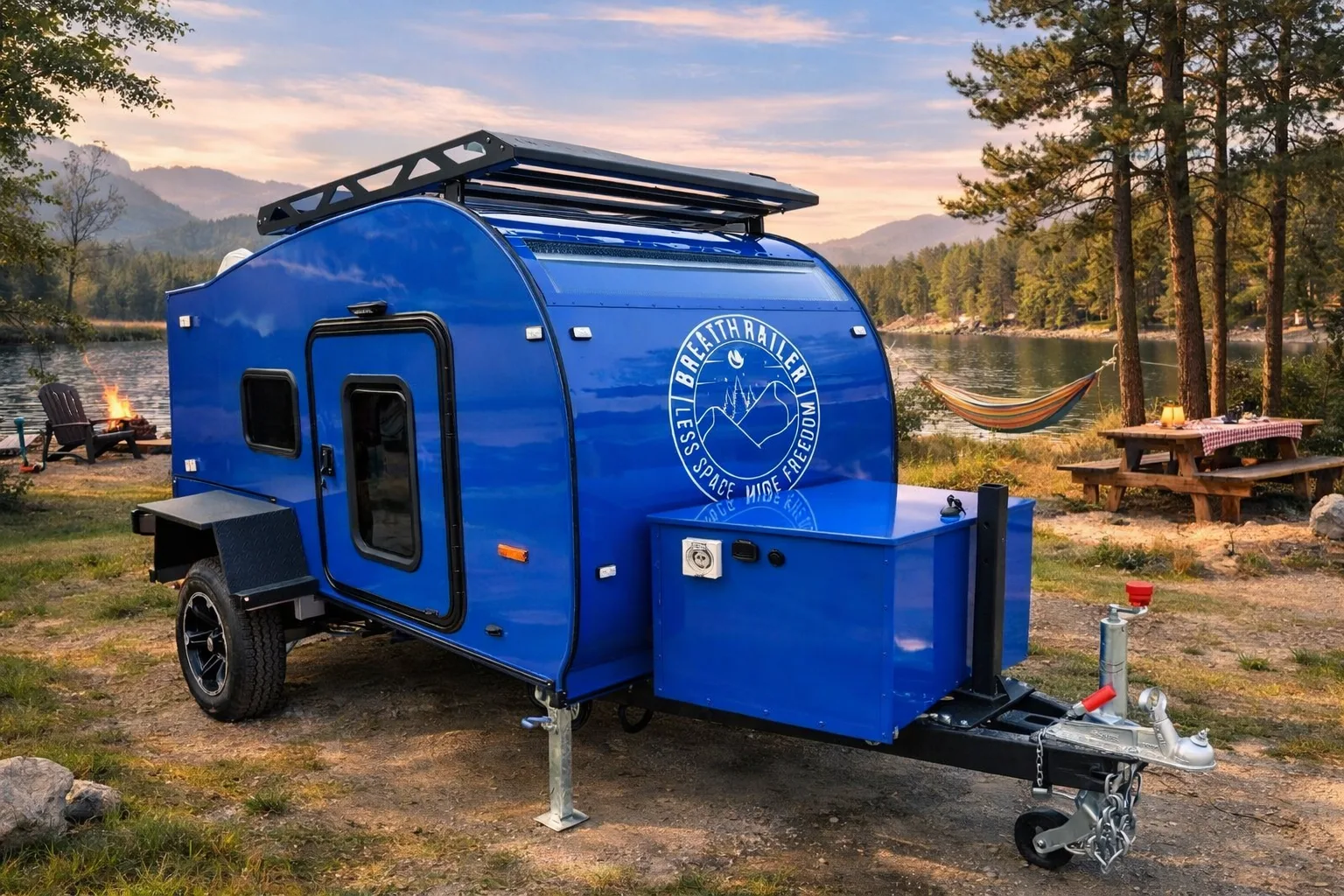
Tasmania is the one Australian state where the camping season never really stops — it simply changes character. In January the east coast delivers white quartz sand and 24°C water at the Bay of Fires. In July the Central Plateau freezes, the tarns at Cradle Mountain ice over, and the same campgrounds are yours alone for the price of a good sleeping bag. Close to a fifth of the island sits inside the Tasmanian Wilderness World Heritage Area, and more than 40% of the state is protected in reserves of one kind or another. For a camper trailer owner, that is an unusually high density of places worth stopping.
The catch is logistics. Tasmania is an island: your rig crosses Bass Strait on the Spirit of Tasmania, and the fare depends on the combined length of your car and trailer. Once there, the roads are narrow, winding, and slow — the 87 km from Devonport to Cradle Mountain takes an honest 90 minutes — and the weather can run through four seasons before lunch. This is where the argument for a light, hard-shell teardrop becomes practical rather than theoretical: less length on the ferry manifest, less mass on the 99 Bends, and a sealed cabin when the sleet arrives sideways.
This guide covers 18 of the best campgrounds across 6 regions, with 2026 fees, booking systems, the parks pass explained, ferry pricing for a car-plus-trailer combination, a seasonal table, and a model-match table so you land in Devonport with the right setup. It completes our state-by-state series — NSW, Queensland, Victoria, Western Australia, South Australia, and the Northern Territory — and follows the same format.
The 6 Regions at a Glance
Tasmania is small on the map and large on the road. Distances below are from Hobart unless the region is naturally reached from the Devonport ferry terminal.
| Region | Distance | Best Season | Key Drawcard |
|---|---|---|---|
| Hobart, Bruny Island & the Far South | 40–130 km from Hobart | Oct–Apr | Bruny’s wildlife and cliffs, Cockle Creek at the end of the road |
| Tasman Peninsula | 90–120 km from Hobart | Oct–Apr | Fortescue Bay, dolerite sea cliffs, Cape Hauy |
| East Coast — Freycinet to Bay of Fires | 190–300 km from Hobart | Nov–Apr | Free beach camps, orange-lichen granite, Wineglass Bay |
| Cradle Coast & the North | 20–90 km from Devonport | Dec–Apr (snow Jun–Sep) | Cradle Mountain, Narawntapu wombats, ferry-side convenience |
| West Coast & the Tarkine | 200–320 km from Devonport | Nov–Mar | Edge of the World, Pieman River rainforest, Macquarie Harbour |
| Central Highlands & Derwent Valley | 75–180 km from Hobart | Aug–Apr | Lake St Clair, trout lakes, Russell Falls |
Tasmania Camping Fees — How It Works
Two separate charges apply in Tasmanian national parks: a parks pass for the vehicle, and a camping fee for the site. Neither includes the other, and many first-time visitors budget for only one.
The Parks Pass (prices effective 1 July 2026)
Every national park in Tasmania requires a valid pass, displayed on the dashboard. The Parks & Wildlife Service (PWS) reviews prices annually; these are the current rates from parks.tas.gov.au.
| Pass | Price (2026) | Validity | Cradle Mountain? |
|---|---|---|---|
| Daily — vehicle (up to 8 people) | $49.15 | 24 hours | ❌ Excluded |
| Holiday — vehicle (up to 8 people) | $98.35 | Up to 2 months | ✅ Entry yes, shuttle no |
| Annual — all parks | $104.75 ($83.85 concession) | 12 months, up to 2 household vehicles | ✅ Entry yes, shuttle no |
| Two-Year — all parks | $133.80 ($107.05 concession) | 24 months | ✅ Entry yes, shuttle no |
| Cradle Mountain Icon Daily | $30.70 adult / $12.30 child / $73.75 family | 24 hours | ✅ Entry + 24-hr shuttle |
| Cradle Mountain shuttle add-on | $15.50 adult (72 hours) | 3 days | Shuttle only |
The arithmetic is simple: two daily passes cost the same as a Holiday Pass. Anyone camping in Tasmania for more than a weekend should buy the Holiday Pass ($98.35) at the ferry terminal or online before boarding. Anyone planning a return trip within two years — and most people who camp Tasmania once plan a return — is better off with the Two-Year Pass at $133.80. Concession holders with a Seniors Card, Pensioner Concession Card, or DVA card receive 20% off the annual and two-year passes.
Cradle Mountain is the exception. Private vehicles cannot drive to Dove Lake during shuttle hours, so you will need either the Icon Daily Pass or the 72-hour shuttle add-on on top of a Holiday or Annual Pass. Budget it in.
PWS Campground Fees
Camping fees in PWS-managed campgrounds are refreshingly consistent across the state — the same tier applies at Freycinet, Fortescue Bay, Narawntapu, Lime Bay, and Mount William:
| Site Type | 1–2 people | Extra adult | Child 5–17 | Family (2 + 3) |
|---|---|---|---|---|
| Unpowered (standard PWS) | $13/night | $5 | $2.50 | $16 |
| Powered (Freycinet, Narawntapu) | $16/night | $7 | $3.50 | $22 |
| Mount Field (unpowered / powered) | $16 / $20 | — | — | — |
| South Bruny NP (The Neck, Jetty Beach) | $10/night | $5 | $2.50 | $15 |
| Free PWS camps (Bay of Fires, Friendly Beaches, Cockle Creek) | $0 | — | — | — |
For a couple in a teardrop, $13 a night is the going rate for a national park site in Tasmania in 2026 — the cheapest state-park camping on the mainland-plus-Tasmania circuit by a clear margin. Most PWS campgrounds are self-registration: a pay-and-display kiosk that takes cards only, and no staff on site. Carry a card, not cash.
Region 1 — Hobart, Bruny Island & the Far South
1. The Neck Campground — Bruny Island
The Neck is the sandy isthmus joining North and South Bruny, and the campground sits in the she-oaks behind the dunes on the eastern side. At $10 a night for two people it is the cheapest national park site in Tasmania, and one of the best placed: the Neck Lookout is a five-minute walk, and at dusk from September to April the beach fills with little penguins and short-tailed shearwaters returning to their burrows. Pit toilets, no water, no bookings, self-registration.
Getting there is the cost. The SeaLink ferry from Kettering to Roberts Point takes about 20 minutes, and a car towing a trailer falls into the 6–10 metre category at $95.30 return (a solo car is $55.80; over 10 metres is $132.10), plus a temporary fuel surcharge of $4 per vehicle applied through 2026. Vehicle price includes passengers. Book in summer — the ferry runs on demand but queues of two hours are normal in January.
Best for: Wildlife, budget camping, an easy first Tasmanian night in a teardrop.
2. Jetty Beach — South Bruny National Park
At the southern tip of the island, Jetty Beach is a sheltered north-facing cove inside South Bruny National Park, 15 minutes from the Cape Bruny Lighthouse. Same $10 fee, same self-registration, same unpowered simplicity — but with a beach you will very often have to yourself outside the Christmas fortnight. The road in from Lunawanna is gravel and narrow in places; take it slowly with a trailer and you will be fine.
Bring water. There is none, and the nearest supply is at Adventure Bay. This is a site for the Ultra or Max — the external shower after a swim in 16°C water is the difference between comfortable and miserable.
Best for: Solitude, the lighthouse, couples with a self-sufficient rig.
3. Cockle Creek — Southwest National Park
Cockle Creek is the most southerly point in Australia you can drive to, and the last 20 km past Lune River are gravel — narrow, occasionally corrugated, slippery after rain, but negotiable by a 2WD towing a light trailer with care. The reward is a string of free campgrounds on the shore of Recherche Bay, with the South Cape Bay walk (the first day of the South Coast Track) starting from the car park.
Roughly 10 flat sites suit trailers; pit toilets only, no water, no rubbish collection, no phone signal. Beyond the bridge you are inside the national park, so the parks pass applies and fires, dogs, and generators are prohibited. Before the bridge, in the Recherche Bay Nature Recreation Area, fires are permitted in the cooler months.
Best for: End-of-the-road wilderness, walkers, anyone with a fully self-contained setup and a diesel heater.
Region 2 — Tasman Peninsula
4. Fortescue Bay — Tasman National Park
Fortescue Bay is the campground that gets recommended most in Tasmania, and for once the reputation is earned: a white-sand bay walled in by the highest sea cliffs in the Southern Hemisphere, with the Cape Hauy track leaving straight from camp. Camper trailers and caravans use the Mill Creek campground (Banksia is tents only). $13 a night for two, pit toilets, cold showers, tank water in the warmer months.
The 12 km access road from the Tasman Highway is gravel — well graded, but slow. Bookings open six months ahead on the first of the month and are strongly recommended from 1 October to 30 April; peak-season sites go the morning they are released. Pay your camping fee and parks pass on arrival at the site office (open 10am–4pm in summer) or the EFTPOS-only pay-and-display machine outside it.
Best for: The Three Capes coastline, kayaking, a base for Port Arthur.
5. Lime Bay State Reserve
On the quieter Norfolk Bay side of the peninsula, Lime Bay sits on a sandy shelf just above the waterline, flanked by two crescent beaches and a stand of tall gums. It is often described as free camping; it is not — $13 a night through a card-only kiosk — but the price is trivial for what is one of the most pleasant low-key campgrounds in the state. Pit toilets, no water, no bookings, and a short drive to the Coal Mines Historic Site, the lesser-known counterpart to Port Arthur.
Lime Bay is flat and open, which makes it an easy set-up for a first-timer towing. The final approach past Saltwater River is sealed until the last few kilometres.
Best for: Calm-water paddling, families, a rest day between Fortescue and Hobart.
Region 3 — East Coast: Freycinet to Bay of Fires
6. Richardsons Beach — Freycinet National Park
Richardsons Beach is Freycinet’s main campground and the only one on the peninsula with powered sites. The RV sites (numbers 1–18a) are hardened, with power, potable water, grey water disposal, and an amenities block — $16 a night for two on power, $13 unpowered. Coles Bay township is a walk away, and the Wineglass Bay Lookout track starts a few minutes’ drive up the road.
The complication is the ballot. From 18 December to 10 February, and again over Easter, sites are allocated by ballot: applications close 31 July, the draw is on 1 August, and the maximum stay is 10 nights for up to six people. If you are reading this in spring for a January trip, you have missed it — aim for shoulder season instead, when sites are bookable through the normal PWS system and the peninsula is markedly calmer.
Best for: Wineglass Bay, first-time Tasmania trips, anyone who wants power under the granite.
7. Friendly Beaches — Freycinet National Park
Ten minutes north of Coles Bay, Friendly Beaches is the free alternative: a 10 km sweep of white sand and heavy surf, with campsites tucked behind the dunes at Isaacs Point. There are no toilets at the Friendlies camp and no water, and self-contained camping is required — which, in practice, means a rig with an onboard toilet. The parks pass applies; the camping fee does not.
This is the site where the case for the Breath Max’s interior bathroom makes itself. A teardrop with an enclosed toilet and sealed grey water tank meets the self-containment requirement out of the box; anything less and you are technically not permitted to stay.
Best for: Surf, empty beach, self-contained couples.
8. Cosy Corner — Bay of Fires Conservation Area
The Bay of Fires is a 50 km stretch of beaches between Binalong Bay and Eddystone Point where the granite boulders are painted bright orange by lichen and the water is Caribbean-clear. The PWS runs a chain of free campgrounds along it — Cosy Corner North and South, Swimcart Beach, Jeanneret Beach, Grants Lagoon, Seatons Cove, Sloop Reef, and Policemans Point in the north — all with the same rules: no fees, no bookings, hybrid or pit toilets, no water, no rubbish bins, and a four-week maximum stay, per PWS Bay of Fires camping.
Cosy Corner North is the pick for a camper trailer: level sites among the she-oaks, the beach a few metres away, and space for small and long caravans. Jeanneret is campervans only. Arrive before mid-afternoon in January; the free camps fill and there is no overflow.
Best for: The most photographed coastline in the state, at no cost.
9. Stumpys Bay — Mount William National Park
Mount William is the far north-east corner of Tasmania, and Stumpys Bay is its campground: four separate camps behind a long beach, with Stumpys 1, 3, and 4 taking small to medium caravans and trailers (Stumpys 2 is tents only). $13 a night or $50 a week for two, paid at the deposit box at Stumpys 1; pit toilets, no water, no power, no bookings. Forester kangaroos graze the campground at dusk, and the Eddystone Point Lighthouse is 20 minutes south.
The park is reached by gravel from Gladstone — around 20 km — and it is properly remote by east coast standards. Fill water at St Helens before heading north.
Best for: Wildlife, fishing, escaping the Bay of Fires crowds without leaving the coast.
Region 4 — Cradle Coast & the North
10. Discovery Parks — Cradle Mountain
There is no national park campground for vehicles at Cradle Mountain, which makes the Discovery Parks site at the park entrance the default base for camper trailers. Powered and unpowered sites, a heated camp kitchen, hot showers, and the shuttle bus stop a short walk away. Site pricing moves with the season — budget for a commercial-park rate rather than a PWS one, and book early for January and Easter; cabins start from around $130 a night and sites sit well below that.
The drive from Devonport is 87 km and about 1.5 hours, sealed the whole way but notoriously winding, and icy from June to September. Cradle Mountain receives snow in any month of the year and clear days are the exception rather than the rule. This is the campground where a diesel heater stops being a luxury.
Best for: Dove Lake circuit, Overland Track day walks, wombats at Ronny Creek.
11. Springlawn — Narawntapu National Park
Forty-five minutes east of Devonport, Narawntapu is where you go to see wombats, Forester kangaroos, and pademelons grazing in numbers on the open Springlawn flats at dusk — locals call it the Serengeti of Tasmania, only half-jokingly. Springlawn campground has powered sites at $16 and unpowered at $13 for two, flush toilets, hot showers, and a boardwalk to the lagoon bird hide.
It is the ideal first or last night of a Tasmanian trip: close to the ferry, easy access, and the kind of wildlife density that resets expectations on day one.
Best for: Wildlife, ferry-adjacent convenience, families.
12. Central Coast Council Self-Contained Sites (Ulverstone & Penguin)
The Central Coast Council runs a series of foreshore camping sites between Ulverstone and Penguin that were free until early 2026 and now cost $15 a night, maximum three nights per site, self-contained vehicles only — no tents, no fires — with permits available via a QR code on site or at the Penguin Visitor Information Centre. The change is a preview of where Tasmanian council camping is heading: the free sites survive only where self-containment is enforced.
For a self-contained teardrop, they remain excellent value: a sea-view site 25 minutes from the ferry, with Ulverstone’s shops and dump point a few minutes away.
Best for: Ferry nights, coastal convenience, self-contained rigs.
Region 5 — West Coast & the Tarkine
13. Arthur River — Manuka & Peppermint Campgrounds
Arthur River is where the Tarkine (takayna) rainforest meets the Southern Ocean, and Gardiner Point — the Edge of the World lookout — faces 15,000 km of uninterrupted sea before the next landfall in Argentina. The PWS runs two campgrounds in the Arthur-Pieman Conservation Area: Manuka (north of the river) and Peppermint (south), both $15 a site for two adults with children free, paid at the Arthur River Parks office. Basic toilets and water; no power.
This is the wild end of Tasmania. Wind is constant, the surf is unswimmable, and the beauty is in the drift-timber beaches and the river cruise into the rainforest. Fill fuel at Smithton or Marrawah — there is nothing at Arthur River.
Best for: Rainforest and ocean in one place, the Tarkine Drive, photographers.
14. Corinna Wilderness Village
Corinna is a restored 1880s gold-mining settlement on the Pieman River, buried in cool-temperate rainforest and reached by a gravel road from Zeehan or Waratah. The unpowered campground is $40 a night per site and bookings are essential — it is the only accommodation for 50 km in any direction. Hot showers, a camp kitchen, a pub, and the Arcadia II river cruise to the Pieman Heads.
If you arrive from the south (Zeehan) or east (Tullah), you will cross the Pieman on the Fatman barge, which starts at $28 for a standard vehicle and rises with length — a car and teardrop combination will cost more. The gravel approach roads are narrow and winding; allow twice the time the map suggests.
Best for: The deepest rainforest experience accessible with a trailer, canoeing, a night in genuine isolation.
15. Macquarie Heads — Strahan
Fifteen kilometres of gravel west of Strahan, Macquarie Heads is a council-run campground on a grassed shelf beside Macquarie Harbour, next to Hells Gates and a short walk from the 40 km expanse of Ocean Beach. $33 per vehicle per night for the 2025–26 financial year, unpowered, no bookings, caretaker on site; a boat ramp, public toilets, and — unusually for the west coast — a dump point. Carry your own water and firewood.
It is the practical base for the Gordon River cruise and the West Coast Wilderness Railway, and it is far quieter than the caravan park in Strahan itself.
Best for: Macquarie Harbour, Ocean Beach sunsets, emptying tanks before the Lyell Highway.
Region 6 — Central Highlands & Derwent Valley
16. Lake St Clair Lodge Campground
Lake St Clair is the deepest lake in Australia, the southern end of the Overland Track, and — for people towing — the easier half of the Cradle Mountain–Lake St Clair National Park to reach. The Lodge campground is privately operated: $45 unpowered / $48 powered per night, with showers at $1 extra. Not cheap by PWS standards, but the location on the lake shore with the Platypus Bay walk starting from the door justifies the difference for a night or two.
The Lyell Highway from Derwent Bridge to Queenstown is the notorious 99 Bends — a mountain road of tight hairpins and few pull-offs. It is entirely manageable with a sub-tonne teardrop; the drivers who struggle are the ones towing 2.5-tonne caravans with the wrong tow ball weight. Our towing tips guide covers descent technique and brake controller settings for exactly this kind of road.
Best for: Overland Track walkers, the ferry to Narcissus Hut, cool-climate lakeside camping.
17. Pumphouse Bay — Arthurs Lake
Arthurs Lake on the Central Plateau is Tasmania’s most popular trout fishery, and Hydro Tasmania operates two campgrounds on its shore, Pumphouse Bay and Jonah Bay. From 2026 the sites are free but seasonal: they close in May and reopen in August in line with the brown trout season, per Hydro Tasmania. Basic toilets, a boat ramp, and space for trailers on the grassed flats.
The plateau sits at 950 m; frosts are routine from April and snow is common in spring. It is one of the best stargazing sites in the state and one of the coldest. Come with a heater, a proper battery, and an appreciation for silence.
Best for: Fly fishing, dark skies, free camping with room to spread out.
18. Mount Field National Park Campground
An hour and a quarter from Hobart, Mount Field is Tasmania’s oldest national park and its most accessible tall-forest experience: the Russell Falls track is ten minutes from the campground, through swamp gums that are the tallest flowering plants on Earth. The campground beside the Tyenna River charges $20 for a powered site and $16 unpowered (two people), first-in, no bookings, with hot showers, flush toilets, and a camp kitchen.
In winter the Lake Dobson road climbs to a small ski field; in autumn the fagus (deciduous beech) turns the high country gold for two weeks in late April. Either way, the campground is sheltered and low enough to be comfortable year-round.
Best for: Waterfalls and giant trees, an easy Hobart escape, families with young children.
The Spirit of Tasmania with a Camper Trailer
The ferry is the single largest line item in a Tasmanian camping budget, and how it is priced matters for anyone towing. Two sailings a day run between Geelong and Devonport — overnight year-round, plus daytime sailings from September to April — with a crossing of 9.5 to 11.5 hours depending on the weather in Bass Strait.
| Item | 2026 Guide Price (each way) | Notes |
|---|---|---|
| Adult passenger | From ~$100 | Cabin or recliner extra on overnight sailings |
| Standard vehicle (under 6 m long, 2 m high, 2 m wide) | From $179 | Low season, with a passenger |
| Car towing a caravan or camper trailer | $224–$452 | After the Bass Strait rebate is deducted |
| Bass Strait Vehicle Equalisation rebate — car + trailer | $188 | Applied automatically at booking |
| Bass Strait Vehicle Equalisation rebate — car + caravan / motorhome | $374 | Applied automatically at booking |
Three points are worth understanding before you book:
- Length is measured end to end — car plus trailer plus drawbar plus anything hanging off the back (bike rack, spare wheel, gas bottles). A mid-size SUV and a teardrop will exceed the 6 m standard category, so you will be priced in the towing band; the difference between the low and high end of that band is season and sailing time.
- The standard height limit is 2.1 m, with higher clearance available on request for roof racks and taller campers. Declare your true height at booking or risk being reassigned at the terminal.
- Gas bottles must be switched off and the trailer is inaccessible during the voyage — pack an overnight bag before you drive on. Tasmania’s biosecurity rules also mean fresh fruit, vegetables, and honey will be confiscated at the terminal; eat them in Geelong.
For a couple with an SUV and a teardrop in shoulder season, a realistic return budget is $900–$1,400 for vehicle, trailer, and two passengers with a cabin one way. Book three to six months ahead for December–February; the vehicle deck, not the cabins, is what sells out. The RACV Spirit of Tasmania guide is updated each season with current fare bands.
Seasonal Camping Guide by Region
| Region | ✅ Best Months | ⚠️ Shoulder | ❌ Avoid | Why |
|---|---|---|---|---|
| Hobart, Bruny & Far South | Oct–Apr | Sep, May | Jun–Aug (cold, short days) | Penguins at The Neck Sep–Apr; Cockle Creek road worst in wet winter |
| Tasman Peninsula | Oct–Apr | Sep, May | Jul–Aug (wind, rain) | Fortescue bookable Oct–Apr; cliffs walks best in settled autumn |
| East Coast | Nov–Apr | Oct, May | Jan (ballot-only at Freycinet, free camps full) | Driest, sunniest coast in the state; swim Dec–Mar |
| Cradle Coast & North | Dec–Apr | Nov, May | Jun–Sep unless equipped for snow | Cradle Mountain road icy in winter; wombats year-round |
| West Coast & Tarkine | Nov–Mar | Oct, Apr | May–Sep (2,400 mm rain, gales) | Strahan gets rain 250 days a year; summer is merely damp |
| Central Highlands | Dec–Mar | Nov, Apr | May–Aug (Arthurs Lake camps closed; snow) | Fagus turns gold late April; trout season Aug–May |
Tasmania’s famous “four seasons in a day” is not a figure of speech. A February afternoon at Cradle Mountain can go from 24°C to sleet in an hour. Pack for winter regardless of the calendar, and treat a hard-shell trailer with a heater as the baseline for anywhere above 600 m.
Booking Systems and Lead Times
| System | Who Uses It | Lead Time | Tips |
|---|---|---|---|
| parks.tas.gov.au | Parks passes; Fortescue Bay; Freycinet (outside ballot dates) | Fortescue: 6 months, from the 1st of the month | Buy the Holiday or Two-Year Pass online before you sail |
| Freycinet ballot | Richardsons Beach, 18 Dec–10 Feb + Easter | Applications close 31 July, drawn 1 August | Miss it and you camp at Friendly Beaches (free, self-contained) |
| Self-registration kiosks | Lime Bay, Stumpys Bay, Bruny, Narawntapu, Mount Field, Bay of Fires | None — first come, first served | Card only; arrive before 3pm in January |
| spiritoftasmania.com.au | Bass Strait crossing | 3–6 months for Dec–Feb; 4–6 weeks otherwise | Declare combined length and height accurately |
| SeaLink Bruny Island | Kettering–Roberts Point ferry | Walk-up; queues in summer | $95.30 return for car + trailer (6–10 m) |
| corinna.com.au / Lake St Clair Lodge / Discovery Parks | Private campgrounds | 1–3 months in summer | Corinna is bookings-essential year-round |
| Hydro Tasmania | Arthurs Lake camps | None; seasonal Aug–May | Free from 2026; closed in winter |
Self-Containment Rules in Tasmania
Tasmania has no statewide self-containment certification, but the direction of travel is unmistakable: free and low-cost camping is increasingly restricted to self-contained vehicles, and councils are enforcing it.
| Land Type | Requirement | Notes |
|---|---|---|
| PWS free coastal camps (Bay of Fires, Friendly Beaches) | Friendly Beaches: self-contained required. Bay of Fires: toilets provided, no water or bins | Take all rubbish out; grey water away from dunes and the waterline |
| PWS fee campgrounds ($13 tier) | Toilets provided; grey water rules site-specific | Freycinet RV sites have grey water disposal; most others do not |
| Council foreshore camps (Central Coast, West Coast) | Self-contained only at Central Coast ($15/night, 3-night max) | No tents, no fires; permit by QR code |
| Hydro Tasmania lake camps | Basic toilets; no grey water infrastructure | Contain and dispose at the next dump point (Miena, Bothwell) |
| World Heritage Area (Cockle Creek beyond the bridge, Cradle, Lake St Clair) | Contain all waste; no generators | Fragile alpine and coastal ecosystems; fines apply |
The practical consequence is that the more of Tasmania’s best free camping you want to use — Friendly Beaches, the Central Coast foreshore, most council sites on the east coast — the more a fully self-contained trailer earns its keep. The Breath Max is the only teardrop on the Australian market under $50,000 with a full interior bathroom, sealed grey water tank, and 80 L fresh water, which means it clears every self-containment requirement in this guide without an aftermarket fit-out. Our self-contained camper guide covers the grey water and cassette toilet arrangements in detail.
Camper Trailer Model Matching by Region
| Region | Essential ($23,320) | Plus ($29,766) | Ultra ($34,749) | Max ($47,190) |
|---|---|---|---|---|
| Hobart, Bruny & Far South | ✅ Bruny camps have toilets | ✅ Fridge for Bruny produce | ✅ External shower after the beach | ✅ Only option for Cockle Creek in comfort |
| Tasman Peninsula | ✅ Fortescue and Lime Bay are easy | ✅ Ideal | ✅ Ideal | ✅ Very comfortable |
| East Coast | ⚠️ Free camps: carry water, no toilet | ✅ Good at fee camps | ✅ Good; shower is the luxury here | ✅ Required for Friendly Beaches; best for Bay of Fires |
| Cradle Coast & North | ✅ Commercial parks cover everything | ✅ Ideal | ✅ Ideal | ✅ Best for Central Coast self-contained sites |
| West Coast & Tarkine | ⚠️ Wet, cold, remote — heater essential | ✅ OK with heater | ✅ Good | ✅ Ideal — bathroom matters when it rains for days |
| Central Highlands | ⚠️ Cold; power-limited for long stays | ✅ OK with good battery | ✅ Off-grid capable | ✅ Ideal for Arthurs Lake and frost |
All four models are under 1,200 kg, which is the number that matters most on the Bass Strait manifest, the 99 Bends, and the gravel into Cockle Creek. The Essential and Plus are excellent in Tasmania’s fee campgrounds, where toilets and often showers are provided. The Ultra’s external shower earns its keep on the east coast. The Max is the model for the free camps, the west coast, and anyone who does not want to leave the trailer at 2am in a Central Plateau frost.
One Tasmania-specific note on power: winter sun on the Central Plateau delivers a fraction of the solar yield you would see in Queensland. Size your battery for consecutive overcast days — our solar sizing guide works through the maths — and treat a DC-DC charger as essential rather than optional. Compare all four models side by side.
Planning Your Tasmania Trip: Practical Notes
Roads and towing: Tasmania’s highways are 100 km/h at best and the default limit on unsealed roads is 80 km/h. The real constraint is not the limit but the road: the Lyell Highway’s 99 Bends, the Cradle Mountain approach, the Tarkine Drive, and the Bruny Island back roads are all narrow, winding, and short on pull-offs. A light trailer with electric brakes and a properly set brake controller makes these roads a pleasure; an overweight one makes them a chore. Trailers over 750 kg GTM must be braked in Tasmania as everywhere in Australia — see our towing guide.
Wildlife on the road: Tasmania has the highest roadkill rate in the country. Wombats, wallabies, pademelons, and devils are all active from dusk to dawn, and a wombat at 80 km/h will end a trip. Plan to be in camp by sunset — which, in June, is before 5pm.
Fuel: The east coast and Midland Highway are well served. On the west coast, fill at Smithton before Arthur River, at Zeehan or Strahan before Corinna, and at Queenstown before the Lyell Highway. Gaps of 100 km with nothing between are normal.
Connectivity: Telstra coverage is good along the east coast and the Midland Highway between Hobart and Launceston, patchy in the north-west, and absent across most of the west coast, the Tarkine, the Central Plateau, and the far south. Cockle Creek, Corinna, and Arthurs Lake are all effectively offline. A PLB is prudent for the west coast and the Southwest.
Biosecurity and firewood: Fresh produce, plants, and honey are restricted on entry to Tasmania and will be confiscated at the Geelong terminal. Do not carry firewood interstate either — buy it locally, and note that many PWS camps and the whole World Heritage Area ban fires outright.
Pre-departure: Before any Tasmanian trip, run the pre-departure checklist with particular attention to wheel bearings and tyres — the gravel into Fortescue Bay, Cockle Creek, and Corinna is hard on both. Pack the recovery and accessory kit sized for cold and wet rather than heat and dust: a diesel heater, a second battery, and a proper awning with sides will get more use than a sand flag.
For anyone folding Tasmania into a longer circuit, the Big Lap preparation guide covers where the crossing fits in an anticlockwise lap and how to time it for the east coast’s driest months.
Frequently Asked Questions
Do I need a parks pass to camp in Tasmania?
Yes — for every national park, including the free campgrounds at Bay of Fires, Friendly Beaches, and Cockle Creek beyond the bridge. In 2026 a Daily Pass is $49.15 per vehicle, a two-month Holiday Pass is $98.35, and a Two-Year Pass is $133.80. The pass covers park entry only; camping fees are charged separately at fee campgrounds. Cradle Mountain requires an additional Icon Daily Pass ($30.70 per adult) or shuttle add-on because private vehicles cannot drive to Dove Lake during shuttle hours.
How much does it cost to take a camper trailer on the Spirit of Tasmania?
A car towing a camper trailer or caravan costs between $224 and $452 each way in 2026, after the Bass Strait Passenger Vehicle Equalisation Scheme rebate ($188 for a car and trailer, $374 for a car and caravan) is deducted. Passengers are extra, from around $100 per adult each way. Length is measured end to end including the drawbar, and the standard vehicle category ends at 6 m, so almost every towing combination is priced in the higher band.
Is free camping allowed in Tasmania?
Yes, in specific places. The Parks & Wildlife Service runs free campgrounds at the Bay of Fires, Friendly Beaches, and Cockle Creek; Hydro Tasmania’s Arthurs Lake camps are free from 2026; and many councils have foreshore sites, though these are increasingly self-contained-only and fee-based — the Central Coast Council introduced $15 a night with a three-night limit in February 2026. Roadside camping outside designated areas is not permitted, and rangers do check.
When is the best time to camp in Tasmania?
November to April for the coasts and the highlands, with December to February the warmest and busiest. The east coast is the driest region and the most reliable for beach camping. Autumn (March–April) is the sweet spot: settled weather, warm water, the fagus turning gold at Mount Field and Cradle in late April, and the Freycinet ballot period over. Winter camping is entirely feasible in a hard-shell trailer with a diesel heater — the campgrounds are empty and the parks are spectacular in snow — but the west coast and Central Plateau are best left to the well-equipped.
Can I tow a camper trailer on Tasmania’s west coast roads?
Yes, and a light one is ideal. The Lyell Highway’s 99 Bends between Derwent Bridge and Queenstown, the Murchison Highway, and the gravel into Corinna and Arthur River are all sealed or well-graded but narrow, winding, and slow. A sub-tonne teardrop with electric brakes tracks behind an SUV without drama; the caravans that struggle are the heavy ones on hairpins with nowhere to pull over. Keep speed to 80 km/h or less on gravel, allow twice the time Google suggests, and avoid driving at dusk.
Which Breath Trailer model is best for Tasmania?
For a trip built around the PWS fee campgrounds — Fortescue Bay, Freycinet, Narawntapu, Mount Field — any model works, and the Plus at $29,766 with its built-in fridge is the value pick. For the free coastal camps, the west coast, and the Central Plateau in the cold, the Max at $47,190 is the right tool: its interior bathroom satisfies the self-contained requirement at Friendly Beaches and the Central Coast sites, and its standing-height cabin makes a rainy week at Corinna liveable. Compare all four models or book a viewing at our Sydney workshop before the ferry.
Recommended Reading
- Best Camping Spots in Victoria — where the ferry leaves from, and the Great Ocean Road on the way
- Best Beach Camping Destinations in Australia — the Bay of Fires in national context
- Diesel Heater vs Air Conditioner — the Tasmanian answer is the heater
- Self-Contained Camper Guide — what the free camps actually require
- Teardrop Camper Towing Tips — descent technique for the 99 Bends
Ready to plan your Tasmania trip? Compare all four Breath Trailer models or book a viewing appointment with one of our ambassadors.