Great Ocean Road Camping Guide 2026: Camper Trailer Road Trip Planner
Complete 2026 guide to camping the Great Ocean Road with a camper trailer: GORCAPA & Parks Vic campgrounds, fees, towing tips, seasonal guide and model comparison.
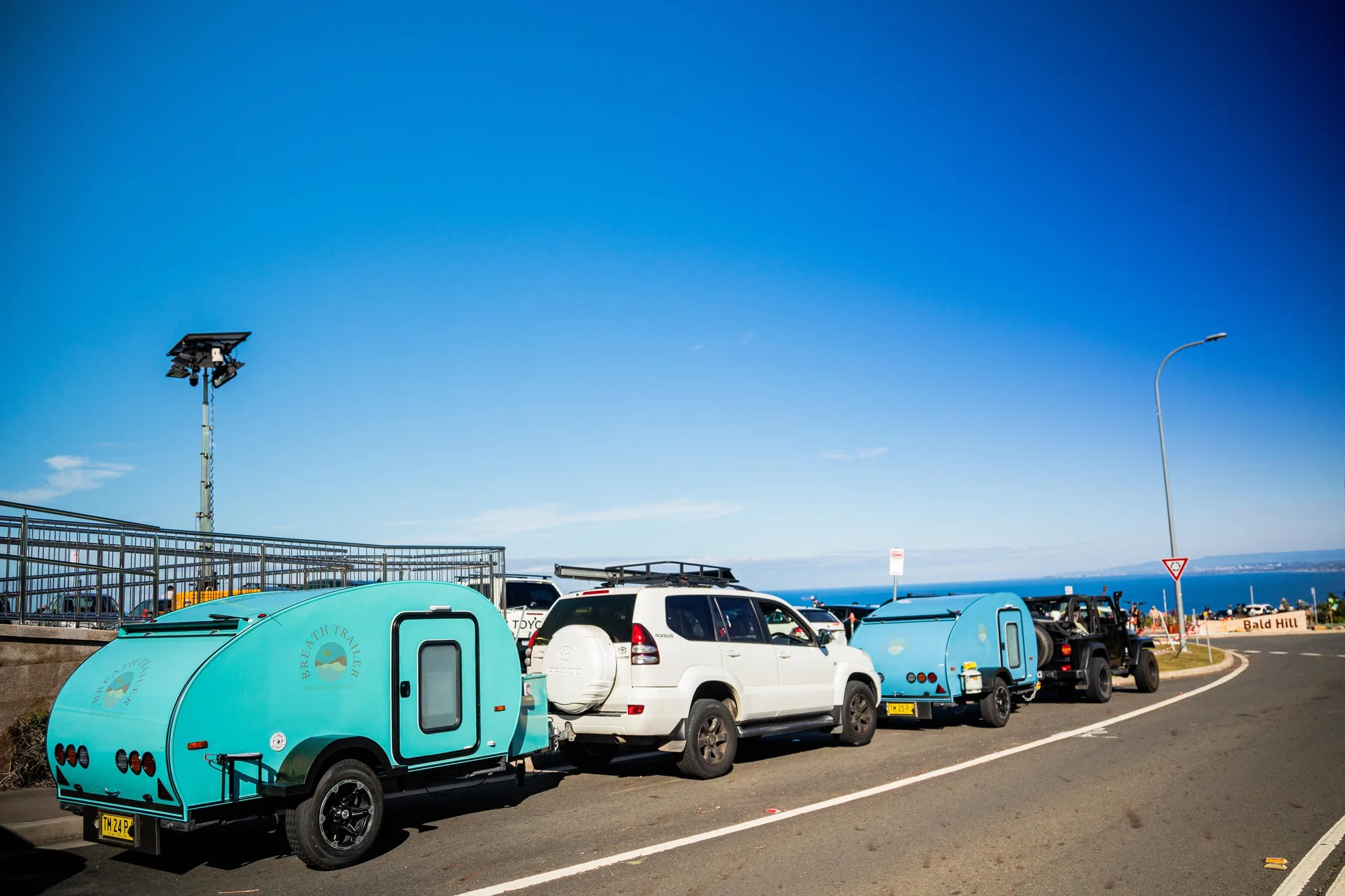
The Great Ocean Road runs 243 kilometres from Torquay to Allansford, a small town near Warrnambool on Victoria’s south-western coast. It was carved into sea cliffs and through wet sclerophyll forests between 1919 and 1932 by returned WWI soldiers as a living memorial to those who did not come back — which makes it both one of the world’s most spectacular coastal drives and the world’s largest war memorial. Every year around three million visitors make the journey. Almost none of them camp well.
Most people treat it as a day trip from Melbourne (3–4 hours non-stop to the Twelve Apostles), dash to the famous sea stacks, and turn around. Camper trailer travellers have a completely different experience: set up a base camp inside the Great Otway National Park, walk out to a deserted beach at sunrise before the tour buses arrive, spend evenings watching fur seals haul out at Kennett River, and reach the Twelve Apostles mid-morning in autumn when the light is perfect and the car park has room to breathe.
This guide is built for people towing a hard-shell teardrop, where five-minute setup opens time for the places rather than the process of camping. It also covers the major management change from 1 July 2026, when the Great Ocean Road Coast and Parks Authority (GORCAPA) took over campground bookings from Parks Victoria for the Great Otway National Park sites.
The Route: Torquay to Warrnambool
The official Great Ocean Road begins at the memorial arch on Beach Road in Torquay and ends at Allansford, 2 km east of Warrnambool. Most visitors drive it west to east — Torquay to Warrnambool — because that keeps the ocean on the driver’s side. The route splits naturally into three legs:
| Leg | Start → End | Distance | Key stop | Terrain |
|---|---|---|---|---|
| East | Torquay → Lorne | 48 km | Bells Beach, Aireys Inlet lighthouse | Sealed, rolling coastal highway |
| Middle | Lorne → Apollo Bay | 45 km | Kennett River koalas, Maits Rest | Narrow cliff road, sharp bends, 80 km/h signed |
| West | Apollo Bay → Warrnambool | ~150 km | Twelve Apostles, Port Campbell | Inland via Otways, then exposed limestone coast |
Allow at least 3 days for the highlights and 5–7 days to do the route properly without rushing. A one-day blast is technically possible; you will leave with checkpoint photos and the strong suspicion you missed the whole point.
2026 Management Change: GORCAPA Takes Over Key Campgrounds
From 1 July 2026, the Great Ocean Road Coast and Parks Authority (GORCAPA) took direct management of Great Otway National Park campgrounds from Parks Victoria. The sites that moved include:
- Blanket Bay (sheltered drive-in bay campground)
- Johanna Beach (surf beach campground off Red Johanna Rd)
- Aire River East and Aire River West
- Kennett River Caravan Park
- Parker Hill, Jamieson Creek, Allenvale
- All Great Ocean Walk hike-in sites
You now book these through the GORCAPA website (greatoceanroadauthority.vic.gov.au), not the Parks Victoria booking system. All pre-existing Parks Victoria bookings transferred with no changes when the handover occurred.
Parks Victoria continues to manage campgrounds outside this zone (including sites east of Kennett River).
Half-price camping: The Victorian Government committed $10.5 million to keep camping fees at half price across the Parks Victoria estate until July 2027. GORCAPA maintained the discounted pricing at the transferred sites through the same period — check the GORCAPA booking page for current per-site rates before you travel, as these can be updated.
Booking window: GORCAPA opens bookings 12 months in advance from 1 July 2026. Summer 2026–27 bookings opened 8 July 2026. Book Blanket Bay and Johanna Beach for peak December–January the instant that window opens — these sites fill within hours.
Campground Table: Great Ocean Road (2026)
| Campground | Manager | Type | Typical rate | Trailer access | Notes |
|---|---|---|---|---|---|
| Kennett River Caravan Park | GORCAPA | Caravan park (powered + unpowered) | ~$40–55/site | Good | Koala colony 300 m up Grayriver Rd; powered sites available |
| Blanket Bay | GORCAPA | NP campground (drive-in) | ~$16–22/site (half-price) | Good | Sheltered bay; fires in shared fireplace only; 7-night min over Christmas 2026–27 |
| Johanna Beach | GORCAPA | NP campground (drive-in) | ~$16–22/site (half-price) | Good (unsealed access) | Via unsealed Red Johanna Rd; 7-night min over Christmas peak |
| Aire River East | GORCAPA | NP campground | ~$16–22/site (half-price) | Good | River estuary setting; bridge access; pit toilets |
| Parker Hill | GORCAPA | NP campground | ~$16–22/site (half-price) | Good | Inland Otways forest; quieter than coast sites |
| Lorne Foreshore Caravan Park | Council | Foreshore park (powered + unpowered) | ~$45–70/site | Good | 5 campground areas across Lorne foreshore; prime location |
| Princetown Recreation Reserve | Volunteer committee | Unpowered / powered | $30–33/site | Good | Closest camp to Twelve Apostles; relaxed, trailer-friendly |
| BIG4 Apollo Bay Pisces Holiday Park | Private | Holiday park (powered) | ~$45–75/site | Good | Central Apollo Bay; dump point on site |
| Port Campbell Holiday Park | Private | Holiday park (powered + unpowered) | ~$40–60/site | Good | Walk to Twelve Apostles in 10 minutes |
| NRMA Warrnambool Riverside | NRMA | Holiday park (powered + unpowered) | ~$40–65/site | Good | Beach and river frontage; logical end-of-route stop |
Rates are indicative 2026 figures; half-price discount applies to national park campgrounds until July 2027. Verify on the relevant booking site before travel.
Towing the Great Ocean Road: What to Know
The road is car-friendly from Torquay to Lorne and again from Apollo Bay westward. The critical section is the 30 km cliff stretch between Lorne and Apollo Bay.
This road hugs a narrow cliff face above the Southern Ocean with single lanes in each direction, tight bends throughout, and no overtaking opportunities for long stretches. It is signed at 80 km/h but practical speeds average 50–60 km/h. That is entirely manageable for a teardrop trailer — a sub-900 kg hard-shell is far more forgiving on tight bends than a 10-metre caravan — but the section demands full attention and confident towing.
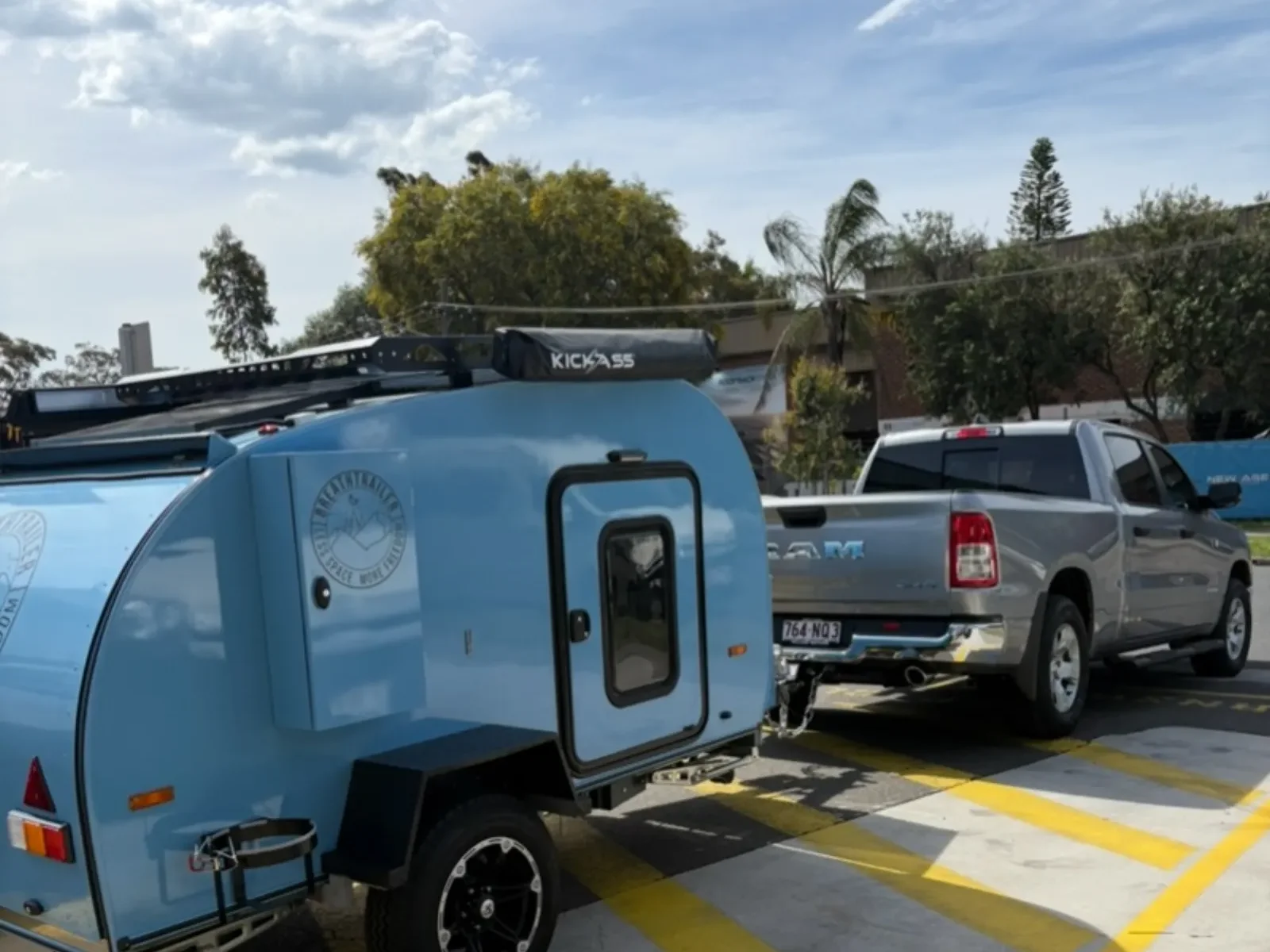
A short, light teardrop has significantly more clearance through the cliff section’s tightest bends than a full-length caravan.
Practical towing tips for the Great Ocean Road:
- Avoid Friday afternoon and Sunday evening: Melbourne outbound traffic is heaviest on those windows. Leave Saturday morning or mid-week.
- Check VicTraffic before you leave: The cliff section is prone to landslide and sinkhole events after heavy rain, particularly in winter. VicTraffic posts current closures.
- No overtaking: Single lane each way almost the whole section. Sit behind traffic and accept the pace.
- Fuel up at Torquay, Lorne, or Apollo Bay: Prices are cheaper at these centres. Avoid fuelling in Port Campbell if you can (tourist pricing). LPG availability drops west of Apollo Bay — fill the gas bottle before you leave Apollo Bay.
- Teardrop advantage: At 700–900 kg tare and 3–4 m length, a teardrop clears the road markings on tight turns where a 7+ metre van would straddle two lanes. The weight difference also means less sway amplification on the bends.
For the full towing technique guide, including weight distribution and state speed limits, see the Teardrop Camper Towing Tips article.
Activities: What You Can Do from a Base Camp
The Great Ocean Road rewards a base-camp strategy. Set up at Blanket Bay, Kennett River, or Apollo Bay, and day-trip to the highlights without re-hitching the trailer.
| Activity | Location | Cost | Notes |
|---|---|---|---|
| Bells Beach & Memorial Arch | Torquay | Free | Australia’s most iconic surf break; the road starts here |
| Aireys Inlet Lighthouse | Aireys Inlet | Free (exterior) | Split Point Lighthouse; bluestone from 1891 |
| Teddy’s Lookout | Lorne | Free | Dramatic lookout over Lorne and beach; 2 km from centre |
| Erskine Falls | Great Otway NP | Free | Tallest accessible waterfall in the Otways; 20-min walk each way |
| Kennett River koala colony | Kennett River | Free | Walk Grayriver Rd 300 m north; koalas every 20 m in the gum trees |
| Maits Rest Rainforest Walk | Great Otway NP | Free | 800 m boardwalk through temperate rainforest; ancient myrtle beech |
| Cape Otway Lighthouse | Cape Otway | ~$21.50 adult | Oldest working mainland lighthouse in Australia (1848) |
| Twelve Apostles | near Port Campbell | Free (currently, see note below) | Arrive before 8 am for photos without crowds |
| Loch Ard Gorge | near Port Campbell | Free | Equally dramatic as Twelve Apostles; far fewer visitors |
| Gibson Steps | near Port Campbell | Free | Walk to the beach base of the sea stacks |
| London Bridge | near Port Campbell | Free | Double arch collapsed in 1990; now two separate pillars |
| Bay of Islands | near Warrnambool | Free | Least-visited limestone coast section |
| Tower Hill Wildlife Reserve | Warrnambool | Free | Active volcano crater with emus, kangaroos and koalas at close range |
| Logan’s Beach whale nursery | Warrnambool | Free | June–September: Southern Right Whale arrivals and calves; viewing platform |
Twelve Apostles entry fee (2026 update): A new visitor centre with a booked entry experience is planned to open in late 2026. An entry fee had not been confirmed at time of publication. Check the GORCAPA website (greatoceanroadauthority.vic.gov.au) before you visit.
Seasonal Guide
| Season | Months | Weather | Crowd level | Best for |
|---|---|---|---|---|
| Summer | Dec–Feb | Hot 25–35°C, dry; Total Fire Ban days | Very high; Christmas school holidays | Beach days; book 6 months ahead; 7-night min at Blanket Bay/Johanna Christmas period |
| Autumn | Mar–May | Mild 15–25°C, sunny with occasional rain | Moderate; Easter peak | Best balance of weather, wildflowers, and site availability; strong light in Otways forest |
| Winter | Jun–Aug | Cool 8–15°C, wetter; heavy rain possible | Low | Whale season at Logan’s Beach; dramatic sea mist at Loch Ard; campfires allowed at shared firepits |
| Spring | Sep–Nov | Warming 15–22°C, occasional showers | Low–moderate | Waterfalls at peak flow; newborn wildlife; green Otways; fewer crowds before Christmas |
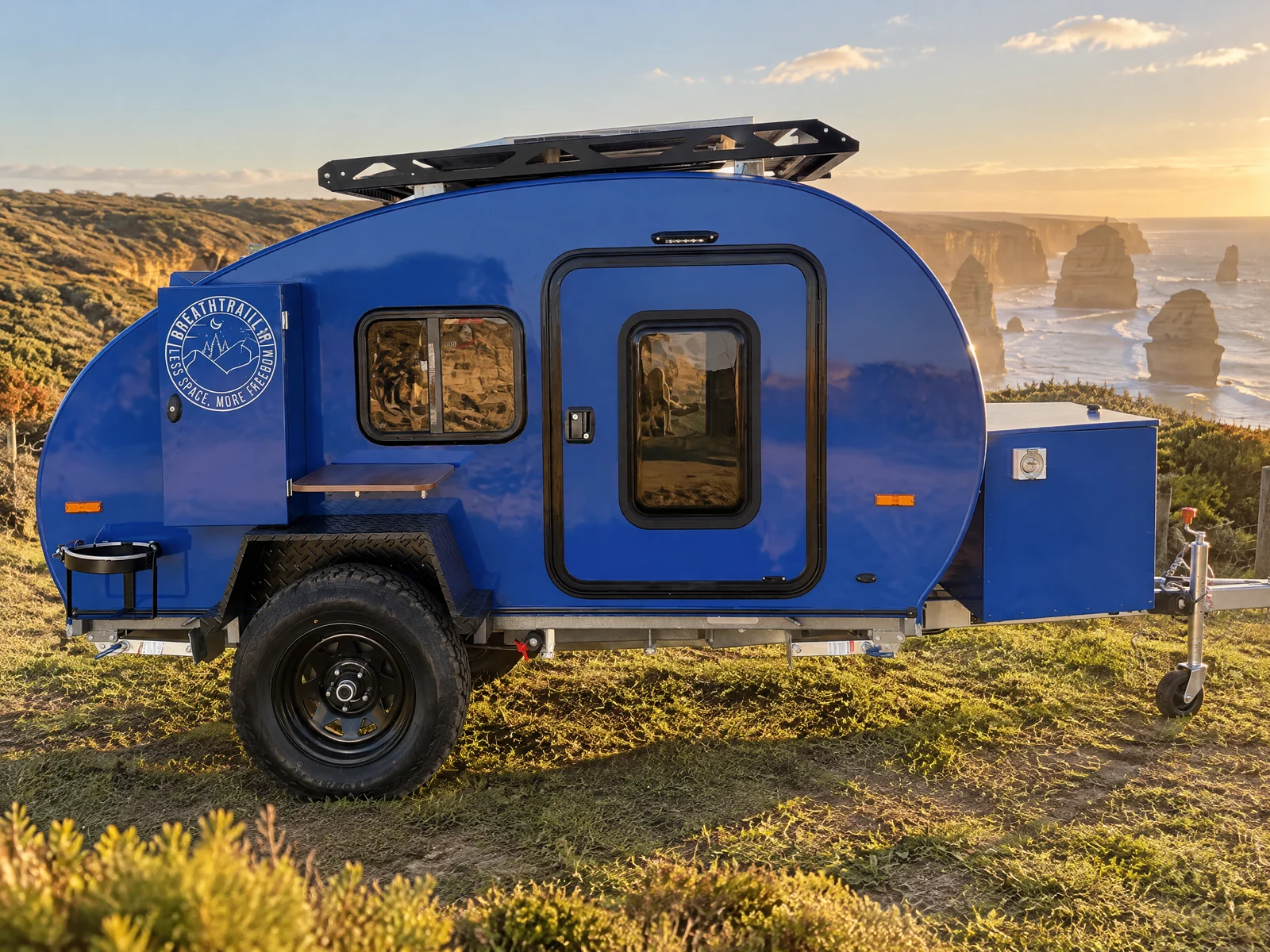
Illustration: Autumn on the Great Ocean Road means golden morning light, emptier car parks, and half-price national park camping still in effect.
The winter angle deserves special mention. Southern Right Whales use Warrnambool’s Logan’s Beach as a calving nursery from approximately June to September each year. In some seasons you can watch mothers nurse calves from the shore-based viewing platform 50 metres away. It is one of the best land-based whale-watching experiences in the world, and most visitors do not know it exists.
Self-Containment and Dump Points
Victoria does not require mandatory self-containment certification to access national park campgrounds the way some states do. However, disposing of grey water on the ground is prohibited across all parks and reserves. Most GOR national park campgrounds have pit toilets only — no dump points on site.
Dump points along the route (2026):
- Kennett River Caravan Park (on-site for registered campers)
- Apollo Bay Recreation Reserve
- Lorne Foreshore (for registered campers)
- Warrnambool (multiple locations — search WikiCamps or Camps Australia Wide)
The Breath Ultra and Breath Max both include a built-in grey water tank (30 L), which is the practical solution between dump points. The Max adds a full interior bathroom — composting or cassette toilet — so a week-long GOR loop where you’re spending nights in national park campgrounds without on-site facilities becomes genuinely self-contained.
For a full explanation of grey water rules and dump point logistics, see the Camper Trailer Water System Guide.
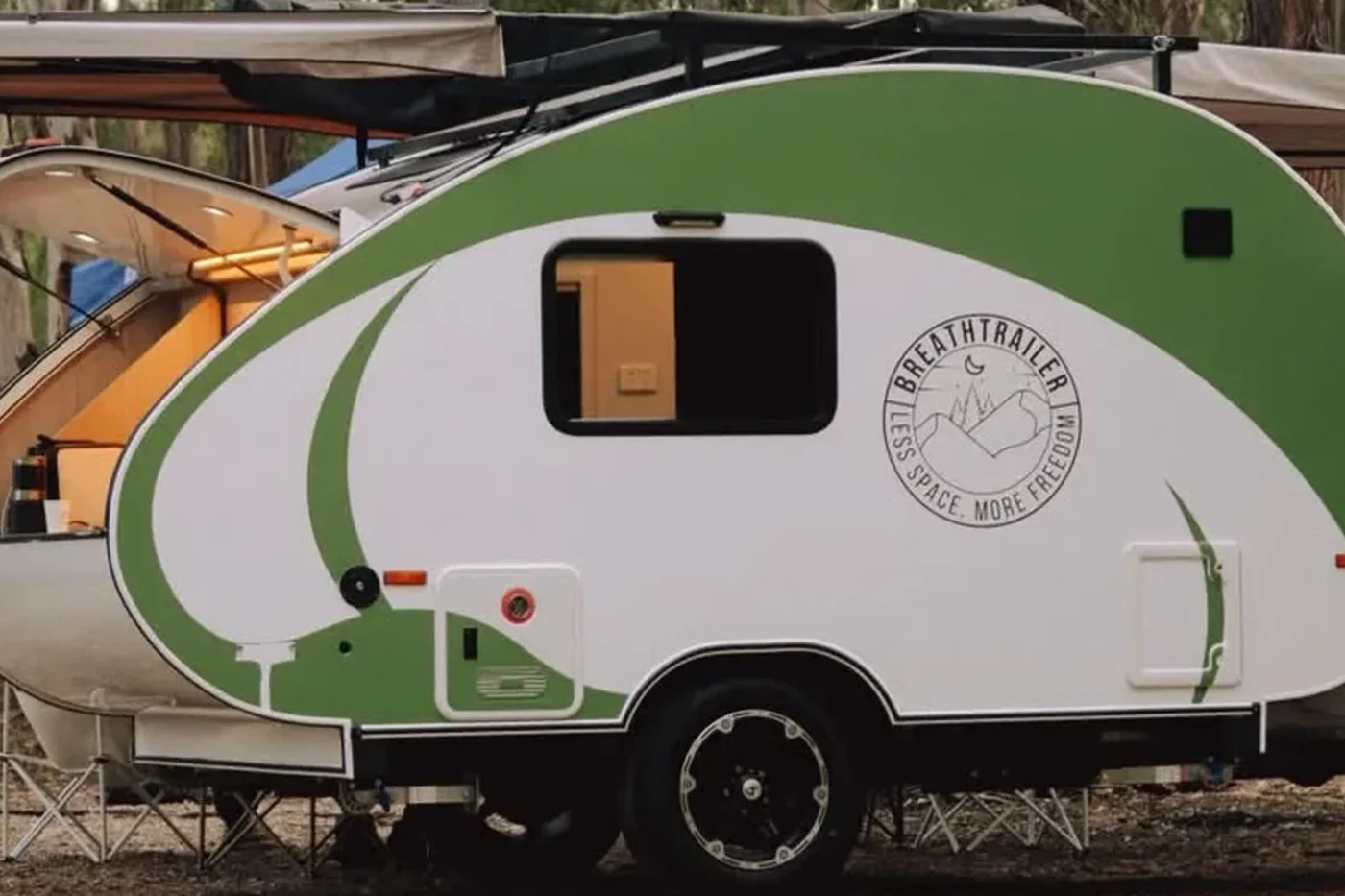
A grey water tank means you’re not hunting a dump point every day between Kennett River and Johanna Beach.
Breath Trailer Model Comparison: Great Ocean Road
| Model | Price (from) | Tare | Best feature for the GOR | Ideal scenario |
|---|---|---|---|---|
| Essential | $23,320 | ~700 kg | Lightest — easiest through the Lorne–Apollo Bay cliff section | Weekend getaway; holiday parks; couples without food storage needs |
| Plus | $29,766 | ~800 kg | 45 L fridge/freezer standard — no powered site needed for food storage on multi-day trips | 4–5-night Otways loop; couples; easy self-catering for a week |
| Ultra | $34,749 | ~900 kg | External shower — rinse sand and saltwater off at Johanna Beach surf camp before entering the trailer | Best coastal trailer; Johanna Beach; surf trips; self-contained grey water tank |
| Max | $42,900 | ~1,200 kg | Full interior bathroom + grey water tank — truly self-contained for national park campgrounds | Week-long route; families; free camping ends; Blanket Bay week minimum stay |
The Ultra’s external shower is the standout feature for the Great Ocean Road specifically. Johanna Beach delivers serious sand, and Kennett River’s estuary swimming adds another layer. The external shower rinses everyone and the dog before they come inside. Compare all four models side by side on the comparison page.
Budget: 5 Nights on the Great Ocean Road (Couple)
| Option | Campground mix | Est. cost | Notes |
|---|---|---|---|
| Full national park (NP) | GORCAPA/Parks Vic sites | ~$80–110 | Half-price ~$16–22/site × 5 nights; book ahead |
| Full holiday park | Powered sites | ~$225–375 | $45–75/site × 5 nights; more amenities |
| Mix (3 NP + 2 holiday park) | Both | ~$150–220 | Best flexibility; hot showers when wanted, NP ambience the rest |
Fuel from Melbourne and back (return trip ~600 km GOR loop): approximately $80–120 for a mid-size SUV towing a sub-900 kg trailer at current Victorian fuel prices.
Driving to the Great Ocean Road: City Distances
| Origin | Distance to Torquay | Drive time | Best approach |
|---|---|---|---|
| Melbourne | 100 km | ~1 hr 15 min | Princes Hwy → Geelong Ring Rd → Surf Coast Hwy |
| Adelaide | ~740 km to Warrnambool | ~7–8 hr | Approach from the west end (Warrnambool first) via Western Freeway |
| Sydney | ~1,050 km to Torquay | ~10–11 hr | Hume Hwy to Melbourne, then Geelong |
| Brisbane | ~1,750 km | ~18–19 hr | Two-day drive; or fly to Melbourne |
Melbourne is the natural gateway. The GOR begins 1 hr 15 min from Melbourne Airport, making it a logical first or last leg for interstate visitors on a Big Lap.
5-Night Itinerary: Torquay → Warrnambool
| Night | Base camp | Day activities |
|---|---|---|
| 1 | Lorne Foreshore Caravan Park | Bells Beach memorial arch, Aireys Inlet lighthouse, Teddy’s Lookout, Erskine Falls |
| 2 | Kennett River Caravan Park (GORCAPA) | Morning koalas on Grayriver Rd, Maits Rest rainforest walk, Aire River estuary swim |
| 3 | Blanket Bay (GORCAPA) | Cape Otway Lighthouse, Great Ocean Walk section (Blanket Bay to Parker Hill 9 km), beach sunset |
| 4 | Princetown Recreation Reserve | Gibson Steps, Twelve Apostles (pre-8 am), Loch Ard Gorge, London Bridge, Bay of Islands |
| 5 | NRMA Warrnambool Riverside | Tower Hill Wildlife Reserve, Logan’s Beach (Jun–Sep: whale nursery), Warrnambool city |
This runs the route from east to west (ocean on your left driving out from Melbourne). Reverse it if you’re arriving from Adelaide.
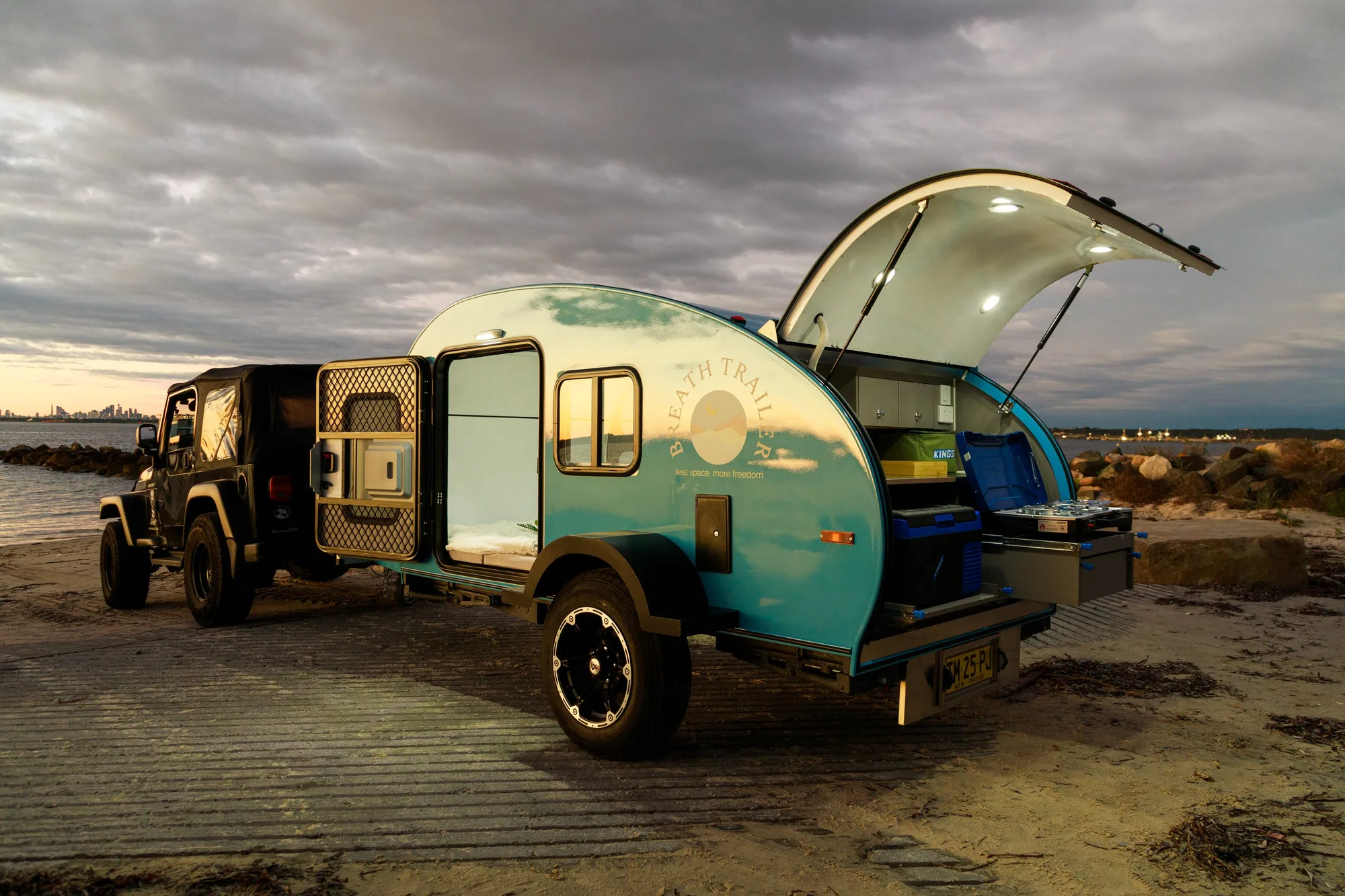
Evening setups along the Great Ocean Road are best approached with a trailer that opens in five minutes — time better spent watching the light change.
Frequently Asked Questions
Can you tow a caravan on the Great Ocean Road? Yes, but the Lorne to Apollo Bay cliff section (30 km, single-lane, tight bends) requires care with a long van. All Breath teardrop models are well within the comfortable range at 700–1,200 kg tare and 4 m length. The critical rule: no overtaking, average 50–60 km/h, and check VicTraffic for closures before leaving.
Do you need to book Great Ocean Road campgrounds in advance? For Blanket Bay and Johanna Beach over summer and Easter: absolutely, on the first day bookings open (GORCAPA: 12 months in advance, summer 2026–27 opened 8 July 2026). For mid-week autumn and winter stays, same-week availability is common.
Is there an entry fee at the Twelve Apostles in 2026? Currently free. A new visitor centre with a paid booked entry experience is planned to open in late 2026. An exact fee had not been confirmed at the time this article was written — check the GORCAPA website before visiting.
What is the best time to photograph the Twelve Apostles? Sunrise, or within the first two hours after, before tour buses arrive from approximately 9 am. Autumn and winter mornings deliver mist and dramatic low-angle light. Midday in January is the worst combination: thousands of people, harsh overhead light, and heat haze.
Is free camping available along the Great Ocean Road? The coastal strip is almost entirely national park or private land — no free camping. State forest land exists north of the route near Forrest and the inland Otways; check WikiCamps for current spots. For a full breakdown of free camping rules by land type, see the Free Camping Australia Guide.
How do I handle the tightest bends with a trailer? Slow down before the bend (not during it), keep left, and watch for oncoming traffic taking the inside line. Avoid braking mid-corner if possible — downshift instead. For a full reversing and manoeuvring guide, see How to Reverse a Camper Trailer.
Recommended Reading
- Best Camping Spots in Victoria — full state guide across 6 regions including the High Country and Grampians
- Best Camping Spots Near Melbourne — pre-GOR warm-up spots within 2 hours of Melbourne
- Teardrop Camper Towing Tips — full towing checklist including weight distribution and speed limits by state
- Camper Trailer Water System Guide — grey water tank sizing and dump point logistics
- Best Awning Setup for Camping — the Otways reward a good awning; this guide covers mounting, brands, and wind management
Ready to explore the Great Ocean Road on your own terms? Compare the four Breath models or book a consultation to talk through which setup suits your tow vehicle and itinerary.