How Lithium Batteries Have Changed Camping in Australia (2026)
LiFePO4 lithium batteries have transformed Australian camping since 2023. Here's exactly what changed, why it matters, and how to choose the right setup in 2026.
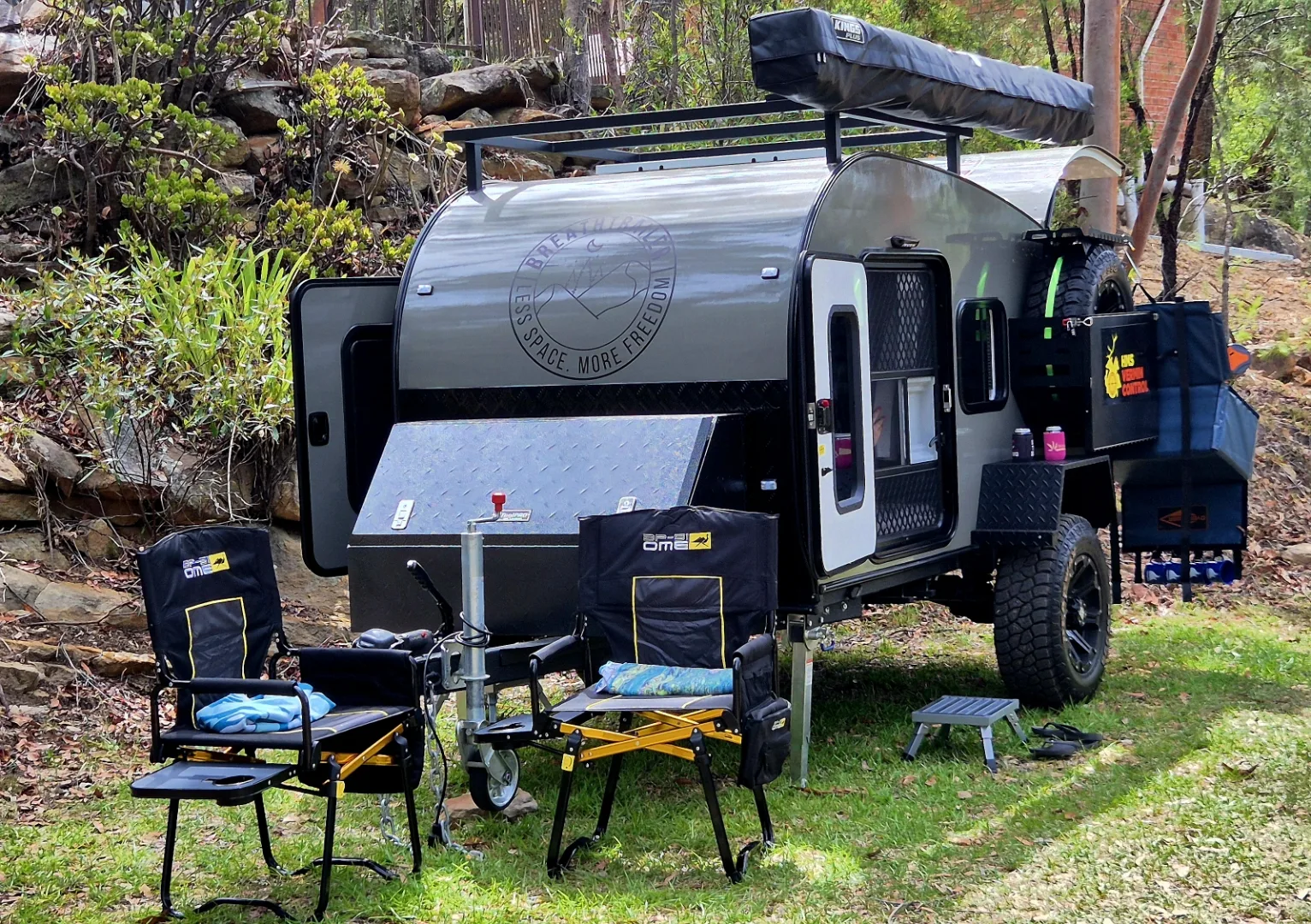
In 2015, planning a week away from a powered campsite meant hauling two heavy AGM batteries, running the fridge on a timer, and crossing your fingers that four days of driving would keep them topped up. By Tuesday night — flat battery. By Thursday — warm beer and no phone charge. Experienced grey nomads called it “battery management”. Everyone else called it a headache.
In 2026, a couple towing a compact teardrop camper can stay off-grid for five to seven days with a single battery the size of a shoebox, a 200W solar panel and a REDARC DC-DC charger. The fridge runs continuously. The phones are always charged. The LED strips are on all evening. Nobody thinks about the battery at all — because there’s nothing to think about.
That shift didn’t happen gradually. It happened fast, driven by one technology: lithium iron phosphate (LiFePO4) batteries. Understanding why they changed everything — and what to do with that knowledge in 2026 — is what this guide is about.
The problem with the AGM era
AGM (absorbed glass mat) batteries are a form of sealed lead-acid battery. They’re reliable, widely available, and genuinely good for what they were designed to do — which is start an engine or power a boat through a weekend. For extended off-grid camping, though, they have three structural problems that no amount of clever charging can fully overcome.
Problem 1: You can only use half the capacity. A 100Ah AGM battery should not be discharged below 50% without shortening its life significantly. In practice, a “100Ah” AGM delivers about 50Ah of usable energy. The rest is technically there but off-limits.
Problem 2: They weigh a lot. A standard 100Ah AGM battery weighs around 28–32 kg. For a camper with a 200 kg payload — which is most lightweight teardrops — two batteries to get meaningful capacity consume 25% of your tow-weight budget before you’ve packed a sleeping bag.
Problem 3: They die fast. A quality AGM battery lasts 300–500 charge cycles, assuming you’re careful. Cycle it once a week on a weekend camping habit and you’re replacing it every five to eight years. Cycle it more aggressively and sooner. That’s not a catastrophic failure rate — it’s just a cost that’s easy to overlook until the bill lands.
None of this was a secret. Experienced campers worked around it. The market just hadn’t offered a cost-effective alternative.
What changed: the LiFePO4 breakthrough
Lithium iron phosphate batteries — a specific sub-type of lithium-ion using an iron phosphate cathode — have been around industrially since the 1990s. The shift in Australian camping came roughly 2020–2023, when manufacturing scale in China brought the price of LiFePO4 cells down from “specialty” territory to broadly accessible. A 100Ah LiFePO4 battery that cost $2,000+ in 2018 now retails at $700–$1,100 depending on brand and quality level.
That price drop unlocked the technology for the mass market. And the advantages over AGM are not incremental — they’re generational.
Usable capacity nearly doubles
A LiFePO4 battery can be safely discharged to 10–15% of remaining charge without damage. In practice this means you get 90–95% of the rated capacity as usable energy. That 100Ah battery actually delivers close to 100Ah — not the 50Ah you get from AGM. Effectively, a 100Ah lithium battery equals a 200Ah AGM in real-world usable energy terms.
Weight drops by two-thirds
A 100Ah LiFePO4 battery weighs around 10–12 kg, compared to 28–32 kg for an equivalent AGM. On a teardrop camper with a tare weight of 700–900 kg and a payload of 150–250 kg, that difference is enormous. Switching from dual AGM to dual lithium typically saves 35–40 kg — weight that goes back into fresh water, food, or simply keeping the rig below the rated ATM for a lighter tow vehicle.
Cycle life multiplies by ten
Quality LiFePO4 batteries are rated for 2,000–5,000 charge cycles at 80% depth of discharge, with many manufacturers now guaranteeing 3,000 cycles at 80% DoD with 80% capacity retention. A camper doing 50 trips a year — call it 50 full cycles — can expect 40–100 years of theoretical service life. More practically: you will almost certainly never replace a quality lithium battery during the life of the camper it came with.
Charging speed improves dramatically
An AGM battery accepts charge quickly at first but slows to a trickle as it fills up — the last 20% can take as long as the first 80%. Lithium accepts a consistent high current all the way to full, then stops abruptly via the BMS. A 25A DC-DC charger fills a 100Ah lithium battery in around four hours of driving. The same charger would take six to eight hours to put the same usable energy into an AGM.
The AGM vs LiFePO4 comparison table
| Specification | 100Ah AGM | 100Ah LiFePO4 |
|---|---|---|
| Usable capacity | ~50Ah (50% DoD) | ~90–95Ah (90–95% DoD) |
| Weight | 28–32 kg | 10–12 kg |
| Cycle life | 300–500 cycles | 2,000–5,000 cycles |
| Full charge time (25A charger) | 6–8 hours | 3–4 hours |
| Self-discharge per month | 3–5% | 1–2% |
| Operating temperature (charge) | 0°C to 45°C | 0°C to 45°C |
| Operating temperature (discharge) | -20°C to 50°C | -20°C to 60°C |
| Upfront cost (AU, 2026) | $200–$350 | $700–$1,200 |
| Cost per cycle (at median price/life) | ~$0.80–$1.00 | ~$0.20–$0.40 |
| Maintenance | Occasional check | None |
| Flat from full discharge? | Yes — reduces life | No — BMS protects |
The cost-per-cycle figure tells the real story. Over a decade of regular camping, lithium batteries typically cost less per usable amp-hour than AGM, despite the higher purchase price — and they never leave you stranded at 50% because you timed a cloudy day wrong.
What’s inside: the BMS explained
LiFePO4 batteries don’t just sit there storing electricity. Inside every quality pack is a Battery Management System (BMS) — a circuit board that acts as the battery’s brain, policeman and guardian simultaneously.
The BMS monitors:
- Individual cell voltage — each 12V lithium battery contains four 3.2V cells in series. If any cell drifts out of balance, the BMS detects it and corrects it through a process called cell balancing.
- Temperature — the BMS shuts down charging if the battery gets too cold (below 0°C) or too hot. This is critical in Australian conditions where a battery in a black battery box in direct sun can reach 55–60°C.
- Current flow — overcharge, over-discharge, and short-circuit protection all run through the BMS. It can cut the circuit in milliseconds.
- State of charge (SoC) — higher-end batteries include Bluetooth communication, letting you monitor SoC, cycle count and cell health from a phone app.
A weak BMS is the Achilles heel of cheap Chinese lithium cells. When comparing batteries at similar Ah ratings, look for the BMS continuous discharge rating (should be at least 100A for a camping application), the BMS’s temperature cut-off specs (lower than 0°C for charging cut-off is concerning in alpine conditions), and whether the brand publishes independent test data.
Australian brands and distributors worth considering include REDARC, Enerdrive, iTechworld, and KickAss Products — all with local support and genuine warranty service.
The ecosystem that lithium rebuilt
Lithium didn’t just replace the battery. It transformed every other component in the 12V charging ecosystem.
Smart alternators and why DC-DC chargers became essential
Modern vehicles — particularly post-2015 utes and SUVs that Australians typically tow with — run variable-voltage smart alternators designed to recover energy under braking and throttle back when the battery is full. This saves fuel and reduces emissions. It also makes them terrible at charging a camper battery via a direct cable: voltage swings between 12.5V and 15V unpredictably, and lithium batteries need a stable, controlled charge profile.
A DC-DC charger (also called a battery-to-battery or B2B charger) solves this by isolating the camper battery completely from the vehicle’s electrical system and delivering a proper multi-stage charge profile regardless of what the alternator is doing. It also prevents a flat camper battery from dragging down the start battery — a critical safety feature if you’re 200 km from the nearest town. REDARC’s BCDC series and Victron’s Orion-TR Smart are the most trusted options in Australia in 2026, with outputs of 20–40A covering almost every touring application.
MPPT solar controllers: getting every watt
A PWM (pulse-width modulation) solar charge controller works like a light switch — it’s either on or off, wasting the excess voltage your panels produce above the battery’s current voltage. An MPPT (Maximum Power Point Tracking) controller is more like a continuously adjusting transformer, finding the optimal operating point on the panel’s power curve and converting surplus voltage into additional current. In real-world testing, MPPT controllers harvest 20–30% more energy from the same panels — on a 200W system that’s effectively a free 40–60W.
With AGM batteries, the gains from MPPT were partially negated by the battery’s slow acceptance of current near full charge. With lithium, which accepts high current all the way to full, MPPT harvests every watt the panel can produce and the battery happily absorbs it. The combination of MPPT + lithium compressed what used to be a three-day recharge (sunny days after a big draw-down) into a single afternoon.
Inverters became practical
An AGM-based system rarely included a serious inverter, because drawing 600–1,000W of 240V power from a 50Ah usable AGM bank would flatten it in under an hour. A 200Ah lithium bank gives 180+ usable amp-hours — enough to run a laptop for eight hours, charge a CPAP machine through the night, or brew coffee on an induction cooker in the morning without touching the solar reserve. Inverters moved from “emergency accessory” to standard feature on well-equipped setups.
What you can actually run now
This is the practical payoff. Here’s a realistic daily energy budget for a couple in a well-specified teardrop camper in 2026:
| Load | Typical wattage | Hours/day | Wh/day |
|---|---|---|---|
| 50L 12V compressor fridge | 45W average | 24h cycling | 55 Wh |
| LED interior lighting (3 circuits) | 18W | 4h | 72 Wh |
| Smartphone × 2 | 15W total | 2h | 30 Wh |
| USB-C laptop (remote work) | 65W | 3h | 195 Wh |
| 12V fan | 20W | 6h | 120 Wh |
| Water pump | 60W | 0.25h | 15 Wh |
| CPAP machine | 45W | 8h | 360 Wh |
| Couple, no CPAP, no laptop | — | — | ~290 Wh/day |
| Couple with laptop + CPAP | — | — | ~845 Wh/day |
A 200Ah LiFePO4 bank holds approximately 2,200 Wh of usable energy (180Ah × 12.2V average). For the standard couple-without-extras profile, that’s 7+ days of storage with no solar at all. Add a 200W solar panel averaging five peak sun hours and you’re generating ~1,000 Wh daily — more than enough to run indefinitely.
The CPAP + laptop profile is more demanding but still manageable with 200Ah lithium and 300W of solar. This is the setup that made the grey nomad and remote worker demographics suddenly viable as full-time off-grid travellers.
Sizing your lithium system: a practical guide
| Camping profile | Battery recommendation | Solar recommendation | Typical budget (2026) |
|---|---|---|---|
| Weekend trips, powered site backup | 100Ah LiFePO4 | 150–200W + MPPT | $1,500–$2,500 |
| Weekend + extended touring, no CPAP | 100–200Ah LiFePO4 | 200–300W + MPPT | $2,500–$4,000 |
| Long-term touring, grey nomad | 200Ah LiFePO4 | 300W + MPPT | $3,500–$5,500 |
| Remote work / CPAP / power-heavy | 200–300Ah LiFePO4 | 300–400W + MPPT | $4,500–$7,000 |
| Full-time lap of Australia | 300Ah LiFePO4 + 24V | 400W+ + MPPT | $6,000–$10,000 |
Add $400–$700 for a quality DC-DC charger (REDARC BCDC1225D or equivalent) regardless of profile — it pays for itself the first time it stops a flat camper battery ruining a tow vehicle start.
Temperature considerations for Australian conditions
LiFePO4 is significantly more thermally stable than cobalt-based lithium-ion cells (the chemistry in laptops and phones that occasionally catches fire). The iron phosphate cathode chemistry does not undergo thermal runaway under normal conditions, making it safe in the confined spaces of a camper.
That said, two thermal issues matter in Australia:
Heat during charging: most quality LiFePO4 BMS boards reduce or stop charging when cell temperature exceeds 45–50°C. In a poorly ventilated battery box during a summer day in the Northern Territory, this is achievable. Solution: mount the battery somewhere with airflow, ideally not against a black steel panel in direct sun.
Cold charging: LiFePO4 cannot be safely charged when cell temperature drops below approximately 0°C. In alpine areas of NSW, Victoria, and Tasmania in winter, this is a real consideration. Quality batteries include low-temperature cut-off in the BMS; some premium batteries include self-heating pads. Check the spec sheet before buying if you tour alpine country.
Discharging (running loads from the battery) works fine at well below zero — it’s only charging that requires above-freezing temperatures.
What to look for when buying: red flags and green flags
The flood of affordable lithium batteries from overseas has created a wide quality spectrum. Here’s how to tell the difference:
Green flags:
- Published BMS continuous discharge rating (≥100A for 100Ah batteries)
- Independent test data from a third-party lab (Canberra labs, CSIRO, or overseas equivalents)
- Local Australian distributor with published warranty support — not just an email to China
- Manufacturer states the BMS manufacturer and cell source (CATL, EVE, Lishen are reputable cell makers)
- Bluetooth SoC monitoring included or available
- Thermal cut-off specs clearly stated in the datasheet
Red flags:
- Weight significantly below the category norm (a 100Ah LiFePO4 under 8 kg likely uses fewer cells than rated)
- No published BMS specs
- “5000 cycle warranty” with no evidence base cited
- No Australian distributor for warranty claims
- Price significantly below $600 for a 100Ah 12V battery with all features claimed
Australian brands like REDARC, Enerdrive, and iTechworld may cost more than direct-import options but they have local technical support, real warranty service, and engineering teams that understand Australian conditions and regulations.
How Breath Trailer is configured with lithium
At Breath Trailer we build every model with lithium-ready 12V systems, and the three upper models come with LiFePO4 from the factory because it’s simply the right choice for the way our customers camp.
| Model | Battery | Solar | Fridge | Off-grid profile |
|---|---|---|---|---|
| Essential $19,990 | Upgrade available | 150W option | Optional 12V | Weekend + powered-site backup |
| Plus $25,740 | 100Ah LiFePO4 std | 200W std | 50L 12V std | 4–7 day off-grid for couple |
| Ultra $30,290 | 100Ah LiFePO4 std | 200W std | 50L 12V std | 4–7 day off-grid + external shower |
| Max $39,000 | 200Ah LiFePO4 std | 300W std | 60L 12V std | 7+ day off-grid, full bathroom, self-contained |
The Breath Max is our most off-grid-capable model — with 200Ah of lithium, 300W of solar, and a full interior bathroom making it the only teardrop under $50,000 in Australia with genuine self-containment for free camping. That power system is what runs the hot water, the interior lighting, the USB charging and the 60L fridge indefinitely in normal Australian conditions.
We pair the solar and battery with REDARC DC-DC charging via the 7-pin trailer connection on every model, so every kilometre you drive is adding to the battery bank — not just the kilometres with the sun out.
For a deeper dive into how the power system works in practice, see our off-grid teardrop camper power guide.
The real-world impact: what customers report
The shift that lithium produces in camping behaviour is partly technical and mostly psychological. When you know a battery can discharge to flat and bounce back with no damage, and when the BMS handles all the protection automatically, you stop rationing. Campers who spent years on powered sites “just to be safe” discovered they could free-camp for a week comfortably. Grey nomads who relied on caravan parks for power access found they could skip them entirely, saving $40–$60 a night.
The teardrop camper resale value data reflects this: buyers in 2026 treat a factory-fitted lithium system as a value-preserving feature, not a luxury — the same way a reverse camera is now baseline on any new car. Trailers sold with AGM batteries (or no battery) are asking buyers to retrofit, and that shows in the price gap.
Frequently asked questions
Can I retrofit lithium into an older camper trailer with AGM? Yes, and it’s a common upgrade. The key steps are: replace the batteries with LiFePO4, upgrade the solar controller to MPPT if you don’t already have one, and install a DC-DC charger if you’re currently charging via a direct cable. Your existing solar panels, 12V lighting and fridge wiring typically don’t need to change. Budget $1,500–$2,500 for a solid retrofit.
Is a 100Ah lithium battery enough for a couple on a two-week trip? For a standard couple (fridge + lights + phone charging, no CPAP or laptop) in Australian sun, yes — with 200W of solar, 100Ah LiFePO4 will sustain indefinitely in typical conditions. For a power-heavier profile (remote work, CPAP, large fridge), step up to 200Ah.
Do lithium batteries need a special charger? Yes, in the sense that they shouldn’t be charged with a basic PWM controller or a direct alternator connection via a standard isolator — they need a proper lithium charge profile (CC/CV with the correct absorption and float voltages). MPPT solar controllers set to LiFePO4 mode and purpose-built DC-DC chargers handle this correctly. Your standard 240V battery charger should also be set to a lithium profile; many modern chargers support this via a selector.
What happens if I accidentally flat a lithium battery completely? The BMS will disconnect the battery before it reaches truly damaging depth, usually around 10–15% remaining. This is called a low-voltage cut-off. If it fires, the BMS typically reconnects once charging begins. Some cheaper BMS units require a mains charger to “wake” a deeply discharged battery — check your battery’s datasheet for recovery procedures.
Are lithium batteries legal in caravans and trailers in Australia? Yes. There is no Australian Standard or regulation prohibiting LiFePO4 in caravans or camper trailers. Many insurers now list “lithium battery” as a standard-equipment category in their policies; check your caravan insurance policy wording to confirm coverage. If you’re doing a DIY install, ensure wiring and protection complies with AS/NZS 3001 (electrical installations in recreational vehicles).
Will a lithium battery drain my tow vehicle’s battery? Not with a DC-DC charger. That’s its main job: it isolates the two battery systems. Without a DC-DC charger (i.e. running a direct parallel cable), a deeply discharged camper battery can absolutely flatten a vehicle start battery — reason enough to install one.
The bottom line
Lithium iron phosphate batteries didn’t just make camping more convenient. They changed the economics of off-grid travel so fundamentally that the old reasons for staying on a powered site — cost management, range anxiety, battery anxiety — mostly evaporated. A couple on a 14-day itinerary through outback Queensland who would have needed $700+ in powered-site fees a decade ago can now camp free for the entire trip with a properly specified teardrop.
The technology is mature, the prices are accessible, and the ecosystem around it — MPPT solar, DC-DC chargers, quality BMS — is well-developed and widely available in Australia. There’s no reason to start a new build or a new purchase with anything else.
If you’re trying to decide which trailer configuration works for your camping profile, the Breath Trailer comparison page lays out all four models side by side. If you’re ready to talk specifics, book a consultation.
Recommended reading
- Off-Grid Teardrop Camper Australia: Power Setup Guide 2026 — in-depth solar sizing and system building
- The Ultimate Off-Grid Camper Trailer Setup (2026 Guide) — water, food, connectivity and the complete system
- Teardrop Camper Weight Australia: Full Guide — tare, ATM, payload and why lithium’s weight advantage matters
- Teardrop Camper Accessories Australia: What’s Worth It — solar panels, fridges and the full accessory ecosystem
- Teardrop Camper Insurance Australia — ensuring your lithium setup is covered