New vs Used Camper Trailer Australia: The Honest 2026 Comparison
New or used camper trailer in Australia? We break down purchase price, depreciation curves, inspection risks, warranty realities, and the 2026 market sweet spot — with real numbers.
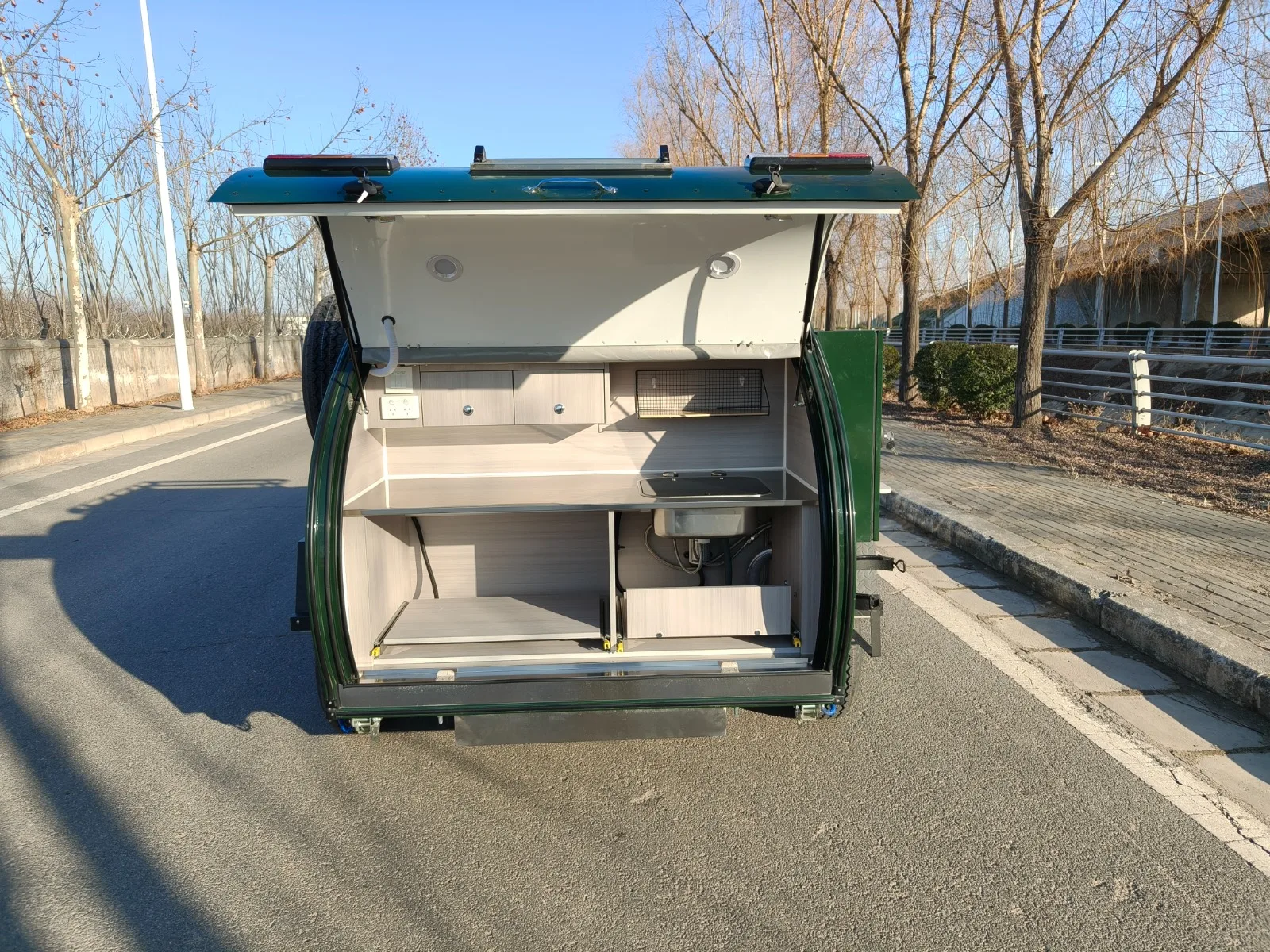
Australia’s used camper trailer market lists over 850 trailers on Gumtree at any given moment, ranging from $4,500 for a 2014 off-roader with a suspect service history to $32,000 for a two-year-old premium fold-out. Meanwhile, a quality new hard-shell teardrop starts from $19,990. So which do you actually buy?
The honest answer depends on three things: your risk tolerance, how much time you’re prepared to spend on inspection and negotiation, and whether the seller’s price genuinely reflects the trailer’s condition. This guide walks through both decisions with real depreciation numbers, a practical inspection framework, and the 2026 market reality that’s changing the equation for first-time buyers.
What You Actually Pay For When You Buy New
The case for new is simpler than it looks. It’s not really about a shiny trailer — it’s about certainty.
Full manufacturer warranty. A new camper from an established Australian manufacturer typically includes structural warranty (1–5 years depending on brand), a separate chassis or suspension warranty, and 12 months on fittings and appliances. Some brands go further: Opus offers 5 years structural, 5 years suspension, and 3 years canvas. Eagle Camper Trailers extended to a lifetime structural warranty from July 2020.
Australian Design Rules compliance, documented. Every new trailer sold in Australia must carry a compliance plate attesting to ADR compliance. You know what you’re getting, and it’s registered to you without any history to unpick.
No water damage risk. Water ingress is the single most common structural problem in the used camper market, and it’s often invisible until the damage is severe. A new trailer comes with no accumulated moisture history.
Finance eligibility at realistic terms. Most mainstream lenders will fund a new camper trailer at their standard secured asset rates (typically 6–10% p.a. in 2026). Used trailers — particularly older private sales — can attract worse terms or outright refusal above a certain age threshold.
The depreciation hit is the cost. New trailers lose 20–30% of value in the first 12 months. That’s real money: a $25,740 new Plus loses approximately $5,150–$7,722 in year one. Whether that loss is justified depends on how much you value the certainty above.
What You Actually Get When You Buy Used
The case for used is equally clear when the numbers are right. A well-maintained Australian-made camper trailer that’s 2–4 years old has already absorbed the steepest depreciation and can represent genuine value — if you know how to assess it.
Price ranges in the 2026 used market:
| Vintage | Condition | Typical Range (AUD) |
|---|---|---|
| 12–18 months old, dealer stock | Near-new, often remaining warranty | $16,000–$28,000 |
| 2–4 years old, private sale, premium brand | Good condition, service history | $14,000–$22,000 |
| 5–7 years old, private sale | Moderate use, inspect carefully | $9,000–$16,000 |
| 8+ years, private sale | Older spec, higher risk | $4,000–$10,000 |
| Import brands (any age) | Variable, typically lower resale floor | $6,000–$18,000 |
The sweet spot the market consistently validates: a 2–4 year old premium Australian-made unit with service history and documented storage. These trailers have passed the steepest depreciation curve, often still carry residual manufacturer warranty, and are far easier to inspect — they simply haven’t had long enough to develop serious problems.
For teardrops specifically, the used market is tighter. Because hard-shell teardrop production volumes in Australia are modest, there are fewer units available second-hand at any given time, and well-priced examples sell quickly. Expect to move fast when you find one.
Depreciation Reality: The Year-by-Year Numbers
Understanding depreciation is understanding the true cost of both buying new and buying used.
| Year | New Trailer Value (example: $25,000) | % Remaining | Annual Loss |
|---|---|---|---|
| Purchase (new) | $25,000 | 100% | — |
| Year 1 | $17,500–$20,000 | 70–80% | $5,000–$7,500 |
| Year 2 | $15,000–$18,500 | 60–74% | $1,500–$3,000 |
| Year 3 | $13,000–$17,500 | 52–70% | $1,000–$2,000 |
| Year 4 | $12,000–$16,000 | 48–64% | $1,000–$1,500 |
| Year 5 | $11,000–$15,000 | 44–60% | $1,000 |
Key insight: The Year 1 drop is the painful one — often $5,000–$7,500 on a $25,000 trailer. If you buy that same trailer second-hand at the end of Year 1 (say, $18,000), you’ve already saved most of the depreciation cost and the remaining depreciation curve is far flatter.
Premium vs import comparison:
- Premium Australian brands (Patriot Campers, Reconn R, Cub, Opus): typically retain 70–80% after three years in good condition.
- Generic/entry-level imports: can lose 30–40% in the first two years alone, partly because Chinese-built camper trailers entering the 2026 market at new prices are undercutting the used-import resale floor.
- Budget-market trap: a $12,000 imported new trailer that retains only 35% after five years costs $7,800 in depreciation — more than a $20,000 premium trailer retaining 65% ($7,000 loss). Lower entry price, higher real cost.
For the full depreciation picture applied to teardrop campers specifically, our teardrop camper resale value guide works through year-by-year retention curves across the four Breath Trailer models.
The Risk Matrix: What Can Go Wrong With a Used Trailer
Not all used trailers are equal, and not all risks are equal. Here’s an honest assessment of what can go wrong, how common it is, and what it costs:
| Risk Category | Likelihood | Repair Cost | Detection Difficulty |
|---|---|---|---|
| Water ingress / structural moisture damage | High (30–40% of older units) | $2,000–$15,000+ | Medium — needs damp meter |
| Wheel bearing failure / neglect | Medium | $300–$800 | Easy — roll hub, feel heat |
| Rebirthed compliance plate / encumbered title | Low (private sales only) | Non-recoverable purchase price | Easy — PPSR search |
| DIY electrical modifications | Medium | $500–$3,000 | Medium — inspect wiring |
| Tyre age (6+ years, cracked sidewalls) | High | $600–$1,200 (full replacement) | Easy — check date stamp |
| Canvas deterioration (if canvas camper) | High | $800–$4,000 | Easy — visual |
| Suspension wear / faded dampers | Medium | $400–$1,500 | Medium — bounce test |
| Brake system (if > 750 kg ATM) | Medium | $300–$1,000 | Hard without test tow |
| Gas hose / fitting degradation | Medium | $150–$500 | Medium — leak test |
Water damage is the standout risk. Timber-framed caravans and campers are particularly susceptible — once moisture penetrates flooring, walls, or ceiling panels, mould and structural deterioration follow. Hard-shell aluminium-skinned teardrops are more resistant (no canvas to leak) but seals around windows and hatches can fail. Always bring or hire a damp meter for any used purchase above $10,000.
Warranty Truth: What Transfers and What Doesn’t
This is one of the most misunderstood areas in the used camper market.
| Warranty Type | Transferable? | Duration | Notes |
|---|---|---|---|
| Manufacturer structural warranty | Usually NO | N/A on resale | Most major AU brands: warranty to original owner only |
| Manufacturer canvas/components | Usually NO | N/A on resale | Same — original purchaser only |
| Australian Consumer Law (ACL) rights | YES | Depends on age/type | ACL guarantees apply regardless of who is selling |
| Dealer extended warranty (purchase from dealer) | YES | 12–24 months typical | Covered if dealer offers it at point of resale |
| Aftermarket warranty (Integrity Warranty, AWN) | YES (you purchase it) | 12–36 months | Available for eligible used units; costs $500–$1,200 |
The ACL safety net matters. Under Australian Consumer Law, any product sold in trade must be fit for purpose and of acceptable quality. If a dealer sells you a used camper with a significant defect they didn’t disclose, ACL provides a remedy regardless of whether the manufacturer warranty has transferred. Private sales from individuals don’t attract the same ACL protections — which is part of why buying used from a reputable dealer costs more but carries lower legal risk.
Extended warranty is worth considering for used purchases above $15,000. Aftermarket warranty providers like the Australian Warranty Network (AWN) offer coverage on eligible used units. Read the exclusions carefully — most exclude pre-existing conditions and cosmetic items.
The 12-Point Used Camper Inspection Checklist
Never buy a used camper trailer without completing this check. Budget 90 minutes minimum.
Exterior and structure:
- Compliance plate — present, riveted (not glued), numbers match VIN. Fresh rivets on an aged trailer are a rebirthing red flag.
- Chassis — inspect for rust, cracks, and welding repairs, especially at stress points (corners, jockey wheel mount, A-frame).
- Body panels and seals — run your finger along all seams, window surrounds, and hatch edges. Soft spots, bubbling paint, or discolouration indicate water ingress.
- Tyres — check tread depth and inspect sidewalls for cracking. Find the 4-digit DOT date code stamped on the sidewall (e.g. “2319” = week 23, 2019). Tyres older than 6 years are a safety risk regardless of tread.
Running gear and towing: 5. Wheel bearing temperature — roll the trailer or ask the seller to tow briefly, then immediately feel the hub centres. Warm is normal; hot indicates neglected bearings. 6. Suspension — bounce each corner; the trailer should return in 1–2 oscillations, not continue bouncing. Faded dampers are a cheap fix but indicate maintenance gaps. 7. Brakes (if > 750 kg ATM) — electric brake function can be tested with a breakaway kit. Ask for evidence of annual brake service. 8. Hitch and safety chains — check ball coupling for play, safety chains for condition.
Systems: 9. 12V electrics — test every light, switch, and appliance. Trace visible wiring for DIY joins or unprotected runs. An amateur 12V job is a fire risk. 10. Gas system — light the cooker (confirms LPG supply and ignition), run the three-way fridge on gas. Check hose condition and bottle expiry dates (10-year re-test cycle). 11. Water system — fill the tank, run all taps, check under every fitting for drips. Run the hot water if fitted. 12. Canvas / soft furnishings (if applicable) — check zips, stitching, and UV degradation. Test annexe poles for bent sections.
If you’re not confident assessing any of these points yourself, a professional inspection service (RedBook Inspect offers caravan pre-purchase inspections for approximately $250–$350) is money well spent on any purchase above $12,000.
The PPSR Search: Non-Negotiable Before Any Private Sale
The Personal Property Securities Register (PPSR) is the Australian government database that records financial encumbrances, write-offs, and stolen status on vehicles — including trailers and caravans.
A PPSR search costs $2 per vehicle and takes 60 seconds at ppsr.gov.au. It tells you:
- Whether the trailer has existing finance against it (meaning the lender has a legal interest — and can repossess even if you paid the seller)
- Whether it’s been recorded as a write-off
- Whether it’s been reported stolen
Do this before you hand over any money. Private sellers occasionally (and sometimes unknowingly) sell trailers with outstanding finance. If you buy that trailer, you may lose both the trailer and the money paid for it. The PPSR search eliminates this risk entirely for $2.
Compliance plate anomalies (new rivets, mismatched numbers, altered VINs) combined with a reluctant seller are the classic rebirthing indicators. Walk away without exception if either flag appears.
The 2026 Market: Chinese Imports Are Changing the Equation
A structural shift is underway in the Australian camper market that directly affects the new-vs-used calculation.
In 2026, Chinese-built camper trailers are entering the Australian market at significantly lower new prices — often with high-spec finishes (lithium batteries, stainless kitchens, independent suspension) at $12,000–$18,000 new. This is putting downward pressure on the used market, specifically in the entry-to-mid tier.
What this means practically:
A 2022 imported budget camper that the owner paid $14,000 for new may now struggle to sell for $8,000 used — because a buyer can get a new Chinese-market unit with similar (or better) specs for $13,000. The used-import floor is falling.
This makes premium Australian-made brands the more defensible investment in the current environment. Patriot Campers, Cub, Reconn, Opus, and hard-shell specialists like Breath Trailer occupy a quality and provenance tier that new budget imports haven’t reached. Their resale values remain supported by genuine brand demand; their used market is less affected by the import influx.
For a first-time buyer deciding between a $13,000 new import and a $15,000 two-year-old Australian-made premium unit: the premium used option is often the better choice in 2026. The engineering, warranty record, and resale floor are materially different.
5-Year Total Cost of Ownership: New vs Used
This is the number that tells the real story. Using a Breath Plus ($25,740 new, 800 kg, premium AU-made) as the reference model:
| Scenario | Purchase Price | Running Costs (5 yr) | Depreciation (5 yr) | Gross 5-yr Cost | Est. Resale (Yr 5) | Net 5-yr Cost |
|---|---|---|---|---|---|---|
| Buy new (Breath Plus) | $25,740 | $6,000 | — | $31,740 | $14,000–$16,000 | $15,740–$17,740 |
| Buy 2-yr-old used (same model) | $18,000 | $6,000 | — | $24,000 | $11,000–$13,000 | $11,000–$13,000 |
| Buy new import ($13,000) | $13,000 | $5,500 | — | $18,500 | $4,000–$6,000 | $12,500–$14,500 |
| Buy used import (3-yr-old, $9,000) | $9,000 | $6,500 (higher maint.) | — | $15,500 | $2,000–$4,000 | $11,500–$13,500 |
Running costs include registration, insurance, and servicing. Depreciation is embedded in the resale estimate.
Takeaways from the table:
- Buying a 2-year-old premium used unit saves $2,700–$6,700 in net cost over five years vs buying new. The bulk of Year 1 depreciation has been absorbed.
- A new import appears cheap but the resale floor is thin — net cost over five years can be comparable to a premium used unit, with higher risk and lower quality throughout.
- The used import is often the worst outcome: lower quality, higher maintenance risk, and a resale floor that’s collapsing as new imports undercut it.
Read the complete breakdown in our is a teardrop camper worth it guide, which walks through cost-per-trip analysis at different usage frequencies.
Who Should Buy New? Who Should Buy Used?
Buy new when:
- You want zero inspection uncertainty. If you don’t have the confidence or time to inspect used units thoroughly, the certainty premium of a new trailer is worth paying.
- You’re financing. New trailers are more straightforward to finance at standard rates. Used private sales can complicate lending.
- You want the exact specification. New means you choose colour, options, and accessories without compromising on someone else’s choices.
- You’re buying a hard-shell teardrop. The used market for quality AU-made teardrops is thin and moves fast. Waiting for the “right” used unit can mean months of searching. New availability is predictable (allow 3–4 months lead time for a Breath Trailer).
- Resale is a priority. Buying new from a brand with strong resale history (like Breath Trailer, Patriot, or Reconn) gives you the full benefit of that retention curve from day one.
Buy used when:
- You have time to inspect carefully (or hire someone to). The savings are real but require due diligence.
- You want a proven unit. A 2-year-old trailer has been used in real Australian conditions. Any early manufacturing defects will have surfaced — and the seller has dealt with them.
- Your budget is genuinely constrained. The used market opens options that aren’t available new in the same bracket. A $15,000 budget buys a 3-year-old premium unit — something that costs $25,000+ new.
- You’re experienced with caravans and campervans. If you’ve owned a trailer before and know how to assess one quickly, the used market rewards that knowledge.
- You’re buying for a specific limited use case (e.g., one or two annual trips, you’ll sell in 2–3 years). If you’re confident you won’t keep it long, the depreciation absorbed by the first owner is a genuine saving.
Our how to choose the right off-road camper trailer guide covers the broader selection framework beyond new/used alone.
What the Pre-Purchase Inspection Actually Costs (vs What It Saves)
Many buyers skip the professional inspection on a $15,000 purchase to “save” $300. The maths on this are consistently wrong.
| Hidden Defect | Inspection Cost | Average Repair Cost | Net Saving |
|---|---|---|---|
| Water damage (moderate) | $300 | $3,000–$8,000 | $2,700–$7,700 |
| Electrical DIY wiring | $300 | $800–$2,500 | $500–$2,200 |
| Tyre replacement (4 tyres) | $300 | $900–$1,400 | $600–$1,100 |
| Wheel bearing failure | $300 | $400–$800 | $100–$500 |
A single inspection that finds water damage on a $14,000 used trailer has paid for itself 10–25 times over. Even if it finds nothing, the peace of mind on a $14,000 purchase is worth the $300.
Our 10-point pre-purchase inspection checklist for teardrop campers covers the most common failure points in detail, including the compliance plate, payload trap, and 750 kg brake rule.
Frequently Asked Questions
Is it better to buy a new or used camper trailer in Australia? Neither is universally better — it depends on your budget, risk tolerance, and inspection ability. A 2–4 year old premium Australian-made unit with documented service history often represents the best value: the steepest depreciation has already happened, the build quality is proven, and the inspection risk is manageable. First-time buyers who can’t inspect confidently are better served by new.
How much cheaper is a used camper trailer than new? Typically 25–40% cheaper for a 2–3 year old unit, depending on brand and condition. A trailer new at $25,000 might sell for $15,000–$18,000 at 2–3 years old in good condition. The discount is front-loaded in the depreciation curve — years 2–5 see a much flatter decline.
Do manufacturer warranties transfer to a new owner? In most cases, no. Australian camper trailer warranties are issued to the original purchaser and are not transferable. You can purchase aftermarket warranty coverage through providers like the Australian Warranty Network (AWN) for a used purchase, typically for $500–$1,200 per year of coverage, subject to an inspection.
What is a PPSR search and do I need one for a used camper trailer? The Personal Property Securities Register (PPSR) is the government database that records finance encumbrances, write-offs, and stolen status on vehicles including trailers. It costs $2 and takes two minutes. Yes — do it for every private sale. If the trailer has outstanding finance, the lender has a legal claim against it regardless of what you paid the seller.
What’s the biggest risk when buying a used camper trailer in Australia? Water ingress and structural moisture damage are the highest-impact risk by cost — repairs range from $2,000 to over $15,000, and the damage is often invisible without a damp meter. Tyre age (check the 4-digit DOT date code; replace at 6 years regardless of tread) and DIY electrical modifications are the next most common problems.
Should I buy from a dealer or private seller? Dealers are more expensive but offer ACL protections, financing, and often extended warranties. Private sellers offer lower prices but no ACL recourse if something goes wrong — your only protections are PPSR status and the inspection you do before purchase. For purchases above $15,000, dealer resale often justifies the price premium.
The Verdict
The new-vs-used decision in 2026 comes down to this: buy new if you value certainty; buy used if you have the time and knowledge to assess quality — and focus on 2–4 year old premium Australian-made units where the depreciation is absorbed and the risk profile is lowest.
What to avoid at both ends:
- A brand-new budget import at $12,000–$14,000, where Year 1 depreciation is steep and the resale floor is weakening.
- A private-sale older camper above $10,000 without a PPSR search, a damp meter, and a systematic inspection.
The used market rewards buyers who do the work. The new market rewards buyers who value their time over the premium.
Breath Trailer manufactures new hard-shell teardrops in Sydney with a 3–4 month lead time and a documented resale history. If you want to understand which model fits your trip style before deciding new or used, our full model comparison lets you compare all four side-by-side. Or book a viewing at our Sydney location — seeing one in person usually makes the decision clearer.
Recommended Reading
- 10 Things to Check Before Buying a Teardrop Camper — pre-purchase inspection: chassis, compliance plate, 750 kg brake rule, payload trap
- Teardrop Camper Resale Value Australia — year-by-year depreciation curves, what destroys resale, and the used-market sweet spot
- What Makes a Premium Camper Trailer Different? — chassis spec, suspension, electrical systems — what separates $20k from $40k
- Teardrop Camper Insurance Australia — agreed vs market value, what’s excluded, real 2026 premium ranges
- Teardrop Camper Hire vs Buy Australia — the crossover point for when buying beats hiring