What Makes a Premium Camper Trailer Different? (2026 Australian Guide)
Discover the 8 real differences between premium and budget camper trailers in Australia — chassis, suspension, weight and what the price gap actually buys you in 2026.
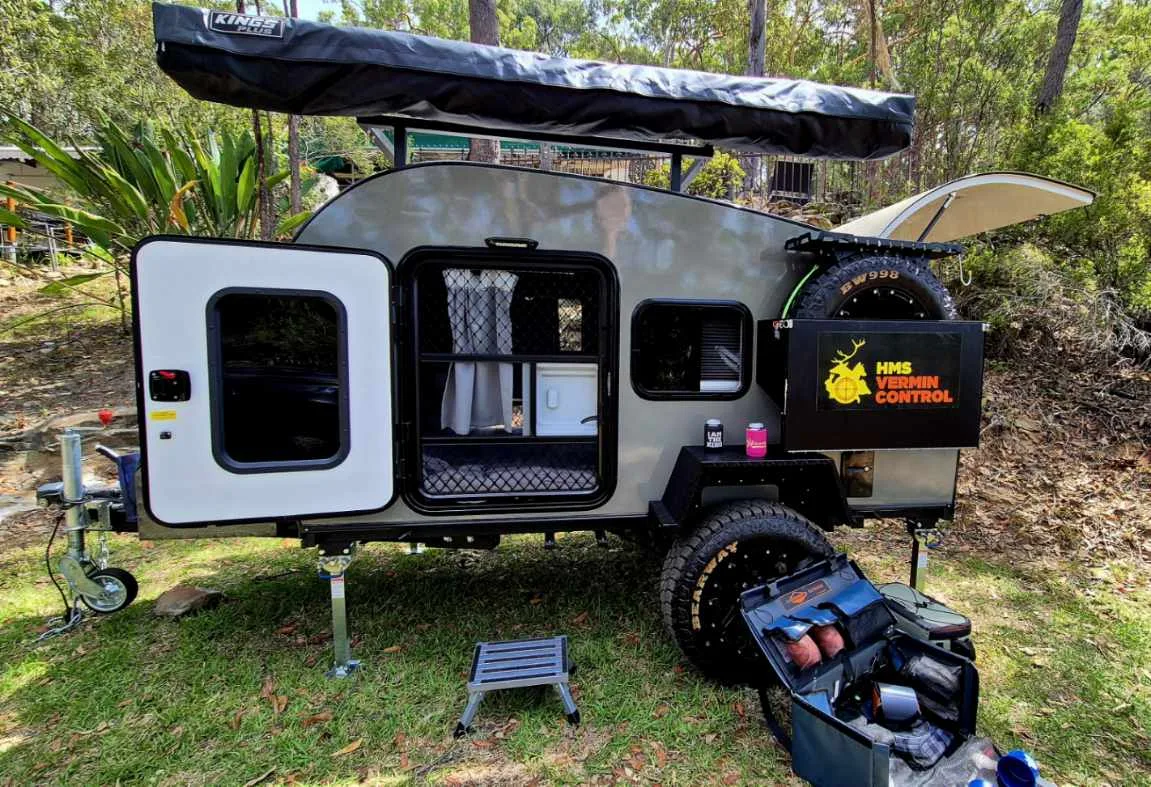
Walk down the aisle at the Sydney Caravan & Camping Expo and you will find camper trailers priced anywhere from $7,000 to well beyond $100,000. Both ends of that spectrum can sleep two adults. Both have some form of kitchen. Both bolt to a towball. So what exactly does the extra money buy — and is any of it real?
This is not a brand ranking. It is a clear-eyed breakdown of the eight engineering and design differences that separate a premium camper trailer from a budget one in Australia in 2026, with a 5-year cost-of-ownership table and a price-band guide so you can decide where your money actually belongs. For a decision framework on which model suits your travel style, see our guide to choosing the right off-road camper trailer.
What “Premium” Actually Means in the Australian Market
“Premium” is a word abused by marketing departments across the price spectrum. For our purposes it means something precise: a trailer that can be registered, towed on a Subaru Forester, driven down corrugated outback tracks every school holiday, and still be in serviceable condition in ten years — without extraordinary repair bills along the way.
That definition filters out a surprisingly large portion of the market.
1. Hot-Dip Galvanised Chassis — Not Painted Steel
The chassis is the one component you cannot economically replace without writing off the trailer. On a budget model it will be painted or powder-coated steel. On a premium build it will be hot-dip galvanised — the completed chassis is immersed in molten zinc at around 450°C, bonding metallurgically to every surface including internal cavities that a spray gun cannot reach.
The difference is not cosmetic. Coastal salt air, creek crossings and corrugated outback tracks attack steel relentlessly. Paint chips. Powder coat eventually flakes under thermal cycling. Hot-dip galvanising, by contrast, resists corrosion for decades. As Club 4X4 notes in their buying guide, “the better the metal finish, the less likely you are to fight rust and chipping later.”
Surface rust appearing around welds within two to three seasons of coastal use is one of the most common complaints in the ProductReview listings for budget camper trailers. A hot-dip galvanised chassis essentially removes that failure mode.
2. Independent Coil Suspension — Not Leaf Springs
Suspension does three things on a camper trailer: protects the contents from vibration, keeps the wheels in contact with the ground on corrugated tracks, and determines how the trailer behaves during a panic swerve at 100 km/h. Budget imports use leaf spring suspension — a technology borrowed from 1950s trucks. Premium Australian-built trailers use independent coil spring suspension (trailing arm or IFS), where each wheel moves independently of the other.
| Suspension type | Corrugation comfort | Ground clearance | Articulation |
|---|---|---|---|
| Leaf spring / beam axle | Poor — both wheels move together | Fixed | None |
| Beam axle + coil-over | Moderate | Moderate | Minimal |
| Independent coil (trailing arm) | Excellent | High, adjustable | Full wheel independence |
On a typical corrugated Australian track — think the Gibb River Road in the Kimberley or the Birdsville Track — independent suspension can reduce internal vibration by 30–40% compared with leaf springs. That matters enormously for eggs, wine bottles, electronic equipment and anything fragile in your galley drawers. It also means tyres stay in contact with the ground through deep corrugations, improving braking performance and trailer stability.
Premium brands commonly specify the Cruisemaster ATX or equivalent Australian-engineered systems, rated for Australia’s most demanding backcountry tracks at up to 2,200 kg ATM.
3. Hard-Shell Body Construction — Not Canvas
Canvas-bodied camper trailers have genuine advantages: lower purchase price, natural ventilation, and the intimacy of sleeping close to the environment. But they also carry a maintenance obligation that hard-shell owners never face.
Canvas requires:
- Re-proofing every 12–24 months (cost: $100–$250 in products, 3–4 hours of labour)
- Thorough drying after every wet camp to prevent mildew and fabric degradation
- UV treatment — Australian sun destroys canvas significantly faster than European conditions
- Panel or full replacement eventually — quality Australian canvas lasts 10–15 years; budget import canvas, considerably less
Hard-shell teardrops offer:
- Zero canvas maintenance, ever
- A fully sealed, insulated cabin that protects against rain regardless of pitch or pegging quality
- Setup in 5 minutes (lift the hatch, deploy the bed) versus 10–40 minutes for a folding canvas camper
- Meaningful security — a locked hard-shell is genuinely harder to enter than a tent zipper
The maintenance cost difference is explored in depth in our teardrop camper vs camper trailer comparison, where canvas re-proofing and wear are costed across a 10-year ownership period.
4. A Properly Engineered 12V Electrical System
This is where the gap between premium and budget trailers is perhaps most visible to a serious camping enthusiast.
Budget trailer 12V:
- Single 100Ah AGM battery (roughly 50Ah usable before damage)
- Basic Anderson plug charging from the tow vehicle alternator only
- No solar, or an undersized 100W panel bolted on as an afterthought
- Thin wire runs, minimal fusing, single-circuit board
Premium trailer 12V:
- 100–200Ah lithium (LiFePO4) battery — 95% usable capacity, 3× the effective storage of AGM
- REDARC or Victron DC-DC charger with an integrated MPPT solar controller
- 200W+ solar panel, flush-mounted and properly cable-managed
- Multi-circuit fuse board with individual breakers per circuit
- Dedicated 12V fridge outlet, USB-A/C charging, interior and exterior LED lighting
The practical difference: a premium 12V system will run a 40 L 12V fridge indefinitely from solar in full Australian sun, and maintain 70%+ charge overnight in a shaded campsite under red-gum canopy. A budget AGM system drains by early evening. For a complete breakdown of solar sizing and lithium versus AGM trade-offs, see our off-grid teardrop camper guide.
5. Integrated Hot Water and a Sealed Kitchen
A budget camper trailer galley is typically a fold-out slide with a two-burner stove, a plastic basin and a foot pump. Adequate for a weekend trip; limiting for extended touring.
Premium trailers invest in the galley as a genuine cooking station:
| Feature | Budget trailer | Premium trailer |
|---|---|---|
| Cooktop | 2-burner portable | 2–3 burner recessed stainless steel |
| Sink | Plastic basin, foot pump | Stainless steel sink, 12V electric pump |
| Water capacity | 20–40 L (sometimes unsealed) | 60–120 L (sealed, food-grade, gravity + pump) |
| Hot water | Cold only | Gas, diesel or instantaneous electric |
| Refrigeration | Icebox or entry-level 12V cooler | Quality 40–50 L 12V compressor fridge |
| Kitchen security | Exposed on pack-down | Sealed under lockable rear hatch |
An interior hot shower is the single feature that most dramatically changes the extended touring experience. In the Australian teardrop market, the Breath Max is currently the only model under $50,000 with a full interior bathroom (toilet, shower basin with vanity) — placing it in a category occupied otherwise by caravans costing twice as much.
6. Realistic Weight Engineering — The Payload Trap
One of the most common budget-trailer traps is a “low tare” that evaporates under closer inspection. A manufacturer can legally quote a tare weight that excludes the spare wheel, gas bottle, battery and accessories — items that add 80–150 kg on a fully equipped real-world camper.
| Weight term | Definition |
|---|---|
| Tare | Empty trailer — no water, no gas, sometimes no spare wheel or battery |
| ATM | Aggregate Trailer Mass — the maximum legal loaded weight stamped on the compliance plate |
| Payload | ATM minus tare — everything you can legally carry, including water and gear |
| Towball download | Static weight pressing on the towball, typically ~10% of the loaded ATM |
Budget trailers often carry an ATM of exactly 750 kg (the threshold below which electric brakes are not legally required) with a real-world payload under 150 kg. Fill a 40 L water tank (40 kg), add a fridge and a week of camping gear, and you are at or above ATM before leaving the driveway.
Premium teardrops engineer honest payload into the design: 200–400 kg across typical model ranges, with tare quoted including all standard-fit equipment. The full weight and towing breakdown — including SUV towing capacity tables — is in our teardrop camper weight guide.
7. Warranty Depth and Local After-Sales Support
Under Australian Consumer Law, the minimum statutory warranty is 12 months. Budget importers often meet this minimum and nothing more. Warranty language matters as much as duration — a policy that voids the moment you drive off a sealed road is effectively useless for a trailer marketed as an off-road camping product.
| Manufacturer category | Typical warranty |
|---|---|
| Budget imports | 12 months statutory only |
| Entry-level Australian | 12–24 months structural |
| Mid-range Australian | 24–36 months structural, 12 months components |
| Premium Australian | 36+ months structural, sometimes chassis lifetime |
A local manufacturer with an Australian workshop means warranty claims are inspected within days, parts are stocked locally, and service intervals are completed by people who built the trailer. Contrast that with an imported brand whose nearest authorised repairer may be interstate or — in the worst case — back at the factory.
Our maintenance and care guide covers how to protect warranty validity through correct servicing intervals and documentation.
8. Setup Time: 5 Minutes vs 40 Minutes
This is the least technical differentiator and arguably the most life-changing one for frequent campers. After a 600 km drive across the Nullarbor, arriving at camp at dusk in light rain:
- Budget canvas camper: remove the cover, unfold the body, extend the poles, attach the spreaders, tension the canvas, peg the annexe, level the trailer. Minimum 20–40 minutes. Any error means a dripping ceiling at 2 am.
- Premium hard-shell teardrop: unhitch or level, lift the rear hatch, pull out the bed, connect power. 5 minutes. The interior was sealed and dry the entire journey.
The 5-minute setup is not a marketing exaggeration — it is a structural consequence of a fixed, rigid body that requires zero assembly. The corresponding pack-down is equally fast, and no damp canvas is ever forced into a storage bag.
Premium vs Budget Camper Trailer at a Glance
| Feature | Budget ($7k–$18k) | Mid-range ($19k–$30k) | Premium ($30k–$60k+) |
|---|---|---|---|
| Chassis finish | Painted / powder-coated | Hot-dip galv (better brands) | Hot-dip galv standard |
| Suspension | Leaf spring / beam axle | Independent coil (some brands) | Independent coil, premium dampers |
| Body construction | Soft canvas | Canvas or entry hard shell | Hard shell or full composite |
| Electrical | Basic AGM, no solar | AGM or entry lithium | Lithium, MPPT solar, full circuit board |
| Hot water | Cold only | External shower (some) | Interior or exterior hot water standard |
| Payload | Often < 150 kg honest | 150–250 kg | 200–400 kg |
| Warranty | 12 months | 12–24 months | 24–36+ months |
| Setup time | 20–40 min | 10–20 min | 5 min (hard-shell) |
| Local AU support | Importer only | Brand dependent | Local workshop |
Price Bands in Australia (2026) — What Your Budget Buys
| Budget | What you get | Representative models |
|---|---|---|
| Under $15,000 | Imported soft-floor canvas, leaf springs, basic galley, no electric brakes (sub-750 kg ATM) | Various import brands |
| $15,000–$20,000 | Australian-assembled entry, hard floor or canvas, some independent suspension, basic 12V | Austrack entry range, Jayco Swan |
| $20,000–$30,000 | AU hard-shell teardrop or quality forward-fold, 100–200Ah battery, external shower | Breath Essential ($19,990), Breath Plus ($25,740) |
| $30,000–$50,000 | Full hard-shell premium, lithium battery, hot water, possible interior bathroom | Breath Ultra ($30,290), Breath Max ($39,000), JAG Glider (~$35,000) |
| $50,000+ | Top-tier composite construction, air suspension, full ensuite, premium off-road | Bruder EXP-8, Patriot Camper X1, Track Trailer Tvan |
Is Premium Worth the Extra Money? A 5-Year Ownership Comparison
The honest answer depends on frequency of use. A camper completing 10 nights per year on powered caravan parks will not unlock much value from independent suspension or a lithium electrical system. A couple doing 60+ nights per year on remote unpowered sites will find the premium investment paying back in fewer repairs, greater camping freedom, and daily quality-of-life gains that compound across years.
| Cost item | Budget ($12,000) | Premium ($35,000) |
|---|---|---|
| Purchase price | $12,000 | $35,000 |
| Canvas re-proofing (5 × $200) | $1,000 | $0 (hard shell) |
| Suspension / bearing repairs (typical) | $800 | $200 |
| Electrical upgrade to lithium | $2,500 | $0 (included) |
| Resale value after 5 years | ~$6,000 (~50%) | ~$24,500 (~70%) |
| Net 5-year cost of ownership | ~$10,300 | ~$12,900 |
At 100+ nights per year, the net cost per night across five years works out at approximately $26 for the premium trailer — competitive with a budget powered campsite, with the freedom to camp anywhere for free.
For the full depreciation analysis by model, see our teardrop camper resale value guide.
What the Breath Trailer Range Delivers Across the Price Spectrum
Breath Trailer manufactures all four models at its Sydney workshop. Every model shares the same hot-dip galvanised chassis, independent coil suspension and hard-shell body — the three features that define the premium category baseline. What changes across the range is primarily size, bathroom specification and electrical output.
| Model | Price (AUD) | ATM | Bathroom | Electrical | Best suited to |
|---|---|---|---|---|---|
| Essential | $19,990 | 700 kg | Hook-up point only | 100Ah AGM | First-time buyer, weekend touring |
| Plus | $25,740 | 800 kg | External shower | 100Ah AGM + 40L fridge | Couples, short off-grid stays |
| Ultra | $30,290 | 900 kg | External shower + outdoor toilet room | 200Ah lithium + solar | Extended touring, regular off-grid |
| Max | $39,000 | 1,200 kg | Full interior bathroom (toilet, shower, vanity) | 200Ah lithium + solar | Grey nomads, free camping, maximum comfort |
The Max is the only teardrop in Australia under $50,000 with a full interior bathroom, 2.1 m standing headroom and CMCA self-containment credentials for national park free camping. Explore the full model-by-model breakdown at /comparison/.
FAQ
What is the minimum I should spend on a quality camper trailer in Australia?
For a genuinely well-built camper trailer with a galvanised chassis, independent suspension and a proper electrical system, expect to spend a minimum of $20,000–$22,000 AUD in 2026. Below that figure, you will almost certainly be making compromises on chassis quality, suspension design or electrical capacity — all of which cost more to rectify after purchase than the initial saving.
Are imported camper trailers worth buying?
Some imported models represent genuine value, particularly those assembled in Australia with Australian-sourced suspension and electrical components. The risk areas are chassis corrosion (ask for the exact galvanising specification), warranty support (will the importer still be trading in three years?) and ADR compliance plate legitimacy. Run through our pre-purchase inspection checklist before committing to any trailer.
Is a hard-shell camper trailer better than a canvas folding camper?
They excel in different ways. A hard-shell delivers faster setup, superior weatherproofing, better security and zero canvas maintenance. A quality canvas camper can offer more sleeping capacity and a lower purchase price at the same budget. For the majority of Australian adventure travellers doing 30+ nights per year on remote tracks, hard-shell wins on convenience and long-term total running cost.
What warranty should I expect on a premium Australian camper trailer?
Premium Australian manufacturers typically offer 24–36 months structural warranty. The legal minimum under Australian Consumer Law is 12 months — any brand offering exactly 12 months on a trailer priced above $20,000 is worth scrutinising. Confirm the warranty explicitly covers off-road use, as many standard policies void the moment the trailer leaves a sealed road.
How does suspension quality affect the camping experience?
Suspension matters for two distinct reasons: what arrives intact at camp, and how the trailer handles an emergency swerve at 100 km/h. Independent coil suspension absorbs the separate impact each wheel encounters on corrugated tracks, keeping the trailer body stable and the contents unshaken. Leaf springs transmit those impacts directly through the body — both wheels react together, creating a rocking motion that gradually loosens every fitting inside. On rough outback tracks, the difference is felt from the first kilometre.
Does a premium teardrop hold its value better than a budget camper?
Yes, consistently. Australian-made teardrops with a strong brand reputation retain 60–75% of original value after five years, compared with 45–55% for budget imports. Hard-shell construction, a recognisable brand, full service records and honest payload figures all support resale. See the full depreciation analysis in our teardrop camper resale value guide.
The Bottom Line
The premium price gap is not for features most campers rarely use. It is primarily for durability (galvanised chassis, quality suspension), independence (a hard shell that sets up in 5 minutes, a lithium system that runs for days) and long-term value (less maintenance, stronger resale). The difference is not arbitrary — it reflects the materials, engineering time and after-sales infrastructure required to build a trailer that lasts fifteen years of genuine Australian outback conditions.
If your camping is 10 nights per year on powered caravan parks, a mid-range setup at $15,000–$20,000 is entirely adequate. If you are planning extended off-grid touring across Australia’s national parks and remote tracks, the 5-year cost-of-ownership maths often favours spending more upfront.
Ready to see exactly which premium features sit at each price point? Compare all four Breath Trailer models or book a consultation with our Sydney team.
Recommended Reading
- How to Choose the Right Off-Road Camper Trailer — the decision framework before you shortlist models
- 10 Things to Check Before Buying a Teardrop Camper — pre-purchase inspection checklist covering chassis, weights and red flags
- Teardrop Camper Resale Value Australia — how premium models hold their value over five years
- Off-Grid Teardrop Camper Guide — solar sizing, lithium batteries and power system deep-dive
- Teardrop Camper vs Camper Trailer Australia — hard-shell teardrops compared to canvas folding campers in detail