Why Australian Expertise Matters When Buying a Camper Trailer (2026)
Corrugations, dust, heat and distance: what they demand from a camper trailer, and how to spot a design built for them.
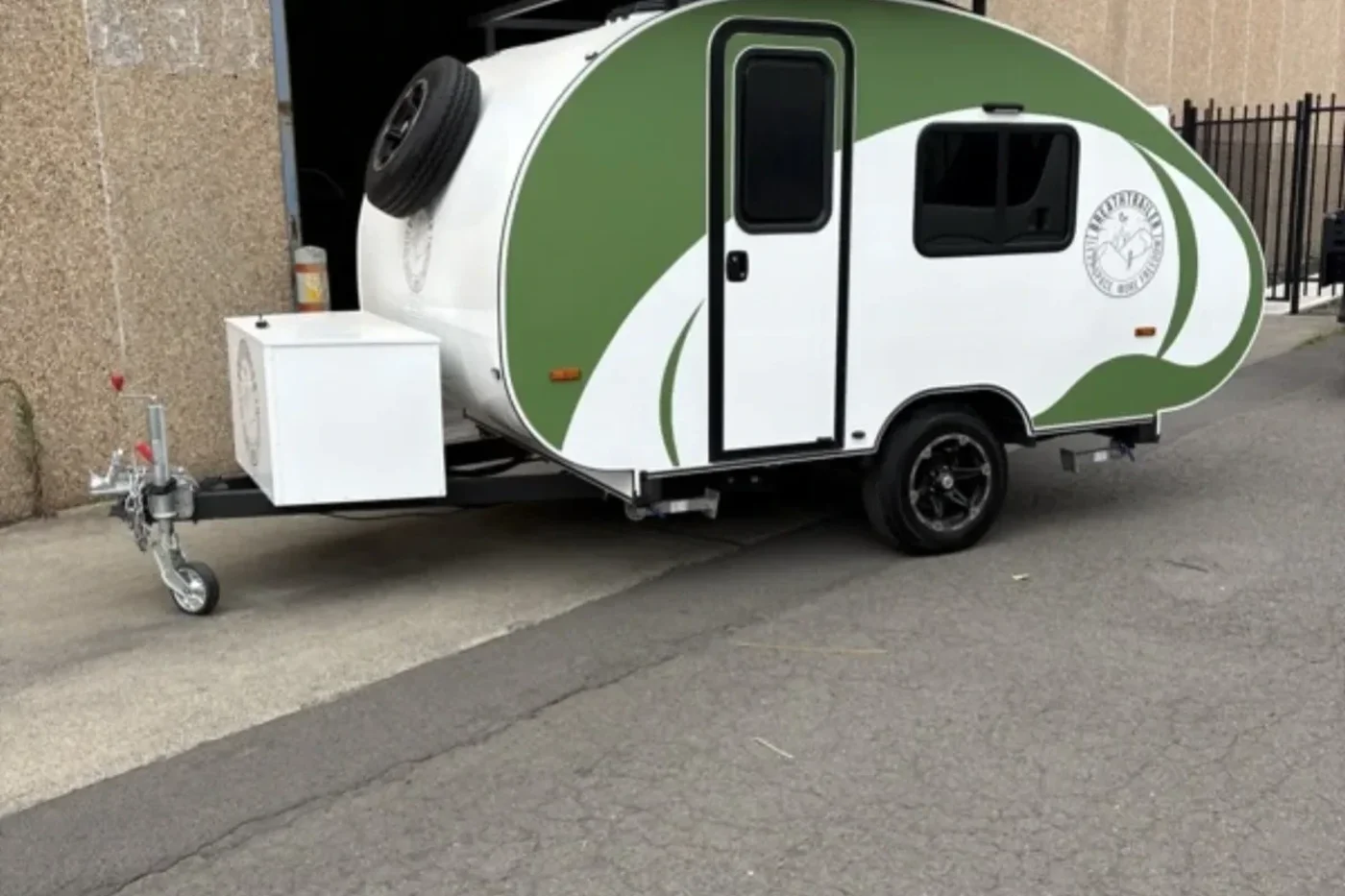
There is a detail that rarely appears in a camper trailer brochure: where the design assumptions were made. A trailer engineered for European touring roads or American RV parks will carry those assumptions into the Gibb River Road, the Birdsville Track, and the Simpson Desert — roads that expose every compromised weld, every under-specified seal, and every suspension setting tuned for smooth asphalt rather than 600-kilometre corrugated outback tracks.
In 2026, Australians have more choice than ever — including a flood of imported trailers priced to attract attention. But 80 per cent of caravan and camper trailer owners who responded to an ACCC survey reported experiencing a fault with their purchase, and 50 per cent classified that fault as major. The complaints the ACCC received rose 72 per cent over five years, from 260 in 2017 to 448 in 2021. The watchdog placed the caravan industry “on notice” for poor treatment of consumers.
Expertise is not a marketing phrase. It is the accumulated knowledge of what breaks when you push a trailer hard through Australia’s specific mix of heat, dust, corrugations, salt spray, and distance from the nearest service centre. This article unpacks what genuine Australian expertise means in the design and build of a camper trailer — and why it matters before you sign anything.
Australia’s Roads Are the World’s Harshest Testing Ground
Ask any engineer who has done the Canning Stock Route or the Gibb River Road at touring pace what differentiates a well-designed trailer from a compromised one, and the answer is always the same: it shows up in the details at kilometre 500, not kilometre 50.
Australia’s defining terrain challenges are not found on any overseas test track:
- Corrugated gravel roads — repetitive impacts at roughly 1,300 per kilometre loosen fittings, fatigue welds, and migrate seals that were only rated for smooth-road use
- Bulldust — ultra-fine silicate particles that penetrate standard rubber seals, destroy wheel bearings, and fill interior cavities in minutes on a dry outback station track
- Ambient temperatures of 45–50°C — UV radiation five times higher than Northern Europe degrades rubbers, caulks, and exterior finishes at a rate imported manufacturers do not account for
- Coastal salt environments — from Exmouth to Broome to Airlie Beach, trailers parked near the ocean oxidise inside steel cavities within months if the galvanising specification is not adequate
- Extended remote distances — the nearest town on a Cape York run can be 300 kilometres away, which changes water capacity targets, battery sizing assumptions, and tyre redundancy planning entirely
An Australian manufacturer who designs around these realities embeds the solutions at the drawing stage. An imported manufacturer, regardless of quality in its home market, starts from different assumptions — and the retrofit cost to bring an imported trailer up to Australian touring standard is rarely zero.
What “Designed for Australia” Means in Practice
The differences between a locally designed trailer and an imported one are most visible in six specific design decisions.
Suspension geometry and wheel travel
Australian corrugated outback tracks require independent trailing-arm or airbag suspension with genuine wheel travel — not the torsion-axle units borrowed from boat trailers, which are rated for smooth bitumen and boat ramp gravel. Locally designed trailers are tuned for Australian corrugation frequencies; the spring rates, shock absorber valving, and bush geometry reflect conditions that no overseas test programme replicates. The full technical breakdown of what this means in practice is covered in our guide to why suspension matters on an off-road camper.
Dust sealing philosophy
The hard-shell teardrop body is inherently more dust-resistant than any canvas camper trailer: there are no zips, no canvas panels, no gaps between fabric sections. But the seals around hatches, windows, and the kitchen door still need to be selected for Australian dust particle sizes and maintenance-free durability in high-UV environments. Local designers have the feedback loop from customers who drove 200 km of bulldust; imported designers do not.
Electrical system sizing
Australia’s off-grid travel culture drives larger 12V systems than virtually any other market. The standard expectation on a week-long remote trip is a 40–60 litre compressor fridge running 24 hours, a CPAP machine, LED lighting, USB charging, and potentially a portable Starlink terminal. Australian designers who build for this use case specify lithium battery banks, MPPT solar controllers, and DC-DC chargers from the ground up — not as expensive options added later. Our complete guide to camper trailer power systems details these baseline requirements.
Water system capacity and sanitisation
An Australian touring couple needs at minimum 80 litres of fresh water for a four-day free camp — more in Queensland summer. High ambient temperatures (30–40°C around a tank stored in a dark compartment) also mean bacteria multiply fast; local designers account for sanitisation cycles, food-safe tank materials, and delivery-system design that does not leach chemicals in heat. These are not design concerns in cooler-climate markets where campgrounds with water hookups are the norm.
Galvanising specification
The difference between 42-micron standard hot-dip galvanising (adequate for inland touring) and 85-micron marine-grade galvanising (required for regular coastal travel) is invisible in a showroom but determines whether the chassis is structurally sound in fifteen years or corroding in five. Australian manufacturers who sell into the coastal touring market understand this distinction because their customers live it. Manufacturers designing for landlocked European markets do not build it in by default.
UV-stable exterior finishes
Australia’s UV index regularly reaches 14+ — extreme on the global scale. Powder coat finishes, exterior caulk compounds, and rubber bump strips need to be UV-stabilised to a level that would be considered over-engineered in a Nordic climate but is simply correct for an Australian trailer parked in the open for months at a time. Local material suppliers and the absence of the “design for our climate, re-specify for theirs” problem mean this gets right the first time.
The ACCC Problem — and Why It Mostly Hits Imported Stock
The ACCC’s findings about the caravan and camper trailer industry are not ambiguous. Of the 2,270 survey respondents, 80 per cent had experienced a fault; 50 per cent of those faults were classified as major. The complaint rate grew 72 per cent over five years. And one in every 100 caravans sold in 2020–2021 was so defective the consumer was entitled to a full refund or replacement.
These numbers skew toward the imported end of the market for three specific reasons.
No pre-dispatch testing conducted in Australia. Imported trailers are manufactured overseas, containerised, shipped to a distributor, and delivered without a post-assembly functional test conducted by a team who understands Australian conditions. A water-ingress test at a controlled factory in Asia does not replicate a 10-minute pressure-hose test against every seal and join at the final workshop in Sydney.
Regulatory gaps at the compliance stage. Australia has specific standards: VSB1 Revision 6 (September 2024 — the National Code of Practice for trailers under 4.5 tonne ATM), ADR38/00 (electric brake control systems), and AS/NZS 3001.2:2022 (electrical installations in recreational vehicles). Imported trailers that were not designed and built to these standards require compliance retrofits that dealers sometimes skip entirely or underspecify. We covered these requirements in detail in our article on why professional installation matters.
No genuine warranty path when things go wrong. When a major fault appears at month seven, an imported-brand buyer may find the dealer has no authorised repairer in the state, the manufacturer has no Australian service agent, and the warranty document contains limitation clauses that reduce coverage to a cosmetic guarantee. At least five Australian caravan brands entered administration in recent years — Zone RV, Highline, and Tango among them — leaving buyers without any warranty path. Our article on why local support matters covers this insolvency risk and how to assess it before purchase.
Australian Standards: What Your Trailer Must Comply With
| Standard / Regulation | What It Covers | Who Is Responsible |
|---|---|---|
| VSB1 Rev 6 (Sep 2024) | Chassis, lighting, braking, couplings, dimensions — the National Code of Practice for trailers under 4.5t ATM | Manufacturer / builder |
| ADR38/00 | Electric brake control systems; mandatory at 750 kg GTM and above | Manufacturer |
| AS/NZS 3001.2:2022 | 240V and 12V electrical systems in recreational vehicles | Licensed electrician at installation |
| State rego / roadworthy | Roadworthy inspection, axle load ratings, tyre compliance | Owner (requirements vary by state) |
| CMCA self-containment standard | Grey water tank, toilet or ensuite, adequate fresh water for free camping | Manufacturer / owner |
An Australian manufacturer builds to these standards from the first cut of steel. An importer must demonstrate compliance post-build — and the compliance plate on the drawbar represents the manufacturer’s declaration, not an independently verified check of every item on that list.
Australian-Designed vs Generic Import — A Practical Comparison
| Factor | Australian-designed trailer | Generic import |
|---|---|---|
| Terrain assumptions at design stage | Corrugations, bulldust, 45°C heat, coastal salt | Sealed roads, temperate climate, campground-adjacent use |
| Suspension specification | Tuned for AU corrugation frequency and amplitude | General road use, smooth bitumen bias |
| Dust sealing | Tested in AU outback conditions | Factory test-chamber specification |
| Electrical system baseline | Off-grid touring lifestyle (lithium, MPPT, DC-DC) | Shore-power lifestyle (240V hookup) |
| Regulatory compliance | VSB1 Rev 6 + ADR38 designed in from the start | Compliance retrofit required (sometimes skipped) |
| Galvanising | Marine-grade specified for coastal AU conditions | Generic continental standard |
| UV rating | UV index 14+ accounted for in all rubber and coating selections | European / Asian UV index (3–6) |
| Water capacity | Sized for 4–7 day off-grid remote touring | Sized for 1–2 day campground access |
| Warranty service | Local workshop, same time zone, direct manufacturer access | International claim process or dealer discretion |
| Parts availability | AU suppliers, 2–5 days typical lead time | Overseas order, 6–18 weeks lead time |
| Design feedback loop | AU customer trips → direct design improvements each run | No Australian feedback mechanism |
The Feedback Loop Only Local Manufacturers Have
One of the least-discussed advantages of buying from an Australian manufacturer is access to the customer feedback loop — and what that loop does to the product over time.
When 350-plus customers tow their trailers through the Flinders Ranges, Kakadu, the Great Ocean Road, and Ningaloo, and then call the Sydney workshop with what worked and what didn’t, that information changes the next production run. Hatch latch designs get revised when early customers report vibration-loosening at outback speeds. Cable routing changes when service technicians spot chafe points that only appear after 10,000 km of corrugations. Storage compartment layouts adjust when couples return from six-month Big Laps reporting what they actually reached for every day versus what went untouched.
A manufacturing operation based overseas has no mechanism for this loop when the trailers are used in Australia. Improvement cycles run on the conditions of the design-origin market — not Australian tracks. The compounding advantage of a local manufacturer is that each generation of trailers reflects the actual experiences of the previous generation of Australian customers.
5 Questions to Ask Any Camper Trailer Manufacturer Before You Buy
Before signing a purchase order, these five questions separate genuine Australian expertise from borrowed marketing language.
1. Where was this trailer designed? Not assembled — designed. The suspension geometry, electrical architecture, and water system capacity decisions should have been made with Australian conditions as the baseline, not adapted from an overseas platform. “Designed in Australia” and “assembled in Australia from imported components” and “imported from [country]” are meaningfully different answers.
2. Can you show me your AS/NZS 3001.2 compliance documentation? For any 12V or 240V system, a licensed Australian electrician must certify the installation. Ask for the signed paperwork. Without it, any insurance claim arising from an electrical fault may be voided, and the installation may not have been independently checked. We covered exactly what this looks like in our professional installation guide.
3. What is the GTM, and does the trailer require ADR38-compliant electric brakes at that mass? At 750 kg GTM or above, electric brakes are mandatory on Australian roads. Check the compliance plate matches the quoted GTM and confirms brake compliance — these sometimes diverge on imported stock.
4. Where is the nearest authorised service agent for this brand? If the answer is “the dealer you’re standing in” and that dealer is an hour from the nearest town on your planned route, that is your warranty network. Ask for the full national service agent list, not just the nearest dealer.
5. What happens to my warranty if this company closes? The five recent insolvencies in the Australian caravan and camper trailer industry make this question essential, not paranoid. Ask for Australian Consumer Law warranty rights to be explicitly stated in the purchase contract — not as a “manufacturer warranty” document that can evaporate when the manufacturer does. Our pre-purchase inspection checklist covers the physical checks once you have the trailer in front of you.
Breath Trailer — Designed in Sydney, Built for Australia
Breath Trailer is a Sydney-based teardrop camper brand. Every trailer is specified, fitted out and tested in the same city where the founding team designed it — and the design brief was Australian from day one: dual-axle suspension capable of outback corrugations, hard-shell dust sealing across the entire body, AS/NZS 3001.2-compliant electrical systems, and lithium-ready power architecture available on every model.
The four models reflect the full range of Australian touring needs:
| Model | Tare | GTM | Price (AUD) | Key Australian capability |
|---|---|---|---|---|
| Essential | 700 kg | 700 kg | $23,320 | Lightweight, tows with any mid-size SUV, full hard-shell dust seal |
| Plus | 800 kg | 800 kg | $29,766 | 12V compressor fridge included, lithium-ready, dual-axle suspension |
| Ultra | 900 kg | 900 kg | $34,749 | External hot shower, 85L fresh water, self-containment-capable |
| Max | 1,200 kg | 1,200 kg | $47,190 | Full interior bathroom, 2.1 m standing height, CMCA self-contained |
Patricio, the founder, received the Gold Sydney Design Award 2025 for the Breath Trailer design. 100-plus colour options mean every build is configured individually — there is no stock on a lot waiting to move. Lead time is 3–4 months, reflecting the to-order production model.
The ambassador network across six states means a customer touring Western Australia has a contact with genuine local knowledge — not a call centre in a different time zone. Every trailer leaves the Sydney workshop after a 12-stage pre-delivery inspection including water-ingress testing, AS/NZS 3001.2 electrical verification, and ADR38 brake compliance checks. The full process is documented in what happens before a trailer leaves our Sydney workshop.
You can inspect any model in person before committing. Our viewing locations page lists where to book an appointment across the country.
FAQ
Is an Australian-made camper trailer significantly more expensive than an imported one?
Entry-level imported teardrops and pod campers start around $12,000–$18,000 AUD. Australian-designed teardrops like Breath Trailer start at $23,320 for the Essential. The apparent price gap often closes when you factor in compliance retrofit costs (sometimes $1,500–$3,000 for imported stock), accessory packages that Australian models include as standard, and the historically faster depreciation of brands with a thin resale market in Australia. Our is a teardrop camper worth it article covers the five-year cost maths in detail.
Does “Australian-designed” always mean “Australian-built”?
Not necessarily. Some brands design in Australia and manufacture overseas — sometimes with strong quality control, sometimes without. The key questions are: where was the compliance certification obtained, who performs warranty service in Australia, and where does technical support originate? “Designed in Australia” without a local service network carries most of the same risks as fully imported stock when something goes wrong.
What is VSB1 and why does it matter when buying a trailer?
VSB1 (Vehicle Standards Bulletin 1) is Australia’s National Code of Practice for trailers under 4,500 kg ATM. It covers chassis design, braking, lighting, couplings, and electrical requirements. Revision 6 was issued in September 2024. Any trailer registered on Australian roads must comply — and the compliance plate on the drawbar indicates the manufacturer has declared this compliance. The ACCC’s findings suggest this declaration is not always independently verified at the factory level for imported stock.
How do I verify whether a trailer’s electrical system is properly certified to Australian standards?
Ask for the AS/NZS 3001.2:2022 certificate of compliance — a formal document signed by a licensed electrician. It should accompany every trailer with a 12V or 240V system. Without it, any insurance claim arising from an electrical fault may be voided, and you have no documentary evidence the installation was independently checked. Our professional installation guide explains what this document looks like and what it should contain.
If I buy from a large dealer network, doesn’t that solve the warranty support problem?
Partly. A large dealer network provides service outlets, but dealers typically service many brands and may lack specific expertise in the trailer you bought. The stronger position is a manufacturer with a direct service team in Australia — people who built the trailer and can resolve issues without consulting an overseas technical department. When a manufacturer closes, dealers in the network typically have no obligation to honour the manufacturer’s warranty, and no capacity to source proprietary replacement parts.
Does an Australian-designed hard-shell teardrop hold its value better than an imported competitor?
Generally yes, though the market is still maturing. Australian-built models with established service networks, recognisable brand names in the resale market, and documented compliance history sell faster and closer to asking price than imported alternatives. We covered the full resale value picture in our teardrop camper resale value guide.
Conclusion
The 80 per cent fault rate the ACCC documented is not a coincidence — it reflects a mismatch between what buyers expected and what many manufacturers designed for. Australian expertise in camper trailer design is the accumulated knowledge of what Australia’s roads, climate, and off-grid culture actually demand: corrugation-rated suspension, dust-sealed hard-shell bodies, oversized water and power systems, marine-grade galvanising, and UV-stable materials — baked in at the design stage, not retrofitted at the dealer lot.
Before you buy, ask where the design assumptions were made. The answer tells you more about long-term reliability than any specification sheet.
Recommended Reading
- Why Quality Control Matters When Buying a Camper Trailer
- 10 Things to Look for Before Buying a Camper Trailer
- Why Local Support Matters After You Buy
- How We Test Every Trailer Before Delivery
- Common Camper Trailer Problems — and How to Avoid Them
Ready to see a Breath Trailer in person? Compare our four models or book a viewing session.