Autumn Camping in Australia: Complete Camper Trailer Guide (2026)
Autumn (March–May) is Australia's best camping season. Temperature table by state, top destinations, fire danger dates, packing checklist and per-model Breath Trailer guide.
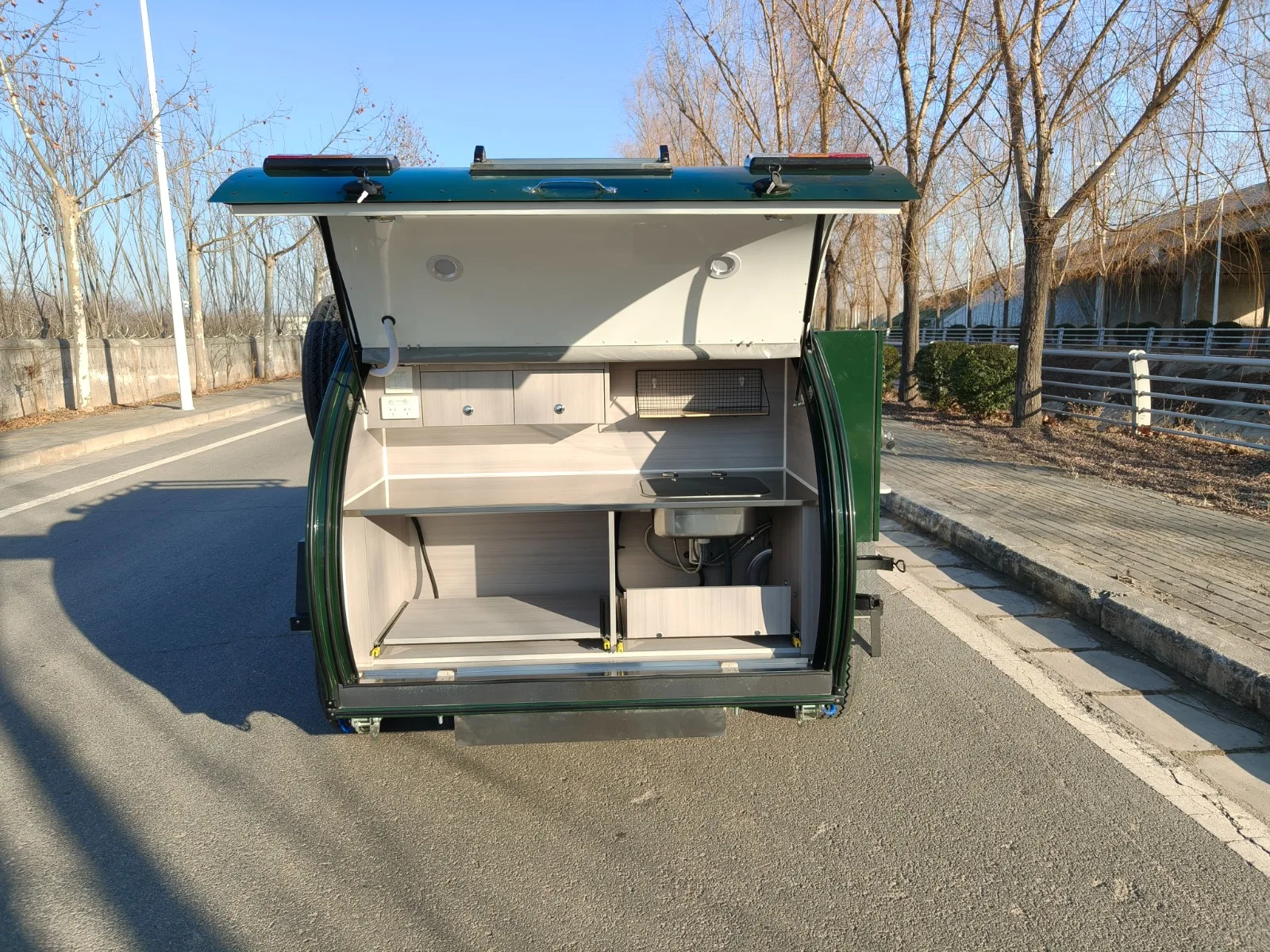
Autumn (March to May) is the season most experienced camper trailer travellers keep to themselves. The summer crowds have gone, the flies have thinned, the inland heat that makes a January trip genuinely dangerous has retreated — and the national parks that were booked solid or inaccessible since October are suddenly available again. Coastal sites quiet down, wildflowers begin in WA’s South West, Flinders Ranges turns its most photogenic, and the High Country of Victoria changes colour.
The trade-off is real but manageable: overnight temperatures drop to 6–8°C in Melbourne and Hobart by May, fire danger seasons are winding down (but not always finished), and Easter is the one chokepoint where booking pressure spikes hard. Handle those three variables correctly and autumn is the best camper trailer season on the calendar.
This guide covers the temperature picture state by state, the top destinations for March, April and May, the gear and setup changes a teardrop needs for autumn conditions, fire danger timing, and the Easter booking windows that catch most people out.
Why Autumn Is Australia’s Best Camping Season
Three things define autumn camping relative to the rest of the year:
Temperature reset. Darwin stays warm year-round, but for everyone else the late-summer heat peak passes by mid-March. Adelaide’s April average maximum is 22.2°C, Melbourne’s is 20.4°C, Sydney’s is 22.6°C — all comfortable hiking and campsite weather. Inland destinations that were genuinely unsafe in January (Alice Springs peaks at 34–36°C in January; the Flinders Ranges can hit 40°C+) become ideal by April, with 15–25°C days.
Crowd drop. Between Easter and the September/October school holidays there is no sustained peak demand at most Australian campgrounds. Sites at Wilsons Prom, Cape Le Grand, Mungo Brush and the Grampians that require ballots or fill months ahead in school holidays often have availability two to four weeks out in May.
Landscape payoff. After late-summer rainfall, central Australia and the outback is at its greenest. Autumn foliage arrives in the Hunter Valley, Beechworth and the Southern Highlands around late April. Waterfalls in Queensland’s wet-season catchments (Atherton Tablelands, Cape Tribulation hinterland) are still full without the closed-road conditions of peak wet season.
For teardrop owners the hard-shell advantage earns its keep in autumn. Morning condensation is real on cool nights — a hard-shell camper doesn’t absorb moisture into canvas and doesn’t require re-proofing. A diesel heater or reverse-cycle AC (fitted to the Ultra and Max models) turns an 8°C night into a comfortable one. And the short five-minute setup means less time in cold, damp conditions on arrival.
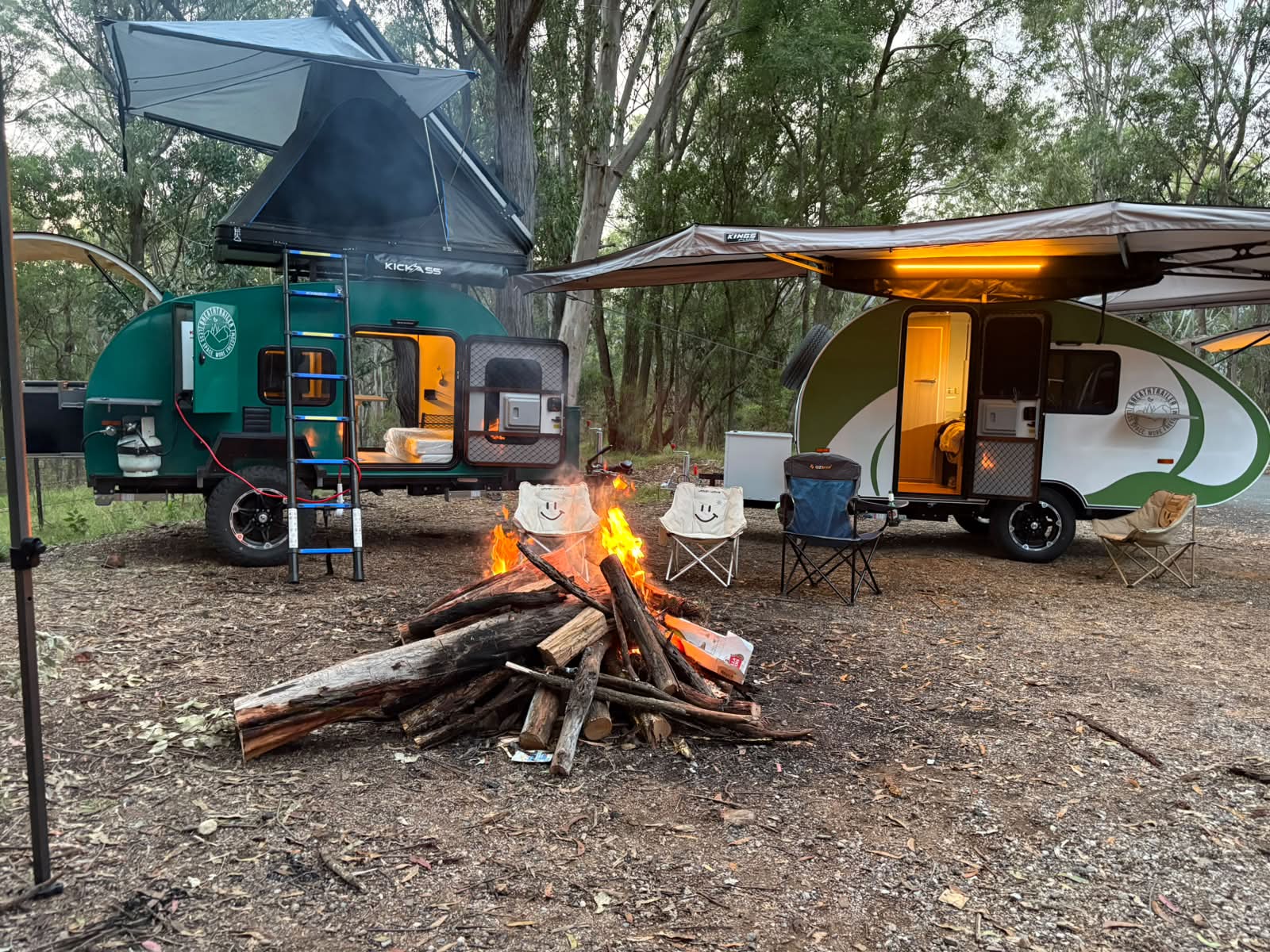
Autumn evenings cool fast across southern Australia — campfire season starts properly in April.
Autumn Temperature Guide by State (March–May)
Overnight lows dictate what sleeping bag and heating you need. Daytime maxima determine whether you’re hiking in comfort or retreating to the shade.
| State/Region | March Max/Min | April Max/Min | May Max/Min | Notes |
|---|---|---|---|---|
| Darwin / NT Top End | 33°C / 25°C | 33°C / 23°C | 31°C / 20°C | Dry season beginning; humidity drops |
| Alice Springs | 34°C / 19°C | 28°C / 13°C | 22°C / 7°C | Cold nights by May; best month is April |
| Cairns / FNQ | 31°C / 23°C | 29°C / 22°C | 28°C / 20°C | Wet season winding down March–April |
| Brisbane | 29°C / 20°C | 26°C / 17°C | 23°C / 14°C | Comfortable for Tablelands/Granite Belt |
| Sydney | 26°C / 18°C | 23°C / 15°C | 19°C / 11°C | Blue Mountains can be 4–5°C cooler |
| Melbourne | 24°C / 14°C | 20°C / 11°C | 16°C / 8°C | Grampians/High Country 3–5°C colder |
| Adelaide | 26°C / 15°C | 22°C / 12°C | 18°C / 8°C | Flinders peaks/outback cooler by May |
| Perth | 28°C / 18°C | 24°C / 14°C | 19°C / 10°C | South-west coast can be wet in May |
| Hobart | 22°C / 12°C | 18°C / 9°C | 15°C / 6°C | Freycinet/east coast 2–3°C warmer than west |
| ACT / High Country (VIC) | 24°C / 11°C | 19°C / 7°C | 13°C / 3°C | Frost possible at elevation from late April |
Source: BOM climate averages. Individual campsite elevations (e.g. Cradle Mountain TAS, Mount Hotham VIC) will be colder. Always check the 7-day forecast before departure at bom.gov.au.
Sleeping bag guide by region:
- NT, FNQ, coastal QLD (all autumn): standard summer sleeping bag or sheet (>15°C overnight).
- NSW coast, SA coast, Perth (March–April): a 5°C-rated bag with a liner is ample.
- VIC, SA, TAS, ACT (April–May): step up to a 0°C bag. A diesel heater on its lowest setting overnight runs 0.1–0.15 L/hr fuel — roughly $0.20–0.30/hr at regional petrol prices.
Best Autumn Camping Destinations by State
Autumn opens up destinations that summer makes uncomfortable or genuinely off-limits. These are the standout picks, one per state, for the March–May window.
South Australia — Flinders Ranges (Ikara-Flinders Ranges NP)
April through October is the ideal window for the Ranges. Daytime temperatures settle at 15–25°C, the flies that make summer nearly unbearable have largely gone, and the red gum creek beds along Brachina Gorge show their colour. Wilpena Pound is rated among the darkest sites in regional SA for stargazing. SA National Parks vehicle entry fees apply; buy the parks pass online before you leave to avoid the self-registration station queue.
The sealed road to Wilpena suits any camper trailer. Arkaroola requires a further three hours of sealed-and-unsealed driving; high clearance recommended, though not 4WD for the main access road. See the full SA camping guide → for campground options and current fees.
Victoria — Grampians National Park
The Grampians in late autumn (April–May) hits the sweet spot: cool mornings, clear skies, and the wildflower season winding down to a manageable level. Brambuk Cultural Centre campground sits centrally for the Pinnacle Walk and MacKenzie Falls. Parks Victoria fees apply; as of 1 July 2026 the Great Ocean Road campgrounds are booked through GORCAPA separately. Parks Vic’s half-price promotion runs until June 2027 for some sites — check before booking.
Full guide: best camping spots in Victoria →.
New South Wales — Hunter Valley and Barrington Tops
The Hunter Valley’s European vineyards produce some of the country’s best autumn foliage in late April to mid-May, turning the Pokolbin–Cessnock corridor into a weekend drive worth the fuel. Barrington Tops NP (declared Great National Park, 2 hours from Newcastle) has campsites at Gloucester River and Carey’s Peak with NPWS 6-tier fees.
The Lovedale Long Lunch (historically May) fills accommodation for 50 km in all directions — book 3–4 months ahead if that weekend aligns with your plan, or time your trip a week either side. Full guide: NSW camping →.
Queensland — Atherton Tablelands
While coastal QLD stays pleasantly warm through autumn (Cairns April max: 29°C), the Tablelands sit at 700–900 m elevation and drop to 14–18°C at night — campfire territory. Millaa Millaa, Ellinja and Zillie Falls are still running strong from the wet season without the road closures of January–March. QPWS camping fees apply ($7.75/adult/night in 2026). Easter crowds concentrate on coastal beaches, leaving the Tablelands unusually quiet in April.
More options: QLD camping guide →.
Western Australia — Lucky Bay, Cape Le Grand NP
Lucky Bay, near Esperance, is the white-sand beach with kangaroos at the waterline. Esperance’s climate is moderate year-round (summer rarely exceeds 25°C), making autumn a solid choice. DBCA WA Park Pass is required: $30 for 5 days or $130 annually. The road to Lucky Bay is sealed. October is peak wildflower season 400 km north (Coalseam Conservation Park area), so the south coast is relatively uncrowded in March–May.
Full guide: WA camping →.
Tasmania — Freycinet Peninsula and Bay of Fires
Autumn (March–April especially) is the quietest and most comfortable season for Tasmania. Summer crowds have cleared, temperatures are still manageable (March highs 19–22°C), and the Bay of Fires’ granite rocks covered in orange lichen look best in morning light. PWS camping fees apply; Spirit of Tasmania bookings for Easter should be made 3+ months ahead — book the car-plus-trailer rate at $224–452 return as soon as dates are confirmed.
Northern Territory — Litchfield National Park
With the wet season officially ending around April, Wangi and Florence Falls are full, access roads are mostly open, and humidity has dropped sharply. May is the dry-season sweet spot: 27–30°C days, almost no rain, and far fewer tourists than the June–August peak. NT Park Pass fees apply.
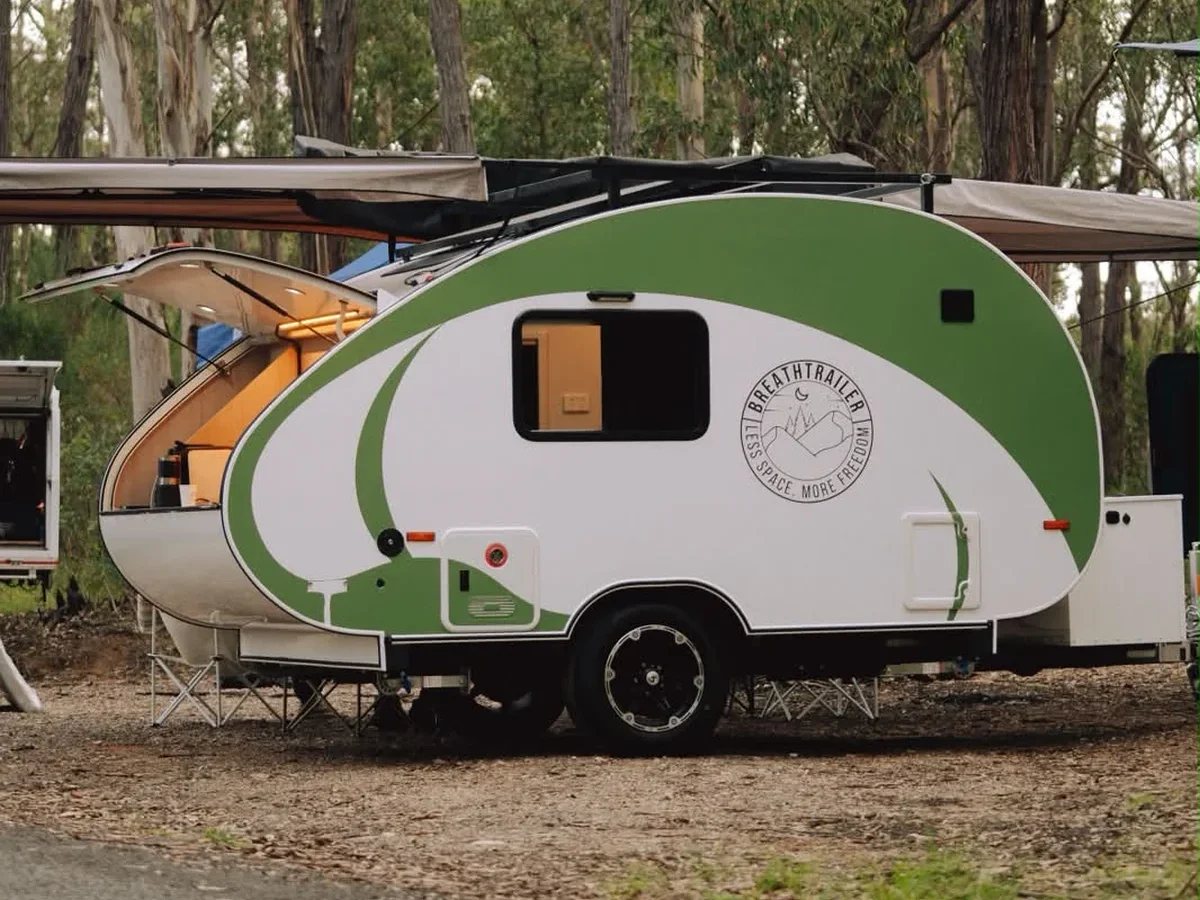
The Max’s awning, side galley and rear hatch turn a quiet autumn campsite into a full basecamp.
Autumn Camping Setup: Four Changes from Summer
A rig optimised for summer camping needs four specific adjustments for March–May.
1. Heating
By May, overnight lows in Melbourne, Adelaide and Hobart sit at 6–9°C. Three practical options:
| Heating Method | Ongoing Power Draw | Approx. Cost (2026) | Best For |
|---|---|---|---|
| Diesel heater (built-in or aftermarket) | 5–30W fan + 0.1–0.15 L/hr fuel | $640–$2,450 installed | Off-grid, nights below 10°C |
| Reverse-cycle AC (240V, powered sites) | 600–800W continuous | Included on Max/Ultra | Powered caravan parks |
| Electric blanket + good sleeping bag | 40–60W for 1–2 hrs | $40–$80 blanket | Nights 8–12°C, 12V available |
The full comparison — including Webasto vs Espar vs Chinese units and power-draw sizing — is in the diesel heater vs AC guide →.
2. Condensation Management
Autumn brings the largest day-night temperature swing of the year across southern Australia — commonly 10–15°C. Warm air from cooking, breathing and washing hits cold hard-shell surfaces and condenses. This is a real issue in teardrops, but it’s manageable with a five-step protocol:
- Extract from the top: run the roof fan on low exhaust while cooking and for the first 30 minutes after settling in for the night.
- Wipe at dawn: a microfibre cloth removes visible moisture from windows and walls before it transfers to bedding.
- Cook outside where possible: autumn’s mild evenings make campfire cooking practical. Boiling water inside a small enclosed space adds significant moisture.
- Use a breathable liner: polyester-fill inners moisture-wick better than cotton sheets at low temps.
- Air out before hitching up: 15 minutes with doors and vents open costs nothing and prevents mould.
3. Awning and Wind
Southern Australia’s autumn weather is variable. Cold fronts move up from the Southern Ocean with little warning — 30 km/h gusts arriving behind what looked like a clear sky. For awning management: guy-rope all four corners, run a dedicated windward stake line, and treat 30 km/h as the threshold to roll it in. The complete awning setup guide → covers mounting options and wind management in detail.
4. Solar Output
Expect 60–75% of summer solar output in April, dropping to 50–65% in May across southern states (Melbourne, Adelaide, Perth and Hobart are meaningfully affected). The same 120W panel / 100Ah lithium setup that comfortably runs a 50L fridge year-round in QLD will need a conservative charge budget in overcast May conditions in VIC. Arrive at sites with a high state of charge and reduce the fridge cycle time on cloudy days.
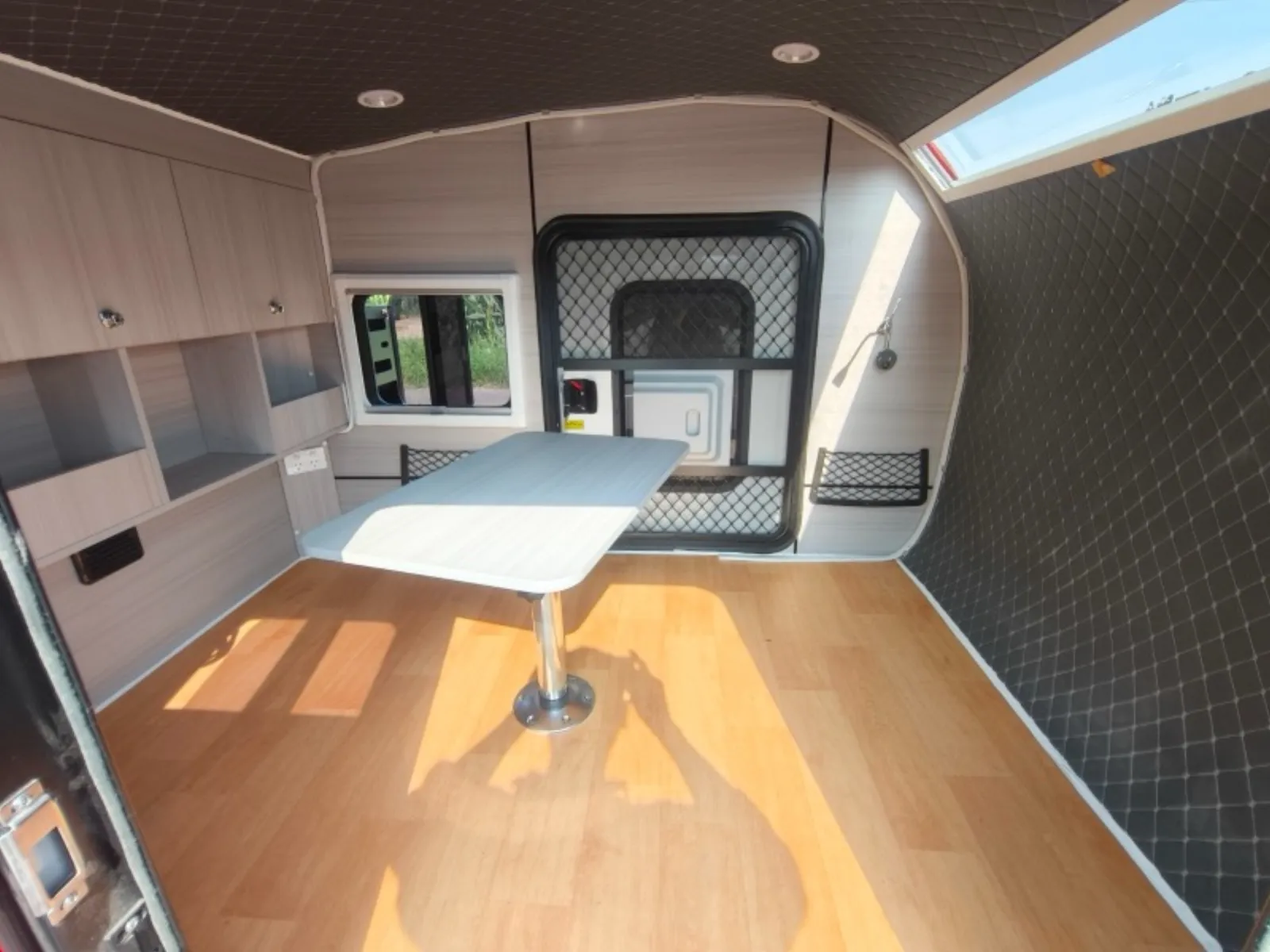
The Ultra’s hard-shell interior stays dry overnight — no canvas re-proofing, no condensation absorbed into the walls.
Fire Danger Season Wind-Down
Fire Danger Season is the most important operational variable for autumn camping. Most declarations cover November through to March or April, but end dates vary by state, local zone and annual conditions. Getting this wrong means camping illegally with a ground fire, or worse, triggering a fine during a Total Fire Ban.
| State | Typical FDS End | 2026 Declared End | Where to Check |
|---|---|---|---|
| NSW (most zones) | 31 March | 1 April 2026 | rfs.nsw.gov.au |
| VIC | 1 May | 4 May 2026 | emergency.vic.gov.au |
| SA | Early April | 8 April 2026 | CFS SA — cfs.sa.gov.au |
| WA (South West Land Division) | 31 March | 1 April 2026 | DFES WA — dfes.wa.gov.au |
| TAS | 30 April | 30 April 2026 | TFS — fire.tas.gov.au |
| ACT | Late March | 26 March 2026 | ACT ESA — esa.act.gov.au |
| QLD (SE QLD zones) | 31 October | Ongoing year-round | QFES — qfes.qld.gov.au |
| NT | Low risk year-round | N/A | NT PFES — pfes.nt.gov.au |
2026 end dates indicative from BOM seasonal reports and state agency announcements. Always confirm current status with your state fire authority before departure.
During an active FDS or Total Fire Ban: no ground fires, no solid-fuel BBQs, no wood-burning stoves. Gas is always permitted. Once the FDS ends, solid-fuel fires are generally allowed in designated fire rings subject to permit requirements in national parks. Late-autumn weather events (heatwaves extending into April) can re-introduce restrictions — check on the day.
Easter and School Holiday Booking Windows
Easter is the only period in autumn that creates genuine booking competition. In 2027, Easter falls 25–28 March (Good Friday to Easter Monday), and state school systems add a two-week autumn holiday block either side.
| Campground Type | Easter / School Holidays | Autumn Off-Peak |
|---|---|---|
| Popular NP (Wilsons Prom, Wilpena Pound) | 3–6 months ahead | 2–4 weeks ahead |
| Remote NP (Cape Le Grand, Litchfield) | 2–3 months ahead | 1–2 weeks ahead |
| QPWS standard sites | 2–3 months ahead | 3–7 days ahead |
| State forests / crown land | No booking | No booking |
| Coastal caravan parks (VIC/SA/QLD) | 4–6 months ahead | Walk-in or 1 week |
Easter long weekends often require minimum 2-night stays at both holiday parks and popular national park sites. Check individual booking rules at the relevant state parks platform.
Free camping → bypasses Easter booking pressure entirely. Self-contained models — any Breath trailer fitted with a grey water tank — unlock rest areas, state forests and crown land across all states, with no booking required. The Breath Max is the only sub-$50k teardrop on the Australian market with a full interior bathroom and self-containment standard.
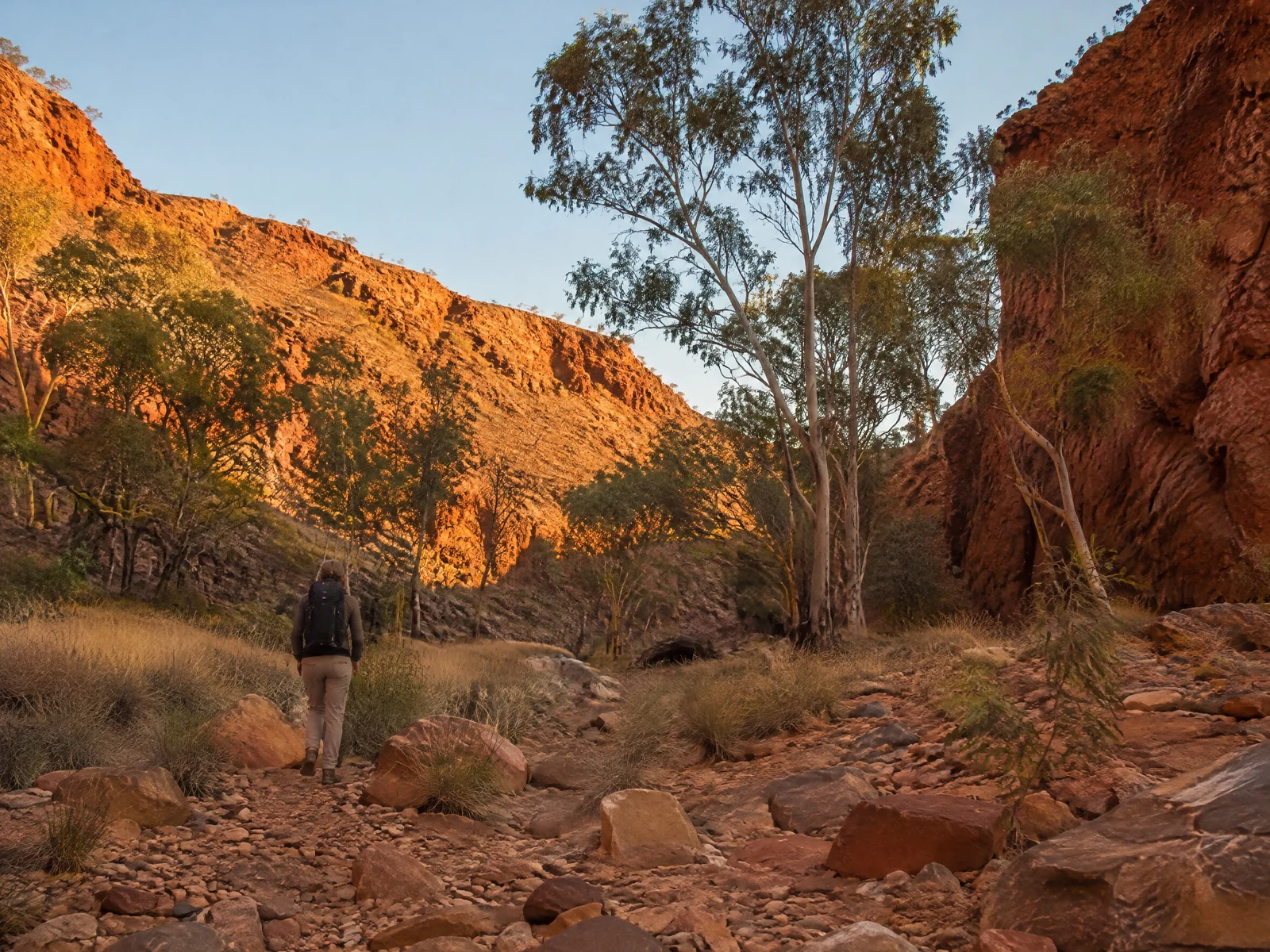
Illustration: The Flinders Ranges are at their best April–May, when heat and flies have eased and the creek beds show their colour.
Autumn Packing Adjustments (Camper Trailer)
The full year-round camper trailer packing list → covers every category. These are the seasonal additions or swaps for March–May:
| Category | Autumn Addition or Swap | Reason |
|---|---|---|
| Sleeping | 0°C-rated bag + liner (SA/VIC/TAS), or 5°C bag (QLD/NSW coast) | Nights below 12°C from April south |
| Clothing | Fleece mid-layer, waterproof shell, warm beanie | Morning damp and afternoon fronts |
| Footwear | Waterproof trail shoes or light gumboots | Wet grass, morning frost at elevation |
| Cooking | Cast-iron camp grill, fire-rated griddle | Post-FDS campfire cooking is viable |
| Condensation | Microfibre cloths (×2), moisture-wicking sheet liner | Hard-shell surfaces in the morning |
| Lighting | Warm-white LED lantern (2700K) | Evenings arrive 30–60 min earlier by May |
| Safety | Fire extinguisher, shovel | Required in some NPs during FDS transition |
| Connectivity | BOM app and ESTA alerts registered | Rain events close access roads in autumn |
Per-Model Guide: Breath Trailer in Autumn
Each model is mechanically suitable for autumn year-round, but the season amplifies the value of specific features.
| Model | Tare / ATM | Autumn Sweet Spot | Key Feature for the Season |
|---|---|---|---|
| Essential | 700 kg / 900 kg | Day-trip and weekend couples | Lightest option; pairs well with a portable diesel heater add-on |
| Plus | 800 kg / 1,050 kg | 4–7 night trips, powered sites | Fridge standard; 12V system supports electric blanket; easiest awning setup |
| Ultra | 900 kg / 1,200 kg | Off-grid autumn touring | External shower for muddy arrivals; 120W solar + 100Ah lithium handles overcast autumn days |
| Max | 1,200 kg / 1,600 kg | Extended trips, grey nomads, FNQ/Tablelands | Interior bathroom for cold mornings; 2.1 m standing headroom; self-contained for free camping |
The Max’s interior bathroom is the feature that matters most when you arrive at a remote site at 7°C at 6:30 am in the Flinders Ranges in May. A walk to the amenities block — if one exists — is a different proposition in those conditions.
For couples targeting South Australia or Western Australia in April: the couples guide → and the retirees/grey nomad guide → both deal with route planning across these autumn-favourite regions.
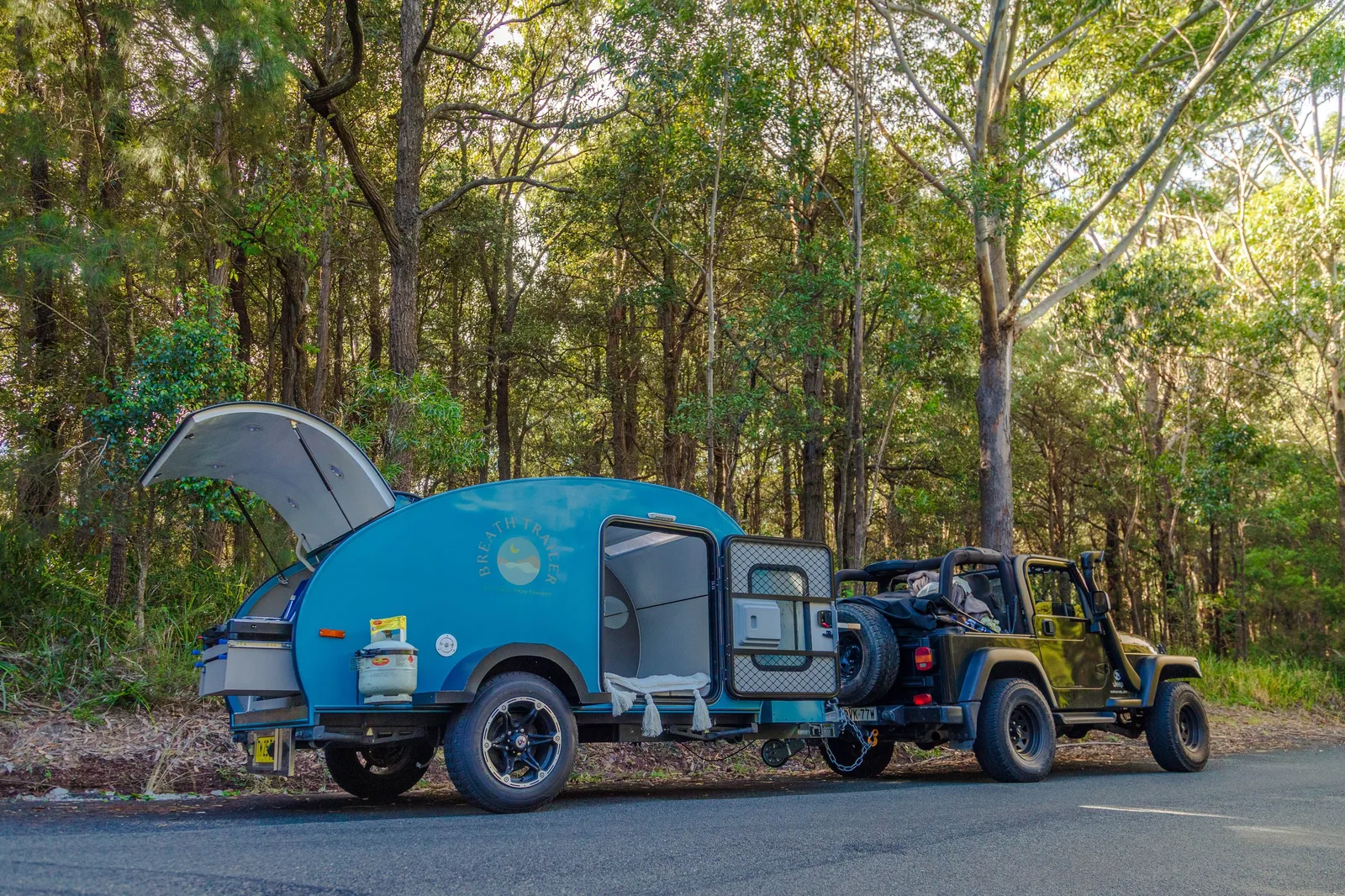
Autumn is when the bush is at its quietest and most accessible — and when the campsite is likely yours.
Autumn Recommission Checklist
If your trailer sat through summer unused — common when WA, SA or NT summer temperatures make camping genuinely uncomfortable — run through this recommission before Easter:
| Item | Check | Why |
|---|---|---|
| Tyre pressure and DOT age | Re-inflate to spec; replace if DOT date >5 years | Heat cycling degrades rubber; sidewall cracks |
| 12V battery | Check charge level, run BMS test | Self-discharges 3–5%/month in storage |
| 12V fridge | Check door seal, run pull-down test | Summer heat can degrade gaskets |
| Water tank | Sanitise (12 mL bleach per 100 L), then flush | Algae and bacteria grow in stored water |
| Solar panels | Check connections; clean surface | Dust/dirt from summer storage |
| Wheel bearings | Visual check; torque nuts; re-grease if layup >3 months | Grease migrates over storage period |
| Seals and awning rail | Inspect for UV cracking; apply silicone sealant | Direct summer UV exposure |
The full maintenance and care guide → covers service intervals in detail, including coastal vs inland frequency differences.
Before your first trip, also run through the pre-departure checklist → — hitching sequence, 12V functional test, water pressure test, tyre pressures on the tow vehicle and trailer.
Frequently Asked Questions
Is autumn a good time to camp in Australia? Autumn (March–May) is arguably the most versatile camping season on the Australian calendar. The extreme summer heat retreats, crowds thin between Easter and the September school holidays, and landscapes across SA, VIC and NSW are at their most interesting. The main variables are fire danger season end dates (varies by state, typically April–May) and colder overnight temperatures by May in southern states.
What temperatures should I expect camping in autumn? It varies significantly by state and month. Darwin sits at 33°C with low humidity through April; Hobart drops to 6°C overnight by late April. As a broad guide: coastal QLD and the NT are T-shirt weather all autumn; southern states (VIC, TAS, SA highlands, ACT) need a 0°C sleeping bag from April and heating capability from May. Use the temperature table in this guide for your target region and check BOM forecasts before departure.
Does fire danger season affect autumn camping? Yes. Fire Danger Season declarations across most states cover November through to late March or April. Ground fires, solid-fuel BBQs and wood-burning stoves are banned during declared periods. Most bans lift between late March and early May depending on state — always check your state fire agency website before departure. Gas cooking is always permitted.
When should I book camping for Easter? Popular national park sites for Easter fill 3–6 months ahead — Wilsons Prom, Wilpena Pound and coastal QLD sites are often fully booked within 24 hours of the booking window opening. If you’re flexible on destination, remote national park sites, state forests and free camping (self-contained models only) require little or no advance booking and are far less crowded.
What’s the best autumn destination for a first-time camper trailer trip? The Flinders Ranges (SA) in April is the most consistent recommendation for a first serious trip. Road access is good (sealed to Wilpena), temperatures are ideal, sites are reasonably available outside Easter, the landscape is spectacular and there are no crocodiles. From Sydney or Melbourne, consider the Hunter Valley or Grampians as closer alternatives with less driving on the first run.
Ready for Autumn?
Autumn is when the campgrounds quieten down and the parts of Australia that were too hot, too busy or too wet in summer become genuinely extraordinary. A teardrop’s five-minute setup, hard-shell protection from morning condensation, and small interior volume that a diesel heater warms in minutes are all advantages that autumn conditions amplify.
Compare all four Breath models → or book a viewing to talk through which suits your plans →.