Best Camping Toilet Options for Australia (2026 Buyer's Guide)
From portable cassette to composting, this guide covers every camping toilet type with real AU prices, self-containment rules and honest advice for Australian campers.
After dark at a remote free campsite, the nearest amenities block is 15 kilometres away — or simply doesn’t exist. For around 4.7 million Australians who camp in camper trailers or caravans each year, your toilet setup isn’t a minor convenience item. It’s the deciding factor in whether you can legally access more than half of Australia’s best free camping spots.
Get the decision wrong and you’ll be paying $40-60 a night at powered caravan parks. Get it right and you unlock state forests, crown land rest areas, remote national parks and council free camps — thousands of nights for nothing or next to it. This guide covers every toilet type available to Australian campers in 2026: real prices, honest trade-offs, self-containment rules by state, and a decision framework that matches your toilet to your actual travel style.
Why Your Toilet Choice Matters More Than You Think
Australia’s free camping network has grown dramatically, but access is increasingly tied to self-containment — the legal requirement to carry all waste on board rather than discharging it on the ground. States including Queensland, New South Wales, Victoria and Western Australia have steadily expanded self-contained-only zones since 2024.
A toilet is only part of what self-containment requires. As our detailed self-containment guide explains, the full package is: a permanently fitted or securely stowed toilet (cassette, composting or portable with sealed waste tank) + a sealed grey water tank + onboard fresh water. A toilet alone won’t open every campsite — but the wrong toilet will close many of them.
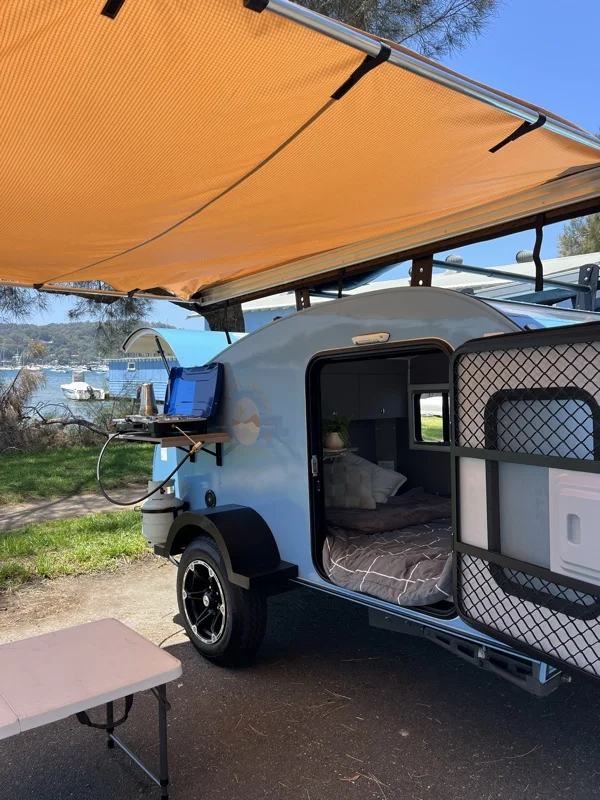
Your toilet setup decides which free camps and remote sites you can legally use.
| Toilet type | Typically qualifies as self-contained? | Notes |
|---|---|---|
| Cassette (permanently fitted) | ✅ Yes | Standard in caravans; accepted everywhere |
| Cassette (portable, sealed tank) | ✅ Yes in most states | QLD/WA rangers check for sealed waste tank |
| Composting / urine-diverting | ✅ Yes if solids contained | Must have sealed solid waste container |
| Bag / dry flush | ⚠️ Sometimes | Accepted in some areas; not universally recognised |
| Bucket / cat-hole | ❌ No | Fails all self-contained definitions |
| Built-in interior bathroom | ✅ Yes | Best result; no ranger ambiguity |
The 5 Types of Camping Toilet at a Glance
Before diving into each type, here’s the quick overview:
| Type | Setup | Emptying | Self-contained | Price range (AUD) |
|---|---|---|---|---|
| Portable cassette (flush) | No install | Dump point every 3-5 days | ✅ Yes | $149 – $389 |
| Composting / urine-diverting | Optional mount | Solids bag monthly; liquids daily/bottle | ✅ Yes | $350 – $1,200 |
| Dry flush / bag | No install | Sealed bag each use | ⚠️ Sometimes | $300 – $550 (+ bags) |
| Bucket / porta-potti basic | No install | Dump point or dig | ❌ No | $15 – $89 |
| Built-in (caravan/trailer bathroom) | Factory fitted | Dump point or composting | ✅ Best | $0 extra if standard |
1. Cassette Toilets — The Australian Caravan Standard
A cassette toilet looks and feels closest to a home toilet. Waste drops into a sealed, removable cassette tank (typically 15–19 litres) treated with chemical breakdown fluid. When the tank is full, you slide it out through an external hatch and empty it at a dump point.
How they work: A small flush tank (4–6 L) provides a lever or electric flush. Aqua-Kem Blue or equivalent chemical deodorises and begins breaking down waste. The cassette locks in place and seals against leaks.
Best cassette toilets available in Australia (2026):
| Model | Flush type | Tank size | Approx. AU price |
|---|---|---|---|
| Thetford Porta Potti 365 | Piston flush | 21 L waste / 15 L fresh | $199 – $289 |
| Thetford Porta Potti 565E | Electric flush | 21 L waste / 15 L fresh | $339 – $389 |
| Dometic CTW 4110 | Gravity flush | 18 L waste / 7 L fresh | $249 – $299 |
| Spinifex 20L Deluxe | Piston flush | 20 L waste | $89 – $149 |
| Aussie Traveller 20L | Piston flush | 20 L waste | $119 – $169 |
Dump point frequency: For two people averaging 6–8 uses per day total, a 19-litre cassette lasts roughly 3–4 days before needing emptying. This is the single biggest constraint of cassette toilets on remote trips. The national dump point network (accessible via WikiCamps, CamperMate or the CMCA’s 500-location network) is extensive in coastal and regional areas but sparse in the outback.
Pros: Familiar to use, inexpensive, widely available, undisputed self-contained status.
Cons: Requires dump point access every 3-4 days; handling the cassette; chemical cost ~$20-40 per trip week.
Best for: Weekend campers, grey nomads on established touring routes, anyone staying in caravan parks part of the time.
2. Composting and Urine-Diverting Toilets — Best for Remote Free Camping
Composting toilets separate urine from solids at the source — because mixing the two is what creates odour. Liquid drains into a separate bottle (emptied daily or every 1-2 days into any toilet, drain or on vegetation well away from camp). Solids mix with a small amount of coco coir and begin decomposing in a sealed chamber.
The result: almost no smell, no chemical purchases, no dump point requirement for solids, and a dramatically extended time between emptying (weeks to months depending on use and model). For serious free campers spending extended time off-grid, this is the most practical toilet type.
Top composting toilet options in Australia (2026):
| Model | Solid capacity | Liquid capacity | Price (AUD) |
|---|---|---|---|
| Joolca GottaGo Eco | 11 L bag | 4.6 L bottle | $349.99 |
| Joolca GottaGo (standard) | 11 L | 4.6 L | $299.99 |
| Nature’s Head | 10 L | 2.2 L | ~$1,100 |
| Air Head Composting Toilet | 8 L | 2 L | ~$1,050 |
| Kildwick FancyLoo | 12 L | 5 L | ~$750 |
The Joolca GottaGo has become the most popular choice for Australian campers. At $349.99, it’s priced accessibly, available at BCF, Snowys and Anaconda, and the modular design lets you use it as a composting toilet, a bag toilet (where legal), or even a chemical flush when near dump points. The 11 L solid waste bag typically lasts 2-4 weeks for a couple.
Nature’s Head is the preferred option for full-time tourers doing the Big Lap — a larger chamber, stainless hardware, and a design proven over thousands of kilometres of corrugated Australian outback roads.
Pros: No dump point needed for solids; minimal odour; low ongoing cost; ideal for extended remote travel.
Cons: Higher upfront cost; daily liquid emptying; requires coco coir ($15-25/bag, lasts 4-8 weeks); some council rangers unfamiliar with the type.
Best for: Extended free campers, remote outback travel, people doing the Big Lap, anyone camping more than 5 nights between towns.
3. Dry Flush Toilets — Convenience at a Cost
Dry flush toilets (the Laveo Dry Flush is the main AU option at $350-500) wrap each use in a small bag that seals airtight with a motor-driven mechanism. No water, no chemicals, no liquid collection. The cartridge holds about 15 uses ($20-30 per cartridge) before needing replacement.
Pros: Genuinely zero odour, no liquids, no mess.
Cons: Expensive per use (~$1.50-2.00/flush); cartridge availability varies in remote areas; ongoing cost of ~$200-400/year for regular users.
Self-containment status: Accepted in most Australian self-contained zones because the bag seals all waste, but some rangers require a sealed external container. Carry a sealed bin to be safe.
Best for: Occasional short trips where convenience outweighs cost, or campers who simply cannot manage the liquid component of a composting toilet.
4. Bucket and Basic Chemical Toilets — Not for Free Camping
The $15-89 bucket-style chemical toilets (Spinifex Outhouse, basic pop-up camp toilets) are fine for day hikes and last-resort emergency use. They do not qualify as self-contained under any Australian state definition because they lack a sealed waste containment tank that can be carried and emptied at a dump point.
Using one in a self-contained-only zone is a real risk: rangers in QLD, NSW and WA regularly inspect and fine campers using non-compliant setups. Fines range from $130 (NT) to $2,200 (NSW national parks) for prohibited waste disposal.
Best for: Day trips, music festivals, genuine emergencies — not for extended camping or free camping access.
5. Permanently Fitted Interior Bathrooms — The Gold Standard
The top of the toilet hierarchy for camper trailers is a factory-installed interior bathroom: a dedicated wet bath with a fitted cassette or composting toilet, shower, sink and grey water containment built as a unit.
This approach eliminates all the trade-offs above. No handling of cassettes outside in the rain. No composting liquid bottle to tip out in the morning. No question of self-containment status from any ranger in any state.
The challenge has historically been cost. A full interior bathroom pushes most caravan prices to $60,000-$100,000+, and most teardrop campers in Australia historically offered no bathroom at all — or a portable cassette stowed in an external locker.
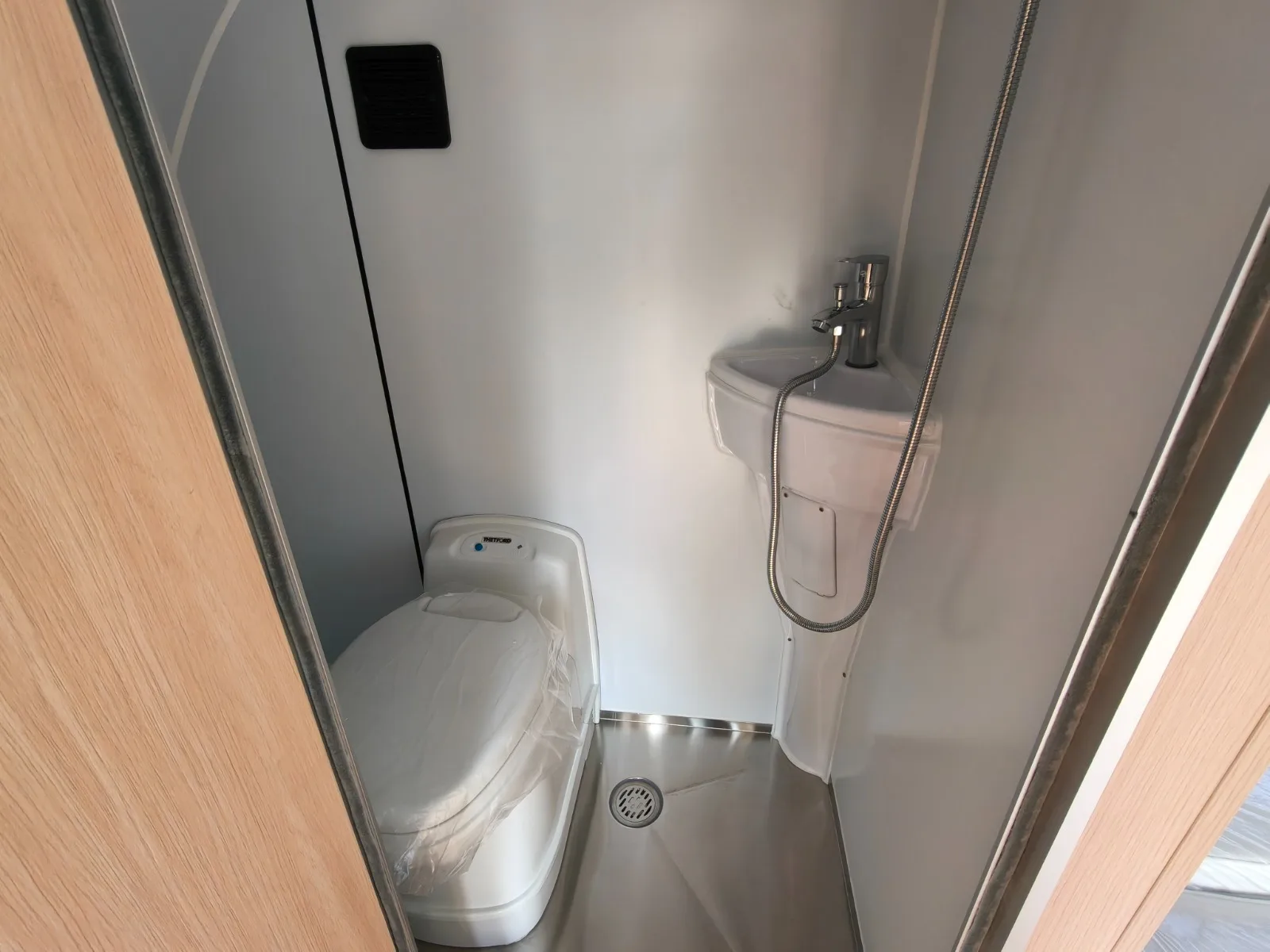
The Breath Max changed that equation at $42,900. It’s the only teardrop-style camper on the Australian market under $50,000 with a full interior wet bathroom: fitted cassette toilet, hot shower, and full grey water containment — all within a 1,200 kg ATM trailer towable by a mid-size SUV. The Breath Max delivers what Greg and Margaret (or Mia doing solo remote work) previously had to spend $80,000+ on in a full caravan. More on this in the model comparison section below.
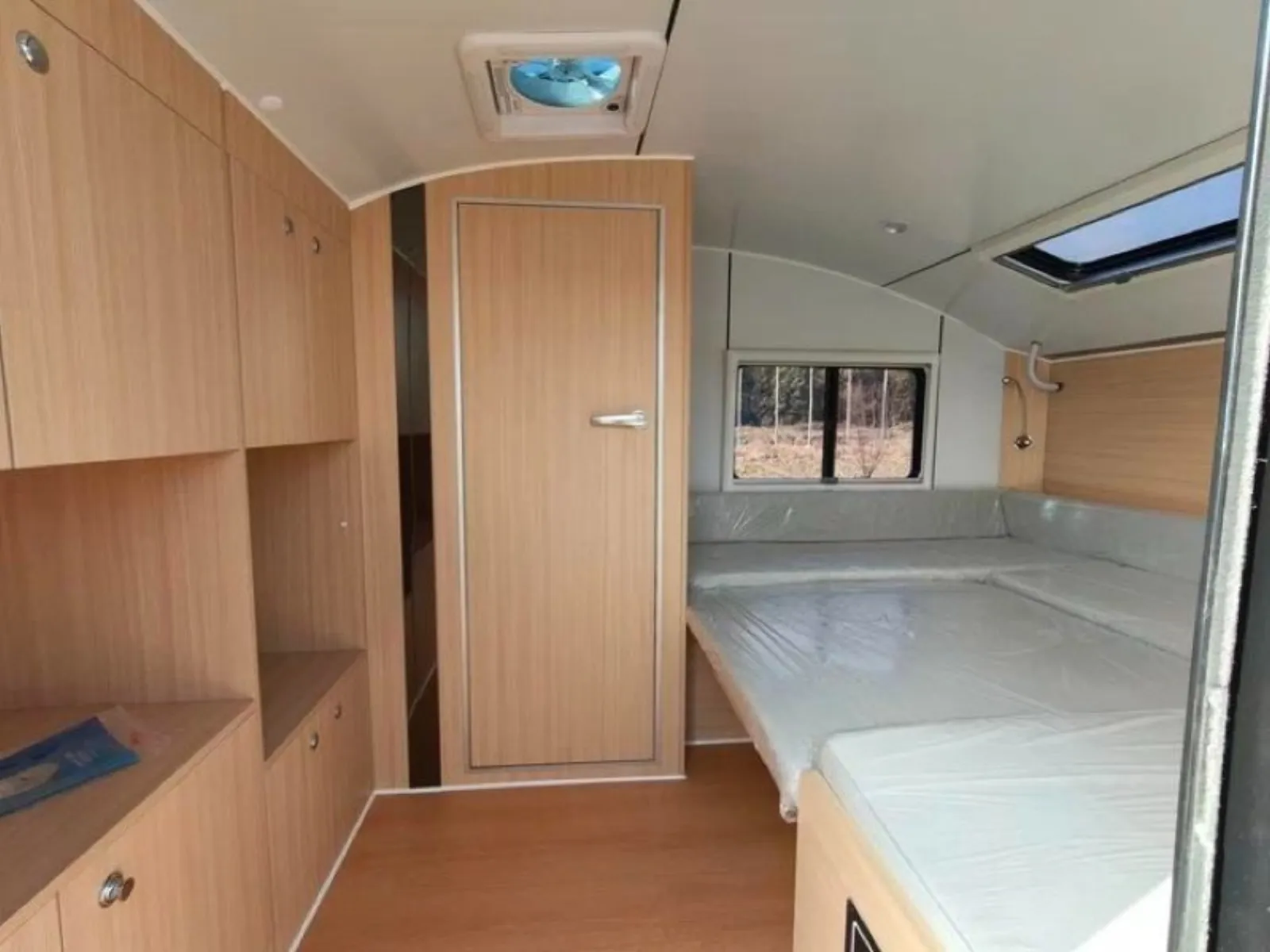
Inside the Breath Max, the bathroom sits behind its own door beside the bed.
Self-Containment Rules by State (2026)
Rules vary by state and the type of land. This table summarises the current position for the most common free camping land types:
| State/Territory | State forests | Crown land / rest areas | NP / conservation parks | Key note |
|---|---|---|---|---|
| NSW | Toilet required (sealed waste) | Varies by council | Self-contained only in many parks | Central Coast Council: self-contained only from Feb 2026 |
| QLD | Not required on most state forest | Local councils vary | QPWS: contained waste required | Rangers actively check at popular spots |
| VIC | Not required (LNT expected) | Varies | Parks Vic: increasing self-contained zones | Check Parks Vic site for each park |
| WA | Required in many managed areas | Varies by shire | DBCA: contained waste mandatory | Popular DPaW areas strictly enforced |
| SA | LNT; toilet recommended | Varies | DEW SA: self-contained recommended | Less strictly enforced outside Flinders |
| TAS | LNT; facilities at most sites | Low use | PWS: self-contained preferred | Wilderness areas: cat-hole or pack out |
| NT | Less enforced | Remote: LNT | NT Parks: toilet required | Croc Country has specific guidelines |
| ACT | n/a | n/a | Self-contained required | Small territory; caravan parks nearby |
Practical rule: if you carry a sealed cassette or composting toilet plus a grey water tank, you’ll meet the requirements for the vast majority of free camping in all eight states. The ambiguity sits only with bag toilets and basic chemical units in QLD and WA.
Dump Points: What’s Available and Where
If you opt for a cassette toilet, you’re working the dump point network. The good news is Australia’s network is among the best in the world:
- CMCA (Campervan and Motorhome Club of Australia): 500+ dump points for members, concentrated in eastern Australia
- WikiCamps Australia ($9.99 one-time): 6,000+ dump points + free camps on one map, filterable by facility
- CamperMate (free): crowd-sourced dump points, best for real-time availability
- Camps Australia Wide ($9.99/yr): particularly strong for outback routes
Dump point frequency planning for a 19L cassette serving two people (6-8 uses/day):
- Weekend trip (2 nights): one emptying sufficient
- One-week trip: 2-3 empties needed
- Two weeks remote: 4-6 empties — check the WikiCamps route before leaving
- One month Big Lap leg: plan emptying stops as navigation waypoints
For more on managing your whole water and waste system, see our camper trailer water system guide.
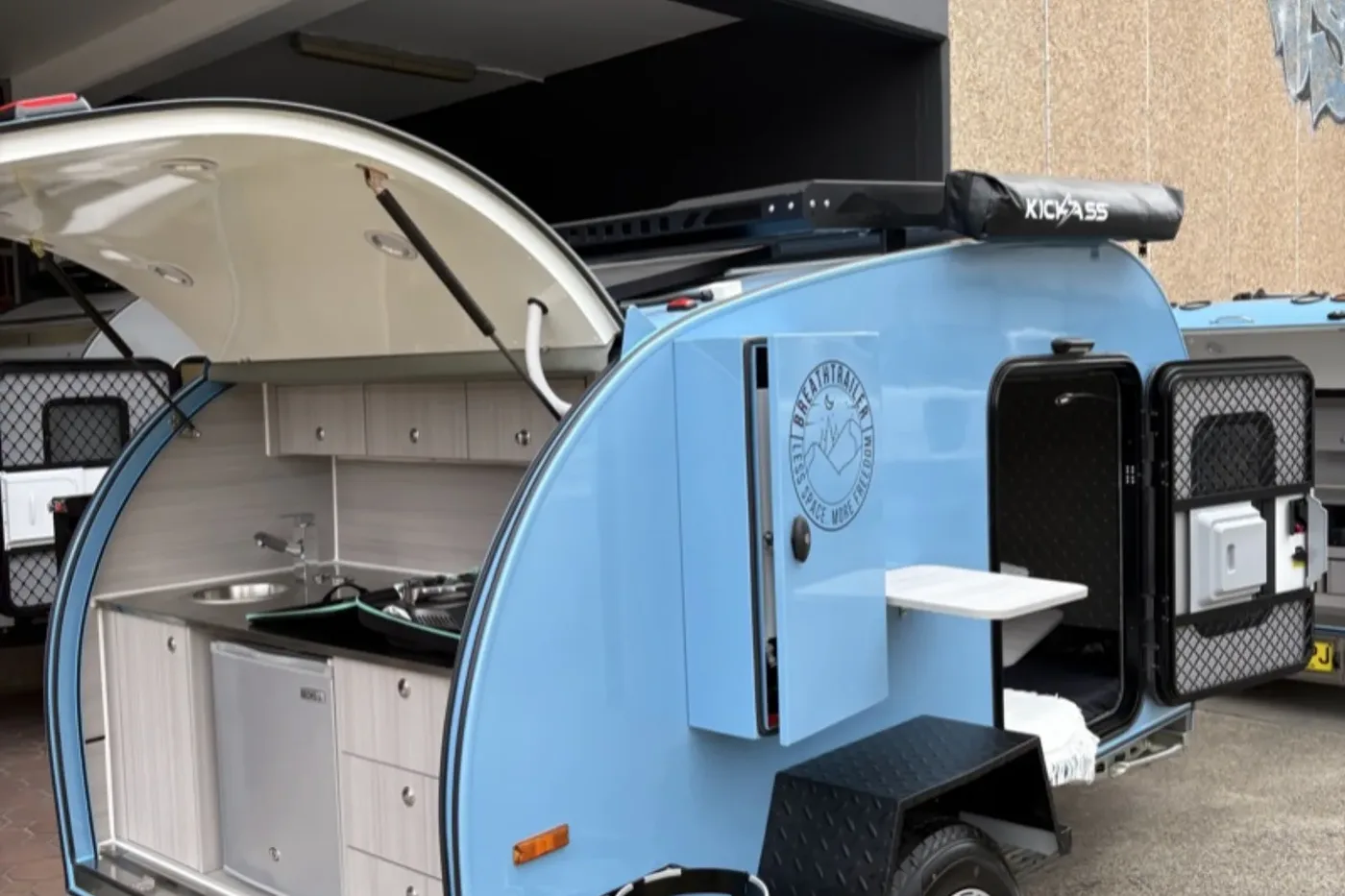
The galley sink is part of the waste equation too: its grey water needs somewhere sealed to go.
Toilet Chemicals and Maintenance
For cassette toilets:
| Product | Purpose | Approx. AU price |
|---|---|---|
| Aqua-Kem Blue (2 L) | Waste breakdown + deodoriser | $25 – $35 |
| Aqua-Rinse Plus (2 L) | Flush tank freshener | $18 – $25 |
| Cassette Clear (sachet) | Descaler + bowl clean | $12 – $18 |
| Thetford Cassette Seal Lubricant | Keeps blade seal flexible | $9 – $15 |
Add 30 ml of Aqua-Kem Blue to an empty cassette with 200 ml water before use. Replace when the level indicator reads full — never overfill. Empty at a licensed dump point only; never into stormwater drains, rivers or soil. After emptying, rinse the cassette twice with water before refilling.
For composting toilets:
- Add a coco coir brick ($15-25, pre-expanded or compressed) to the solid chamber at the start of each trip
- Empty the liquid bottle daily (into a toilet, drain or well away from camp in vegetation — 50 m minimum)
- After a full trip, seal the solid waste in a compostable bag and dispose of at a dump point or in a composting facility
- Annual deep clean with diluted vinegar solution
Leave No Trace principles apply regardless of toilet type. Human waste must be carried out from all national parks and most campgrounds. The “cat-hole” method (bury waste 15 cm deep, 200 m from water) is appropriate only on remote public land where no toilet facility of any type exists.
Comparing Toilet Options for Breath Trailer Models
Each Breath Trailer model handles the toilet question differently:
| Model | Tare weight | Toilet standard | Grey water | Self-contained? |
|---|---|---|---|---|
| Essential ($23,320) | 700 kg | None (storage space available for portable) | No grey tank | ❌ Portable cassette needed + aftermarket grey tank |
| Plus ($29,766) | 800 kg | None standard | No grey tank | ❌ Portable cassette + aftermarket grey tank |
| Ultra ($34,749) | 900 kg | External shower (rear locker) | Grey tank included | ⚠️ Add portable cassette for self-containment |
| Max ($42,900) | 1,200 kg | Interior wet bathroom (cassette + shower) | Full grey tank | ✅ Self-contained as standard |
The Breath Ultra deserves a note here. Its external shower and built-in grey water containment mean you’re close to self-contained — add a Thetford Porta Potti 365 ($199-289) stowed in the rear locker, and you meet the legal definition in all eight states. Total cost: ~$35,000-35,100 all-in for a genuinely self-contained rig.
The Breath Max is the only model in the range (and the only teardrop under $50,000 on the Australian market) where self-containment is factory-delivered. The full details are on the Breath Max page and our dedicated shower and toilet page.
Which Toilet Is Right for Your Trip Style?
This is the decision that actually matters. Match your choice to how you actually camp:
| Travel style | Recommended toilet type | Reasoning |
|---|---|---|
| Weekends only, caravan parks | Budget cassette (Spinifex/Aussie Traveller) | Dump point every trip; low volume |
| Regional touring, mix of parks + free camps | Thetford Porta Potti 365 | Proven performance, widest dump point compatibility |
| Extended touring, 2+ weeks between towns | Composting (Joolca GottaGo or Nature’s Head) | Eliminates dump point dependency for solids |
| Big Lap full-timers | Nature’s Head + Breath Max | Long-haul composting or built-in bathroom; no compromise |
| Solo or couple, free camping focus | Composting or Breath Max | Grey nomad persona: bathroom privacy, no midnight walk |
| Families with kids | Breath Max interior bathroom or fitted cassette | Kids create unpredictability; built-in best |
| Off-grid remote (Simpson, Gibb River Road) | Composting — Nature’s Head | No dump points for weeks; composting handles it |
For perspective on how this fits into full-trip planning for different personas, see our guides for retirees and grey nomads, couples and solo travellers.
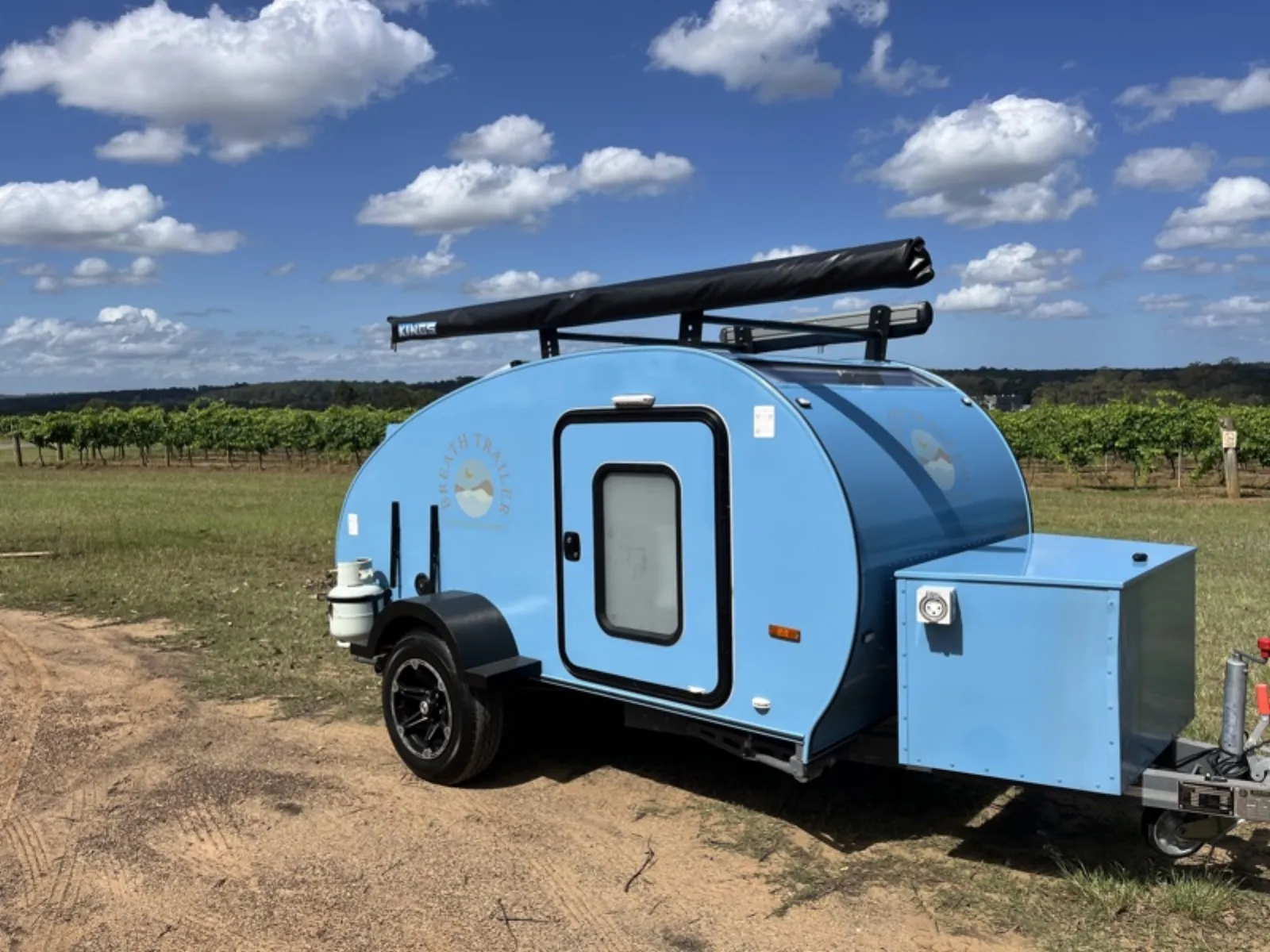
Weekend near town or weeks off-grid, the right toilet depends on how far you roam from a dump point.
Frequently Asked Questions
Does a portable cassette toilet count as self-contained in Australia?
In most states, yes — provided it has a sealed waste tank (not a bucket-style open container) that you empty at a dump point. Queensland and WA rangers are the strictest; they’re looking for a tank that seals completely. The Thetford Porta Potti range all qualify. Simple bucket toilets do not.
How often do I need to empty a cassette toilet?
For two people averaging 6-8 combined uses per day, a standard 19-20 litre cassette lasts roughly 3-4 days. Plan a dump point stop on day 3 of any remote trip. WikiCamps shows dump point locations along your route.
Can I use a composting toilet in Australian national parks?
Yes — composting toilets are accepted as self-contained waste management in all Australian states provided the solid waste is sealed in a container and not discharged on site. The liquid component must also be disposed of responsibly (into a toilet or dump point), not onto the ground within 50 m of water.
What chemicals can I put in a cassette toilet in Australia?
Use only formaldehyde-free chemical breakdown fluids such as Aqua-Kem Blue, Green (eco-friendly) or equivalent. Formaldehyde-based chemicals are banned for dump point disposal in all Australian states. Never use household bleach or detergents in a cassette — they destroy the breakdown chemistry and damage seals.
Is grey water containment always required for self-containment?
Yes. A toilet alone is not enough for self-contained status. You need a sealed grey water tank (or containment system) for sink and shower runoff in addition to toilet waste containment. The Breath Ultra and Max both include grey water tanks as standard. For Essential and Plus owners, an aftermarket grey water bladder ($80-200 fitted under the trailer) solves this.
What is the cheapest path to self-containment for a camper trailer without a toilet?
A Thetford Porta Potti 365 ($199-289) + a grey water capture solution (portable bladder from $80 or fitted tank from ~$350 installed) is the lowest-cost route — roughly $280-650 total depending on the grey water option chosen.
The Bottom Line
The right camping toilet for an Australian camper trailer comes down to two questions: how remote do you travel, and how often do you need dump points?
- For weekend campers near caravan parks: a $149-289 cassette toilet does the job, full stop.
- For extended free campers and remote tourers: a composting toilet ($350-1,100) eliminates dump point dependency and pays back quickly in saved caravan park fees.
- For those who want zero compromise: the Breath Max’s factory interior wet bathroom is the only teardrop-class solution in Australia that delivers self-containment without a single aftermarket addition.
Ready to explore which Breath Trailer model fits your camping style? Compare all four models or book a no-pressure viewing at one of our ambassador locations across Australia.