Camper Trailer Registration in Australia: 2026 State-by-State Guide
Know the VIN, RAV, inspection and transfer steps before you buy. Compare current registration rules and fee methods across every state and territory.
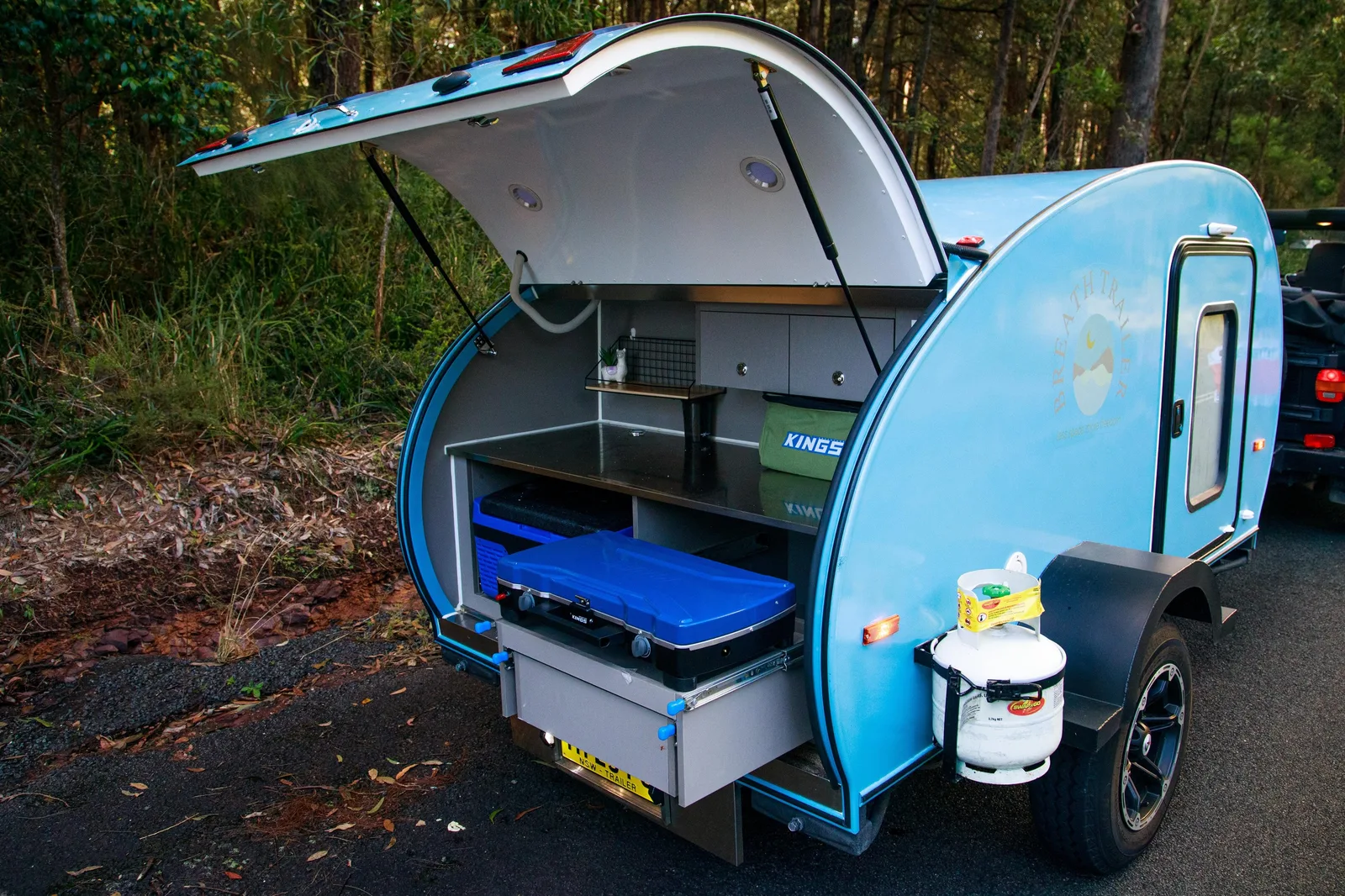
Camper trailer registration in Australia looks simple until a missing VIN, an interstate plate or an unverified tare weight stops the transaction. The national government controls whether a newly supplied trailer is approved for the Australian market. Your state or territory then controls registration, inspections, plates, transfers and fees. Those are two separate layers.
For a factory-built new camper, the dealer will usually handle most of the work. For a used, imported, modified or home-built trailer, the buyer may need to prove its identity, ownership, mass and compliance before it can legally go on the road.
This guide explains the process as at 18 September 2026: RAV and VIN checks, inspections, interstate transfers, current fee methods and the questions to resolve before paying a deposit. Use the linked transport authority for the final amount and appointment requirements.
The short answer: what must be in place?
For most camper trailers used on public roads, expect to need all of the following:
| Item | What it proves | Check before you pay |
|---|---|---|
| VIN or accepted chassis number | The trailer’s unique identity | The number on the frame, plate, invoice and rego record must match exactly |
| RAV entry for a newly supplied trailer | Approval to be provided to the Australian market | Search the VIN in the public RAV database |
| Trailer identification plate | Manufacturer, model and mass information | No blank fields, altered numbers or plate that belongs to another trailer |
| Proof of ownership | Your entitlement to register it | Tax invoice or signed receipt with seller, buyer, VIN, date and price |
| Inspection where required | Identity, safety or roadworthiness | Book the correct inspection class for the trailer and transaction |
| Verified tare and mass ratings | The fee band and legal loading limits | Use the plate, RAV record or an accepted weighbridge certificate |
| State or territory registration | Authority to use the trailer on public roads | Do not assume the tow vehicle’s registration covers the trailer |
Victoria has a narrow exemption for certain trailers under 200 kg unladen, under three metres long and meeting several other conditions. A camper trailer will almost never fit it. VicRoads also tells owners to register even an exempt trailer before interstate travel. Treat registration as the normal rule for a camper, regardless of its size.
Registration does not prove that your tow vehicle can legally tow the trailer or that the loaded combination is within its limits. Use the camper trailer weight guide for the separate ATM, GVM, GCM, payload and towball calculations.
The national layer: RAV, VIN and VSB 1
Australia moved from the old physical compliance-plate system to the Road Vehicle Standards framework. For low-ATM trailers newly provided to the market, three terms now matter.
Register of Approved Vehicles
The RAV is the national digital record of vehicles approved for supply in Australia. From 1 July 2023, a newly constructed low-ATM trailer generally needs a RAV entry before first registration. A low-ATM trailer has an Aggregate Trailer Mass of 4.5 tonnes or less.
You can search the public RAV database with the VIN. Check the actual trailer’s permanently stamped VIN rather than copying a number from an online advertisement. The result should agree with the trailer plate and sale documents on make, model, build details and mass ratings.
An older trailer with genuine Australian registration history does not need a new RAV entry simply because it changes hands. Its age determines the applicable standards and identity rules. Problems arise when registration history, an accepted identifier or matching paperwork is missing.
Vehicle Identification Number
A modern VIN contains 17 characters. It should be permanently marked on the frame, commonly the drawbar or A-frame, and appear on the trailer plate and paperwork. A loose plate, an adhesive label with no frame stamping or a one-character mismatch must be resolved.
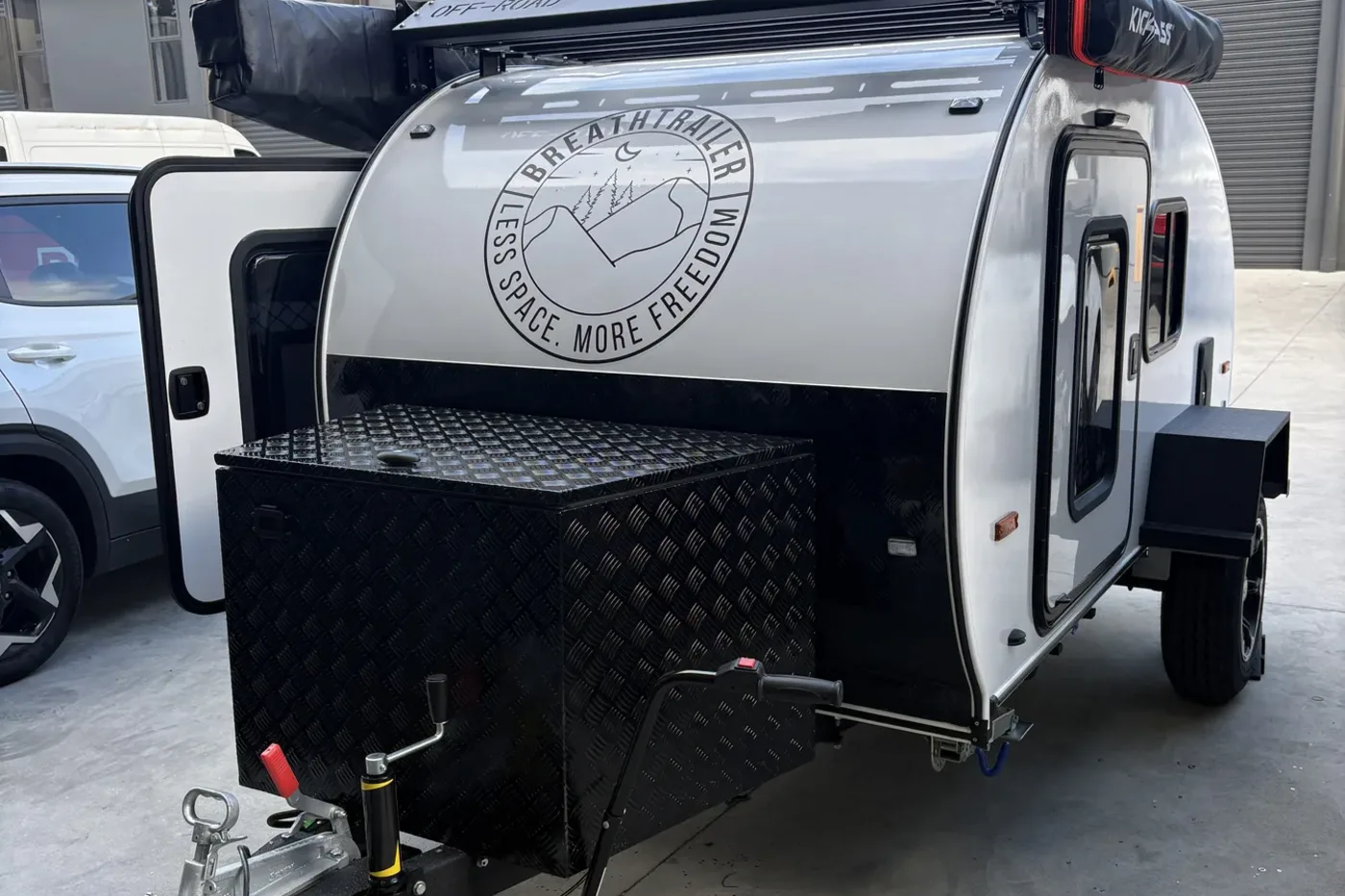
The drawbar and A-frame are the first places to look for the permanently stamped VIN.
NSW’s current guidance makes the timeline clear: trailers manufactured after 1 July 2023 need a 17-character VIN, specified mass information and a RAV entry. Older trailers can have different identity requirements depending on their build date. The NSW buying and registration guide is useful even outside NSW because it shows why build date matters.
Vehicle Standards Bulletin 1
VSB 1 Revision 6 is the national construction guide for trailers up to 4.5 tonnes ATM. It covers areas such as dimensions, couplings, safety chains, lighting, reflectors, tyres, mudguards, electrical wiring and brakes. The current Australian Government VSB 1 says:
| Gross Trailer Mass | Brake requirement |
|---|---|
| 750 kg GTM or less | Brakes are not required under VSB 1 |
| Over 750 kg to 2,000 kg GTM | An efficient service brake is required; overrun brakes may be used |
| Over 2,000 kg GTM | Brakes must operate on all wheels and an emergency breakaway system is required |
Braking thresholds use GTM, while approval and the 4.5-tonne low-trailer boundary use ATM. Mixing those terms is a common cause of bad advice. For controller types, breakaway systems and maintenance, read the electric trailer brake guide.
The five checks to make before buying a camper trailer
Run these checks before money changes hands.
1. Match the identity in four places
Compare the VIN on the frame, trailer plate, registration certificate and invoice. Photograph all four. A plate number alone is insufficient because plates can be removed and registration can expire.
For a new trailer, search the VIN on the RAV. For a used trailer, also use the state registration checker. Current registration does not reveal finance owing.
2. Run a PPSR search on a used trailer
The Australian Government’s PPSR vehicle search costs $2 online. It can show a security interest and may include stolen or written-off information. Run it on the purchase day, keep the certificate and search by VIN or chassis number rather than the plate.
The PPSR and RAV answer different questions. The RAV concerns approval for supply. The PPSR concerns registered financial interests and associated vehicle data. One does not replace the other.
3. Verify the mass figures
The trailer plate and RAV entry should show the relevant mass ratings. Ask whether the recorded tare represents the finished trailer as delivered, including fixed accessories. Roof racks, spare wheels, batteries, water systems and permanently installed equipment can reduce usable payload if they were fitted after the recorded tare was established.
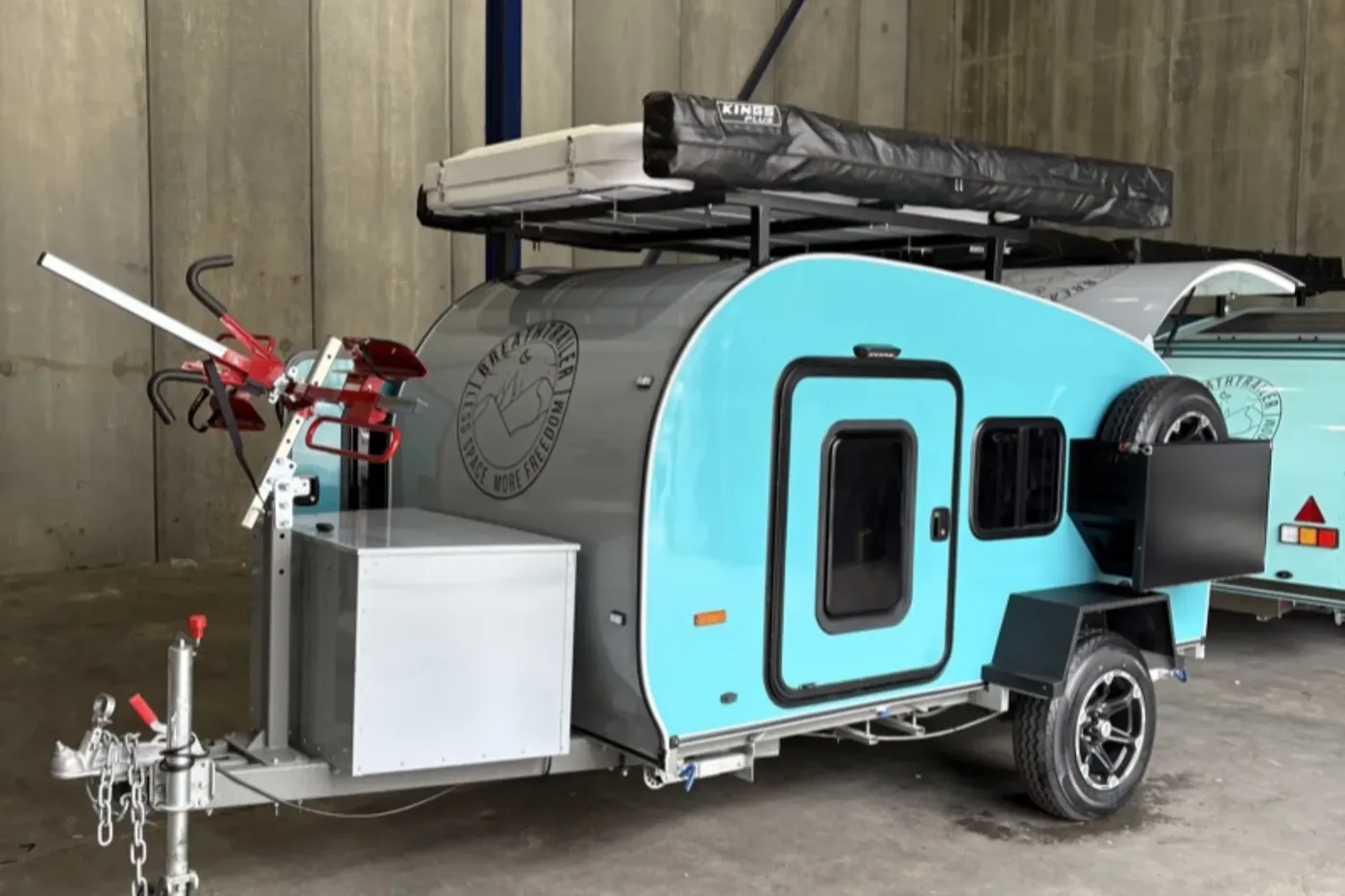
Roof rack, tent, awning, bike rack and spare: fixed accessories like these belong in the tare you rely on.
Where the authority cannot confirm tare from an accepted specification, or where the trailer was imported or substantially changed, it may require a weighbridge certificate. The pre-deposit verification checklist covers the documents to request from the seller.
4. Confirm who completes registration
Ask a new-trailer supplier for one written sentence: Is the advertised price drive-away and registered in my state, or must I arrange and pay for inspection, permits, plates and registration? Freight and interstate delivery often change the answer.
If you are buying privately, confirm the transfer deadline, whether an inspection is required, who must lodge the seller notice and whether the existing registration remains valid long enough to tow it home.
5. Check modifications before the inspection
A change to axles, suspension, drawbar, coupling, brakes, dimensions or mass rating can trigger engineering or inspection requirements. Ask for certificates and approval records that identify the VIN.
The concern is any change that affects identity, safety, structure, dimensions or rated masses.
Camper trailer registration rules by state and territory
The national standards are shared, but the transaction process is local. This table summarises the practical starting point for a light camper trailer in 2026.
| Jurisdiction | First registration or interstate transfer | Useful 2026 detail |
|---|---|---|
| NSW | New or unregistered trailers need the applicable identity and inspection documents before Service NSW registration | An original blue slip is generally needed; trailers over 2 tonnes ATM use the relevant heavy vehicle inspection pathway. The inspection report is valid for 42 days |
| Victoria | A first-time Australian registration needs a RAV entry. The form and appointment depend on whether ATM is up to 750 kg or 751–4,500 kg | VicRoads normally wants the trailer presented for the heavier band. Its tiny-trailer exemption is not a practical camper exemption |
| Queensland | Register in person through TMR or an eligible regional service point | A pre-registration inspection applies to a trailer with more than one axle or ATM over 750 kg. An interstate-registered trailer brought to Queensland must generally be registered there within 14 days |
| South Australia | Service SA handles registration; interstate and uncertain-identity cases can require a Tier 2 identity inspection | A resident or buyer generally has three months to register an interstate vehicle in SA. A change of owner on an interstate trailer triggers an identity inspection |
| Western Australia | A vehicle new to WA, or unlicensed for more than three months, generally needs inspection before a licence application | WA calls registration a vehicle licence. The vehicle must be primarily kept in WA |
| Tasmania | Book a pre-registration inspection at an Approved Inspection Station, then apply through Service Tasmania | The inspection is valid for 30 days. Interstate inspection reports are not accepted |
| ACT | A brand-new trailer needs an ACT roadworthy inspection; a used trailer may also need an identity check | New low-ATM trailers must comply with VSB 1 Revision 6 and the applicable ADRs |
| Northern Territory | First NT registration requires a compliance check, with a roadworthy inspection when the current rules require one | From 9 February 2026, light-vehicle roadworthy inspections focus on vehicles seven years or older in specified transactions; first NT registration still needs the compliance step |
Use the authority for the state where the trailer is principally garaged, rather than shopping for the cheapest plate. The official process pages are VicRoads, Queensland TMR, South Australia, Transport WA, Service Tasmania, Access Canberra and NT MVR.
What camper trailer registration costs in 2026
There is no national camper trailer registration price. Some authorities charge by tare band, WA charges by 100 kg, and others use a flat light-trailer fee. Inspection, plate, transfer, permit and duty charges can sit outside the headline renewal figure.
| Jurisdiction | Published fee method or example | What can change the final bill |
|---|---|---|
| NSW | Private camper trailers from 255 kg to 4.5 tonnes receive an automatic 40% vehicle-tax reduction. The discounted 2026 tax is $94 at 255–764 kg, $167 at 765–970 kg and $217 at 1,151–1,500 kg | Registration and plate charges, inspection, late transfer and special plates |
| Victoria | Flat light-trailer registration structure | Registration, appointment, inspection and plate components for the transaction |
| Queensland | TMR directs owners to its registration quote service for a towed light trailer figure | Term, plate, inspection and any applicable transaction fees |
| South Australia | About $110 for 12 months, $38 for three months or $11 for one month from 1 July 2026 | Identity inspection and transfer costs; actual quote may vary slightly |
| Western Australia | Trailer-type caravan rate of $7.44 per 100 kg for 2026–27, plus applicable flat and recording fees | Tare rounded to the next 100 kg, renewal term, inspection and plate fees |
| Tasmania | Over-500 kg caravan renewal published at $153.81; establishment including the plate is $176.35 | Inspection, duty, transfer and concession position |
| ACT | Weight-based quote through Access Canberra | Tare band, registration term, inspection and plates |
| Northern Territory | Tare bands: $162.85 for 601–800 kg, $180.85 for 801–1,000 kg and $223.85 for 1,001–1,200 kg for 12 months | Registration term, compliance or roadworthy checks and stamp duty position |
NSW figures come from the current vehicle registration fee schedule. SA, WA, Tasmania and NT figures are current government-published amounts as at September 2026. They are examples for budgeting, not a quote.
The weight basis matters. A 700 kg and a 900 kg camper can land in different bands even when they share the same 1,500 kg ATM. That is why the plate’s actual tare, rather than a generic model brochure, belongs in your purchase file.
New, used, interstate and home-built: four different paths
Buying new from a manufacturer or dealer
The cleanest path is a type-approved model already entered on the RAV, with its trailer plate fitted and sale documents prepared. Ask for the VIN before collection and run the public search yourself.
Confirm whether the supplier registers the trailer in your name, supplies an unregistered vehicle permit, or expects you to arrange both. At collection, use the camper trailer handover checklist to match the physical trailer to the paperwork before signing.
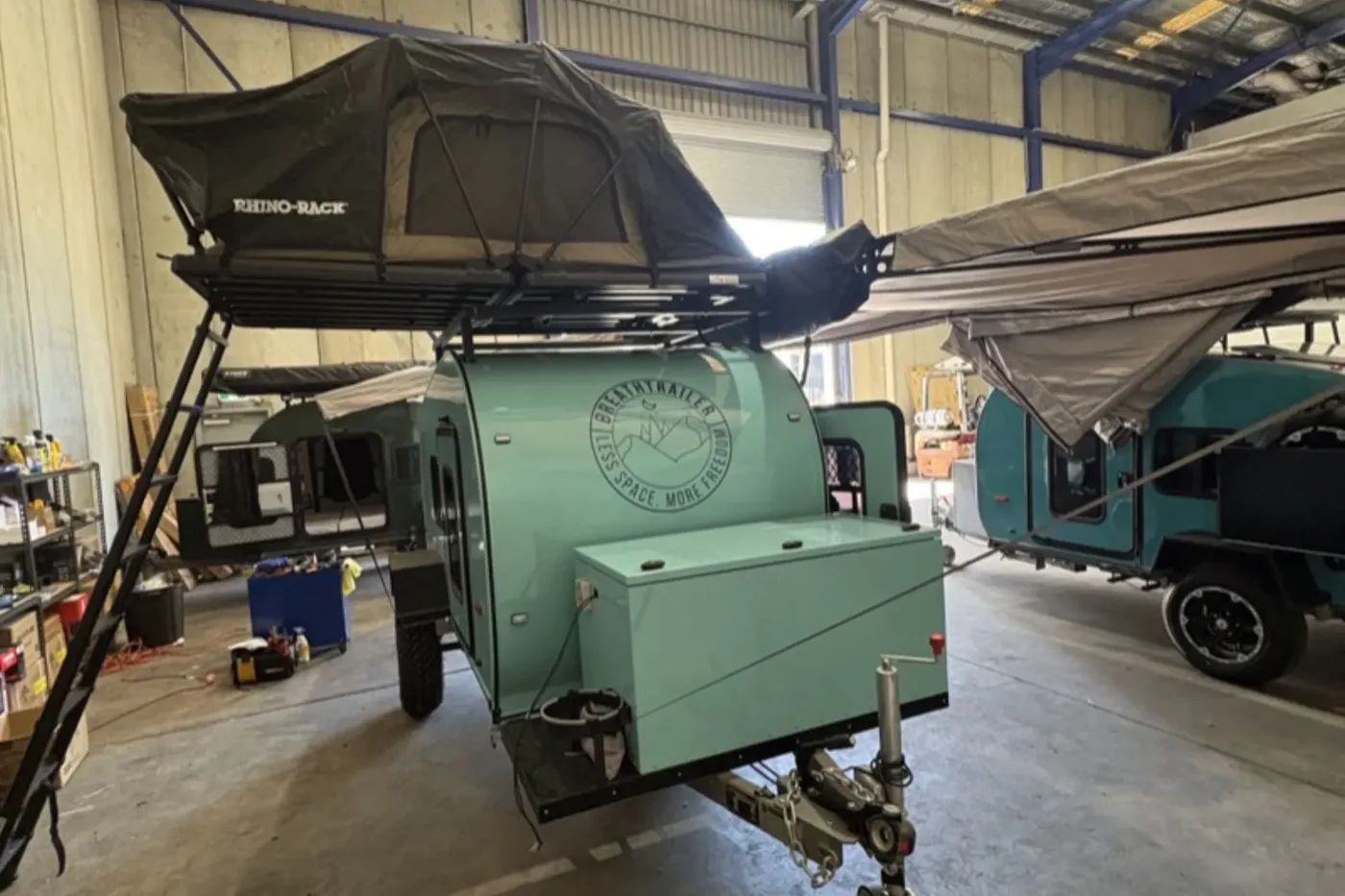
Before collection day, confirm who registers the trailer and whether it leaves plated or on a permit.
Buying a used trailer in the same state
Check registration, seller identity, VIN, plate, ownership and PPSR before paying. Follow the local transfer process within the deadline. A current plate does not excuse an identity mismatch, and a receipt does not discharge a lender’s interest.
Expired registration may turn a transfer into a new establishment with different inspection rules. Price the inspection and repairs before calling an unregistered trailer cheap.
Buying interstate
Do not cancel existing registration before arranging a lawful move. You may travel on current interstate registration, obtain an unregistered vehicle permit or transport the trailer. The destination may require its own inspection.
Keep the sale receipt, source-state registration certificate, inspection reports and plate surrender receipt. Registration deadlines differ: Queensland publishes a 14-day period for an interstate trailer brought into the state, while South Australia generally allows up to three months in the circumstances described by its authority. Check the rule that matches your residency and purchase situation.
Registering a home-built or one-off trailer
Calling a trailer “home-made” does not bypass national approval. A person manufacturing or importing no more than four low-ATM trailers in a 12-month period may be eligible for a concessional RAV entry approval. The federal process can allocate a VIN, and the applicant must support the trailer’s compliance with the relevant standards.
After the RAV work, the state still completes its own identity, safety and registration steps. Expect to retain receipts for materials, evidence for the mass ratings and construction, and any engineering records. NSW no longer allocates VINs to new one-off trailers; its guidance directs applicants through the Commonwealth concessional RAV process.
Registration, CTP and comprehensive insurance are separate
Registration gives you legal authority to use the trailer on the road. It is not comprehensive insurance for collision, theft, storm, contents or off-road recovery.
Compulsory third party arrangements also vary. Queensland says most trailers and caravans do not need a separate CTP policy when towed by a Queensland-registered vehicle, but owners should confirm the cover with the tow vehicle’s CTP insurer. The NT registration schedule includes Motor Accidents Compensation cover. South Australia’s published trailer figure includes an estimated CTP component.
Do not generalise one state’s system to another. Once the registration is sorted, compare agreed value, off-road exclusions, contents and recovery limits using the teardrop camper insurance guide.
Common registration failures and the practical fix
| Problem | Why it stops the process | Practical next step |
|---|---|---|
| No VIN or unreadable stamping | The authority cannot establish identity | Stop using the trailer on-road and ask the authority which identity pathway applies |
| VIN differs between frame and papers | Possible clerical error, rebirth or plate swap | Do not buy until the issuing authority resolves it in writing |
| New trailer absent from the RAV | It may not be approved for first supply | Ask the supplier for the approval and VIN record; do not accept “it will appear later” without a verifiable plan |
| Tare cannot be verified | Fee band and payload cannot be established | Obtain an accepted weighbridge certificate with the trailer prepared as required |
| Major modification has no certificate | Original approval may no longer describe the trailer | Use the state’s engineering or vehicle-signatory pathway before inspection |
| Interstate inspection rejected | States do not always recognise another jurisdiction’s report | Book the destination state’s required inspection before the source documents expire |
| Finance recorded on PPSR | A secured party may have rights over the trailer | Require a payout and discharge process; re-run the search immediately before settlement |
The expensive mistake is fixing the seller’s identity or compliance problem after settlement. If a private seller cannot produce a readable identifier and coherent registration history, walking away is usually the rational decision.
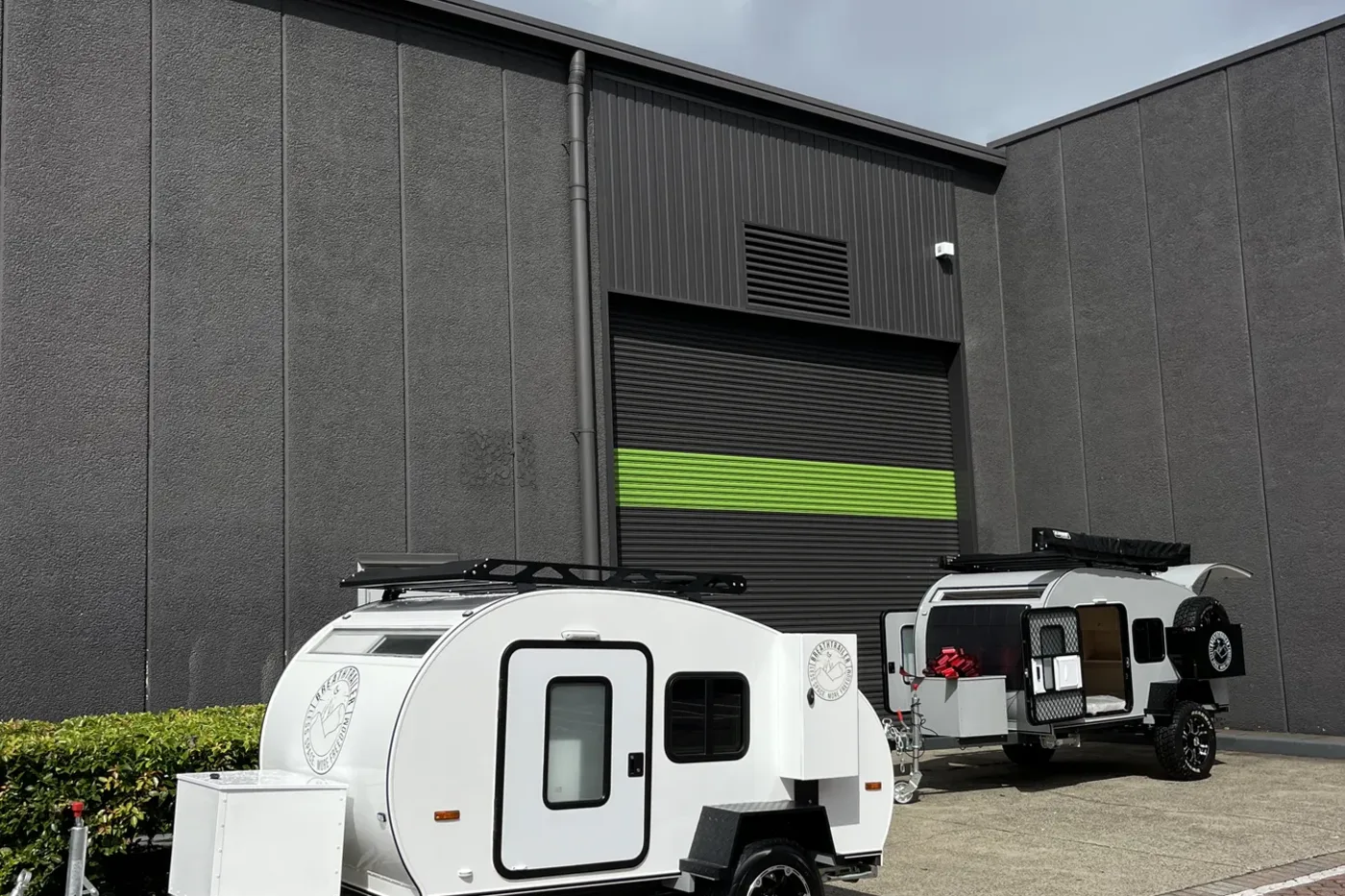
Two trailers can look alike; only a readable VIN that matches the paperwork tells them apart.
Frequently asked questions
Does every camper trailer need registration in Australia?
In normal use, yes. Registration rules are state based, and Victoria has a narrow exemption for very small non-commercial trailers under 200 kg that also meet length, width and use conditions. A camper trailer will almost never meet that exemption. Register it before public-road and interstate use.
How do I check whether a new camper trailer is on the RAV?
Find the permanently stamped 17-character VIN on the trailer and enter it in the Australian Government’s public RAV search. Compare the result with the trailer plate, invoice and physical model. Ask the manufacturer to correct any discrepancy before handover.
Can I register a camper trailer with no VIN?
Usually not through an ordinary counter transaction. A modern trailer needs an accepted identifier. A newly constructed one-off trailer may need a concessional RAV approval and VIN from the Commonwealth process before state inspection and registration. Older trailers can have age-specific pathways, so contact the state authority before altering or stamping anything.
Do trailers under 750 kg need registration?
The 750 kg figure is mainly a braking and inspection threshold, not a blanket registration exemption. VSB 1 says brakes are not required at 750 kg GTM or less. States still generally require a camper trailer to be registered. Victoria’s limited exemption uses an unladen weight under 200 kg plus other conditions.
Can I tow an unregistered camper trailer to an inspection?
Only through a lawful pathway published by the relevant state, such as an unregistered vehicle permit or a specific direct-to-inspection provision. Do not attach an old plate or assume an appointment alone is enough. Check the rules for every state crossed on the journey.
Is registration transferred automatically when I buy a used camper?
No. Buyer and seller obligations, deadlines and inspections vary. Obtain a signed receipt, verify the VIN, run the PPSR search and lodge the transfer through the destination authority. Buying interstate can require a new registration establishment rather than a simple transfer.
Does current registration prove a camper trailer is safe and debt-free?
No. Registration establishes road-use status. It does not replace a physical inspection, payload check or PPSR search. A trailer can be registered and still be poorly maintained, overloaded or subject to a security interest.
Get the paperwork right before the adventure
Good camper trailer registration paperwork is unremarkable: one VIN, one coherent identity, verified mass figures and a clear path through your state’s process. That boring file protects the exciting part of ownership.
If you are comparing new hard-shell teardrops, ask every supplier for the VIN and RAV status, finished tare, ATM, GTM, registration responsibility and drive-away charges in writing. Breath Trailer’s four models are supplied with documented identities and mass ratings; the right model still depends on your tow vehicle, payload and travel plans. Compare the range side by side before you book a viewing.
Recommended reading
- Camper Trailer Handover Day Checklist — match the trailer, documents and order before leaving the yard.
- Things to Check Before Buying a Teardrop Camper — inspect the structure, seals, tyres, electrical system and ownership records.
- New vs Used Camper Trailer — compare purchase risk, depreciation, warranty and setup cost.
- Camper Trailer Security in Australia — protect the registered trailer at home, on the road and at camp.