Camper Trailer Security in Australia: A Layered Anti-Theft Plan
A hitch lock alone is not enough. Compare locks, clamps, alarms and GPS costs, then build a practical home, campsite and road-trip security plan.
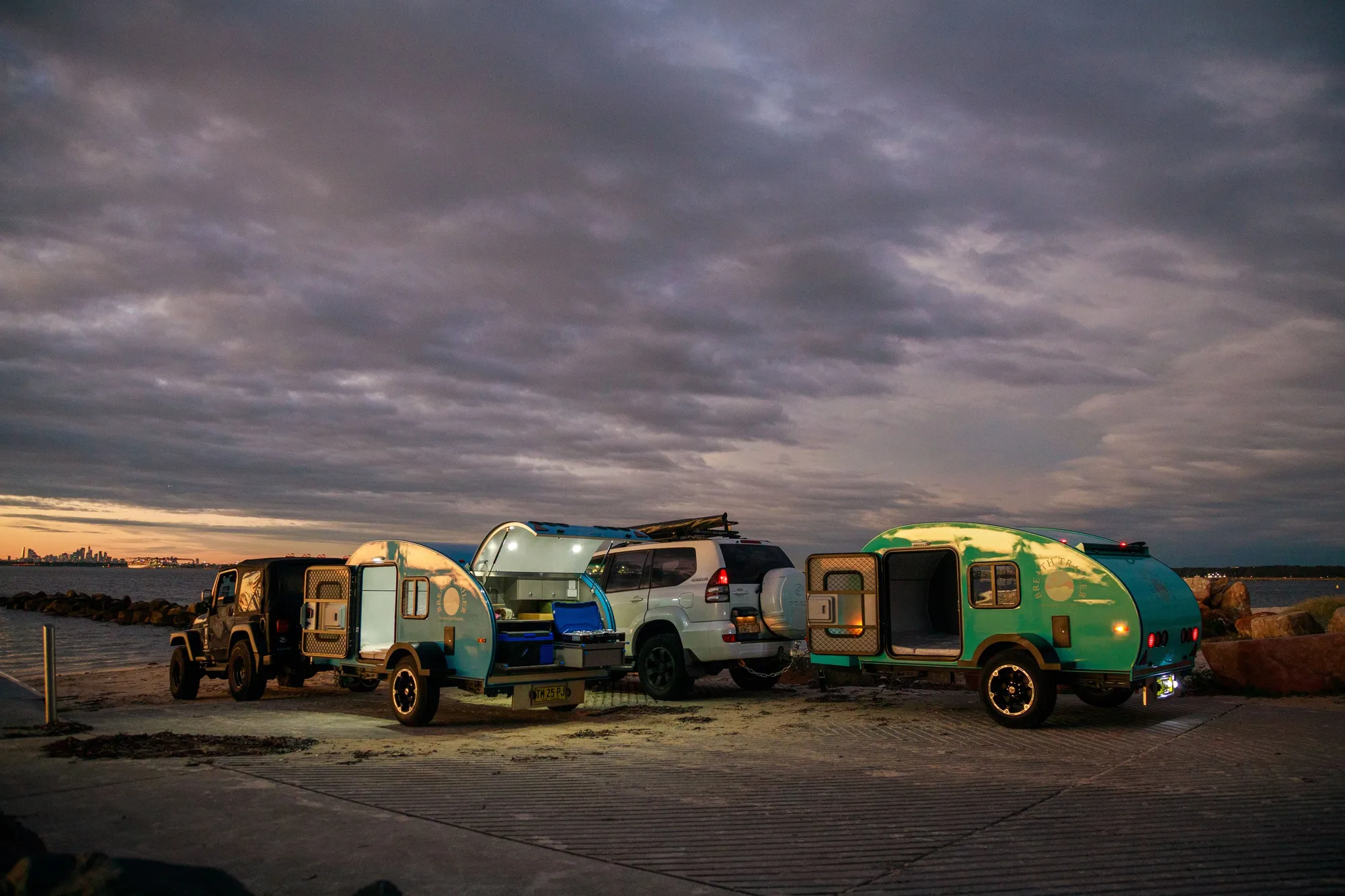
Camper trailer security in Australia is not solved by buying the biggest padlock in the shop. A trailer can be attacked at the coupling, wheel, door, number plate or storage location. Its loose gear can disappear without the trailer moving at all. The useful question is not, “Which lock is unbeatable?” No lock is. It is, “How many noisy, visible and time-consuming problems must someone defeat before they can take anything?”
A sensible setup works in layers: deter, delay, detect and recover. For a camper worth roughly $20,000–$40,000, a practical two-layer mechanical setup can cost about $300–$600. Adding an alarm and subscription-based GPS tracking can take the first-year total past $1,500, but that is not automatically the right answer for every owner.
This guide explains what each layer actually does, current Australian price examples as at September 2026, how off-road couplings change the lock you need, and the different routines that work at home, in a caravan park and at a remote campsite. It also separates prevention from recovery, because a tracker is useful after movement begins; it does not physically stop the movement.
The Seven Layers of Camper Trailer Security
Good camper trailer security starts with the threat, not a shopping list. Whole-trailer theft, forced cabin entry and an unsecured e-bike are different problems.
| Layer | Main job | Typical 2026 cost | What it does not solve |
|---|---|---|---|
| Coupling or hitch lock | Stops normal hitching | $70–$250 | Chaining or winching the trailer |
| Wheel clamp or wheel lock | Stops a wheel rotating or being removed | $170–$350 | Entry into the cabin or toolbox |
| Ground anchor and hardened chain | Ties the chassis to the site | $150–$500 installed | Portable campsite use |
| Door, hatch and external-gear locks | Protects contents and accessories | $20–$250 per zone | Whole-trailer theft |
| Motion alarm and lighting | Detects and draws attention | $50–$700 | Recovery after removal |
| Hidden GPS tracker | Alerts and helps locate the trailer | $249–$349 plus data | Physical prevention |
| Records and insurance | Supports reporting and financial recovery | Policy-dependent | Preventing the incident |
The short answer: for most owners, the best-value camper trailer security setup is a coupling-specific hitch lock plus a visible wheel clamp. Add a hidden, powered GPS tracker when the trailer spends long periods outside a locked building or carries high-value equipment.
1. Match the Hitch Lock to the Coupling
A hitch lock blocks the obvious theft method: reverse a tow vehicle to the drawbar, connect and leave. It is compact, fast to use and visible. That makes it the first layer for most Australian camper trailers.
Compatibility is the catch. A universal lock made for a standard 50 mm ball coupling may not fit a DO35, DO45, Treg-style block or another articulating off-road coupling. Before ordering, photograph the coupling, find its model or version marking and check the lock manufacturer’s fit list. “Suits off-road hitches” is too vague.
| Coupling situation | Lock to look for | Important check |
|---|---|---|
| Standard 50 mm ball coupling, unhitched | Ball-insert or enclosing coupling lock | Housing width and latch clearance |
| Standard coupling, attached to tow vehicle | Locking latch plus receiver hitch-pin lock | The product is approved for use while hitched |
| DO35 / DO45 family | Version-specific dummy pin or enclosing lock | DO35 generation and DO45 / DO45Plus compatibility |
| Treg or poly-block style | Matching pin or block-coupling lock | Pin diameter and housing geometry |
| Removable towbar tongue | Locking receiver pin | Pin size and receiver class |
As a current price reference, Purple Line lists its FullStop Saracen off-road hitch lock at $230.99 including GST in September 2026. It is described for DO35 and DO45Plus setups, with an explicit exclusion for DO45 V1. That kind of fit note is exactly what to look for.
A hitch lock remains one obstacle. A trailer can still be dragged, winched or loaded, so pair coupling security with a different barrier. Do not repurpose the rated safety chains as the only lock; for storage, use a separate hardened chain around an appropriate chassis or drawbar point and fixed anchor.
2. Add a Visible Wheel Clamp
A wheel clamp changes the problem from “defeat the hitch” to “defeat the hitch and immobilise the wheel”. A bright, obvious clamp also advertises that the trailer is not an effortless target.
Check five details:
- Cover the wheel nuts. A clamp that blocks rotation but leaves every nut accessible may allow the wheel to be removed.
- Check spoke clearance. Some wheel locks pass a bar through the wheel and will not fit a solid steel wheel or a tight alloy design.
- Check tyre and rim range. “Universal” rarely means every wheel.
- Keep the lock body away from the ground. Dirt, salt and water shorten the life of exposed barrels.
- Store it where you will reach it. A 12 kg clamp under all the bedding is a clamp that eventually stays unused.
Current manufacturer listings show the price spread: Purple Line’s Samurai is $173.99, Nemesis $308.99, and Nemesis Pro $349.99 including GST. The Pro uses a replacement receiver nut, covers the wheel nuts and needs a gap through the spokes. No model is unbreakable.
For a lightweight teardrop, the best clamp is often the robust one that fits quickly. Test it at home, confirm clearance from the mudguard, brake wiring and valve, then save a photo of the correct position.
If you are still deciding how much gear and weight to carry, our camper trailer accessories guide helps separate essential equipment from upgrades that can wait.
3. Secure the Storage Location, Not Just the Trailer
At home, a trailer may sit in one predictable place for weeks. Parking geometry and the property boundary matter as much as its lock.
Victoria Police’s caravan and trailer guidance recommends secure, well-lit storage, locked doors and windows, wheel clamps, coupling locks, alarms and GPS tracking. South Australia Police also recommends a concrete anchor with a padlocked chain through the A-frame when a caravan is stored at home.
Build the home setup from the outside in:
- Put the trailer in a locked garage or shed where possible.
- If it must stay outside, park it nose-in or with the coupling facing a wall, fence or other fixed obstruction.
- Close a locked gate behind it and block the clear towing path with another vehicle.
- Fix a rated ground anchor into suitable concrete and use a hardened chain sized for the anchor and chassis point.
- Install motion lighting that exposes the drawbar and both wheels, not just the house door.
- Aim a camera to capture faces, the tow vehicle, number plate and direction of travel. A beautiful overhead view of the trailer alone is poor evidence.
- Remove portable valuables, keys and registration papers from the trailer.
- Keep doors, windows and roof hatches locked and blinds closed.
- Use anti-theft screws or suitable rivets on the trailer number plate.
The number-plate step is cheap and useful. Stolen plates can be fitted to another trailer and used to disguise its identity. One-way screws are a deterrent rather than a guarantee, but they remove the quick screwdriver option. Keep the removal method with your vehicle documents, not inside the unattended trailer.
A hardwired alarm or tracker that drains the house battery is not protection. Follow its standby-current and low-voltage advice, maintain the battery correctly and test monthly. For the rest of the lay-up routine, use our teardrop camper maintenance and storage guide.
4. Use Alarms for Detection and GPS for Recovery
An alarm and a GPS tracker solve different problems.
- An alarm reacts to movement, a door opening or an interior sensor. Its job is to draw attention and interrupt the attempt.
- A GPS tracker reports location or a geofence breach. Its job begins when movement is detected or the trailer has already gone.
| Technology | Best contribution | Main limitation | Buying question |
|---|---|---|---|
| Motion alarm | Immediate noise and attention | False alarms; depends on power | Can sensitivity be adjusted? |
| Door / hatch sensor | Detects access to a protected opening | Does not detect every external attack | How many sensors can the system support? |
| Brake-locking alarm | Adds physical resistance on braked trailers | Requires compatible 12 V electric brakes and installation | What happens below the low-voltage threshold? |
| Cellular GPS | Live location and geofence alerts in coverage | Subscription and network dependence | Which networks and frequencies does it use? |
| Wi-Fi-assisted GPS | Can report through known Wi-Fi or onboard Starlink | Wi-Fi service must be powered and connected | Does it queue locations when offline? |
| Bluetooth location tag | Cheap secondary clue through nearby phones | Not continuous independent GPS; anti-stalking alerts | Is it a backup rather than the primary tracker? |
One current Australian example shows the real cost. WiTi lists its anti-theft system at $699, including a 105 dB horn, six-axis motion sensing, door and PIR sensors, and brake output for compatible 12 V electric trailer brakes. SafeTrack GPS is $349, plus $15 per month or $180 per year. It uses a managed multi-network SIM and can use onboard Starlink through Wi-Fi; it does not connect directly to Starlink satellites.
Ask what happens below the battery cutoff, outside mobile coverage, after a subscription lapses and if visible power is disconnected. Hidden installation and monthly testing are part of the system.
Never follow a stolen trailer yourself. Save its last location and alert history, call police, and let them handle recovery.
5. Protect the Cabin, Galley and Gear
Whole-trailer theft is dramatic, but opportunistic theft often targets what is easiest to carry: e-bikes, portable fridges, cameras, laptops, fishing gear, gas bottles and fuel containers.
In January 2026, Tasmania Police reported six mountain bikes stolen from a caravan park, with many thefts occurring overnight when bikes were not properly secured. All six were recovered, but the lesson is useful: locking the camper door does nothing for expensive equipment left beside it.
Divide the campsite into zones:
| Zone | Typical exposure | Practical response |
|---|---|---|
| Sleeping cabin | Keys, phone, wallet, laptop | Lock doors and windows; keep keys beside you, not near a window |
| Rear galley | Stove, cookware, portable appliances | Close and lock the hatch when away; remove high-value electronics |
| A-frame toolbox | Battery tools, electrical gear, recovery kit | Upgrade generic cam locks where appropriate; keep an inventory |
| Bike rack | Bikes and e-bikes worth thousands | Lock frame and wheels to a structural rack point; remove batteries and displays |
| Awning area | Chairs, esky, shoes, loose gear | Put small items away overnight; cable-lock larger portable items |
| Gas bottle / jerry-can mounts | Easy-to-remove essentials | Use compatible, ventilated restraints that do not compromise gas safety |
Hard-shell teardrops have a useful advantage over canvas campers: solid, lockable access doors instead of large fabric walls. Breath Essential, Plus and Ultra list two lockable screened side doors; Max has one screened, lockable door. It is still not a safe—windows, hatches, gear and keys need a routine.
A distinctive colour can aid identification. Photograph every side, wheels, accessories, marks and the compliance plate. Never post the VIN or tracker hiding place publicly.
Solo travellers should keep the physical routine simple enough to use without help. The teardrop camper guide for solo travellers covers site selection, lockable shelter and arrival habits in more detail.
6. Change the Routine for Home, Road Stops and Campsites
The home setup is too heavy to tour with; the touring setup is too light for months on a driveway. Change the layers by situation.
At home for more than a week
Use the hitch lock, clamp, locked boundary, blocked towing path, lighting and a fixed barrier. Arm electronics, test them monthly and keep keys and documents inside.
At a caravan park
Fit the hitch lock when you unhitch and the clamp before leaving for the day. Ask about local issues, learn who belongs nearby, lock the cabin even for a pool visit, and put loose gear away overnight.
At a remote or free campsite
Position the drawbar away from the easiest exit without blocking emergency access. Fit mechanical locks, hide valuables and do not rely on cellular alerts outside coverage. Check whether the tracker queues locations until service returns.
Our free camping guide for Australia explains land types and self-containment; security remains the owner’s responsibility even at an official site.
At a fuel, food or overnight road stop
Park in sight of the shop. Overnight in a legal, well-lit place and point the coupling towards an obstacle where practical. Use only locks approved while hitched and confirm they do not interfere with towing.
Before leaving again, separate the security check from the towing check. Remove wheel clamps, chains and covers, then complete the normal coupling, safety-chain, plug, brake and light sequence in our teardrop towing checklist. A security device accidentally left fitted can create its own hazard.
7. Choose a Security Package You Will Actually Use
Choose a repeatable system matched to the trailer’s value, storage and travel pattern.
| Package | Suitable for | Example components | Indicative first-year cost |
|---|---|---|---|
| Essential | Trailer stored in a locked building; occasional park stays | Coupling-specific lock, anti-theft plate screws, photo/VIN inventory | $100–$300 |
| Touring | Driveway storage or frequent road trips | Hitch lock, visible wheel clamp, upgraded gear locks, compact secondary location tag | $350–$800 |
| High exposure | Outdoor long-term storage, remote work, high-value gear | Hitch lock, wheel lock, anchor/chain, powered alarm, hidden cellular GPS, lighting/camera | $1,200–$2,500+ |
These ranges include hardware only and vary with installation. A complete first-year electronic package can be expensive: using the current examples above, a $699 alarm, $349 tracker and $180 annual service already total $1,228 before installation, hitch lock or wheel clamp.
Start with two mechanically different layers. Add lighting and an alarm for undetected activity at home, or a tested tracker and recovery records for travel. If a device is too awkward to fit, improve its storage and access.
When comparing trailers, inspect lock quality, inside/outside operation, keying, toolbox access with luggage loaded, and tracker power and hiding places. Use the Breath Trailer model comparison to shortlist a layout, then test the routine at a viewing.
Insurance and Evidence: The Layer People Forget
Insurance does not stop theft, and security hardware does not replace insurance. They work together only when you understand the policy.
Read the Product Disclosure Statement and ask the insurer in writing:
- Is theft covered at home, in a storage yard, at a campsite and while the trailer is attached to the tow vehicle?
- Does the policy require a nominated hitch lock, wheel clamp, locked building or other device?
- Are bikes, portable fridges, tools and personal electronics covered as contents, and to what limit?
- Is an agreed value available, and does it include fitted accessories?
- What evidence is needed for accessories added after purchase?
- Is there an excess or exclusion connected to keys left in or near the trailer?
Keep the policy, invoice, accessory receipts and photos away from the trailer. Record registration, 17-character VIN, model, colour, wheel details and distinguishing features, plus serial numbers for valuable equipment.
If a theft or break-in occurs, do not confront anyone or disturb the scene. Call 000 if it is happening now, a person is in danger or the offender remains present. Otherwise contact the relevant state police assistance line, obtain an event or report number, then notify the insurer. Provide tracker information to police, not to a public online chase group. The teardrop camper insurance guide explains theft cover, agreed versus market value and contents limits in more detail.
A 15-Minute Camper Trailer Security Audit
Do this audit before the next trip, then repeat it whenever the storage location or equipment changes.
- Photograph the coupling and identify its exact type and version.
- Fit the hitch lock and confirm it cannot simply lift, rotate or expose removable bolts.
- Fit the wheel clamp; check spoke, mudguard, wheel-nut and valve clearance.
- Test every cabin door, window, rear hatch and toolbox lock with all duplicate keys.
- Install anti-theft number-plate fasteners.
- Photograph the trailer, VIN, compliance plate and distinguishing features.
- Record accessory serial numbers and save receipts away from the trailer.
- Walk the towing path: can a vehicle reverse straight to the coupling?
- Move lighting and cameras so the drawbar, wheels, faces and tow vehicle are visible.
- Trigger the alarm deliberately and confirm every sensor and notification.
- Move the trailer far enough to test the GPS geofence and location update.
- Check tracker subscription, 12 V supply, standby drain and low-voltage behaviour.
- Read the theft and contents sections of the current insurance PDS.
- Put locks, keys and the clamp where the unhitch routine naturally reaches them.
- Write a five-step campsite routine and share it with every driver.
Frequently Asked Questions
What is the best camper trailer security setup in Australia?
Start with a coupling-specific hitch lock and visible wheel clamp. Add hidden GPS for long outdoor storage, frequent remote travel or expensive equipment. Lighting, secure parking and insurance complete the system.
Is a hitch lock enough to stop a camper trailer being stolen?
No. It blocks normal coupling, not every drag, winch or loading method. Pair it with a wheel clamp or fixed anchor.
Can I use a normal towball lock on a DO35 hitch?
Usually not. Articulating couplings need a compatible, often version-specific lock. Check the exact coupling generation and the maker’s fit list.
Is a GPS tracker better than a wheel clamp?
They are not substitutes. A clamp delays movement; GPS detects movement and supports recovery. Mechanical prevention normally comes first.
Should I use an AirTag in a camper trailer?
A Bluetooth tag is a secondary clue, not powered GPS. It relies on nearby compatible phones, may alert a person travelling with it and is not independently continuous.
Does caravan or camper trailer insurance require a wheel clamp?
Requirements vary by policy and storage arrangement. Read the current PDS and get written confirmation for your trailer.
Camper Trailer Security Works When It Becomes a Habit
The strongest camper trailer security plan is not the one with the most products. It is the one you can apply in the dark, in the rain and after a long drive: lock the coupling, immobilise a wheel, secure the cabin and gear, arm detection, verify tracking and keep recovery records elsewhere.
For most Australian teardrop owners, two well-matched mechanical barriers are the right foundation. Add home-storage geometry and lighting before expensive electronics; add electronics when the trailer’s exposure justifies them. Then test every layer. A lock in its box and a tracker with an expired subscription protect nothing.
If you want to inspect where locks, wheel clamps and powered trackers would fit on each layout, compare the four Breath Trailer models or book a Sydney viewing and bring your security checklist.
Recommended Reading
- Teardrop Camper Insurance in Australia — understand theft cover, contents limits and agreed value.
- Teardrop Camper Accessories Australia — prioritise useful touring gear without overloading the trailer.
- Teardrop Camper Maintenance and Care — keep batteries, locks, bearings and seals ready between trips.
- Camper Trailer Handover Day Checklist — record the VIN, paperwork, keys and condition before towing home.