Camping with a Baby in Australia: The Camper Trailer Guide (2026)
Complete guide to camping with a baby in Australia using a camper trailer — safe sleep rules, temperature management, gear checklist, campsite selection and the right model.
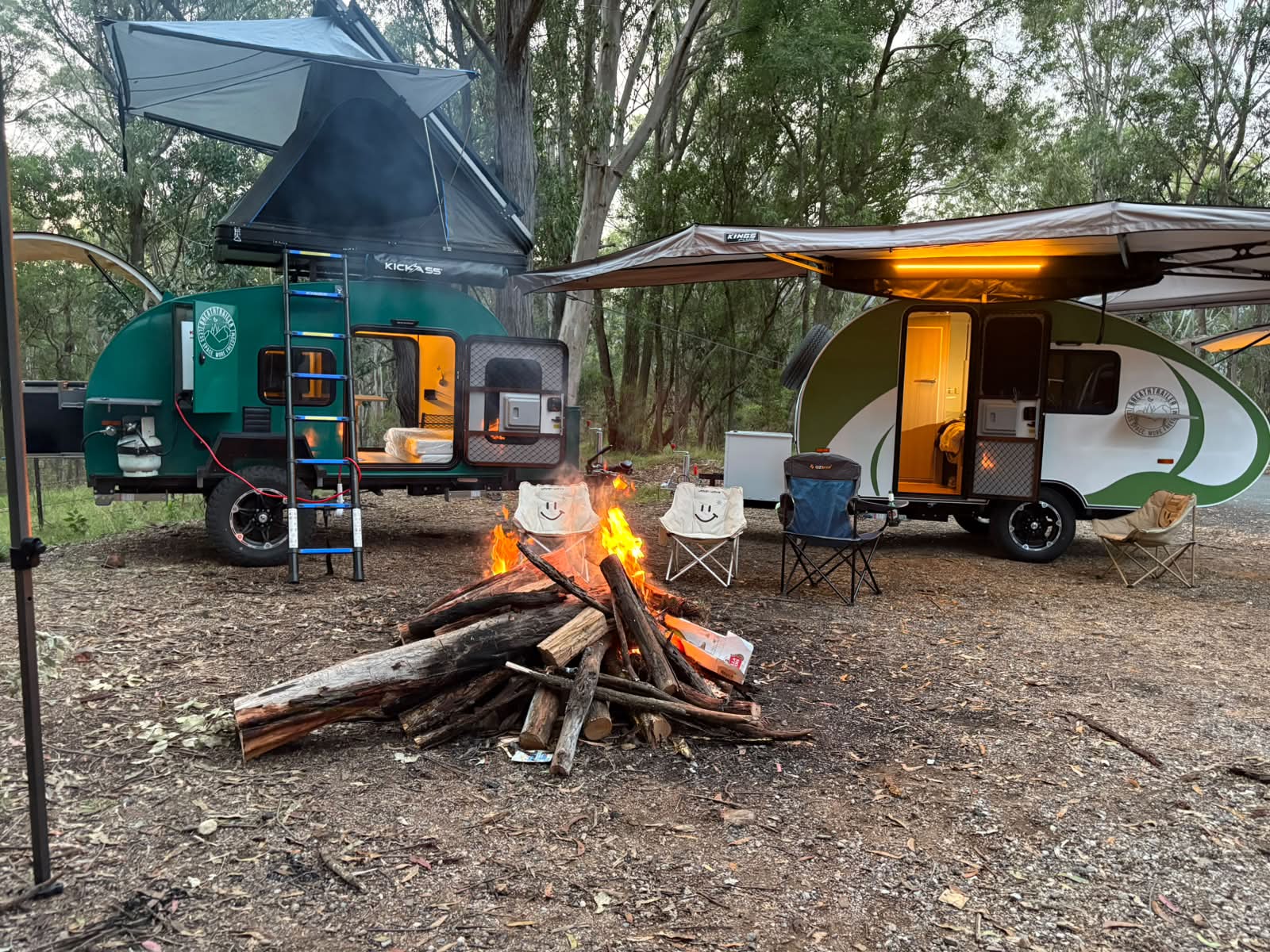
Every year, more than 4.5 million Australians go camping. For new parents, the question is rarely “can we go?” — it’s “how do we do it safely and without losing our minds?” The gear has never been better: portable cots that meet Australian safety standards, compact 12V hot water systems, and hard-shell camper trailers that maintain a stable internal temperature regardless of what the weather does outside. The challenge isn’t the equipment. It’s knowing what to bring, what to plan for and which setup actually works for a baby.
This guide covers everything — Red Nose Australia’s safe sleep rules adapted for camping, the real temperature thresholds to watch, a complete gear checklist by age, campsite selection criteria, driving schedules that work around feeds and naps, and which camper trailer model makes the most sense at each stage of the journey from newborn to toddler.
One number that concentrates the mind: overheating is one of the leading modifiable risk factors for SIDS and SUDI in Australia. Getting that right in a canvas tent at 28°C is genuinely hard. Getting it right in a hard-shell camper trailer with roof ventilation and optional air conditioning is much more manageable — and that difference deserves a direct, honest conversation.
Why more Australian parents are camping with babies in 2026
Camping rates among families with children under two have grown significantly over the past decade. Tourism Research Australia data shows domestic camping is now the most popular short-break activity for Australian families, overtaking beach resorts for the first time in 2024. The reasons are practical: caravan parks and national park campgrounds typically cost $20–50/night per site — a fraction of short-stay accommodation. For a family on parental leave managing a single income, the maths matter.
The second driver is behavioural. Research consistently shows that babies who spend time outdoors from an early age develop more robust sleep patterns, are exposed to a broader range of sensory stimuli and show lower incidence of vitamin D deficiency — a problem that affects an estimated 1 in 4 Australian children. Getting outside isn’t a lifestyle choice for this cohort; it’s a public health recommendation.
The third driver is the equipment. A modern hard-shell teardrop camper trailer offers something a tent categorically cannot: a regulated, enclosed sleeping environment with positive ventilation, lockable access and a stable temperature profile. For parents who’ve graduated from sleeping in a tent with a toddler, the upgrade is not about luxury. It’s about sleep — everyone’s.
Why a hard-shell camper trailer beats a tent for babies
The comparison matters because most camping-with-baby guides assume a tent. Here is what changes when you switch to a hard-shell camper trailer:
| Factor | Canvas tent | Hard-shell camper trailer |
|---|---|---|
| Temperature stability | Tracks ambient closely | Insulated shell buffers ±5–8°C |
| Condensation | Significant; drips on sleeping surface | Minimal with roof vent open |
| Floor sleeping surface | Ground-level, cold, uneven | Elevated bed platform, off the ground |
| Security (locks) | Zip only | Full lockable doors |
| Lighting at night | Torch or lantern disturbs baby | Internal 12V LED, no ambient spillover |
| Hot water for feeds | Portable gas unit required | Built-in 12V/gas system on many models |
| Bathroom at 3am | Walk to amenities block | Interior bathroom (Breath Max) or external shower |
| Setup time with a baby | 10–45 min (canvas/fold) | 5 minutes (hard shell, one lever) |
The temperature stability point is the most consequential. A canvas tent in the Australian sun can reach 40°C+ in under an hour. A hard-shell composite trailer with roof vents cracked and a reflective exterior holds 25–30°C in the same conditions — uncomfortably warm, but manageable. Add a 12V DC fan or air conditioning, and you are in safe territory.
The 5-minute setup is not a sales point when you have a baby. It is the difference between a trip you will take again and one you will never repeat.
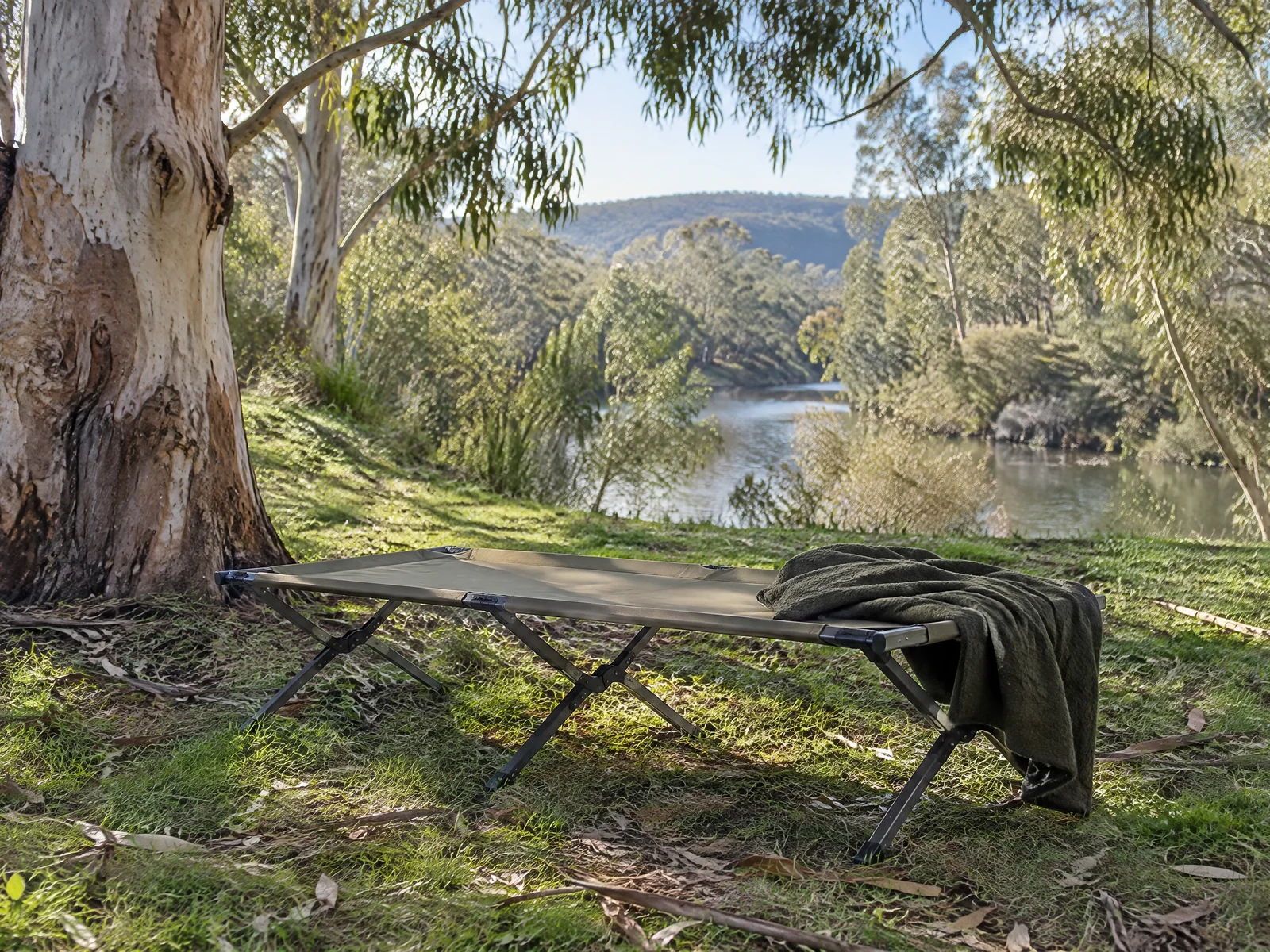
Illustration: A portacot set up in shade outside the trailer gives the baby a safe, familiar sleep space during day naps — but always bring them inside overnight.
Safe sleep for babies while camping (Red Nose Australia guidelines)
Red Nose Australia is the national authority on safe infant sleep. Their guidelines apply equally at home and in a camper trailer. Here is what that looks like in practice:
The portacot rule
The safest sleep surface for a baby while camping is a portable cot (portacot) that complies with Australian Standard AS/NZS 2195. This standard covers structural stability, mesh panel ventilation and the firm, correctly fitted mattress that prevents entrapment.
- Use only the mattress supplied with the portacot — never add padding, extra mattresses, sheepskin or memory foam
- Keep the sleeping surface firm and flat
- Remove soft toys, bumpers, pillows and loose bedding from the sleeping space
- Never use a pram for overnight sleep in an enclosed space (overheating risk)
Inside a camper trailer, the portacot typically sits on the trailer bed platform or on the annex floor. The key is that the baby is never placed on the main adult mattress for overnight sleep — bed-sharing in a confined, warmer-than-usual sleeping space significantly elevates risk.
Back to sleep, every time
Red Nose’s foundational guidance — back to sleep, face and head uncovered — does not change outdoors. A baby placed in a portacot face-down because “they settle better that way” remains at elevated SIDS risk.
The smoke-free requirement
If your camping setup includes a campfire, manage ventilation carefully. Australian campfire smoke contains particulate matter that is harmful to infant lungs; Red Nose specifically notes that a smoke-free sleeping environment is an essential safe sleep requirement. Run the roof vent from the campfire side to ensure smoke does not enter the sleeping space.
When a portacot won’t fit
In a smaller camper trailer (Breath Essential, Breath Plus), a portacot typically fits on the open trailer bed — but it is a snug arrangement. The alternative endorsed by Red Nose for confined spaces is a firm, flat mattress on the floor with the surrounding area cleared of hazards. This works well in a hard-shell trailer where the floor is clean, flat and sealed.
Managing temperature — the number one risk for infant campers
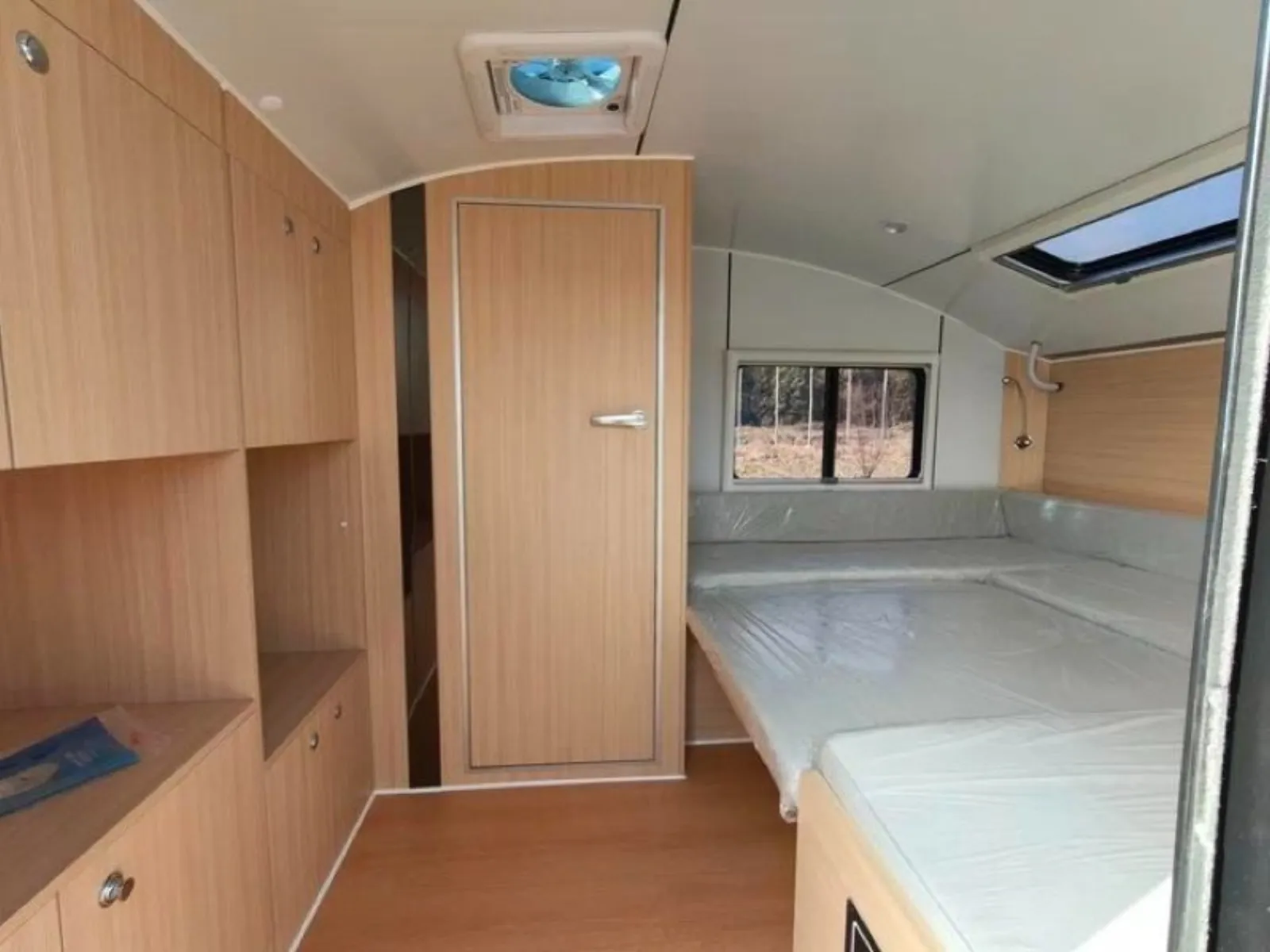
The Breath Max’s roof vent fan, skylight and insulated composite shell are the key temperature management tools for keeping a baby’s sleeping space within the safe range.
Babies cannot regulate their body temperature effectively. The safe overnight sleeping temperature range recommended for infants is 16–20°C. Australia’s climate makes this straightforward in spring and autumn, genuinely challenging in summer and alpine winter.
How to layer baby clothing for camping
Dress a baby for sleeping at one more layer than you need to be comfortable. A useful rule of thumb for Australian conditions:
| Ambient temperature | Baby sleep layer | Sleeping bag tog |
|---|---|---|
| Below 10°C | Singlet + onesie + sleep suit + beanie | 3.5 tog |
| 10–16°C | Singlet + onesie + sleep suit | 2.5 tog |
| 16–20°C | Singlet + onesie | 1.0 tog |
| 20–24°C | Short-sleeve onesie | 0.5 tog |
| Above 24°C | Nappy only, or short-sleeve onesie | Sheet only |
Signs of overheating in a baby
Check your baby every 30–60 minutes for the first few overnight camping trips. Signs of overheating include:
- Sweating (neck, back of head, chest)
- Red, flushed face
- Rapid breathing at rest
- Unusual lethargy or limpness
If you observe these, remove a layer, increase ventilation and offer a feed. Never fan cool a baby with a camp fan aimed directly at them — the rapid evaporation can shock the thermoregulatory system. Increase air circulation in the trailer instead.
Signs of cold in a baby
- Cold skin on the chest, back or tummy (despite a warm face — warm extremities and face, cold core is the warning sign)
- Pale or mottled skin colouring
- Weak cry or unusual stillness
Add a layer, wrap in a warm blanket, and offer a feed to provide calories for heat generation.
The 12V fan and air conditioning decision
For trips to NSW, QLD or WA in summer, a 12V roof vent fan running on exhaust mode is the minimum. On nights where ambient temperature stays above 24°C, consider whether your model supports air conditioning. The Breath Max supports a 240V rooftop air conditioning unit when connected to a powered site — the only sub-$50k teardrop on the Australian market to do so. For unpowered sites in summer, a 12V DC portable air conditioner requires a 100–200Ah lithium battery to run meaningfully overnight. See our air conditioning guide for a full battery-sizing table.
For winter camping, a diesel heater provides quiet, safe overnight heat without the carbon monoxide risk of gas. This matters significantly for infant sleep safety — never run a gas heater inside a sleeping space with a baby.
What to pack: the complete camping-with-baby gear checklist
The most common first-trip mistake is under-packing the consumables (nappies, formula, wipes) and over-packing the gear (swing, activity mat, full bath). Here is a practical category-by-category list calibrated for a camper trailer trip of 2–5 nights:
Safe sleep essentials
| Item | Notes |
|---|---|
| Portacot (AS/NZS 2195) | BabyBjörn Travel Cot Light ~$399, Childcare Breeze Plus ~$149 |
| Fitted sheet × 2 | For portacot mattress only; no loose bedding |
| Sleeping bags (correct tog for season) | Ergopouch, Clevamama — check the tog by expected overnight low |
| Baby monitor with long-range capability | Audioline or Motorola with 300m+ range; 3G data monitors use caravan park WiFi |
| Travel blackout blind | Grobag SnoozeShade, ~$50 — clips to portacot mesh |
Feeding and kitchen
| Item | Notes |
|---|---|
| Formula + extras (breastfed babies need nothing additional) | Pack 20% more than expected; resupply is not always possible |
| Sterilising solution or portable UV steriliser | Cold-water Milton steriliser tablets work without power; UV units need USB charge |
| 12V kettle or pot for boiling water | Essential for formula preparation; hot water system in trailer helps |
| Insulated cooler bag for expressed milk | If breastfeeding and expressing; keep inside trailer fridge |
| Baby food jars/pouches for solids + spoons | 6 months+; no refrigeration required if sealed |
| Baby bib × 4–6 | Fewer than you think; spot-wash at site |
| High chair or clip-on seat | Skip the full high chair; BABYBJÖRN Travel High Chair ~$129 or Inglesina Fast Table Chair ~$99 for a picnic table clip |
Hygiene and health
| Item | Notes |
|---|---|
| Nappies (80–100% more than daily home use) | Estimate 10–12/day under 3 months, 6–8/day over 6 months; add 30% buffer |
| Baby wipes, unscented × 3+ packs | Multi-use: nappy changes, face/hand wipes, surface cleans |
| Nappy bags + lidded bin | NPWS rules prohibit leaving nappies in camp fire rings |
| Portable baby bath or tub | Boon Naked collapsible tub ~$69; fills in trailer with 12V pump or jug |
| Baby sunscreen SPF 50+ (6+ months only) | Under 6 months: sun avoidance only — Cancer Council Australia |
| Baby-safe insect repellent | Under 3 months: use physical barriers only; 3–12 months: DEET-free (picaridin 10%) |
| First aid kit with infant-specific items | Paracetamol infant drops, saline nasal spray, digital thermometer, teething gel |
| Medicare card + GP after-hours number | Know the nearest hospital: app “NearMap Hospital Finder” works offline |
Comfort and sleep environment
| Item | Notes |
|---|---|
| White noise machine or app | Dreamegg D3 Pro ~$69; or a downloaded Spotify playlist cached offline |
| Blackout curtain for trailer windows | clip-on Grobag or cut-to-size static window cling film |
| Baby carrier / wrap | For campsite walks while partner sets up; hands-free security essential |
| Portable shade tent / UV shelter | For day naps outside trailer on hot days; SPF50+ fabric |
| Baby laundry detergent + travel wash kit | Dreft or Omo Sensitive; hand-wash in sink, line-dry in trailer hatch |
Transport safety
| Item | Notes |
|---|---|
| ACCC-compliant car seat (rear-facing to 4 years in AUS) | Do not travel a single kilometre without the correctly fitted seat |
| Sunshade for rear side windows | Suction cup style; required under Australian sun at 40°C |
| Travel mirror (rear-facing seat monitoring) | Munchkin Safety Clear-View Mirror; lets driver check baby |
Choosing your campsite: what matters most with an infant
Not all campgrounds are suitable for a baby’s first trip. Filter by these criteria in roughly this order:
1. Distance from home
Your first trip should be within 2 hours of home. This gives you the option to return if something goes badly wrong — and something almost always needs adjustment on a first trip with a baby. A 2-hour return buffer means arriving home by midnight if you leave at 10pm is achievable.
2. Modern amenities block
Look for a campground with a dedicated parent room or at minimum a sink with hot running water in the amenities block. You will need it for washing formula equipment. The NPWS booking system lets you filter by “accessible amenities”. Caravan parks (Camplify or Big4) offer greater facilities than national parks for the first trip.
3. Hardstand pads or gravel sites
Mud and babies are a poor combination. A sealed hardstand pad means the portacot goes on clean, level ground outside during the day. It also means wheels don’t sink, and the trailer sits level — easier levelling = less gear falling on sleeping baby.
4. Mobile phone coverage
Your first trip is not the time for remote wilderness camping. A campground with Telstra 4G coverage means you can reach an after-hours GP service, access the Red Nose safe sleep line (1300 998 698) and stream white noise if your offline player fails.
5. Pet-free or separated sites
Some caravan parks have designated dog-friendly areas. For a very young baby, request a site away from other campers’ dogs — not because dogs are dangerous, but because an unfamiliar barking dog at 2am is not what you need on night three.
Recommended first-trip campgrounds for families
| State | Campground | Why it works for babies |
|---|---|---|
| NSW | Euroka, Blue Mountains NP | 1hr from Sydney, toilets, level sites |
| NSW | Bonnie Vale, Royal National Park | 45min from Sydney, caravan park facilities, beach |
| VIC | Bairnsdale Riverside CP | Modern facilities, level hardstand, 2.5hr from Melbourne |
| QLD | Boonah Showgrounds | Basic but excellent facilities, 1.5hr from Brisbane |
| WA | Lane Poole Reserve | 1.5hr from Perth, modern amenities block, river |
| SA | Deep Creek NP Stringybark | Reopened after 2026 bushfire, modern facilities, 1.5hr from Adelaide |
For more options near each capital city, see our best camping near Melbourne, near Sydney and near Brisbane guides.
Planning your first trip: driving schedule and night routines
The logistics of a camping trip with a baby are dominated by two things: feeds and nap windows. Ignore both and the trip becomes a sleep-deprivation test. Plan around them and it can actually work.
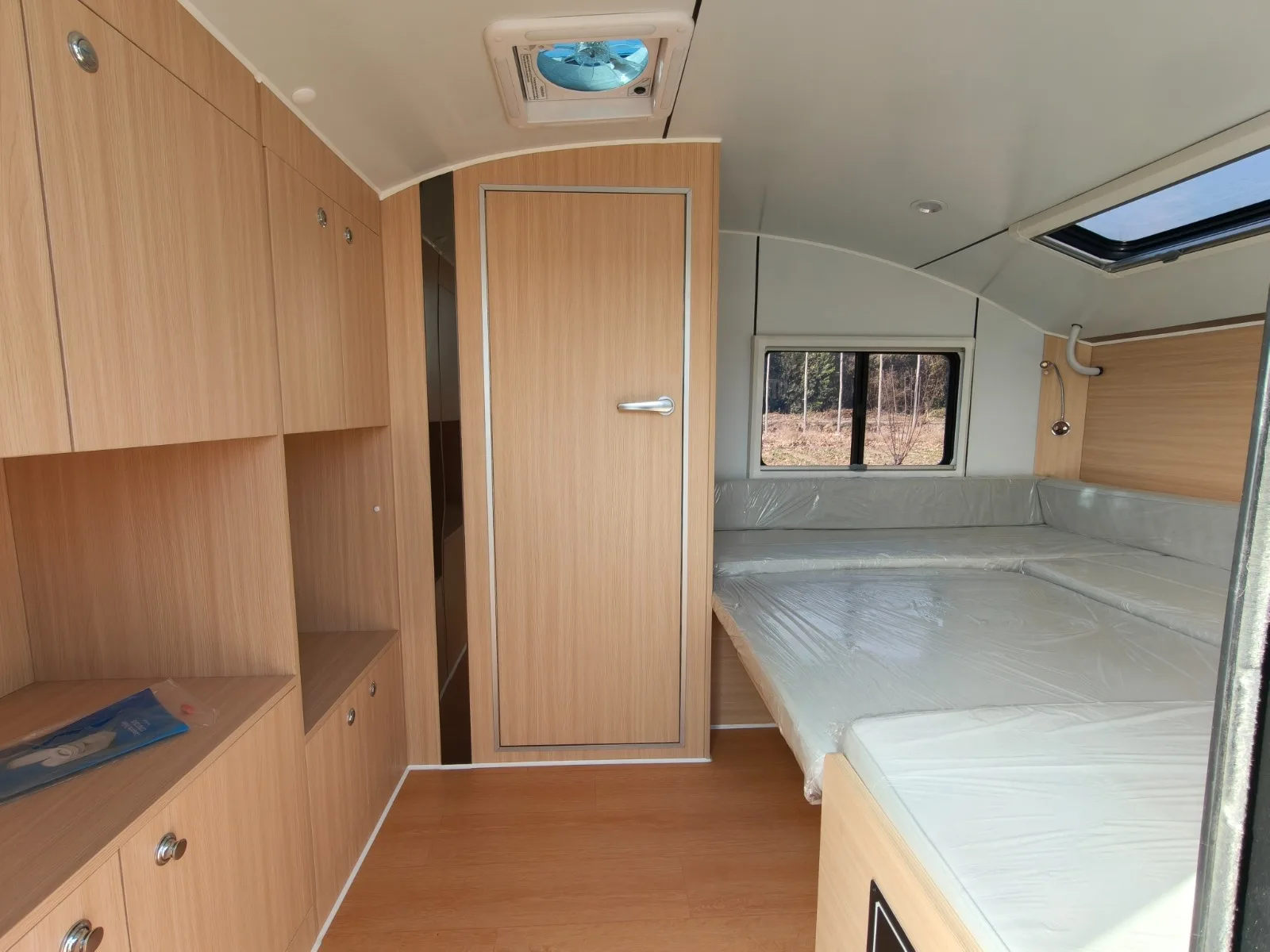
Inside the Breath Max, the queen bed and bathroom door sit within arm’s reach of each other — a critical detail at 3am when a baby needs a nappy change without waking a partner.
Driving with a baby
Australian road rules require a rear-facing car seat until 6 months minimum; the ACCC recommendation is rear-facing to 4 years. Keep drives to 2 hours maximum between stops for under 6 months; 3 hours for 6–12 months. This is not just about comfort — studies on in-vehicle sitting positions for young infants raise concerns about extended semi-reclined posture affecting airway patency.
Plan departure for immediately after a feed and a fresh nappy so the first sleep window happens in the car. For a 3-hour drive, aim: feed → change → load → depart → baby sleeps 1–2 hours → 30-minute stop → arrive.
Time your arrival at the campsite for 2–3 hours before the expected bedtime. You need setup time, daylight to orientate, and a feed window before the long night begins.
The first night
The biggest mistake is arriving late, rushing setup and putting a baby down in a hot, unfamiliar trailer. Instead:
- Arrive by 3pm on the first day
- Set up immediately (5 minutes with a hard-shell teardrop)
- Ventilate the trailer for 30+ minutes before the baby enters — allow the interior to equalise with ambient temperature
- Set up the portacot in its overnight position before the baby needs it
- Run your pre-sleep routine exactly as at home — bath in portable tub, final feed, white noise, back to sleep in the portacot
Babies are remarkably adaptable to new sleep environments if the routine is consistent. The trailer itself is not the variable. Your routine is.
Night feeds in a camper trailer
This is where the hard-shell format wins. You do not need to leave the trailer, find shoes, and walk to an amenities block at 3am. With a 12V kettle or a hot water system, formula preparation happens inside the trailer. The Breath Max’s interior bathroom means nappy changes happen 1.2 metres from the sleeping mattress. For breastfeeding parents, the queen bed and portacot can be positioned close enough for a side-lying feed without fully waking a partner.
Which Breath Trailer model suits families with a baby?
The right model depends less on the baby’s age and more on whether you need a built-in bathroom and how much you’ll use unpowered free camping versus powered caravan park sites.
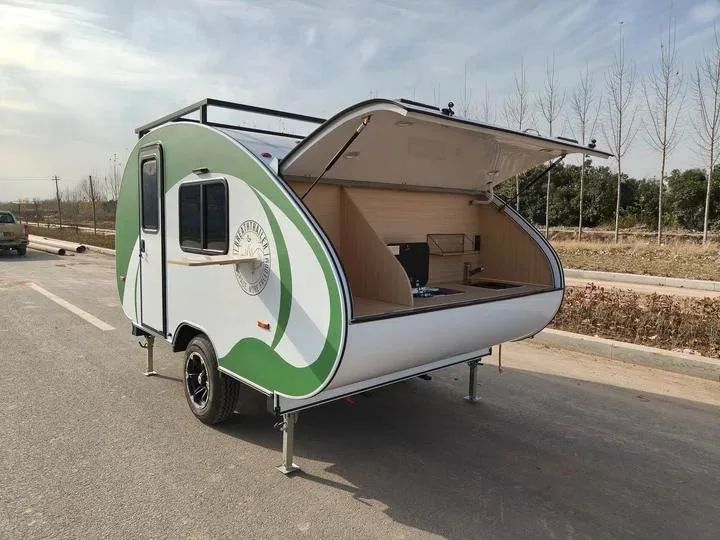
The Breath Max’s rear galley supports a full camp kitchen setup — and the 120-litre fresh water tank means you have enough water for formula preparation, baby bathing and adult cooking over 6–7 days before a refill.
Breath Essential $23,320 (700 kg)
Best for: Families staying at powered caravan park sites where amenities blocks are nearby and used regularly. No internal bathroom, but the 5-minute setup, compact footprint and 700 kg tare weight (towable by most family SUVs) make it the easiest entry point.
Baby considerations: No internal bathroom means night feeds require a walk to amenities for formula prep if you don’t have an in-trailer power and water solution. A 12V kettle on the internal 12V circuit solves the formula question; a portable baby bath solves washing. Adequate for term 2-plus trips once you have the routine.
→ See the full Breath Essential specifications.
Breath Plus $29,766 (800 kg)
Best for: Families wanting a fridge (included) and a more complete kitchen setup, still on a budget that leaves room for a year or two of accessories.
Baby considerations: Same bathroom situation as the Essential. The included fridge makes expressed milk storage and prepared food storage significantly easier. At 800 kg, still towable by most family SUVs including the Toyota RAV4 (1,500 kg), Kia Sorento (2,000 kg) and Mitsubishi Outlander (1,600 kg).
→ See the full Breath Plus specifications.
Breath Ultra $34,749 (900 kg)
Best for: Families moving toward free camping and unpowered sites, with an external shower for quick baby washes without using the amenities block.
Baby considerations: The external shower on the Breath Ultra is a practical addition for camping with a young baby — quick rinse after a beach visit, clean-down after a sandy nappy explosion, washing bottles without going inside. Still no internal bathroom, but the external shower significantly reduces reliance on amenities blocks.
→ See the full Breath Ultra specifications.
Breath Max $42,900 (1,200 kg) — recommended for families with babies
Best for: Families who want the full camping experience without relying on amenities blocks — particularly relevant for the 3am night feed and nappy change cycle.
Baby considerations: This is the one model we recommend unreservedly for camping with babies under 12 months. The interior wet bathroom with cassette toilet, corner basin and handheld shower means all baby care happens inside, at any hour, without disturbing your campsite neighbours. The 2.1 m standing headroom means a tired parent can stand upright during a night change. The 120-litre fresh water tank provides 6–7 days of water for formula, baby bathing and cooking. At 1,700 kg ATM (1,200 kg tare), it requires a tow vehicle rated to at least 1,700 kg (Kia Sorento, Toyota Prado, Isuzu D-Max, Ford Ranger).
The Breath Max is the only teardrop camper under $50,000 on the Australian market with a full interior bathroom. For families with babies, that distinction is more than a luxury.
→ See the full Breath Max specifications.
Model quick comparison for families with babies
| Model | Price | Bathroom | Baby convenience rating | Minimum tow rating |
|---|---|---|---|---|
| Breath Essential | $23,320 | None | ★★★☆☆ | 750 kg (most SUVs) |
| Breath Plus | $29,766 | None | ★★★★☆ (fridge helps) | 800 kg |
| Breath Ultra | $34,749 | External shower | ★★★★☆ | 900 kg |
| Breath Max | $42,900 | Full interior bathroom | ★★★★★ | 1,500 kg |
5-night budget: what does it actually cost?
For a couple on parental leave, the true cost of a camping trip with a baby is lower than almost any alternative form of family accommodation. Here is a worked example for 5 nights at a national park campground in NSW or Victoria:
| Item | Cost |
|---|---|
| NPWS/Parks Vic site fee (5 nights × ~$20) | ~$100 |
| Fuel (500 km return, ~$0.15/km towing) | ~$75 |
| Food and formula (incremental above home) | ~$100 |
| Consumables (nappies, wipes, sunscreen) | ~$40 |
| Total | ~$315 |
Compare that to a budget hotel for 5 nights in a regional town: $120–180/night = $600–900. The camper trailer pays for itself within 2–3 years of regular use even against budget accommodation. For families planning multiple annual trips, the 5-year cost comparison is more striking still.
Common questions about camping with a baby in Australia
What age can you take a baby camping in Australia?
There is no legal minimum age for camping with a baby in Australia. Medically, most paediatricians suggest waiting until 6–8 weeks post-birth for the baby’s immune system to develop initial antibody responses, and avoiding remote camping without reliable communications access until 3 months. A first caravan park trip at 8–10 weeks, with amenities and phone coverage, is entirely reasonable and widely practised.
Is a portacot safe in a camper trailer?
Yes, provided it meets AS/NZS 2195 and is used with only the supplied mattress. The key variables are temperature (keep the sleeping space between 16–20°C), ventilation (roof vent cracked, no direct draughts on the baby), and placement (never on the adult mattress or in a position where the baby can roll against a wall or side).
Can I use a canvas camper trailer or tent for camping with a baby?
Technically yes, but the practical challenges are significantly greater. Canvas tent temperatures are harder to regulate, condensation drips onto sleeping surfaces, and setup time with a baby in arms is genuinely difficult. If you own a canvas camper already, the compromises are manageable with experience. If you are starting from scratch, a hard-shell teardrop is worth the additional investment for this life stage.
What do I do if my baby gets a fever while camping?
Infant paracetamol (Panadol Children’s drops or Nurofen for Children if over 3 months) is the first response for fever over 38°C. Any fever in a baby under 3 months is a medical emergency requiring immediate GP or emergency department assessment — this is why campsite phone coverage and distance from hospital are essential first-trip considerations. Above 3 months, a fever under 40°C without other concerning symptoms can be managed with medication and reassessment over 12–24 hours.
How do I sterilise baby bottles while camping?
Cold-water sterilisation using Milton Sterilising Tablets is the most practical method for camping: tablets dissolve in cold water, no power required, full sterilisation in 15 minutes. Alternatively, a portable UV steriliser (Philips AVENT, ~$79) requires a USB charge but sterilises in 3 minutes. Boiling in a pot for 5 minutes remains effective if power or cold-water options are unavailable.
Should I get extra insurance before camping with a baby?
Your standard camper trailer insurance policy covers third-party damage and the trailer itself. Check that your health insurance includes ambulance cover — Ambulance Victoria, Ambulance Queensland and SA Ambulance are government-funded but NSW Ambulance charges apply to non-subscribers ($401+ per call-out in 2026). Add ambulance cover through your health insurer before any camping trip with a baby.
Recommended reading
- Best camper trailer for families Australia — full category guide for families with older children
- Teardrop camper for families Australia — hard-shell specific guide for family campers
- Camper trailer hot water system guide — choosing the right system for formula and baby bathing
- Free camping Australia guide — self-containment requirements and where to camp free
- Camper trailer packing list Australia — complete master packing checklist for every trip
The first camping trip with a baby is a logistics exercise with enormous reward. Get the safe sleep environment right, manage temperature conservatively, pack for self-sufficiency and choose a campsite within 2 hours of home with decent facilities. After the first trip, every subsequent one gets easier. After five trips, it becomes second nature.
If you have a baby and you’re serious about camping regularly, book a viewing with us — we’ll walk you through the Breath Max interior specifically with night feeds and portacot placement in mind. 350+ Breath Trailer owners have done exactly that.