Best Camper Trailer for Families Australia 2026: Complete Buying Guide
Canvas, hard-floor, teardrop or hybrid — the honest 2026 guide to choosing the best camper trailer for your Australian family. Real prices, weights, TCO and top picks.
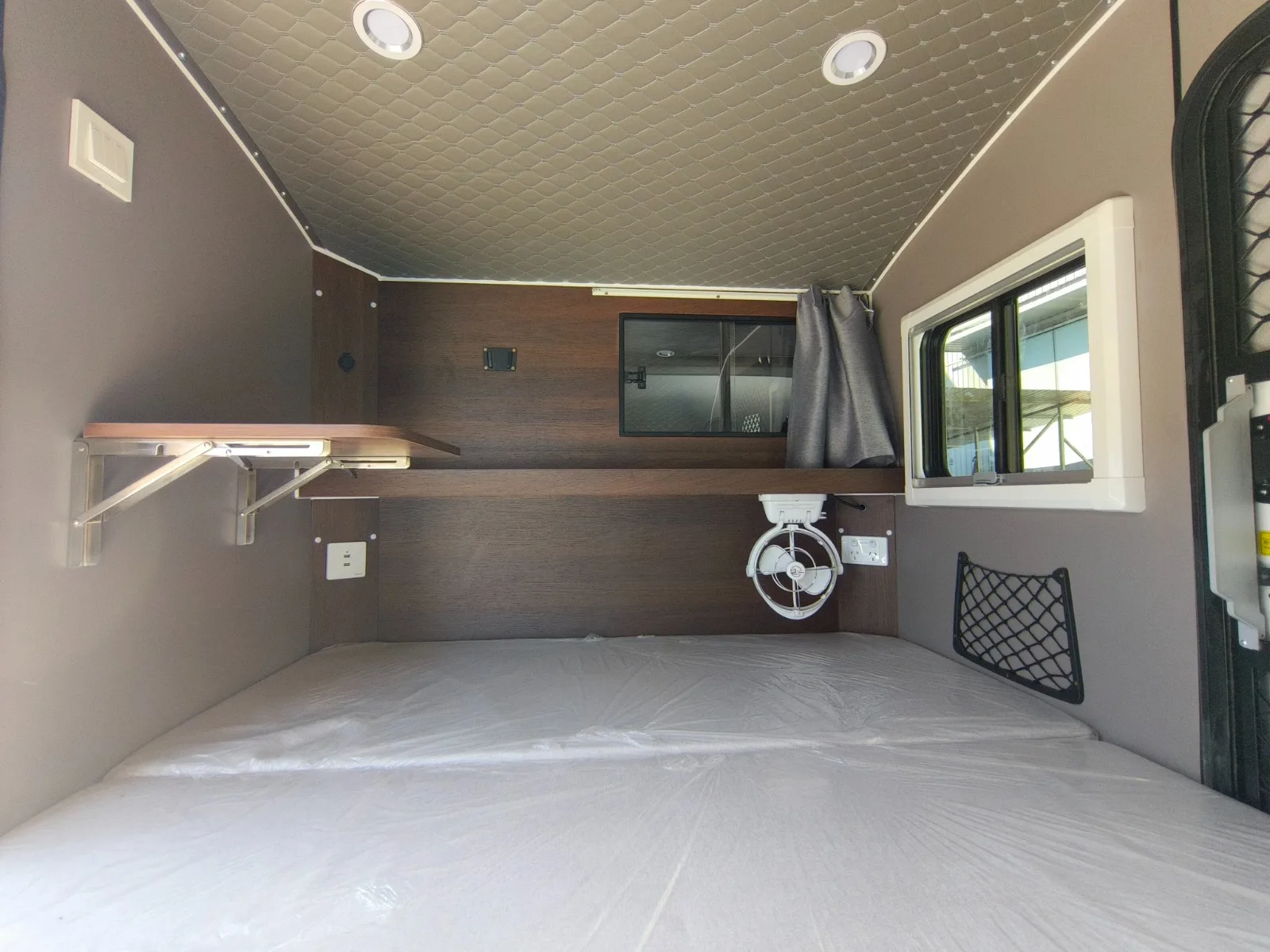
Choosing a camper trailer for a family is harder than it looks. You’re juggling sleeping space for 3–5 people, a tow vehicle that might be a Kluger rather than a Land Cruiser, a setup time that doesn’t eat the first hour of a Friday afternoon, and a budget stretched across the trailer, accessories, and five years of school-holiday trips. Add in the distinctly Australian question — “Do we actually need a bathroom to free camp?” — and the decision becomes a genuine research project.
In 2026, the Caravan Industry Association Australia reports over 770,000 registered caravans and camper trailers on Australian roads, with families driving a significant share of new registrations. The market has responded with four genuinely different categories of family camper trailer, each with different strengths. This guide covers all four — canvas soft-floor, forward-fold hard-floor, hard-shell teardrop, and hybrid caravan — with real 2026 prices, honest trade-offs, and a 5-year total cost of ownership comparison.
What Makes a Good Family Camper Trailer?
Before comparing models, it helps to agree on your non-negotiables. Five factors matter most for Australian families:
| Factor | Why It Matters for Families |
|---|---|
| Sleeping capacity | Must sleep 2 adults + 2–4 children without cramming |
| Setup time | After a 5-hour drive with tired kids, 10 minutes beats 45 minutes |
| Off-road clearance | National parks and coastal free camps often need at least corrugated dirt-road capability |
| Price (purchase + running costs) | 5-year total cost matters more than the sticker |
| Self-containment | Unlocks free camping — the only reliable escape from school-holiday booking chaos |
If you’re new to camper trailers, our camper trailer towing guide Australia and lightweight vs heavy camper trailer comparison are solid starting points before you start test-driving.
Type 1: Canvas Soft-Floor Camper Trailers (Rear-Fold)
Best for: Families who camp mainly on formed roads, want maximum sleeping space for the dollar, and don’t mind a longer setup.
Canvas rear-fold camper trailers — the traditional Australian style — unfold to create a large tent living area with a queen or king bed at one end and a convertible lounge or bunk arrangement at the other. A canvas annex extends the footprint further, giving kids their own sleeping zone separate from the adults.
Why families choose them:
- Largest sleeping footprint per dollar of any camper type
- Full annex rooms allow children to sleep independently
- Lower purchase price — entry-level from ~$18,000
- Generous storage when packed down
The honest trade-offs:
- Setup time runs 25–45 minutes (longer in rain or wind)
- Canvas requires annual re-proofing (~$200–$400/year) and carries a dust ingress risk on long outback tracks
- Heavier loadings can surprise families who haven’t weighed their gear
Representative 2026 prices:
- Entry-level soft-floor (Rydar, Bushranger): ~$18,000–$22,000
- Mid-range (Patriot X1, Austrack Plenty-X): ~$24,000–$30,000
Canvas rear-folds remain the most popular family camper trailer in Australia by volume — and for good reason if your trips are mainly school-holiday caravan parks or formed-road national parks. The moment you want to free camp consistently, their lack of a fixed bathroom becomes a real limitation.
Type 2: Forward-Fold Hard-Floor Camper Trailers
Best for: Families who want faster setup and better dust resistance than canvas, can sleep 4–5 with side-wing extensions, and camp a mix of caravan parks and light off-road sites.
Forward-fold campers are arguably the fastest-growing segment in the Australian family camping market. The floor and walls fold forward over the drawbar as hard-sided aluminium panels; canvas wings extend on each side to create additional sleeping areas for children.
Why families choose them:
- Setup time: 10–20 minutes — a material difference after a long drive
- Better dust and weather resistance than soft-floor canvas
- Compact tow profile makes fuel economy and highway driving easier
- Most can sleep 4–5 people with side wings or extending annex
- Many mid-range models now include slide-out kitchens and 12V lithium systems
The honest trade-offs:
- More expensive than rear-fold canvas ($27,000–$55,000 range)
- Side-sleeping extensions are still canvas — some seasonal maintenance required
- Ground clearance and build quality vary significantly between price points
Representative 2026 prices (forward-fold hard-floor):
| Model | Sleeps | Tare | ATM | 2026 Price (approx.) |
|---|---|---|---|---|
| Austrack Telegraph X | 4 | ~900 kg | ~1,400 kg | ~$27,990 |
| MDC Jackson FF | 4 | ~850 kg | ~1,350 kg | ~$31,990 |
| CUB Frontier | 4 | ~950 kg | ~1,450 kg | ~$34,990 |
| Signature Trailers SE | 4–5 | ~900 kg | ~1,400 kg | ~$36,000 |
| CUB Drifter (dual-fold) | 6 | ~1,397 kg | ~1,900 kg | ~$52,990 |
ATM = Aggregate Trailer Mass fully loaded. Always cross-check against your vehicle’s braked towing capacity and towball download limit. See our teardrop camper weight guide for a full explainer on tare, ATM, and payload.
The CUB Drifter sits at the top of this category — a dual-fold that genuinely sleeps six with two fixed end-beds and a convertible lounge. At ~$52,990 it’s the most expensive fold-out camper, but for families of five or six it’s hard to match on pure sleeping volume.
Type 3: Hard-Shell Teardrop / Pod Campers for Families
Best for: Families of 3–4 who want the fastest setup, a lockable sealed trailer, and are serious about off-grid free camping.
Hard-shell teardrop campers aren’t just for couples. The Breath Max — at 1,200 kg tare and 2.1 m internal standing headroom — is the most capable family teardrop on the Australian market, and the only teardrop under $50k with a full interior bathroom.
Why families choose them:
- Setup time: 5 minutes (level, connect power, open door)
- Fully sealed hard-shell — zero canvas to maintain, re-proof, or worry about in the rain
- Queen bed for adults, annexe arrangement for children
- Lockable hard shell means security on longer hiking days (no slicing through canvas)
- Self-containment (Max model) gives complete freedom from caravan park booking windows
The honest trade-offs:
- Sleeping capacity tops out at 2+2 with annexe — not suited for families of five or six
- Hard-shell teardrops cost more per square metre than canvas alternatives
- The full interior bathroom is a premium — it’s the Max, not the entry-level models
How the bathroom question plays out for families:
| Breath Trailer Model | Kids’ Bathroom Reality | Best Family Use Case |
|---|---|---|
| Essential ($19,990 / 700 kg) | Caravan park or communal facilities | Families who mainly use powered sites |
| Plus ($25,740 / 800 kg) | External hot shower included | Parks + some national park camping |
| Ultra ($30,290 / 900 kg) | External hot shower + annex connection | Most national park and bush camping |
| Max ($39,000 / 1,200 kg) | Full interior toilet + shower, grey water tank | 100% self-contained free camping anywhere |
For families who want to escape the school-holiday park queue entirely, the Breath Max resolves the bathroom objection completely. Our self-contained camper guide covers the CMCA self-containment standard and free-camping rules by state.
For a deeper dive into how teardrops specifically handle family needs — sleeping arrangements, annexe options, school-holiday strategy — see our Teardrop Camper for Families Australia guide.
Type 4: Hybrid Caravans (for Larger Families)
Best for: Families of 5–6 who want caravan-level comfort, a fixed bathroom, and plan to camp primarily on powered sites.
Hybrid caravans — pop-top or folding-roof caravans — combine a hard-sided body with a raising roof section. They sleep 4–6 people comfortably and typically include a fixed bathroom, full kitchen, and air conditioning options.
Why larger families choose them:
- Largest sleeping capacity in the sub-$100k segment
- Fixed bathroom and proper kitchen from day one
- Air conditioning options — significant comfort on Queensland or NT school holidays
- Caravan-park infrastructure (powered sites, dump points) is mature and well-distributed
The honest trade-offs:
- Heavier (1,400–2,200 kg ATM) — typically requires a dual-cab ute or large 4WD
- Off-road capability is genuinely limited — loose sand, steep tracks, and soft creek crossings are out
- Full plumbing, gas, and electrical systems mean more servicing complexity
- The hidden cost: most hybrid caravans need a more capable tow vehicle
Representative 2026 prices:
- Jayco Penguin (pop-top, 4 berth): ~$36,000–$42,000
- Opus OP4 (collapsible, 4–6 berth): ~$37,000–$49,000
- Jayco Journey Outback (6 berth): ~$65,000–$75,000
The true cost of a hybrid caravan is often hidden in the tow vehicle equation: a family driving a Toyota Kluger can tow a 1,200 kg teardrop or a 1,400 kg forward-fold camper without any modification. Most hybrid caravans at 1,800+ kg ATM need a Prado, LandCruiser 200 or dual-cab — adding $40,000–$70,000 to the total acquisition decision.
Family Camper Trailer Comparison: Five Key Picks
| Model | Type | Sleeps | Tare | Setup Time | Bathroom | 2026 Price |
|---|---|---|---|---|---|---|
| Breath Trailer Plus | Hard-shell teardrop | 2 + 1 annexe | 800 kg | 5 min | External shower | $25,740 |
| Austrack Telegraph X | Forward-fold | 4 | ~900 kg | ~15 min | No | ~$27,990 |
| MDC Jackson FF | Forward-fold | 4 | ~850 kg | ~15 min | No | ~$31,990 |
| Breath Trailer Max | Hard-shell teardrop | 2 + 2 annexe | 1,200 kg | 5 min | Full interior | $39,000 |
| CUB Drifter | Dual-fold canvas | 6 | ~1,397 kg | ~25 min | No | ~$52,990 |
Prices are indicative 2026 starting prices. Tare weights are manufacturer figures — loaded ATM will be higher. Confirm towing compatibility with your own vehicle’s specifications.
Tow Vehicle Guide for Australian Families
Most Australian families own one vehicle. If it already meets the towing requirement for your chosen camper, that’s tens of thousands of dollars saved. Here’s how the most common family vehicles stack up:
| Family Tow Vehicle | Braked Tow Capacity | Compatible Camper Category | Key Notes |
|---|---|---|---|
| Toyota RAV4 (petrol) | 1,600 kg | Light teardrop (Essential, Plus) | Tows Breath Essential and Plus comfortably |
| Hyundai Santa Fe | 2,000 kg | Light forward-fold or teardrop to ~1,400 kg ATM | Check payload — Santa Fe payload is often tight when fully loaded |
| Toyota Kluger | 2,000 kg | Forward-fold or teardrop up to 1,400 kg ATM | Opens most family forward-folds |
| Mitsubishi Pajero Sport | 3,000 kg | Forward-fold, teardrop, light hybrid | Solid all-round family tow vehicle |
| Toyota LandCruiser Prado | 3,000 kg | All categories incl. Breath Max, CUB Drifter | Best balance of capability and family practicality |
| Toyota HiLux / Ford Ranger | 3,500 kg | All categories | Maximum towing + payload combination |
Always verify towball download limit and GVM separately from braked towing capacity. A Kluger rated at 2,000 kg towing may have a 200 kg towball download limit — insufficient for some heavier camper trailers. Our camper trailer towing tips guide covers hitching, load distribution, and the tow capacity maths in full.
The practical conclusion for most families: teardrops and light forward-folds work with the vehicles Australian families already own. There’s no hidden $50,000 ute upgrade required.
5-Year Total Cost of Ownership
The sticker price is only the start. Here’s what a realistic 5-year TCO looks like across the four categories, based on 25 camping nights per year:
| Cost Item | Canvas Rear-Fold | Forward-Fold | Teardrop Plus/Max | Hybrid Caravan |
|---|---|---|---|---|
| Purchase price | ~$24,000 | ~$30,000 | $25,740–$39,000 | ~$38,000 |
| Tow vehicle upgrade | $0 (Kluger ok) | $0 (Kluger ok) | $0 (RAV4–Prado) | ~$45,000 (ute upgrade) |
| Registration 5 yr | ~$800 | ~$1,000 | ~$800–$1,500 | ~$2,500 |
| Insurance 5 yr | ~$1,500 | ~$2,000 | ~$1,500–$2,500 | ~$3,500 |
| Canvas re-proofing 5 yr | ~$1,200 | ~$600 | $0 | $0 |
| Campsite fees (125 nights) | ~$3,750 (park avg.) | ~$3,750 | $0–$3,750 (free camping possible) | ~$6,250 (powered sites) |
| Servicing 5 yr | ~$750 | ~$1,000 | ~$750 | ~$2,500 |
| 5-yr TCO estimate | ~$32,000 | ~$38,350 | ~$30,000–$48,500 | ~$97,750+ |
Hybrid TCO assumes a $45,000 tow vehicle upgrade and mainly powered-site camping. Teardrop lower end assumes Plus with existing RAV4; upper end assumes Max with a new Prado. Free camping assumed for 50% of Breath Max nights. All figures are indicative.
The most striking figure: hybrid caravans look competitive at $38,000 on the showroom floor, but once the tow vehicle upgrade, powered-site fees, and higher running costs are included, the 5-year gap blows out to $50,000 or more compared to a teardrop or forward-fold. For families who already own a capable SUV, it’s an enormous difference.
Read more: Is a Teardrop Camper Worth It? — a detailed cost-per-trip analysis across all camper types.
School Holidays, Free Camping and the Annexe Strategy
School holidays are where Australian family camping is won or lost. Popular national parks in NSW, Victoria and Queensland reach booking capacity weeks in advance during July and October breaks. The families who’ve escaped the booking anxiety are invariably the ones who are self-contained.
Self-containment basics: A self-contained rig needs at minimum a fixed toilet, grey water containment, and sufficient water for at least three days independent of external facilities. Most Australian states follow the CMCA self-containment standard or an equivalent state framework. See our self-contained camper guide for state-by-state rules.
How each camper type handles free camping:
- Canvas/forward-fold: Most lack a fixed toilet. A portable toilet kit (Thetford Porta Potti, ~$200) can meet basic standards in some states, but grey water management is generally unresolved. Free camping is possible but limited to low-demand areas.
- Breath Max teardrop: Fixed toilet, fixed shower, 100+ litre grey water capacity — self-contained out of the box. No mods required. This is the most straightforward path to genuine free camping for a family.
The annexe strategy for kids: When a family runs a teardrop with a 2-person hard-shell bed, the annexe solves the sleeping question for children. A quality freestanding annexe (ARB, Darche, or model-specific) costs ~$1,500–$3,000 and connects to the trailer’s awning rail to give children a dedicated, weatherproof sleeping space. This arrangement is often more comfortable than squeezing four into a canvas fold-out, and it lets adults lock the main cabin without disturbing sleeping kids.
If you’re looking for destination inspiration for your first school-holiday free camping trip, our best teardrop camper destinations by state guide covers 18 sites across all states and territories with self-containment requirements noted.
Top Picks by Family Configuration
Family of 3 — 2 adults + 1 child: Breath Trailer Max ($39,000) — 5-minute setup, interior bathroom for genuine self-containment, queen bed for adults plus annexe for one child. Tow with a Prado, Fortuner, or loaded Kluger. The self-containment unlocks the full national park network without booking anxiety.
Family of 4 — 2 adults + 2 children:
Austrack Telegraph X ($27,990) or MDC Jackson FF ($31,990) — forward-fold with side-wing sleeping for two kids, slide-out kitchen, 12V fridge. Budget-friendly entry into proper off-road family camping. For families who want self-contained free camping: the Breath Max with a quality annexe is the upgrade path.
Family of 5–6: CUB Drifter (~$52,990) — the definitive dual-fold for larger families. Two fixed end-beds, convertible lounge to double, annex for additional children. Requires a capable tow vehicle rated to at least 1,900 kg ATM (Prado 150, LandCruiser 200 or HiLux).
Family on a budget — 3–4 people: Breath Trailer Plus ($25,740) — hard-shell setup in 5 minutes, 800 kg tare (towable by a RAV4), external hot shower included. For families who mainly use national park campgrounds and caravan parks with facilities, this is the lowest-cost entry into the teardrop category with almost no ongoing maintenance.
FAQ
What size camper trailer do I need for a family of 4? Most forward-fold campers in the $28,000–$35,000 range sleep four — two adults in the main bed and two children in side-wing extensions. For a teardrop, the Breath Max with a quality annexe ($39,000 all up) works well for a family of four. For five or six people you’ll generally need a dual-fold canvas camper like the CUB Drifter (~$52,990) or a hybrid caravan.
Can a Kluger or RAV4 tow a family camper trailer? Yes, with the right trailer. A RAV4 (1,600 kg braked tow capacity) handles most teardrop campers up to the Breath Plus (800 kg tare). A Kluger (rated 2,000 kg) opens up light forward-fold campers in the 1,200–1,400 kg ATM range. You’ll need a Prado or ute-class vehicle for a CUB Drifter (~1,900 kg ATM) or hybrid caravan. Our towing tips guide has the full vehicle-matching breakdown.
Do we need a bathroom for school-holiday family camping in Australia? It depends on where you plan to go. If you mainly visit national parks and caravan parks with communal facilities, no. If you want to free camp — particularly in WA, NT, remote NSW and coastal Queensland — a fixed toilet and grey water containment are either required or make life significantly easier with children. The Breath Max is currently the only teardrop under $50k with a full interior bathroom, making it the most straightforward self-contained family option.
How long does setup take for a family camper trailer? Canvas rear-folds take 25–45 minutes. Forward-fold hard-floor campers take 10–20 minutes. Hard-shell teardrops take 5 minutes. After a long school-holiday drive with kids, the setup time difference is one of the most underrated factors in choosing a family camper.
Is it better to buy new or used for a family camper trailer? Used can offer 30–40% below new pricing on well-maintained 2–3 year old models. For a family, the key risks to check are canvas condition (cost to re-proof), wheel bearing service history, and chassis corrosion — especially on coastal Queensland and NSW trailers. Our new vs used camper trailer guide walks through the full pre-purchase inspection process.
Recommended Reading
- Teardrop Camper for Families Australia — deep dive into teardrop-specific family layouts, annexe setups and model selection
- Camper Trailer Towing Guide Australia — tow vehicle ratings, speed limits by state, and safety essentials
- Self-Contained Camper Australia — state-by-state free camping rules and CMCA self-containment explained
- Teardrop Camper Weight Australia — tare, ATM, payload: what every family buyer should know before signing
- Things to Check Before Buying a Camper Trailer — 10-point pre-purchase inspection checklist
Ready to see how the Breath Trailer lineup compares for your family? Visit our model comparison page or book a viewing at our Sydney showroom — lead time is currently 3–4 months.