How We Test Every Trailer Before Delivery (2026)
The electrical, water and road checks each trailer goes through, and the sign-off before it is released.
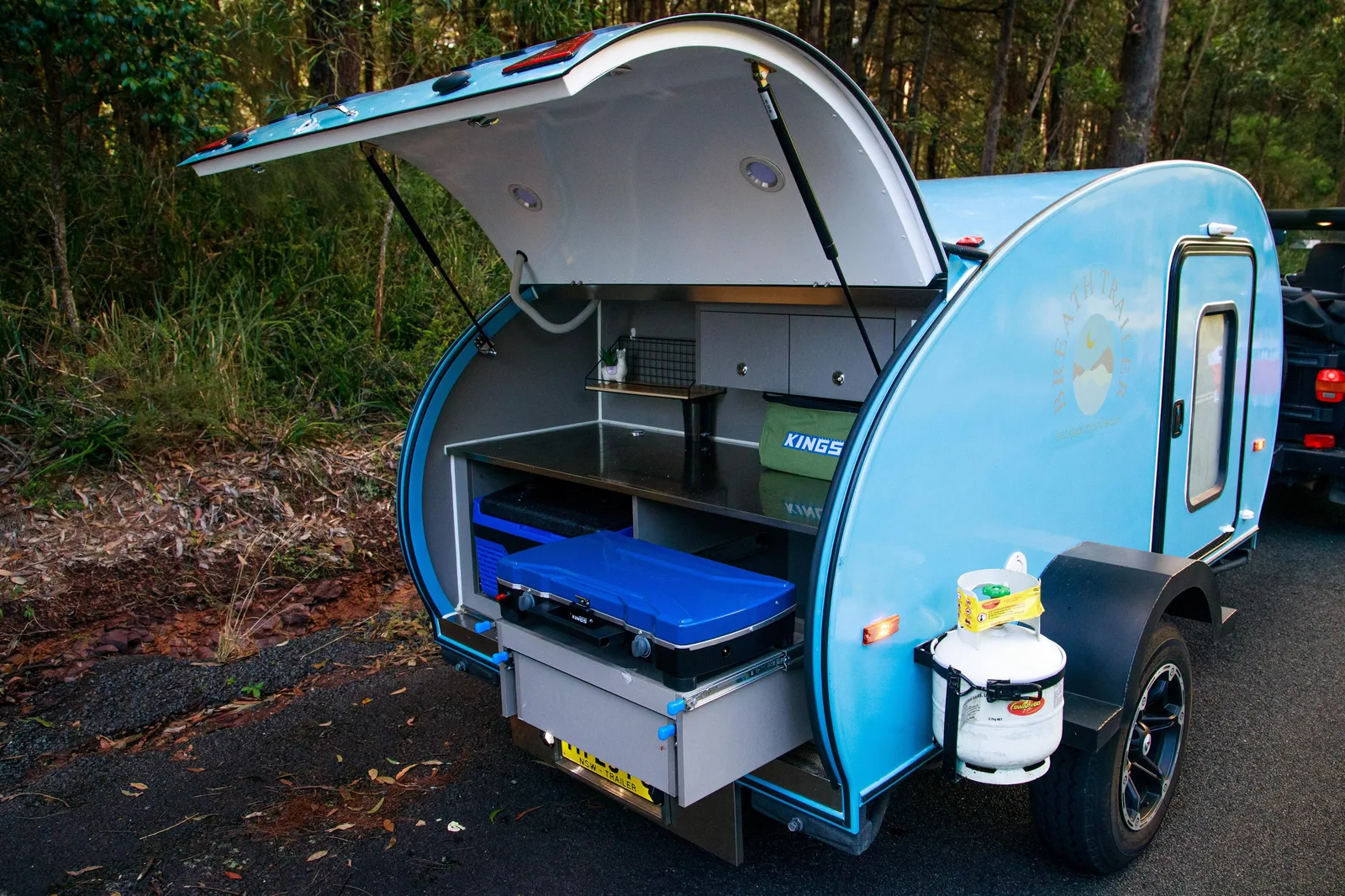
Eighty per cent of Australian camper trailer buyers experience a fault with their new unit. Of those, nearly half classify it as major. That figure comes from the ACCC survey of 2,270 owners — the largest systematic study of the sector’s record.
That failure rate is not random. It reflects what happens when “tested before delivery” means someone walking around the trailer with a clipboard and ticking boxes without turning a single tap, connecting a single circuit, or running a single watt through the 12V system.
At Breath Trailer, “tested before delivery” means twelve specific, measurable tests — each with a defined pass threshold, a documented result, and a mandatory rework requirement if the test fails. No unit leaves our Sydney workshop until every test is passed and a technician has signed the checklist. Here is exactly how each one works.
Why “Visual Inspection” Is Not a Quality Test
Let us start with a distinction most buyers do not know to ask about.
A visual inspection is a scan — the technician looks at the trailer and notes whether anything appears obviously wrong. For a basic flatbed trailer, this is often sufficient.
A camper trailer is not a flatbed. It contains:
- A 12V electrical system with six or more circuits, each drawing load at highway speed over rough corrugated roads
- An electric brake system calibrated to a specific GTM
- A water containment system that must hold pressure and remain leak-free through Australian temperature extremes
- Sealed hatches and windows whose failure modes are invisible until they leak
- Running gear (bearings, springs, tyres) operating under several thousand vertical load cycles per kilometre
For each of these systems, the failure mode is invisible in a static visual inspection. A cable whose insulation is chafing on a metal edge will not show up when the trailer is sitting still. A brake drum with incorrect shoe clearance looks fine from the outside. A hatch seal with a 1 mm compression gap passes any visual check and fails at the first rain.
Testing means applying load, measuring outcomes, and comparing results against a defined threshold. The table below shows exactly what we apply, what we measure, and what the pass threshold is.
The 12 Tests: Summary
| Test # | System | Input Applied | What We Measure | Pass Threshold |
|---|---|---|---|---|
| 1 | Weld integrity | High-intensity lamp at <30 cm | Fusion, porosity, undercut at every weld | Zero defects |
| 2 | Galvanising | Visual at cut edges and drilled holes | Coverage at welds, holes, tube ends | Zero bare steel |
| 3 | Coupling engagement | 50 mm test ball | Lateral play, locking spring | Zero play; lock engages cleanly |
| 4 | Cable sizing | AS/NZS 3001.2 voltage drop table | Cable gauge vs max continuous load | ≤4.5% voltage drop at rated current |
| 5 | Circuit fusing | Tape measure from battery positive | Fuse position | Within 150 mm of battery terminal |
| 6 | 12V functional load | Full battery → all loads on | Current draw, voltage at load terminal | Each circuit within ±10% of rated draw |
| 7 | Solar MPPT profile | Panel input or direct sunlight | Charging stage, absorption voltage | Matches battery chemistry (LiFePO4 or AGM) |
| 8 | Electric brake | Manual override, wheels on ground | Wheel rotation under full override | Zero rotation; drag confirmed |
| 9 | Hose (seal) test | Garden hose base to roofline, 10 min | All seal lines under torch from inside | Zero moisture penetration |
| 10 | Water system pressure | Pump pressurised, all outlets | Fitting integrity, flow rate | Zero leaks; ≥6 L/min at kitchen tap |
| 11 | Wheel bearing play | 3 and 9 o’clock hand rock | Lateral and axial play | Zero detectable movement |
| 12 | Tyre condition and age | Date code; calibrated gauge | Age from manufacture; inflation | ≤5 years; ≥7 mm tread; within 5 psi of placard |
Each test generates a documented result on the pre-delivery checklist — a number, a measurement, or a pass/fail entry. The technician who performed the test signs each row.
Tests 1–3: Structural Integrity
Weld Inspection
Weld quality determines how long a trailer survives Australian road conditions. Corrugated dirt roads impose approximately 1,300 wheel impacts per kilometre — each one cycling tensile stress through every weld joint. A defect invisible at zero load will propagate into a fatigue crack after a few thousand kilometres of outback travel.
We inspect every weld on the chassis rails, cross-members, drawbar, and suspension mount points using a high-intensity lamp at close range. The three defect types we look for:
- Porosity: voids in the weld bead caused by contamination or rapid cooling. Appear as pits or bubbles. Create stress concentrations.
- Undercut: a groove along the toe of the weld where the base metal has been melted back but not filled. Reduces effective thickness of the parent metal.
- Incomplete fusion: the weld bead did not bond to the base metal at the root. Can look perfect on the surface while being hollow underneath.
If any defect is found, the chassis does not proceed to the next stage. It goes back to the weld team for repair and a complete re-inspection of the affected run.
Galvanising Verification
Every Breath Trailer chassis is hot-dip galvanised — the steel is immersed in molten zinc at approximately 450°C, which bonds a zinc layer into the surface of the steel rather than just coating it. The result is a layer that cannot be peeled, scratched through, or lifted at cut edges.
What can fail in hot-dip galvanising is coverage. Cut edges, drilled holes, and tightly bent sections can develop bare patches if the zinc bath does not flow completely into the geometry. These spots will begin rusting within one wet season on a coastal or tropical Queensland route and within 2–3 seasons on any salt-exposed track.
We check every cut edge and drilled hole under direct light. Any bare steel — however small — triggers re-treatment before the trailer proceeds.
Coupling Engagement
The coupling is the single mechanical connection between a 1,200 kg Max trailer and your tow vehicle. We test it with a 50 mm calibrated test ball, checking lateral play (near zero), locking mechanism spring engagement (audible, positive resistance), release cable operation (disengages under load without binding), and safety chain attachment points (loaded by hand to confirm weld integrity).
For full context on coupling and drawbar requirements under VSB1 Rev 6, see our pre-purchase inspection checklist.
Tests 4–7: Electrical Quality
AS/NZS 3001.2:2022 sets the minimum requirements for electrical systems in Australian recreational vehicles. These are good requirements — but they are minimum requirements. Our testing protocol goes beyond several of them.
Test 4: Cable Sizing and Voltage Drop
The standard requires wiring to be sized for its maximum continuous load, and specifies a maximum 5% voltage drop from battery to load. What it does not specify is how that calculation is verified before delivery. Some builders rely on rule-of-thumb sizing. We calculate the expected voltage drop for every circuit run based on cable length (both positive and return), cable cross-sectional area, and maximum continuous current under Australian summer ambient temperatures.
Any circuit where the calculation shows a voltage drop above 4.5% is re-wired with the next gauge up. We test to 4.5% rather than the 5% regulatory limit to maintain a buffer against connection resistance and temperature variation.
| Circuit | Typical Run (m) | Max Continuous Load | Cable Installed | Calculated Drop |
|---|---|---|---|---|
| Fridge compressor | 4 m | 8 A | 6 mm² | 2.1% |
| DC-DC charger output | 0.5 m | 40 A | 16 mm² | 0.4% |
| Solar MPPT output | 3 m | 30 A | 10 mm² | 1.8% |
| Interior lighting | 5 m | 5 A | 4 mm² | 2.6% |
| Water pump | 4 m | 10 A | 6 mm² | 2.6% |
Values shown for the Breath Ultra configuration. The Max adds bathroom pump and fan circuits at equivalent sizing.
Test 5: Circuit Fusing Within 150 mm of Battery Positive
AS/NZS 3001.2:2022 is explicit: every positive circuit must be fused or protected by a circuit breaker within 150 mm of the battery terminal. The cable between the battery and the fuse is unprotected — if it short-circuits before the fuse, you have an unfused conductor at full battery capacity. That is a fire risk, not a fault.
We verify this with a physical tape measure. Not an estimate, not a glance — a measured 150 mm from battery terminal to fuse. Any circuit where the fuse is further than this is corrected before proceeding.
Test 6: 12V Functional Load Test
This is where we verify the electrical system works under load, not just at rest. We run every circuit simultaneously and measure current draw with a clamp meter at the load terminal.
Why measure at the load terminal rather than the battery? Because a cable with resistance problems — undersized, corroded terminal, damaged insulation — may show correct battery current while the load itself receives insufficient power. A fridge drawing 7.5 A at the battery might receive only 6 A at the fridge terminal due to resistive losses, putting the compressor at the edge of its operating envelope. Under Australian summer temperatures, that margin disappears fast.
For a full explanation of why electrical system design matters in Australian conditions, see our complete guide to camper trailer power systems.
Test 7: Solar MPPT Charging Profile Verification
The MPPT solar charge controller must be configured for the correct battery chemistry. A LiFePO4 charging profile is not the same as an AGM profile, and using the wrong one either damages the battery (overcharge on AGM at LiFePO4 voltages) or permanently undercharges it (AGM profile on LiFePO4).
We verify the MPPT controller is set to match the installed battery chemistry, and that the absorption voltage is within ±0.2 V of the battery manufacturer’s specification. This is documented in the handover paperwork so you know the exact settings if you ever need to reset the controller.
Test 8: Electric Brake Verification
ADR 38/04 mandates electric brakes on any Australian trailer with a GTM exceeding 750 kg. Here is how our four models sit against that threshold:
| Model | GTM | Electric Brakes Required | Breakaway System Required |
|---|---|---|---|
| Essential | ~700 kg | Borderline at payload; verify on load | No |
| Plus | ~850 kg | Yes | No |
| Ultra | ~950 kg | Yes | No |
| Max | ~1,200 kg | Yes | Yes |
Our brake test applies the full manual override on the in-cab brake controller — this activates the electric brake magnets without any wheel rolling — and attempts to push the trailer by hand on flat concrete. If the wheels rotate, the brake shoe-to-drum clearance is incorrect.
What we are setting: 0.15–0.25 mm shoe-to-drum clearance on new drums. At less than 0.15 mm, the shoe drags when brakes are released. At more than 0.25 mm, the electromagnetic gap reduces effective braking force at highway speed. This is a measurement job, not a feel job. We also verify the breakaway battery on the Max is fully charged and will trigger if the coupler separates, and that safety chains are correctly crossed under the drawbar at the right length.
For the full regulatory background on ADR38 thresholds and brake controller types, see our comprehensive guide to electric brakes for camper trailers.
Tests 9–10: Water Integrity
Water damage is the leading cause of structural failure in Australian camper trailers — and the failure mode most consistently missed at pre-delivery. The reason is straightforward: a 1 mm gap in a hatch seal is invisible in a visual inspection. It only reveals itself when you run water over it.
Test 9: Hose and Seal Test
We run a garden hose over the entire exterior for a minimum of ten minutes. The test starts from the base skirt and progresses upward to the roof join. The flow rate starts low and increases to simulate heavy rain on the upper third of the body.
Inside the trailer, a second technician tracks every seal line with a torch during the full ten-minute test. The interior is pre-dried before the test begins — any pre-existing moisture would make ingress points impossible to identify.
Pass criteria: zero moisture penetration at any seal line. A single damp patch triggers:
- Identification of the entry point from the outside while water is still running
- Re-sealing with appropriate compound (butyl tape, polyurethane sealant, or EPDM compression seal depending on the location and material)
- A repeat ten-minute hose test from the beginning
The seal test is one reason hard-shell teardrop construction has a structural advantage over canvas-bodied campers. A hard-shell body seal, correctly bedded, holds indefinitely and can be repaired with off-the-shelf materials if damaged on the road. Canvas is the seal — and canvas sealing degrades with UV, temperature cycling, and compression set. For the full weight-and-durability comparison, see our lightweight vs heavy camper trailer guide.
Test 10: Water System Pressure Test
The fresh water system is pressurised to 40 psi by the 12V pump with the tank at full capacity and all outlets closed. We hold that pressure for three minutes while inspecting every fitting, tank seam, and pipe run. Any weeping at a fitting — even the smallest droplet — fails the test.
Once pressure integrity is confirmed, we open each outlet individually and measure flow rate at the kitchen tap: pass threshold is 6 L/min minimum. Below this flow rate, the pump may be struggling against a partially blocked strainer, undersized pipe run, or incorrectly set pump pressure switch.
The hot water system fitted on the Ultra and Max goes through a full heat cycle to 60°C. We verify the thermostat cuts at the correct temperature and that the pressure-and-temperature (P&T) relief valve is functional. This valve is required by Australian plumbing standards and protects against dangerous pressure buildup if the thermostat fails.
Tests 11–12: Running Gear
Test 11: Wheel Bearing Play
New bearings should have near-zero detectable play. We check each hub by gripping the tyre at 3 and 9 o’clock and rocking it — any perceptible lateral or axial movement indicates a bearing that is incorrectly packed, set to wrong preload, or already worn.
All Breath Trailer wheel bearings are packed with NLGI 2 lithium-based grease before installation, and hub preload is set to the manufacturer’s specification. The dust cap or bearing protector is fitted and checked for secure seating before the test.
For the full service interval guide and why bearing inspection intervals differ between coastal, sealed-road, and corrugated outback use, see why wheel bearings matter on a camper trailer.
Test 12: Tyre Condition and Age
The Australian legal minimum tread depth is 1.5 mm. Our delivery threshold is 7 mm minimum — any tyre below this on a new build is replaced. We also check the tyre date code: any tyre older than five years from its manufacture date is replaced regardless of visible tread depth, because rubber compound degradation is not visible from the outside.
Tyre date codes appear on the sidewall as a four-digit number in an oval: the first two digits are the week, the last two are the year (“2423” = 24th week of 2023). We photograph each code and include the readings in the handover documentation.
What Happens When a Test Fails
This is the part most manufacturers do not talk about, and it is the most important part of the quality process.
When any of our 12 tests fails, the trailer does not move to the next stage. It goes back to the relevant trade team for investigation and repair. After repair, the failed test is repeated — not from the next stage, but from the failed test itself. If the solar MPPT profile is wrong, we correct it and re-run the full 12V functional test before proceeding. The technician who originally failed the test does not sign off the re-test — a different set of eyes confirms the outcome.
The practical consequence of this policy is occasionally delayed deliveries. We have delayed handovers by one to three business days when a fault required time to repair. We notify the customer immediately with a revised handover date. We do not ship a trailer with a known fault to hold a delivery schedule.
The alternative — shipping a trailer with outstanding issues and resolving them under warranty — is common enough in the Australian industry to have its own description in the owner forums. It is the mechanism behind the ACCC finding that 48% of buyers waited more than two months for a warranty fix. Our quality control guide covers the industry-wide picture of where this leads.
Breath Trailer Testing vs Regulatory Minimum
Here is how our test protocol compares to what applicable Australian regulations actually require:
| Area | Regulatory Minimum | Our Test Protocol | Difference |
|---|---|---|---|
| Voltage drop | ≤5% (AS/NZS 3001.2) | ≤4.5% internal threshold | 0.5% buffer above legal minimum |
| Fuse position | Within 150 mm of battery | Tape measured; corrected if not | Actively verified, not self-declared |
| Brake compliance | Compliance plate declaration | Manual override push test, flat concrete | Functional test vs paperwork declaration |
| Water seal test | No minimum requirement | 10-minute hose test, base to roof | Exceeds any regulatory standard |
| Tyre age | No delivery requirement | ≤5 years; ≥7 mm tread | Significantly exceeds legal minimum |
| Wheel bearings | No delivery test specified | Play test at hub; reject on any movement | Active functional test |
| Weld inspection | VSB1 requires structural integrity | Close-range lamp at every weld | Active inspection; VSB1 leaves method to builder |
The gap in the middle column reflects an important point: most Australian trailer manufacturing regulations are outcome-based, not process-based. The law states the trailer must comply; it does not specify how compliance should be verified before delivery. Our 12-test protocol is our answer to that verification question. For more on what good and bad look like at the pre-purchase stage, see our pre-purchase inspection checklist.
Can You Attend the Testing?
Yes. Contact our team in advance of your scheduled handover and we can arrange a workshop visit during the testing stages. Buyers who attend the testing almost always arrive at handover with better questions — they have seen the cable routing, watched the hose test, observed the brake test in person.
If attending the Sydney workshop before handover is not practical — particularly for interstate buyers — the ambassador viewing network puts you in front of a real unit in your state before the factory build is complete. A real Breath Trailer owner hosts those viewings, not a salesperson. You see the same systems, the same build quality, and can ask questions from someone living with the product daily.
For the full picture on why the manufacturer’s location matters more than most buyers realise, see why local support matters.
The Documentation Trail
Every test generates a written record. The documentation pack at handover includes:
| Document | Content |
|---|---|
| PDI checklist (signed) | All 12 tests — measured values, technician signature, date |
| AS/NZS 3001.2 compliance statement | Electrical system declaration, cable sizing calculations |
| Compliance plate | VIN, ATM, GTM, actual measured tare weight, year |
| NSW Certificate of Registration | Registration certificate or interstate transfer paperwork |
| Battery documentation | Cell spec sheet, AS IEC 62619 compliance confirmation |
| MPPT configuration record | Controller settings, charging profile, absorption voltage |
| Wiring diagram | Every circuit, cable gauge, fuse rating, load terminal |
| Service schedule | First service at 2,500 km or 3 months; ongoing intervals |
This documentation serves three purposes. First, it gives you the information to maintain the trailer correctly — the wiring diagram alone allows any competent auto electrician to fault-find or extend the 12V system without guessing. Second, it establishes the baseline for any warranty claim: if a fault occurs, you have a measured baseline against which to assess whether it was present at delivery or developed in service. Third, it puts a named person’s signature on each test result.
The alternative — a verbal “everything’s been checked” with no paperwork — is worth exactly as much as you would expect.
FAQ
Why do twelve tests take a full working day?
Eight to ten hours is approximately correct for the Breath Plus and Ultra. The Max with interior bathroom takes closer to 10–12 hours because the bathroom system adds a hot water cycle, toilet function test, and a grey water pressure hold test. The electrical stages alone — cable sizing verification, circuit labelling, load testing each circuit individually — take 3–4 hours when done properly.
What happens to trailers that repeatedly fail testing?
We have had trailers that failed a test, were repaired, and failed again in a different area during the re-run. In those cases, the trailer stays in the workshop until the root cause is identified and resolved — not just the symptom. If a bearing shows play after being freshly packed, we investigate why (incorrect preload, contaminated grease, machining tolerance on the hub) rather than re-packing and proceeding.
How do these tests relate to the NSW registration inspection?
NSW registration of a new trailer requires a compliance plate issued by the manufacturer and, for trailers with a GTM above 750 kg, confirmation that ADR38 brakes are fitted. Our testing protocol exceeds these requirements in every category — particularly on electrical (no registration requirement specifies voltage drop testing) and water integrity (no registration requirement specifies any seal test).
Does the test protocol change for different models?
Broadly no — all 12 tests apply to all four models. Model-specific additions: the Max includes grey water system, interior bathroom, and breakaway battery tests; the Ultra includes external shower and hot water system tests. The core structural, electrical, and brake tests are identical across the range.
What if I find a fault after delivery?
Contact us directly. The signed PDI checklist you receive at handover is the baseline. If a fault is present that was not on the checklist, and it is not attributable to use or impact damage, we investigate whether it was a pre-existing condition missed at PDI or a fault that developed in service. Our Sydney team handles warranty claims directly — no third-party dealer in the loop. For the broader picture on warranty and support response times, see why local support matters.
What is the relationship between the PDI and the ongoing service schedule?
The PDI is a one-off pre-delivery verification. Once you take delivery, a scheduled maintenance programme picks up — see our complete maintenance guide for the full interval table. The first service should occur at approximately 2,500 km or 3 months (whichever comes first), because the running-in period settles bearing preloads, bolt torques, and cable connection resistances that are within spec at delivery but benefit from a re-check after early use.
The Consequence of Not Testing
Every category of fault documented in the Australian camper trailer market — water ingress, bearing failure, electrical problems, brake issues — is preventable at the pre-delivery stage. Our guide to common camper trailer problems shows the full breakdown.
The reason those faults still reach customers is not that the tests are complicated. The hose test requires a garden hose and a torch. The brake test requires a brake controller and flat ground. The cable sizing check requires a tape measure and freely available AS/NZS 3001.2 tables. Weld inspection requires a lamp and someone who knows what they are looking at.
The reason is time and economics. A thorough pre-delivery test takes a full working day. Manufacturers building on thin margins and high volumes cut that to a two-hour visual inspection. The time saved is a direct transfer of cost from manufacturer to buyer, who discovers the skipped tests on their first campsite.
That calculation does not work for us. Our 3–4 month lead time and build-to-order model means we are never racing a delivery schedule against a stock unit. The testing day is planned from the start of every build. The technician who signs the checklist knows that this specific trailer has a named customer who will be driving it into the Australian outback.
For a complete picture of what happens during the pre-delivery process — stage by stage — see what happens before a trailer leaves our Sydney workshop.
Want to see the testing process in person? Book a workshop visit or viewing appointment before your handover date, or compare all four Breath Trailer models to find the specification that suits your adventures.
Recommended Reading
- What Happens Before a Trailer Leaves Our Sydney Workshop
- Why Quality Control Matters When Buying a Camper Trailer
- Why Professional Installation Matters
- Understanding Electric Brakes on a Camper Trailer
- Common Camper Trailer Problems and How to Avoid Them
- How to Verify a Camper Trailer Brand Before You Pay a Deposit — the documents and written answers to ask any manufacturer for.