Van Life vs Camper Trailer Australia: The Complete 2026 Comparison
Van life vs camper trailer in Australia: real 2026 costs, freedom, off-road ability, compliance and who each option genuinely suits. Honest numbers included.
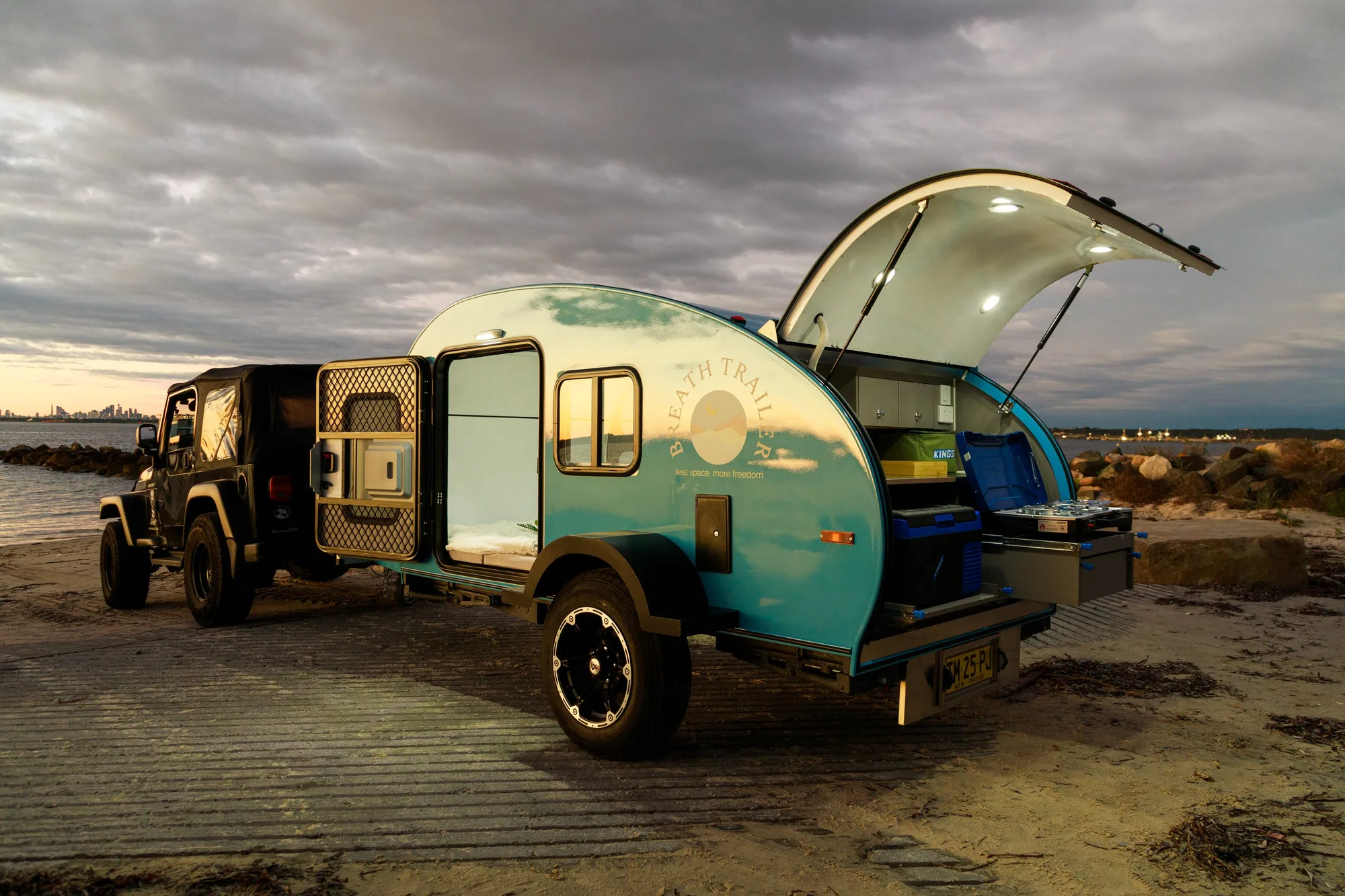
Van life content floods YouTube and Instagram. Converted HiAces and Sprinters are parked at every scenic lookout, and the hashtag has hundreds of millions of posts worldwide. Meanwhile, camper trailer sales in Australia have grown steadily for a decade — a more traditional choice, but one that keeps outselling converted vans by a wide margin.
So which actually makes sense for you in 2026?
This is not a brand comparison. It is a numbers-led look at what each option genuinely costs, where you can legally sleep, how far off the beaten track you can go, and what happens when something breaks. If you have already researched factory-built motorhomes or campervans, note that this article is about a different choice — converting a passenger or commercial van yourself versus buying a purpose-built camper trailer.
The short version: van life wins in specific situations (urban stealth camping, no tow vehicle, extended city-to-city travel). A camper trailer wins in more situations than people realise — especially once you look at the true cost of each.
What Is Van Life in Australia?
Van life, as it is practised in Australia, means converting a commercial or passenger van — most commonly a Toyota HiAce 200 or 300 Series, Mercedes-Benz Sprinter, Ford Transit, Hyundai iLoad, or Volkswagen Crafter — into a moveable living space. The conversion might be as simple as a plywood bed platform, or as complex as a full kitchen, bathroom, solar system, and insulated living area built by a professional convertor.
This is different from buying a factory-built campervan or motorhome. Factory campervans are built from the ground up on purpose-designed platforms by established manufacturers, are sold with proper warranties, and meet all Australian compliance standards by default. A DIY van conversion is a personal project. The legal and compliance obligations — gas, electrical, registration — sit entirely with the owner.
Most van lifers in Australia fall into one of three camps:
- Weekend and holiday travellers who use a converted van as a budget accommodation solution
- Long-term travellers doing the Big Lap or extended regional touring (often 3–18 months)
- Remote workers who combine Starlink internet connectivity with mobile living to work from anywhere
None of these use cases are impossible in a camper trailer. But van life has genuine advantages for some of them — particularly the urban-travel scenario where stealth parking matters.
The Real Cost of Going Van Life in Australia (2026 Prices)
The single biggest misconception about van life is that it is cheap. The vehicle itself is often used as the benchmark (“I found a HiAce for $18,000 — it’s way cheaper than a camper trailer”). But the vehicle is only the start.
Van purchase price
A used Toyota HiAce 200 Series in good condition trades for $20,000–$38,000 in late 2026, depending on age, kilometres and service history. The newer 300 Series (introduced 2019) commands $35,000–$55,000 used. Mercedes Sprinters and Ford Transits sit at similar levels. Plan on spending at least $22,000–$35,000 for a van with a reasonable service history and enough years left to justify the conversion cost.
Conversion costs
The cost of turning a bare van into something you can sleep and live in varies enormously.
| Conversion level | DIY cost | Professional cost | What you get |
|---|---|---|---|
| Basic (bed platform only) | $1,500–$4,000 | $4,000–$8,000 | Sleeping platform, basic ventilation |
| Liveable (bed + kitchen + 12V) | $8,000–$20,000 | $20,000–$40,000 | Bed, bench, 12V fridge, solar, water |
| Full (bathroom + full kitchen + insulation) | $20,000–$45,000 | $40,000–$70,000+ | Toilet, shower, full kitchen, 240V |
Professional conversions from established Australian convertors carry compliance certificates. DIY conversions do not, and compliance is the owner’s legal responsibility. Most insurance policies require the vehicle to be roadworthy and compliant — an uncertified gas installation can void your claim entirely.
Total van life setup cost: 2026
| Budget tier | Base van | Conversion | Compliance extras | Total |
|---|---|---|---|---|
| Entry (basic) | $20,000 | $6,000 | $800 | ~$27,000 |
| Mid-range (liveable) | $28,000 | $30,000 | $2,500 | ~$60,500 |
| Premium (full build) | $40,000 | $60,000 | included | ~$100,000+ |
The entry-level figure gets you a usable but spartan setup — no gas, no shower, very limited power. The mid-range figure is a realistic, liveable van build. The premium is a fully specified professional conversion comparable in comfort to a high-end motorhome.
What a Camper Trailer Actually Costs (2026 Prices)
A purpose-built camper trailer from a reputable Australian manufacturer includes every system — electrical, gas, water, suspension, braking — certified to Australian standards as part of the purchase price.
| Model | Price (incl. GST) | Tare weight | Standout features |
|---|---|---|---|
| Breath Essential | $23,320 | 700 kg | Rear kitchen, queen bed, solar, 12V system |
| Breath Plus | $29,766 | 800 kg | All Essential features + 60L fridge included |
| Breath Ultra | $34,749 | 900 kg | Plus features + external shower, larger water tank |
| Breath Max | $42,900 | 1,200 kg | Full interior bathroom, 2.1 m standing height, self-contained |
These prices include all compliance — ADR-compliant braking above 750 kg GTM, AS/NZS 3001.2:2022 electrical certification, AS/NZS 5601.2 gas certification — and a manufacturer warranty. You need nothing extra to start camping legally.
The camper trailer assumes you already own a suitable tow vehicle (any SUV with a 1,500 kg+ tow rating handles the Essential, Plus or Ultra; a 2,000 kg+ rated vehicle handles the Max). If you do not own an SUV, add that to your comparison. If you already do, the tow vehicle cost is zero.
Freedom: Where You Can Sleep in Australia
This is the area where van life genuinely wins. A converted van is a registered motor vehicle; in most situations, it can park anywhere a regular car can park. A camper trailer requires a campsite, rest area, or specifically permitted free-camping location.
| Sleeping location | Van (converted) | Camper trailer |
|---|---|---|
| National park campground | ✓ (book ahead) | ✓ (book ahead) |
| State forest (dispersed camping) | ✓ check local rules | ✓ check local rules |
| Gazetted rest areas / stopping areas | ✓ with time limits | ✓ with time limits |
| Roadhouse and service station | ✓ often tolerated | ✓ often tolerated |
| Suburban street parking overnight | ✓ (stealth) council dependent | ✗ generally prohibited |
| Shopping centre car parks | ✓ (check signs) | ✗ not suitable |
| Remote free camps (4WD tracks) | ✗ most 2WD vans can’t reach | ✓ off-road models |
| CMCA/KEA dump point free camps | ✓ if registered | ✓ Max: self-contained access |
The freedom gap matters most for people who plan to spend significant time in cities or travel point-to-point without booking campsites in advance. A well-built, tidy van is discreet. A camper trailer and tow vehicle combination is not.
For people spending most of their time at campgrounds, national parks, and free camps — which is the majority of Australian adventure travel — the freedom gap narrows considerably. Free camping in Australia is accessible to both setups, and a fully self-contained Breath Max opens up sites that non-self-contained vans cannot use.
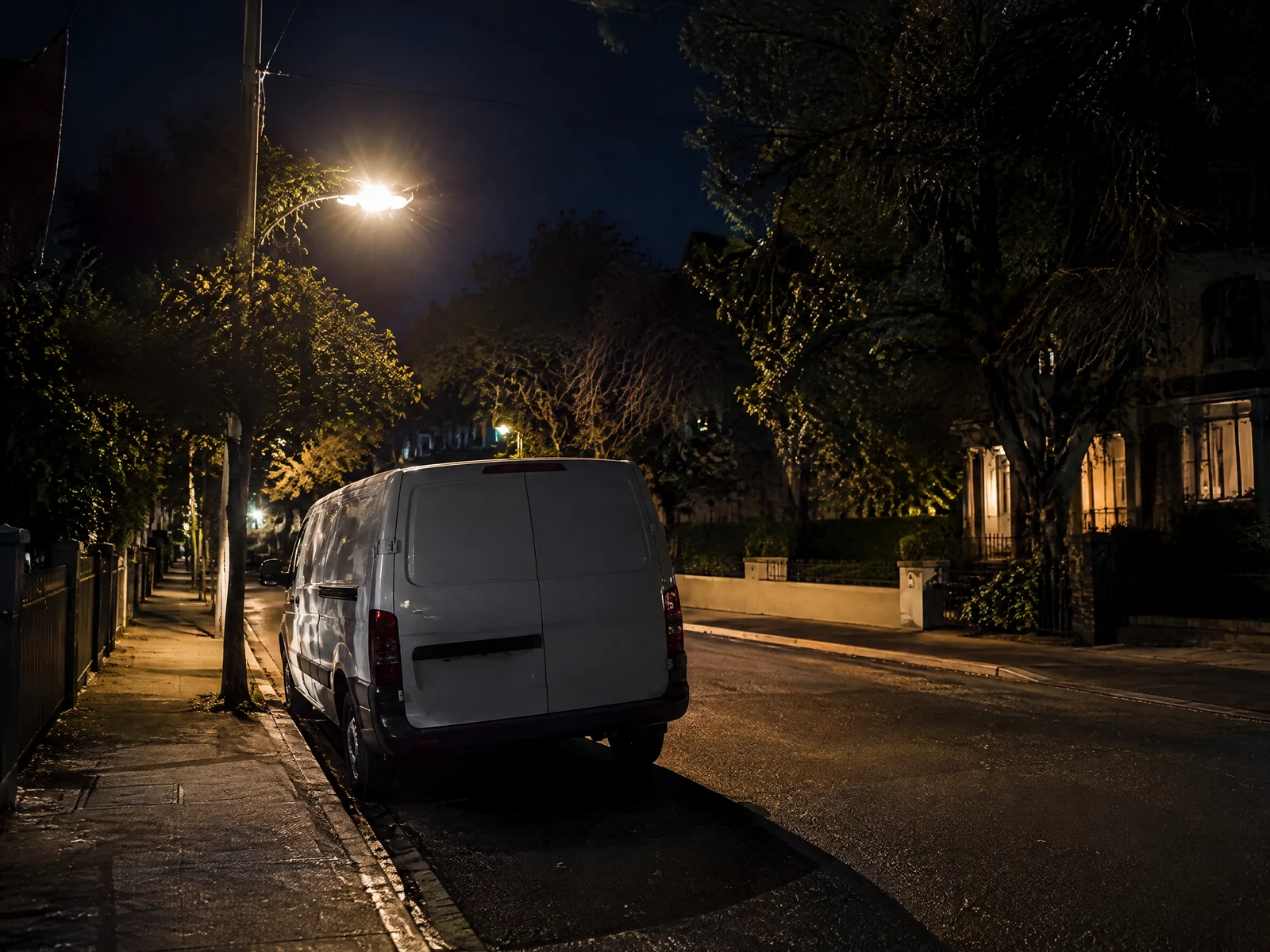
Illustration: Van life’s key advantage: a converted van is street-legal anywhere a car can park.
Off-Road Capability: Where the Comparison Gets Decisive
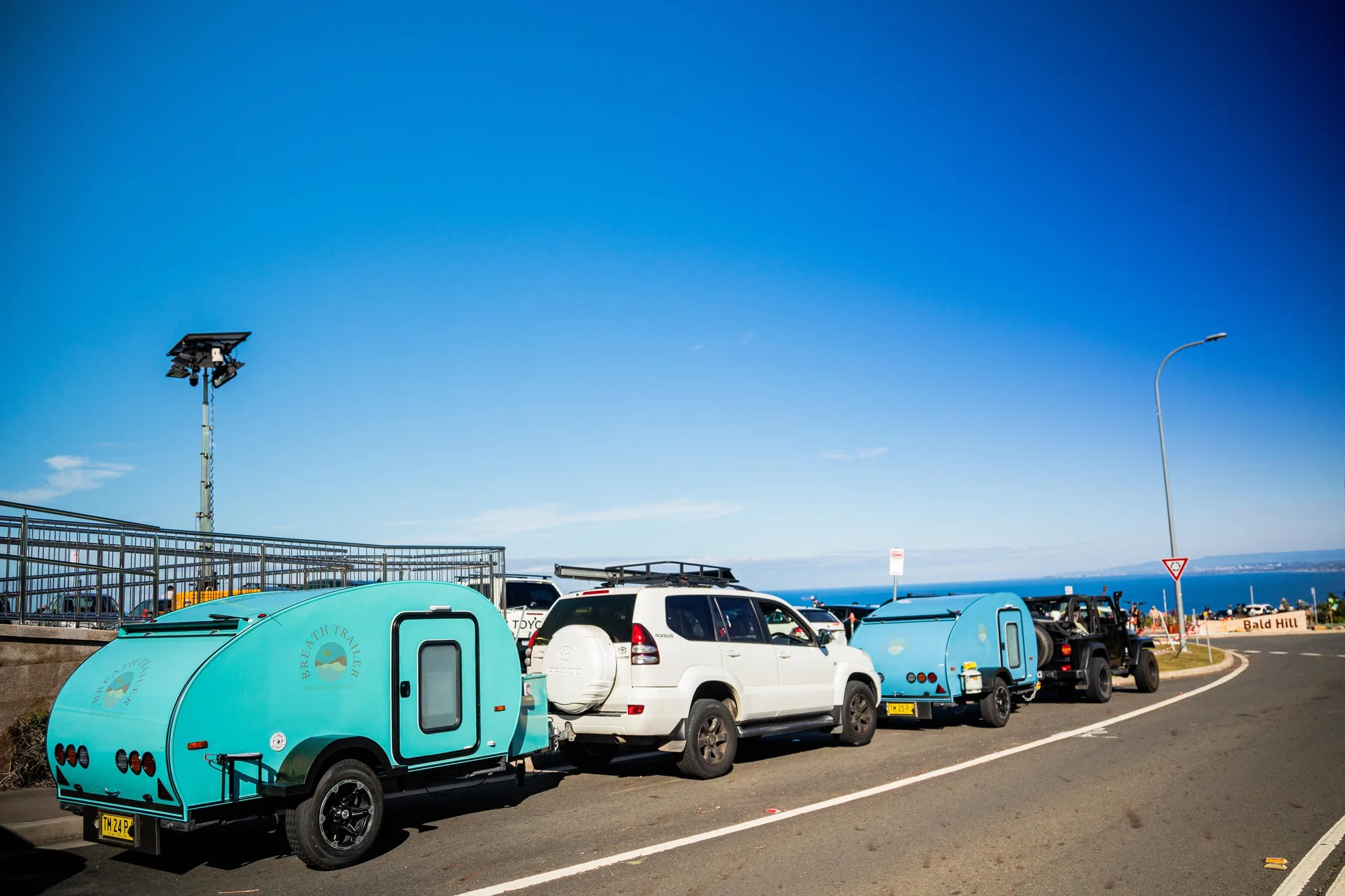
Teardrop camper trailers towed along the coast — reaching destinations a 2WD van cannot.
This is where the van life pitch breaks down for most serious Australian travellers. The vast majority of converted vans are 2WD — built on a standard commercial van platform with factory suspension, 160–200 mm ground clearance, and road tyres. They are fine on sealed roads and well-graded dirt. On corrugated outback tracks, sandy creek beds, or any genuine four-wheel-drive terrain, they are not suitable.
A 4WD van conversion does exist — Mercedes Sprinter 4x4, Volkswagen Crafter 4MOTION, Toyota HiAce 4WD — but prices for these platforms start at $60,000–$90,000 used, and a quality conversion on top adds another $40,000–$80,000. You are at $100,000–$170,000 for a capable off-road van. At that point you are in factory-built motorhome territory.
| Off-road factor | 2WD converted van | Teardrop camper trailer (Breath) |
|---|---|---|
| Ground clearance | 160–200 mm | 250–350 mm |
| Suspension | Standard leaf / coil (factory) | Independent coil, upgraded bushes |
| Tyre options | Road tyres (180/60 R17 typical) | All-terrain 225/75 R15 standard |
| Corrugated tracks | Caution; bodywork at risk | Rated for corrugated outback roads |
| Creek crossings | Not recommended | Depends on depth and tow vehicle |
| Recovery | Entire van must be recovered | Separate: unhitch and recover tow vehicle |
| 4WD requirement | No (2WD is the van itself) | Depends on terrain; tow vehicle matters |
For the Kimberley, Cape York, Simpson Desert approaches, or any route flagged “high clearance recommended” — a camper trailer towed by a proper 4WD is significantly more capable than a 2WD van and dramatically cheaper than a capable 4WD van conversion. See why suspension matters on an off-road camper trailer for more on what separates purpose-built off-road trailers from van setups.
Bathroom and Comfort: Van vs Teardrop
Bathroom access is the most frequently cited reason for choosing a van over a camper trailer. The idea is that a van can be fitted with a composting toilet and a shower cubicle in a way a small trailer cannot.
This was accurate when teardrops were all sub-500 kg compact units. It is no longer the whole picture.
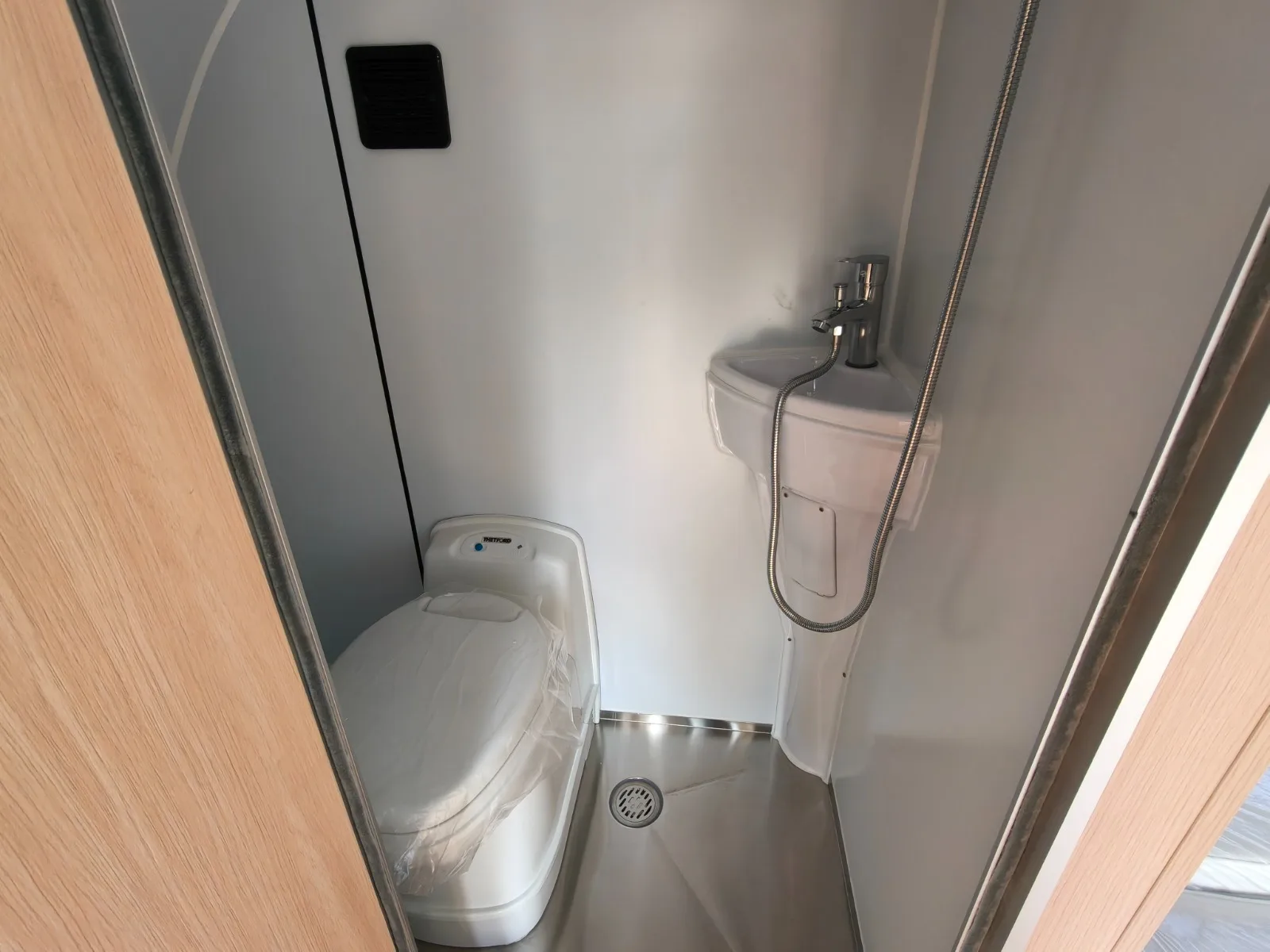
The Breath Max — the only teardrop on the Australian market under $50,000 with a full interior bathroom.
| Bathroom feature | Basic van conversion | Full van conversion | Breath Plus / Ultra | Breath Max |
|---|---|---|---|---|
| Toilet | Portable cassette | Built-in cassette | External portable | Interior ceramic flush |
| Shower | Outdoor / bag shower | Fitted cubicle | External shower (Ultra) | Interior wet room |
| Basin | Jerry can + bucket | Fitted basin | — | Fitted basin |
| Hot water | Gas canister | Built-in system | Hot water (gas or 12V) | Built-in hot water |
| Privacy | Van body | Van body | Annexe / outdoors | Interior bathroom |
| Price point | $27,000–$40,000 | $80,000+ | $29,766 / $34,749 | $42,900 |
The Breath Max is the only teardrop camper on the Australian market under $50,000 with a full interior bathroom — standing headroom of 2.1 m, a cassette toilet, shower, basin, and a proper wet room with a floor drain. For the “Greg and Margaret” scenario — retirees who need privacy and night-time bathroom access without a walk to the amenities block — the Max delivers it at $42,900, versus a mid-range van conversion bathroom build at $80,000+.
If You Already Own an SUV, The Maths Change Entirely
The most important question in the van-versus-trailer decision is: do you already own a capable tow vehicle?
In Australia, most families and outdoor enthusiasts own at least one SUV with a tow rating of 1,500–3,500 kg — a Toyota Prado, LandCruiser, Isuzu MU-X, Mazda CX-5, Ford Everest, Hyundai Santa Fe, or similar. If you do, your camper trailer costs nothing extra for the tow vehicle. Zero.
A van life setup, on the other hand, requires purchasing a second vehicle specifically for the purpose. If you keep your existing SUV for daily driving, you now have two vehicles to insure, service, and register. If you sell it, you lose your towing capability and must rely entirely on the van for everything.
The tow-vehicle offset matters enormously in the five-year cost comparison:
- Your SUV is already paid for: camper trailer running costs = trailer rego + trailer insurance + trailer maintenance
- A van adds: van purchase + conversion + van rego + van insurance + van maintenance + interest on any loan
For someone who already owns an SUV and wants occasional weekend camping plus occasional longer trips, a camper trailer is almost always the better financial decision. See our guide on the best tow vehicles for camper trailers in Australia if you are unsure whether your current vehicle qualifies.
Compliance: The Van Life Red Tape Nobody Talks About
Factory-built camper trailers arrive compliant. Converted vans often do not, and the consequences matter.
Gas systems
Under AS/NZS 5601.2, any gas installation in a vehicle used for accommodation must be installed and certified by a licensed gasfitter. This includes propane cooking setups, hot water systems, and diesel heaters that use gas. Self-installed gas systems — however carefully done — are not compliant. If your insurer discovers a non-compliant gas installation after an incident, they can deny your claim.
Electrical systems
AS/NZS 3001.2:2022 governs electrical systems in caravans and campervans. The standard covers 12V wiring, solar charge controllers, battery systems, and any 240V shore power connections. A licensed electrician must certify the installation. Most DIY van conversions, and many professional converters who do not hold the relevant certification, cannot produce a certificate of compliance.
What this means in practice
Many of the converted vans advertised for sale in Australia are not compliant. The gas was self-installed. The 240V was wired by a handy friend. The buyer inherits that liability. When something goes wrong — and gas and electrical faults are the leading causes of serious RV incidents in Australia — an uncertified system gives your insurer grounds to reject the claim.
A Breath Trailer arrives with a gas certificate, an electrical compliance certificate (covering 12V and any 240V connections), and an ADR compliance plate. The camper trailer registration process is straightforward because the compliance documentation is already done.
5-Year Total Cost of Ownership: Van Life vs Camper Trailer
The comparison below assumes an existing SUV is owned (common scenario). If you must also purchase an SUV, add that cost to the camper trailer column.
| Cost item | Van life (mid-range build) | Breath Plus + existing SUV |
|---|---|---|
| Initial purchase / conversion | $60,500 | $29,766 |
| Rego (5 years) | $4,500 (van) | $800 (trailer only) |
| Insurance (5 years) | $12,500 (campervan comprehensive) | $2,500 (trailer) |
| Servicing and maintenance | $7,500 | $750 |
| Interest on $40k loan @ 8% (5yr) | $8,700 | $4,000 (on $29,766) |
| Resale value (5yr) | +$25,000 | +$18,000 |
| Net 5-year cost | ~$68,700 | ~$19,816 |
The resale assumptions: a mid-range van conversion retains roughly 35–45% of total build cost after five years (vehicles depreciate; conversions can actually reduce resale value if buyers cannot verify compliance). A quality teardrop camper typically retains 60–75% of its purchase price. See our analysis of camper trailer resale value in Australia.
The van life setup costs around 3.5× more over five years in this scenario. That gap narrows if you travel full-time (eliminating rent or a mortgage) or if you sell your SUV. It widens if the van requires major repairs or the conversion has compliance issues that a buyer discount away.
Who Should Choose Van Life?
Van life is a genuinely good option for some people. Be honest with yourself about whether you are one of them.
Van life makes sense if:
- You have no existing tow vehicle and do not plan to buy one
- Urban travel is central to your plan — you will sleep in cities, at roadhouses, in car parks, and want the discretion a van provides
- You are travelling point-to-point across Australia and do not need to leave your accommodation and drive separately to explore
- You are an international visitor on a working holiday who needs accommodation and transport in one vehicle
- Your routes are 95% sealed or well-graded dirt roads; outback tracks are not on your list
- You value the build process itself — designing and constructing your van is part of the journey
Van life is probably wrong for you if:
- You already own an SUV with a towing capacity above 1,500 kg
- Off-road access is important — the Gibb River Road, Cape York, or remote national parks
- A bathroom is non-negotiable and your budget is under $80,000 for a van setup
- You plan weekend trips rather than extended full-time travel (a van sits idle in your driveway all week)
- You want a hassle-free purchase with warranties and certified compliance included
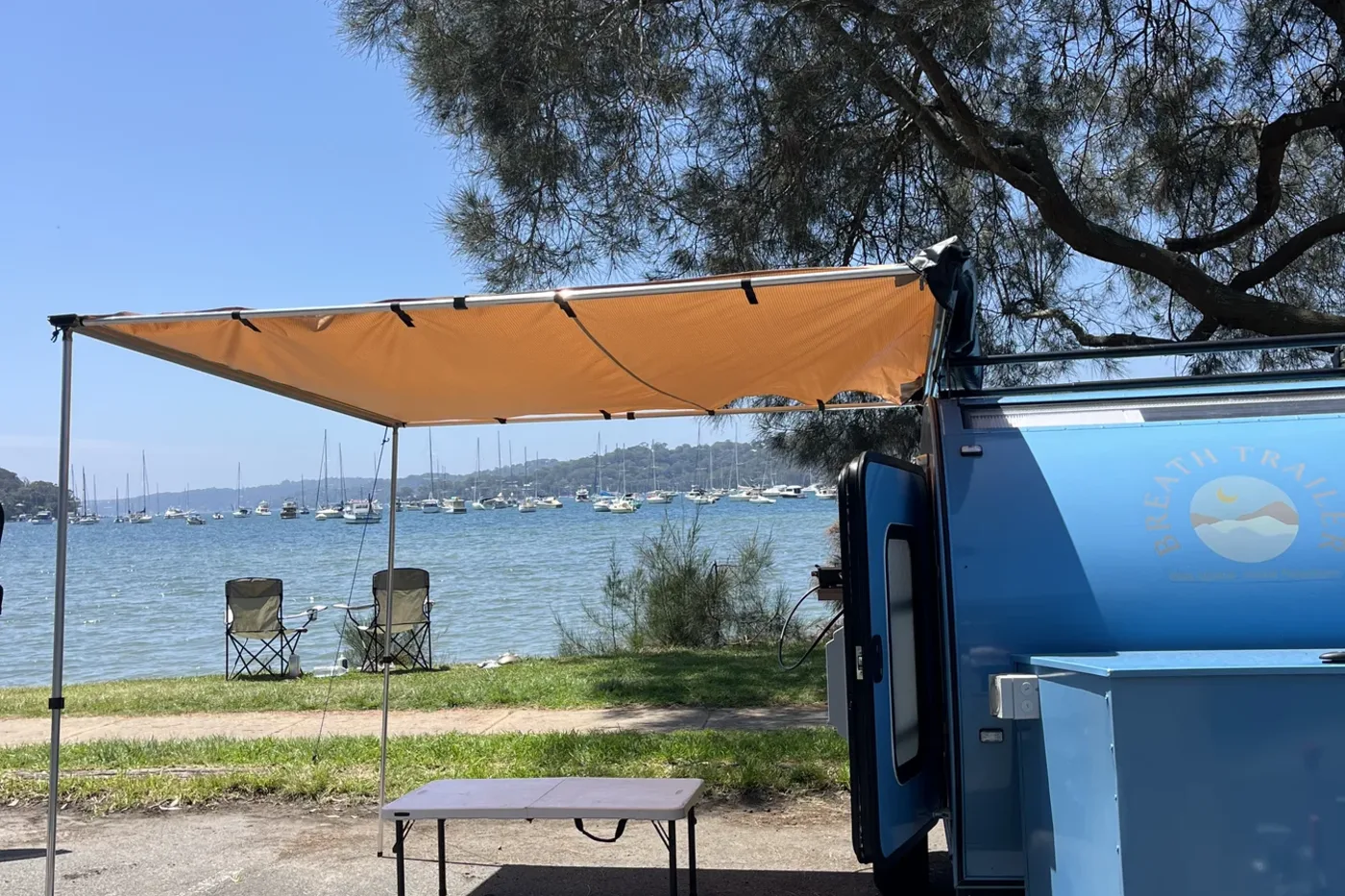
A teardrop at a bay campsite — the setup style that suits most Australian weekend and holiday campers.
Who Should Choose a Camper Trailer?
A camper trailer — particularly a hard-shell teardrop — suits the overwhelming majority of Australian adventure travellers.
A camper trailer makes sense if:
- You own an SUV with 1,500 kg+ tow rating (most modern SUVs qualify for the Essential and Plus)
- Your camping trips mix weekend getaways with annual longer trips — you do not live in it full-time
- You want certified compliance, a manufacturer warranty, and a support network
- Off-road access matters — the Breath Ultra and Max use independent coil suspension and all-terrain tyres
- A full bathroom is non-negotiable and your budget is under $50,000 (only the Breath Max delivers this in the teardrop class)
- You want to leave it at a campsite and drive separately to explore tracks, towns and beaches without dismantling your entire home
- Storage at home is limited — a teardrop is 4.0–4.6 m long, roughly the same as a second car
The ability to unhitch and drive independently is underrated. A van life traveller cannot drive to the shops and leave their bedroom behind. A camper trailer owner parks at camp, unhitches, and uses their SUV as a day vehicle — reaching hiking trailheads, town centres, and surf breaks without dragging 1,000 kg of accommodation behind them.
Frequently Asked Questions
Is van life cheaper than a camper trailer in Australia?
Not in most cases. An entry-level van conversion — basic bed and 12V setup only — can be done for around $27,000 (van + conversion). A Breath Essential camper trailer costs $23,320 and includes a full rear kitchen, solar, and 12V system already certified to Australian standards. Once you want a liveable setup with gas cooking and a fridge, van life costs escalate quickly. A mid-range liveable van conversion typically costs $50,000–$70,000 all up.
Can I free camp with a van in Australia?
Yes, and this is one of van life’s genuine advantages. A van can park at gazetted rest areas, many state forest dispersed camping areas, and some roadside stops where a trailer rig would be impractical. However, the most popular remote free-camping locations — accessed by 4WD tracks — are generally beyond the capability of a 2WD van.
Do I need a special licence to tow a camper trailer in Australia?
A standard car licence covers towing a trailer up to 4,500 kg GCM in most states. There is no separate towing licence requirement for recreational trailers in Australia, though you must observe your vehicle’s rated tow capacity and the 80% rule. See our camper trailer towing guide for state-by-state speed limits and the load rules.
What about working remotely — van life or camper trailer?
Both work. The connectivity requirements are identical: most remote workers use a Starlink Mini (hardware $599, Roam 100GB plan ~$80/month as of 2026) paired with a 12V battery bank for the dish draw (~50–80W). A van is arguably better for urban remote work (park near a café for backup Wi-Fi). A camper trailer gives you more reliable off-grid power options and the freedom to use a larger solar array on the trailer roof, separate from the tow vehicle’s electrical system.
Is van life legal in Australia?
Yes, with qualifications. There is no national law against sleeping in your vehicle. Individual councils regulate overnight parking in their jurisdictions — some prohibit it on residential streets, others tolerate it. Camping in a vehicle on crown land, state forest, or at gazetted rest areas follows the same rules as any other camping. The key compliance issues are about gas and electrical safety systems, not where you park.
What is the difference between a converted van and a factory campervan?
A factory-built campervan (motorhome) is built on a purpose-designed platform, sold with a full manufacturer warranty, and meets Australian compliance standards by default. Prices start at around $100,000 for an entry-level model. A converted van is a DIY or third-party conversion of a commercial van — compliance depends entirely on what was done and whether certificates were obtained. This article compares converted vans to camper trailers; our campervan vs teardrop article covers factory campervans separately.
The Bottom Line
Van life is a genuine lifestyle choice with real advantages for specific situations. If you travel full-time through cities and towns, have no tow vehicle, and value the discretion of a standard-looking vehicle, a converted van is the right answer.
For most Australian adventure campers — weekend trips, annual holidays, occasional longer tours — a purpose-built camper trailer is cheaper to buy, cheaper to run, cheaper to insure, more capable off-road, and significantly less complicated from a compliance standpoint. If you already own an SUV, the financial case for a camper trailer is almost always stronger.
The Breath Trailer range starts at $23,320 for a fully certified, ready-to-camp hard-shell teardrop, and reaches $42,900 for the only sub-$50,000 teardrop in Australia with a full interior bathroom. Both extremes cost less than a mid-range van conversion — and arrive fully compliant, ready to tow.
Ready to compare the models side by side? Visit our comparison page or book a viewing with your nearest Breath Trailer ambassador.
Recommended Reading
- Teardrop Camper vs Campervan Australia: Which Is Right for You?
- Is a Teardrop Camper Worth It in Australia? The Honest Answer
- Free Camping Australia: The Complete Camper Trailer Guide
- Best Tow Vehicle for a Camper Trailer in Australia (2026 Guide)
- Teardrop Camper Resale Value Australia: What Holds Its Worth