How to Finance a Camper Trailer in Australia (2026 Guide)
Secured loans, interest rates, balloon payments and eligibility explained. Real repayment tables for every budget — including all four Breath Trailer models.
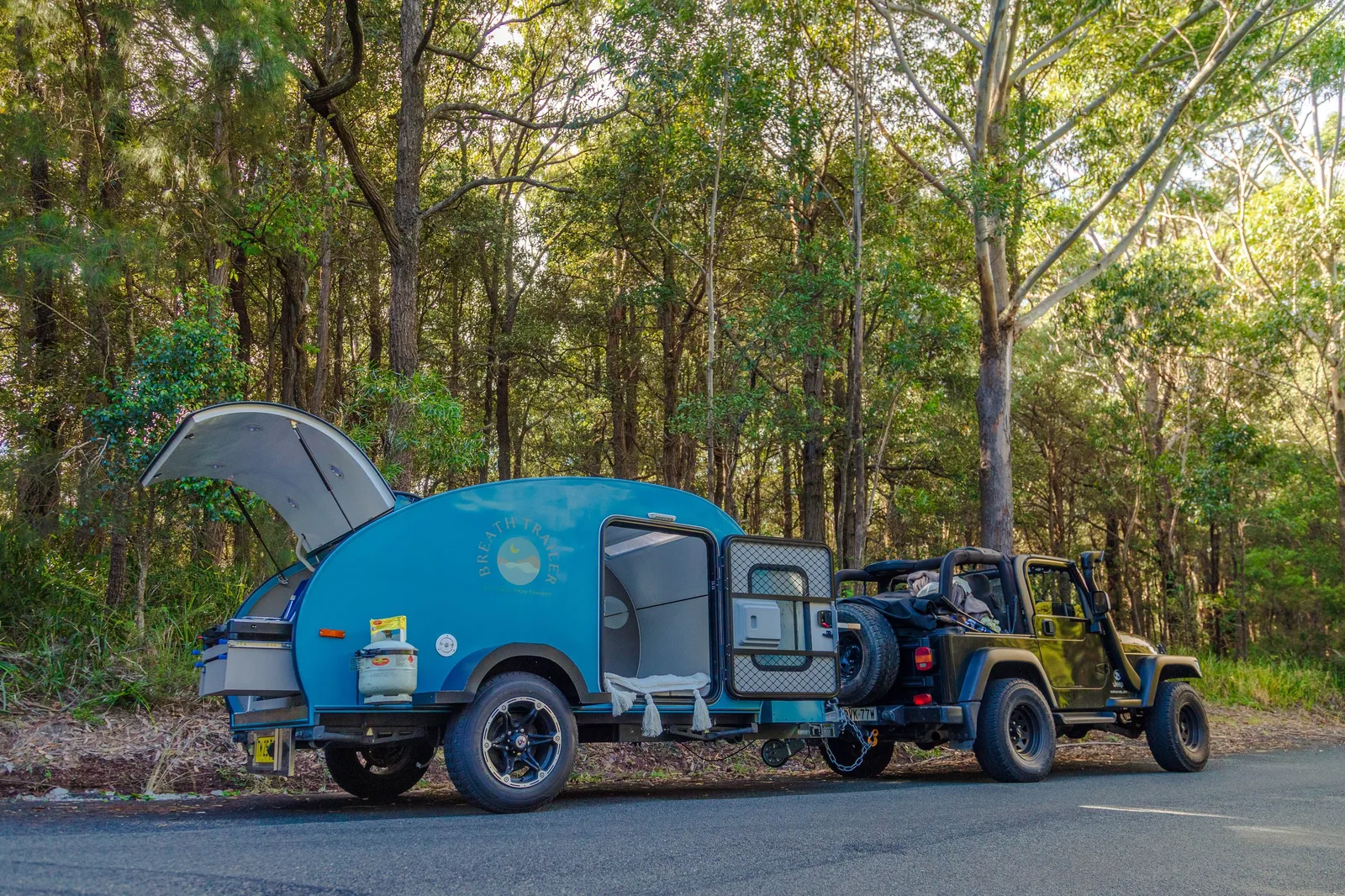
The trailer is picked. The spec sheet looks right. Then comes the question every buyer faces: pay cash, or finance it?
In Australia, the majority of new camper trailers are purchased with finance — and for good reason. Spreading $23,000–$43,000 across five to seven years can make a quality hard-shell trailer more accessible than a cheap canvas compromise. But financing a camper trailer is not the same as financing a car, and the details — secured vs unsecured, comparison rate, balloon payment, registration eligibility — can meaningfully change what you pay.
This guide explains how camper trailer finance works in Australia in 2026, what lenders look for, and what your repayments would look like across each Breath Trailer model.
Loan types: secured vs unsecured vs redraw
Secured leisure loan
The most common and cheapest option. The trailer itself serves as the security (collateral), so the lender takes a lower risk and passes lower rates to you — typically 6–12% p.a. in 2026 for new or near-new models. If you stop paying, the lender can repossess the trailer.
Critical condition: the trailer must be registered (or registrable) to qualify as security. This rules out many entry-level canvas softfloor models that are sold as unregistered trailers. All Breath Trailer models ship with a compliance plate and full registration, so they qualify.
Unsecured personal loan
No collateral required. Rates run higher — typically 9–18%+ p.a. — because the lender takes on more risk. Useful when the trailer is unregistered or when you want to keep the title free of encumbrances. On a $30,000 loan over five years, the difference between 8% secured and 12% unsecured adds roughly $3,600 in extra interest.
Redraw or line of credit
If you have an offset account or a home loan with redraw, borrowing against your property is usually the cheapest available rate (often 6–7% variable). The downside is that you’re mixing short-term leisure spending with your long-term mortgage. Talk to your broker before using home equity for discretionary purchases.
Interest rates in 2026
| Loan type | Advertised rate (p.a.) | Typical comparison rate | Notes |
|---|---|---|---|
| Secured leisure loan — new trailer | 6.00–9.99% | 7.50–11.50% | Best rates for clean credit + registered trailer |
| Secured leisure loan — used trailer (<5yr) | 7.50–12.00% | 9.00–13.50% | Age of trailer affects security value |
| Secured leisure loan — used trailer (5-10yr) | 9.00–15.00% | 11.00–16.50% | Some lenders won’t finance >10yr-old trailers |
| Unsecured personal loan | 9.49–18.99% | 10.50–20.00% | No registration required |
| Home loan redraw (variable) | 6.00–7.50% | n/a | Cheapest option; consult mortgage broker |
Comparison rate warning: the advertised rate never tells the full story. The comparison rate folds in fees (establishment, monthly account, early repayment) and reflects the true annual cost of the loan. On leisure loans, the gap between the two can be 1–3 percentage points. Always compare on the comparison rate, not the headline figure.
Loan amounts and terms
| Loan amount | Typical minimum | Typical maximum | Typical term range |
|---|---|---|---|
| Secured leisure loan | $5,000 | $100,000+ | 1–7 years |
| Unsecured personal loan | $2,000 | $50,000–$75,000 | 1–5 years |
Most camper trailer buyers finance between $15,000 and $45,000 over five to seven years. Going beyond seven years is uncommon for a trailer because depreciation eventually overtakes the outstanding balance, creating negative equity (you owe more than the trailer is worth).
Monthly repayments: every Breath Trailer model
The table below shows indicative monthly repayments based on the full purchase price of each model, at two common interest rates and two common terms. Figures assume no balloon payment and no deposit.
| Model | Price | 8% / 5 yr | 8% / 7 yr | 10% / 5 yr | 10% / 7 yr |
|---|---|---|---|---|---|
| Essential | $23,320 | $473 | $363 | $495 | $387 |
| Plus | $29,766 | $604 | $464 | $632 | $494 |
| Ultra | $34,749 | $705 | $542 | $738 | $577 |
| Max | $42,900 | $870 | $669 | $911 | $712 |
Indicative only. Your actual rate depends on your credit profile, lender and loan structure.
Longer term = lower monthly payment but more interest
At 8% over 5 years, the Breath Plus at $604/month costs $6,447 in total interest. Extend to 7 years and the monthly drops to $464 — but total interest rises to $9,205. That extra $2,758 buys you only $140/month in cash flow relief. Run the numbers before choosing the longest term automatically.

A shorter term on the Plus costs more each month but less in total interest.
| Model | Total interest (8% / 5 yr) | Total interest (8% / 7 yr) | Difference |
|---|---|---|---|
| Essential | $5,051 | $7,212 | +$2,161 |
| Plus | $6,447 | $9,205 | +$2,758 |
| Ultra | $7,526 | $10,746 | +$3,220 |
| Max | $9,291 | $13,266 | +$3,975 |
How balloon payments work
A balloon (or residual) payment defers a lump sum to the end of your loan, reducing your monthly repayments during the term. It’s popular with camper trailer finance because it frees up cash flow for accessories, running costs, or travel.
Example — Breath Max ($42,900) at 8% over 5 years with a 20% balloon:
| Scenario | Monthly repayment | Final balloon | Total paid | Extra cost vs no balloon |
|---|---|---|---|---|
| No balloon | $870 | — | $52,191 | baseline |
| 20% balloon ($8,580) | $753 | $8,580 | $53,765 | +$1,574 |
The balloon saves you $117/month — but costs $1,574 more over the full term because you’re paying interest on the deferred amount throughout the loan. When the balloon comes due, your options are:
- Pay in full from savings
- Refinance the balloon into a new loan
- Trade in or sell the trailer to cover it (if the resale value is ≥ balloon amount)
A 20% balloon on a Breath Trailer after 5 years is generally achievable on resale — Breath Trailer models hold value well relative to the broader camper trailer market — but always model the worst case before committing.

Resale value at the end of the term decides whether a balloon is comfortable to clear.
Deposit: how much should you put down?
Finance lenders in Australia typically offer zero-deposit options, but that doesn’t mean zero deposit is ideal.
A 10–20% deposit achieves three things:
- Reduces negative equity risk. In the first 12–18 months, depreciation can outpace loan repayment. Without a deposit, you may owe more than the trailer is worth if you need to sell early.
- Qualifies you for lower rates. Some lenders reserve their best secured rates for borrowers with ≥10% deposit.
- Reduces total interest. A $4,000 deposit on the Essential, all else equal, reduces your 5-year interest bill from $5,051 to roughly $4,182 — a $869 saving for an upfront commitment.
If cash flow is the constraint, zero deposit works. If you have savings sitting in a low-rate account, putting 10% down is usually the better maths.
Eligibility: what lenders look at
Every lender is different, but the following factors consistently affect approval and rate:
| Factor | What lenders look for | Notes |
|---|---|---|
| Age | 18+ | All lenders |
| Residency | Australian citizen or permanent resident | Some lenders accept temporary visa holders with restrictions |
| Employment | Stable PAYG role, typically 3+ months | Pay slips or bank statements required |
| Self-employed | 2 years’ ABN + last 2 tax returns | Some lenders require Business Activity Statements |
| Credit score | Clean preferred; impaired credit = higher rate | A default or CCJ from >2 years ago carries less weight than a recent one |
| Income | Sufficient to service the debt | Lenders apply a debt-to-income ratio; existing commitments reduce borrowing capacity |
| Trailer registration | Required for secured loan | Hard-shell registered trailers qualify; unregistered softfloor models don’t |
Self-employed buyers
If you’re self-employed, ABN finance is available — but lenders require documentation to verify income. Have your last two annual tax returns, any BAS statements, and your ABN registration ready before approaching a broker. Some lenders offer low-doc options at a slight rate premium if your tax returns are not yet filed.
An accountant angle worth exploring: if the trailer is legitimately used for income-producing activity (content creation, a registered hire fleet, a landscaping or trades business), financing via a chattel mortgage — where the trailer is treated as a business asset — can allow you to claim depreciation and interest as tax deductions. Get specific advice from your accountant; personal-use travel doesn’t qualify.
Why hard-shell trailers have a financing advantage
Soft-floor canvas camper trailers are frequently sold unregistered, especially at the entry-level end of the market. An unregistered trailer cannot serve as security for a secured loan — which means buyers are pushed to unsecured personal loans at 2–6 percentage points higher.
Hard-shell teardrops like Breath Trailer models:
- Are delivered with a compliance plate and a full ADR certificate
- Register under standard state trailer registration schedules
- Have a verifiable ATM and tare documented on the plate — giving the lender a clear valuation anchor
This means Breath Trailer buyers can access secured financing from day one, at the lower rate tier. On a $34,749 Ultra over five years, the difference between 8% secured and 12% unsecured is roughly $4,800 in total interest. The hard-shell advantage is not just about durability; it’s also financial.
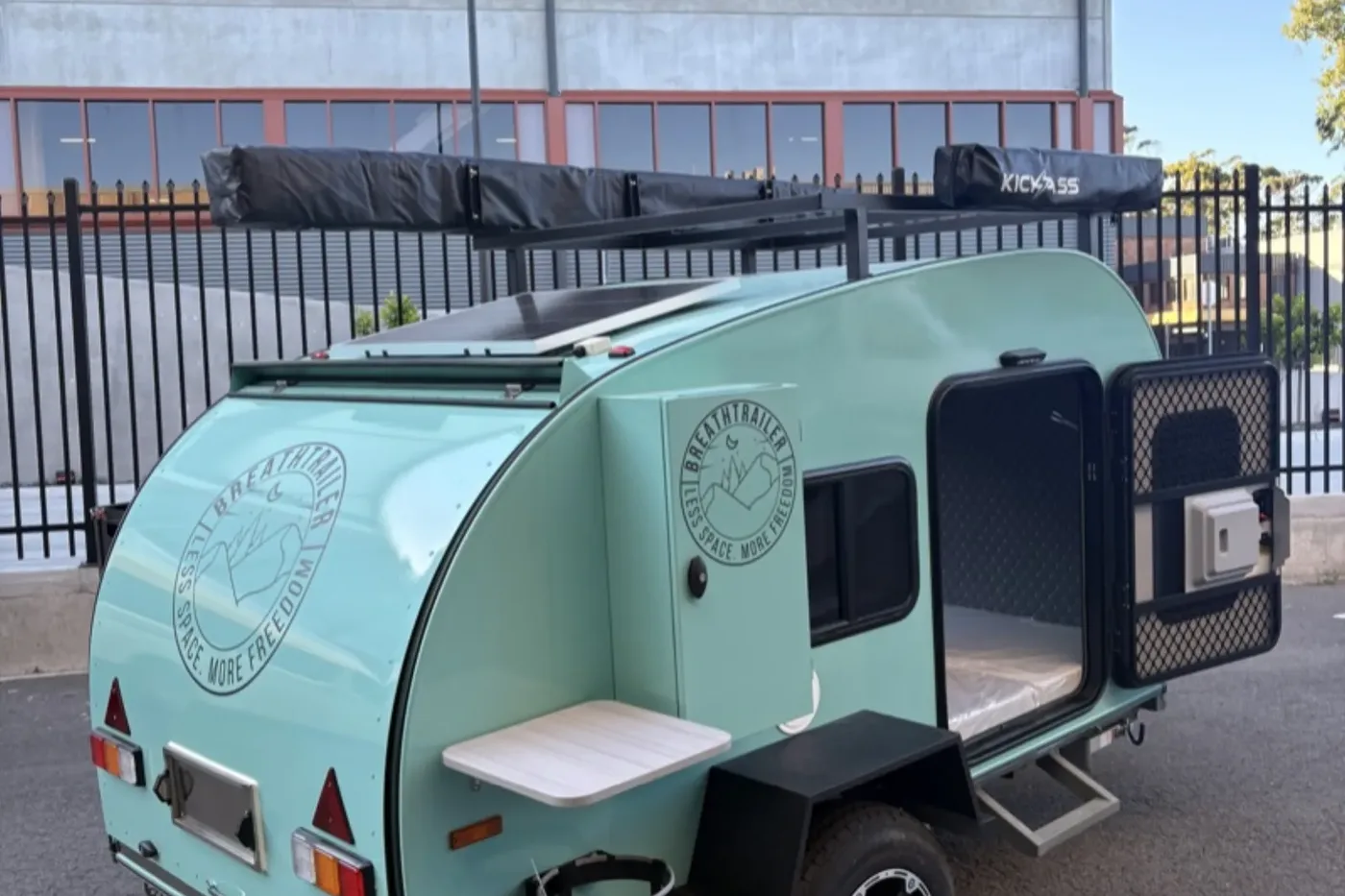
A registered hard-shell trailer gives the lender clear security, which is what unlocks the lower rate tier.
See teardrop camper weight and ATM for how compliance plate figures affect both financing and towing legality.
Major lenders and brokers in Australia
You can approach a lender directly or use a broker who accesses multiple lenders in one application (a soft credit check until you formally apply).
| Option | Examples | Best for |
|---|---|---|
| Direct bank | NAB Personal Loan, CommBank, ANZ | Existing bank customers; simpler process |
| Specialist leisure lender | Aussie Leisure Loans, Jade Caravan Finance | Dedicated camper/caravan products; competitive leisure rates |
| Finance broker (multi-lender) | Driva, Ezilend, Fox Finance Group, Ausloans, Alpha390 | Comparing 20–80+ lenders in one application |
| Dealer/manufacturer finance | Austrack Finance, Patriot Campers finance portal | Convenience; rates may be less competitive — always compare |
Broker vs direct: a finance broker submits your profile to multiple lenders simultaneously and returns the best offer. They’re paid by the lender (commission) not by you, and a reputable broker’s soft credit check does not affect your credit score until you formally accept an offer.
The application process: 7 steps
- Know your number. Decide your model, check the current price, and calculate your deposit.
- Check your credit file via annualcreditreport.com.au or Equifax. A clean file means a lower rate; any errors can be disputed before applying.
- Pre-approval. Apply through a broker or direct lender for pre-approval before you visit the manufacturer or dealer. Pre-approval tells you your maximum loan amount and locks in a rate estimate — it puts you in the same position as a cash buyer during the purchase conversation.
- Supply documents. Typically: photo ID, 3 months’ bank statements, 2 recent pay slips (or 2yr tax returns if self-employed), and the trailer invoice or purchase agreement.
- Formal approval. Once you have a specific trailer confirmed, the lender finalises the loan against the serial number and compliance plate.
- Settlement. Funds transfer directly to the manufacturer or dealer.
- Registration. The trailer registers in your name; the lender holds a PPSR interest (Personal Property Securities Register) until the loan is repaid.
Red flags and traps to avoid
| Trap | What to watch | Better approach |
|---|---|---|
| Comparison rate gap | Advertised rate 5.99% but comparison rate 8.30% = high fees hidden | Always ask for comparison rate in writing |
| Early repayment fee | Charged if you pay off the loan ahead of schedule | Ask lender upfront; some leisure loans have zero early repayment fees |
| Variable rate risk | Monthly repayments can rise if the RBA increases rates | Fixed rate preferred for leisure assets; variable only if you plan to repay early |
| Balloon without a plan | A 20–30% balloon feels comfortable now; three-year resale value matters | Model balloon vs resale value before choosing balloon size |
| Dealer-arranged finance | Convenience often = rate premium | Use it as a benchmark; broker will usually beat it |
| Financing accessories into the loan | Lender values the trailer, not the accessories; adds unsecured risk | Finance the trailer separately; buy accessories over time |
Insurance and registration: the costs alongside finance
Finance repayments are not the only ongoing cost. Budget for:
- Registration: varies by state and ATM. NSW example: a 700 kg trailer (Essential) = ~$91/yr; a 1,200 kg trailer (Max) = ~$227/yr. Exact fees at your state motor registry.
- Trailer insurance: $250–$600/yr for agreed-value cover. See our full teardrop camper insurance guide for 2026 premium ranges, agreed vs market value, and what exclusions to watch.
- CTP (Green Slip): trailers in NSW do not require a separate CTP — it’s included in the tow vehicle’s CTP. Other states vary; check locally.
- Servicing: approximately $100–$150/yr for a hard-shell teardrop (bearings, seals, 12V check). Canvas models can run $200–$500/yr more for re-proofing and repairs.
These add roughly $800–$1,200/yr on top of your loan repayment. Factor them into your budget alongside the monthly payment figure.
Is financing a camper trailer worth it?
The maths depends on what you’re comparing. If financing a $34,749 Ultra at 8% over 5 years (total cost $42,275) means you spend 12 weekends a year camping instead of zero because the upfront cash wasn’t there — the $7,526 in interest is arguably cheap leisure.
If you were going to camp anyway and have the cash sitting in a low-rate savings account, the interest cost is real.
Our full guide to whether a teardrop camper is worth it runs the cost-per-trip maths across different use patterns, and how to choose the right model will help you land on the spec that fits your actual camping style before committing to finance.
Financing a new vs used trailer
New vs used is a separate decision — but it affects finance in two practical ways:
- Age-based rate penalty. Lenders charge higher rates on older trailers because resale value is less certain. A 7-year-old canvas trailer may attract 12–15% rather than the 7–8% you’d get on a new registered hard-shell.
- Unregistered used stock. Private-sale used trailers are sometimes listed without current registration. Before buying, confirm you can register it in your name — or you’ll be stuck with unsecured finance at a higher rate.
Buying new from a reputable manufacturer removes both complications: the trailer is registered in your name from day one and qualifies for the best secured rates.
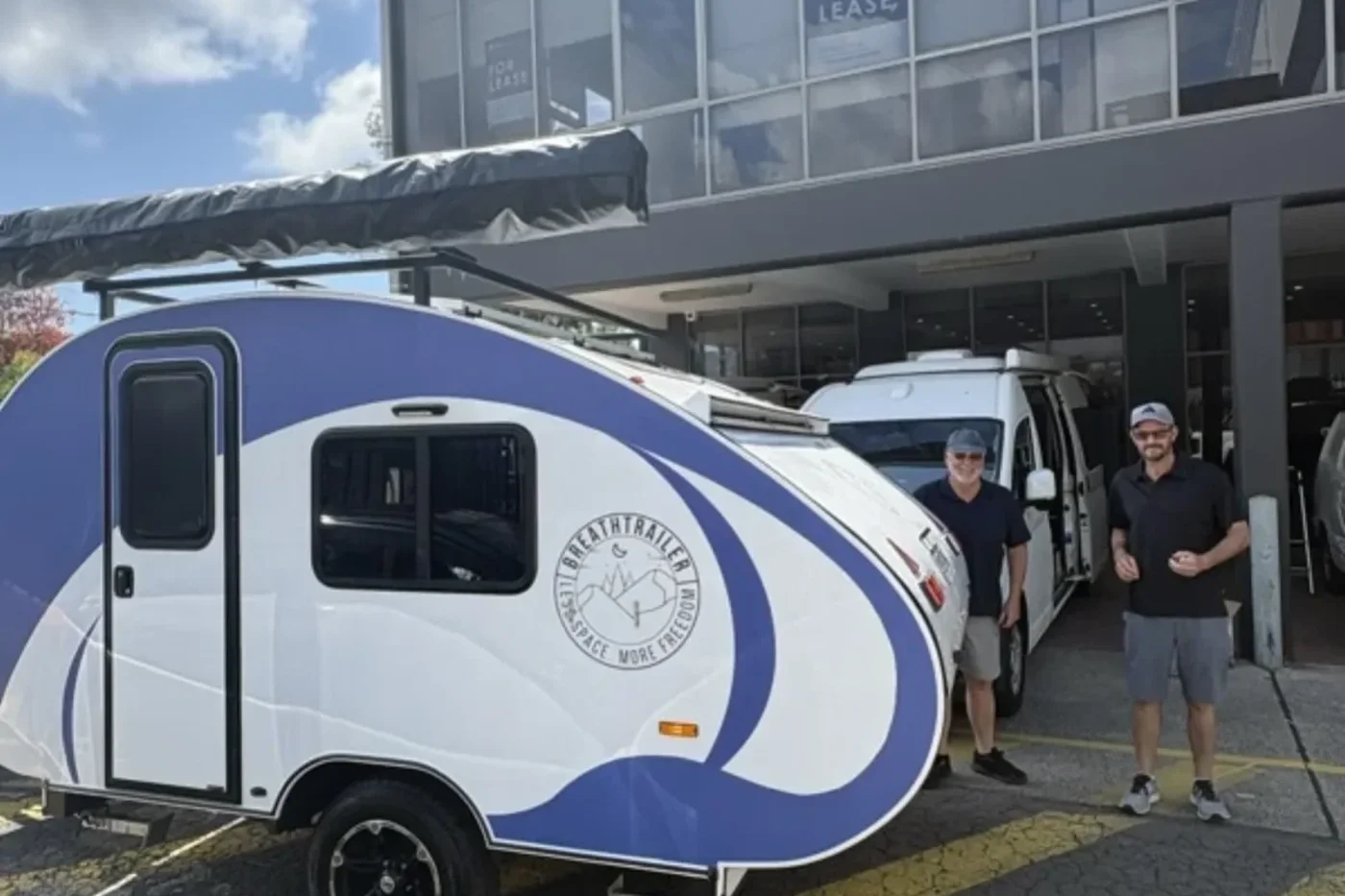
A new trailer goes into the buyer’s name from day one, which keeps it eligible for secured rates.
FAQ
Can I get camper trailer finance with bad credit in Australia? Yes, some lenders specialise in impaired credit applications. Expect a higher rate (12–18%+), a shorter maximum term, and sometimes a deposit requirement. Rebuilding your credit score for 6–12 months before applying will meaningfully reduce the rate you’re offered.
Does getting pre-approval affect my credit score? A pre-approval soft check does not. Only a formal application (hard enquiry) affects your credit file. Use a broker’s soft-check comparison first; submit a hard enquiry only when you’ve chosen a lender.
Can I finance a camper trailer if I’m self-employed? Yes, with 2 years’ ABN documentation. Some lenders offer low-doc options. The rate may be 0.5–1% higher than PAYG, depending on how cleanly your income is documented.
What is the minimum credit score for a secured leisure loan? There’s no single threshold — lenders use proprietary scorecards. As a guide, a Equifax score above 600 typically qualifies for mainstream rates; 700+ unlocks the best rate tiers. Below 550, specialist or non-conforming lenders apply.
What happens to my loan if I sell the trailer before it’s paid off? The sale proceeds must first pay out the outstanding loan balance. The PPSR interest held by the lender must be discharged at settlement. Any surplus is yours. If the sale price is less than the balance owed (negative equity), you’re responsible for the shortfall.
Can I claim camper trailer finance as a tax deduction? Generally, no — personal leisure use is not tax-deductible. If the trailer is used exclusively or predominantly for income-producing activity (a verifiable hire business, content creation with documented commercial intent), a chattel mortgage may allow depreciation and interest deductions. Seek specific advice from your accountant.
Recommended reading
- Is a Teardrop Camper Worth It? The 2026 Cost Analysis
- Teardrop Camper Resale Value Australia: What to Expect After 5 Years
- New vs Used Camper Trailer: The Honest 2026 Comparison
- Teardrop Camper Insurance Australia: 2026 Premium Guide
- Soft Floor vs Hard Floor Camper Trailer Australia
Ready to see which model fits your budget? Compare all four Breath Trailer models — Essential through Max — side by side at breathtrailer.com/comparison, or book a viewing to see a trailer in person before you commit to finance.