Flinders Ranges Camping Guide 2026: The Complete Camper Trailer Adventure in South Australia
Plan your 2026 Flinders Ranges camping trip: campground fees, road access for camper trailers, best seasons, Wilpena Pound, Brachina Gorge, and a model-matching table for all 4 Breath Trailer models.
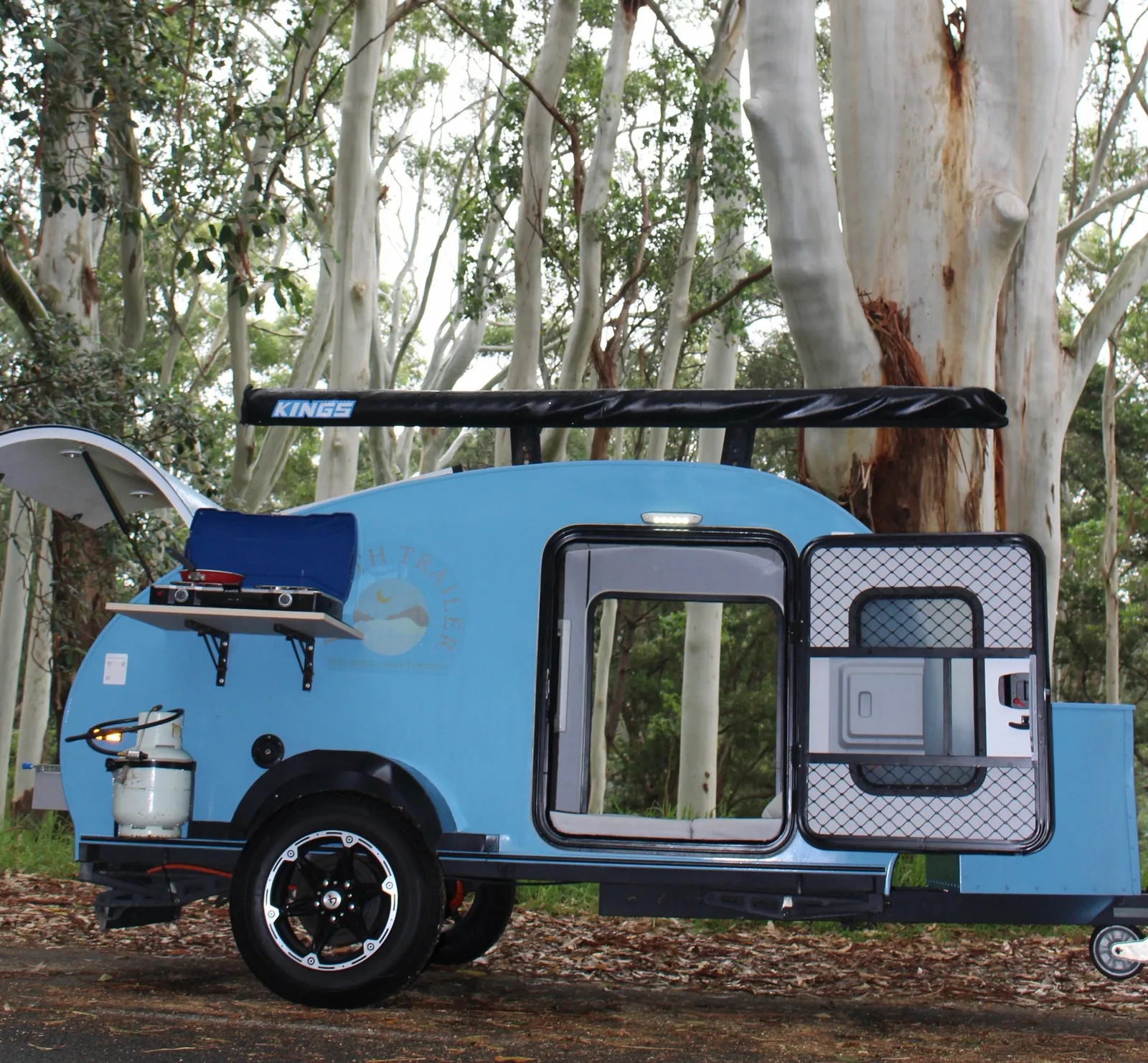
The Flinders Ranges is one of those places that changes what you think camping means. Two hours north of Port Augusta and four hours from Adelaide, Ikara-Flinders Ranges National Park puts you inside 946 km² of ancient geology — pink-red quartzite ridges, gum-lined gorges, and the extraordinary natural amphitheatre of Wilpena Pound rising 500 metres above the surrounding plains. The Australian Geological Survey describes Brachina Gorge as one of the finest geological traverses in the Southern Hemisphere — 600 million years of rock you drive straight through. In spring (September to November), wildflowers carpet the valley floors and daytime temperatures sit around 22–26°C. In autumn (April to May), the heat breaks, the flies ease off, and the park is at its quietest.
For camper trailer travellers, the Flinders Ranges works particularly well. The main route to Wilpena Pound is sealed all the way from Adelaide. Most campgrounds are accessible to standard camper trailers, not just high-clearance 4WDs. And the park is compact enough to base-camp at one spot and day-drive the gorges without dragging a trailer along narrow unsealed tracks. This guide covers 2026 fees, road conditions, campground options, what each Breath Trailer model handles, and the one season you should absolutely avoid.
Why the Flinders Ranges Rewards Camper Trailer Travellers
The Flinders Ranges suits camper trailers in a way that large caravans and rooftop tents simply do not. A caravan can navigate the sealed road to Wilpena Pound, but the moment conditions turn rough — a creek crossing, a steep descent, a narrow gorge track — it becomes an anchor. A teardrop camper trailer lets you set up at a campground and day-drive the entire park unhitched.
The same detachment advantage that works in a city carpark works here: leave the trailer set up at Trezona or Aroona, drive Brachina Gorge Road in the morning, return to a made bed and a cold fridge. No need to reverse a 7-metre rig into a slot each afternoon.
The park’s main constraints for trailers are practical ones:
- No generators are permitted at any national park campground
- No pets are allowed within Ikara-Flinders Ranges National Park
- Some campgrounds require high clearance (Bunyeroo Valley, Brachina East 4WD section)
- Mobile coverage is absent for most of the park — pre-download everything
When to Go: Seasonal Guide for the Flinders Ranges
| Season | Months | Daytime Temp | Conditions | Verdict |
|---|---|---|---|---|
| Spring | Sep–Nov | 18–28°C | Wildflowers, mild days, good photography light | ★★★★★ Best — book 4–6 weeks ahead |
| Autumn | Apr–May | 18–26°C | Clear skies, quiet, best overall weather | ★★★★★ Excellent — less crowded than spring |
| Winter | Jun–Aug | 12–18°C | Cold nights (0°C possible), brilliant stargazing, very quiet | ★★★★ Great for hardy campers |
| Summer | Dec–Feb | 35–45°C+ | Extreme heat, bushfire risk, some tracks/campgrounds close | ✗ Avoid — genuinely dangerous |
October sits in the sweet spot: wildflowers are near their peak, school holidays have finished, and the flies haven’t yet reached their summer numbers. Spring weekends fill fast — book Wilpena Pound Resort campground at least a month ahead for the October long weekend.
Summer is not just uncomfortable; it is dangerous. Temperatures regularly exceed 40°C in sheltered gorges. No awning compensates for that, and the park’s isolation means emergency response takes time. Some campgrounds, including Akurra inside Wilpena Pound, formally close in summer.
Getting There: Towing Your Camper Trailer to the Flinders Ranges
The main approach is Adelaide → Princes Highway → Port Augusta → Flinders Ranges Way through Quorn and Hawker → Wilpena Pound (approx. 430 km, all sealed).
| Route Segment | Distance | Road Surface | Camper Trailer Suitability |
|---|---|---|---|
| Adelaide → Wilpena Pound | 430 km | Sealed all the way | All camper trailers |
| Wilpena → Brachina Gorge campgrounds | ~60 km | Unsealed, graded | Standard camper trailers; high clearance recommended after rain |
| Wilpena → Bunyeroo Valley | ~70 km | Unsealed, steep descent, creek crossings | High clearance only; check conditions first |
| Wilpena → Rawnsley Park Station | 25 km south | Unsealed, graded | All camper trailers |
Towing tips specific to the Flinders Ranges:
- Reduce tyre pressures on unsealed sections: 28–32 psi (vs 38–42 psi sealed road). Our camper trailer tyre guide has a full pressure-by-surface table.
- Fuel up in Hawker — the last reliable fuel before the park. Fuel is also sold at Wilpena Pound Resort at premium outback prices (~$2.80–3.20/L in 2026 vs ~$2.10/L in Hawker).
- Pre-download offline maps (Hema Explorer or WikiCamps) and save your campground booking confirmation before leaving coverage. No Telstra signal exists at most campgrounds.
- The Brachina Gorge Road is typically 15–20 m wide. Standard camper trailers pass through without difficulty. Bunyeroo Valley’s steep descent and creek crossings require vehicles with ground clearance above 200 mm; assess conditions on the day, especially after any recent rain.
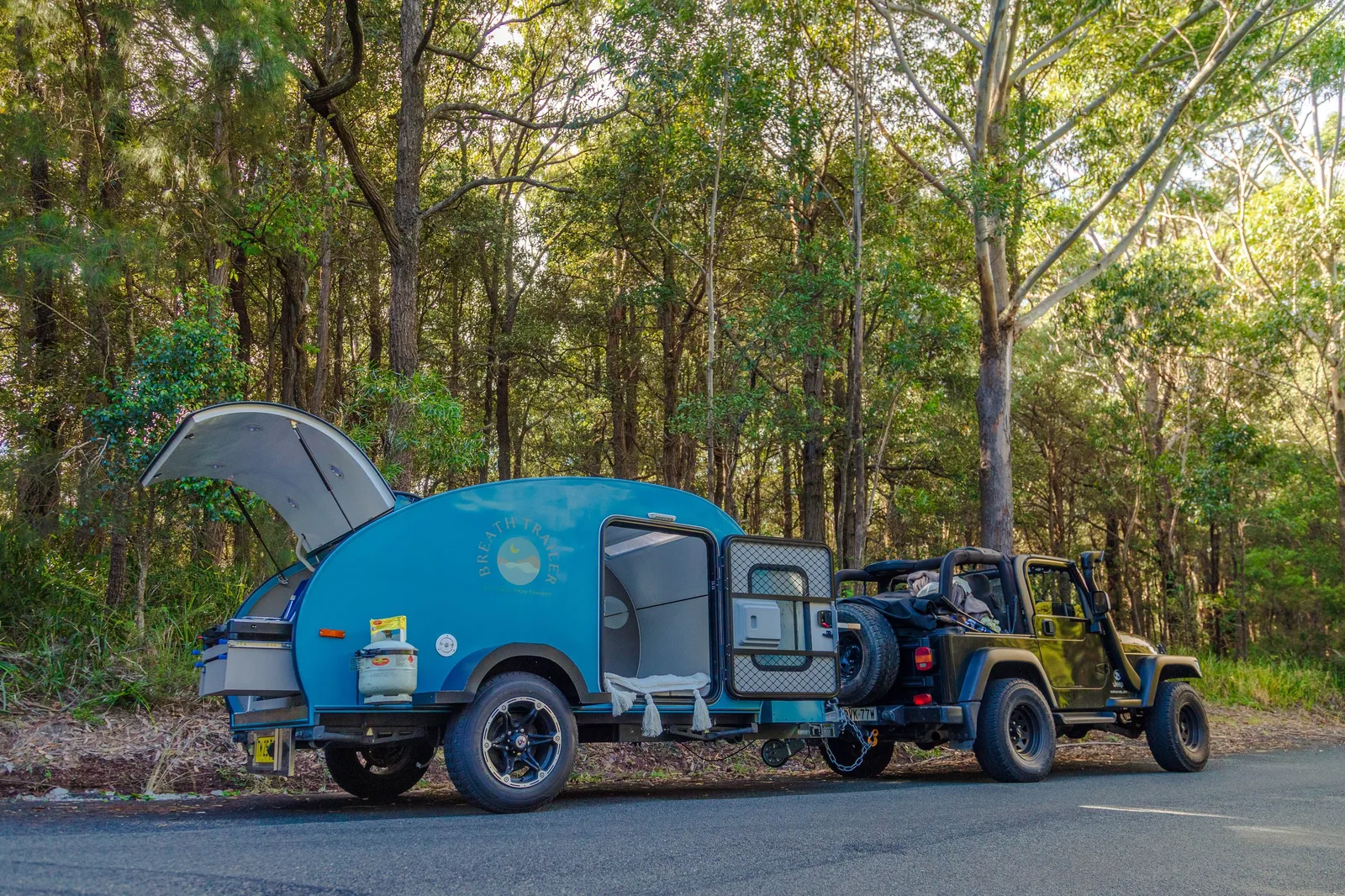
An unhitched teardrop means you can drive the gorge tracks in the tow vehicle and return to camp already set up.
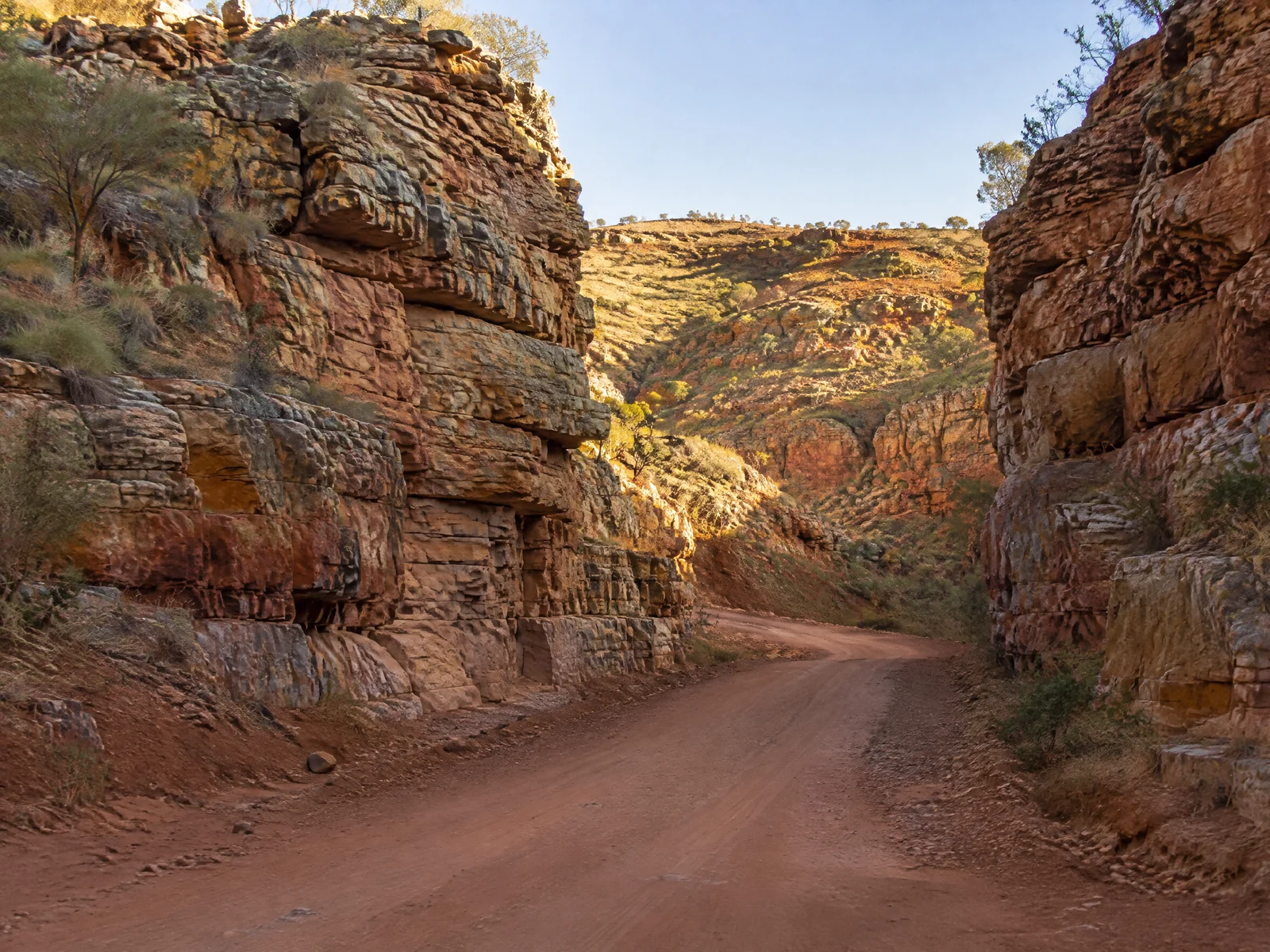
Illustration: Brachina Gorge Road passes through 600 million years of geological history across 15 km of unsealed track.
Park Entry Fees and Campground Costs (2026)
Ikara-Flinders Ranges National Park charges vehicle entry fees separately from camping fees. All must be purchased in advance at parks.sa.gov.au or at the Wilpena Pound Visitor Centre.
| Fee Type | 2026 Cost | Notes |
|---|---|---|
| Vehicle day entry (Ikara-Flinders NP) | $14.40/vehicle | Covers all occupants for one day |
| 2-month multi-park vehicle pass | $44.50–$55.50 | All SA national parks, 2 months |
| 12-month multi-park vehicle pass | $100–$125 | All SA national parks, full year |
| Camping (Aroona, Trezona, Brachina) | ~$15–$17/vehicle/night | On top of vehicle entry |
| Wilpena Pound campground — unpowered | From $24/couple/night | Via Discovery Resorts; on top of entry |
| Wilpena Pound campground — powered | From $35/couple/night | Via Discovery Resorts; on top of entry |
Pass maths: A 2-month multi-park pass ($44.50–$55.50) pays for itself after 4 day-visits at $14.40/day. For a week-long trip, the 2-month pass is almost always better value. If you plan to visit multiple SA national parks on the same trip (Flinders + Mt Remarkable + Ikara–Ediacara), the 2-month pass is the obvious choice.
Always verify current fees at parks.sa.gov.au before booking — fees are updated annually.
Campground Guide: Where to Set Up
| Campground | Fee (excl. park entry) | Facilities | Trailer Access | Best For |
|---|---|---|---|---|
| Wilpena Pound — Discovery Resorts | From $24 unpow. / $35 pow. per couple | Showers, toilets, pool, restaurant, powered sites | All camper trailers | Couples, families; book well ahead in spring |
| Trezona | ~$17/vehicle | Toilets, water, fire rings | Standard camper trailers | Scenic creek location, views toward St Mary’s Peak |
| Aroona Valley | ~$17/vehicle | Toilets, water, fire rings | Standard camper trailers | Gorge access; near historic Aroona Dam |
| Acraman Creek | ~$15/vehicle | Toilets, basic facilities | Standard camper trailers | Quieter site; creek camping atmosphere |
| Brachina East | ~$17/vehicle | Toilets, fire rings | 6× 2WD sites + 7× 4WD-only sites | Geology trail access; 2WD section suitable for standard trailers |
| Bunyeroo Valley | ~$10–$15/vehicle | Basic toilets | High clearance recommended | Best for 4WD trailers; steep descent + creek crossings |
| Rawnsley Park Station | ~$40–$55/couple | Powered & unpow., ablutions, Wi-Fi | All camper trailers | Good southern base; Chace Range access; dogs permitted |
Fee estimates from current listings. Verify at parks.sa.gov.au or directly with operators before booking.
Wilpena Pound: The Bucket-List Centrepiece
Wilpena Pound is the park’s signature feature — a natural amphitheatre 17 km long and 8 km wide, its quartzite walls folded upward 540 million years ago. The outer rim reaches 1,170 m at St Mary’s Peak (Ngarutjarinja), the highest point in South Australia. The inside of the Pound is accessible only on foot or by scenic flight; your vehicle stays at the Visitor Centre on the southern approach.
Discovery Resorts – Wilpena Pound is the only campground at the Pound’s entrance. It runs the Visitor Centre, a tour booking desk, the park’s only petrol station nearby, a restaurant, and a bar. Campground guests can use the resort pool — a genuine relief in shoulder-season heat.
Activities at Wilpena Pound:
- Wangara Lookout (4 km return, Grade 3) — the quickest route to 360° views over the Pound’s western wall; half a day
- ABC Range Quartzite Walk (4.4 km return, Grade 2) — interpretive signs explaining the ancient geology; good intro for first-timers
- St Mary’s Peak circuit (20 km, 2-day return, Grade 5) — overnights inside the Pound at Akurra Campsite (no facilities; carry all water and food). Closed December–February
- Scenic flights with Wilpena Air — 30-min flights from ~$189–$230/person; the only way to see the full scale of the Pound from above
Brachina Gorge: A Drive Through 600 Million Years
The Brachina Gorge Geological Trail (15.7 km one-way drive) is the park’s standout experience for those who want more than a bush walk. Seventeen interpretive boards guide you through formations ranging from 1.6-billion-year-old Brachina shales to the famous Ediacaran soft-bodied organisms preserved in the Rawnsley Quartzite — among the oldest complex life forms ever found.
The gorge is also the park’s best wildlife corridor. Yellow-footed rock-wallabies (regionally significant — the Flinders Ranges is their stronghold in South Australia) are most active at dawn and dusk near permanent waterholes. Leave the camper trailer at camp and do this drive in the tow vehicle; the unsealed sections narrow in places but are manageable for 2WD without a trailer attached.
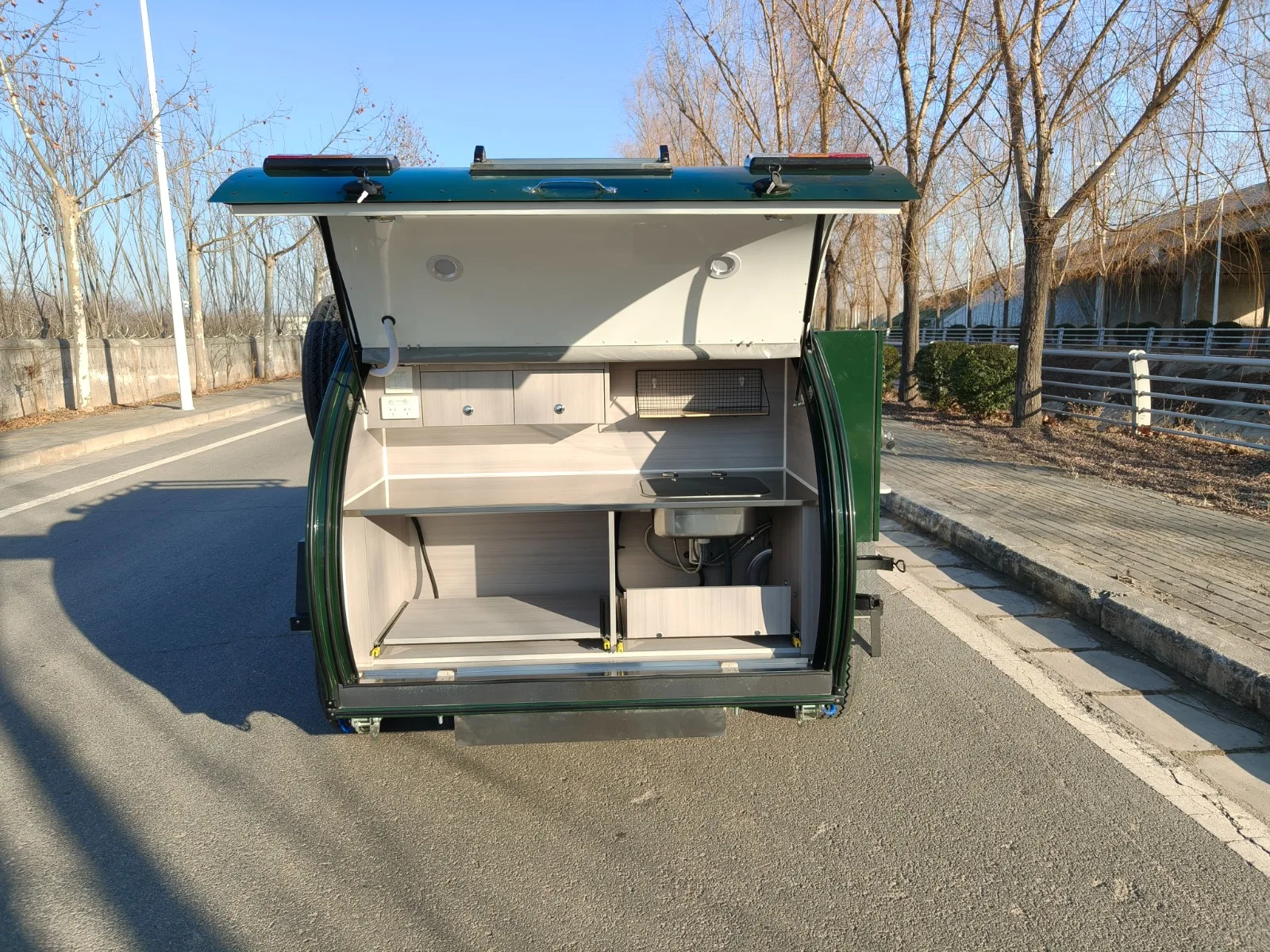
With the galley open and dinner under way, the Flinders evening begins — and out here, the dark comes fast and the stars fill the sky.
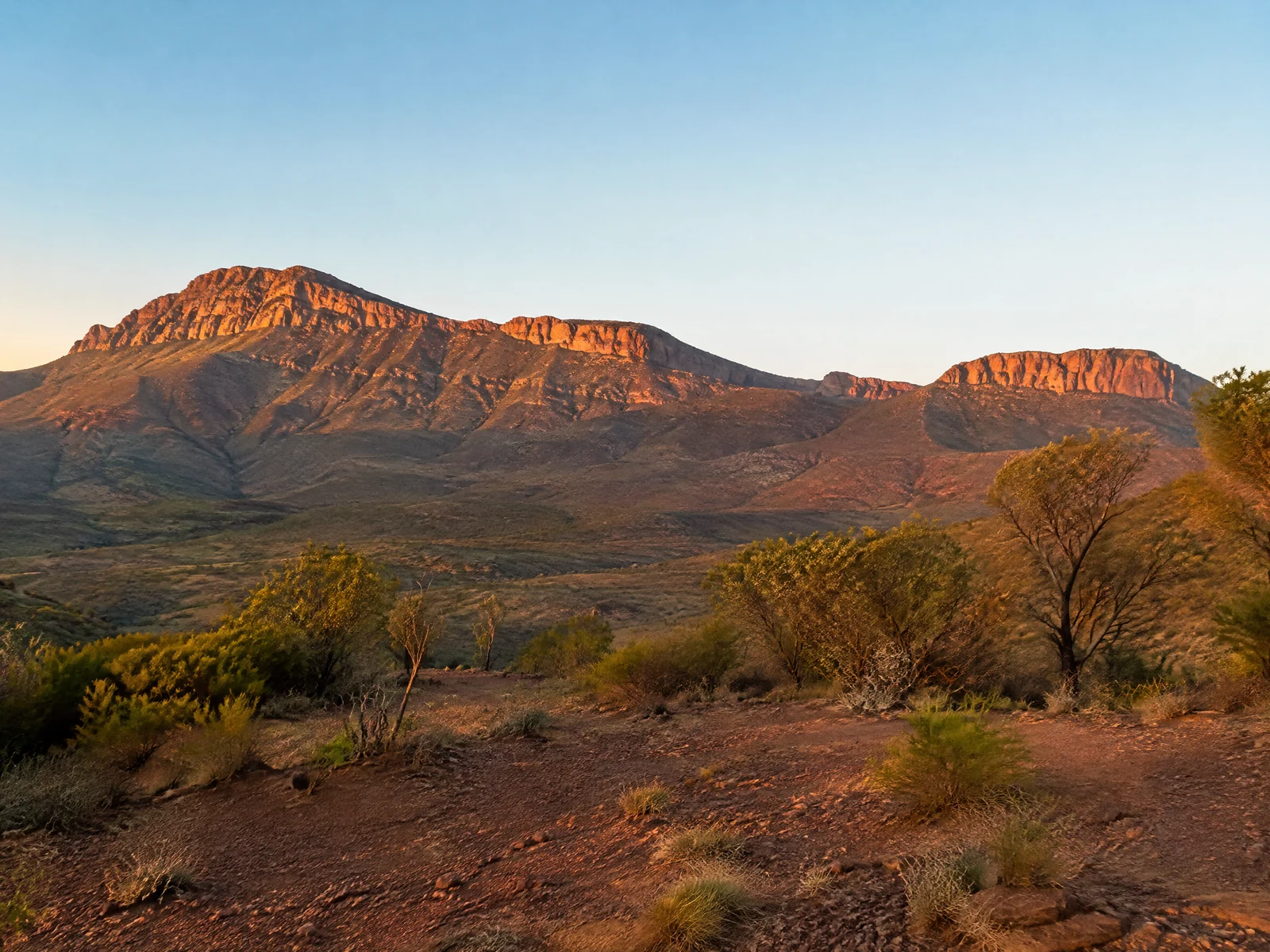
Illustration: Wilpena Pound’s walls catch the first light — an alarm worth setting for.
Water, Power, and Self-Containment
Water Planning
Tap water is available at Wilpena Pound Resort and most major campgrounds, but flow can slow mid-season or after heavy use. Treat the following as minimum carry requirements:
| Trip Type | Water to Carry | Notes |
|---|---|---|
| Wilpena Pound Resort only | 20–30 L | On-site water; useful buffer |
| Wilpena + Trezona/Aroona circuit | 60–80 L couple | Restock at Wilpena between moves |
| Remote camping (Brachina/Bunyeroo) | 80–120 L couple | Seasonal supply; carry full tank |
Do not rely on creek water — seasonal flows and unknown quality mean it must be treated before drinking. The Breath Ultra (80 L tank) and Max (80 L) both carry enough for a comfortable 4-night remote stay per couple. The Essential and Plus (40–60 L tanks) suit shorter trips or itineraries that return to Wilpena Pound regularly.
Read more on sizing your water system in our camper trailer water system guide.
Power
No powered sites exist outside Wilpena Pound Resort. For solar-equipped trailers in spring/autumn, the Flinders Ranges provides 6–7 peak sun hours per day — excellent. A 100–200 W panel feeding 120 Ah of LiFePO4 will power a 40–60 L fridge, lighting, and device charging indefinitely on a sunny spring week. See how much solar you need for a camper trailer for a full sizing walkthrough.
For winter trips (shorter days, lower sun angle), add 20–30% to your sizing estimate. Melbourne-equivalent winter solar figures apply to the Flinders Ranges at that time of year.
Self-Containment
Within Ikara-Flinders Ranges NP, a self-contained grey water system is not a legal requirement at campgrounds that have grey water disposal pits (which the major campgrounds do). However, for remote sites like Brachina East and Bunyeroo Valley, having an onboard grey water tank (Breath Ultra: 30 L; Breath Max: full cassette system) means you avoid the 50-km round trip back to Wilpena Pound for disposal.
For free camping on crown land or state forest around the NP boundary — common near Hawker and Quorn — SA self-containment rules require a contained system. Our free camping guide covers the SA rules by land type.
Which Breath Trailer Model Suits the Flinders Ranges?
| Model | Tare | ATM | Road Access Rating | Flinders Fit | Key Advantage |
|---|---|---|---|---|---|
| Essential $23,320 | 700 kg | 1,050 kg | Sealed + main graded unsealed | ✅ Good | Light enough for any mid-size SUV; Wilpena Pound + Trezona/Aroona |
| Plus $29,766 | 800 kg | 1,200 kg | Sealed + main graded unsealed | ✅ Good | Slide-out fridge included; better storage for a week’s supplies |
| Ultra $34,749 | 900 kg | 1,400 kg | Sealed + graded unsealed + capable 4WD | ✅ Very Good | External shower after dusty gorge days; 80 L tank for multi-night remote |
| Max $42,900 | 1,200 kg | 1,700 kg | Sealed + most unsealed + 4WD with upgrade | ✅ Excellent | Interior bathroom + 2.1 m headroom — eliminates amenities-block dependency for a full week |
Self-contained angle: The Flinders Ranges has patchy shower facilities at most bush campgrounds — only Wilpena Pound Resort and Rawnsley Park Station offer proper hot showers. If your itinerary includes remote sites (Aroona, Brachina East, Bunyeroo Valley), the Breath Max’s interior wet room with cassette toilet removes the daily 25–50 km return trip to Wilpena for a shower. At $42,900, it is the only teardrop camper trailer in Australia under $50,000 with a full interior bathroom.
For tow vehicle matching, see our best tow vehicle guide — a mid-size SUV (Subaru Outback, Kia Sorento, Ford Everest) handles all three lighter models on the sealed road; the Max benefits from a large SUV or ute with a 2,000+ kg tow rating for the unsealed campground roads.
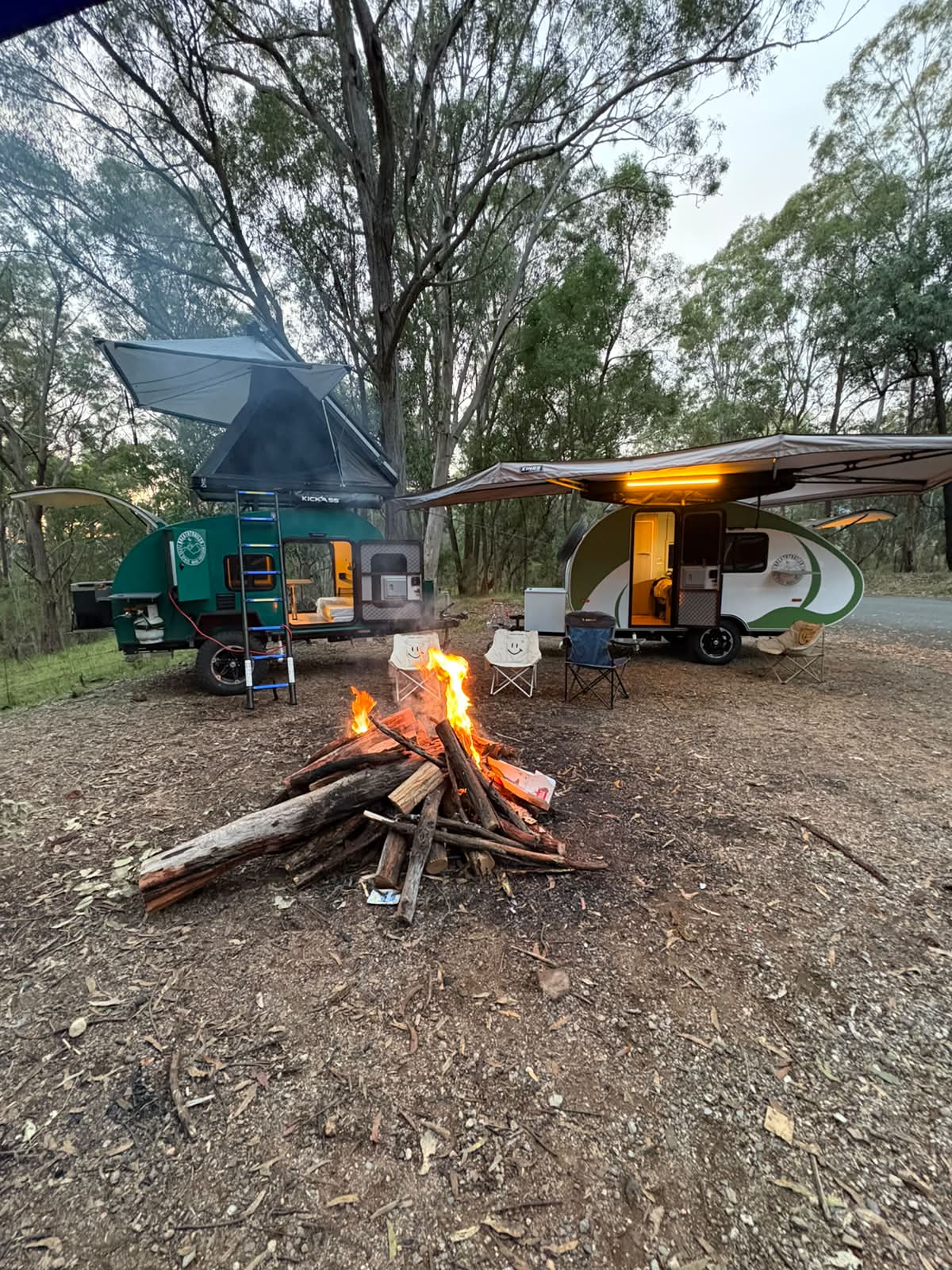
The Flinders Ranges delivers some of the clearest, darkest skies in Australia — 100 km from any city light in every direction.
Packing Checklist for the Flinders Ranges
| Category | Must-Have | Useful Addition |
|---|---|---|
| Navigation | Hema Explorer offline maps (downloaded), WikiCamps app | Garmin GPS unit, printed Hema atlas |
| Water | Full tank + 10 L jerry can buffer | Water filtration pump (emergency backup) |
| Food | Full trip provisions + 1 extra day buffer | Cast iron camp oven for slow-cook meals |
| Sun + heat | SPF50+ sunscreen, wide-brim hat, awning set up quickly | UV-rated window tint on tow vehicle |
| Power | Solar fully charged before departure | 20,000 mAh power bank as device buffer |
| Recovery | MaxTrax/traction boards, rated shackle | Snatch strap + tree protector for soft-surface bogs |
| Safety / comms | PLB (personal locator beacon) — essential | UHF CB radio (other campers + park rangers use Ch. 40) |
| Snakes / insects | Long pants and closed shoes for dawn/dusk | Pressure-immobilisation bandages × 3 in first-aid kit |
| Bookings | Campsite confirmation saved offline, parks pass email | Wilpena Air booking if scenic flight planned |
The Flinders Ranges is active snake country — eastern brown and western brown snakes are common around rocky outcrops and campsites. Wear closed shoes at dawn and dusk and check around tent pegs. A PLB is strongly recommended for any campground outside mobile coverage range; the nearest hospital with emergency surgery is Port Augusta, 2+ hours away by road.
Recommended Reading
Before you leave:
- Best Camping Spots in South Australia — full SA campground overview with Flinders Ranges in context
- Camper Trailer Packing List Australia — full gear checklist with weight distribution guide
- How Long Can You Stay Off-Grid? — water and power maths for planning multi-night remote stays
- Free Camping Australia: The Camper Trailer Guide — crown land and state forest free camping around Hawker and Quorn
- Camper Trailer Towing Guide Australia — hitching, unsealed road technique, and state speed limits
Frequently Asked Questions
Do I need a 4WD to camp in the Flinders Ranges? No. The sealed road runs all the way to Wilpena Pound, and most campgrounds — Wilpena Pound Resort, Trezona, Aroona Valley, and Acraman Creek — are accessible to 2WD vehicles towing standard camper trailers. Brachina East’s 4WD section and the Bunyeroo Valley descent require high clearance; Brachina East’s 2WD sites are accessible to standard trailers. Always check current track conditions at parks.sa.gov.au before heading out, particularly after recent rain.
Can I bring my dog to the Flinders Ranges? No pets are permitted within Ikara-Flinders Ranges National Park, including at all NP campgrounds. Private station camps and caravan parks outside the NP boundary — including Rawnsley Park Station and options around Hawker and Quorn — do allow well-behaved dogs on leads. Call ahead to confirm pet policies.
When is the absolute worst time to visit? December through February. Temperatures regularly exceed 40°C and can reach 45°C in sheltered gorges. Extreme fire danger periods apply, Total Fire Bans prohibit campfires, some tracks close, and Akurra campsite inside Wilpena Pound shuts for summer. This is genuinely dangerous, not just uncomfortable.
Is mobile coverage available in the park? Coverage is very limited past Hawker on most networks. Telstra has the best rural reach in the region, but even Telstra is patchy and absent in gorges and at most campgrounds. Download offline maps, save booking confirmations, and load any documents you’ll need before you leave town. A personal locator beacon (PLB) is essential for remote campsites.
How do I book a campsite in the Flinders Ranges? NP campgrounds (Trezona, Aroona, Brachina East, Bunyeroo Valley) are booked online via parks.sa.gov.au. Wilpena Pound Resort campground is booked via the Discovery Resorts website. Rawnsley Park Station is booked directly. Some remote sites allow self-registration on arrival, but pre-booking is strongly recommended for September–November peak season.
What is the self-containment requirement in the Flinders Ranges? NP campgrounds with facilities have grey water disposal pits — you do not need a self-contained grey water system to use these. However, for remote bush sites and for any free camping on crown land or state forest outside the NP boundary, full self-containment is required under SA rules. The Breath Ultra’s 30 L grey water tank and the Max’s full bathroom system both meet the standard.
The Flinders Ranges rewards patience in planning. Lock in a campsite before spring school holidays, pick a model with enough tank capacity for your itinerary, and arrive knowing the only thing between you and 600 million years of geology is a few hours on the highway.
Compare the four Breath Trailer models or book a viewing at a location near you.