Generator vs Solar Power for Camping in Australia (2026 Guide)
Generator vs solar power for camping in Australia: real 2026 cost comparison, noise rules, national park restrictions, and which system suits your style.
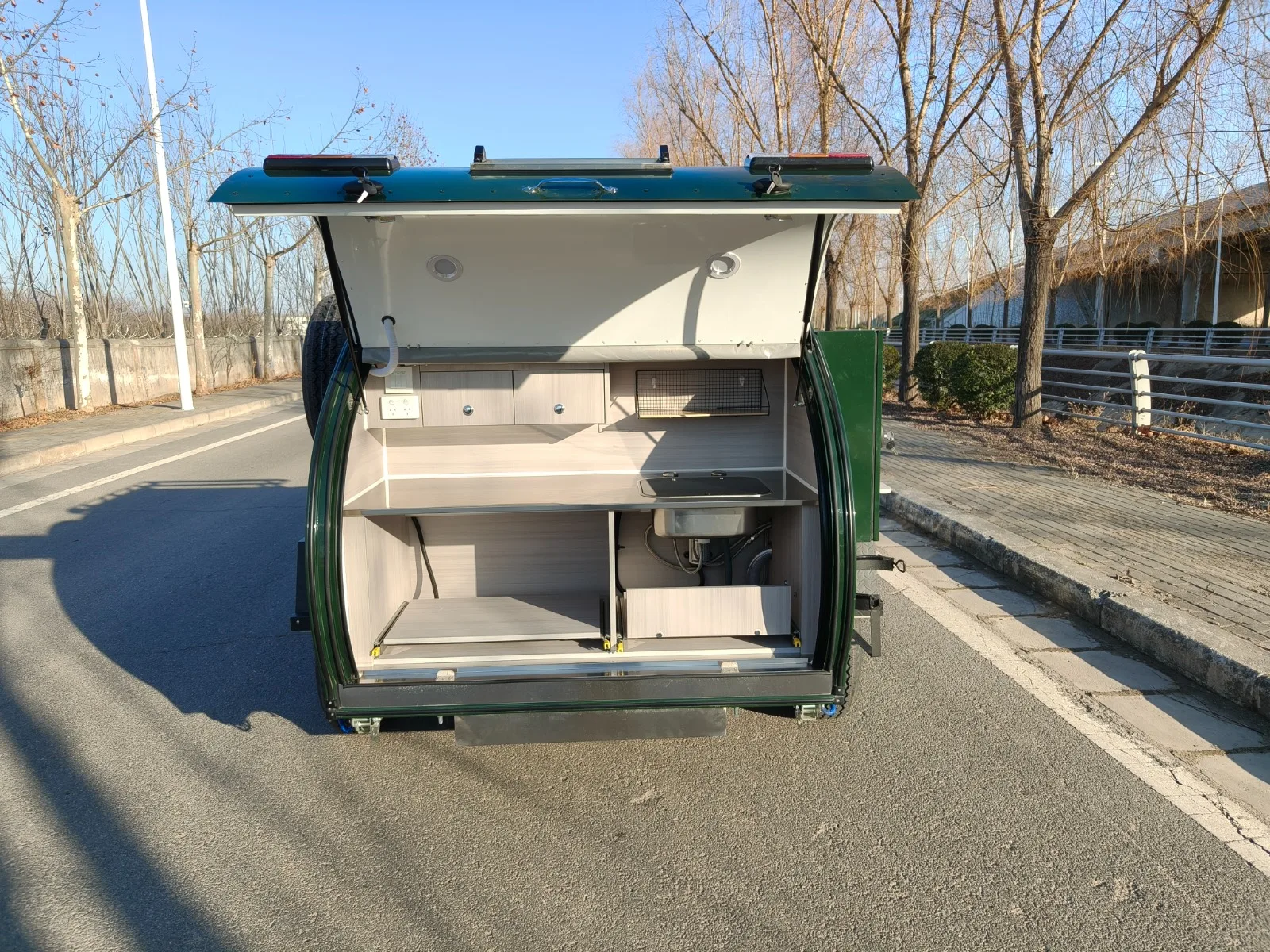
Australia has roughly 300 days of sunshine per year across most of the country, a sprawling network of off-grid national parks and free camps, and a camping culture that increasingly demands real creature comforts — 12V fridges, phone charging, lighting, and yes, air conditioning. All of that needs power.
Two technologies compete for the job: the portable petrol generator and the solar panel plus battery system. In 2026 the decision looks very different from how it did even five years ago. Solar and lithium batteries have dropped dramatically in price; generator restrictions in national parks have tightened; and the average Aussie camper is spending more nights off-grid than ever before.
This guide cuts through the marketing and gives you the real numbers — cost per trip, noise levels, park rules, what each system can and can’t run, and the honest verdict on which setup wins for different camping styles. If you’re fitting out a teardrop camper or any off-grid rig, this is the comparison you need.
How Each System Works
Petrol inverter generator: A small four-stroke engine burns petrol and drives an alternator. An inverter circuit converts the raw AC output into a clean, stable sine wave safe for electronics. The result: 1–3.5 kVA of on-demand AC power anywhere you can carry fuel. Popular camping models include the Honda EU22i (2.2 kVA) and the Yamaha EF2200iS (2.2 kVA).
Solar panel + battery system: Photovoltaic panels (fixed roof-mount, portable folding, or a combination) convert sunlight into DC electricity. A charge controller — ideally a Maximum Power Point Tracking (MPPT) unit — regulates the charge into a 12V battery. An inverter converts stored DC power to 240V AC for appliances. For a deeper explanation of how the components connect, see our complete guide to camper trailer power systems.
The Real Cost: 3-Year Total Cost of Ownership
The purchase price of a generator often looks cheaper upfront. The maths changes quickly once you add fuel.
Assumptions: 60 camping nights per year, 4 hours of generator run-time per night, petrol at $2.00/L, generator fuel consumption 0.8–1.0 L/hr at 50% load.
| Item | Portable Generator | Solar Add-On (to existing battery) | Solar + Battery (from scratch) |
|---|---|---|---|
| Equipment cost | Honda EU22i: $1,859 | 200W folding panel: $500 | 200W panel + 100Ah LiFePO4 + MPPT: ~$1,400 |
| Fuel cost (3 years) | $1,440 (240 hrs/yr × $2.00 × 3) | $0 | $0 |
| Maintenance (3 years) | ~$450 (oil, spark plug, carby service) | $0 | $0 |
| Total over 3 years | $3,749 | $500 | $1,400 |
| Cost per camping night | ~$20.80 | ~$2.80 | ~$7.80 |
The generator is nearly 2.7× more expensive over three years when you add fuel — and that assumes a reliable, quality brand. Budget generators ($450–800) have higher failure rates, shorter service lives, and often louder operation.
Noise: The Dealbreaker Most People Ignore
Noise is where generator camping falls apart — not just socially, but legally.
A standard budget camping generator produces 70–80 dB at 7 metres. Even the quietest inverter generators on the market — the Honda EU22i and Yamaha EF2200iS — produce 53–58 dB at 7 metres under eco-throttle load. For context:
| Sound Source | Approx. dB |
|---|---|
| Quiet library | 40 dB |
| Solar/lithium power station | 0 dB (silent) |
| Honda EU22i (eco-throttle, 7m) | 53 dB |
| Normal conversation | 60 dB |
| National park noise limit (most states) | 65 dB at 7m |
| Standard budget generator (7m) | 70–80 dB |
| Petrol lawn mower (7m) | 85 dB |
For neighbouring campers — especially at 10 pm — even 53 dB is noticeable. Solar produces zero decibels.
Generator Rules in Australian National Parks and Campgrounds
This is the issue that catches most generator owners off guard. Restrictions vary by state and even by individual campground.
| State / Territory | Default rule | Quiet hours | Notes |
|---|---|---|---|
| NSW | Generally permitted where signage allows | 9 pm – 7 am | Many NPWS campgrounds allow generators in specified generator bays only |
| QLD | Prohibited in most national parks | — | Where permitted: max 65 dB at 7 m, max 2.0 kVA output |
| VIC | Campground-specific | Site rules apply | Tidal River (Wilsons Promontory) — generators banned entirely |
| WA | Campground-specific | Most sites: 8 pm – 7 am | DBCA parks often generator-free zones |
| SA | Campground-specific | Check booking confirmation | Free camps and remote sites: generally unrestricted |
| TAS | Generally not permitted in national parks | — | Fuel-fire risk in dry conditions |
| NT | Generally unrestricted in remote areas | Common courtesy applies | Litchfield, Kakadu: check specific site rules |
| ACT | Prohibited in Namadgi NP | — | Tidbinbilla: no generators |
Practical impact: if you free-camp in QLD — some of the best campgrounds in the country — a generator with output above 2.0 kVA is illegal, and most national park campgrounds ban them entirely. A solar system has zero regulatory restrictions anywhere in Australia.
For long-term travellers doing a Big Lap, this is a decisive factor. The best free camps in the country — QPWS sites in Queensland, DBCA sites in WA, remote NT parks — are largely generator-unfriendly environments.
Power Output: What Can Each System Run?
The most important question is whether your chosen system can actually power what you need. Here’s an honest breakdown by appliance:
| Appliance | Draw (watts) | Solar + 120Ah LiFePO4 | 2.2 kVA Generator |
|---|---|---|---|
| LED cabin lights (4 × 5W) | 20W | ✅ Easily | ✅ |
| 12V compressor fridge (40–60L) | 40–50W avg | ✅ All day | ✅ |
| Phone charging | 5–20W | ✅ | ✅ |
| Laptop | 45–65W | ✅ | ✅ |
| 12V water pump | 60W | ✅ | ✅ |
| Electric kettle (240V, 2,400W) | 2,400W surge | ❌ (needs 2000W inverter + large battery) | ✅ |
| Hair dryer | 1,200–2,000W | ❌ | ✅ |
| 12V DC air conditioner (portable) | 600–1,000W | ⚠️ Only with 200Ah+ battery | ✅ |
| 240V rooftop AC unit | 1,200–2,400W | ❌ (needs substantial battery + inverter) | ✅ |
| Air compressor (for tyres) | 800–1,200W | ❌ | ✅ |
The verdict on power: Solar and a 120Ah lithium battery handle everything a camper needs day-to-day with no problem — fridge, lights, charging, water pump. Where solar falls short is sustained high-draw 240V loads like an air conditioner run for hours, a hair dryer, or a kettle. A generator handles those easily.
This is why many serious full-timers use a hybrid strategy rather than choosing one exclusively.
Weight, Portability and Setup
| Factor | Portable Generator (Honda EU22i) | 200W Portable Solar Panel | 120Ah LiFePO4 Battery |
|---|---|---|---|
| Weight | 21 kg | 8–12 kg | 12–14 kg |
| Space required | ~600 × 450 × 450 mm | Folds to 580 × 380 mm | ~280 × 180 × 220 mm |
| Setup time | 30 seconds (place, pull cord) | 2–3 minutes (unfold, position, connect) | Fixed in trailer (no setup) |
| Carry fuel? | Yes — minimum 4–8L jerry can | No | No |
| Requires ventilation? | Yes — never use enclosed | No | No |
| Fire risk | Yes (fuel, hot exhaust) | No | No (LiFePO4 chemistry) |
A generator also requires fuel storage — at least one 5L jerry can, ideally two on longer trips. That’s additional weight and fire risk to manage. Solar panels and lithium batteries have no consumables.
When a Generator Still Makes Sense
Be honest: there are real use cases where a generator is the right tool.
1. Extended overcast weather (3+ days) Australia’s Top End during Wet season, Tasmania in winter, and alpine areas in autumn can deliver extended cloud cover. A solar system with 120Ah can survive 1–2 cloudy days easily; beyond that, a DC-DC charger fed by your tow vehicle alternator supplements the shortfall. If you regularly camp in persistently overcast conditions, a generator as backup insurance makes sense.
2. Running 240V AC on a hot night A 240V rooftop air conditioner drawing 1,500W for 6 hours needs 9 kWh of energy — equivalent to 750Ah at 12V. That’s beyond what a standard camper solar setup stores in a day. A generator makes it practical. (In teardrop campers, the small interior volume means a 12V portable or evaporative cooler is often sufficient — see our guide on air conditioning for camper trailers.)
3. Remote workshop or job-site use If your camping is combined with work in remote areas — running power tools, charging large equipment, welding — a generator’s raw 240V output at sustained wattage has no solar equivalent for short bursts of very high draw.
4. Backup for medical equipment CPAP machines (80–180Wh/night) are well within solar and battery range. Insulin refrigeration (40–60Wh/day) is fine too. But certain medical equipment drawing 500W+ continuously may warrant a generator as redundancy — especially for travellers where failure carries health risk.
When Solar Always Wins
For the overwhelming majority of Australian campers, solar is simply the better system. Here’s why.
Silent operation: This matters more than most campers realise until they’ve sat next to someone running a generator at 9 pm. Solar and a lithium battery are completely silent — no engine, no vibration, no exhaust smell. You hear the bush, not a motor.
No fuel logistics: In remote WA, the Northern Territory, or the Kimberley, fuel availability is a genuine constraint. Detours to the next servo for generator fuel add time, cost, and complexity. Solar panels run on sunlight, which Australia has in abundance.
Park and campground access: As detailed above, most of the best free camps in Queensland, Victoria, WA, and Tasmania either restrict or ban generators. Solar has no restrictions anywhere.
Zero ongoing cost: After the initial equipment investment, solar power is free. At 60 camping nights per year, the fuel savings alone pay off a 200W portable panel within one camping season compared to running a generator.
Maintenance: A quality solar panel has no moving parts and a 25-year warranty on power output. A petrol generator requires oil changes every 50–100 hours, spark plug replacement, carburettor servicing, and fuel stabiliser for storage. Miss a service and it may not start when you need it.
For a full sizing walkthrough, see our guide on how much solar you actually need for a camper trailer.
The Hybrid Strategy: Using Both
The most experienced long-term travellers often carry both — but not as equal partners. The typical setup:
- Solar + lithium battery as primary: handles 95% of daily needs silently and for free
- Generator as emergency backup: pulled out 3–4 times per year for extended cloud events, running AC for heat waves, or topping up a depleted battery quickly
The Honda EU22i (2.2 kVA) can charge a 120Ah lithium battery from flat to full in approximately 4 hours via a 20A DC charger. That emergency top-up capability has real value on a 90-day lap when you hit three weeks of cloud in Tasmania.
The key insight: with a hybrid setup you don’t need to size your solar system to handle the absolute worst case. Design for 90% of days; use the generator for the other 10%.
How Each Breath Trailer Model Handles Power
All Breath Trailer models (except the Essential, where solar and battery are optional) leave the Sydney workshop solar-powered and ready for off-grid use. Here’s how the standard setup stacks up against the generator vs solar comparison:
| Model | Battery (std) | Solar (std) | Inverter | Typical off-grid autonomy | Generator needed? |
|---|---|---|---|---|---|
| Essential | 24Ah lithium | Optional | Not included | Lights, charging: 1–2 days | Only if adding fridge or large 240V loads |
| Plus | 120Ah lithium | Included | Included | Fridge + lights + charging: 3–5 days | Only for AC or extended cloud cover |
| Ultra | 120Ah lithium | Included | 240V included | Fridge + shower + charging: 3–5 days | Only for AC or extended cloud cover |
| Max | 120Ah lithium | Included | 1000W included | Full self-contained: 3–5 days | Only for AC or extended cloud cover |
The Plus, Ultra, and Max all arrive solar-powered and capable of sustained off-grid living without a generator for the vast majority of Australian camping conditions. Adding a portable 200W folding panel (from $500) extends autonomy further and reduces the threshold at which a generator becomes useful.
For the Breath Essential, adding the solar and battery upgrade at build time is the most cost-effective path to off-grid capability — retrofitting panels and wiring after delivery costs more than specifying them upfront. For a deeper explanation of how to size a system for your specific camping habits, read our understanding camper trailer solar systems guide.
The Verdict
| Factor | Generator | Solar | Winner |
|---|---|---|---|
| Upfront cost | $1,768–1,859 (quality) | $500–1,400 | Solar |
| 3-year total cost | ~$3,749 | $500–1,400 | Solar |
| Noise | 53–80 dB | 0 dB | Solar |
| National park access | Restricted/banned in many | No restrictions | Solar |
| High-draw 240V appliances | Excellent | Limited without large battery | Generator |
| Fuel logistics | Requires jerry cans | None | Solar |
| Maintenance | Regular servicing | None | Solar |
| Extended cloud cover | Excellent | Limited (2–3 days) | Generator |
For most Australian campers: solar wins on every metric that matters day-to-day — cost, silence, park access, and zero maintenance. A generator makes sense as an occasional-use backup for extended cloud events or sustained AC use.
If you’re building out a teardrop camper from scratch, start with a well-sized solar and lithium system. Add a portable generator only if your specific use case — tropical Wet season, alpine winter, or AC-dependent camping — demands it.
Frequently Asked Questions
Can I run a 12V fridge all day on solar alone? Yes, comfortably. A 60L 12V compressor fridge draws 40–50W on average. With 120W or more of solar and a 120Ah lithium battery, the fridge runs continuously without depleting the battery — even on a partly cloudy day with the fridge drawing ~60Ah over 24 hours and the panels producing 80Ah+ in average conditions. See our guide on keeping food cold off-grid for the full maths.
Are generators allowed at free camps in Australia? It depends on the land manager and the specific site. Crown land free camps and state forest roads are generally unrestricted. QPWS national park campgrounds mostly ban generators. DBCA (WA) campgrounds are campground-specific. Always check the booking confirmation or the relevant state park authority website before assuming.
What’s the quietest generator available in Australia? The Honda EU22i and Yamaha EF2200iS are among the quietest production generators at approximately 53 dB(A) at 7 metres under eco-throttle. Both meet the 65 dB limit enforced at Australian campgrounds where generators are permitted. Neither is close to silent — a lithium power station produces zero noise.
How long will a 120Ah lithium battery last without a solar top-up? With typical camping loads (fridge 45Ah, lighting 7.5Ah, phone/laptop charging 10Ah) drawing roughly 60–65Ah per day, a 120Ah LiFePO4 battery at 100% usable capacity lasts approximately two days without any solar input. Add even 100W of solar producing 50Ah on an average sunny day, and the system runs indefinitely. See the full breakdown in our how long can you stay off-grid guide.
Can I charge my battery using a generator? Yes. A 2.2 kVA generator connected to a 20A AC-DC battery charger can deliver around 240W (20A × 12V) to a lithium battery, fully charging a 120Ah battery from flat in approximately 5–6 hours. In practice, campers use the generator to do a quick 2-hour partial charge and then let solar complete the job — reducing fuel burn and noise time significantly.
Recommended Reading
- The Complete Guide to Camper Trailer Power Systems
- AGM vs Lithium Batteries for Camper Trailers
- How Much Solar Do You Need for a Camper Trailer?
- Understanding DC-DC Chargers for Camper Trailers
- The Ultimate Off-Grid Camper Trailer Setup
Ready to find a teardrop camper that comes solar-powered as standard? Compare the Breath Trailer range or book a consultation with our Sydney team.