Summer Camping in Australia: The Complete Camper Trailer Guide (2026)
Plan your Australian summer camping trip with a camper trailer. Heat, fire restrictions, best destinations by state, food safety, and staying cool — complete 2026 guide.
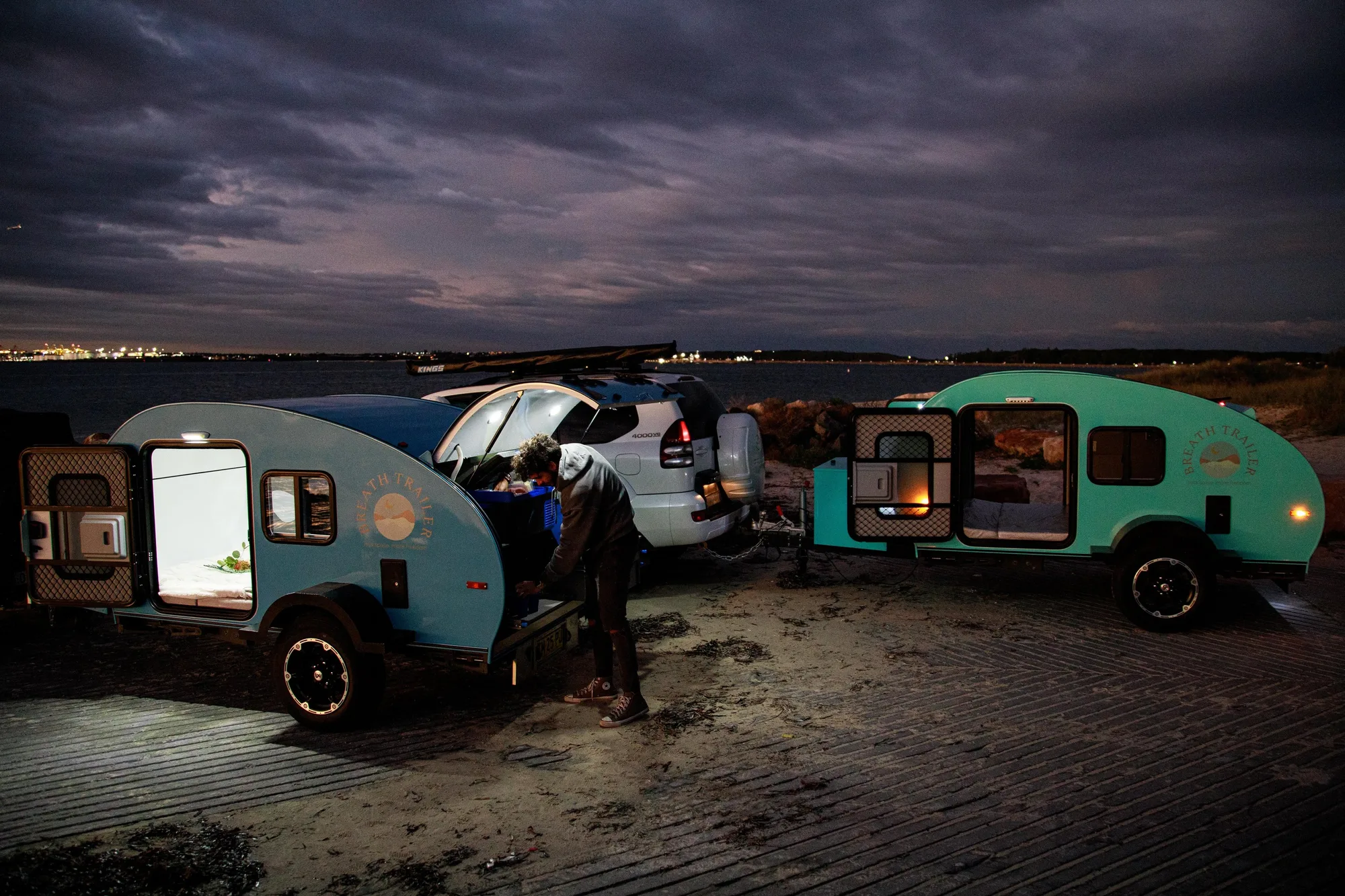
Australian summer. Six months of long days, open roads, and campsite sunsets — but also 45°C inland heat, Total Fire Bans, tropical wet season road closures, and a UV index that sits at 12+ for weeks on end. The same season that makes Australia’s coastlines, alpine meadows, and national parks irresistible to campers can turn an under-prepared trip into a miserable ordeal.
With the right setup and planning, summer is the best time to own a hard-shell teardrop camper. Unlike canvas camper trailers that trap heat and attract condensation, a rigid fibreglass or composite shell heats up fast — but cools down just as fast once the sun drops, and can pair with proper air conditioning in a way canvas never can. Over 350 Breath Trailer owners have put this to the test across Australian summers.
This guide covers everything you need for a safe, comfortable summer camping trip in Australia: where to go (and where to avoid), how to manage heat inside your trailer, fire restrictions by state, food safety in high ambient temperatures, and how to configure each Breath model for summer conditions.
Australia’s Summer Calendar: It’s Not One Season
“Summer” means different things depending on where you are in Australia. Fail to account for regional variation and you could book a trip to the tropical north in January — straight into the wet season — while the same week delivers perfect conditions on the NSW South Coast or in the Victorian High Country.
| Region | Summer window | What to expect | Trailer verdict |
|---|---|---|---|
| Tropical North (NT, FNQ, Kimberley) | Nov–Apr | Monsoonal rain, road closures, 35–40°C with extreme humidity | Avoid Nov–Mar; wait for Dry (Apr–Oct) |
| Outback / Arid Centre (SA, WA, western NSW) | Dec–Feb peak | Dry heat 40–49°C, dust, no relief at night | Avoid Dec–Feb; shoulder Oct–Nov and Mar–Apr only |
| South East Coast (NSW, VIC coast) | Dec–Feb | 25–35°C, sea breezes, occasional heatwave to 40°C+ | Excellent; choose coastal sites with sea breezes |
| Alpine (VIC High Country, NSW Kosciuszko) | Dec–Feb | 15–28°C, wildflowers, snow melt, occasional thunderstorm | Excellent; best summer camping in Australia |
| Tasmania | Dec–Feb | 18–25°C, low UV relative to mainland, occasional 35°C spike | Excellent; coolest summer option |
| South-West WA (Margaret River, Pemberton) | Dec–Feb | 25–38°C, beaches and forests, occasional heat spike | Good; mornings and evenings cool, plan for midday heat |
Key rule for summer: the tropical north and the arid interior are for shoulder season (April–October). Summer camping in Australia means heading south, east, or up in altitude.
Where to Go in Summer: Best States and Regions
New South Wales
The NSW South Coast (Murramarang, Merimbula, Eden) delivers consistent 24–28°C days with ocean breezes that drop temperatures 6–8°C compared with inland. The Blue Mountains offer a 5–8°C relief over Sydney. Kosciuszko National Park above 1,800 m stays under 25°C even on a mainland heatwave day — and the wildflower display from mid-December to late January is world-class.
See our detailed campground-by-campground breakdown in the best camping spots in NSW guide.
Victoria
The Victorian Alps — Mount Buffalo, the Alpine National Park, Lake Eildon — are reliably 10–15°C cooler than Melbourne in summer. Tidal River in Wilsons Promontory books out months ahead (use the Parks Vic ballot system) but offers one of the best beach camping experiences on the mainland. Avoid the Mallee and the Murray in January–February: Mildura regularly hits 42°C.
Full campground list: best camping spots in Victoria guide.
Tasmania
Tasmania is the most underrated summer camping destination in Australia. Hobart averages 22°C in January. Cradle Mountain sits at 15–18°C. The East Coast — Freycinet, Bay of Fires, St Helens — runs 20–24°C with pristine water and almost no crowds after mid-January once school holidays end. Spirit of Tasmania crossing: book well ahead (from $224 per vehicle + trailer return, plus a fuel surcharge).
Full guide: best camping spots in Tasmania.
Queensland
Avoid north Queensland and the Whitsundays from November to March: the wet season brings monsoonal rain, cyclone risk, flooded roads, and national park closures. Southeast Queensland (Granite Belt, Lamington, Sunshine Coast hinterland) stays accessible and comfortable at 25–32°C. K’gari (Fraser Island) remains open in summer but heat and soft sand make it challenging — the QPWS recommends morning driving windows before 11 am.
See the best camping spots in Queensland guide.
Managing Heat Inside Your Teardrop
This is the most important skill in Australian summer camping. Teardrop hard-shell trailers have a small internal volume (roughly 3–5 m³ depending on the model), which means they heat up faster than a caravan — but also cool down faster once the sun drops and airflow kicks in.
Site selection: the single biggest lever
In Australian summer, camp orientation matters more than any gear you pack. The sun tracks north-to-northeast in the morning and northwest in the afternoon. To maximise natural shade during the hottest window (11 am–4 pm):
- Position your trailer’s side under trees on the west and northwest side
- Deploy your awning on the north or west face to block afternoon sun
- Never park in a depression where heat radiates from the ground all night
- Favour campgrounds with mature native trees — grass clearings give no relief
A simple $30 shade sail strung between two trees and your awning arm can drop ambient air temperature by 6–8°C under your outdoor setup.
Awning use in summer
A 270° awning or a 180° roof-mounted awning turns a tiny footprint into a liveable outdoor room for the six hottest hours of the day. For summer camping, an awning is arguably more important than any electrical system — it’s the difference between spending the afternoon inside a hot trailer or relaxing outdoors in shade.
For the full awning comparison (180° vs 270°, AU brand prices, mounting options on teardrops), see the best awning setup guide.
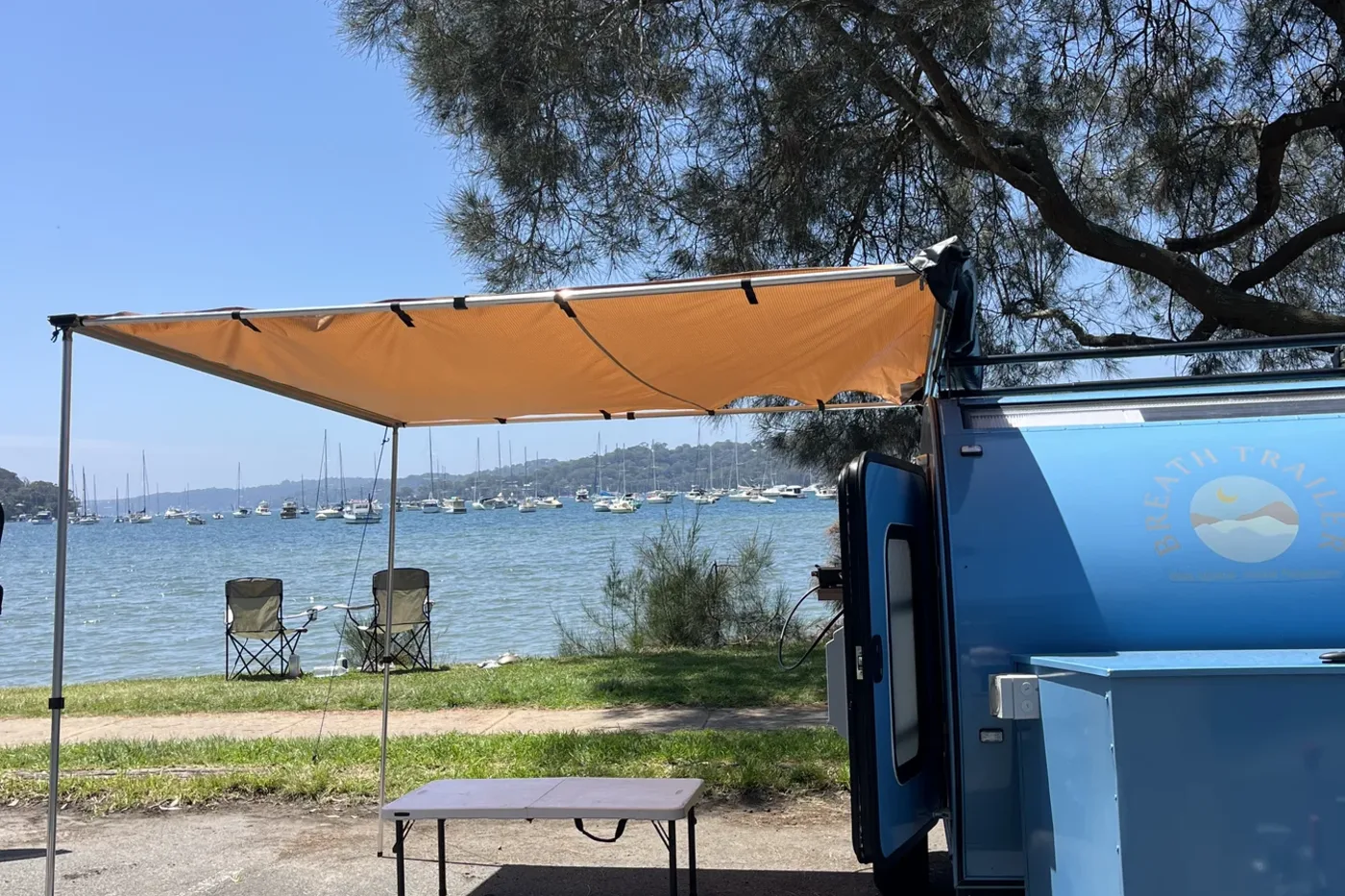
An awning is your most effective heat management tool in Australian summer — it creates shade without power.
Cross-ventilation
Every Breath trailer has opening windows and a side entry door. On nights when temperatures drop to 22–26°C (typical for coastal NSW and VIC in summer), open the windows on both sides to create cross-ventilation. Combined with a small USB desk fan drawing less than 5W, this is enough to sleep comfortably without running an air conditioner.
The trick: point the desk fan across the bed rather than directly at your face. This moves air without the “fan blast” that disrupts sleep.
Air conditioning: when it’s essential
Above 28°C overnight, cross-ventilation alone isn’t enough. That’s when an air conditioning system earns its weight. Teardrops have a major advantage over caravans here: the small volume means a 12V DC rooftop unit rated at 800–1,000W can cool the interior to 22°C in under 20 minutes, whereas the same unit would barely dent a 7 m caravan.
For a full breakdown of AC system types (240V rooftop, 12V DC, portable battery-powered, evaporative), power budget requirements (200–400 Ah battery), and per-model suitability, see the air conditioning guide for camper trailers.
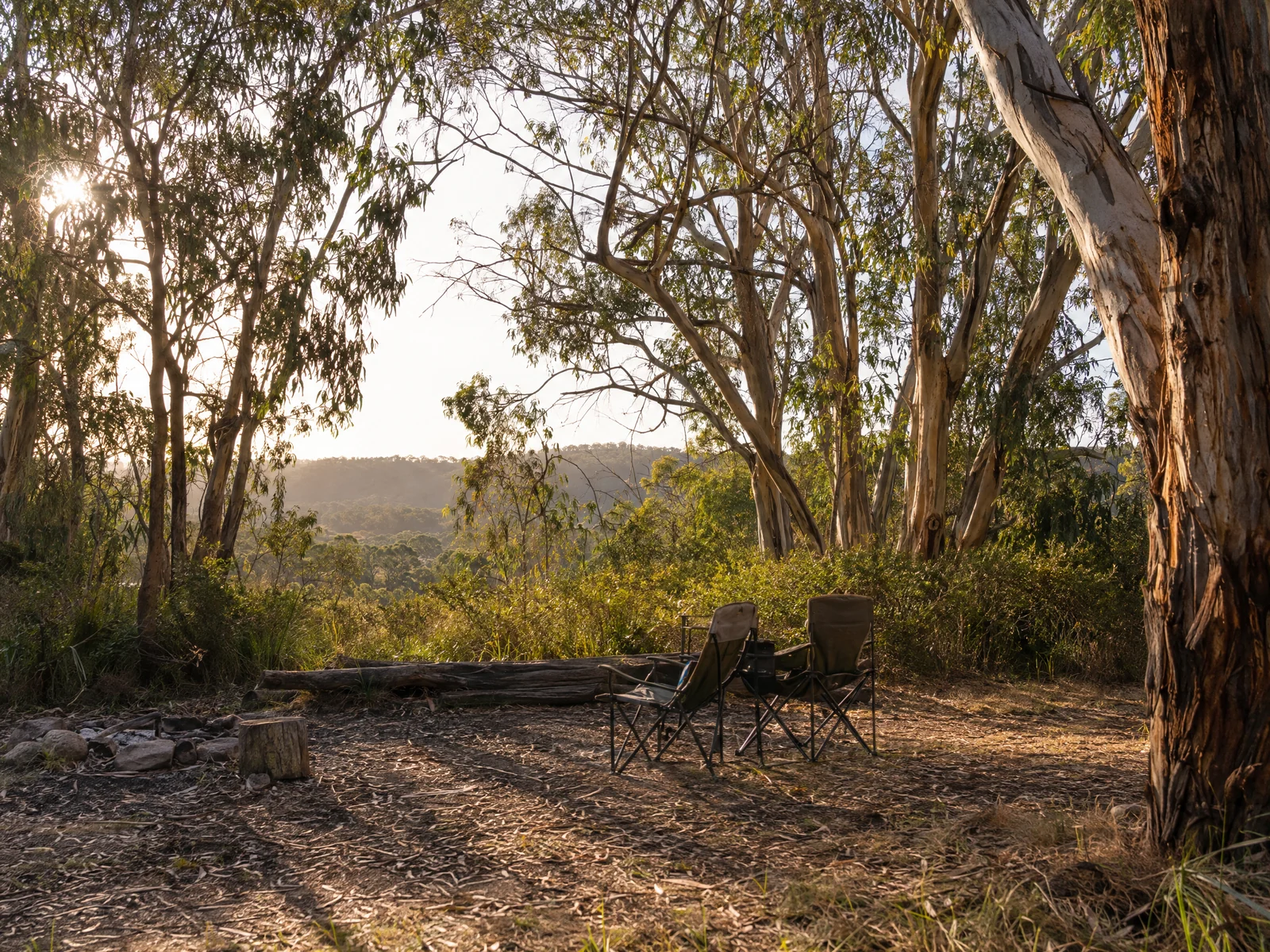
Illustration: Illustration: smart site selection keeps the afternoon sun off your trailer when temperatures peak above 40°C.
Food Safety and Fridge Performance in Australian Heat
This is where summer camping becomes genuinely dangerous if you’re not careful. Food Science Australia (FSANZ) defines the “temperature danger zone” as 5°C–60°C — the range in which bacteria double roughly every 20 minutes. In a 40°C ambient environment, chicken left at the wrong temperature for 90 minutes poses a real listeria and salmonella risk.
The 5°C rule in practice
Your 12V compressor fridge keeps food safe as long as it maintains internal temperature below 5°C. The problem in summer is that:
- Fridge performance degrades in high ambient temperatures. Most 12V compressor fridges are rated at ambient temperatures up to 43°C, but above 35°C the compressor runs almost continuously, consuming 40–60% more power than in cool conditions.
- Opening frequency matters more in summer. Each fridge opening lets hot air in. In 40°C heat, an open fridge warms from 3°C to 12°C in under 30 seconds.
| Ambient temp | Typical fridge draw (40L compressor) | Daily Ah consumed | Days off a 120 Ah battery |
|---|---|---|---|
| 20°C | 1.5–2.0 A avg | 36–48 Ah | 2.5–3.3 days |
| 30°C | 2.5–3.2 A avg | 60–77 Ah | 1.6–2.0 days |
| 40°C | 3.5–4.5 A avg | 84–108 Ah | 1.1–1.4 days |
Practical fixes:
- Pre-cool the fridge to 2°C before loading food. Let it run for 4–6 hours plugged in before departure.
- Shadow your fridge. If your trailer’s rear galley faces west in the afternoon, run a shade sail or park nose-out to rotate it into shade.
- Separate drinks from food. A dedicated drinks esky means you’re not opening the food fridge every 30 minutes.
- Use a thermometer strip. Stick one on the inside wall of your fridge so you can check temperature without opening the door.
For a complete comparison of 12V compressor fridges vs ice boxes in Australian heat conditions (Dometic, Engel, Bushman, Evakool prices), see the keeping food cold guide.
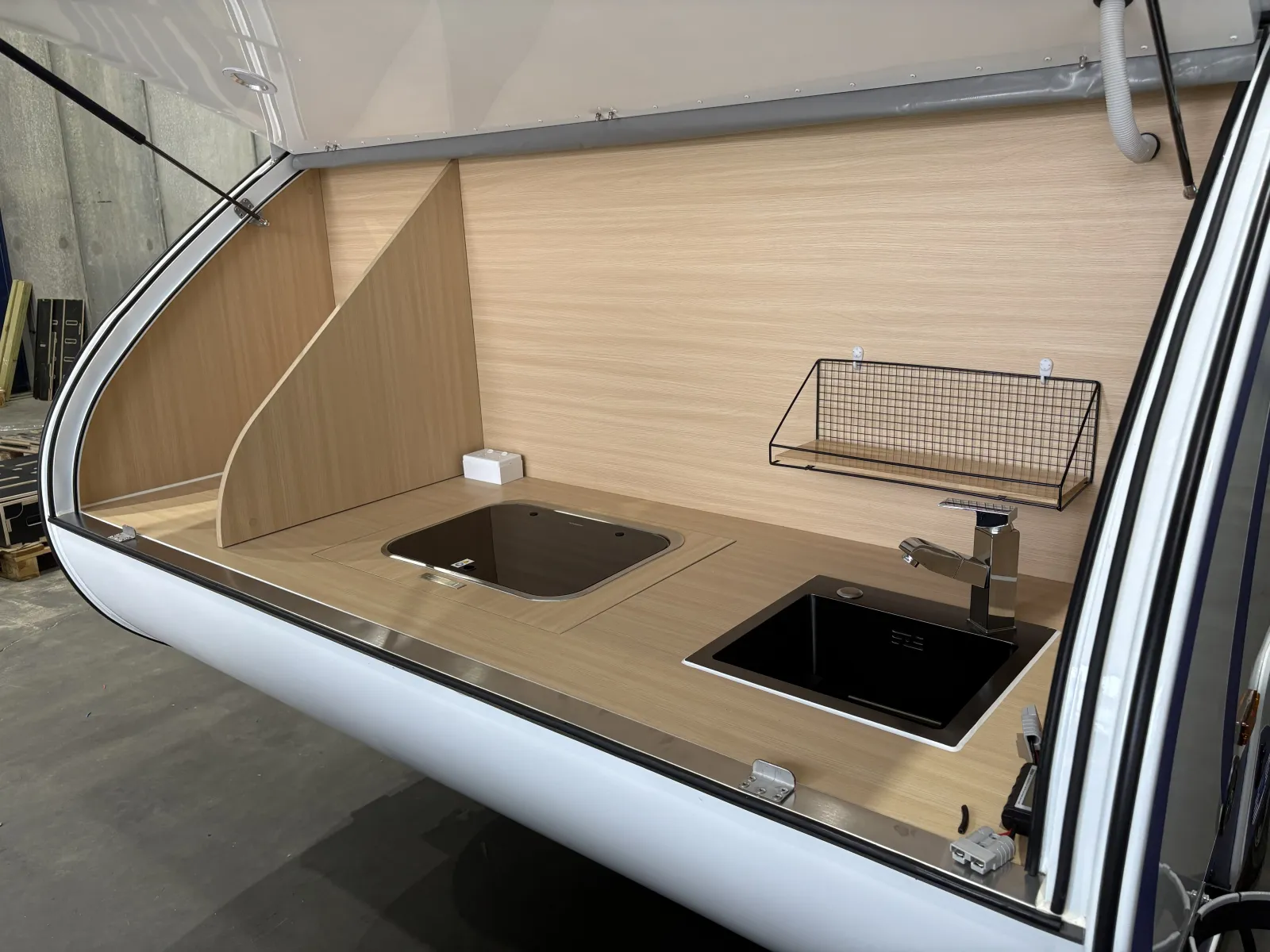
The Breath Max’s rear galley keeps fridge, sink and cooking station in one organised space — shade the hatch side to reduce fridge load.
Water: Your Most Important Summer Resource
The standard planning figure of 10 L per person per day (drinking, cooking, washing) needs to increase in summer heat. In temperatures above 35°C with activity:
- Drinking alone: 3–4 L/pp/day (vs 2 L in mild weather)
- Cooking and dishwashing: 4–5 L/pp/day
- External shower (Ultra and Max models, 5-minute shower): 15–20 L/shower
- Total conservative summer budget: 12–15 L/pp/day
For a couple spending 5 nights in summer heat, budget 120–150 L. The Breath Ultra carries 80 L built-in, which covers 5.3–6.7 days for a couple, and the Max’s 120 L fresh tank stretches that to 8–10 days — a realistic off-grid duration before needing to refill.
For campgrounds with mains water, this is irrelevant. For free camping and national parks without water:
- Carry a 20 L jerry can as backup
- Know where the next fill point is before you leave (WikiCamps app shows water sources)
- Sanitise tanks every 3–6 months (125 mL of household bleach per 1,000 L, circulate and drain)
The water system guide covers pump types, grey water rules by state, and tank sanitisation in full.
Fire Restrictions: Summer’s Non-Negotiable Rule
Every Australian summer, fire danger seasons close national parks to campfires and on Total Fire Ban days, prohibit any open flame outdoors — including gas cooktops in some states. Violating a Total Fire Ban carries fines up to $5,500 for individuals and $27,500 for corporations in NSW. In Victoria, penalties include up to 5 years imprisonment for causing a fire during a fire danger period.
The crucial detail: fire restrictions do not apply to enclosed cooking appliances in most states. Your trailer’s slide-out gas stove, inside the rear galley with the hatch raised, is usually exempt even on a Total Fire Ban — but check the current state rules before cooking.
| State | Fire Danger Season | Typical campfire restriction window | App to check daily |
|---|---|---|---|
| NSW | Oct–Apr (varies) | Total Fire Ban days: no open fires | NSW Rural Fire Service (RFS) app |
| Victoria | Nov–May (varies) | Fire Danger Periods + Total Fire Ban days | VicEmergency app |
| South Australia | Nov–Apr | Declared Fire Danger Season | SA CFS app / sa.gov.au/cfs |
| Western Australia | Nov–Apr (south-west) | Fire Danger Season declared | DFES WA |
| Queensland | Year-round (south-east) | Varies by local authority | Queensland Fire (QFire app) |
| Tasmania | Dec–Apr | Total Fire Ban days | Tasmania Fire Service app |
| ACT | Oct–Apr | Fire Danger Period | ESA ACT |
| NT | No formal FDS; focus on Dry Season fires | Few campfire restrictions in summer | NT Emergency |
The practical rule: always check your state’s fire service app the night before you plan to cook outdoors. These apps give next-day Total Fire Ban declarations by region. When in doubt, use your trailer’s enclosed gas stove — it’s always the safest option.
Summer Packing: What Changes from Winter
Summer camping with a teardrop doesn’t require major extra gear, but a few targeted additions make an outsized difference:
| Category | Summer-specific item | Why it matters |
|---|---|---|
| Shade | 3×3 m shade sail + tensioning cords | Drops ambient temperature 6–8°C in your outdoor area |
| Cooling | 12V desk fan (5W USB, 2,000 L/min airflow) | Enables comfortable sleep at 26–28°C without running AC |
| Bedding | Merino wool or bamboo cotton sheet only (no quilt) | Breathable fibres prevent night sweats at 25°C+ |
| Sun protection | SPF 50+ sunscreen, UPF 50+ shirt, wide-brim hat | Australian UV index reaches 12+ in summer; 10 min exposed = burn |
| Hydration | 2 L personal drinking bottle per person | Separate from cooking water; encourages continuous sipping |
| Insects | 20% DEET repellent + mosquito coils | Mozzies peak after summer rain; Ross River virus endemic in QLD, NT |
| Fridge management | Fridge thermometer strip + drinks esky | Keeps food fridge below 5°C without unnecessary door openings |
| Vehicle | 1 L extra coolant + coolant hydrometer | Engine cooling systems work harder in 40°C+ ambient conditions |
For a comprehensive packing list beyond summer-specific items, see the camper trailer packing list guide.
Tyre Pressure in Summer Heat
Tyre pressure increases with temperature. For every 10°C rise in ambient temperature, tyre pressure increases by approximately 2–3 PSI. This means a trailer tyre set to 44 PSI cold (as per the manufacturer’s placard) might read 50–52 PSI after driving 100 km on a 40°C day — creating the incorrect impression that the tyres are over-inflated.
Never reduce tyre pressure based on a hot reading. Always check and adjust tyres cold (before driving or after sitting in shade for at least 3 hours).
The summer-specific risk is the opposite: an under-inflated tyre in summer heat generates excess heat from sidewall flexing, accelerating the risk of blowout. Check your trailer tyre placard. For all-terrain tyres (AT) in the 205/75R15 to 225/75R15 range fitted to Breath models, the typical cold inflation recommendation is 40–44 PSI (sealed road) and 26–32 PSI (unsealed, corrugated).
See the complete tyre pressure guide by surface type in the camper trailer tyre guide.
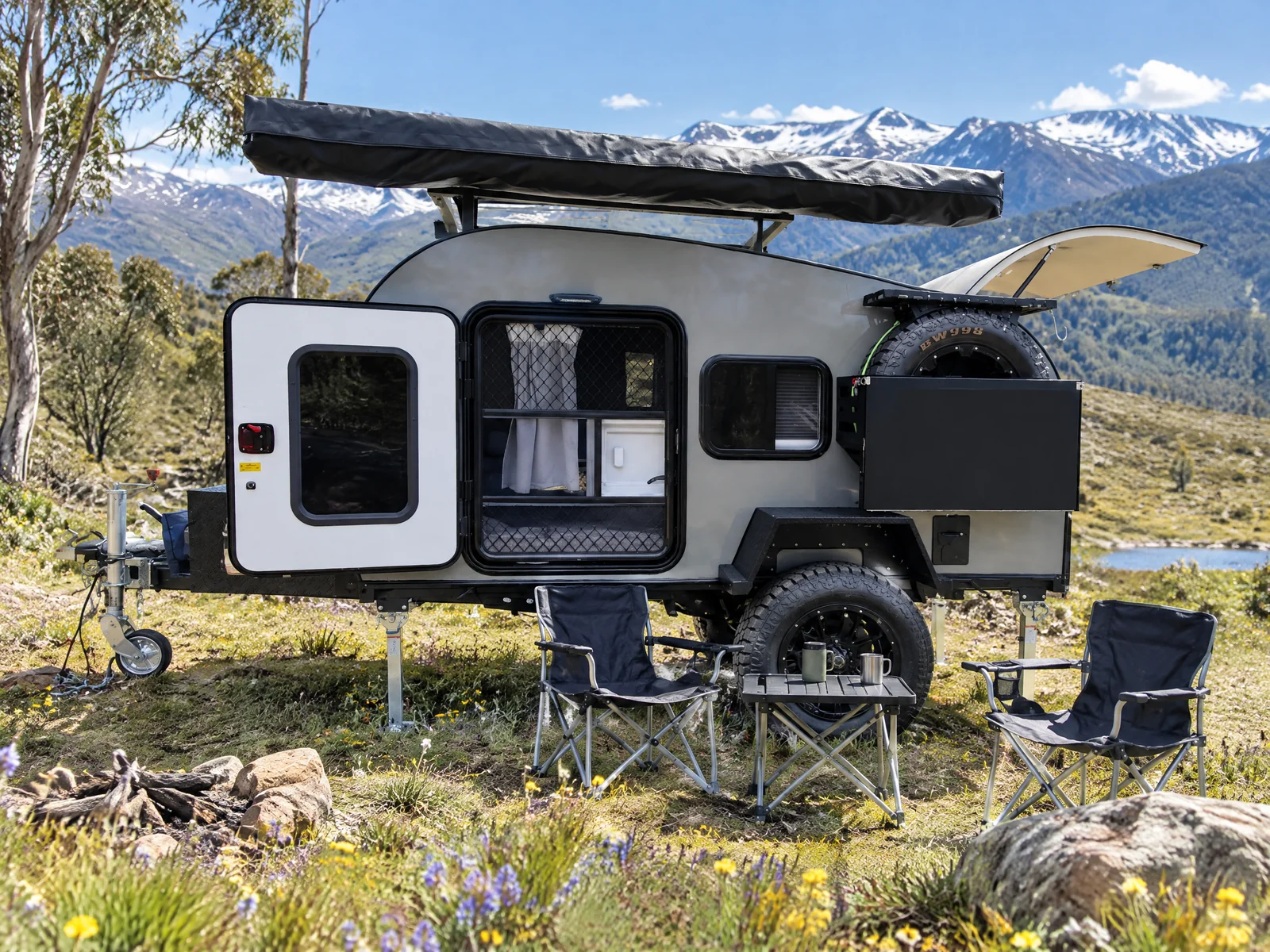
Illustration: Illustration: the Victorian Alps deliver 15–22°C summer days — a 15°C relief over Melbourne on a heatwave day.
Breath Trailer Model Comparison: Summer Suitability
| Feature | Essential | Plus | Ultra | Max |
|---|---|---|---|---|
| Tare / ATM | 700 / 1,000 kg | 800 / 1,100 kg | 900 / 1,200 kg | 1,200 / 1,700 kg |
| Water tank | 50 L | 50 L | 80 L | 120 L |
| Fridge (standard) | Optional | Included (40 L) | Included (40 L) | Included (60 L) |
| External shower | — | — | ✅ (cold + hot) | ✅ (cold + hot) |
| Interior bathroom | — | — | — | ✅ (ensuite toilet + shower) |
| AC-ready (12V circuit) | Optional upgrade | Optional upgrade | Standard 12V circuit | Standard 12V circuit |
| Summer self-containment | Not self-contained | Not self-contained | Self-contained (grey water tank) | Self-contained (full) |
| Best summer use | Campsite-with-water coastal trips, short stays | Beach camping, powered sites | Off-grid coastal, national park | Remote free-camping, long summer stays |
| Price (from) | $23,320 | $29,766 | $34,749 | $42,900 |
The Ultra is the practical sweet spot for summer: the external shower lets you rinse off sand, salt and sunscreen without using the campsite’s amenities block, the 80 L water tank carries 5–6 days’ supply for a couple, and it’s self-contained for free camping in state forests. The Breath Ultra page has the full spec sheet.
The Max is the only teardrop in Australia under $50,000 with a full interior ensuite bathroom — a genuine game-changer on hot summer nights when walking to the amenities block at 2 am means navigating 32°C darkness in flip-flops. See Breath Max for the complete interior layout.
For summer trips at powered campgrounds or with shore power available, the Plus is the most cost-effective starting point with its included fridge and 5-minute setup time. See Breath Plus.
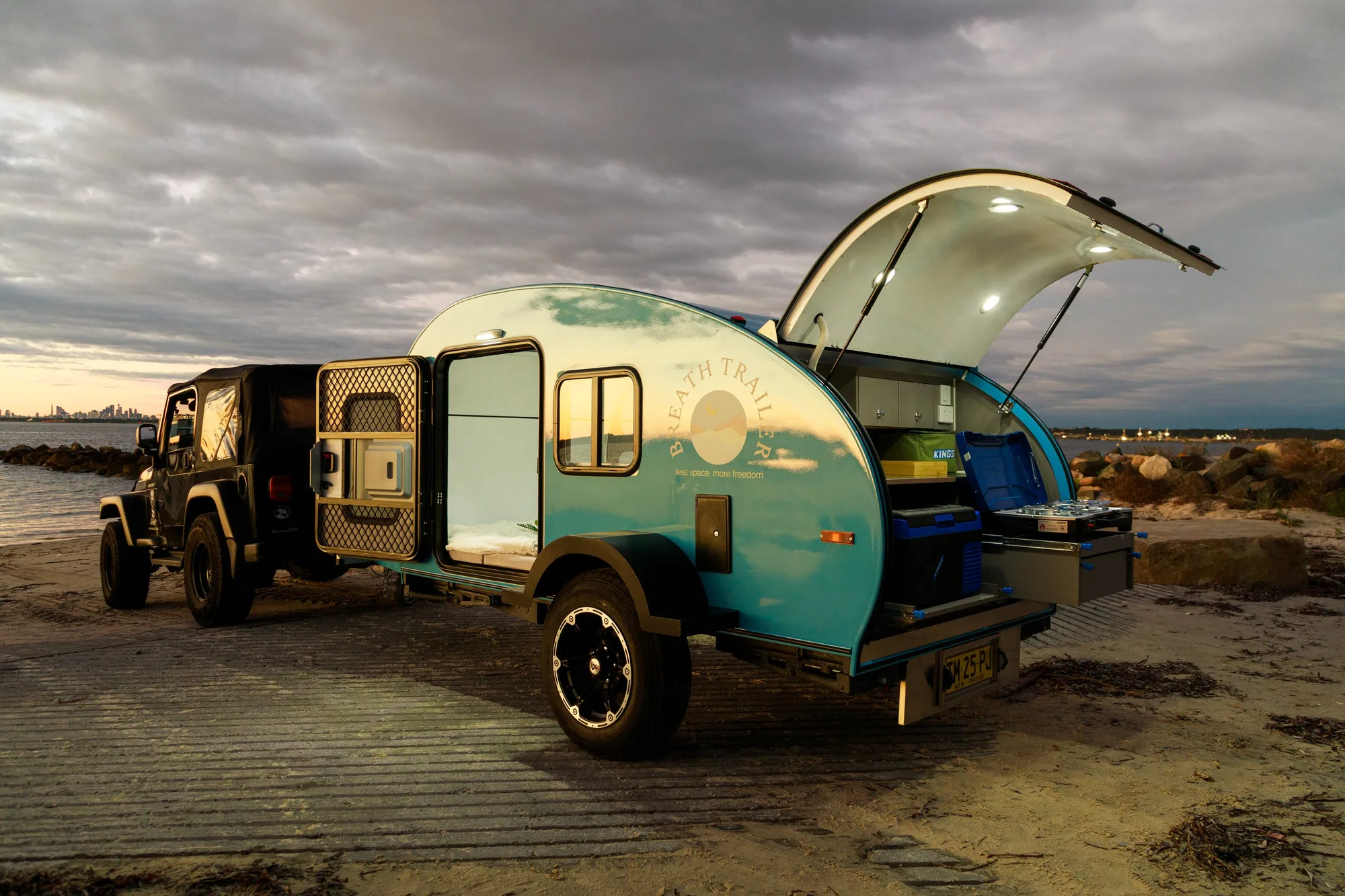
Summer camping in Australia is about the evening hours — the 6 am sunrise and the 8 pm sunset give you the best of the day at each end.
Summer Camping FAQ
Q: What’s the best month to start a summer camping trip in Australia?
Late October–early November is the sweet spot for most of southern Australia: the crowds from school holidays haven’t arrived, summer heat hasn’t peaked, and spring wildflowers are still visible in alpine areas. For Queensland’s Sunshine Coast and the NSW South Coast, November is arguably the best camping month of the year.
Q: Can I have a campfire during summer in Australia?
In most of southern Australia, no — or at least not freely. Fire Danger Seasons (November–April in SA, VIC, WA) restrict or prohibit campfires on declared Fire Danger days. On a Total Fire Ban day, no open fire is permitted anywhere outdoors. Check your state’s emergency app the day before. Your trailer’s enclosed gas stove is generally exempt. Never light a campfire without confirming current restrictions.
Q: How much extra water do I need in summer compared with other seasons?
Budget 12–15 L per person per day in temperatures above 35°C, versus the standard 10 L/pp/day. For a couple on a 5-night trip in summer heat, carry 120–150 L — which means the Breath Max’s 120 L built-in fresh tank plus a 20 L jerry can covers you comfortably (the Ultra’s 80 L tank needs a little more in jerry cans).
Q: Is it safe to camp in the Northern Territory or Far North Queensland in summer?
Generally, no. The tropical wet season (November–April) brings monsoonal rain, road closures, extreme heat with high humidity, and saltwater crocodiles at flooded creek crossings. Many national parks close their access roads. Save the Top End and Cape York for the Dry Season (May–October) — one of Australia’s best camping experiences.
Q: How do I keep my teardrop cool at night without air conditioning?
Cross-ventilation is your best tool: open windows on both sides to create airflow, and run a small 12V USB desk fan across the bed (not at your face). Choose coastal or elevated sites where night-time temperatures drop below 25°C — and park with your awning deployed to shade the trailer during the hottest afternoon hours, so the shell absorbs less heat and takes less time to cool after sunset.
Q: What happens to my tyre pressure when it’s 40°C outside?
Tyre pressure increases approximately 2–3 PSI for every 10°C rise in temperature. Always check and adjust tyres cold (before driving). Never reduce pressure based on a hot reading — it will appear higher than the cold inflation figure, which is normal and safe.
Ready to Plan Your Summer?
The key numbers to remember: Tasmania averages 22°C in January. The Victorian Alps sit 15°C below Melbourne during a heatwave. The NSW South Coast gets its best beach weather from late November to early March. And the tropical north — despite its appeal — is best left to the Dry Season.
For campsite-by-campsite summer destination planning by state, see the destination guides: NSW, Victoria, Tasmania, and Queensland. For free camping and self-contained options, the free camping guide covers every state’s rules and app recommendations.
For a personalised model recommendation based on your summer travel style, visit the comparison page or book a chat with the Breath Trailer team.
Recommended reading: