Top 20 National Parks to Visit with a Camper Trailer in Australia (2026 Guide)
A state-by-state guide to Australia's 20 best national parks for camper trailer camping — fees, access roads, camper-friendly sites, and seasonal tips for 2026.
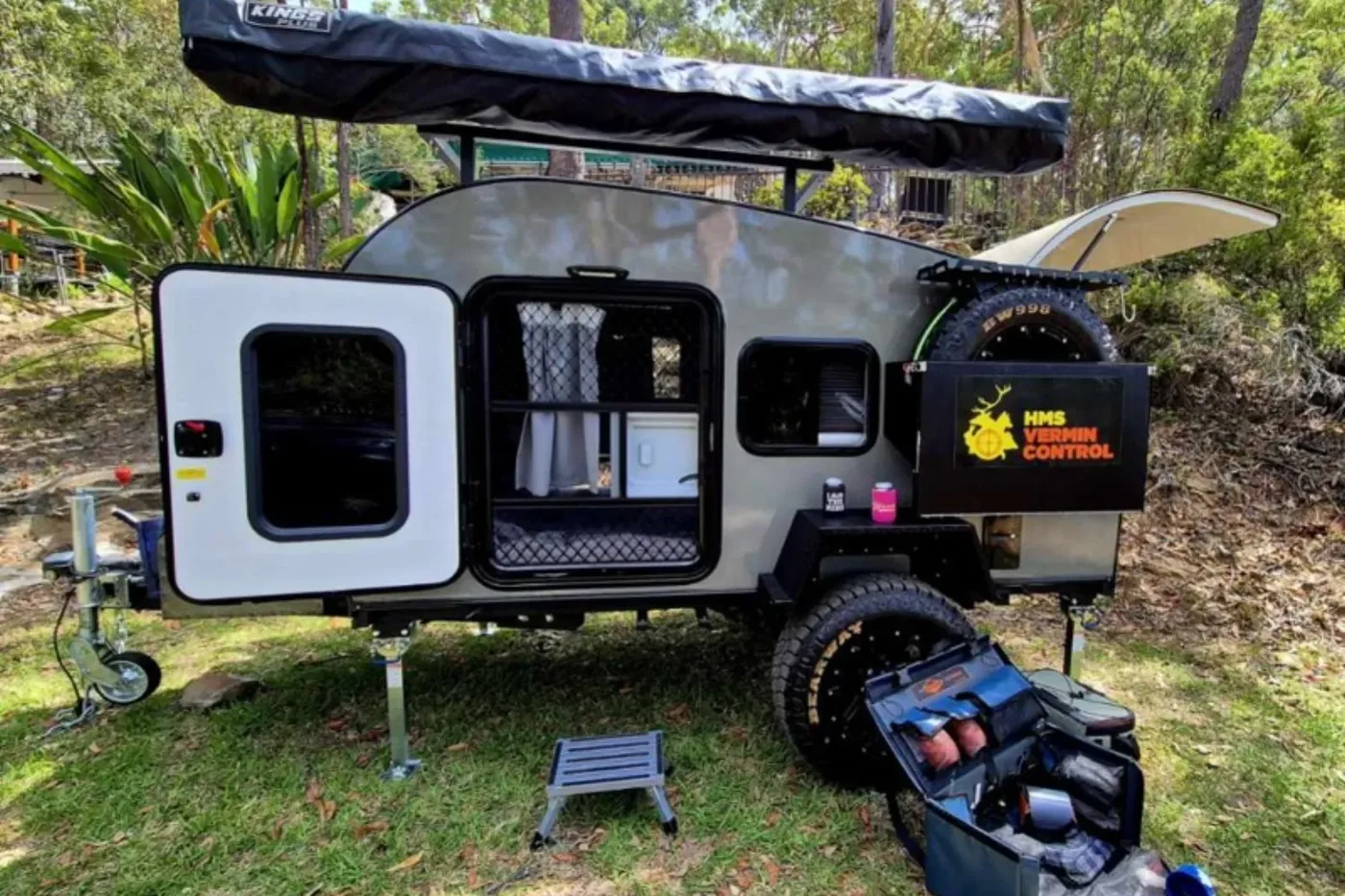
Australia holds more than 600 national parks covering in excess of 28 million hectares — roughly 3.6% of the entire continent. For camper trailer owners, these parks represent the gold standard of Australian camping: unspoilt landscapes, wildlife encounters, fire restrictions that keep the stars visible, and campgrounds built around genuine immersion in country rather than amenity parks.
But not every national park welcomes every rig. Some have strict single-axle-only rules. Others ban campervans over five metres. A handful close entirely for a season. And the booking systems, fees, and road standards vary wildly across eight states and territories.
This guide maps the 20 best national parks for camper trailer camping in Australia in 2026 — one master overview table, state-by-state detail, and everything you need to know about access, fees, and timing before you hitch up. If you’re planning a lap around Australia, you’ll likely tick off half this list on the way.
At a Glance: Master Overview Table
| # | Park | State | Access | Camper Trailer | Fee (adult/night) | Booking |
|---|---|---|---|---|---|---|
| 1 | Kakadu NP | NT | 2WD paved + 4WD remote | ✅ Yes (main sites) | $6–$15 + park pass | Online / in park |
| 2 | Litchfield NP | NT | 2WD sealed | ✅ Yes | $15 (unpowered) | Online required |
| 3 | Nitmiluk NP | NT | 2WD sealed | ✅ Yes | ~$15–$20 | Online |
| 4 | Karijini NP | WA | 2WD gravel + 4WD remote | ✅ Yes | ~$11 + entry fee | Online |
| 5 | Cape Range NP | WA | 2WD sealed | ✅ Yes | $7/person | Online (180 days out) |
| 6 | Purnululu NP | WA | 4WD + single-axle off-road only | ✅ Off-road trailers only | $15 + vehicle entry | Online |
| 7 | Ikara-Flinders Ranges NP | SA | 2WD gravel | ✅ Yes | ~$12–$18 | Online / self-register |
| 8 | Dhilba Guuranda-Innes NP | SA | 2WD sealed | ✅ Yes | ~$12 | Online |
| 9 | Grampians (Gariwerd) NP | VIC | 2WD sealed + gravel | ✅ Yes (11 drive-in sites) | Half-price 2026–27 | Online (some free) |
| 10 | Wilsons Promontory NP | VIC | 2WD sealed | ✅ Yes | $41.50 powered | Online (book early) |
| 11 | Alpine NP | VIC | 2WD sealed + 4WD tracks | ✅ Yes (seasonal) | Free–$25 | Self-register |
| 12 | Kosciuszko NP | NSW | 2WD sealed + 4WD alpine | ✅ Yes (selected sites) | $6 booking fee + entry | Online |
| 13 | Blue Mountains NP | NSW | 2WD sealed | ⚠️ Limited sites | Free–$15 | Online |
| 14 | Myall Lakes NP | NSW | 2WD sealed + sand 4WD | ✅ Yes | $8–$23 (2026 tiers) | Online |
| 15 | Carnarvon Gorge NP | QLD | 2WD sealed/gravel | ✅ Yes | $7.75/person | Online |
| 16 | Lamington NP | QLD | 2WD sealed | ✅ Yes | $7.75/person | Online |
| 17 | Eungella NP | QLD | 2WD sealed | ✅ Yes | $7.75/person | Online |
| 18 | Cradle Mountain–Lake St Clair NP | TAS | 2WD sealed (restricted) | ⚠️ Limited (no caravans over 5m on park road) | Separate park + camping fee | Online |
| 19 | Freycinet NP | TAS | 2WD sealed | ✅ Yes | Park pass + camping fee | Online (ballots apply) |
| 20 | Namadgi NP | ACT | 2WD sealed + 4WD tracks | ✅ Yes | Free–$12 | Self-register / online |
Northern Territory (Parks 1–3)
1. Kakadu National Park
Australia’s largest terrestrial national park — nearly 20,000 km² — Kakadu is both a UNESCO World Heritage Site and a living cultural landscape continuously inhabited for at least 65,000 years. For camper trailer travellers, it rewards the effort with wildlife-rich billabongs, ancient rock art at Ubirr and Nourlangie, and the thundering cascade at Gunlom Falls.
Access: Main campgrounds (Gunlom, Garnamarr, Muirella Park, Merl) are 2WD accessible and take camper trailers of all sizes. Off-road and semi-off-road trailers access bush camps on unsealed tracks. Important 2026 note: the Jim Jim Falls and Twin Falls area remains closed for the entire 2026 dry season following cyclone damage to access roads — check kakadu.gov.au before routing there.
Fees: Bush camps $6/adult; main campgrounds up to $15/adult. A Kakadu park pass is required on top of camping fees. The joint Parks Pass covering Kakadu and Uluru is $95/person for 14 days.
Best season: May–October (dry season). The wet season (November–April) closes many tracks and makes some campgrounds inaccessible.
2. Litchfield National Park
Just 100 km south of Darwin, Litchfield is the locals’ favourite — easier to reach than Kakadu, equally spectacular, and reliably two-wheel-drive accessible in the dry season. Florence Falls and Wangi Falls are natural plunge pools set in sandstone country, with magnetic termite mounds rising up to two metres tall along the access road.
Access: The main loop road is sealed. Florence Falls campground takes campervans, camper trailers, and motorhomes. An NT Parks Pass is compulsory and must be purchased online before arrival — there is no pay-at-gate option.
Fees: $15/adult/night unpowered; $30/night powered (8 sites at Florence Falls). NT Parks Pass from $55/vehicle for 14 days.
Best season: May–September. The road to Buley Rockhole is often closed October–April.
3. Nitmiluk (Katherine Gorge) National Park
Nitmiluk’s thirteen interlocking gorges carved by the Katherine River through ancient sandstone are one of the Territory’s most dramatic landscapes. Camper trailers access the main campground at the gorge car park easily; from there, canoe hire takes you into the gorges themselves.
Access: 2WD sealed road from Katherine. Camper trailers up to ~7.5 m typically fit without difficulty. Advance booking essential September–October when the park is at peak capacity.
Fees: Approximately $15–$20/adult/night for powered and unpowered options. Book via nt.gov.au/leisure/parks-reserves.
Best season: May–September. The gorge floods during the wet season, which makes for extraordinary scenery but no access.
Western Australia (Parks 4–6)
4. Karijini National Park
Karijini is the Pilbara’s crown — a park of ancient gorges up to 100 m deep, carpeted in Sturt’s desert pea and occupied by red rock wallabies. Dales Gorge, Fortescue Falls, and the challenging gorge-walk through Hancock and Weano are the headliners. For camper trailer owners this is the benchmark Outback trip.
Access: The park’s main sealed road from Tom Price takes any rig to Dales campground, which has powered and unpowered sites and accepts camper trailers and caravans. More remote gorges (Hamersley) require a high-clearance 4WD, and large caravans must stay at the main camp.
Fees: ~$11/adult/night + DBCA park entry fee ($15/vehicle/day or Annual Parks Pass $113). Book via exploreparks.dbca.wa.gov.au.
Best season: April–September. Summer temperatures regularly exceed 45°C.
5. Cape Range National Park / Ningaloo Coast
Ningaloo Reef — the world’s largest fringing reef — sits just metres from shore along WA’s remote Coral Coast. Cape Range National Park flanks the coast with limestone canyons and sheltered bay campgrounds where you fall asleep hearing the ocean. Snorkelling with whale sharks (March–July) and manta rays, and swimming with whale sharks (March–July) are the bucket-list moments.
Access: Most campgrounds are 2WD accessible and beach-side. Two sites beyond Yardie Creek require a 4WD. Campervans and camper trailers are welcome; large caravans can access the main campgrounds.
Fees: $7/person/night — among the cheapest coastal national park camping in Australia. Park entry fee applies separately.
Booking: All sites must be booked online via Parks and Wildlife WA. Sites open 180 days ahead; popular sites like Turquoise Bay disappear in hours. As of August 2026, Parks is trialling monthly batch releases at 10am AWST instead of daily midnight drops — check exploreparks.dbca.wa.gov.au for current rules.
Best season: April–October. March–July for whale shark snorkelling.
6. Purnululu National Park (Bungle Bungle Range)
The beehive domes of the Bungle Bungle Range — UNESCO World Heritage listed since 2003 — are among Australia’s most photographed landscapes. Getting there is an adventure itself: 53 km of corrugated gravel from the Great Northern Highway, dropping into a remote Kimberley valley.
Access: 4WD essential. The access track is suitable for single-axle off-road trailers only — standard road caravans and twin-axle trailers cannot make the crossing. Trailers may be stored at the turnoff caravan park for $20/night while your 4WD enters the park.
Fees: Parks and Wildlife WA operate Walardi and Kurrajong campgrounds at $15/adult/night + vehicle entry. Note: as of 1 June 2026 the private Bungle Bungle Caravan Park has closed for the season.
Best season: April–November. The park closes December–March (wet season).
If you’re planning a Kimberley trip or considering the Gibb River Road, see our off-road teardrop camper guide for advice on single-axle setup and tyre management on corrugated tracks.
South Australia (Parks 7–8)
7. Ikara-Flinders Ranges National Park
The Flinders Ranges rise from the flat South Australian plains in ancient folded quartzite, their red cliffs and gorges forming some of inland Australia’s most iconic scenery. Wilpena Pound — a natural amphitheatre of encircling mountains — is the centrepiece. The park has more than ten campgrounds spread across creek lines and valleys, from the popular resort-adjacent sites at Wilpena to free-camping clearings along the Brachina Gorge Geological Trail.
Access: The main road from Hawker to Wilpena is sealed. Most campgrounds are 2WD gravel; some Heysen Trail adjacent sites require a high-clearance vehicle. Camper trailers of any size reach the main sites comfortably.
Fees: Approximately $12–$18/adult/night depending on facility level; free self-register sites available on the gorge trail. Book via parks.sa.gov.au.
Best season: April–October. Spring wildflower season (August–September) brings the park to life.
8. Dhilba Guuranda-Innes National Park
At the tip of Yorke Peninsula, Innes National Park delivers a quieter coastal experience than the crowded west-coast beaches: rugged limestone cliffs, protected surf breaks, and diverse birdlife. Stenhouse Bay campground has 27 sites suitable for tents, camper trailers, and caravans, with basic toilets and barbecue facilities set back from a sheltered bay.
Access: 2WD sealed all the way to the main campgrounds from Yorke Peninsula Highway.
Fees: ~$12/adult/night. Book via parks.sa.gov.au.
Best season: Year-round, though winter swells make for excellent surfing; summer is warm and dry.
Victoria (Parks 9–11)
9. Grampians (Gariwerd) National Park
The Grampians’ angular sandstone ranges rise sharply from western Victoria’s agricultural plains, hosting more species of wildflower than anywhere in the state. Brambuk — the living cultural centre — tells the story of the five Aboriginal Djab wurrung and Jardwadjali clans who have lived in this country for tens of thousands of years. For camper trailer owners, Boreang campground has 11 drive-in sites suitable for camper trailers, caravans, and campervans; three further campgrounds (Plantation, Kalymna, Wannon Crossing) are free and first-come-first-served.
Fees (2026–27 update): From 1 July 2025, the Victorian Government reintroduced half-price camping at all bookable Parks Victoria campgrounds for two years. This makes the Grampians excellent value.
Access: Sealed main road from Halls Gap; gravel tracks to remote bush camps require a high-clearance vehicle. Camper trailers of all sizes welcome at main sites.
Best season: August–November (wildflower bloom); April–May for foliage colour.
10. Wilsons Promontory National Park
“The Prom” is Victoria’s most loved national park — the southernmost tip of the Australian mainland, fronted by granite boulders, white sand beaches, and turquoise water. Tidal River campground is the hub, with powered sites ($41.50/night for up to 8 people) and unpowered sites for camper trailers and caravans.
Access: 2WD sealed road all the way from Meeniyan. No 4WD required for main campgrounds. An additional vehicle fee ($11.40/night) applies.
Booking: Most dates open 18 months ahead; peak periods (Easter, Labour Day, Melbourne Cup, Christmas) fill instantly. Book via parkstay.vic.gov.au or call 03 8427 2122.
Best season: December–February for swimming; winter is uncrowded and often clear.
11. Alpine National Park
Victoria’s Alpine National Park covers 646,000 hectares of the Great Dividing Range’s high country — snow gum woodland, glacial lakes, and the historic Bogong High Plains with their cattlemen’s huts. For four-wheel-drive camper trailer owners, the network of unsealed tracks leading to remote sites along the Dargo High Plains and Jamieson area offers some of the best high-country camping in mainland Australia.
Access: Main roads from Bright, Harrietville, and Omeo are sealed. Most off-road tracks require a 4WD. Self-register at the park entrance; some sites are free.
Fees: Free to approximately $25/night depending on site.
Best season: January–March for high alpine access; April–May for autumn colour. Many high-altitude tracks close June–October due to snow.
New South Wales (Parks 12–14)
12. Kosciuszko National Park
Australia’s highest peak, Mount Kosciuszko (2,228 m), anchors a park of subalpine meadows, glacial tarns, and a river system that feeds the Murray–Darling Basin. Geehi Flats — beside the Swampy Plains River — is the classic camper trailer site: flat grassed sites, toilets, and BBQs, with 4WD tracks leading to several historic alpine huts and snowmelt streams excellent for trout fishing.
Important note: Geehi Flats requires 4WD and is not suitable for caravans. More accessible powered sites with drive-in access exist at Kosciuszko Mountain Retreat and Jindabyne township parks nearby (private).
Fees (2026): Under the new NPWS 6-tier system from 1 July 2026, most bush clearing sites in Kosciuszko carry only a $6 booking fee with no nightly charge. A park entry fee ($17/vehicle/day) applies across most of the park.
Best season: December–March for alpine hiking; June–September for skiing (Thredbo, Perisher, Charlotte Pass).
For more NSW camping options, see our guide to the best camping spots in NSW.
13. Blue Mountains National Park
Just 80 km from Sydney, the Blue Mountains offer sheer sandstone escarpments, eucalyptus-blue valleys, and the iconic Three Sisters at Katoomba. Camper trailer access is more limited here than in other parks — most campgrounds (Perrys Lookdown, Murphys Glen) are tent-only. The main vehicle-based camping is at Blue Mountains Heritage Centre at Blackheath, which has basic facilities.
Who it suits: This park is best for day trips and weekend escapes if you’re based at Katoomba or Lithgow in a private park nearby. Hardier camper trailer setups can use the limited NPWS bush camping with generator-free, self-contained requirements applying.
Fees: Free–$15 under the 2026 NPWS tiering.
14. Myall Lakes National Park
Three interconnected coastal lagoons, surf beaches, and sand islands make Myall Lakes one of the most diverse national parks on the NSW north coast. Dark Point and Mungo Brush campgrounds accept camper trailers on 2WD gravel roads; Korsman campground is accessible by boat or 4WD across the dunes.
Fees: Under the 2026 NPWS 6-tier system, Myall Lakes sites range from $8 to $23 per night depending on facilities. No generator zones apply at several sites — a key consideration if you’re relying on solar rather than a petrol generator. See our guide to off-grid camping power for solar sizing advice.
Best season: Year-round, but spring and autumn avoid school holiday crowds.
Queensland (Parks 15–17)
15. Carnarvon Gorge National Park
Deep in central Queensland, 700 km from Brisbane, Carnarvon Gorge is an ancient sandstone gorge with creek-fed ferns, palms, and one of the highest concentrations of Aboriginal rock art in the world. The 9.7 km gorge walk to Art Gallery and Cathedral Cave is the main attraction; the campground at Takarakka (private, adjacent to the national park) and the QPWS site at Carnarvon Creek both take camper trailers and caravans.
Access: The final 20 km from Rolleston is an unsealed but well-maintained gravel road — manageable for any modern camper trailer in dry conditions.
Fees: $7.75/adult/night (QPWS standard). Book via parks.des.qld.gov.au.
Best season: April–September. Avoid January–March (flooding risk).
For a wider view of Queensland’s national park campgrounds, see our best camping spots in Queensland guide.
16. Lamington National Park
Part of the Gondwana Rainforests of Australia World Heritage Area, Lamington’s subtropical rainforest in the Gold Coast hinterland hosts an extraordinary diversity of bird life — the park record stands at more than 190 species. Green Mountains (O’Reilly’s) and Binna Burra are the two main precincts, each with QPWS campgrounds accepting camper trailers.
Access: 2WD sealed roads to both precincts. The final climb to Green Mountains is steep (some hairpin bends); drivers towing trailers should use low gear and take care.
Fees: $7.75/adult/night. Book via parks.des.qld.gov.au.
Best season: Year-round; winter (June–August) is clearest. Summer can see heavy rain.
17. Eungella National Park
Eungella — meaning “Land of Clouds” in Ngambaa language — rises to 1,268 m in the Clarke Range above the Whitsundays coast. The Broken River campground near Eungella township is one of the best places in Australia to spot wild platypus; they surface reliably at dawn and dusk along a 100 m stretch of river.
Access: 2WD sealed road from Mackay via Finch Hatton. Steep in places — experienced driver recommended when towing.
Fees: $7.75/adult/night. Self-contained camper trailers preferred as the town is small.
Best season: Year-round; June–September is dry season in the Whitsundays.
Tasmania (Parks 18–19)
18. Cradle Mountain–Lake St Clair National Park
The jagged silhouette of Cradle Mountain rising above Dove Lake is one of Australia’s most photographed landscapes, and the Overland Track between Cradle Mountain and Lake St Clair is regularly voted Australia’s finest multi-day walk. The park is part of the Tasmanian Wilderness World Heritage Area.
Important restriction for camper trailers: The road beyond the Visitor Centre to Dove Lake is controlled by a boom gate, and private vehicles — including campervans over 5 metres — are prohibited beyond the gate during peak periods. RVs, caravans, and large camper trailers are generally prohibited on park roads year-round beyond the Visitor Centre. Your options are: (1) park at the large day-visitor car park and take the shuttle, or (2) stay at Discovery Parks – Cradle Mountain (from ~$130/night), a private park 2 km from the entrance, which accepts all rig sizes.
Fees: A Tasmanian Parks Pass is required for entry ($31.30/adult/day or $62.80/adult/year in 2026); camping fees are booked separately through parksbooking.tas.gov.au.
Best season: November–April for the Overland Track; snow closes the summit plateau year-round.
19. Freycinet National Park
The pink granite peaks of the Hazards, the crystalline sweep of Wineglass Bay, and the sheltered Coles Bay village combine to make Freycinet Tasmania’s most popular park — and one of its most competitive for campsites. Drive-in camping at Freycinet Lodge and Muirs Beach takes camper trailers; the Richardsons Beach campground is the main powered option.
Access: 2WD sealed road from Swansea. No 4WD required. Advance booking essential; a ballot system operates for peak summer dates (Christmas–January school holidays) opening several months ahead at parksbooking.tas.gov.au.
Fees: Tasmanian Parks Pass ($31.30/adult/day) + separate camping fee. Book via parksbooking.tas.gov.au.
Best season: November–April. Winter can be beautiful but cold.
ACT (Park 20)
20. Namadgi National Park
Namadgi covers 106,000 hectares — nearly 46% of the ACT — and begins just 35 km from Canberra. The park spans alpine grasslands, granite tors, ancient Ngunnawal rock art, and the headwaters of the Cotter River. It’s the least-visited park on this list and all the better for it: sites at Orroral Valley and Mount Clear are often uncrowded even on long weekends.
Access: 2WD sealed road to most campgrounds; a 4WD track leads to the remote Honeysuckle campground.
Fees: Free to $12/night. Book via recreation.act.gov.au or self-register at the site.
Best season: October–April. Winter access is limited by snow and ice on alpine tracks.
National Park Camping: What You Need to Know in 2026
Booking systems by state
| State/Territory | Booking Platform | Opens | Notes |
|---|---|---|---|
| NSW | nationalparks.nsw.gov.au | Up to 6 months ahead | New 6-tier fee system from 1 Jul 2026; Tier 1 = free, no booking |
| QLD | parks.des.qld.gov.au | 11 months ahead | $7.75/adult standard; book early for peak season |
| WA | exploreparks.dbca.wa.gov.au | 180 days ahead (Cape Range: monthly batch) | Annual Parks Pass $113; WA parks do not accept interstate Senior Cards |
| NT | nt.gov.au/leisure/parks-reserves | 12 months ahead | NT Parks Pass compulsory; no pay at gate |
| SA | parks.sa.gov.au | 12 months ahead | Some self-register sites with no booking required |
| VIC | parkstay.vic.gov.au | Up to 18 months ahead | Half-price camping July 2025–July 2027 at bookable sites |
| TAS | parksbooking.tas.gov.au | Varies; ballot for peak Freycinet | Tasmanian Parks Pass $31.30/adult/day; annual pass available |
| ACT | recreation.act.gov.au | Standard advance | Many sites self-register; mostly free |
Self-containment and free camping
National parks generally do not permit grey water discharge onto the ground or into waterways. If your rig doesn’t have an internal grey water tank, carry a 20 L collapsible tote for washing-up water and dispose at dump points. Self-contained rigs unlock access to more remote bush camps that lack black water dump points.
See our full guide to self-contained camping rules in Australia for state-by-state grey water regulations.
Seasonal access guide
| Season | Best parks | Avoid |
|---|---|---|
| Mar–May (Autumn) | Alpine NP (VIC), Blue Mountains, Grampians wildflowers | Wet season parks: Kakadu closes roads, Purnululu closes Dec–Mar |
| Jun–Aug (Winter) | Kakadu, Litchfield, Karijini, Carnarvon Gorge, Cape Range, Flinders Ranges | Alpine NP (snow), Cradle Mountain summit |
| Sep–Nov (Spring) | Flinders Ranges (wildflowers), Grampians (bloom), Freycinet | Far North QLD (cyclone season starts Nov) |
| Dec–Feb (Summer) | Freycinet, Wilsons Promontory (swimming), Kosciuszko (hiking) | Karijini (45°C+), Purnululu (closed), Kakadu (roads flood) |
Which Breath Trailer Model Suits Each Park?
Not every trailer is right for every park. The table below matches terrain type to model capability.
| Terrain type | Typical parks | Recommended model |
|---|---|---|
| 2WD sealed roads, powered sites | Wilsons Prom, Freycinet, Litchfield, Lamington | Essential $23,320 or Plus $29,766 |
| 2WD gravel + corrugated unsealed | Flinders Ranges, Carnarvon Gorge, Karijini main camp, Myall Lakes | Ultra $34,749 (raised clearance, external shower) |
| Hard-core 4WD + remote, no amenities | Purnululu (4WD track), Geehi/Kosciuszko, Alpine NP back-country | Max $47,190 (self-contained, 1,200 kg ATM, interior bathroom) |
| Self-contained free camping required | Northern Territory parks, remote WA, Alpine NP | Max or Ultra with grey water compliance |
The Breath Max is the only teardrop on the Australian market under $50,000 with a full interior bathroom, making it the go-to for remote parks where the nearest amenity block is kilometres away. Its CMCA-compliant self-containment unlocks free camping in national parks that enforce grey water rules.
For retirees and grey nomads planning an extended national parks circuit, see our retirees’ camper trailer guide for bathroom decision trees, self-containment ratings, and tow vehicle matching.
What to Pack for National Park Camping
National park camping often means no powered sites, limited or no water, and camp fire restrictions. Beyond your trailer’s standard kit, prioritise:
- PLB or satellite communicator — EPIRB-equivalent personal locator beacon (GME MT610G ~$389 or Garmin inReach Mini 2 ~$599). Mandatory in remote parks with no mobile coverage.
- Recovery gear — MaxTrax boards and a snatch strap minimum for any park with unsealed access tracks.
- Tyre pressure management — Drop to 18–22 PSI on corrugated tracks; carry a 12V compressor (ARB CKMTP12) for reinflation on the highway exit.
- Sufficient water — Many national park campgrounds have no potable water supply; carry minimum 10 L/person/day.
See must-have accessories for off-road adventures for a full kit list with 2026 Australian prices.
FAQ
Do I need a specific permit to drive through a national park with a camper trailer? Entry fees and park passes are separate from camping permits. In most parks you pay at the gate or purchase online. NT parks require an NT Parks Pass purchased before arrival — no gate payment is accepted. WA and TAS have annual passes worth buying if visiting multiple parks.
Can I bring my dog to national parks in Australia? Pets are prohibited in most Australian national parks — including all the parks on this list. The only exceptions are some NSW state forests and certain designated pet-friendly campgrounds outside national park boundaries. Plan accordingly.
How far in advance do I need to book? WA Cape Range opens 180 days ahead and disappears within hours for peak summer/autumn weeks. Wilsons Promontory opens 18 months ahead. As a rule of thumb: book at least 3–6 months ahead for any peak-season dates at parks 1–10 on this list.
Are generators allowed in national parks? Policies vary. NSW NPWS restricts generators at many campgrounds (no-generator zones). QLD and WA parks generally permit them with time-of-use restrictions (typically 7am–9pm). A solar-powered camper trailer with a quality 12V fridge eliminates the generator question entirely — and makes you a much more popular neighbour at camp.
Which national park is best for first-time camper trailer owners? Litchfield NP in the NT, Cape Range in WA, and Lamington NP in QLD are all excellent first-time picks: 2WD accessible, well-maintained campgrounds, iconic scenery, and bookable well in advance. For NSW beginners, Myall Lakes NP north of Sydney is a solid option before tackling the more remote parks.
How does self-containment affect national park access? Most national park campgrounds have pit toilets and do not require self-contained certification for entry. However, remote bush camps within parks (no amenities, no designated grey water disposal) increasingly require grey water to be contained and carried out. A trailer with a sealed grey water tank opens up the full range of bush camp options in NT, WA, and SA parks.
Recommended Reading
- Best Teardrop Camper Destinations by State — Australia
- Big Lap Around Australia: The Definitive Preparation Guide
- Best Beach Camping Destinations in Australia
- How Long Can You Stay Off-Grid Camping in Australia?
- Must-Have Accessories for Off-Road Adventures
Ready to plan your national park circuit? Compare all four Breath Trailer models — including self-containment specs and payload — on the comparison page, or book a viewing at one of our ambassador locations around Australia.