Gibb River Road With a Camper Trailer: The 2026 Prep, Cost and Campground Guide
Fuel gaps to 407 km, $3.30/L diesel at Mt Barnett, camp fees $15-$37, two spares minimum, and the side tracks where you leave the trailer behind.
The Gibb River Road is 647 km of former cattle route running between Derby and the Great Northern Highway near Wyndham, roughly 470 km of it unsealed. Main Roads Western Australia grades those unsealed sections three to four times a year, and a single full grade can take up to two months to complete. That one sentence explains most of what happens to camper trailers on the Gibb: depending on where you are and when you go, you are either driving on a freshly bladed surface or on six months of accumulated corrugation.
Main Roads’ own advice is blunt — “caravans, motorhomes and some camper trailers are not recommended on unsealed roads” — and they recommend a larger high-clearance 4WD in high range. That is not a ban, and thousands of people tow the Gibb every dry season without incident. It is a warning that the road sorts equipment honestly. What survives is light, properly sprung, and driven slowly. What doesn’t is heavy, under-built, or driven at 80 km/h because the corrugations feel smoother up there.
This guide is written for the person who has already decided to tow something. Below: the 2026 fuel gaps and what diesel actually costs out there, a fee table for every camp and station on the route, the side tracks where you leave the trailer behind and where you can safely park it, tyre pressures for a light trailer versus a loaded 4WD, a water and power budget for ten days without a dump point, and an itinerary that treats the trailer as a base camp rather than dragging it up every gorge track.
Can You Tow a Camper Trailer on the Gibb River Road?
Yes — with two qualifications that matter more than any brochure claim.
The first is construction. Corrugations are ridges roughly 5–20 cm high spaced 30–60 cm apart, and the problem is resonance rather than impact: at certain speeds that spacing matches the natural frequency of a leaf-spring suspension, so the springs skip across the surface instead of absorbing it. Everything bolted to the trailer then vibrates at that frequency for hours. Our deep-dive on why suspension matters on an off-road camper trailer covers the mechanics; the practical version is that a road-spec trailer arrives at Kununurra with cracked brackets, loose 12V terminals, water ingress through stressed seals and, occasionally, a failed hub.
The second is weight. A 700–900 kg hard-shell teardrop and a 2.8-tonne hybrid caravan face the same corrugations, but they load the tow vehicle, the coupling and the tyres very differently. Lighter rigs sit higher, brake shorter, follow the vehicle through the Pentecost more predictably, and cost far less to recover if something breaks. Club 4X4 puts the cost of a recovery tow off the Gibb at $20,000 or more — a figure worth checking against your policy before you leave, which is exactly the scenario our camper trailer insurance guide tells you to read the fine print on.
The nuance everyone learns on day three: towing the Gibb is not the hard part. Towing the side tracks is. The main road is manageable; Munurru, the Mitchell Plateau, Lennard River Gorge and the tighter station approaches are where trailers get left behind — which is fine, and covered in its own section below.
The Gibb River Road at a Glance
| Fact | 2026 detail |
|---|---|
| Length | 647 km (Main Roads WA); Derby to the Great Northern Hwy near Wyndham |
| Unsealed | ~470 km, mostly between the Lennard River and the Pentecost River |
| Grading | 3–4 times per year; a full grade can take up to two months |
| Open season | Typically May to October/November; closed through the wet (Dec–April) |
| Recommended vehicle | High-clearance 4WD in high range (Main Roads names Prado, Pajero, HiLux class) |
| Trailer advice | Off-road-spec camper trailers routinely tow it; caravans and road-spec trailers are not recommended |
| Fuel stops | Derby, Mt Hart, Imintji, Mt Barnett, Drysdale (side trip), El Questro, Kununurra |
| Longest fuel gap | 407 km, Mt Barnett Roadhouse to Kununurra |
| Phone reception | None between stations; Telstra/Optus patchy at homesteads only |
| Dump points | None on the route — plan your grey and black water accordingly |
| Live conditions | Main Roads WA travel map and the status boards at Derby and Kununurra |
Two things on that table are easy to underestimate. The 407 km gap is the number that decides whether you carry jerry cans. And “no dump points” is the number that decides whether a self-contained trailer is a luxury or the thing that makes the trip work.
When to Go: the Dry-Season Window
The Gibb opens on rainfall, not on a calendar. Main Roads describes the typical window as May to November, but opening dates “depend on wet season rainfall, repairs and river levels.” Early season means a freshly damaged, ungraded surface and deeper crossings. Late season means dust, low water in the gorges and thinner crowds.
| Month | Road condition | Water crossings | Crowds | Verdict for a trailer |
|---|---|---|---|---|
| April | Usually still closed or just opening | Deep, fast | None | Too early — check Main Roads before committing |
| May | Opening, often ungraded and rough | Pentecost deep; can run fast | Building | Doable but the roughest surface of the year |
| June | Grading underway; conditions improving | Pentecost moderate | Busy | Best balance of water in the gorges and surface |
| July | Generally good early, deteriorating late | Manageable | Peak — book campsites | Excellent, but book DBCA sites at the 180-day mark |
| August | Corrugations rebuilding after peak traffic | Low | Peak | Good; drop pressures and slow down |
| September | Corrugated, dusty | Pentecost typically under 50 cm | Easing | Very good for towing; gorges quieter |
| October | Rough, hot (35–40 °C common) | Lowest | Thin | Fine to tow; heat becomes the limiting factor |
| Nov–March | Closed or closing | Impassable | — | Do not attempt |
The Pentecost River crossing is the one people photograph and the one people worry about. It can run more than 60 m wide with fast flow just after the wet, and by September–October it is typically under 50 cm. The important safety note is not depth: it is that the Pentecost holds saltwater crocodiles, so the standard advice to wade a crossing before driving it does not apply here. Watch another vehicle cross, or wait.
2026 Fuel Stops, Distances and What Diesel Actually Costs
Fuel is the constraint that shapes the whole itinerary. Diesel is available at more stops than petrol, and no LP gas is sold anywhere along the Gibb — a detail worth knowing if your trailer runs a gas cooktop or a gas hot water unit.
| Leg | Distance | Fuel available |
|---|---|---|
| Derby → Imintji Roadhouse | 227 km | Diesel only |
| Imintji → Mt Barnett Roadhouse (Manning Gorge) | 78 km | Petrol and diesel |
| Mt Barnett → Drysdale River Station (via Kalumburu Rd) | 171 km | Petrol and diesel |
| Mt Barnett → El Questro | 337 km | Petrol and diesel |
| Mt Barnett → Kununurra (direct) | 407 km | — (longest gap) |
| Mt Hart Wilderness Lodge (side track) | ~50 km off the Gibb | Diesel only |
For a petrol vehicle the first real gap is Derby to Mt Barnett, 305 km, because Imintji sells diesel only. For a diesel vehicle the gaps are comfortable until Mt Barnett, after which 407 km without a bowser becomes the planning number.
Remote pricing is severe. PetrolSpy listed diesel at Mt Barnett Roadhouse at around $3.30 per litre in late August 2026, against roughly $2.00/L in Kununurra earlier in 2026. That spread is the argument for jerry cans.
| Scenario | Assumption | Fuel cost, Derby → Kununurra |
|---|---|---|
| 4WD towing a 900 kg teardrop | ~15 L/100 km, ~700 km incl. side trips, all bought remote at $3.30/L | ~$347 |
| Same rig, tanked up in Derby + 40 L in jerry cans | Half the fuel bought at ~$2.20/L in town | ~$275 |
| 4WD towing a 2.5 t hybrid caravan | ~19 L/100 km, same route, remote pricing | ~$439 |
The difference between the first and last rows is not enormous over one crossing. Over a full Kimberley season, or a lap that continues into the Big Lap around Australia, the compounding is real — and it is one of several reasons the weight of your camper trailer matters more on remote trips than it does on weekends.
Where to Camp: 2026 Fees, Bookings and Trailer Notes
Two systems operate side by side. National park campgrounds (Silent Grove, Windjana Gorge) are run by DBCA through Park Stay and require bookings; station stays are private, cheaper to book (or unbookable) and generally friendlier to trailers.
| Camp / station | 2026 cost | Bookings | Trailer notes |
|---|---|---|---|
| Bandiln͟gan (Windjana Gorge), DBCA | $20/adult camping + $17 per vehicle park entry | Essential, via Park Stay, up to 180 days ahead for 1 Jun–31 Oct | Tent and caravan sites; no fee charged for trailers or camper trailers |
| Dulundi (Silent Grove), DBCA — base for Bell Gorge | $20 adult / $15 concession / $5.50 child | Essential, 180 days ahead | No marked sites; generator and quiet zones; trailers free; flush toilets and showers |
| Mt Hart Wilderness Lodge | Camping fees apply; diesel available | Phone ahead | ~50 km access track off the Gibb — slow with a trailer |
| Imintji Campground | Fees apply; roadhouse alongside | Phone ahead | Handy fuel and resupply stop mid-route |
| Mt Barnett Roadhouse / Manning Gorge | $25 adult first night (includes $10 gorge access), $15 per additional night; under 14 free | On arrival | Large open camping area; the gorge walk starts with a river crossing |
| Mt Elizabeth Station | $25/adult, $10/child (4–12) | Phone ahead | Working station; corrugated 30 km access road |
| Ellenbrae Station | $37/night unpowered, $42 family; under 5 free | On arrival | Famous scones; easy access for trailers |
| Drysdale River Station (Kalumburu Rd) | Camping fees apply; check-in 8am–8pm, April–Nov | No bookings taken | Free trailer and caravan storage, on an “all care, no responsibility” basis |
| Home Valley Station | Station camping and resort-style sites | Phone ahead | Two campgrounds; good stop before the Pentecost |
| El Questro (Black Cockatoo) | $18 per person/night + Wilderness Park Permit $22 adult / $11 child (7-day) | Recommended | Private riverside sites from ~$41/night; the permit is added automatically when booking through El Questro |
| Free camps (Pentecost, Hahn River, Gibb River) | $0 | None | Fully self-contained only — no toilets, showers or taps; arrive early in peak season |
Two structural points fall out of that table. First, DBCA does not charge for trailers, which is unusual and means the fee difference between towing and not towing at Windjana and Silent Grove is zero. Second, the free camps are only free if you are genuinely self-contained. There are no toilets and no dump points on the Gibb, so “self-contained” here means carrying your own toilet and your own grey water plan — the rules and thresholds are set out in our self-contained camper guide.
Park passes worth buying before you leave
| Pass | 2026 price | Covers |
|---|---|---|
| 5-day Holiday Pass | $30 | Unlimited park entry, one vehicle, up to 12 people |
| 14-day Holiday Pass | $50 | Same |
| 4-week Holiday Pass | $70 | Same — the usual choice for a Gibb trip |
| Annual All Parks Pass | $130 | 12 months, all WA parks charging entry |
| Annual All Parks Pass (concession) | $80 | Same, concession card holders |
| Uunguu Visitor Pass (Wunambal Gaambera) | From $45 per person; Ngauwudu Road Zone $50–$200 | Required for Mitchell Falls and Munurru; buy online before you go — there is no phone or internet on Country |
A 4-week Holiday Pass at $70 pays for itself against a single $17 vehicle entry plus a few day visits, and it removes the friction of paying at each gate. The Uunguu Visitor Pass is the one people get caught by: it must be purchased online in advance, and Drysdale River Station is the last practical place to sort it out if you forget.
The Side Tracks: Where You Leave the Trailer
This is the section that separates a good Gibb trip with a trailer from a frustrating one. The main road is fine. Several of the best destinations are reached by tracks that are either too rough, too tight or explicitly unsuitable for anything towed.
| Destination | Access | Take the trailer? |
|---|---|---|
| Windjana Gorge | Sealed-ish access from the Gibb | Yes — camp there |
| Tunnel Creek | Short unsealed run from Windjana | Day trip; leave the trailer at Windjana |
| Bell Gorge (Dalmanyi) | ~29 km in to Silent Grove, then ~10 km to the car park | Camp at Silent Grove, day-trip the last 10 km without the trailer — Bell Gorge is day-use only |
| Lennard River Gorge | Short, rocky, rutted spur | No — leave it on the Gibb |
| Galvans Gorge | Roadside pull-in | Fine either way; it is a 10-minute walk |
| Manning Gorge | Camp at Mt Barnett, walk from there | Yes — camp with the trailer |
| Mitchell Falls (Punamii-Uunpuu) | Kalumburu Rd → Port Warrender Rd | No caravans permitted; off-road camper trailers can enter Mitchell River NP, but most travellers leave the trailer at Drysdale (free) |
| Munurru (King Edward River) | Corrugated Kalumburu Rd | Possible with a genuine off-road trailer; check current Kalumburu Rd status |
| El Questro gorges (Emma, Zebedee, El Questro Gorge) | Rocky 4WD spurs from the township | No — base at Black Cockatoo, day-trip |
| Home Valley / Pentecost lookouts | Main road | Yes |
Drysdale River Station is the single most useful logistics point on the route for anyone towing: free trailer and caravan storage, fuel, and it sits 59 km north of the Gibb/Kalumburu junction, which is roughly where you want to drop the trailer before the Mitchell Plateau run anyway.
One 2026 caveat on that northern detour: as of June 2026 the Kalumburu Road was open from the Gibb turnoff to Drysdale River Station, while the section from the Mitchell Plateau turnoff to Kalumburu was closed to all traffic. Access north of Drysdale changes year to year — confirm with the Shire of Wyndham/East Kimberley before you commit fuel to it.
Tyres, Pressures and Spares
Speed causes more tyre failures on the Gibb than anything else. Most punctures out there are sidewall cuts from a sharp rock flicked up by the vehicle in front or by your own tyre — and sidewall damage is not repairable with a plug kit.
| Rig element | Highway | Gibb River Road (cold) |
|---|---|---|
| Loaded 4WD, LT tyres | 38–42 psi | 28–32 psi |
| Hire-spec 4WD, 2–4 people | 38 psi | ~35 psi |
| Off-road trailer, 700–900 kg, light axle load | 40+ psi as delivered | 22–28 psi — a light trailer needs far less than a loaded tug |
| Heavy trailer, 2 t+ | 45–50 psi | 32–38 psi |
The general rule quoted by tyre specialists is 20–30% below your bitumen pressure for corrugated and rocky surfaces, with cold pressures around 30–34 psi typical for a loaded 4WD. Under-inflating a lightly loaded trailer is the most commonly missed adjustment: run a 800 kg teardrop at 40 psi and it skips, chatters and beats itself apart. Drop it into the 20s and it tracks.
| Item | Recommendation for a towed Gibb trip |
|---|---|
| Spare tyres | Two minimum across the rig; matched vehicle and trailer stud pattern is a real advantage |
| Repair kit | Tyre plugs, valve cores, a quality 12V compressor, a bead breaker if you carry a spare tube |
| Speed | 60–70 km/h on graded sections, 40 km/h or less on rough; slow down on corrugations, do not try to float over them |
| Daily checks | Wheel nuts, coupling, suspension bolts, shock mounts, spare wheel carrier; mark bolts with paint so movement is visible |
| Bearings | Repack or replace before the trip and carry a spare bearing kit — see our guide to wheel bearings |
| Recovery | Rated recovery points, snatch strap, MaxTrax, and a satellite communicator or Starlink |
Matched wheels between tow vehicle and trailer is the cheapest reliability upgrade you can make for remote touring. It turns “two spares for the car and one for the trailer” into “three spares for everything,” which on a 407 km fuel gap with no phone reception is worth more than any accessory. Our list of must-have accessories for off-road adventures covers the rest of the kit, and the common camper trailer problems article is essentially a list of what corrugations find.
Water, Power and Ten Days Without a Dump Point
The Gibb has no dump points. Combined with limited potable water between stations, that makes the trip a genuine self-sufficiency exercise rather than a caravan-park hop.
| Resource | Planning figure | Ten days, two people |
|---|---|---|
| Drinking and cooking water | 5 L per person per day | 100 L |
| Washing / shower water | 5–15 L per person per day depending on setup | 100–300 L |
| Fridge draw (60 L compressor, 35 °C days) | 45–60 Ah/day | Sized by battery, not by tank |
| Battery (usable) | 100 Ah lithium ≈ 90 Ah usable; 100 Ah AGM ≈ 50 Ah | Lithium strongly preferred in Kimberley heat |
| Solar | 200–300 W to keep up with a fridge in October heat | See how much solar you need |
| Grey water | No dump points — carry a container or use station facilities | Plan it before Derby |
Two Kimberley-specific notes. Ambient heat is the enemy of a fridge: at 35–40 °C a compressor fridge can draw close to double its temperate-climate figure, which is why our article on keeping food cold while camping off grid leans so hard on insulation and shade. And solar output on the Gibb is excellent — clear dry-season skies, high sun angle — so the limiting factor is usually storage and fridge efficiency rather than panels. If you want the full system view, the ultimate off-grid camper trailer setup walks through water, power, fridge, toilet and connectivity together.
A Ten-Day Itinerary That Works With a Trailer
Most guides suggest 10–14 days, with three extra for Mitchell Falls. This version is built around leaving the trailer parked while you day-trip, rather than hitching and unhitching daily.
| Day | Route | Night | Trailer |
|---|---|---|---|
| 1 | Derby → Windjana Gorge (~145 km) | Bandiln͟gan campground | Stays |
| 2 | Tunnel Creek day trip, return | Bandiln͟gan campground | Left at camp |
| 3 | Windjana → Silent Grove (~120 km) | Dulundi (Silent Grove) | Stays |
| 4 | Bell Gorge day trip (~20 km return) | Dulundi (Silent Grove) | Left at camp |
| 5 | Silent Grove → Mt Barnett (~180 km), Galvans Gorge en route | Manning Gorge campground | Stays |
| 6 | Manning Gorge walk (~6 km return, river crossing) | Manning Gorge campground | Left at camp |
| 7 | Mt Barnett → Ellenbrae (~110 km) | Ellenbrae Station | Stays |
| 8 | Ellenbrae → Home Valley (~180 km), Pentecost crossing | Home Valley Station | Stays |
| 9 | Home Valley → El Questro (~50 km) | Black Cockatoo | Stays |
| 10 | El Questro gorges, then Kununurra (~110 km) | Kununurra | Left at camp, then hitched |
Add three to four days at the Drysdale/Mitchell Plateau turnoff if Mitchell Falls is on the list — dropping the trailer at Drysdale, running the Plateau, and returning. If you have the season for it, this pairs naturally with the rest of the state: our best camping spots in Western Australia guide covers the six regions either side of the Kimberley.
Which Breath Trailer Suits the Gibb
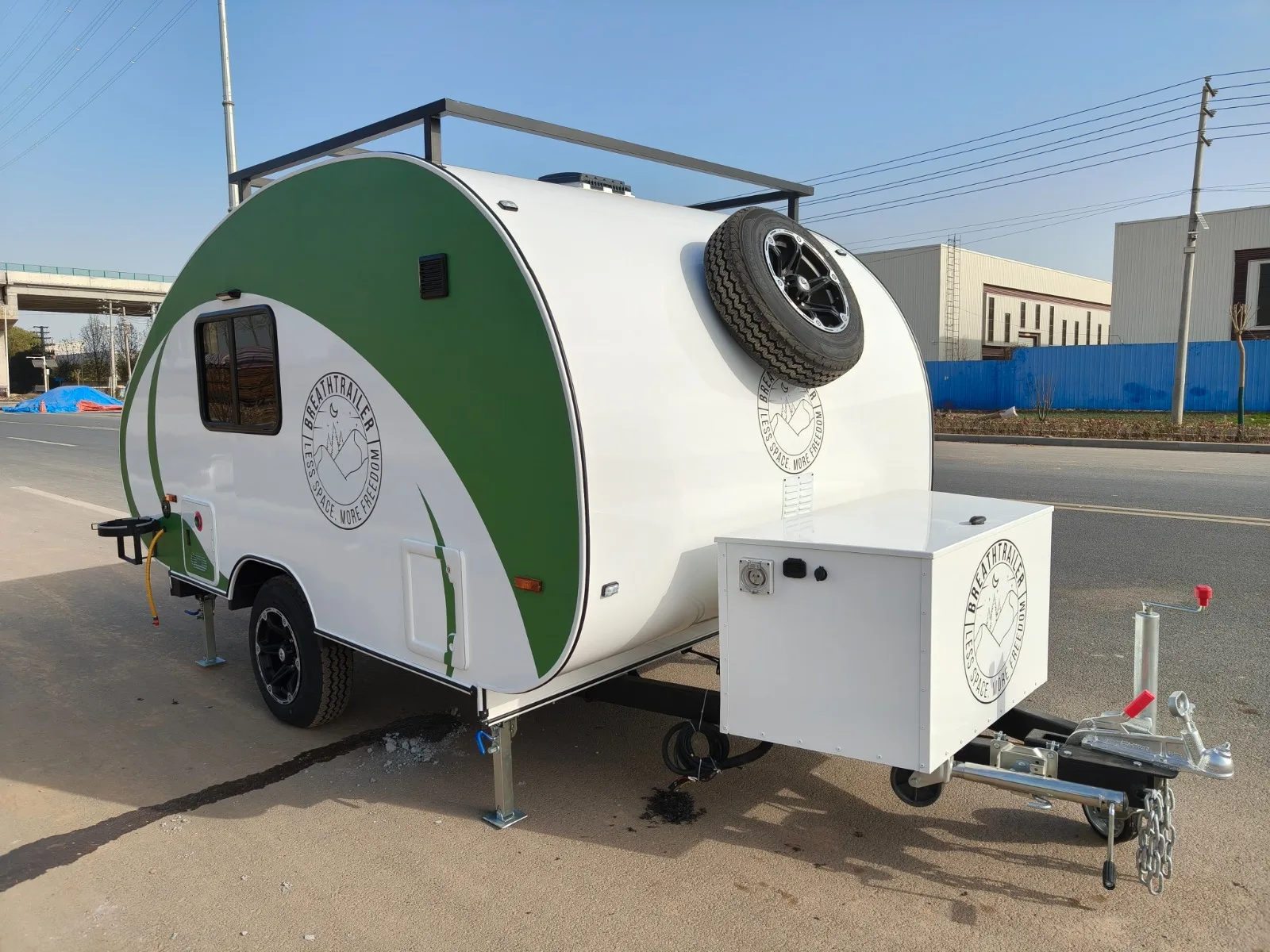
Being honest about our own gear matters more on a road like this than anywhere else. Breath trailers ship semi off-road as standard with an off-road upgrade available. If the Gibb is on your list, specify that upgrade and an articulating off-road coupling at ordering time — not after handover. The main road is forgiving; the Kalumburu Road, the Mt Elizabeth access and the El Questro spurs are not.
| Model | Tare | Price (AUD) | Gibb suitability |
|---|---|---|---|
| Breath Essential | 700 kg | $23,320 | Lightest option; easiest to tow and recover. Off-road upgrade essential |
| Breath Plus | 800 kg | $29,766 | Fridge included — meaningful when the nearest resupply is 300 km away |
| Breath Ultra | 900 kg | $34,749 | External shower; the natural pick for a couple doing the full Kimberley run |
| Breath Max | 1,200 kg | $47,190 | Full interior bathroom and 2.1 m standing headroom — the only teardrop under $50k in Australia with one. Removes the toilet question at the free camps entirely |
The Max is the model that changes what a Gibb trip feels like, because the free camps at the Pentecost, Hahn River and Gibb River have no toilets at all and there are no dump points anywhere on the route. A self-contained trailer turns those camps from a one-night option into somewhere you can actually stay. Against that, it is the heaviest of the four, and on 470 km of corrugation, weight is what you pay for capability. Our comparison page sets the four models side by side, and if you are still choosing a category rather than a model, how to choose the right off-road camper trailer works through clearance, suspension and weight trade-offs first.
Before You Leave Derby: the Short List
- Confirm the road is open on the Main Roads travel map and at the Derby status board — not on a blog, including this one.
- Buy the Uunguu Visitor Pass online if Mitchell Falls or Munurru is on the itinerary. No internet on Country.
- Book Windjana and Silent Grove through Park Stay; the 180-day window opens for 1 June–31 October dates.
- Fill every tank and jerry can in Derby. The 407 km Mt Barnett–Kununurra gap and $3.30/L remote diesel both argue for it.
- Check your insurance covers unsealed roads and off-road recovery. A recovery from the Gibb has been quoted at $20,000 and up.
- Drop your pressures at the start of the dirt, not 50 km in. Both vehicle and trailer.
- Carry two spares minimum, a compressor, plugs and a satellite communicator.
- Repack the bearings and torque every bolt before you go, then re-check them daily. Our pre-trip checklist has the full version.
Frequently Asked Questions
Can you take a camper trailer on the Gibb River Road? Yes, if it is genuinely off-road spec. Main Roads WA does not recommend caravans, motorhomes or “some camper trailers” on unsealed roads, which is a construction warning rather than a prohibition. Off-road camper trailers tow the Gibb routinely every dry season. Road-spec trailers with light chassis and unbraced fittings are the ones that fail.
How many spare tyres do I need for the Gibb River Road? Two across the rig is the widely accepted minimum, and matching your trailer’s stud pattern to your vehicle’s is the single best way to make those spares count. Punctures on the Gibb are commonly sidewall cuts, which cannot be plugged — a spare is the only fix.
What is the longest stretch without fuel on the Gibb River Road? 407 km, from Mt Barnett Roadhouse to Kununurra. For petrol vehicles the first significant gap is 305 km from Derby to Mt Barnett, because Imintji sells diesel only. No LP gas is available anywhere on the route.
How much does it cost to camp on the Gibb River Road in 2026? Budget roughly $15–$37 per person per night. DBCA campgrounds (Windjana, Silent Grove) are $20 per adult with a $17 per-vehicle park entry, and charge nothing for trailers. Station stays run from $25 per adult (Mt Barnett, Mt Elizabeth) to $37 per site (Ellenbrae) and $18 per person plus a $22 permit at El Questro’s Black Cockatoo.
Do I need a 4WD to tow the Gibb River Road? Yes. Main Roads recommends a larger high-clearance 4WD in high range. An AWD SUV is not appropriate for the river crossings, the rocky spurs or the sustained corrugation, and towing multiplies every one of those demands.
Where do I leave my camper trailer for Mitchell Falls? Drysdale River Station offers free caravan and trailer storage on an “all care, no responsibility” basis, and it sits 59 km north of the Gibb/Kalumburu junction. Caravans are not permitted at Mitchell River National Park; off-road camper trailers can enter, but most travellers still drop them at Drysdale and run the Plateau light.
The Bottom Line
The Gibb River Road does not reward the biggest rig. It rewards the one that is light enough to tow slowly, built strongly enough to absorb 470 km of corrugation, and self-contained enough to use the free camps where there are no facilities at all. Get those three right and the logistics — $70 park pass, two spares, jerry cans out of Derby, trailer parked at Drysdale for the Plateau run — are ordinary.
If you are planning a Kimberley crossing and want to sit in the four models before committing, book a viewing or start with the comparison page. And if the Gibb is the first leg of something longer, our Big Lap preparation guide picks up where this one stops.
Sources: Main Roads Western Australia — Gibb River Road · Explore Parks WA — Dulundi (Silent Grove) Campground · Explore Parks WA — Bandiln͟gan (Windjana Gorge) Campground · WA Naturally — Holiday Passes · Wunambal Gaambera — Uunguu Visitor Pass · Mt Barnett Roadhouse · Club 4X4 — Gibb River Road 4WD guide
Recommended Reading
- Why Suspension Matters on Your Off-Road Camper Trailer — the mechanics of what corrugations actually do to a trailer.
- Simpson Desert Preparation Guide — the other great Australian corrugation test, with a different set of rules.
- Cape York Camping Guide — remote-north touring with a trailer, including the tracks to skip.
- Self-Contained Camper Guide — what “self-contained” legally requires before you use the free camps.
- Camper Trailer Towing Guide for Australia — tow ratings, ball weight and the numbers to check before a long trip.
- K’gari (Fraser Island) Camping Guide for Camper Trailers — the sand-driving equivalent of this guide.