Soft Floor vs Hard Floor Camper Trailer: Honest 2026 Australian Guide
Soft floor vs hard floor camper trailer: setup time, weight, canvas maintenance costs, weather protection and 5-year TCO compared for Australian buyers in 2026.
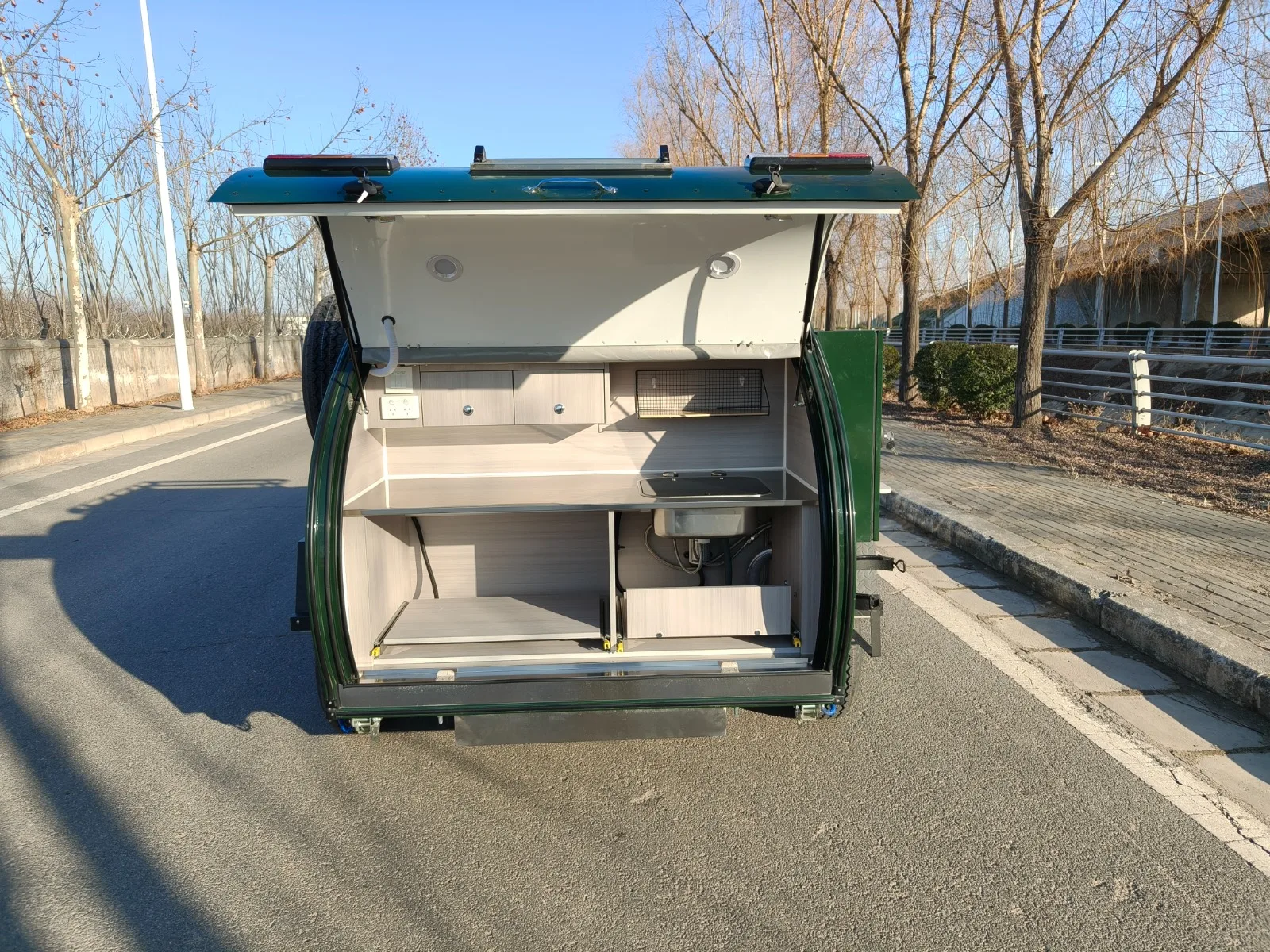
There’s a moment every first-time camper trailer buyer hits: you’ve narrowed it down to two very different trailers, both called “camper trailers,” but one is a canvas tent on wheels and the other is a rigid shell that looks nothing like a tent. The marketing doesn’t help — every brand claims their type is superior, and most comparison articles are written by someone who sells one type.
This guide doesn’t. It explains exactly what each type is, what it actually costs to own over five years, and which buyer should choose which — with real 2026 prices from Australian brands across all three sub-categories.
Three numbers that frame the whole comparison:
- A quality soft floor camper: $13,000–$25,000 new
- A quality forward fold hard floor: $22,000–$40,000 new
- A quality hard-shell teardrop: $23,320–$47,190 new
The ranges overlap substantially. Where they differ is in what you’re actually getting for those dollars — and what you’ll spend maintaining it over the next decade.
The short answer
| You are… | Best fit | Why |
|---|---|---|
| Camping on a tight budget with a group of 4–6 | Soft floor | Largest living/sleeping space per dollar |
| Towing with a vehicle rated under 1,500 kg | Soft floor | 400–700 kg tare is genuinely light |
| Weekend camper who hates setup fuss | Hard-shell teardrop | 5 minutes, no canvas, no ritual |
| Couple or solo traveller, any terrain | Hard-shell teardrop | All-weather sealed cabin, towable by any SUV |
| Family of 3–4, off-road access required | Forward fold hard floor | Rigid bed platform, bigger living footprint than teardrop |
| Full-time traveller or Big Lap | Hard-shell teardrop (Max) | Self-contained, interior bathroom, lowest setup fatigue |
| Budget under $25,000 | Hard-shell teardrop (Essential) or soft floor | Breath Essential from $23,320; soft floors from $13,000 |
Now the honest detail.
What is a soft floor camper trailer?
A soft floor camper trailer has a rigid chassis-mounted tub base — fibreglass or steel — from which canvas walls and a canvas roof expand outward and upward at camp. The sleeping area rests on a tensioned canvas floor supported by a folding steel frame above the tub. There is no hard wall or rigid floor in the living or sleeping zone; the entire room envelope is canvas.
Setup involves inserting steel poles into canvas pockets around the perimeter, clipping canvas walls to the tub edge, and staking guy ropes where the design calls for it. Think of a very large, well-engineered tent mounted on a trailer. When done properly, the result is a substantial living space — some models sleep four to six people — at tare weights that can come in under 500 kg.
Major Australian soft floor brands in 2026:
- Platinum Campers — Cadet SE from $18,399 / Warrior S4 from ~$22,000 (QLD)
- Mars Campers — range from ~$13,000 (entry) to ~$24,000
- Cameron Campers — SA-made, ~$15,000–$22,000
Tare weight range: 400–700 kg. ATM range: 800–1,200 kg fully loaded.
What is a hard floor camper trailer?
“Hard floor” in the Australian market covers two distinct sub-categories that share a rigid underfloor but differ critically in what happens above it.
Forward fold (and rear fold) hard floor
The trailer carries a rigid aluminium or steel base and a hinged “lid” that opens to reveal a hard sleeping platform. Canvas walls then drop down and attach around the perimeter to create the room envelope. The bed is on a rigid deck — hence “hard floor” — but the walls and roof are still canvas.
Real 2026 models:
| Model | Price | Tare | ATM |
|---|---|---|---|
| Austrack Telegraph LT | $21,990 | ~850 kg | 1,500 kg |
| Market Direct Explorer FF | ~$25,000 | ~900 kg | 1,500 kg |
| Ezytrail Stirling Z | ~$24,000 | ~1,060 kg | 1,700 kg |
| Austrack Plenty X | ~$35,000 | ~1,060 kg | 1,800 kg |
Hard-shell (no canvas)
A fully rigid shell — composite fibreglass or aluminium sandwich panel — provides walls, roof and floor simultaneously. No canvas of any kind. The only “opening” at camp is a rear galley hatch and stabiliser legs.
Real 2026 models:
| Model | Price | Tare | ATM |
|---|---|---|---|
| Breath Essential | $23,320 | 700 kg | 1,200 kg |
| Breath Plus | $29,766 | 800 kg | 1,400 kg |
| Breath Ultra | $34,749 | 900 kg | 1,500 kg |
| Breath Max | $47,190 | 1,200 kg | 1,600 kg |
This article uses “hard floor” to include both forward folds and hard-shell models since they share the rigid underfloor. But the canvas question is the single biggest practical difference between the two sub-types — and it drives most of the maintenance and weather-protection differences covered below.
For a deeper comparison of the teardrop vs folding camper category specifically, see our Teardrop Camper vs Camper Trailer comparison.
Setup time: the gap is bigger than you think
Setup time compounds across your camping lifetime. If you camp 25 weekends a year for 10 years, the setup-plus-packdown gap between a soft floor and a hard-shell unit adds up to between 125 and 250 hours. That’s 5–10 full days of your holiday standing in a paddock doing admin.
| Camper type | Setup time | Why |
|---|---|---|
| Soft floor (pole tent style) | 25–45 min | Poles, wall clips, guy ropes, ground sheet levelling |
| Forward fold hard floor | 10–20 min | Hinge the lid, drop canvas walls, clip pegs |
| Hard-shell teardrop | 3–7 min | Level, stabiliser legs, open rear galley hatch |
Setup time matters most in three specific scenarios:
Arriving in the dark: After a long drive day, pitching a soft floor tent by torch is genuinely hard. Many buyers report their first after-dark arrival as the moment they started regretting their purchase. A hard-shell teardrop is functional within minutes of unhitching regardless of conditions or visibility.
Short stays: Stopping one night on a multi-day trip doesn’t justify 45 minutes of setup and 30 minutes of packdown. Many soft floor owners end up staying longer than planned or skipping stops entirely because the setup cost is too high for a one-nighter.
Wet weather packdown: Packing a soaking wet canvas into a trailer means either accepting a mouldy canvas or setting it up again later to dry it. Neither is pleasant. A hard-shell can be packed immediately and driven home without consequence.
Weight and your tow vehicle
Light tare weight is the primary reason buyers choose soft floors — and it is a genuine, real advantage for anyone driving a small vehicle.
A soft floor at 450 kg tare and 900 kg ATM is towable by vehicles that can’t legally tow most hard-floor campers. That includes the Toyota Corolla Cross (750 kg towing), Mazda CX-30 (1,000 kg), Nissan Qashqai (1,000 kg) and Honda CR-V (1,500 kg). For buyers who own these vehicles and don’t want to change them, soft floors are often the only sensible option.
| Vehicle | Tow rating | Compatible types |
|---|---|---|
| Small SUV (Corolla Cross, Qashqai) | 750–1,000 kg | Soft floor only |
| Mid-size SUV (CR-V, Forester, RAV4 2.0L) | 1,200–1,500 kg | Soft floor + some hard-floor entry models |
| Large family SUV (RAV4 2.5, CX-5 2.5, Sorento) | 1,600–2,000 kg | All types including Breath Max at 1,600 kg ATM |
| 4WD wagon (Prado, Fortuner, Patrol) | 2,500–3,500 kg | All types with significant payload margin |
The nuance buyers miss: a soft floor at 450 kg tare loaded with camping gear, water and food quickly reaches 800–900 kg ATM. A hard-shell teardrop like the Breath Essential at 700 kg tare similarly loads to around 1,000–1,100 kg ATM. Both require a vehicle with a genuine 1,200 kg+ tow rating once you account for payload.
See our full towing guide and camper trailer weight guide for vehicle-specific tables.
Canvas maintenance: the number most buyers don’t factor in
This is the section that most comparison articles skip, because it makes canvas products look more expensive to own than their sticker price suggests. Here are the honest numbers.
Any camper trailer that uses canvas — whether a soft floor or a forward fold hard floor — has ongoing maintenance costs that don’t apply to hard-shell products. The annual cost stack:
| Maintenance item | Frequency | DIY cost | Professional cost |
|---|---|---|---|
| Re-proofing treatment (Nikwax, Fabsil) | 1–2x per year | $50–$100 | $200–$400 |
| Seam sealer reapplication | Every 1–2 years | $20–$40 | $80–$150 |
| Zip lubrication | Every 6 months | $10–$15 | N/A |
| Minor tear repair | As needed | $20–$40 (DIY kit) | $150–$400 |
| Full canvas replacement | Every 8–15 years | — | $2,000–$4,000 |
Annual maintenance budget for canvas campers: $200–$500/year on average, trending higher in coastal UV environments.
Two hidden costs that don’t appear in this table:
Drying time after rain: Canvas packed wet grows mould within 48 hours. After a rainy trip, owners must re-erect the canvas at home to dry fully before storage. On average, this takes 2–4 hours per wet trip. For frequent campers, this becomes a recurring time tax.
Zip failures: Canvas camper zips operate under tension, UV exposure and grit ingress — a harder environment than the same zip on a bag or jacket. Zip failure in a remote location is a significant problem; there’s no quick fix in the field. Experienced canvas owners carry spare zip sliders and a seam ripper as standard gear.
A hard-shell teardrop has zero canvas maintenance costs. There are no panels to re-proof, no zips to fail, no drying rituals after rain. You can arrive home from a week in tropical Queensland, hose the exterior down, and put it away. This isn’t a minor convenience — over ten years, it represents a meaningful difference in ownership experience and total cost.
Weather and insulation: rain, wind, and condensation
Canvas and rigid shell perform very differently in Australian conditions.
Rain: Quality canvas — 16 oz weave, properly re-proofed — is genuinely waterproof in moderate rain when the seams are sealed and the canvas is properly tensioned. The failure points are poorly maintained seams, worn proofing, and low-hanging branches that allow water to pool. In heavy sustained rain, most canvas campers leak at stress points over time. A rigid shell doesn’t leak. Full stop.
Wind: Canvas walls flex and “breathe” in wind, which is uncomfortable above about 30 km/h and a serious structural risk above 50 km/h. Hard canvas walls on a forward fold are more rigid than soft-floor tent walls but still move meaningfully in strong wind. A hard-shell teardrop sits on the trailer intact regardless of wind speed. You may hear it in the shell, but nothing flexes, nothing stakes out and nothing pulls.
Condensation: This is the canvas issue competitors almost never discuss. Canvas is deliberately breathable to reduce condensation buildup, but breathability means temperature equalisation between inside and outside happens faster. On cold nights, you feel it. On Queensland humid mornings, the canvas surface and your gear can be damp by dawn even in clear weather. Experienced canvas campers manage this with ventilation and airflow habits; new buyers are frequently caught off guard.
A hard-shell’s composite walls provide better thermal mass: the interior stays warmer in winter, cooler in summer, and free of the condensation pattern that canvas buyers learn to manage.
Insects: Canvas requires ongoing zip discipline to keep insects out. A missed zip — or a zip that fails mid-night — means a 3 am mozzie situation. A hard-shell trailer closes completely, with compression-gasket door seals, and stays sealed.
Off-road capability
Canvas is not inherently anti-off-road. Quality forward fold hard floors with independent coil suspension — Austrack Plenty X, for example — are genuine off-road platforms that handle corrugated tracks well. The canvas handles dust and movement; it’s the suspension and chassis that determine capability, not the wall material.
Where the distinction matters off-road is protection of your gear inside the trailer while travelling. A hard-shell’s sealed cabin is completely dust-proof on bulldust tracks and corrugations. A canvas camper trailer, even well-sealed, admits fine dust through seams during travel. If you’re on the Gibb River Road or the Oodnadatta Track in July, everything inside a canvas trailer will carry a layer of red dust by the end of the day. Clothing, bedding, electronics and open food all get affected.
The hard-shell teardrop eliminates this completely — the cabin is sealed during towing, so the interior arrives clean regardless of what the road threw at it.
Living space and sleeping capacity
This is where soft floors have a genuine structural advantage.
A typical soft floor trailer at camp offers a sleeping area of 8–15 square metres of floor space including annexe — enough to sleep a family of four to six. The canvas walls extend the living space well beyond the tub footprint, and most designs include a front awning space that functions as an outdoor living room.
| Type | Typical sleeping capacity | Interior footprint at camp |
|---|---|---|
| Soft floor | 2–6 people | 8–15 m² (varies by model) |
| Forward fold hard floor | 2–4 people | 6–10 m² |
| Hard-shell teardrop | 2 people | ~3 m² (sleeping cabin only) |
A hard-shell teardrop comfortably sleeps two adults in a fixed bed. It does not expand into family-scale living space. If you’re camping with three or four people, a teardrop requires supplementary tents or an annexe for the extra sleepers — which adds setup time and equipment back in.
The Breath Max maximises the hard-shell footprint with 2.1 m standing headroom, a queen bed and a full interior bathroom — but it still sleeps two. For families of three or four, a forward fold hard floor or family-focused canvas setup is the more practical choice.
For couples — particularly the Tom-and-Sarah DINK buyer who wants to tour Australia in comfort — a hard-shell teardrop solves nearly every problem: sealed from weather, easy to reverse, easy to setup at dusk, and towable by their Subaru Outback. See our Best Camper Trailer for Couples guide for the full couples breakdown.
5-year total cost of ownership
This is the honest comparison that sticker prices hide. A $13,000 soft floor and a $29,766 hard-shell end up far closer in five-year cost than their sticker prices suggest once you factor in canvas maintenance, insurance, depreciation and the real cost of resale.
| Cost category | Soft floor ($13k–$22k) | Forward fold hard floor ($22k–$35k) | Hard-shell teardrop ($23k–$47k) |
|---|---|---|---|
| Purchase price | $13,000–$22,000 | $22,000–$35,000 | $23,320–$47,190 |
| Annual canvas maintenance | $200–$500/yr | $200–$400/yr | $0 |
| 5-yr canvas cost | $1,000–$2,500 | $1,000–$2,000 | $0 |
| Insurance (5 years) | $1,250–$3,000 | $1,500–$3,500 | $1,500–$3,500 |
| Tyres (1 set over 5 yrs) | $300–$500 | $400–$700 | $400–$700 |
| Resale value (5 yrs) | 40–55% of purchase | 50–60% of purchase | 60–75% of purchase |
| 5-yr net cost (mid estimate) | $9,000–$15,000 | $10,000–$18,000 | $9,000–$20,000 |
Two key observations:
Canvas maintenance adds up. A $15,000 soft floor with $400/year canvas upkeep costs $17,000 to own over five years before accounting for depreciation. A $23,320 hard-shell teardrop adds $0 in canvas costs over the same five years — and retains a higher percentage of its purchase price at resale.
Resale value favours hard shells. Premium hard-shell teardrops retain 60–75% of purchase price after five years versus 40–55% for soft floor canvas campers. See our full resale value guide for the data behind these numbers.
The net five-year cost between a well-chosen soft floor and a well-chosen hard-shell teardrop is often surprisingly close once you run the full numbers.
Common problems by type
Understanding what breaks — and how often — shapes the ownership experience.
| Problem | Soft floor | Forward fold hard floor | Hard-shell teardrop |
|---|---|---|---|
| Canvas mould | Common if stored wet | Common if stored wet | Not applicable |
| Water ingress at seams | Moderate (annual re-seal needed) | Moderate | Very low (compression seals) |
| Zip failure | Common over time | Moderate | Minimal (no tent zips) |
| Dust ingress during travel | High | Moderate | Very low |
| Condensation overnight | Moderate–High | Moderate | Low |
| Suspension/bearing wear | Equal across all types | Equal | Equal |
| 12V electrical faults | Equal across all types | Equal | Equal |
See our Common Camper Trailer Problems guide for the full picture on what to inspect before purchase.
Who should choose which
Choose a soft floor if:
- You’re camping with a group of four or more people
- Your tow vehicle has a rating below 1,500 kg and you don’t plan to change it
- Budget is under $18,000 and space is the priority
- You’re experienced with canvas maintenance and camping
- You camp in mild conditions (temperate south-east, not tropical or dusty outback)
Choose a forward fold hard floor if:
- You have a family of three to four and need real sleeping capacity
- You want a rigid bed platform (great for back pain) plus larger living space
- You’re going off-road but want more room than a teardrop provides
- Budget is $22,000–$40,000
Choose a hard-shell teardrop if:
- You’re a couple (or solo traveller) and sleeping capacity isn’t the constraint
- Setup fatigue is real — you want to arrive and be in bed in under 10 minutes
- You camp in all weather, including rain, wind and dusty outback conditions
- You want a bathroom inside the trailer (Breath Max, the only under-$50k option in Australia with a full interior bathroom)
- You want the lowest long-term maintenance cost
- You do frequent one-night stops and short stays where setup time matters most
See our pre-purchase inspection checklist and the how to choose guide for the full decision framework before putting a deposit down.
FAQ
Is a soft floor or hard floor better for off-road touring?
Both can handle genuine off-road touring — it depends more on suspension, chassis quality and tyres than the wall material. The practical difference is dust ingress: a hard-shell teardrop cabin arrives clean on bull-dust tracks; a canvas camper carries a red dust layer on everything inside. For longer outback trips, that matters.
Do hard floor campers rust more than soft floors?
No. Rust resistance depends on the quality of galvanising on the chassis and suspension components, not the floor type. Hot-dipped galvanised chassis lasts 15–20+ years in Australian conditions across all camper types. Inspect the chassis quality before purchase regardless of type — a cheap soft floor and a cheap hard floor both have the same corrosion risk if the galvanising is thin.
How long does canvas last on a hard floor camper?
With proper care — annual re-proofing, dry before storage, regular seam sealing — quality canvas on an Australian-made camper trailer lasts 10–15 years. Without maintenance, expect problems by year four or five. Budget $2,000–$4,000 for a full canvas replacement when the time comes.
Can I add an annexe to a hard-shell teardrop?
Yes. All Breath Trailer models accept a bolt-on awning via the C-channel rail system on the trailer body. A 270-degree awning with walls significantly extends the usable outdoor living space. It won’t give you the 12-square-metre floor plan of a fully deployed soft floor, but it creates a covered outdoor kitchen and living area adequate for couples. See our awning setup guide for the setup options.
Which type holds its value better at resale?
Hard-shell teardrops consistently retain more value. Premium hard-shell models retain 60–75% of purchase price after five years versus 40–55% for soft floor canvas campers. The canvas condition at resale is a major variable — a canvas camper with poorly maintained or sun-degraded canvas can lose 50%+ of its value almost regardless of mechanical condition.
Is a hard-shell teardrop suitable for families?
A two-person teardrop doesn’t suit a family of four unless you’re adding an annexe tent for the children. If you’re camping with two young children who can sleep in a rooftop tent or annexe while parents have the teardrop cabin, the setup works well. For families who want everyone under one rigid roof, a forward fold hard floor with a family-sized sleeping capacity is the better choice. Our Best Camper Trailer for Families guide covers the full family decision tree.
Bottom line
The honest comparison looks like this: soft floors give you the most space and the lightest weight for the least money upfront. Forward fold hard floors give you a rigid bed platform, moderate setup time, and more standard inclusions — with canvas still in the mix. Hard-shell teardrops eliminate canvas entirely, give you five-minute setup, and provide the best weather protection and lowest maintenance cost — at a sleeping capacity capped at two adults.
For the couple or solo buyer who camps frequently in variable conditions, the hard-shell teardrop consistently wins the five-year total cost comparison once canvas maintenance is included. For the family or large group buyer who needs real sleeping capacity, the extra money and maintenance of a forward fold is justified.
Whichever type you’re leaning toward, compare models in person before committing. Real weights, real finish quality, and real suspension articulation are things you can only judge standing next to the trailer.
Recommended Reading
- Teardrop Camper vs Camper Trailer Australia — a deeper look at the teardrop vs folding camper head-to-head
- Teardrop Camper Weight Guide — tare, ATM, GTM, payload and what they mean for your vehicle
- Teardrop Camper Resale Value in Australia — five-year depreciation curves by type
- Common Camper Trailer Problems — what breaks, how to prevent it, what to inspect before buying
- How to Choose the Right Camper Trailer — the full buyer decision framework