How to Prepare for Long-Term Travel Around Australia in 2026
The complete guide to preparing for extended travel around Australia — admin, finances, health, gear, connectivity, and choosing the right setup for months on the road.
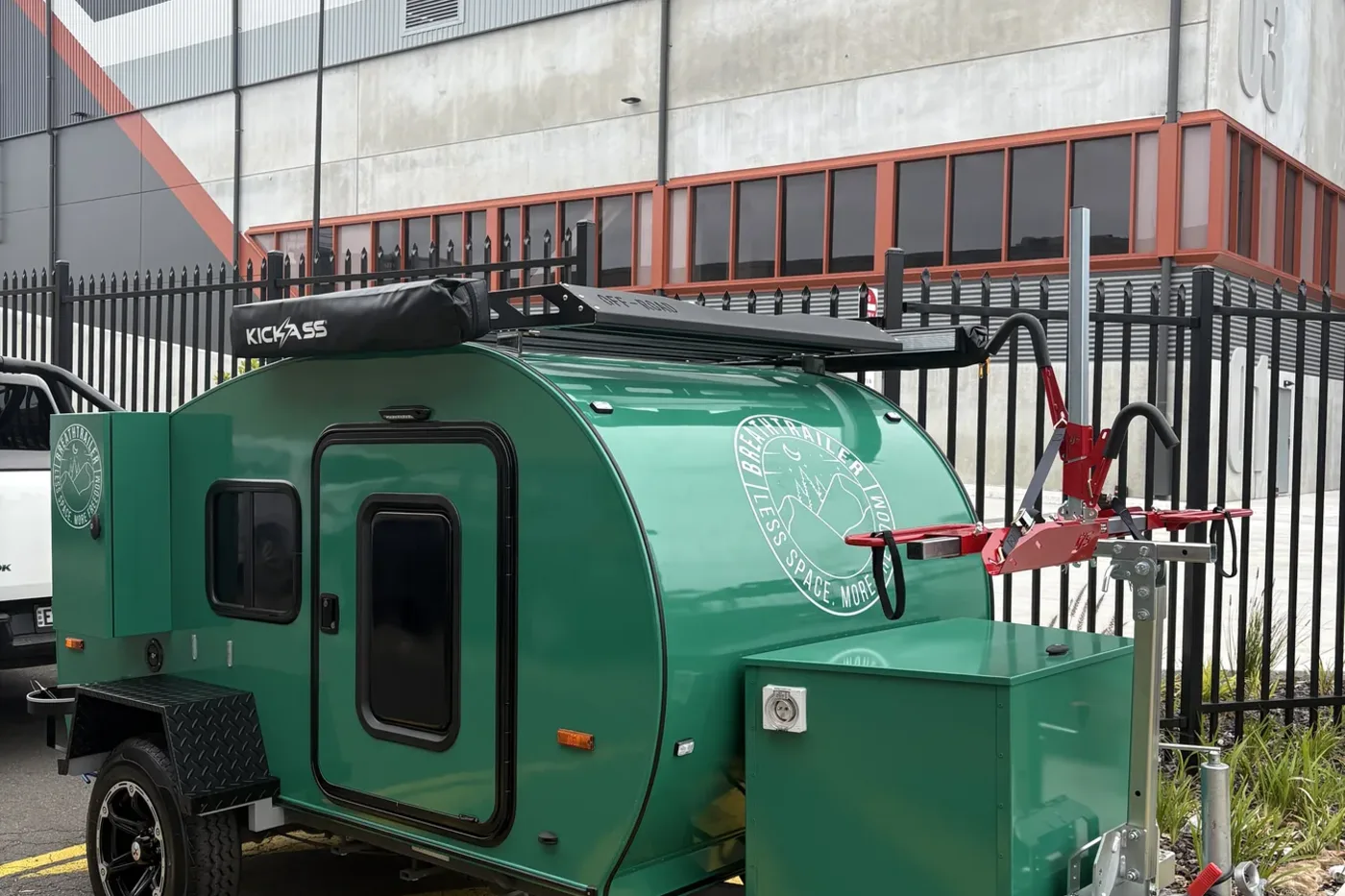
More than 300,000 Australians are on the road at any given time in a caravan, camper trailer, or motorhome. According to the Caravan Industry Association of Australia, travellers aged 55 and over now account for 59% of all camping trips in Australia, averaging four nights per stay — longer than any other age group. And that’s just the retirees. Tens of thousands of younger Australians are also hitting the road for three-month sabbaticals, working-remote laps, and year-long adventures with their families.
Long-term travel — anything from three months to indefinite full-timing — is a fundamentally different undertaking from a two-week holiday. The gear that gets you through a fortnight breaks on the road for six months. The admin you can ignore for a weekend becomes a crisis after 90 days. The campsite you loved for three nights drives you mad as a permanent address.
This guide covers everything you need to prepare before you leave: admin, finances, health, your setup, connectivity, and your rig. If you’re planning the full lap around Australia, read this alongside our Big Lap preparation guide; this article focuses on the preparation systems that make any extended trip work — wherever you’re headed.
What “Long-Term Travel” Actually Means
There’s no official definition, but three categories shape how you prepare:
| Type | Duration | Who it suits | Key preparation difference |
|---|---|---|---|
| Extended trip | 3–6 months | Couples on sabbatical, families between school years | Part-time house/flat management, address redirect, leave of absence |
| Seasonal nomad | 6–12 months annually | Retirees following the sun, grey nomads | Vehicle registration, Medicare address, income/pension management |
| Full-timer | 12 months+ indefinitely | Digital nomads, retired full-timers | No fixed address admin, health insurance pause, storage unit for possessions |
Most Australians start with an extended trip and discover it suits them well enough to repeat or extend. The preparation in this guide applies equally to all three, with notes where full-timers need to go further.
Step 1: Sort Your Admin Before the Departure Date
This is the section most travel guides skip entirely. It’s also the section that causes the most problems six weeks into a trip when a bank card expires, an ATO notice bounces, or a vehicle registration renewal goes to an empty house.
Budget four to six hours for admin — do it four to six weeks before departure, not the night before.
| Admin task | Action | Why it matters |
|---|---|---|
| Mail redirection | Australia Post redirect — $35 for 3 months, $55 for 12 months | ATO notices, bank cards, rego renewals |
| Virtual mailbox | AussieMailman, PostScan Mail — from $15/month | Digital access to physical mail; scanned and emailed |
| ATO address | Update via myGov → ATO | Tax returns, BAS, notices |
| Medicare / Services Australia | Update address, ensure My Health Record is current | Prescription access, benefits |
| Banks | Notify all banks of travel; enable contactless; ensure cards don’t expire mid-trip | Fraud locks on remote transactions are common |
| Insurance | Notify home and contents insurer of absence; trailer insurance current | Many home policies void after 60 days unoccupied |
| Vehicle rego | Check expiry date; renew online from the road if needed | Each state has different online options |
| Driver’s licence | Check expiry; renew if within 12 months | Can’t renew most AU licences while interstate |
| Private health insurance | Pause your PHI for up to 2 years — premiums stop, waiting periods don’t reset | Significant savings for full-timers |
| Subscriptions/bills | Cancel gym, streaming, council rates (if renting out), electricity | Easy to forget; adds up to $300–$600/month |
For full-timers without a fixed address: The ATO requires an Australian address. Most full-timers use a family member’s address or a registered virtual address service. Your state’s licensing authority also needs a physical address — some travellers use a mail service or a trusted relative.
Step 2: Financial Planning for the Long Haul
The standard “budget travel” figure you’ll read online — $100/day per couple — is accurate for a comfortable but economical trip. Real-world spending varies significantly depending on your travel style and campsite choices.
| Budget tier | Weekly spend (couple) | Monthly | Key driver |
|---|---|---|---|
| Budget | $700–$850 | $3,000–$3,700 | Mostly free camping, cook every meal, avoid tourist sites |
| Moderate | $850–$1,100 | $3,700–$4,800 | Mix of powered sites and free camping, occasional restaurant |
| Comfortable | $1,100–$1,350 | $4,800–$5,800 | Regular powered sites, dining out 2–3×/week, activities |
How the money breaks down:
| Category | Budget tier | Moderate tier |
|---|---|---|
| Fuel | $250–$350/week | $250–$350/week |
| Camping | $0–$50/week (free camp) | $100–$200/week (powered sites) |
| Food & groceries | $200–$250/week | $250–$350/week |
| Activities & entry fees | $0–$50/week | $100–$200/week |
| Maintenance buffer | $150/week | $150/week |
| Total | ~$700–$850/week | ~$850–$1,100/week |
The maintenance buffer is not optional. Mechanical issues — a tyre blowout on a corrugated track ($300–$500 for a caravan tyre), a wheel bearing ($200–$400 per hub), a fridge compressor ($800–$1,500) — are not “if” events on a long trip, they are “when” events. Keep $5,000 in a separate emergency fund and replenish it whenever you draw from it.
Free camping dramatically changes the maths. A self-contained rig that qualifies for free camping can save $15–$50 per night. Over a 90-day trip at a conservative $20/night average: that’s $1,800 in campsite fees you don’t pay. Over six months, it’s $3,600. The Breath Max’s interior bathroom and grey water tank make it fully self-contained for the growing number of free-camping areas that now require a self-contained vehicle.
Step 3: Health and Medical Preparation
Health preparation is another topic the travel guides and YouTube channels gloss over. Get it right before you leave; managing it from a remote location is genuinely difficult.
| Health task | Action | Timing |
|---|---|---|
| GP appointment | Full health review, discuss trip plans | 6–8 weeks before |
| Prescriptions | Ask for 3-month supply of regular medications; S8 (controlled) scripts: max 3 months legally | 4–6 weeks before |
| Dental checkup | Full checkup and clean; fix any known issues | 4–6 weeks before; remote dental is expensive and hard to access |
| Eye test | New glasses/contacts if due; spare pair | 4–6 weeks before |
| Vaccinations | Confirm tetanus, hepatitis A/B if going to remote far north | 6–8 weeks before |
| CPAP travellers | Carry 12V/24V adapter (cigarette lighter + DC input); know your model’s input voltage range; consider a backup unit | Before departure |
| My Health Record | Ensure it’s up to date; emergency services can access it | Before departure |
| Private health pause | Notify your insurer; request pause (up to 2 years in most funds) | 2–4 weeks before |
| First aid course | Remote First Aid (2 days, ~$300) recommended for remote travel | 4–8 weeks before |
| Travel insurance | Standard travel insurance doesn’t cover ongoing domestic travel; specialist “grey nomad” or “caravan” policies available | Before departure |
On medications: Australia Post can deliver to post offices along your route, but PBS scripts have a 2-month emergency supply limit in most states. Plan your prescription fills around towns with a pharmacist and stock what you’re allowed. Your GP can help — they understand the grey nomad situation well.
Heat and medication: Some medications lose efficacy above 25°C. Insulin, eye drops, and certain cardiac medications need refrigeration. The Breath Plus, Ultra, and Max include a 12V compressor fridge as standard — keep a dedicated medication compartment at the front of the fridge where temperatures stay most stable.
Step 4: Choosing the Right Setup for Extended Travel
The most common long-term travel mistake is underestimating how much harder a journey is on your rig than a holiday. A canvas-wall camper trailer requires monthly re-proofing on the road; zips fail under constant use; canvas repairs require specialist shops that may not be near where you break down.
Hard-shell teardrop trailers like the Breath range have no canvas to re-proof, waterproof seams that hold for years, and a 5-minute setup that means you actually stop for the night instead of driving through it. Over six months, the daily quality-of-life difference is significant.
The bathroom decision matters more on a long trip than a short one. After three months, walking to amenities block at 3am — cold, in the rain, in an unfamiliar campsite — wears thin. The question shifts from “do I need a bathroom?” to “why didn’t I get one?”
| Model | ATM | Bathroom | Self-contained | Free camping | Best for |
|---|---|---|---|---|---|
| Essential $23,320 | 700 kg | None | No | Free camps with no grey-water rules | Short to medium trips, budget travellers |
| Plus $29,766 | 800 kg | None (external shower upgrade optional) | No | Some free camps | Couples, moderate trips |
| Ultra $34,749 | 900 kg | External shower | No | Some free camps | Travellers prioritising shower access |
| Max $47,190 | 1,200 kg | Full interior (toilet + shower) | Yes | All free camps | Long-term, grey nomads, retirees, remote travel |
Our full retiree and grey nomad guide breaks down the bathroom decision tree in detail.
For power, long-term travel means your solar and battery sizing matters more, not less. On a six-month trip through the outback, you’ll spend days with no mains power access. Our complete power systems guide covers sizing for extended stays. The short answer: 200Ah lithium and 200W solar minimum for a couple running a compressor fridge; 300Ah and 300W for more comfort.
Weight discipline is equally critical. Payload management becomes a long-term problem when you add three months of “just in case” gear. Weigh your rig before leaving and leave the payload buffer in place — you’ll collect things on the road.
Step 5: Connectivity on the Road
If you’re working remotely, managing investments, or staying in touch with family during an extended trip, connectivity isn’t optional.
| Option | Monthly cost | Outback coverage | Speed | Best use |
|---|---|---|---|---|
| Telstra SIM + data plan | $30–$90 | Good on major highways; poor inland | 4G/5G | Day-to-day; paired with Starlink |
| Starlink Roam | A$69/month (100 Mbps tier) | Excellent, including remote areas | 100–200 Mbps | Primary internet, remote areas |
| Telstra + Starlink combo | $100–$160/month | Near-complete national coverage | Combined near-zero failure | Remote workers, full-timers |
| Cel-Fi Go signal booster | $600–$700 hardware | Extends existing carrier signal | Carrier-dependent | Marginal-coverage areas |
| Garmin inReach Mini 2 | From $50/month | Satellite coverage everywhere | Text/SOS only | Safety; emergency comms |
The Telstra SIM + Starlink Roam combination is the setup most serious long-term travellers settle on. Telstra alone fails in genuinely remote areas; Starlink alone is expensive for everyday use. Together, the estimated combined failure rate drops to around 0.04% — nearly zero. Pause Starlink in the months you’re near major cities to reduce cost.
For digital nomads and remote workers: Starlink’s 100–200 Mbps download speed is fast enough for video calls, large file uploads, and cloud-based work. Pair it with a 12V workspace in your trailer — the Breath Max’s 2.1m standing interior converts to a functional home office with a folding desk.
Step 6: Prepare Your Rig Before Departure
A vehicle service costs $300–$600 before you leave. A roadside breakdown in the outback costs $1,000+ to recover from — and that’s before parts and labour. The maths are straightforward.
| Check | Interval | Notes |
|---|---|---|
| Vehicle full service | 10,000km or 12 months | Oil, filters, belts, fluids, brakes |
| Trailer wheel bearings | 10,000km or pre-departure | Service more frequently near the coast (saltwater) |
| Tyres | Pre-departure | Check age (DOT date), tread, pressure; replace if 5+ years old |
| Trailer brakes | Pre-departure | Test electric brake controller; clean magnets |
| Coupling and hitch | Pre-departure | Grease ball, check pin, test safety chains |
| 12V system | Pre-departure | Check battery health (load test), solar connection, DC-DC charger |
| Seals and water ingress | Pre-departure | Check door seals, hatch seals, any bubbling paint |
| Spare tyre (trailer) | Pre-departure | Ensure you carry one; check it’s inflated |
| Recovery gear | Pre-departure | MaxTrax, snatch strap, 12V compressor, shovel |
| Emergency comms | Pre-departure | PLB registered (free via AMSA), UHF CB ch40 highway |
Our maintenance guide has full service interval tables for teardrop trailers. For recovery gear specifics, see our must-have accessories for off-road adventures.
Book a shakedown trip. Before the main departure, do a 3–5 night trip close to home. This surfaces problems — a rattle in the coupling, a leaking water line, an inverter that trips on the fridge startup — when you can fix them easily. Don’t discover your setup’s failure points 500km from the nearest town.
Step 7: Building a Sustainable Daily Routine on the Road
The travellers who make it six months without burning out are not the ones who cover the most ground. They’re the ones who pace themselves.
The 300km daily driving limit: Long-term travellers consistently report that more than 300–400km per day is unsustainable after the first month. At those distances, you arrive at a site with an hour of light left, set up in the dark, and leave before you’ve seen anything. Build a 3:1 rule into your itinerary — for every three moving days, plan one full rest day.
Base camping strategy: Staying in one location for 3–7 nights and day-tripping without the trailer saves fuel, reduces coupling wear, and gives you time to actually experience a region. The Breath Trailer’s 5-minute detach makes this practical — leave the trailer on-site, tow-vehicle free for the day.
Cooking economics: Buying groceries and cooking 80–90% of meals is the single biggest lever on your weekly budget. A couple eating out three times per week adds $150–$250 to weekly spend compared to home cooking. A well-equipped galley kitchen — the Breath Plus, Ultra, and Max all have rear-slide-out galleys — makes this easy even on extended trips.
Step 8: Self-Containment and Free Camping
Australia’s free-camping landscape has shifted significantly in 2026. An increasing number of councils — including Central Coast (NSW), parts of Yorke Peninsula (SA), and most Kimberley free-camp areas — now require self-contained vehicles only, with tighter grey-water rules and $15/night permit systems replacing no-fee access.
Self-containment isn’t just about getting access to sites. On a six-month trip:
- Free camp at $0/night average (vs $25/night at a powered site) = $4,500 saved over six months
- Freedom to park overnight in more remote locations far from tourist congestion
- No queuing for amenities blocks at 6am
Self-containment defined for most councils (2026):
- Fresh water on-board: minimum 80–100L
- Grey water fully contained: no release on-site
- Toilet: contained and removable (composting or cassette)
The Breath Max meets all three criteria with its built-in 100L water tank, grey water tank, and interior toilet. It’s the only teardrop trailer on the Australian market under $50,000 with a full interior bathroom. The Essential, Plus, and Ultra do not have grey water containment as standard, which restricts access to the strictest self-contained-only sites.
Common Mistakes First-Time Long-Term Travellers Make
Overpacking and hitting payload limits. Every extra 10kg of “might need this” gear reduces your legal payload and adds tyre wear, fuel consumption, and suspension stress. Pack your rig, weigh it at a public weighbridge ($15–$25), and strip what pushes you over your ATM.
No maintenance budget. The average long-term traveller spends $200–$400/month on vehicle and trailer maintenance. It’s not glamorous, but it’s real.
Skipping the shakedown. New or unfamiliar setups need a trial run close to home. Don’t discover a critical problem 1,200km from your nearest service agent.
Ignoring trailer insurance. Comprehensive camper trailer insurance costs $250–$600/year for a Breath Trailer. On a six-month trip across remote Australia, this is not optional. See our insurance guide for what to check in the policy.
Underestimating the emotional adjustment. The first two to four weeks on the road are often disorienting. The freedom is real, but so is the absence of routine. Plan lighter in the early weeks, allow time to settle, and don’t judge the whole trip by the first fortnight.
FAQ: Long-Term Travel Around Australia
How much does it cost to travel Australia long-term for a couple?
Expect $700–$1,350 per week ($36,000–$70,000 per year) depending on travel style and campsite choices. A self-contained setup with free camping capability brings this toward the lower end; powered sites and dining out push it higher.
Do I need to sell my house to travel long-term?
No. Many long-term travellers rent their home while travelling, generating income that offsets trip costs. Others arrange house-sitters. A property manager handles the rental if you’re away for months.
Can I pause my private health insurance while travelling?
Yes. Most Australian private health insurers allow you to pause your policy for up to two years. You stop paying premiums, and your waiting periods don’t reset when you resume. Contact your insurer before departure.
What internet setup works best for remote travel?
A Telstra SIM for everyday use along highways plus Starlink Roam ($69/month, 100–200 Mbps) for remote areas is the most reliable combination. Add a Garmin inReach Mini 2 for emergency SOS coverage where even Starlink can’t connect.
How do I get mail while travelling long-term?
Set up an Australia Post mail redirect ($35/3 months) to a trusted family address or a virtual mailbox service like AussieMailman. Update your ATO, Medicare, and bank addresses before you leave. Budget 4–6 hours for this admin.
Is a teardrop trailer practical for six months on the road?
Yes — provided you choose the right model. The hard shell eliminates canvas maintenance. The compact footprint fits any campsite. The 5-minute setup removes the daily labour of a fold-out camper. For solo travellers and couples, it’s the most efficient format for extended travel. See our solo travel guide and off-grid guide for specific setups.
Recommended Reading
- Big Lap Around Australia — The Ultimate Preparation Guide — Route, legs, weekly budgets, and admin for the full circumnavigation
- Self-Contained Camper Australia — Free Camping and Grey Water Rules — Which models qualify, which sites require self-containment, how the rules vary by state
- Teardrop Camper for Retirees and Grey Nomads — The Greg & Margaret guide: bathroom decision, 2-yr TCO vs caravan, health considerations
- Complete Guide to Camper Trailer Power Systems — Solar sizing, battery banks, DC-DC charging, inverters — everything you need for months off-grid
- Must-Have Accessories for Off-Road Adventures — Recovery gear, comms, navigation, safety — what to pack for remote Australia
Long-term travel is one of the most rewarding things an Australian can do — and one of the most poorly prepared for. The travellers who come home having loved every week of it are the ones who sorted the admin before they left, chose a setup that fits their actual needs (not their aspirational ones), and didn’t underestimate the maintenance realities.
The preparation takes a few weeks. The trip lasts months. That ratio makes the preparation the best investment you’ll make before departure.
Ready to choose your setup? Compare the four Breath Trailer models with one of our team, and we’ll help you match a trailer to your actual travel plans — not a sales pitch.