Best Camping Spots in Queensland: Coast, Rainforest & Outback (2026 Guide)
18 of the best campgrounds in Queensland by region — with 2026 fees, road ratings, self-containment rules, and a model-matching table for camper trailers.
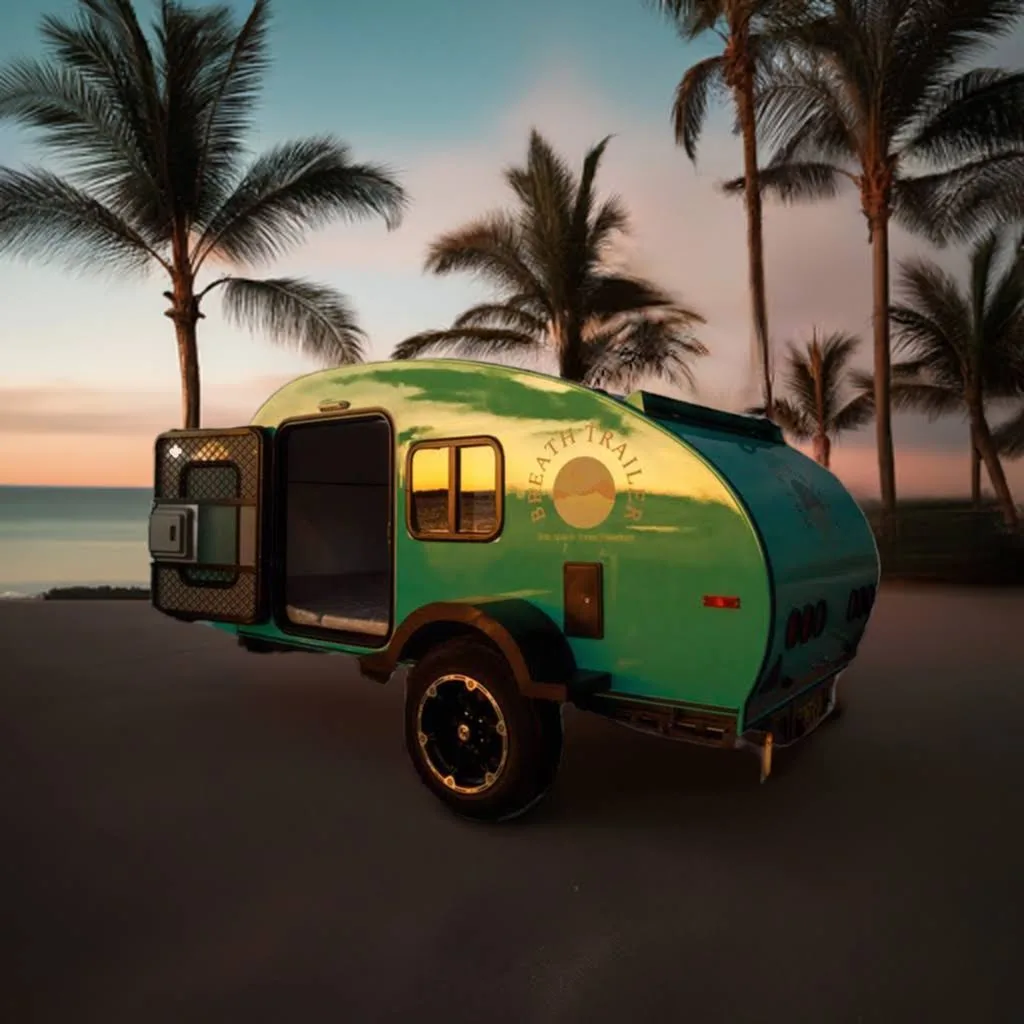
Queensland is the most geographically diverse camping state in Australia. In a single Big Lap loop you can sleep under a Gondwana rainforest canopy one night, wake to kangaroos on a white-sand beach the next, and spend the following week watching the Milky Way rise over ancient volcanic lava tubes in the Outback — all within the same state. With approximately 7,000 km of Pacific coastline, more than 1,000 national parks and protected areas, and 500+ designated camping areas managed by the Queensland Parks and Wildlife Service (QPWS), Queensland rewards campers who plan well and arrive prepared.
This guide covers 18 of the best campgrounds in Queensland, organised by region, with 2026 fees, road ratings, access notes, and a model-matching table so you can match your Breath Trailer to the destination.
If you are building a multi-state itinerary, our state-by-state camping destinations guide covers the full country in one article. For the neighbouring state, the best camping spots in NSW guide follows the same structure.
Quick-Reference Table: 18 Best Queensland Camping Spots (2026)
| Campground | Region | Type | Road | 2026 Fee | Self-Contain? | Best For |
|---|---|---|---|---|---|---|
| Springbrook NP | Gold Coast hinterland | National Park | Sealed / short gravel | $7.75/adult | No | Couples, day walkers |
| Lamington NP (Green Mountains) | Gold Coast hinterland | National Park | Sealed | $7.75/adult | No | Rainforest walks, families |
| D’Aguilar NP (Lake Manchester) | Brisbane hinterland | National Park | Gravel | $7.75/adult | No | Weekenders from Brisbane |
| Noosa North Shore (Teewah Beach) | Sunshine Coast | Nat. Park / Great Sandy | 4WD beach | $7.75/adult | Recommended | Beach 4WD, fishing |
| Cooloola Recreation Area | Great Sandy NP | National Park | 4WD / boat-in | $7.75/adult | Recommended | Canoe trails, remote |
| Inskip Point | Rainbow Beach / Fraser Coast | National Park | 4WD | $7.75/adult | Recommended | Ferry launch to K’gari |
| Girraween NP (Terrawambella) | Granite Belt / Stanthorpe | National Park | Sealed | $7.75/adult | No | Couples, retirees, 2WD |
| Carnarvon Gorge (school hols) | Central QLD | National Park | Gravel 2WD | $7.75/adult | No | Families, gorge walks |
| Ka Ka Mundi (Salvator Rosa) | Carnarvon NP | National Park | 4WD | Free | Required | Off-grid purists |
| Cape Hillsborough NP | Mackay | National Park | Sealed | $7.75/adult | No | Beach, wildlife |
| Whitsunday Island (Whitehaven) | Whitsundays | National Park | Boat only | $7.75/adult | Required | Island adventure |
| Hook Island (Maureen’s Cove) | Whitsundays | National Park | Boat only | $7.75/adult | Required | Snorkelling, couples |
| Noah Beach | Daintree NP / Cape Trib | National Park | Sealed (no caravan) | $7.75/adult | No | Rainforest + beach |
| Cape Hillsborough NP | Mackay | National Park | Sealed | $7.75/adult | No | Kangaroos on beach |
| Babinda Rotary Park | Far North QLD (near Cairns) | Council (free) | Sealed | Free (72hr) | No | Budget base, families |
| Undara Volcanic NP | Outback / Gulf Savannah | National Park | Sealed | $7.75/adult | No | Lava tubes, geology |
| Longreach / Qantas Founders Area | Outback Central QLD | Commercial | Sealed | ~$30–45/site | No | History, grey nomads |
| Cooper Creek (Windorah) | Channel Country / SW QLD | Council/Crown | Dirt | Free | Strongly recommended | Remote Outback |
QPWS fee from 1 July 2026: $7.75 per adult per night, $31.00 per family per night. Confirm current rates at parks.qld.gov.au/camping/bookings.
South East Queensland — Gold Coast Hinterland & Brisbane
Springbrook National Park
Springbrook sits in the Gold Coast hinterland, roughly 90 minutes south of Brisbane and 45 minutes from the Gold Coast strip. It forms part of the Gondwana Rainforests of Australia World Heritage Area — one of only four mixed cultural and natural World Heritage sites in the country. The Natural Bridge rock arch, lit at night by a colony of bioluminescent glow worms (Arachnocampa flava), is the park’s signature attraction and genuinely one of the best free natural light shows in Australia.
There are two designated camping areas within the national park boundary, both at national park rates ($7.75/adult). Springbrook is the only Gold Coast hinterland national park with on-site camping — Lamington National Park technically sits in the Scenic Rim local government area and uses private operators.
The access roads to both camping areas are either sealed or short unsealed sections manageable in dry conditions.
Road rating: Sealed / short gravel ⚠️ | Suits: Breath Essential, Plus, Ultra, Max
Lamington National Park — Green Mountains Section
Queensland’s oldest national park, proclaimed in 1915, Lamington covers 20,200 hectares of subtropical and temperate rainforest straddling the McPherson Range. Green Mountains (the O’Reilly’s area) is the most accessible section and has the best facilities for camper trailer stays.
O’Reilly’s operates 17 fully set-up Safari Tents and powered campervan drive-on sites through a private concession inside the national park. This is an unusual arrangement for a national park but the setting is authentic — you are deep in the rainforest, and the daily influx of day-tripper foot traffic disappears at dusk, leaving the forest to overnight campers.
Walking tracks from camp reach waterfalls, gorge lookouts, and the famous Tree Top Walk canopy boardwalk. The access road from Canungra is sealed all the way to the park entrance.
Road rating: Sealed ✅ | Suits: All Breath Trailer models | Book: oreillys.com.au
D’Aguilar National Park (Lake Manchester Road)
The closest national park with genuine bush camping to Brisbane CBD, D’Aguilar covers 37,000 hectares of dry eucalypt forest just 30–40 km from the city centre. The Lake Manchester camping area gives families a no-fuss introduction to national park camping — sealed access road, flush toilets, picnic tables — with the full QPWS experience at $7.75/adult.
It suits the Breath Essential or Plus for a Friday night escape without burning a tank of diesel.
Road rating: Gravel ⚠️ | Suits: Breath Essential, Plus
Sunshine Coast & Noosa — Great Sandy National Park
Noosa North Shore / Teewah Beach — Great Sandy National Park
The Teewah Beach campground system is unlike anything on the south-east coast: 50+ km of uncrowded surf beach accessible only by 4WD, running north from the Noosa River ferry at Tewantin to Rainbow Beach. You sleep on the sand flat, metres from a heavy shore break, with the Cooloola coloured sand cliffs rising behind you.
Access is by vehicle ferry from Tewantin (cash or card, approximately $30 return per standard-width camper trailer). All driving from the ferry north is on the beach and soft-sand track — 4WD low range is essential. Tyre pressures should come down to 18–20 psi on soft sand; our must-have accessories guide covers the 12V compressor you will need for re-inflation.
Camping permits are required and must be booked in advance through the QPWS booking system. Dogs are not permitted.
Road rating: 4WD beach — mandatory ⚠️⚠️ | Suits: Breath Plus, Ultra, Max | Fee: $7.75/adult/night
Cooloola Recreation Area — Great Sandy National Park
The Cooloola section of Great Sandy National Park encompasses the Noosa River valley, Lake Cootharaba, freshwater lakes, and creek systems threading through wildflower heath. It offers one of Queensland’s best canoe-camping trails — paddling upstream from the Noosa Everglades into remote river sites accessible only by boat.
For camper trailer travellers, the main vehicle-based camping areas at Freshwater and Elanda Point are accessible by 4WD tracks from Rainbow Beach or by barge from Tewantin. The park is notable for seasonal wildflower displays (September–October) and for the Cooloola Great Walk, a 102 km coastal route rated one of Queensland’s best multi-day tracks.
Self-containment for grey water and toileting is strongly recommended — the park has limited dump-point infrastructure in its more remote areas.
Road rating: 4WD ⚠️⚠️ | Suits: Breath Ultra, Max preferred (self-contained advantage) | Fee: $7.75/adult/night
Fraser Coast — Gateway to K’gari
Inskip Point — Great Sandy National Park
Inskip Point is the southern gateway to K’gari (Fraser Island), the world’s largest sand island and a UNESCO World Heritage site. The camping area at Inskip sits on the sand peninsula facing K’gari across a narrow tidal channel — you wake to views of the island’s forested escarpment, with the 10-minute Rainbow Ventures barge crossing a short drive away.
There are seven camping sites at Inskip Point, clustered on soft sand among coastal scrub. The majority are 4WD-only; one or two sites have marginally firmer 2WD access depending on recent weather. No powered sites — this is fully off-grid camping. Dogs are not permitted.
Beach driving applies the same rules as Noosa North Shore: tyre pressures down, 4WD low range engaged, and a recovery kit on board. For the K’gari crossing itself, check the barge schedule at Rainbow Beach Coastal Village before making camp.
Road rating: 4WD ⚠️⚠️ | Suits: Breath Plus, Ultra, Max | Fee: $7.75/adult/night
For extended off-grid stays either side of the K’gari crossing, our how long can you stay off-grid guide includes a per-model water, power, and food table that is directly relevant to this kind of frontier camping.
Granite Belt — Southern Downs
Girraween National Park — Terrawambella Camping Area
Girraween, meaning “place of flowers” in the local Aboriginal language, is one of the most underrated national parks in south-east Queensland. Located on the border ranges south-west of Stanthorpe, it is built around a landscape of enormous granite monoliths — some balanced so precisely they seem to defy physics — rising above open woodland and seasonal wildflower meadows.
Three camping areas serve the park:
| Camping Area | Suits | Notes |
|---|---|---|
| Terrawambella | Camper trailers, caravans, larger motorhomes | Open, spacious sites; ideal for larger rigs |
| Kambuwal | Smaller camper trailers, tents | Sheltered by trees and granite; more intimate |
| Castle Rock | All sizes + accessible sites | Dedicated PWD-accessible spaces; closest to major walks |
Access is on sealed road all the way to the park entrance, with short unsealed sections to some sites — 2WD accessible in dry conditions for any standard tow vehicle. This makes Girraween one of the best all-year camper-trailer destinations in Queensland for travellers without a dedicated 4WD setup.
The park fills completely during spring wildflower season (August–October) — book 3–4 months ahead.
Road rating: Sealed / short gravel ✅ | Suits: All Breath Trailer models | Fee: $7.75/adult/night
Girraween’s granite-altitude nights can drop to single digits in winter (June–August). The hard-shell insulated design of all Breath Trailer models handles these temperature swings significantly better than a canvas camper. For more on cold-weather camping preparation, see our teardrop camper maintenance guide.
Central Queensland — Carnarvon Gorge
Carnarvon Gorge Camping Area — Carnarvon National Park
Carnarvon Gorge is the most spectacular gorge system in inland Australia. The main gorge — a 30 km sandstone canyon cut by Carnarvon Creek — contains ancient rock art, moss gardens, Aboriginal stencil galleries, and towering white cliffs rising 200+ metres from the valley floor. It sits approximately 4.5 hours inland from Brisbane or Rockhampton, via sealed roads all the way to the park entrance.
The national park camping area has 35 sites, flush toilets (no showers), and a maximum stay of five days. It sits inside the gorge itself — the camping atmosphere is dramatic. However, there is an important restriction: the national park camping area is open only during Queensland school holidays — Easter, June–July, and September–October. Outside of school holidays, the only option inside the park is the hike-in Big Bend camping area (19.4 km return walk).
The alternative year-round option is BIG4 Carnarvon Gorge Holiday Park (private), located 3 km from the park entrance and open all year — caravans, camper trailers, and full facilities.
| Option | Open Period | Fee | Facilities |
|---|---|---|---|
| Carnarvon Gorge NP campground | School holidays only | $7.75/adult | Flush toilets, no showers |
| Big Bend (hike-in, NP) | Year-round | $7.75/adult | Pit toilet only |
| BIG4 Holiday Park (private) | Year-round | ~$40–55/site | Full facilities, powered sites |
Road rating: Sealed to park gate, gravel beyond ✅ | Suits: All models (NP sites); All models (BIG4)
Ka Ka Mundi — Salvator Rosa Section, Carnarvon National Park
The Salvator Rosa section of Carnarvon National Park, accessed via Injune, is a world away from the gorge experience — a remote wilderness area of red rock ridges, deep ravines, and Aboriginal rock art. The Ka Ka Mundi camping area in this section is free, with basic pit toilet facilities. No bookings required, but the access track is 4WD-only.
This is one of the few genuinely free national park camping areas in Queensland and a favourite among experienced off-roaders who want the Carnarvon experience without the school holiday crowds.
Road rating: 4WD required ⚠️⚠️ | Suits: Breath Ultra, Max | Fee: Free
Whitsundays — Island Camping
Whitsunday Island — Whitehaven Beach Campground
Whitehaven Beach is regularly listed among the top 10 beaches in the world. The 7 km sweep of pure silica sand — brilliant white, squeaky underfoot, non-heat-absorbing — sits on the western shore of Whitsunday Island, 25 km east of Airlie Beach. Whitehaven is a Queensland National Park campground accessible only by boat or seaplane from Airlie Beach or Shute Harbour.
Eight Whitsunday Islands offer camping within Queensland National Parks, with 16 designated camping areas across the group. Whitehaven Beach campground on Whitsunday Island and Maureen’s Cove on Hook Island are the two most sought-after sites.
Camping is fully self-contained by nature — there is no infrastructure beyond a composting toilet. Everything you need (water, food, stove, fuel, rubbish bags) must be carried in and out by boat. The Breath Max’s 85-litre fresh water capacity and 120 Ah lithium battery are a practical advantage here: your fresh water and power supply travels with you in the trailer, reducing what you need to carry by dinghy.
Access: Boat only | Fee: $7.75/adult/night | Book: 12 months in advance; permits fill in hours during the April–September peak
Hook Island — Maureen’s Cove
The most popular island camping site in the Whitsundays outside of Whitehaven Beach, Maureen’s Cove has direct snorkelling access to fringing coral reefs and a composting toilet at the site. Maximum 24 people. Access is by boat at mid to high tide only — a tender or dinghy lands on the beach.
Access: Boat only | Fee: $7.75/adult/night | Suits: Self-contained couples or small groups travelling by charter or private vessel
North Queensland & Far North Queensland
Cape Hillsborough National Park — Mackay Region
Cape Hillsborough is the only national park in Australia where Eastern grey kangaroos and agile wallabies routinely come down to the beach at sunrise to feed on washed-up kelp. The phenomenon is well-documented and reliably repeatable: be at the beach by 6 am and you will share it with 30–50 wallabies and kangaroos working the tideline. Turtles, dolphins, and dugongs are frequent sightings offshore.
The campground sits adjacent to the national park and offers powered and unpowered sites, cabin accommodation, and direct beach access. Access is entirely on sealed roads from Mackay (45 minutes north).
Road rating: Sealed ✅ | Suits: All Breath Trailer models | Fee: $7.75/adult/night (NP sites)
Noah Beach — Daintree National Park, Cape Tribulation
Noah Beach is the only national park camping area inside Daintree National Park (CYPAL — Country Yet, Permission And Laws), and it occupies one of the most remarkable settings of any campground in Australia: 15 numbered sites set back 50 metres from a tropical beach, in a pocket of 165-million-year-old rainforest that pre-dates the Amazon.
Access is via the Daintree River ferry from the south (approximately $30 return per vehicle, cash or card, runs continuously). North of the ferry, Cape Tribulation Road is sealed but not accessible for standard caravans, high campervans, or buses — a maximum vehicle height of 3.20 m applies due to overhanging tree canopy. Camper trailers (sub-3.2 m) can generally pass, but verify your Breath Trailer’s height with your canopy or roof rack fitted before departure.
Noah Beach is closed for the entire wet season — from the Friday before Christmas to Good Friday (Easter). The optimal window is May to November (Dry Season).
- Sites: 15 numbered sites
- Facilities: Composting toilets only; no mobile phone coverage
- Fires/generators: Not permitted
- Fee: $7.75/adult/night
- Book: book.parks.qld.gov.au
Road rating: Sealed (height restriction) ✅⚠️ | Suits: Breath Essential, Plus, Ultra (verify height); Max may be too tall depending on roof configuration
Babinda Rotary Park — Free Camping near Cairns
Babinda, 60 km south of Cairns on the Bruce Highway, has a free council campground (72-hour maximum stay) with a genuinely impressive facility set for a free site: hot showers, flushed toilets, BBQs, picnic tables, and sealed pull-through bays for camper trailers. It functions as the budget base for exploring the Babinda Boulders swimming hole (2 km away), the northern end of Wooroonooran National Park, and the Cairns gateway to the Daintree and Cape Tribulation.
Road rating: Sealed ✅ | Suits: All models | Fee: Free (72-hour limit)
Outback Queensland
Undara Volcanic National Park — Gulf Savannah
Undara (meaning “long way” in Muluridji language) sits in the Gulf Savannah, approximately 275 km south-west of Cairns. The park protects the world’s longest system of lava tubes formed by a volcanic eruption 190,000 years ago — tubes up to 1.6 km long and 15 m in diameter, now sheltering rare microbat colonies and diverse savannah fauna.
Camping is available through the Undara Experience, a private operator running the concession inside the national park. The attraction is the setting more than the facilities: guests sleep in restored Queensland railway carriages or drive-in campsites surrounded by open savannah. Access is on sealed road all the way from Cairns or Mount Garnet.
The park is best visited in the Dry Season (May–October). Wet season (November–April) brings flooding that can cut access.
Road rating: Sealed ✅ | Suits: All Breath Trailer models | Fee: ~$30–40/site/night (private concession)
Cooper Creek — Windorah, Channel Country
For travellers doing a serious Outback loop — the Diamantina, the Birdsville Track, the Channel Country — Cooper Creek at Windorah is the archetypal central Queensland free camp. The Cooper is a braided inland river that floods spectacularly after rare rainfall events but for most of the year sits as a series of wide waterholes fringed by river red gums.
Camping is free on the creek banks (council and Crown land). No facilities — full self-containment is essential. The nearest town with fuel and supplies is Windorah (a short drive) or Longreach (4+ hours north). Phone coverage is limited to satellite messengers (Garmin inReach Mini 2 or ZOLEO).
Anyone camping in the Outback should reference our off-grid camper trailer setup guide for the water-storage maths (10 L per person per day minimum in summer), power setup, and fridge choices that define how many days you can stay remote.
Road rating: Dirt/corrugated ⚠️⚠️ | Suits: Breath Ultra, Max (suspension and self-containment advantage) | Fee: Free
Queensland Camping Rules & Fees (2026)
QPWS Camping Fees from 1 July 2026
Queensland’s park and forest camping fees are set annually by the Department of the Environment, Tourism, Science and Innovation (DETSI):
| Category | Fee (from 1 July 2026) |
|---|---|
| Standard adult (per person/night) | $7.75 |
| Family (per night, per group) | $31.00 |
| Students on approved educational excursions (per person/night) | $4.25 |
Most bookings are made online through the Queensland National Parks Booking Service at book.parks.qld.gov.au and your permit is issued by email. Always carry your permit at camp. Recommended advance booking lead time: at least 6 weeks for popular parks; 3–4 months for peak school-holiday periods.
Self-Containment in Queensland
Unlike New Zealand — which has a nationally standardised Certified Self-Contained (CSC) scheme — Australia has no single federal standard. Rules are set at state, territory, and local-council level, and they vary:
| Land Type | Self-Containment Requirement |
|---|---|
| QPWS National Parks and Forests | No statewide mandate — site-by-site facilities vary |
| Noosa Shire Council free camping | Self-contained vehicles only — fines apply |
| Sunshine Coast Council free camps | Self-contained vehicles only |
| Island camping (Whitsundays, K’gari) | Self-contained required (no infrastructure on-site) |
| Remote free camps (Outback, Cooper Creek) | Strongly recommended — no facilities |
| Council free camps (Babinda, Julia Creek) | No mandate — facilities provided |
The practical minimum for Queensland’s coastal and island camping: a cassette or composting toilet and a grey-water bladder or tank. For island camping and remote Outback travel, full self-containment (toilet, grey water, 80+ litres of fresh water, solar or DC-DC power) is the only viable option.
The Breath Max includes an internal toilet and shower, onboard grey-water management, and a 120 Ah lithium battery system — it is directly self-contained for all Queensland land types without additional accessories. The Breath Ultra benefits from the addition of a portable cassette toilet (Thetford C200 ~$350) and a 20-litre grey water bladder (Surfride ~$95) for free-camp-heavy itineraries.
Which Breath Trailer Model Suits Your Queensland Adventure?
| Region / Terrain | Recommended Model | Why |
|---|---|---|
| Gold Coast hinterland & Brisbane weekends | Breath Essential or Plus | Sealed road access; fridge in Plus suits long hinterland weekends |
| Sunshine Coast / Noosa North Shore | Breath Plus or Ultra | 4WD beach; external shower critical for sand/salt rinse |
| Fraser Coast / Inskip Point | Breath Ultra or Max | 4WD beach; full self-containment advantage on K’gari |
| Granite Belt / Girraween | Any model | Sealed 2WD access; cold winter nights benefit from insulated hard shell |
| Carnarvon Gorge (NP sites) | Breath Plus, Ultra, or Max | Gravel road; good suspension for the 45 km unsealed stretch near gorge |
| Whitsundays island camping | Breath Max | Island self-containment; 85-litre water reduces dinghy resupply |
| Daintree / Noah Beach | Breath Plus or Ultra | Height restriction — verify Max height with canopy fitted |
| Far North / Cairns base | Any model | Sealed access to Babinda, Cape Hillsborough, Atherton Tablelands |
| Outback / Channel Country | Breath Ultra or Max | Corrugated dirt roads; suspension, self-containment, and 120 Ah lithium |
The comparison page shows the full specification matrix for all four models, or book a no-obligation call to talk through which model suits your Queensland loop.
For towing any of the four models on Queensland’s varied road surfaces — from the Bruce Highway to corrugated Outback tracks — our camper trailer towing guide covers SUV towing capacities, load distribution, and the speed adjustments that protect wheel bearings on corrugated roads.
Seasonal Guide to Queensland Camping
| Season | Best Regions | Avoid |
|---|---|---|
| Summer / Wet Season (Nov–Apr) | Granite Belt (cooler), Gold Coast hinterland, Outback (check flood risk) | Cape York (impassable tracks), Daintree/Noah Beach (closed), Cape York roads, most 4WD tracks |
| Autumn (Mar–May) | Whitsundays (warm, calmer seas), Cairns/Daintree (Dry starts), Outback (temperature dropping) | Still wet in Cape York north; check road reports |
| Winter / Dry Season (May–Oct) | Cape York (only viable window), Daintree, Whitsundays, Outback QLD, Carnarvon Gorge (school hols Jun/Jul) | Granite Belt (sub-zero nights, frost possible June–July) |
| Spring (Sep–Nov) | Girraween (wildflowers peak Aug–Oct), Sunshine Coast/Noosa, Whitsundays | Summer storms building north of Cairns from October |
Apps & Tools for Finding Queensland Campsites
WikiCamps Australia ($2.99, iOS/Android) — The most used camping app in Australia. User-generated reviews and condition reports, offline maps once downloaded, and full-trip planning tools. The best all-rounder for Queensland trip planning.
QPWS Online Booking Service (Free, book.parks.qld.gov.au) — The mandatory booking portal for all Queensland national park and state forest campgrounds. Essential for school-holiday and peak-season planning. Bookings open 12 months in advance.
CamperMate (Free) — Strong free alternative with dump-point finder, LPG refill locator, and commercial park booking integration. Useful while on the road between sites.
Hema Explorer (Subscription) — The best option for Cape York, Channel Country, and any serious 4WD track. Detailed track ratings, topographic layers, and offline topo maps. If you are planning the Cape York run or the Birdsville Track, Hema is the navigator you need.
Camps Australia Wide (campsaustraliawide.com / app) — The most comprehensive database of free and low-cost camping in Queensland. Essential for Outback travel.
Frequently Asked Questions
Do I need to be self-contained to camp in Queensland national parks? Not in every national park — most QPWS parks have toilets and fire rings at standard camping areas and do not mandate a self-contained vehicle. However, island camping (Whitsundays), remote beach camping (Noosa North Shore, Inskip Point), and boat-in sites effectively require full self-containment because no waste infrastructure exists. Council free camps in Noosa Shire and Sunshine Coast mandate self-containment and enforce the rule with fines.
Can I have a campfire in Queensland national parks? Open campfires are permitted at Queensland national park campgrounds that have designated fire rings, unless a fire prohibition or total fire ban is in force. Campfires are not permitted at Noah Beach or most tropical rainforest sites. During Queensland’s fire season (typically August–November in the south), check the Queensland Rural Fire Service alerts before lighting. Fires are prohibited at all times within 1 metre of any structure and must be extinguished before leaving camp.
Do I need to book ahead for Queensland national park campgrounds? Yes — all Queensland national park campgrounds require an advance booking through the Queensland National Parks Booking Service (book.parks.qld.gov.au). Bookings open up to 12 months in advance, and popular sites (Carnarvon Gorge, Whitehaven Beach, Girraween) fill within hours of school-holiday windows opening. Babinda Rotary Park and Channel Country free camps are walk-in only with no booking required.
When is Cape York accessible? The practical Cape York camping season is May to October (the Dry Season). The wet season — November to April — brings monsoonal rainfall that renders most Cape York tracks and creek crossings impassable. Even in the Dry, some northern tracks may be soft or partially flooded after unseasonal rain. Always check road conditions via the Queensland Department of Transport and Main Roads (511.qld.gov.au) before departing.
Are pets allowed in Queensland national parks? No. Dogs, cats, and other pets are prohibited in all Queensland national parks and most QPWS-managed forests. If you are travelling with a dog, you will need to camp outside park boundaries — council free camps (Babinda, Julia Creek) and privately operated parks accept pets in most cases.
What is the best Queensland camping destination for retirees / grey nomads? Undara Volcanic National Park (sealed access, dramatic geology, good amenities), Cape Hillsborough (sealed, beach wildlife at sunrise), and Carnarvon Gorge BIG4 Holiday Park (full facilities year-round) are all excellent choices for travellers prioritising sealed road access, good facilities, and remarkable natural settings. Our grey nomad camping guide covers the self-containment and free-camping strategy for an extended Queensland Big Lap in detail.
Plan Your Queensland Loop
Queensland’s sheer size rewards a phased approach. A classic south-to-north loop from the Gold Coast to Cairns covers the key regions without doubling back:
- Springbrook NP (Gold Coast, 2 nights) → arrival, rainforest acclimatisation
- Girraween NP (Stanthorpe, 2 nights) → granite boulders, Dry Season wildflowers
- Carnarvon Gorge (Central QLD, 3 nights, school holidays only) → gorge walks, rock art
- Inskip Point / Rainbow Beach (Fraser Coast, 2 nights) → K’gari day crossing, beach driving
- Noosa North Shore (Sunshine Coast, 2 nights) → Teewah Beach surf camp
- Cape Hillsborough (Mackay, 2 nights) → beach wildlife at sunrise
- Noah Beach (Daintree, 2 nights, Dry Season) → rainforest and coral coast
That is 15 nights — 2,500 km from the Gold Coast to Cape Tribulation, with only two 4WD sections (Inskip/Teewah and Noah Beach / Cape Trib road). Any Breath Trailer model from the Plus upward handles every site on this itinerary comfortably, with the Max delivering full self-containment for the island and remote beach nights.
For solo travellers planning a Queensland solo loop, the teardrop camper for solo travellers guide covers the specific logistics and safety considerations. For couples thinking about the island camping option, our teardrop camper for couples guide includes the bathroom decision tree that’s directly relevant to boat-in camping.