Why Quality Control Matters When Buying a Camper Trailer in Australia (2026)
What quality control actually involves, what to inspect yourself, and the questions that reveal a brand's process.
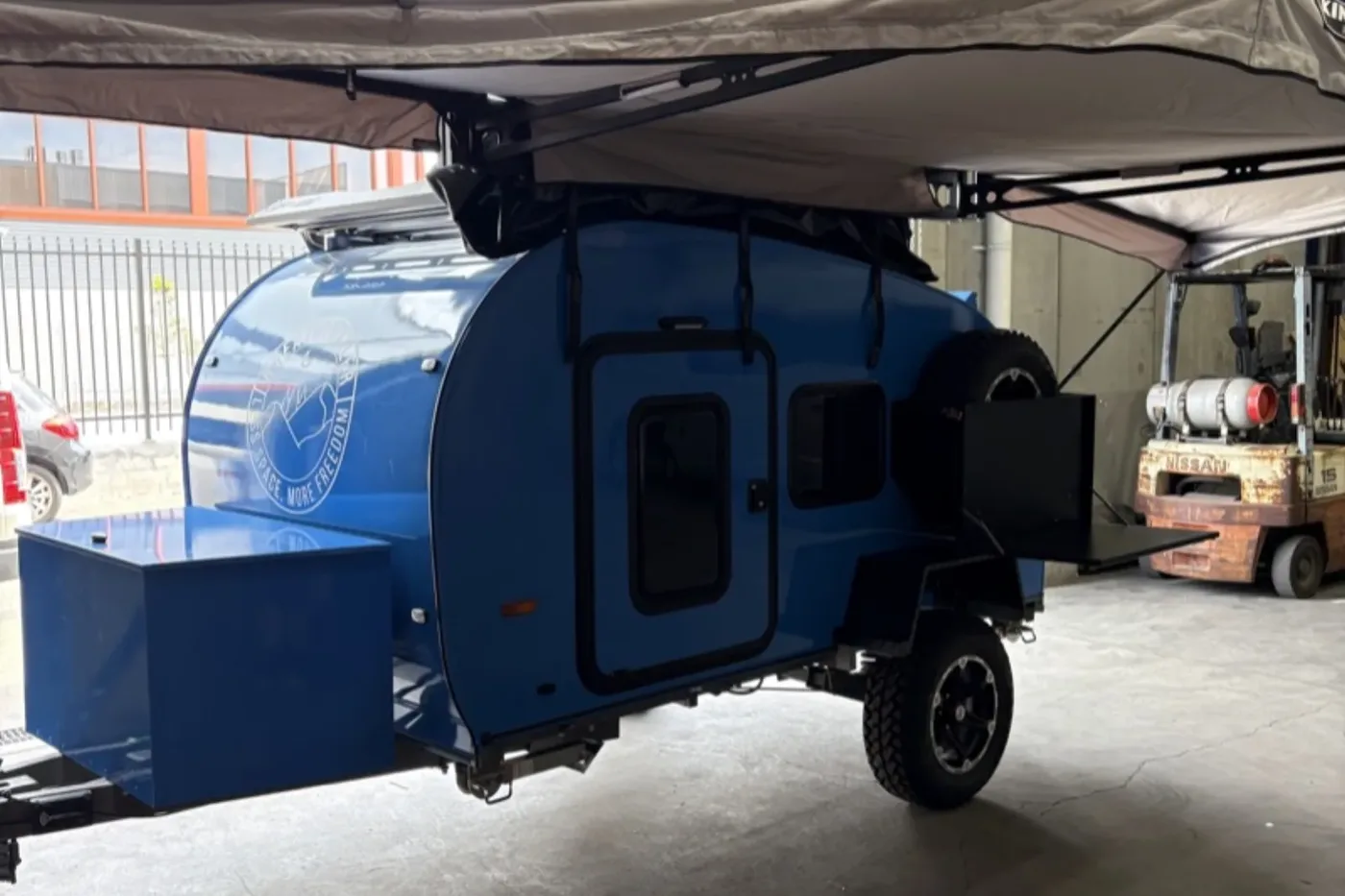
In 2022, the Australian Competition and Consumer Commission (ACCC) surveyed 2,270 caravan and camper trailer owners and found something that should stop every buyer cold: 80% reported experiencing a fault with their new trailer. Half of those faults were classified as major.
That’s not a rounding error. That’s an industry-wide failure — and it’s why quality control isn’t a nice-to-have when you’re spending $20,000–$40,000 on a camper trailer. It’s the entire ballgame.
This guide covers what quality control actually means in the context of Australian camper trailer manufacturing, what the law requires (and what it doesn’t), and how to separate genuine build quality from marketing gloss — before you hand over your money.
The Australian Camper Trailer Quality Crisis: What the Data Says
The ACCC’s 2022 report, New Caravan Retailing: Ensuring Industry Compliance with the Australian Consumer Law, didn’t pull punches. Based on their survey data:
- 80% of caravan and camper trailer owners reported experiencing at least one fault with a new purchase
- 50% of those faults were classified as major
- 1 in every 100 new caravans, motorhomes, or camper trailers sold in 2020–21 was so defective it should have qualified for a full refund or replacement
- 47% of consumers reported being misled about their warranty rights
- The ACCC received more than 1,300 complaints about the caravan industry over five years
For context: a 1-in-100 major defect rate would be catastrophic in any other industry. In camper trailers, it barely made the news.
The most common failure modes? Water ingress, electrical faults, chassis corrosion, and structural problems — exactly the things that leave you stranded 300 km from the nearest town.
This isn’t a problem confined to budget imports. The ACCC report covered the full market. But it does mean that manufacturing discipline — quality control — matters enormously in how you choose which trailer to buy.
What Australian Law Actually Requires — and What It Doesn’t
Australia has a layered regulatory framework for trailers. Understanding what it covers will help you see the gaps.
Road Vehicle Standards Act 2018 (RVSA)
The RVSA replaced the Motor Vehicle Standards Act 1989 and is the main federal law governing how trailers enter the Australian market. It requires manufacturers and importers to demonstrate compliance with applicable Australian Design Rules (ADRs) before a trailer can be sold.
Vehicle Standards Bulletin 1 (VSB1) Revision 6 — September 2024
VSB1 is a practical guide that helps manufacturers understand how to comply with ADRs for trailers under 4.5 tonnes ATM. Revision 6 (published September 2024) is the current version.
| Area | VSB1 Coverage |
|---|---|
| Braking systems | ✅ Required (electric brakes ≥750 kg ATM) |
| Lighting and reflectors | ✅ Required |
| Structural dimensions | ✅ Maximum width/height |
| Tyre load ratings | ✅ Must match ATM |
| Coupling systems | ✅ Ball coupling standards |
| Compliance plate | ✅ Required on all new trailers |
| Build process / QC methodology | ❌ Not prescribed |
| Steel grade specification | ❌ Not prescribed |
| Sealing and waterproofing quality | ❌ Not prescribed |
| Electrical system quality | ❌ Minimum only |
The compliance plate tells you the trailer meets minimum legal standards. It tells you nothing about whether the chassis was hot-dip galvanised or spray-painted, whether seals were applied properly, or whether the 12V wiring was done by a qualified auto-electrician.
That’s where QC comes in — and it’s entirely at the manufacturer’s discretion.
The Compliance Plate Red Flag: Rebirthed Plates
A compliance plate should reflect the trailer it’s attached to. In Australia, there’s a known practice called “rebirthing” — where a plate from a compliant trailer is transferred to a non-compliant one. State road authorities have flagged this as a serious issue in the secondhand market.
If you’re buying secondhand and the compliance plate details don’t match the trailer’s observed specifications (ATM, dimensions, manufacturer name), treat it as a serious red flag. Our guide on 10 things to check before buying a camper trailer covers how to verify a plate against the National Register.
The 7 Quality Checkpoints That Separate Good from Great
Whether you’re buying new or used, these are the build quality markers with the biggest impact on long-term reliability.
1. Chassis Steel Grade and Fabrication
The chassis is the spine of every camper trailer. Quality manufacturers use RHS (Rectangular Hollow Section) structural steel — commonly 350-grade for strength — with welds inspected and ground before galvanising. You should be able to ask for the steel specification and get a straight answer.
2. Hot-Dip Galvanising — Post-Weld
This is one of the most meaningful quality markers on any Australian camper trailer, given the country’s coastal environments, salt air, and creek crossings.
| Corrosion Protection Method | Description | Durability |
|---|---|---|
| Primer + powder coat | Paint applied to bare steel | Chips expose bare metal; rust within 2–5 years coastal |
| Pre-galvanised (DuraGal / SupaGal) | Zinc applied before welding | Weld joints unprotected; 5–10 years coastal |
| Hot-dip galvanised post-weld | Full chassis dipped after welding | Best protection; 20–50+ years |
Hot-dip post-weld galvanising is the gold standard. The entire welded chassis — including internal surfaces and weld joints — is coated in zinc at approximately 460°C. Pre-galvanised steel is cheaper to use, but the weld joints remain unprotected and corrode first.
Ask every manufacturer: “Is the chassis hot-dip galvanised after welding, or is it DuraGal with a top coat?” The answer tells you a great deal about how seriously they take long-term durability.
3. Water Ingress Sealing
Water ingress is the number one cause of major camper trailer damage in Australia. A poorly sealed roof vent, window frame, or cable penetration can allow water to track behind panels for months undetected — by the time you see visible damage, you’re often looking at a $3,000–$10,000 repair.
Quality manufacturers seal every penetration point with both an outer bead (visible to you) and a secondary inner seal. Budget builds often seal only what’s visible.
Signs of quality sealing at inspection:
- Consistent, neat sealant beads with no gaps or voids
- Seals applied to both inner and outer surfaces at windows and vents
- Drip rails above windows and doors
- No visible gaps at panel joins or where cables enter the shell
4. Electrical System
The 12V electrical system in a modern camper trailer runs fridges, lighting, USB outlets, water pumps, hot water, and charge management. Poor-quality electrical work is one of the leading causes of both trailer fires and warranty claims in Australia.
Quality markers:
- Wiring completed by a qualified auto-electrician or RV electrician
- Correct gauge cable for each circuit with inline fusing
- All connections crimped or soldered (not twisted and taped)
- Distribution panel with labelled, individual circuit breakers
- Compliance with AS/NZS 3001.2:2022 (recreational vehicle wiring standard, effective November 2023 — covers lithium battery enclosure requirements, fusing proximity, and solar isolation)
Our complete camper trailer power systems guide explains what a properly specced 12V system looks like — useful benchmarking when you’re evaluating a new trailer.
5. Suspension and Wheel Bearings
Suspension absorbs corrugations, creek crossings, and the general brutality of Australian outback roads. Wheel bearing failure is one of the most common causes of trailer accidents in Australia — bearings overheat, seize, and in some cases catch fire.
Quality markers:
- Independent coil or heavy-duty leaf suspension rated for the trailer’s ATM
- Wheel bearings packed at the factory and documented in a pre-delivery record
- Clearance for the tyre load index to match the ATM
The 750 kg brake rule: any trailer with an ATM over 750 kg requires electric brakes by law in every Australian state. A quality trailer above this threshold should have brakes correctly adjusted and tested before handover. See our camper trailer weight guide for ATM and payload definitions.
6. Tyre Age and Load Rating
Tyres are often overlooked in quality discussions. Budget trailers sometimes arrive with tyres from slow-moving stock — physically new but already aged. Check the DOT date code on the sidewall (the four-digit code indicates week and year of manufacture). A tyre more than five years old is a safety risk regardless of tread depth.
Quality manufacturers also match tyre load ratings to the trailer’s ATM, not just fit whatever’s cheapest in that diameter.
7. Compliance Plate and Documentation
At handover, you should receive the following without having to ask:
- Compliance plate riveted (not stickered) to the chassis
- Registration document or certificate of compliance
- Owner’s manual specific to your model
- Pre-delivery inspection report
- Warranty documentation in writing
Missing documentation at handover is a yellow flag. A genuine manufacturer has nothing to hide and every incentive to provide a complete paper trail.
Why Hard-Shell Teardrops Have a Built-In Quality Advantage
If you’re comparing quality across different trailer types — not just brands — hard-shell teardrops have a structural quality advantage worth understanding.
Canvas camper trailers have more water ingress risk by design. Every canvas-to-frame junction, zip, and pole socket is a potential leak point. Canvas also degrades: UV exposure, mildew, and mechanical wear require re-proofing every 2–5 years at a cost of $300–$800 per treatment, eventually requiring full canvas replacement.
| Quality Factor | Hard-Shell Teardrop | Canvas Camper Trailer |
|---|---|---|
| Water ingress points | Fixed seals (few, inspectable) | Canvas/zip interfaces (many) |
| Canvas maintenance | None | Re-proof every 2–5 years |
| Seal wear | Years between maintenance | Constant monitoring required |
| Setup wear and tear | Hinge and latch only | Canvas fold, zip, pole system |
| Body integrity over 10+ years | Shell holds shape | Canvas stretches and sags |
| Effective life (well maintained) | 20–30+ years | 10–15 years canvas lifespan |
A hard-shell teardrop’s body is a fixed structure with a small number of seal points — door, windows, cable entries, hatches — all of which can be properly inspected and maintained. Our teardrop camper maintenance guide covers what a hard-shell annual service looks like — it’s considerably simpler than canvas.
For a direct head-to-head comparison, see teardrop camper vs camper trailer Australia.
Australian-Made vs Imported: The Real Quality Calculus
This is nuanced territory. The quality gap between imported and Australian-made camper trailers has narrowed significantly in recent years — some imported trailers are excellent, and some domestic builds have quality problems. But there are structural differences in how quality is delivered.
| Factor | Australian-Made | Budget Import |
|---|---|---|
| Build oversight | In-country, inspectable | Overseas; limited buyer visibility |
| ADR compliance | Local signoff, manufacturer accountable | Importer-certified (varies in rigour) |
| Local parts availability | Generally good | Often poor; long lead times |
| Warranty service | In-country service network | May require shipping to importer |
| Chassis spec for AU conditions | Designed for AU roads and climate | Sometimes designed for EU/US conditions |
| Price for equivalent spec | Higher | Lower |
| Resale value | Generally stronger | Generally weaker |
The cheapest imported camper trailers in the $8,000–$15,000 range often make compromises on chassis grade, galvanising method, tyre quality, and electrical systems that aren’t visible at the showroom but become apparent after 12 months of use on Australian roads.
At the premium end — including Australian-made teardrops — you’re paying for build oversight, locally sourced components, service infrastructure, and genuine warranty backing. Our article on what makes a premium camper trailer different goes deeper into where the price difference actually goes.
What Poor Quality Control Costs Over Five Years
Poor QC costs money — just on a delay. The most common repair bills for quality-related failures in Australian camper trailers in 2026:
| Failure | Likely Root Cause | Typical Repair Cost |
|---|---|---|
| Water damage — minor (one panel) | Inadequate factory sealing | $800–$2,500 |
| Water damage — major (structural) | Sustained leak, detected late | $3,000–$12,000 |
| Chassis rust treatment | Insufficient galvanising | $600–$3,000 |
| Wheel bearing replacement | No pre-delivery pack or inspection | $300–$700 per axle |
| Electrical rewire | Substandard wiring at build | $800–$2,500 |
| Electric brake system repair | Incorrect setup at handover | $500–$1,500 |
| Canvas replacement (canvas trailers) | UV degradation, normal wear | $1,200–$3,500 |
A $5,000 cheaper trailer that requires $4,000 in repairs over five years is effectively a $1,000 saving — before you account for time off the road and the difficulty of sourcing parts for obscure brands. Resale value is also meaningfully lower for a trailer with a documented repair history.
See our teardrop camper resale value guide for how build quality affects what you recover when you sell.
The Warranty Trap: When Manufacturers Go Bust
There’s a quality risk no one talks about enough: manufacturer insolvency. Your written warranty is only as good as the company that issued it. If the manufacturer collapses — and Australian industry history shows this happens with alarming frequency — your warranty is worthless.
Recent camper trailer and caravan manufacturer insolvencies in Australia:
| Manufacturer | Collapse Year | Debt / Impact |
|---|---|---|
| Zone RV | Early 2025 | ~$42 million in debt; $270,000 caravans stranded |
| Network RV (Vancraft, Nextgen, Victory) | 2024 | ~$30 million in debts |
| Tango Caravans | August 2024 | ~$1 million; one couple lost $94,000 for a van never delivered |
| Highline Caravans | May 2024 | ~$1 million in debts |
| Infinity Motorhomes | 2023 | Liquidation; Gold Coast |
A common pattern: companies collapse, then restart under a new name — leaving warranty obligations unmet. Consumers with legitimate warranty claims find no one to call.
This makes the manufacturer’s financial longevity and track record part of the quality assessment. Ask:
- How long has this manufacturer been operating?
- Do they own their premises or rent?
- Are their order books full or under pressure?
- What’s their reputation in the community — forums, Facebook groups, current owner reviews?
A trailer from a manufacturer who has been operating for 10+ years, has a full order book, and maintains a Sydney workshop is a meaningfully lower risk than a shiny new entrant with attractive pricing and no history.
How to Verify a Manufacturer’s Quality Claims
Marketing language is cheap. Here are the questions that reveal what’s actually behind it.
Questions that expose the truth:
- “Can we visit the workshop before we commit?” — A manufacturer with nothing to hide will say yes
- “Can you show us the pre-delivery inspection checklist you use?” — Genuine manufacturers have a documented process
- “Is the chassis hot-dip galvanised post-weld, or is it DuraGal?” — Not all galvanising is equivalent
- “Who does your 12V wiring — is there a qualified auto-electrician on staff?”
- “What’s your warranty process if I live 800 km from your workshop?”
Signs of genuine QC commitment:
- Workshop is clean and well-organised (chaos in production correlates with chaos in build quality)
- Staff can explain the build process, not just the features
- Written pre-delivery inspection report provided at handover without prompting
- RVMAP accreditation — the Caravan Industry Association of Australia’s voluntary manufacturing accreditation programme; licensed manufacturers record nearly 3x fewer ADR compliance issues than unlicensed ones (note: RVMAP covers ADR compliance across product types, not individual unit inspection)
- Local support network beyond the factory
- Independent awards or certifications from bodies that inspect the actual product
Breath Trailer — designed and finished in Sydney — won the Gold Sydney Design Award 2025, independently judged recognition of both design integrity and engineering execution. The award process includes assessment of structural and functional design, not merely aesthetics. You can inspect all four models at our viewing locations before committing.
Pre-Delivery Inspection: What to Confirm Before You Drive Away
Even with a quality manufacturer, there are specific things to personally verify at handover. Never rush this appointment.
| # | Check | What to Look For |
|---|---|---|
| 1 | Compliance plate | Riveted (not stickered); ATM/GTM/tare match your order |
| 2 | Water seals | All windows, vents, hatches — no gaps in sealant |
| 3 | Electrical function | All circuits live: fridge, lights, pump, USB, 12V sockets |
| 4 | Electric brakes | Controller connected, calibrated, test at low speed |
| 5 | Wheel bearings | Confirmed packed on pre-delivery inspection report |
| 6 | Tyre DOT date | No more than 2 years old; 4 years absolute maximum |
| 7 | Coupling | Locks positively; breakaway cable correct length and clips |
| 8 | Jockey wheel | Smooth wind, locks solid — used every single trip |
| 9 | Documentation | Manual, warranty card, pre-delivery inspection sheet |
| 10 | Test tow | 10–15 km including brake activation before signing off |
Never drive away without completing every item. A quality manufacturer will expect this of you — they built the checklist too.
Frequently Asked Questions
What is VSB1 and does compliance mean my camper trailer is well built?
VSB1 (Vehicle Standards Bulletin 1) is the Australian government’s guide for trailer manufacturers on how to comply with the Australian Design Rules. Compliance is mandatory for legal sale — but VSB1 covers minimum safety requirements like braking, lighting, and coupling. It does not regulate build quality, material grade, galvanising method, or sealing quality. A VSB1-compliant trailer can still have poor-quality welds, inadequate sealing, and substandard electrical work. Compliance is a floor, not a ceiling.
What is the most common quality failure in Australian camper trailers?
Water ingress is the most frequently cited major fault in ACCC complaint data and industry service reports. It’s particularly damaging because it develops slowly — by the time visible damage appears, the underlying structure (wall cavities, floor substrate, framing) may already have significant rot or corrosion. This is entirely a manufacturing quality issue: no amount of aftermarket maintenance fixes a trailer that wasn’t sealed properly at the factory.
Should I get an independent inspection before buying a new camper trailer?
For a new trailer from a reputable manufacturer, the pre-delivery inspection process should be sufficient — but you should request the report in writing and verify the key items yourself at handover. For a secondhand trailer, an independent inspection by a qualified RV assessor (typically $200–$400) is strongly recommended, particularly for detecting water ingress and structural issues that require specialist equipment to find properly.
Does build quality affect my camper trailer insurance premium?
Not directly — insurers don’t audit manufacturing QC. However, build quality affects the agreed value of your trailer and your exposure to claims. A trailer with documented repair history for water damage may face higher premiums or exclusions for that specific risk category. See our teardrop camper insurance guide for how insurers assess camper trailer risk in Australia.
How long should a well-built camper trailer last in Australian conditions?
A trailer with a hot-dip galvanised chassis, quality sealing, and consistent maintenance should last 20–30 years in Australian conditions. Budget trailers with inadequate chassis protection commonly show corrosion within 5–10 years in coastal environments. The hard-shell body of a quality teardrop, maintained correctly, can outlast the frame — this is one reason well-built teardrops retain their resale value better than canvas alternatives.
What are my rights if my new camper trailer has a major fault?
Under the Australian Consumer Law (ACL), you have consumer guarantee rights independent of any written warranty. A brand-new camper trailer should not develop major faults within several years of normal use — if it does, you may be entitled to a repair, replacement, or refund regardless of what the manufacturer’s warranty document says. The ACCC has made this a compliance priority after finding that 47% of consumers were misled about their rights.
Conclusion: Build Quality Is the Decision
The ACCC’s 80% fault rate is not an argument against buying a camper trailer — it’s an argument for buying the right one. Quality control is what separates a trailer that performs flawlessly for 20 years from one that becomes a warranty dispute and a mounting repair bill.
The markers are consistent across all price points: post-weld hot-dip galvanising, proper sealing discipline, qualified electrical work, wheel bearings packed and documented, and a manufacturer willing to show you the build before you commit.
For hard-shell teardrops, the structural advantage over canvas is real — fewer seal points, no canvas degradation, simpler ongoing maintenance. But even within the teardrop category, manufacturing discipline varies considerably.
If you’re ready to compare models, the Breath Trailer comparison page lets you evaluate all four models side by side — from the 700 kg Essential at $23,320 to the 1,200 kg Max at $47,190 with its full interior bathroom. Or book a viewing at our Sydney location to inspect the build quality in person.
Recommended Reading
- 10 Things to Check Before Buying a Camper Trailer in Australia — Pre-purchase inspection checklist, point by point
- What Makes a Premium Camper Trailer Different? — Where the price difference actually goes
- Teardrop Camper Resale Value Australia — How build quality affects what you recover at resale
- Teardrop Camper Maintenance Australia — Annual service schedule for hard-shell teardrops
- Australian-Made Teardrop Camper — What the claim legally means, and what to verify instead
- How to Verify a Camper Trailer Brand Before You Pay a Deposit — RAV approval, compliance plate, warranty terms — what you can objectively verify.